

The Human Fungal Pathogen Cryptococcus neoformans Escapes Macrophages by a Phagosome Emptying Mechanism That Is Inhibited by Arp2/3 Complex-Mediated Actin Polymerisation
Open accessThe DOI matches its Crossref record; 35 of the 35 references it cites were found in a registry or an index.
Abstract
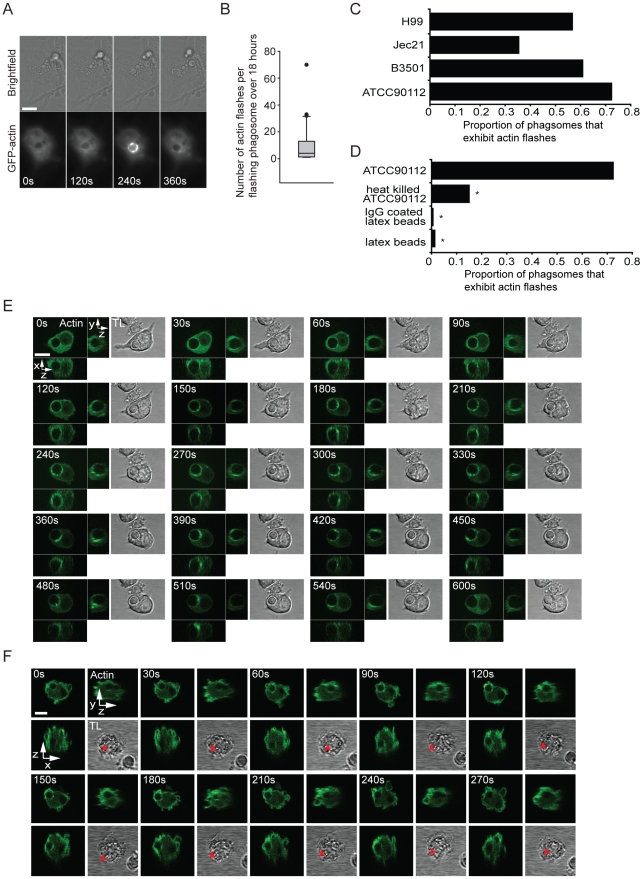
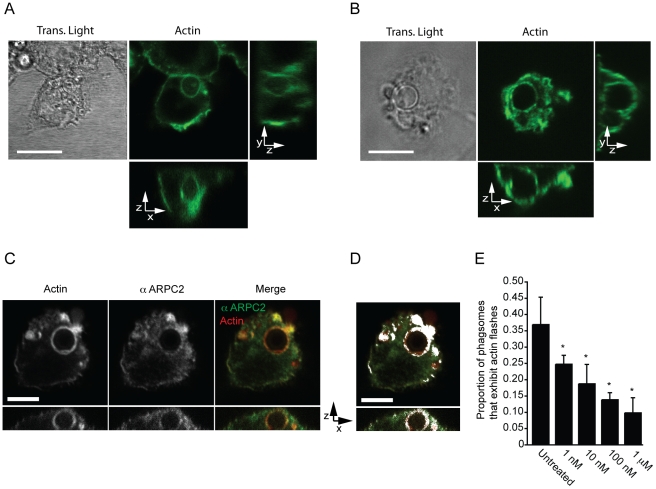
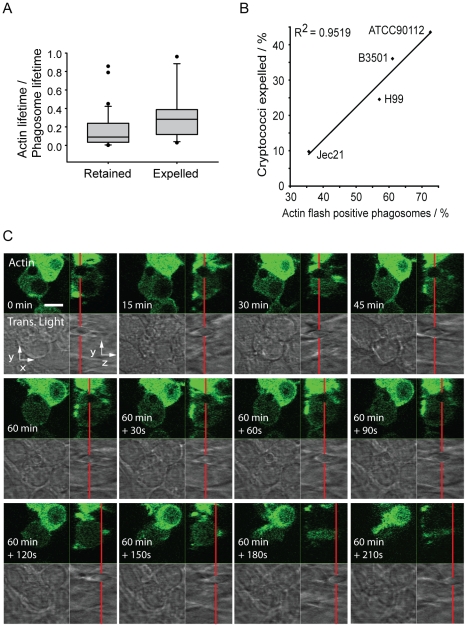
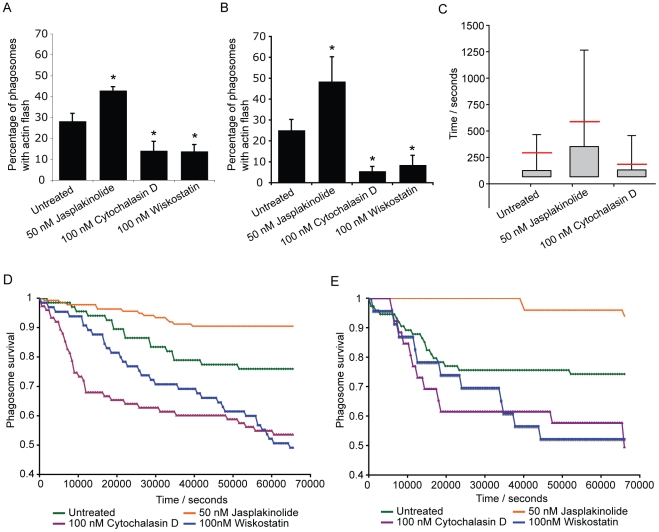
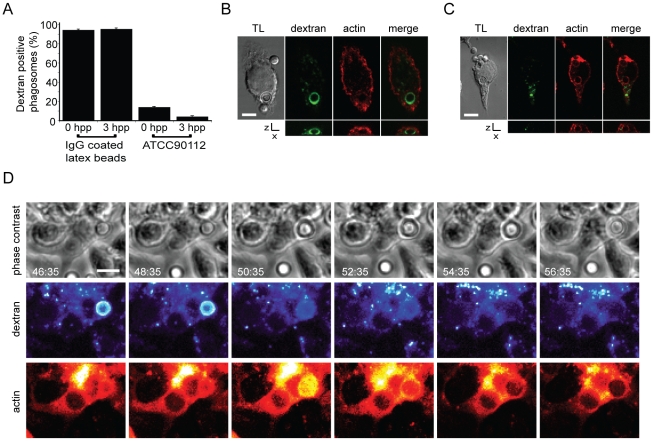
The lysis of infected cells by disease-causing microorganisms is an efficient but risky strategy for disseminated infection, as it exposes the pathogen to the full repertoire of the host's immune system. Cryptococcus neoformans is a widespread fungal pathogen that causes a fatal meningitis in HIV and other immunocompromised patients. Following intracellular growth, cryptococci are able to escape their host cells by a non-lytic expulsive mechanism that may contribute to the invasion of the central nervous system. Non-lytic escape is also exhibited by some bacterial pathogens and is likely to facilitate long-term avoidance of the host immune system during latency. Here we show that phagosomes containing intracellular cryptococci undergo repeated cycles of actin polymerisation. These actin 'flashes' occur in both murine and human macrophages and are dependent on classical WASP-Arp2/3 complex mediated actin filament nucleation. Three dimensional confocal imaging time lapse revealed that such flashes are highly dynamic actin cages that form around the phagosome. Using fluorescent dextran as a phagosome membrane integrity probe, we find that the non-lytic expulsion of Cryptococcus occurs through fusion of the phagosome and plasma membranes and that, prior to expulsion, 95% of phagosomes become permeabilised, an event that is immediately followed by an actin flash. By using pharmacological agents to modulate both actin dynamics and upstream signalling events, we show that flash occurrence is inversely related to cryptococcal expulsion, suggesting that flashes may act to temporarily inhibit expulsion from infected phagocytes. In conclusion, our data reveal the existence of a novel actin-dependent process on phagosomes containing cryptococci that acts as a potential block to expulsion of Cryptococcus and may have significant implications for the dissemination of, and CNS invasion by, this organism.
Overview
The claims and statistics of this paper haven’t been checked yet.
Free: it reads the open-access text and checks the first 5 claims that cite a source we can check. Create a free account to check every claim.
Integrity signals
Registry
Cites
Statistics
Figures
Verification
Claims the paper makes
The claims and statistics of this paper haven’t been checked yet.
Free: it reads the open-access text and checks the first 5 claims that cite a source we can check. Create a free account to check every claim.
Claims other papers make about this one
Each is checked against this paper’s own text: does it say what the citing paper says it does?
In the citing paper
“Conversely, C. neoformans can exit macrophages via non-lytic exocytosis, or vomocytosis. Vomocytosis is mediated by phagosomal extrusion: a process in which mature phagosomes containing cryptococcal cells fuse with the plasma membrane and release fungi into the extracellular milieu [43–46].”
From Mechanisms of fungal dissemination (2021) · cites this paper as [46]
Self-check
Percentages, sums and reported differences re-computed from the paper’s own numbers.
The self-check needs the paper’s full text.
Citations
Cites
Lifeact: a versatile marker to visualize F-actin
Riedl, J., Crevenna, A. H., Kessenbrock, K., Yu, J. H., Neukirchen, D., Bista, M., Bradke, F., Jenne, D., Holak, T. A., Werb, Z., et al. (2008) · Nature Methods · doi:10.1038/nmeth.1220 · Cited by 2,189
Park, B. J., Wannemuehler, K. A., Marston, B. J., Govender, N., Pappas, P. G., & Chiller, T. M. (2009) · AIDS · doi:10.1097/qad.0b013e328322ffac · Cited by 2,014
Rohatgi, R., Ma, L., Miki, H., Lopez, M., Kirchhausen, T., Takenawa, T., & Kirschner, M. W. (1999) · Cell · doi:10.1016/s0092-8674(00)80732-1 · Cited by 1,348
Tilney, L. G., & Portnoy, D. A. (1989) · The Journal of cell biology · doi:10.1083/jcb.109.4.1597 · Cited by 1,263
Gaillard, J. L., Berche, P., Mounier, J., Richard, S., & Sansonetti, P. (1987) · Infection and Immunity · doi:10.1128/iai.55.11.2822-2829.1987 · Cited by 715
Phagocytosis and the actin cytoskeleton
May, R. C., & Machesky, L. M. (2001) · Journal of Cell Science · doi:10.1242/jcs.114.6.1061 · Cited by 715
Self-citationListeria monocytogenes — from saprophyte to intracellular pathogen
Freitag, N. E., Port, G. C., & Miner, M. D. (2009) · Nature Reviews Microbiology · doi:10.1038/nrmicro2171 · Cited by 577
Mycobacterium tuberculosis and the Macrophage: Maintaining a Balance
Pieters, J. (2008) · Cell Host & Microbe · doi:10.1016/j.chom.2008.05.006 · Cited by 503
Mechanisms of host cell exit by the intracellular bacterium Chlamydia
Hybiske, K., & Stephens, R. S. (2007) · Proceedings of the National Academy of Sciences · doi:10.1073/pnas.0703218104 · Cited by 489
Combination antifungal therapies for HIV-associated cryptococcal meningitis: a randomised trial
Brouwer, A. E., Rajanuwong, A., Chierakul, W., Griffin, G. E., Larsen, R. A., White, N. J., & Harrison, T. S. (2004) · The Lancet · doi:10.1016/s0140-6736(04)16301-0 · Cited by 470
Cited by
Interactions of fungal pathogens with phagocytes
Erwig, L. P., & Gow, N. A. R. (2016) · Nature Reviews Microbiology · doi:10.1038/nrmicro.2015.21 · Cited by 626
Regulatory circuitry governing fungal development, drug resistance, and disease.
Shapiro, R. S., Robbins, N., & Cowen, L. E. (2011) · Microbiology and Molecular Biology Reviews · doi:10.1128/mmbr.00045-10 · Cited by 576
Cryptococcus: from environmental saprophyte to global pathogen
May, R. C., Stone, N. R. H., Wiesner, D. L., Bicanic, T., & Nielsen, K. (2016) · Nature Reviews Microbiology · doi:10.1038/nrmicro.2015.6 · Cited by 541
Self-citationSanin, D. E., & Mountford, A. P. (2015) · Parasites & Vectors · doi:10.1186/s13071-014-0608-1 · Cited by 441
Immune responses to human fungal pathogens and therapeutic prospects
Lionakis, M. S., Drummond, R. A., & Hohl, T. M. (2023) · Nature Reviews Immunology · doi:10.1038/s41577-022-00826-w · Cited by 379
Expanding fungal pathogenesis: Cryptococcus breaks out of the opportunistic box
Kronstad, J. W., Attarian, R., Cadieux, B., Choi, J., D'Souza, C. A., Griffiths, E. J., Geddes, J. M. H., Hu, G., Jung, W. H., Kretschmer, M., et al. (2011) · Nature Reviews Microbiology · doi:10.1038/nrmicro2522 · Cited by 340
Modulation of Immune Responses by Particle Size and Shape
Baranov, M. V., Kumar, M., Sacanna, S., Thutupalli, S., & van den Bogaart, G. (2021) · Frontiers in Immunology · doi:10.3389/fimmu.2020.607945 · Cited by 324
Control of Phagocytosis by Microbial Pathogens
Uribe-Querol, E., & Rosales, C. (2017) · Frontiers in Immunology · doi:10.3389/fimmu.2017.01368 · Cited by 306
Pathogens and polymers: Microbe–host interactions illuminate the cytoskeleton
Haglund, C. M., & Welch, M. D. (2011) · Journal of Cell Biology · doi:10.1083/jcb.201103148 · Cited by 194
Vylkova, S., & Lorenz, M. C. (2014) · PLoS Pathogens · doi:10.1371/journal.ppat.1003995 · Cited by 174
Johnston, S. A., & May, R. C. (2013) · Cellular Microbiology · doi:10.1111/cmi.12067 · Cited by 145
Self-citationBojarczuk, A., Miller, K. A., Hotham, R., Lewis, A., Ogryzko, N. V., Kamuyango, A. A., Frost, H., Gibson, R. H., Stillman, E., May, R. C., et al. (2016) · Scientific Reports · doi:10.1038/srep21489 · Cited by 170
Self-citationBain, J. M., Louw, J., Lewis, L. E., Okai, B., Walls, C. A., Ballou, E. R., Walker, L. A., Reid, D., Munro, C. A., Brown, A. J. P., et al. (2014) · mBio · doi:10.1128/mbio.01874-14 · Cited by 160
The Intracellular Life of Cryptococcus neoformans
Coelho, C., Bocca, A. L., & Casadevall, A. (2014) · Annual Review of Pathology: Mechanisms of Disease · doi:10.1146/annurev-pathol-012513-104653 · Cited by 130
Fu, M. S., Coelho, C., De Leon-Rodriguez, C. M., Rossi, D. C. P., Camacho, E., Jung, E. H., Kulkarni, M., & Casadevall, A. (2018) · PLOS Pathogens · doi:10.1371/journal.ppat.1007144 · Cited by 138
The Tools for Virulence of Cryptococcus neoformans
Coelho, C., Bocca, A. L., & Casadevall, A. (2014) · Advances in applied microbiology · doi:10.1016/b978-0-12-800261-2.00001-3 · Cited by 138
Cryptococcus and Phagocytes: Complex Interactions that Influence Disease Outcome
Leopold Wager, C. M., Hole, C. R., Wozniak, K. L., & Wormley, F. L. (2016) · Frontiers in Microbiology · doi:10.3389/fmicb.2016.00105 · Cited by 105
Molecular mechanisms of cryptococcal meningitis
Liu, T.-B., Perlin, D. S., & Xue, C. (2012) · Virulence · doi:10.4161/viru.18685 · Cited by 131
Mechanisms of fungal dissemination
Strickland, A. B., & Shi, M. (2021) · Cellular and Molecular Life Sciences · doi:10.1007/s00018-020-03736-z · Cited by 127
Immunity to Cryptococcus neoformans and C. gattii during cryptococcosis
Gibson, J. F., & Johnston, S. A. (2014) · Fungal Genetics and Biology · doi:10.1016/j.fgb.2014.11.006 · Cited by 128
Self-citationSmith, L. M., Dixon, E. F., & May, R. C. (2015) · Cellular Microbiology · doi:10.1111/cmi.12394 · Cited by 99
Self-citationCryptococcal pathogenic mechanisms: a dangerous trip from the environment to the brain
Esher, S. K., Zaragoza, Ó., & Alspaugh, J. A. (2018) · Memórias do Instituto Oswaldo Cruz · doi:10.1590/0074-02760180057 · Cited by 126
Mechanisms of Infection by the Human Fungal Pathogen Cryptococcus Neoformans
Sabiiti, W., & May, R. C. (2012) · Future Microbiology · doi:10.2217/fmb.12.102 · Cited by 83
Self-citationNon-lytic expulsion/exocytosis of Candida albicans from macrophages
Bain, J. M., Lewis, L. E., Okai, B., Quinn, J., Gow, N. A. R., & Erwig, L.-P. (2012) · Fungal Genetics and Biology · doi:10.1016/j.fgb.2012.01.008 · Cited by 100
Chayakulkeeree, M., Johnston, S. A., Oei, J. B., Lev, S., Williamson, P. R., Wilson, C. F., Zuo, X., Leal, A. L., Vainstein, M. H., Meyer, W., et al. (2011) · Molecular Microbiology · doi:10.1111/j.1365-2958.2011.07632.x · Cited by 100
Self-citationImmunology of Cryptococcal Infections: Developing a Rational Approach to Patient Therapy
Elsegeiny, W. A. W., Marr, K. A., & Williamson, P. R. (2018) · Frontiers in Immunology · doi:10.3389/fimmu.2018.00651 · Cited by 117
Catch me if you can: phagocytosis and killing avoidance by Cryptococcus neoformans
García-Rodas, R., & Zaragoza, O. (2012) · FEMS Immunology & Medical Microbiology · doi:10.1111/j.1574-695x.2011.00871.x · Cited by 94
Li, C., Wang, Y., Li, Y., Yu, Q., Jin, X., Wang, X., Jia, A., Hu, Y., Han, L., Wang, J., et al. (2018) · Scientific Reports · doi:10.1038/s41598-018-22039-9 · Cited by 105
Fungal Pathogens: Survival and Replication within Macrophages
Gilbert, A. S., Wheeler, R. T., & May, R. C. (2015) · Cold Spring Harbor Perspectives in Medicine · doi:10.1101/cshperspect.a019661 · Cited by 97
Self-citationImmunomodulatory Role of Capsular Polysaccharides Constituents of Cryptococcus neoformans
Decotè-Ricardo, D., LaRocque-de-Freitas, I. F., da Rocha, J. D. B., Nascimento, D. O., Nunes, M. P., Morrot, A., Freire‐de‐Lima, L., Previato, J. O., Mendonça‐Previato, L., & Freire-de-Lima, C. G. (2019) · Frontiers in Medicine · doi:10.3389/fmed.2019.00129 · Cited by 109
Dinoflagellate symbionts escape vomocytosis by host cell immune suppression
Jacobovitz, M. R., Rupp, S., Voss, P. A., Maegele, I., Gornik, S. G., & Guse, A. (2021) · Nature Microbiology · doi:10.1038/s41564-021-00897-w · Cited by 104
Anti-Immune Strategies of Pathogenic Fungi
Marcos, C. M., de Oliveira, H. C., de Melo, W. D. C. M. A., da Silva, J. D. F., Assato, P. A., Scorzoni, L., Rossi, S. A., de Paula e Silva, A. C. A., Mendes-Giannini, M. J. S., & Fusco-Almeida, A. M. (2016) · Frontiers in Cellular and Infection Microbiology · doi:10.3389/fcimb.2016.00142 · Cited by 91
Prison Break: Pathogens' Strategies To Egress from Host Cells
Friedrich, N., Hagedorn, M., Soldati‐Favre, D., & Soldati, T. (2012) · Microbiology and Molecular Biology Reviews · doi:10.1128/mmbr.00024-12 · Cited by 106
Cryptococcus neoformans–Induced Macrophage Lysosome Damage Crucially Contributes to Fungal Virulence
Davis, M. J., Eastman, A. J., Qiu, Y., Gregorka, B., Kozel, T. R., Osterholzer, J. J., Curtis, J. L., Swanson, J. A., & Olszewski, M. A. (2015) · The Journal of Immunology · doi:10.4049/jimmunol.1402376 · Cited by 79
Pathways of host cell exit by intracellular pathogens
Flieger, A., Frischknecht, F., Haecker, G., Hornef, M. W., & Pradel, G. (2018) · Microbial Cell · doi:10.15698/mic2018.12.659 · Cited by 95
Mechanisms of Cryptococcus neoformans-Mediated Host Damage
Casadevall, A., Coelho, C., & Alanio, A. (2018) · Frontiers in Immunology · doi:10.3389/fimmu.2018.00855 · Cited by 90
Mechanisms of microbial escape from phagocyte killing
Smith, L. M., & May, R. C. (2013) · Biochemical Society Transactions · doi:10.1042/bst20130014 · Cited by 78
Self-citationFungal kinases and transcription factors regulating brain infection in Cryptococcus neoformans
Lee, K.-T., Hong, J., Lee, D.-G., Lee, M., Cha, S., Lim, Y.-G., Jung, K.-W., Hwangbo, A., Lee, Y., Yu, S.-J., et al. (2020) · Nature Communications · doi:10.1038/s41467-020-15329-2 · Cited by 74
How type 1 fimbriae help Escherichia coli to evade extracellular antibiotics
Avalos Vizcarra, I., Hosseini, V., Kollmannsberger, P., Meier, S., Weber, S. S., Arnoldini, M., Ackermann, M., & Vogel, V. (2016) · Scientific Reports · doi:10.1038/srep18109 · Cited by 71
Robust Extracellular pH Modulation by Candida albicans during Growth in Carboxylic Acids
Danhof, H. A., Vylkova, S., Vesely, E. M., Ford, A. E., Gonzalez-Garay, M., & Lorenz, M. C. (2016) · mBio · doi:10.1128/mbio.01646-16 · Cited by 72
Lindenbergh, M. F. S., Wubbolts, R., Borg, E. G. F., van ’T Veld, E. M., Boes, M., & Stoorvogel, W. (2020) · Journal of Extracellular Vesicles · doi:10.1080/20013078.2020.1798606 · Cited by 71
Paradoxical roles of alveolar macrophages in the host response to Cryptococcus neoformans
McQuiston, T. J., & Williamson, P. R. (2012) · Journal of Infection and Chemotherapy · doi:10.1007/s10156-011-0306-2 · Cited by 62
Dormancy in Cryptococcus neoformans: 60 years of accumulating evidence
Alanio, A. (2020) · Journal of Clinical Investigation · doi:10.1172/jci136223 · Cited by 73
Calcineurin Orchestrates Lateral Transfer of Aspergillus fumigatus during Macrophage Cell Death
Shah, A., Kannambath, S., Herbst, S., Rogers, A., Soresi, S., Carby, M., Reed, A., Mostowy, S., Fisher, M. C., Shaunak, S., et al. (2016) · American Journal of Respiratory and Critical Care Medicine · doi:10.1164/rccm.201601-0070oc · Cited by 71
Aslanyan, L., Sanchez, D. A., Valdebenito, S., Eugenín, E. A., Ramos, R. L., & Martinez, L. R. (2017) · Journal of Fungi · doi:10.3390/jof3010010 · Cited by 69
Mechanisms of immune evasion in fungal pathogens
Collette, J. R., & Lorenz, M. C. (2011) · Current Opinion in Microbiology · doi:10.1016/j.mib.2011.09.007 · Cited by 68
Mechanisms of Pulmonary Escape and Dissemination by Cryptococcus neoformans
Denham, S., & Brown, J. (2018) · Journal of Fungi · doi:10.3390/jof4010025 · Cited by 67
Chin, E., Kirker, K. R., Zuck, M., James, G. A., & Hybiske, K. (2012) · PLoS ONE · doi:10.1371/journal.pone.0046949 · Cited by 66
Vomocytosis of live pathogens from macrophages is regulated by the atypical MAP kinase ERK5
Gilbert, A. S., Seoane, P. I., Sephton-Clark, P., Bojarczuk, A., Hotham, R., Giurisato, E., Sarhan, A. R., Hillen, A., Velde, G. V., Gray, N. S., et al. (2017) · Science Advances · doi:10.1126/sciadv.1700898 · Cited by 54
Self-citationNutritional Requirements and Their Importance for Virulence of Pathogenic Cryptococcus Species
Watkins, R. A., King, J., & Johnston, S. A. (2017) · Microorganisms · doi:10.3390/microorganisms5040065 · Cited by 53
Self-citationPulmonary Macrophage and Dendritic Cell Responses to Cryptococcus neoformans
Nelson, B. N., Hawkins, A. N., & Wozniak, K. L. (2020) · Frontiers in Cellular and Infection Microbiology · doi:10.3389/fcimb.2020.00037 · Cited by 53
Macrophage Mediated Immunomodulation During Cryptococcus Pulmonary Infection
Wang, Y., Pawar, S., Dutta, O., Wang, K., Rivera, A., & Xue, C. (2022) · Frontiers in Cellular and Infection Microbiology · doi:10.3389/fcimb.2022.859049 · Cited by 52
Flying under the radar: Histoplasma capsulatum avoidance of innate immune recognition
Ray, S. C., & Rappleye, C. A. (2018) · Seminars in Cell and Developmental Biology · doi:10.1016/j.semcdb.2018.03.009 · Cited by 49
Linnerz, T., & Hall, C. J. (2020) · Frontiers in Immunology · doi:10.3389/fimmu.2020.01094 · Cited by 48
Stukes, S., Coelho, C., Rivera, J., Jedlicka, A. E., Hajjar, K. A., & Casadevall, A. (2016) · The Journal of Immunology · doi:10.4049/jimmunol.1501855 · Cited by 44
Fungal resilience and host–pathogen interactions: Future perspectives and opportunities
Brown, A. J. P. (2022) · Parasite Immunology · doi:10.1111/pim.12946 · Cited by 46
Lachat, J., Pascault, A., Thibaut, D., Borgne, R. L., Verbavatz, J., & Weiner, A. (2022) · Nature Communications · doi:10.1038/s41467-022-31237-z · Cited by 46
Integrity under stress: Host membrane remodelling and damage by fungal pathogens
Westman, J., Hube, B., & Fairn, G. D. (2019) · Cellular Microbiology · doi:10.1111/cmi.13016 · Cited by 42
Anticipatory Stress Responses and Immune Evasion in Fungal Pathogens
Pradhan, A., Ma, Q., de Assis, L. J., Leaves, I., Larcombe, D. E., Rondon, A. V. R., Nev, O. A., & Brown, A. J. P. (2020) · Trends in Microbiology · doi:10.1016/j.tim.2020.09.010 · Cited by 46
Caretti, A., Torelli, R., Perdoni, F., Falleni, M., Tosi, D., Zulueta, A., Casas, J., Sanguinetti, M., Ghidoni, R., Borghi, E., et al. (2016) · Biochimica et Biophysica Acta (BBA) - General Subjects · doi:10.1016/j.bbagen.2016.02.014 · Cited by 42
Harnessing Macrophages for Controlled-Release Drug Delivery: Lessons From Microbes
Visser, J. G., Staden, A. D. P. V., & Smith, C. (2019) · Frontiers in Pharmacology · doi:10.3389/fphar.2019.00022 · Cited by 42
Experimental Models of Cryptococcosis
Sabiiti, W., May, R. C., & Pursall, E. R. (2011) · International Journal of Microbiology · doi:10.1155/2012/626745 · Cited by 41
Self-citationFungal factors involved in host immune evasion, modulation and exploitation during infection
König, A., Müller, R., Mogavero, S., & Hube, B. (2020) · Cellular Microbiology · doi:10.1111/cmi.13272 · Cited by 40
Vomocytosis: What we know so far
Seoane, P. I., & May, R. C. (2019) · Cellular Microbiology · doi:10.1111/cmi.13145 · Cited by 39
Self-citationNew weapons in the Cryptococcus infection toolkit
Taylor-Smith, L. M., & May, R. C. (2016) · Current Opinion in Microbiology · doi:10.1016/j.mib.2016.07.018 · Cited by 38
Self-citation“Under Pressure” – How fungi evade, exploit, and modulate cells of the innate immune system
Lange, T., Kasper, L., Gresnigt, M. S., Brunke, S., & Hube, B. (2023) · Seminars in Immunology · doi:10.1016/j.smim.2023.101738 · Cited by 36
Watkins, R. A., Andrews, A., Wynn, C., Barisch, C., King, J., & Johnston, S. A. (2018) · Frontiers in Cellular and Infection Microbiology · doi:10.3389/fcimb.2018.00108 · Cited by 35
Self-citationKraibooj, K., Park, H., Dahse, H., Skerka, C., Voigt, K., & Figge, M. T. (2014) · Mycoses · doi:10.1111/myc.12237 · Cited by 35
Lipids Affect the Cryptococcus neoformans-Macrophage Interaction and Promote Nonlytic Exocytosis
Nolan, S. J., Fu, M. S., Coppens, I., & Casadevall, A. (2017) · Infection and Immunity · doi:10.1128/iai.00564-17 · Cited by 35
Dangerous Liaisons: Interactions of Cryptococcus neoformans with Host Phagocytes
Gaylord, E. A., Choy, H. L., & Doering, T. L. (2020) · Pathogens · doi:10.3390/pathogens9110891 · Cited by 33
Highly Dynamic Host Actin Reorganization around Developing Plasmodium Inside Hepatocytes
Gomes-Santos, C. S. S., Itoe, M. A., Afonso, C., Henriques, R., Gardner, R., Sepúlveda, N., Simões, P. D., Raquel, H., de Almeida, A. P. G., Moita, L. F., et al. (2012) · PLoS ONE · doi:10.1371/journal.pone.0029408 · Cited by 32
Microbial Egress: A Hitchhiker's Guide to Freedom
Traven, A., & Naderer, T. (2014) · PLoS Pathogens · doi:10.1371/journal.ppat.1004201 · Cited by 28
Pruitt, H. M., Zhu, J., Riley, S. P., & Shi, M. (2025) · Journal of Fungi · doi:10.3390/jof11030236 · Cited by 26
A pore-forming toxin enablesSerratiaa nonlytic egress from host cells
Venanzio, G. D., Lazzaro, M., Morales, E. S., Krapf, D., & Véscovi, E. G. (2016) · Cellular Microbiology · doi:10.1111/cmi.12656 · Cited by 27
Induction of Protective Immunity Against Cryptococcosis
Wozniak, K. L., Hardison, S. E., Olszewski, M. A., & Wormley, F. L. (2011) · Mycopathologia · doi:10.1007/s11046-011-9505-8 · Cited by 24
Fungal mechanisms of intracellular survival: what can we learn from bacterial pathogens?
Stuckey, P. V., & Santiago-Tirado, F. H. (2023) · Infection and Immunity · doi:10.1128/iai.00434-22 · Cited by 22
Temporal Kinetics and Quantitative Analysis of Cryptococcus neoformans Nonlytic Exocytosis
Stukes, S. A., Cohen, H. W., & Casadevall, A. (2014) · Infection and Immunity · doi:10.1128/iai.01503-14 · Cited by 22
Cellular Exit Strategies of Intracellular Bacteria
Hybiske, K., & Stephens, R. S. (2015) · Microbiology Spectrum · doi:10.1128/microbiolspec.vmbf-0002-2014 · Cited by 21
Phagosomal F-Actin Retention by Cryptococcus gattii Induces Dendritic Cell Immunoparalysis
Jamil, K., Polyak, M. J., Feehan, D. D., Surmanowicz, P., Stack, D., Li, S. S., Ogbomo, H., Olszewski, M. A., Ganguly, A., & Mody, C. H. (2020) · mBio · doi:10.1128/mbio.01821-20 · Cited by 21
Dancing cheek to cheek: Cryptococcus neoformans and phagocytes
Zhang, M., Sun, D., & Shi, M. (2015) · SpringerPlus · doi:10.1186/s40064-015-1192-3 · Cited by 19
Cryptococcus and Cryptococcosis in Cuba. A minireview
Zaragozí, M. T. I., Martínez-Machín, G., Andreu, C. F., Lancha, M. R. P., Hagen, F., & Meis, J. F. G. M. (2014) · Mycoses · doi:10.1111/myc.12275 · Cited by 20
Vu, K., Bautos, J. M., & Gelli, A. (2015) · Eukaryotic Cell · doi:10.1128/ec.00100-15 · Cited by 19
Nonlytic exocytosis of Cryptococcus neoformans from neutrophils in the brain vasculature
Yang, X., Wang, H., Hu, F., Chen, X., & Zhang, M. (2019) · Cell Communication and Signaling · doi:10.1186/s12964-019-0429-0 · Cited by 18
Hansakon, A., Ngamphiw, C., Tongsima, S., & Angkasekwinai, P. (2022) · The Journal of Immunology · doi:10.4049/jimmunol.2200592 · Cited by 17
Neuro-Immune Mechanisms of Anti-Cryptococcal Protection
Drummond, R. A. (2017) · Journal of Fungi · doi:10.3390/jof4010004 · Cited by 17
Cryptococcal Disease in HIV-Infected Children
Kao, C. M., & Goldman, D. L. (2016) · Current Infectious Disease Reports · doi:10.1007/s11908-016-0534-9 · Cited by 16
Early Endosome Antigen 1 (EEA1) decreases in macrophages infected withParacoccidioides brasiliensis
Voltan, A. R., Sardi, J. D. C. O., Soares, C. P., Pelajo‐Machado, M., Fusco‐Almeida, A. M., & Mendes‐Giannini, M. J. S. (2013) · Medical Mycology · doi:10.3109/13693786.2013.777859 · Cited by 16
The Type III Secretion Effector CteG Mediates Host Cell Lytic Exit of Chlamydia trachomatis
Pereira, I. S., Pais, S. V., Borges, V., Borrego, M. J., Gomes, J. P., & Mota, L. J. (2022) · Frontiers in Cellular and Infection Microbiology · doi:10.3389/fcimb.2022.902210 · Cited by 15
Nelson, B. N., Daugherty, C. S., Sharp, R. R., Booth, J. L., Patel, V. I., Metcalf, J. P., Jones, K. L., & Wozniak, K. L. (2022) · Frontiers in Immunology · doi:10.3389/fimmu.2022.1054477 · Cited by 15
Dragotakes, Q., Jacobs, E., Ramirez, L. S., Yoon, O. I., Perez-Stable, C. T., Eden, H. E., Pagnotta, J., Vij, R., Bergman, A., D’Alessio, F. R., et al. (2022) · PLoS Pathogens · doi:10.1371/journal.ppat.1010697 · Cited by 15
Vomocytosis: Too Much Booze, Base, or Calcium?
Cruz‐Acuña, M., Pacifici, N. J., & Lewis, J. S. (2019) · mBio · doi:10.1128/mbio.02526-19 · Cited by 14
From phagocytosis to metaforosis: Calcineurin’s deadly role in innate processing of fungi
Armstrong-James, D. P. H., de Boer, L. L., Bercusson, A., & Shah, A. (2018) · PLoS Pathogens · doi:10.1371/journal.ppat.1006627 · Cited by 14
Szumowski, S. C., Estes, K. A., & Troemel, E. R. (2012) · Worm · doi:10.4161/worm.20501 · Cited by 14
Gibson, R. H., Evans, R. J., Hotham, R., Bojarczuk, A., Lewis, A., Bielska, E., May, R. C., Elks, P. M., Renshaw, S. A., & Johnston, S. A. (2017) · bioRxiv (Cold Spring Harbor Laboratory) · doi:10.1101/131540 · Cited by 14
Self-citationAre macrophages the heroes or villains during cryptococcosis?
Rudman, J., Evans, R. J., & Johnston, S. A. (2019) · Fungal Genetics and Biology · doi:10.1016/j.fgb.2019.103261 · Cited by 13
Self-citationLi, H., Han, X., Du, W., Meng, Y., Li, Y., Sun, T., Liang, Q., Li, C., Suo, C., Gao, X., et al. (2022) · Emerging Microbes & Infections · doi:10.1080/22221751.2022.2081619 · Cited by 13
Jung, E. H., Park, Y., Dragotakes, Q., Ramirez, L. S., Smith, D. F. Q., Reis, F. C. G., Dziedzic, A., Rodrigues, M. L., Baker, R. P., Williamson, P. R., et al. (2022) · microLife · doi:10.1093/femsml/uqac015 · Cited by 13
Hawkins, A. N., Determann, B. F., Nelson, B. N., & Wozniak, K. L. (2021) · Frontiers in Immunology · doi:10.3389/fimmu.2021.722500 · Cited by 12
Vomocytosis of Cryptococcus neoformans cells from murine, bone marrow-derived dendritic cells
Pacifici, N. J., Cruz‐Acuña, M., Diener, A., Tu, A. B., Senthil, N., Han, H., & Lewis, J. S. (2023) · PLoS ONE · doi:10.1371/journal.pone.0280692 · Cited by 12
The emerging links between immunosenescence in innate immune system and neurocryptococcosis
Soraci, L., Beccacece, A., Princiotto, M., Savedra, E. V., Gambuzza, M. E., Aguennouz, M., Corsonello, A., Luciani, F., Muglia, L., Filicetti, E., et al. (2024) · Frontiers in Immunology · doi:10.3389/fimmu.2024.1410090 · Cited by 11
Metadata
- Authors
- Johnston, S. A., & May, R. C.
- Affiliations
- University of Birmingham (GB)
- Corresponding author
- May, Robin C.
- Venue
- PLoS Pathogens
- Publisher
- Public Library of Science (PLoS)
- Published
- 2010-08-12
- Volume
- 6
- Issue
- 8
- Pages
- e1001041
- ISSN
- 1553-7366 (ISSN-L)
- 1553-7374
- PMC
- PMC2920849
- OpenAlex
- W2037266934
- Cited by
- 141
- References
- 34
- Citations by year
- 2026: 5 · 2025: 3 · 2024: 6 · 2023: 7 · 2022: 10 · 2021: 5 · 2020: 16 · 2019: 10 · 2018: 12 · 2017: 9 · 2016: 13 · 2015: 7 · 2014: 13 · 2013: 6 · 2012: 10
- FWCI
- 5.82
- Type
- journal article
- Language
- en
- Open access
- gold
- doi.org
- Locations
- PLoS Pathogens (publishedVersion, cc-by)
- Europe PMC (PubMed Central) (publishedVersion, cc-by)
- PubMed Central (publishedVersion, cc-by)
- PubMed (publishedVersion)
- University of Birmingham Institutional Research Archive (University of Birmingham) (acceptedVersion)
- DOAJ (DOAJ: Directory of Open Access Journals) (submittedVersion, cc-by-sa)
- Figshare (submittedVersion, cc-by)
- University of Birmingham Research Portal (University of Birmingham) (submittedVersion, other-oa)
- Funders
- Wellcome Trust (088148MF)
- Advantage West Midlands
- Medical Research Council
- Topics
- Health Sciences › Medicine › Infectious Diseases › Fungal Infections and Studies
- Life Sciences › Biochemistry, Genetics and Molecular Biology › Cell Biology › Cellular transport and secretion
- Life Sciences › Biochemistry, Genetics and Molecular Biology › Endocrinology › Legionella and Acanthamoeba research
- Keywords
- Cryptococcus neoformans, macrophages, Arp2/3 complex, actin polymerization, wasps, fungal dispersal, central nervous system infiltration, cryptococcal meningitis
- MeSH terms
- Actins, Animals, Cryptococcosis, Cryptococcus neoformans, Cytoskeleton, Humans, Image Processing, Computer-Assisted, Macrophages, Phagosomes, Microscopy, Confocal, Green Fluorescent Proteins, Actin-Related Protein 2-3 Complex, Mice, Immune Evasion
About these checks
Registry, retraction, Cites and statistics results are computed, not judged, with one exception: a printed reference that no index lists is read once by a model before it counts as a citation error. Claims are extracted by a model and kept only when their quote appears verbatim in the text; each cited source is then checked, with a model’s help, for whether it says what the claim relies on. Those verdicts can be wrong — read the claim’s quote and the cited source before relying on one.
Statistics and arithmetic are recomputed, not judged.
Confidence bands are shown only for fields calibrated on our annotated test set. None is calibrated yet, so no band is shown.
What counts as a claim ›How we measure confidence ›How we check this ›
Are you an author, or do you see a problem with this page? Request a review
Data sources
Bibliographic data: Semantic Scholar, OpenAlex, Crossref.
Contains information from the Semantic Scholar Academic Graph Datasets, made available under the ODC Attribution License (ODC-BY 1.0).
Semantic Scholar’s data is described in: Kinney, R., et al. (2023). The Semantic Scholar Open Data Platform. arXiv:2301.10140.
