

The DOI matches its Crossref record; 34 of the 34 references it cites were found in a registry or an index.
Anti-filarial Activity of Antibiotic Therapy Is Due to Extensive Apoptosis after Wolbachia Depletion from Filarial Nematodes
Open accessAbstract
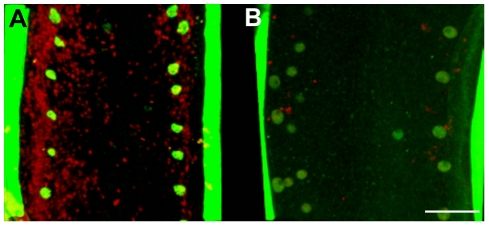
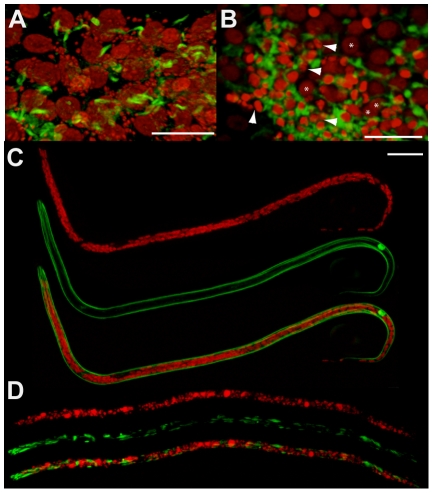
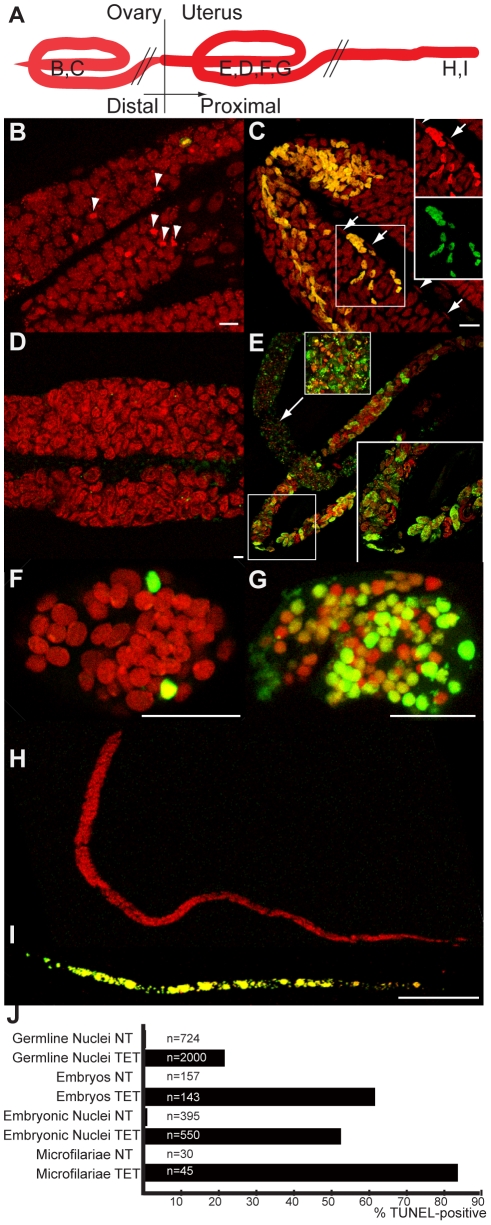
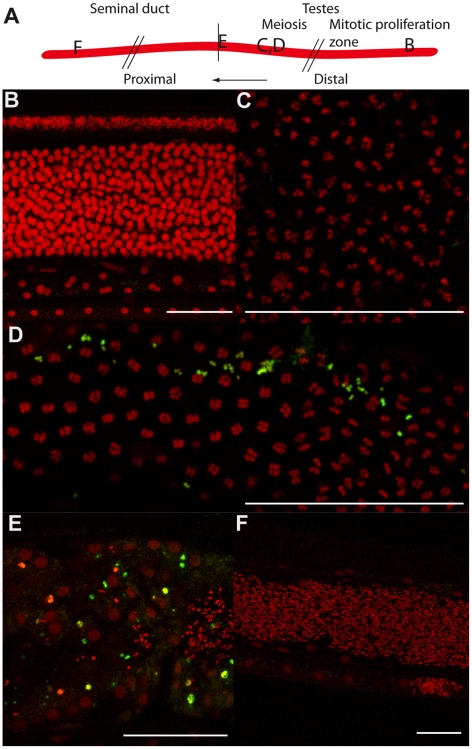
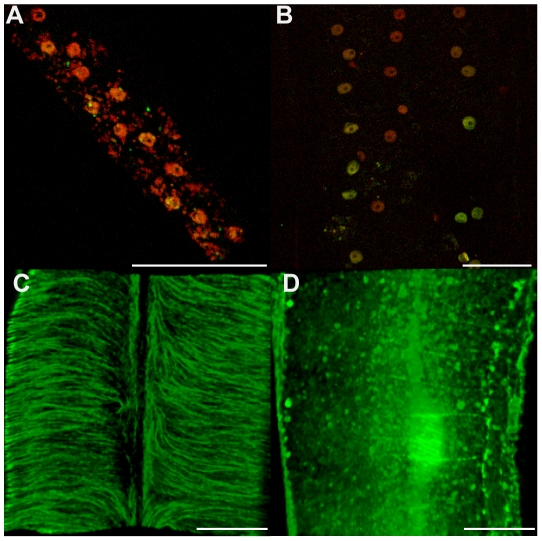
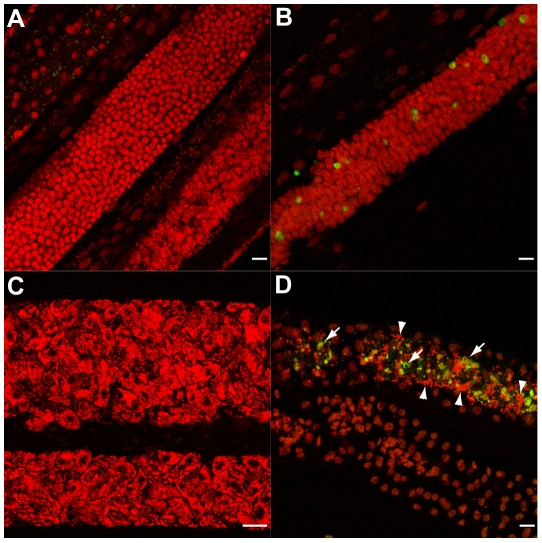
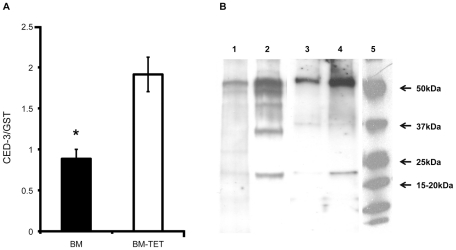
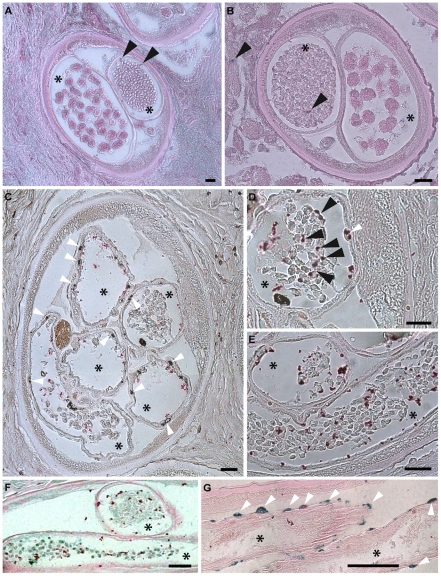
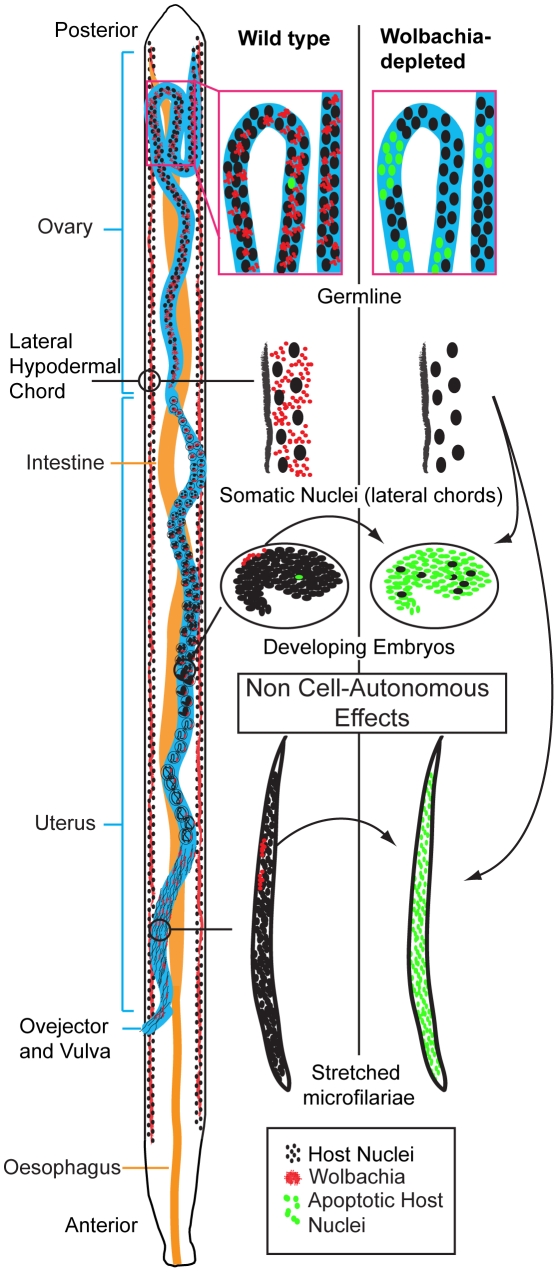
Filarial nematodes maintain a mutualistic relationship with the endosymbiont Wolbachia. Depletion of Wolbachia produces profound defects in nematode development, fertility and viability and thus has great promise as a novel approach for treating filarial diseases. However, little is known concerning the basis for this mutualistic relationship. Here we demonstrate using whole mount confocal microscopy that an immediate response to Wolbachia depletion is extensive apoptosis in the adult germline, and in the somatic cells of the embryos, microfilariae and fourth-stage larvae (L4). Surprisingly, apoptosis occurs in the majority of embryonic cells that had not been infected prior to antibiotic treatment. In addition, no apoptosis occurs in the hypodermal chords, which are populated with large numbers of Wolbachia, although disruption of the hypodermal cytoskeleton occurs following their depletion. Thus, the induction of apoptosis upon Wolbachia depletion is non-cell autonomous and suggests the involvement of factors originating from Wolbachia in the hypodermal chords. The pattern of apoptosis correlates closely with the nematode tissues and processes initially perturbed following depletion of Wolbachia, embryogenesis and long-term sterilization, which are sustained for several months until the premature death of the adult worms. Our observations provide a cellular mechanism to account for the sustained reductions in microfilarial loads and interruption of transmission that occurs prior to macrofilaricidal activity following antibiotic therapy of filarial nematodes.
Overview
The claims and statistics of this paper haven’t been checked yet.
Run the check — free, no account needed. It reads the open-access text and checks the sources it cites.
Integrity signals
Registry
Cites
Statistics
Figures
Verification
Claims the paper makes
The claims and statistics of this paper haven’t been checked yet.
Run the check — free, no account needed. It reads the open-access text and checks the sources it cites.
Claims other papers make about this one
Each is checked against this paper’s own text: does it say what the citing paper says it does?
In the citing paper
“Those studies showed that the elimination of Wolbachia induces the extensive apoptosis of germ cells in adults and of somatic cells in embryos, microfilariae, and L4 larvae but not in hypodermal cords”
From Human and animal dirofilariasis: The emergence of a zoonotic mosaic (2012) · cites this paper as [222]
In the citing paper
“suggesting that symbiotic bacteria regulate apoptosis in the nematodes that host them.”
From Human and animal dirofilariasis: The emergence of a zoonotic mosaic (2012) · cites this paper as [222]
Self-check
Percentages, sums and reported differences re-computed from the paper’s own numbers.
The self-check needs the paper’s full text.
Citations
Cites
Identification of programmed cell death in situ via specific labeling of nuclear DNA fragmentation.
Gavrieli, Y., Sherman, Y., & Ben-Sasson, S. A. (1992) · The Journal of cell biology · doi:10.1083/jcb.119.3.493 · Cited by 9,444
The Nematode Caenorhabditis elegans
Wood, W. B. (1988) · Cold Spring Harbor Laboratory eBooks · Cited by 2,820
Lymphatic filariasis and onchocerciasis
Taylor, M. J., Hoerauf, A., & Bockarie, M. (2010) · The Lancet · doi:10.1016/s0140-6736(10)60586-7 · Cited by 686
Self-citationWolbachia.Bacterial Endosymbionts of Filarial Nematodes
Taylor, M. J., Bandi, C., & Hoerauf, A. M. (2005) · Advances in Parasitology/Advances in parasitology · doi:10.1016/s0065-308x(05)60004-8 · Cited by 425
Self-citationJeremy, B., Cass, B. N., Riegler, M., Witsenburg, J. J., Iturbe‐Ormaetxe, I., McGraw, E. A., & O’Neill, S. L. (2009) · PLoS Pathogens · doi:10.1371/journal.ppat.1000368 · Cited by 373
Hoerauf, A. M., Nissen-Pähle, K., Schmetz, C., Henkle-Dührsen, K., Blaxter, M., Büttner, D. W., Gallin, M. Y., Al-Qaoud, K. M., Lucius, R., & Fleischer, B. (1999) · Journal of Clinical Investigation · doi:10.1172/jci4768 · Cited by 336
Wolbachia Bacteria of Filarial Nematodes
Taylor, M. J., & Hoerauf, A. (1999) · Parasitology Today · doi:10.1016/s0169-4758(99)01533-1 · Cited by 309
Self-citationAnaplasma phagocytophilum and Ehrlichia chaffeensis: subversive manipulators of host cells
Rikihisa, Y. (2010) · Nature Reviews Microbiology · doi:10.1038/nrmicro2318 · Cited by 213
Hoerauf, A. M., Mand, S., Volkmann, L., Büttner, M., Marfo‐Debrekyei, Y., Taylor, M. J., Adjei, O., & Büttner, D. W. (2003) · Microbes and Infection · doi:10.1016/s1286-4579(03)00026-1 · Cited by 205
Self-citationWolbachia Interferes with Ferritin Expression and Iron Metabolism in Insects
Kremer, N., Voronin, D., Charif, D., Mavingui, P., Mollereau, B., & Vavre, F. (2009) · PLoS Pathogens · doi:10.1371/journal.ppat.1000630 · Cited by 202
Self-citation
Research works printed but not linked: 1
- K Srivastava, 2003, Tetracycline, a tool for transmission blocking of Brugia malayi in Mastomys coucha., Curr Sci, 85, 588
Cited by
Sorted by citations
Human and animal dirofilariasis: The emergence of a zoonotic mosaic
Simón, F., Siles-Lucas, M., Morchón, R., González-Miguel, J., Mellado, I., Carretón, E., & Montoya-Alonso, J. A. (2012) · Clinical Microbiology Reviews · doi:10.1128/cmr.00012-12 · Cited by 834
The evolution of parasitism in Nematoda
Blaxter, M., & Koutsovoulos, G. (2014) · Parasitology · doi:10.1017/s0031182014000791 · Cited by 368
Bad guys turned nice? A critical assessment ofWolbachiamutualisms in arthropod hosts
Zug, R., & Hammerstein, P. (2014) · Biological reviews/Biological reviews of the Cambridge Philosophical Society · doi:10.1111/brv.12098 · Cited by 329
The rich somatic life of Wolbachia
Pietri, J. E., DeBruhl, H., & Sullivan, W. (2016) · MicrobiologyOpen · doi:10.1002/mbo3.390 · Cited by 209
Self-citationDarby, A. C., Armstrong, S. D., Bah, G. S., Kaur, G., HUGHES, M. A., Kay, S., Koldkjær, P., Rainbow, L., Radford, A. D., Blaxter, M., et al. (2012) · Genome Research · doi:10.1101/gr.138420.112 · Cited by 194
Landmann, F. (2019) · Microbiology Spectrum · doi:10.1128/microbiolspec.bai-0018-2019 · Cited by 144
Self-citationTaylor, M. J., Hoerauf, A. M., Townson, S., Slatko, B. E., & Ward, S. A. (2013) · Parasitology · doi:10.1017/s0031182013001108 · Cited by 143
Self-citationWolbachia endosymbionts and human disease control
Slatko, B. E., Luck, A. N., Dobson, S. L., & Foster, J. M. (2014) · Molecular and Biochemical Parasitology · doi:10.1016/j.molbiopara.2014.07.004 · Cited by 136
Autophagy regulates Wolbachia populations across diverse symbiotic associations
Voronin, D., Cook, D. A. N., Steven, A., & Taylor, M. J. (2012) · Proceedings of the National Academy of Sciences · doi:10.1073/pnas.1203519109 · Cited by 135
Self-citationWolbachia: Can we save lives with a great pandemic?
LePage, D., & Bordenstein, S. R. (2013) · Trends in Parasitology · doi:10.1016/j.pt.2013.06.003 · Cited by 107
Parasite microbiome project: Grand challenges
Dheilly, N. M., Martínez, J. M., Rosario, K., Brindley, P. J., Fichorova, R. N., Kaye, J. Z., Kohl, K. D., Knoll, L. J., Lukeš, J., Perkins, S. L., et al. (2019) · PLoS Pathogens · doi:10.1371/journal.ppat.1008028 · Cited by 106
Russell, S. L. (2019) · FEMS Microbiology Letters · doi:10.1093/femsle/fnz013 · Cited by 99
Sariola, S., & Gilbert, S. F. (2020) · Microorganisms · doi:10.3390/microorganisms8050746 · Cited by 97
Wolbachia filarial interactions: Wolbachia filarial cellular and molecular interactions
Taylor, M. J., Voronin, D., Johnston, K. L., & Ford, L. (2013) · Cellular Microbiology · doi:10.1111/cmi.12084 · Cited by 97
Self-citationThe symbiotic role of Wolbachia in Onchocercidae and its impact on filariasis
Bouchery, T., Lefoulon, E., Karadjian, G., Nieguitsila, A., & Martin, C. (2012) · Clinical Microbiology and Infection · doi:10.1111/1469-0691.12069 · Cited by 103
Landmann, F., Bain, O., Martin, C., Uni, S., Taylor, M. J., & Sullivan, W. (2012) · Biology Open · doi:10.1242/bio.2012737 · Cited by 81
Self-citationEndosymbiotic bacteria associated with nematodes, ticks and amoebae
Taylor, M. J., Mediannikov, O., Raoult, D., & Greub, G. (2011) · FEMS Immunology & Medical Microbiology · doi:10.1111/j.1574-695x.2011.00916.x · Cited by 79
Self-citationFrom “the Worm” to “the Worms” and Back Again: The Evolutionary Developmental Biology of Nematodes
Haag, E. S., Fitch, D. H. A., & Delattre, M. (2018) · Genetics · doi:10.1534/genetics.118.300243 · Cited by 68
Ramírez-Puebla, S. T., Servín-Garcidueñas, L. E., Ormeño‐Orrillo, E., de León, A. V., Rosenblueth, M., Delaye, L., Martínez, J., & Martínez‐Romero, E. (2015) · Systematic and Applied Microbiology · doi:10.1016/j.syapm.2015.05.005 · Cited by 65
A Cell-Based Screen Reveals that the Albendazole Metabolite, Albendazole Sulfone, Targets Wolbachia
Serbus, L. R., Landmann, F., Bray, W. M., White, P. M., Ruybal, J., Lokey, R. S., Debec, A., & Sullivan, W. (2012) · PLoS Pathogens · doi:10.1371/journal.ppat.1002922 · Cited by 63
Self-citationIdro, R., Opar, B. T., Wamala, J. F., Abbo, C., Onzivua, S., Mwaka, A. D., Kakooza‐Mwesige, A., Mbonye, A. K., & Aceng, J. R. (2016) · International Journal of Infectious Diseases · doi:10.1016/j.ijid.2016.03.002 · Cited by 61
Baquiran, J.-P., Thater, B., Sedky, S., Ley, P. D., Crowley, D. E., & Orwin, P. M. (2013) · PLoS ONE · doi:10.1371/journal.pone.0067425 · Cited by 61
Helminth Microbiomes – A Hidden Treasure Trove?
Jenkins, T. P., Brindley, P. J., Gasser, R. B., & Cantacessi, C. (2018) · Trends in Parasitology · doi:10.1016/j.pt.2018.10.007 · Cited by 62
Iron Necessity: The Secret of Wolbachia's Success?
Gill, A. C., Darby, A. C., & Makepeace, B. L. (2014) · PLoS neglected tropical diseases · doi:10.1371/journal.pntd.0003224 · Cited by 59
Landmann, F., Foster, J. M., Michalski, M. L., Slatko, B. E., & Sullivan, W. (2014) · PLoS neglected tropical diseases · doi:10.1371/journal.pntd.0003096 · Cited by 59
Self-citationMappingWolbachiadistributions in the adultDrosophilabrain
Albertson, R., Tan, V., Leads, R. R., Reyes, M., Sullivan, W., & Casper-Lindley, C. (2013) · Cellular Microbiology · doi:10.1111/cmi.12136 · Cited by 57
Self-citationWolbachia Control Stem Cell Behavior and Stimulate Germline Proliferation in Filarial Nematodes
Foray, V., Pérez‐Jiménez, M. M., Fattouh, N., & Landmann, F. (2018) · Developmental Cell · doi:10.1016/j.devcel.2018.03.017 · Cited by 57
Self-citationTurner, J. D., Sharma, R., Jayoussi, G. A., Tyrer, H. E., Gamble, J., Hayward, L., Priestley, R. S., Murphy, E. A., Davies, J. D., Waterhouse, D., et al. (2017) · Proceedings of the National Academy of Sciences · doi:10.1073/pnas.1710845114 · Cited by 56
Self-citationDefining Brugia malayi and Wolbachia symbiosis by stage-specific dual RNA-seq
Grote, A., Voronin, D., Ding, T., Twaddle, A., Unnasch, T. R., Lustigman, S., & Ghedin, E. (2017) · PLoS neglected tropical diseases · doi:10.1371/journal.pntd.0005357 · Cited by 55
Self-citationA host as an ecosystem: W olbachia coping with environmental constraints
Sicard, M., Dittmer, J., Grève, P., Bouchon, D., & Braquart‐Varnier, C. (2014) · Environmental Microbiology · doi:10.1111/1462-2920.12573 · Cited by 52
Onchocerciasis caused by Onchocerca lupi: an emerging zoonotic infection. Systematic review
Grácio, A., Richter, J., Komnenou, A. T., & Grácio, M. A. A. (2015) · Parasitology Research · doi:10.1007/s00436-015-4535-7 · Cited by 51
Polyanhydride Nanoparticle Delivery Platform Dramatically Enhances Killing of Filarial Worms
Binnebose, A. M., Haughney, S. L., Martin, R. J., Imerman, P. M., Narasimhan, B., & Bellaire, B. H. (2015) · PLoS neglected tropical diseases · doi:10.1371/journal.pntd.0004173 · Cited by 48
Melnikow, E., Xu, S., Liu, J., Bell, A. J., Ghedin, E., Unnasch, T. R., & Lustigman, S. (2013) · PLoS neglected tropical diseases · doi:10.1371/journal.pntd.0002151 · Cited by 47
Glucose and Glycogen Metabolism in Brugia malayi Is Associated with Wolbachia Symbiont Fitness
Voronin, D., Bachu, S., Shlossman, M., Unnasch, T. R., Ghedin, E., & Lustigman, S. (2016) · PLoS ONE · doi:10.1371/journal.pone.0153812 · Cited by 44
Self-citationCao, Y., Tian, B., Ji, X., Shang, S., Lu, C., & Zhang, K. (2015) · Journal of Basic Microbiology · doi:10.1002/jobm.201400816 · Cited by 42
Ioannidis, P., Johnston, K. L., Riley, D. R. J., Kumar, N., White, J. R., Olarte, K. T., Ott, S. H., Tallon, L. J., Foster, J. M., Taylor, M. J., et al. (2013) · BMC Genomics · doi:10.1186/1471-2164-14-639 · Cited by 42
Self-citationSharma, R., Jayoussi, G. A., Tyrer, H. E., Gamble, J., Hayward, L., Guimaraes, A. F., Davies, J. D., Waterhouse, D., Cook, D. A. N., Myhill, L. J., et al. (2016) · Scientific Reports · doi:10.1038/srep23458 · Cited by 40
Self-citationWolbachia Endosymbionts Modify Drosophila Ovary Protein Levels in a Context-Dependent Manner
Christensen, S., Perez-Dulzaides, R., Hedrick, V., Momtaz, A. J. M. Z., Nakayasu, E. S., Paul, L. N., & Serbus, L. R. (2016) · Applied and Environmental Microbiology · doi:10.1128/aem.01255-16 · Cited by 38
Parasite–bacteria interrelationship
Ashour, D. S., & Othman, A. A. (2020) · Parasitology Research · doi:10.1007/s00436-020-06804-2 · Cited by 37
Bacteria- and temperature-regulated peptides modulate β-catenin signaling in Hydra
Taubenheim, J., Willoweit-Ohl, D., Knop, M., Franzenburg, S., He, J., Bosch, T. C. G., & Fraune, S. (2020) · Proceedings of the National Academy of Sciences · doi:10.1073/pnas.2010945117 · Cited by 36
Neglected Tropical Diseases in the Post-Genomic Era
Buscaglia, C. A., Kissinger, J. C., & Agüero, F. (2015) · Trends in Genetics · doi:10.1016/j.tig.2015.06.002 · Cited by 36
Advances in Antiwolbachial Drug Discovery for Treatment of Parasitic Filarial Worm Infections
Bakowski, M. A., & McNamara, C. W. (2019) · Tropical Medicine and Infectious Disease · doi:10.3390/tropicalmed4030108 · Cited by 38
A symbiont's guide to the germline
Russell, S. L., Chappell, L., & Sullivan, W. (2019) · Current topics in developmental biology/Current Topics in Developmental Biology · doi:10.1016/bs.ctdb.2019.04.007 · Cited by 35
Self-citationAnti-Wolbachia therapy for onchocerciasis & lymphatic filariasis
Sulaiman, W. A. W., Tatuene, J. K., Mohamed, M. H., Ramachandran, V., Ching, S. M., Lim, S. M. S., Hashim, H. Z., Mat, L. N. I., Hoo, F. K., & Basri, H. (2019) · The Indian Journal of Medical Research · doi:10.4103/ijmr.ijmr_454_17 · Cited by 35
Guo, Y., Hoffmann, A. A., Xu, X. ‐., Zhang, X., Huang, H., Ju, J., Gong, J., & Hong, X. (2018) · Insect Molecular Biology · doi:10.1111/imb.12518 · Cited by 33
Wolbachia, bottled water, and the dark side of symbiosis
Sullivan, W. (2017) · Molecular Biology of the Cell · doi:10.1091/mbc.e17-02-0132 · Cited by 30
Self-citationGenty, L.-M., Bouchon, D., Raimond, M., & Bertaux, J. (2014) · PLoS ONE · doi:10.1371/journal.pone.0094577 · Cited by 30
The helminth holobiont: a multidimensional host–parasite–microbiota interaction
Hodžić, A., Dheilly, N. M., Cabezas‐Cruz, A., & Berry, D. (2022) · Trends in Parasitology · doi:10.1016/j.pt.2022.11.012 · Cited by 29
Restricted distribution and lateralization of mutualisticWolbachiain theDrosophilabrain
Strunov, A. A., Schneider, D. I., Albertson, R., & Miller, W. J. (2016) · Cellular Microbiology · doi:10.1111/cmi.12639 · Cited by 26
Carpinone, E. M., Li, Z., Mills, M. K., Foltz, C., Brannon, E. R., Carlow, C. K. S., & Starai, V. J. (2018) · PLoS ONE · doi:10.1371/journal.pone.0204736 · Cited by 26
Quek, S., Cook, D. A. N., Wu, Y., Marriott, A. E., Steven, A., Johnston, K. L., Ford, L., Archer, J., Hemingway, J., Ward, S. A., et al. (2022) · Proceedings of the National Academy of Sciences · doi:10.1073/pnas.2120003119 · Cited by 25
Self-citationBrealey, J. C., Lecaudey, L. A., Kodama, M., Rasmussen, J. A., Sveier, H., Dheilly, N. M., Martin, M. D., & Limborg, M. T. (2022) · mBio · doi:10.1128/mbio.00679-22 · Cited by 25
Wolbachia Effect on Drosophila melanogaster Lipid and Carbohydrate Metabolism
Karpova, E. K., Bobrovskikh, М. А., Deryuzhenko, М. А., Shishkina, O. D., & Gruntenko, N. E. (2023) · Insects · doi:10.3390/insects14040357 · Cited by 20
Wolbachia increase germ cell mitosis to enhance the fecundity of Laodelphax striatellus
Guo, Y., Khan, J., Zheng, X., & Wu, Y. (2020) · Insect Biochemistry and Molecular Biology · doi:10.1016/j.ibmb.2020.103471 · Cited by 20
Voronin, D., Guimaraes, A. F., Molyneux, G. R., Johnston, K. L., Ford, L., & Taylor, M. J. (2014) · Parasites & Vectors · doi:10.1186/preaccept-2035540288138337 · Cited by 19
Self-citationEco-evolutionary implications of helminth microbiomes
Salloum, P. M., Jorge, F., Dheilly, N. M., & Poulin, R. (2023) · Journal of Helminthology · doi:10.1017/s0022149x23000056 · Cited by 18
Wolbachia and Lymphatic Filarial Nematodes and Their Implications in the Pathogenesis of the Disease
Setegn, A., Amare, G. A., & Wondmagegn, Y. M. (2024) · Journal of Parasitology Research · doi:10.1155/2024/3476951 · Cited by 18
The shutting down of the insulin pathway: a developmental window for Wolbachia load and feminization
Herran, B., Geniez, S., Delaunay, C., Raimond, M., Lesobre, J., Bertaux, J., Slatko, B. E., & Grève, P. (2020) · Scientific Reports · doi:10.1038/s41598-020-67428-1 · Cited by 18
Wolbachia springs eternal: symbiosis in Collembola is associated with host ecology
Rodrigues, J., Lefoulon, E., Gavotte, L., Perriat‐Sanguinet, M., Makepeace, B. L., Martin, C., & D’Haese, C. A. (2023) · Royal Society Open Science · doi:10.1098/rsos.230288 · Cited by 16
Nag, J. K., Shrivastava, N., Gupta, J., & Misra‐Bhattacharya, S. (2012) · Comparative Immunology Microbiology and Infectious Diseases · doi:10.1016/j.cimid.2012.09.004 · Cited by 16
Host–gut microbiota interactions shape parasite infections in farmed Atlantic salmon
Brealey, J. C., Kodama, M., Rasmussen, J. A., Hansen, S. B., Santos‐Bay, L., Lecaudey, L. A., Hansen, M. A., Fjære, E., Myrmel, L. S., Madsen, L., et al. (2024) · mSystems · doi:10.1128/msystems.01043-23 · Cited by 18
Mills, M. K., McCabe, L. G., Rodrigue, E. M., Lechtreck, K. F., & Starai, V. J. (2023) · PLoS Pathogens · doi:10.1371/journal.ppat.1010777 · Cited by 12
Almeida, F. D. O., & Suesdek, L. (2017) · Parasites & Vectors · doi:10.1186/s13071-017-2332-0 · Cited by 14
Kramer, L. H., & Genchi, C. (2014) · Veterinary Parasitology · doi:10.1016/j.vetpar.2014.03.028 · Cited by 14
Camacho, M., Oliva, M., & Serbus, L. R. (2017) · Biology Open · doi:10.1242/bio.023895 · Cited by 13
Chung, M. C., Basting, P. J., Patkus, R. S., Grote, A., Luck, A. N., Ghedin, E., Slatko, B. E., Michalski, M. L., Foster, J. M., Bergman, C., et al. (2020) · G3 Genes Genomes Genetics · doi:10.1534/g3.120.401534 · Cited by 12
Gene Transfer Agents in Symbiotic Microbes
Christensen, S., & Serbus, L. R. (2020) · Results and problems in cell differentiation · doi:10.1007/978-3-030-51849-3_2 · Cited by 12
Trends in Symbiont-Induced Host Cellular Differentiation
Russell, S. L., & Castillo, J. R. (2020) · Results and problems in cell differentiation · doi:10.1007/978-3-030-51849-3_5 · Cited by 11
Lancaster, J., Mohammad, B., & Abebe, E. (2012) · BMC Research Notes · doi:10.1186/1756-0500-5-688 · Cited by 10
Rana, A. K., Chandra, S., Siddiqi, M. I., & Misra‐Bhattacharya, S. (2013) · Antimicrobial Agents and Chemotherapy · doi:10.1128/aac.02264-12 · Cited by 10
Hegde, S., Marriott, A. E., Pionnier, N. P., Steven, A., Bulman, C. A., Gunderson, E. L., Vogel, I. A., Koschel, M., Ehrens, A., Lustigman, S., et al. (2024) · Frontiers in Microbiology · doi:10.3389/fmicb.2024.1346068 · Cited by 9
Self-citationThe Wolbachia Symbiont: Here, There and Everywhere
Lefoulon, E., Foster, J. M., Truchon, A. R., Carlow, C. K. S., & Slatko, B. E. (2020) · Results and problems in cell differentiation · doi:10.1007/978-3-030-51849-3_16 · Cited by 9
Makepeace, B. L., & Gill, A. C. (2016) · Springer eBooks · doi:10.1007/978-3-319-46859-4_21 · Cited by 9
Master of Puppets: How Microbiota Drive the Nematoda Ecology and Evolution?
Trejo‐Meléndez, V. J., & Contreras-Garduño, J. A. (2025) · Ecology and Evolution · doi:10.1002/ece3.71549 · Cited by 11
Chevignon, G., Foray, V., Pérez‐Jiménez, M. M., Libro, S., Chung, M. C., Foster, J. M., & Landmann, F. (2021) · PLoS neglected tropical diseases · doi:10.1371/journal.pntd.0008935 · Cited by 8
Self-citationThe filarial and the antibiotics: Single or combination therapy using antibiotics for filariasis
Fordjour, F. A., & Kwarteng, A. (2022) · Frontiers in Cellular and Infection Microbiology · doi:10.3389/fcimb.2022.1044412 · Cited by 8
Das, N. C., Chakraborty, P., Nandy, S., Dey, A., Malik, T., & Mukherjee, S. (2023) · Journal of Cellular and Molecular Medicine · doi:10.1111/jcmm.17913 · Cited by 6
Sounart, H., Voronin, D., Masarapu, Y., Chung, M. C., Saarenpää, S., Ghedin, E., & Giacomello, S. (2023) · Nature Communications · doi:10.1038/s41467-023-42237-y · Cited by 7
Self-citationBouchet, C., Deng, Q., & Umair, S. (2022) · Parasitologia · doi:10.3390/parasitologia2020007 · Cited by 7
Keroack, C. D., Wurster, J. I., Decker, C. G., Williams, K. M., Slatko, B. E., Foster, J. M., & Williams, S. A. (2016) · Journal of Parasitology · doi:10.1645/15-872 · Cited by 8
Roder, A. C., & Stock, S. P. (2018) · Journal of Invertebrate Pathology · doi:10.1016/j.jip.2018.02.015 · Cited by 6
Landmann, F. (2020) · John Wiley & Sons, Inc. eBooks · doi:10.1128/9781683670261.ch10 · Cited by 6
Self-citationNag, J. K., Shrivastava, N., Chahar, D., Gupta, C. L., Bajpai, P., & Misra‐Bhattacharya, S. (2014) · PLoS neglected tropical diseases · doi:10.1371/journal.pntd.0002930 · Cited by 6
RetractedHost environment shapes filarial parasite fitness and Wolbachia endosymbionts dynamics
Fercoq, F., Cormerais, C., Remion, E., Gal, J., Plisson, J., Fall, A., Alonso, J., Vallarino-Lhermitte, N., Hübner, M. P., Kohl, L., et al. (2025) · PLoS Pathogens · doi:10.1371/journal.ppat.1013301 · Cited by 5
Self-citationBacteria associated with ovine gut parasites Trichuris ovis and Haemonchus contortus
Bhat, A. H., Tak, H., Ganai, B. A., Malik, I. M., & Bhat, T. (2023) · Journal of Helminthology · doi:10.1017/s0022149x23000573 · Cited by 5
A Rare Case Report of a Human Dirofilaria repens Infection
Schatz, C., Füßl, M., Caf, Y., Schmitz, K., Kresse, D., Ludwig, W., Walochnik, J., & Knabl, L. (2025) · Microorganisms · doi:10.3390/microorganisms13030476 · Cited by 5
Gangwar, M., Jha, R., Goyal, M., & Srivastava, M. (2018) · Vaccine · doi:10.1016/j.vaccine.2018.12.015 · Cited by 5
Shrivastava, S. R., Gupta, A., & Kaur, C. D. (2020) · Current Drug Targets · doi:10.2174/1389450121666200630111250 · Cited by 5
Marriott, A. E., Silva, J. F., Pionnier, N. P., Sjoberg, H. T., Archer, J., Steven, A., Kempf, D. J., Taylor, M. J., & Turner, J. D. (2022) · PLoS neglected tropical diseases · doi:10.1371/journal.pntd.0010474 · Cited by 5
Self-citationNematodes as Models for Symbiosis
Heppert, J. K., Ransone, E. M., Grossman, A. S., Mauer, T. J., & Goodrich‐Blair, H. (2022) · CABI eBooks · doi:10.1079/978178924881.0005 · Cited by 5
Repurposed Drugs That Activate Autophagy in Filarial Worms Act as Effective Macrofilaricides
Voronin, D., Tricoche, N., Peguero, R., Kaminska, A. M., Ghedin, E., Sakanari, J. A., & Lustigman, S. (2024) · Pharmaceutics · doi:10.3390/pharmaceutics16020256 · Cited by 4
Self-citationA filarial parasite potentially associated with the health burden on domestic chickens in Japan
Hayashi, N., Hosokawa, K., Yamamoto, Y., Kodama, S., Kurokawa, A., Nakao, R., & Nonaka, N. (2024) · Scientific Reports · doi:10.1038/s41598-024-55284-2 · Cited by 4
Bah, G. S., Tanya, V. N., & Makepeace, B. L. (2015) · Veterinary Parasitology · doi:10.1016/j.vetpar.2015.06.005 · Cited by 4
Characterization of innate immunity genes in the parasitic nematode Brugia malayi
Libro, S., Slatko, B. E., & Foster, J. M. (2016) · Symbiosis · doi:10.1007/s13199-015-0374-7 · Cited by 4
The untapped cell biology of neglected tropical diseases
Sullivan, W. (2016) · Molecular Biology of the Cell · doi:10.1091/mbc.e15-11-0771 · Cited by 3
Self-citationBodri, M. S. (2021) · doi:10.1002/9781119569831.ch21 · Cited by 3
Current Antifilarial Drugs – Mechanisms of Action
Geary, T. G., Long, A., & Tritten, L. (2022) · Wiley eBooks · doi:10.1002/9783527823413.ch10 · Cited by 3
Berardi, L., Colvin, A., West, M., Odorizzi, G., & Starai, V. J. (2025) · PLoS Pathogens · doi:10.1371/journal.ppat.1013383 · Cited by 2
Parasite-associated microbiomes: An unseen microenvironment
McCann, P., Megaw, J., & Gobert, G. N. (2026) · Advances in Parasitology/Advances in parasitology · doi:10.1016/bs.apar.2026.03.001 · Cited by 2
Rinaldi, G., Meseguer, C. P., Cantacessi, C., & Cortés, A. (2024) · Advances in experimental medicine and biology · doi:10.1007/978-3-031-60121-7_1 · Cited by 2
Metadata
- Authors
- Landmann, F., Voronin, D., Sullivan, W., & Taylor, M. J.
- Affiliations
- Liverpool School of Tropical Medicine (GB)
- University of California, Santa Cruz (US)
- Corresponding author
- Taylor, Mark J.
- Venue
- PLoS Pathogens
- Publisher
- Public Library of Science (PLoS)
- Published
- 2011-11-03
- Volume
- 7
- Issue
- 11
- Pages
- e1002351
- ISSN
- 1553-7366 (ISSN-L)
- 1553-7374
- PMC
- PMC3207916
- OpenAlex
- W2135804039
- Cited by
- 134
- References
- 34
- Citations by year
- 2026: 6 · 2025: 9 · 2024: 8 · 2023: 10 · 2022: 11 · 2021: 5 · 2020: 15 · 2019: 7 · 2018: 12 · 2017: 6 · 2016: 11 · 2015: 7 · 2014: 10 · 2013: 7 · 2012: 9
- FWCI
- 5.83
- Type
- journal article
- Language
- en
- Open access
- gold
- doi.org
- Locations
- PLoS Pathogens (publishedVersion, cc-by)
- PubMed Central (publishedVersion, cc-by)
- PubMed (publishedVersion)
- LSTM Online Archive (Liverpool School of Tropical Medicine) (acceptedVersion)
- DOAJ (DOAJ: Directory of Open Access Journals) (submittedVersion, cc-by-sa)
- Funders
- Bill and Melinda Gates Foundation
- Topics
- Health Sciences › Medicine › Infectious Diseases › Parasitic Diseases Research and Treatment
- Life Sciences › Immunology and Microbiology › Parasitology › Parasites and Host Interactions
- Life Sciences › Agricultural and Biological Sciences › Plant Science › Nematode management and characterization studies
- Keywords
- filarial nematodes, apoptosis, antibiotic therapy, cytoskeleton disruption, embryonic development, microfilariae, fourth-stage larvae, transmission interruption
- MeSH terms
- Animals, Anti-Bacterial Agents, Doxycycline, Female, Filariasis, Gerbillinae, Humans, Larva, Male, Symbiosis, Tetracycline, Helminth Proteins, Brugia malayi, Apoptosis, In Situ Nick-End Labeling, Wolbachia, Caspase 3
About these checks
Registry, retraction, Cites and statistics results are computed, not judged, with one exception: a printed reference that no index lists is read once by a model before it counts as a citation error. Claims are extracted by a model and kept only when their quote appears verbatim in the text; each cited source is then checked, with a model’s help, for whether it says what the claim relies on. Those verdicts can be wrong — read the claim’s quote and the cited source before relying on one.
Statistics and arithmetic are recomputed, not judged.
Confidence bands are shown only for fields calibrated on our annotated test set. None is calibrated yet, so no band is shown.
What counts as a claim ›How we measure confidence ›How we check this ›
Are you an author, or do you see a problem with this page? Request a review
