

Cryptococcus neoformans urease affects the outcome of intracellular pathogenesis by modulating phagolysosomal pH
Open accessThe DOI matches its Crossref record; 104 of the 105 references it cites were found in a registry or an index.
Abstract
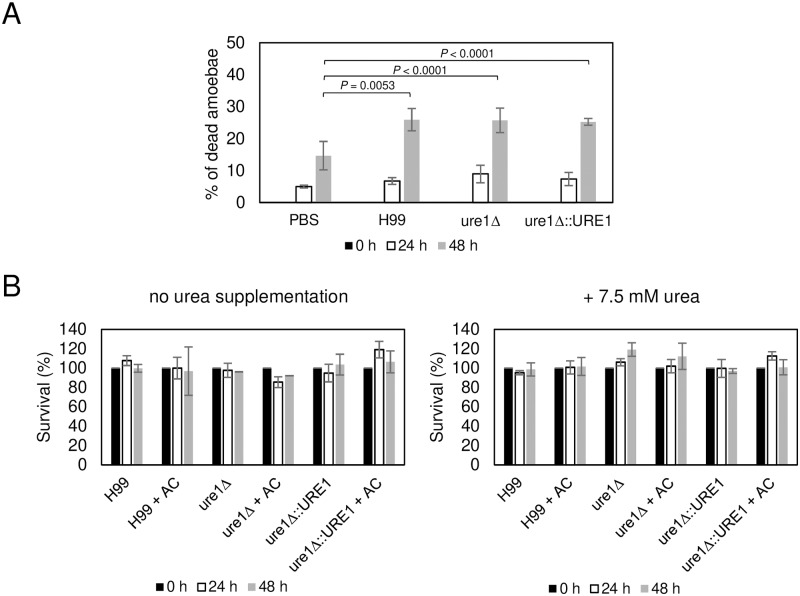
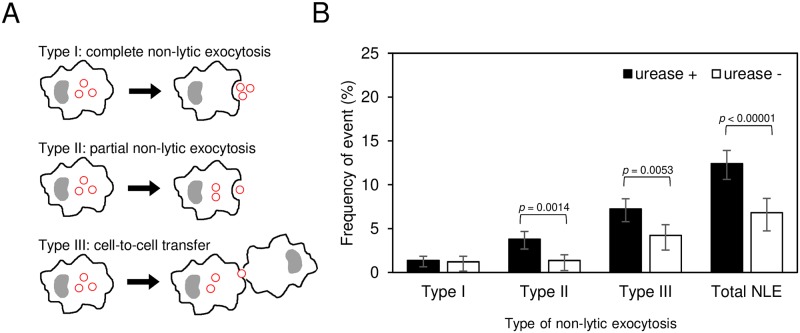
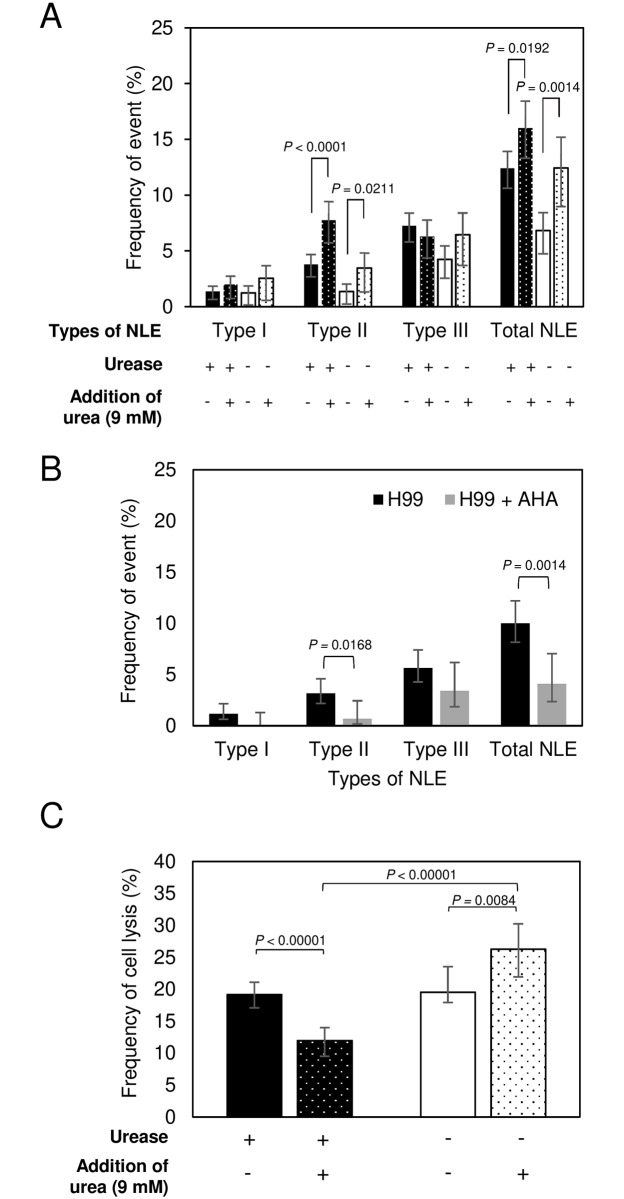
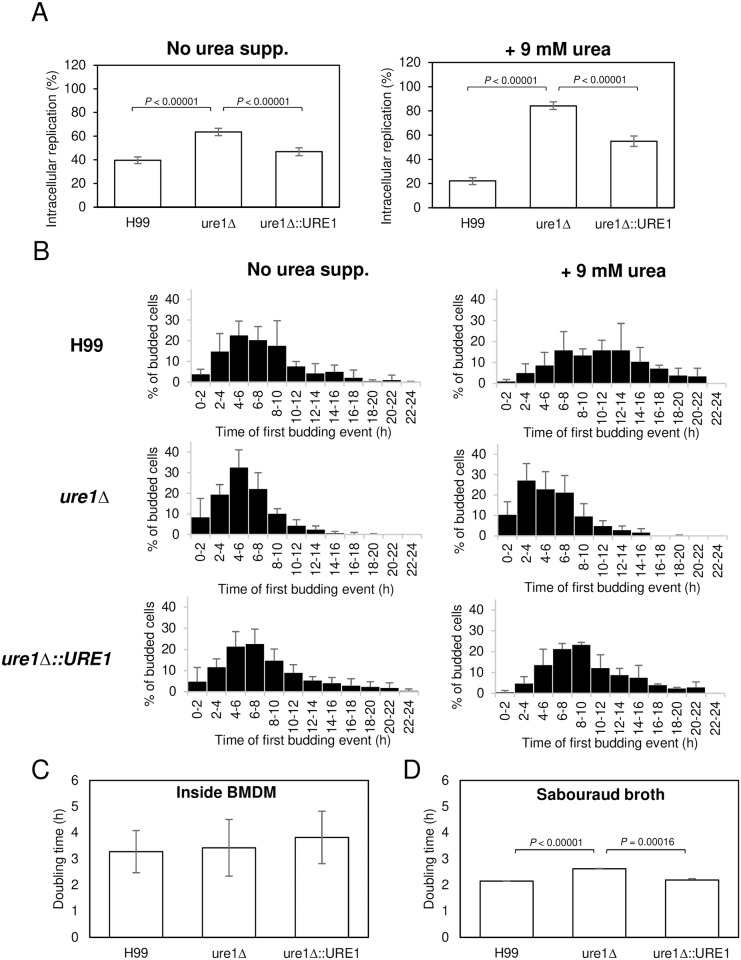
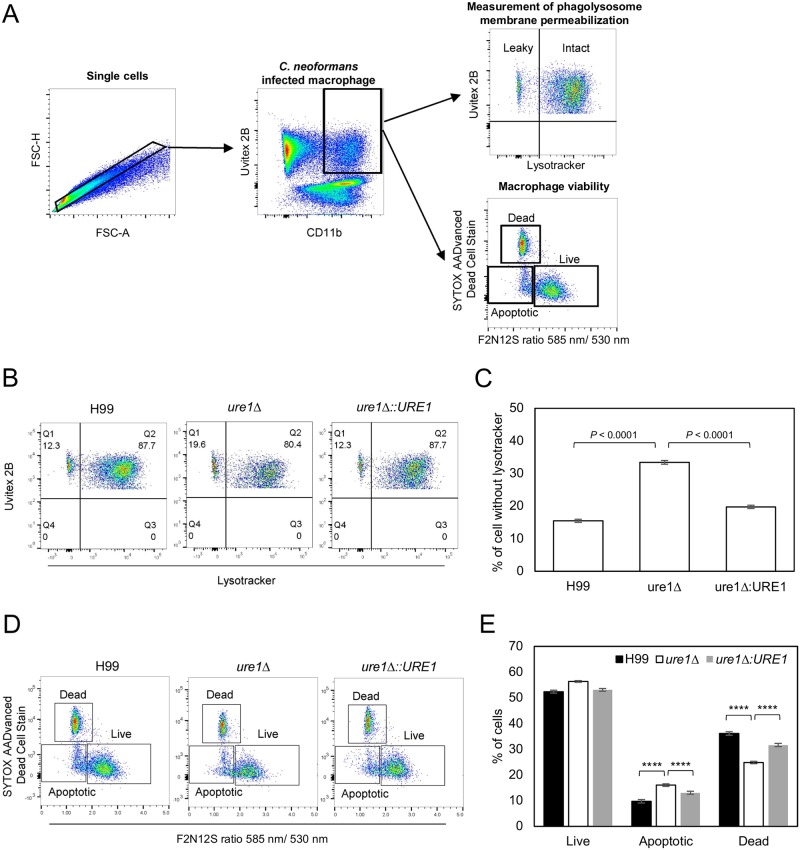
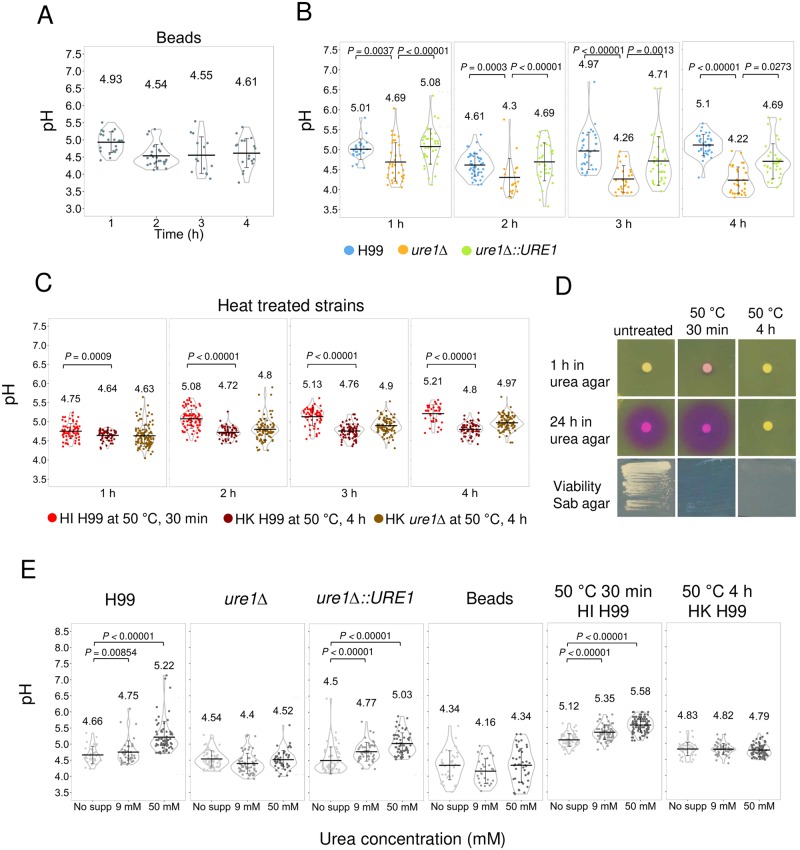
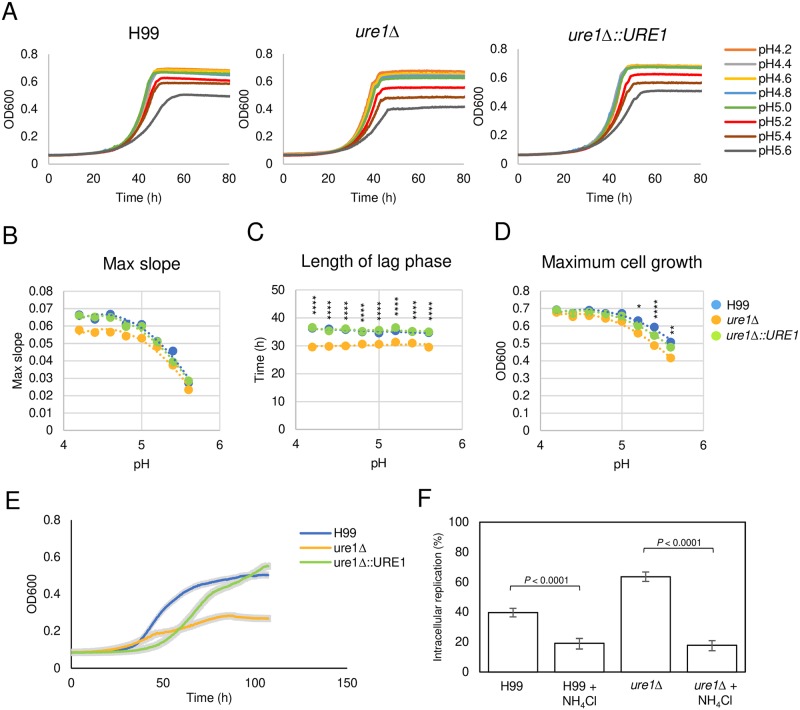
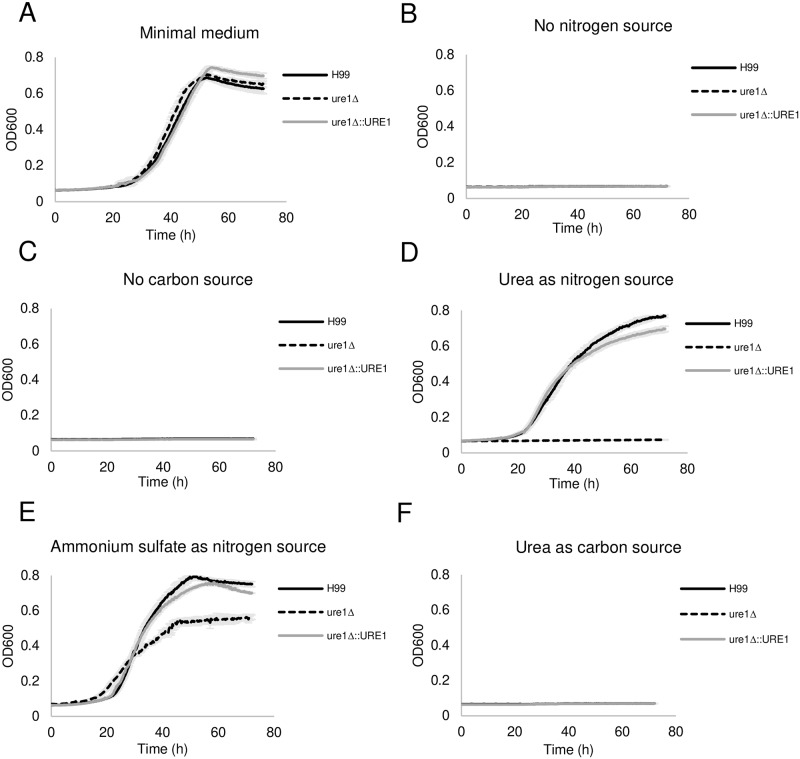
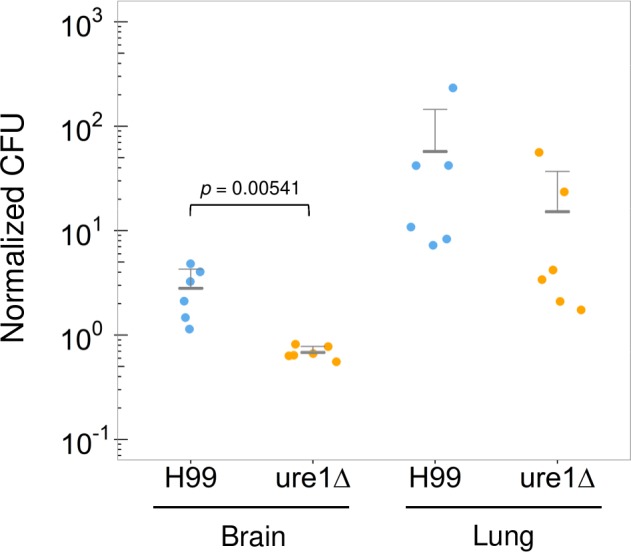
Cryptococcus neoformans is a facultative intracellular pathogen and its interaction with macrophages is a key event determining the outcome of infection. Urease is a major virulence factor in C. neoformans but its role during macrophage interaction has not been characterized. Consequently, we analyzed the effect of urease on fungal-macrophage interaction using wild-type, urease-deficient and urease-complemented strains of C. neoformans. The frequency of non-lytic exocytosis events was reduced in the absence of urease. Urease-positive C. neoformans manifested reduced and delayed intracellular replication with fewer macrophages displaying phagolysosomal membrane permeabilization. The production of urease was associated with increased phagolysosomal pH, which in turn reduced growth of urease-positive C. neoformans inside macrophages. Interestingly, the ure1 mutant strain grew slower in fungal growth medium which was buffered to neutral pH (pH 7.4). Mice inoculated with macrophages carrying urease-deficient C. neoformans had lower fungal burden in the brain than mice infected with macrophages carrying wild-type strain. In contrast, the absence of urease did not affect survival of yeast when interacting with amoebae. Because of the inability of the urease deletion mutant to grow on urea as a sole nitrogen source, we hypothesize urease plays a nutritional role involved in nitrogen acquisition in the environment. Taken together, our data demonstrate that urease affects fitness within the mammalian phagosome, promoting non-lytic exocytosis while delaying intracellular replication and thus reducing phagolysosomal membrane damage, events that could facilitate cryptococcal dissemination when transported inside macrophages. This system provides an example where an enzyme involved in nutrient acquisition modulates virulence during mammalian infection.
Overview
The claims and statistics of this paper haven’t been checked yet.
Free: it reads the open-access text and checks the first 5 claims that cite a source we can check. Create a free account to check every claim.
Integrity signals
Registry
Cites
Statistics
Figures
Verification
Claims the paper makes
The claims and statistics of this paper haven’t been checked yet.
Free: it reads the open-access text and checks the first 5 claims that cite a source we can check. Create a free account to check every claim.
Claims other papers make about this one
Each is checked against this paper’s own text: does it say what the citing paper says it does?
The source backs part of the claim, not all of it — or backs it for a different population, condition or comparison.
In the citing paper
“this increase in pH results in yeast entering into a quiescent state, in which intracellular replication is delayed [25, 49].”
From Mechanisms of fungal dissemination (2021) · cites this paper as [49]
Experimental — accuracy not yet measuredIn the citing paper
“C. neoformans promotes vomocytosis through its expression of urease [49].”
From Mechanisms of fungal dissemination (2021) · cites this paper as [49]
Self-check
Percentages, sums and reported differences re-computed from the paper’s own numbers.
The self-check needs the paper’s full text.
Citations
Cites
Global burden of disease of HIV-associated cryptococcal meningitis: an updated analysis
Rajasingham, R., Smith, R. M., Park, B. J., Jarvis, J. N., Govender, N. P., Chiller, T. M., Denning, D. W., Loyse, A., & Boulware, D. R. (2017) · The Lancet Infectious Diseases · doi:10.1016/s1473-3099(17)30243-8 · Cited by 1,861
Eaton, K. A., Brooks, C. L., Morgan, D. R., & Krakowka, S. (1991) · Infection and Immunity · doi:10.1128/iai.59.7.2470-2475.1991 · Cited by 691
The position of lysosomes within the cell determines their luminal pH
Johnson, D. E., Ostrowski, P., Jaumouillé, V., & Grinstein, S. (2016) · Journal of Cell Biology · doi:10.1083/jcb.201507112 · Cited by 590
Retro-orbital injections in mice
Yardeni, T., Eckhaus, M., Morris, H. D., Huizing, M., & Hoogstraten-Miller, S. (2011) · Lab Animal · doi:10.1038/laban0511-155 · Cited by 528
Urease as a Virulence Factor in Experimental Cryptococcosis
Cox, G. M., Mukherjee, J., Cole, G. T., Casadevall, A., & Perfect, J. R. (2000) · Infection and Immunity · doi:10.1128/iai.68.2.443-448.2000 · Cited by 522
Self-citationSteenbergen, J. N., Shuman, H. A., & Casadevall, A. (2001) · Proceedings of the National Academy of Sciences · doi:10.1073/pnas.261418798 · Cited by 511
Self-citationCryptococcus neoformans Is a Facultative Intracellular Pathogen in Murine Pulmonary Infection
Feldmesser, M., Kress, Y., Novikoff, P., & Casadevall, A. (2000) · Infection and Immunity · doi:10.1128/iai.68.7.4225-4237.2000 · Cited by 423
Self-citationPhagosome Extrusion and Host-Cell Survival after Cryptococcus neoformans Phagocytosis by Macrophages
Alvarez, M., & Casadevall, A. (2006) · Current Biology · doi:10.1016/j.cub.2006.09.061 · Cited by 414
Self-citationEvidence of a Role for Monocytes in Dissemination and Brain Invasion by Cryptococcus neoformans
Charlier, C., Nielsen, K., Daou, S., Brigitte, M., Chretien, F., & Dromer, F. (2009) · Infection and Immunity · doi:10.1128/iai.01065-08 · Cited by 362
Pathogen Cell-to-Cell Variability Drives Heterogeneity in Host Immune Responses
Avraham, R., Haseley, N., Brown, D., Penaranda, C., Jijon, H. B., Trombetta, J. J., Satija, R., Shalek, A. K., Xavier, R. J., Regev, A., et al. (2015) · Cell · doi:10.1016/j.cell.2015.08.027 · Cited by 335
Research works printed but not linked: 1
- Osterholzer JJ, Surana R, Milam JE, Montano GT, Chen G-H, Sonstein J, et al Cryptococcal Urease Promotes the Accumulation of Immature Dendritic Cells and a Non-Protective T2 Immune Response within the Lung. Am J Pathol. 2009; 174: 932– 943. doi: 10.2353/ajpath.2009.080673 19218345 PMC2665753 · DOI
Cited by
Items 101–137 of 137
Silva, V. K. A., Min, S., Yoo, K., & Fries, B. C. (2024) · Journal of Fungi · doi:10.3390/jof10040279 · Cited by 1
“We synthesized the observations of this study in Figure 8. organelle [12].”
BackgroundMethodResultInfluentialIvanov, M., Stojković, D. S., & Sokóvić, M. (2025) · Springer eBooks · doi:10.1007/978-981-96-1305-2_7 · Cited by 2
Vomocytosis of Cryptococcus neoformans from Macrophages: from discovery to current understanding
Onyishi, C. U. (2025) · Biomedical Journal · doi:10.1016/j.bj.2025.100891 · Cited by 1
Mechanisms of chronic infection: The multificated strategy of Cryptococcus
Qian, S., Fang, D., Fu, H., Wu, W., & Du, W. (2025) · Fungal Biology Reviews · doi:10.1016/j.fbr.2025.100469 · Cited by 1
A review of the current anti-Cryptococcus antifungals and emerging treatment strategies
Maliehe, M., Rapeso, P. M., Mdana, K., McQuire, C. K., Moukangwe, L., Ntshangase, N. F., Mjokane, N., Skosana, Z. T., Ogundeji, A. O., Folorunso, O. S., et al. (2026) · New Microbes and New Infections · doi:10.1016/j.nmni.2026.101735 · Cited by 1
Novel Inhibitors Targeting Urease Promote Fungicidal and Antivirulence Effects in Cryptococcus
Barreto, T. L., Costa, N. E. M., Freire, N. M. L., de Almeida, L. C., Miguel, R. D. A., Costa-Lotufo, L. V., Silva-Rodrigues, G., da Silva, C. M., de Aquino, T. M., Alberto, E. E., et al. (2026) · ACS Omega · doi:10.1021/acsomega.6c03740 · Cited by 1
Thompson, G. R., & Patterson, T. F. (2022) · Elsevier eBooks · doi:10.1016/b978-0-323-75608-2.00249-4 · Cited by 1
Andrade-Silva, L. E., Vilas-Boas, A., Paim, K. F., Andrade-Silva, J., Santos, D. A., Ferreira, T. B., Borges, A. S., Mora, D. J., Melhem, M. D. S. C., & Silva-Vergara, M. L. (2023) · Journal of Fungi · doi:10.3390/jof9090889 · Cited by 1
“Urease is an enzyme that acts in phagosomal acidification by hydrolyzing urea to generate ammonia [70].”
BackgroundZebrafish Model System in Antimicrobial Drug Discovery
Pamanji, R. (2020) · Springer eBooks · doi:10.1007/978-981-15-1695-5_30 · Cited by 1
Infections by Cryptococcus species
Rossi, S. A., & Zaragoza, Ó. (2020) · Elsevier eBooks · doi:10.1016/b978-0-12-819990-9.00008-1 · Cited by 2
Patiño-Medina, J. A., Camacho, E., & Casadevall, A. (2026) · bioRxiv (Cold Spring Harbor Laboratory) · doi:10.64898/2026.02.06.704083 · Cited by 1
Self-citationVomocytosis of Cryptococcus neoformans cells from murine, bone marrow-derived dendritic cellsPreprint
Pacifici, N. J., Cruz‐Acuña, M., Diener, A., Senthil, N., Han, H., & Lewis, J. S. (2022) · bioRxiv (Cold Spring Harbor Laboratory) · doi:10.1101/2022.03.28.486165
Dyląg, M. (2022) · Postępy Mikrobiologii - Advancements of Microbiology · doi:10.2478/am-2022-025
Gupta, M. K., Tilak, R., Pal, N., Singh, A. K., Chakravarty, J., & Kumar, B. (2023) · Avicenna Journal of Clinical Microbiology and Infection · doi:10.34172/ajcmi.2023.3367 · Cited by 1
Santos, S. R. D. (2022) · Digital Library of Theses and Dissertations (Universidade de São Paulo) · doi:10.11606/t.42.2022.tde-22062023-154055
Semi-synthetic glycoconjugate vaccine candidate against Cryptococcus neoformansPreprint
Crawford, C. J., Liporagi-Lopes, L. C., Coelho, C., dos Santos, S. R., Nicola, A. M., Wear, M. P., Vij, R., Oscarson, S., & Casadevall, A. (2024) · bioRxiv (Cold Spring Harbor Laboratory) · doi:10.1101/2024.02.02.578725
Self-citationUreases as drug targets in fungal infections
Martinelli, A. H. S., Perin, A. P. A., & Lopes, F. C. (2024) · Elsevier eBooks · doi:10.1016/b978-0-323-91800-8.00003-5
Muir, C. F., Reyes‐Aldasoro, C. C., Ellett, F. E., Prajsnar, T. K., Ho, Y. X., Bernut, A., Loynes, C. A., Elworthy, S., Bowden, K. A., Cadbury, A. J., et al. (2024) · bioRxiv (Cold Spring Harbor Laboratory) · doi:10.1101/2024.02.29.582694
“Alternatively, the failure of phagosomes to fuse with other organelles may represent a failure of maturation and potentially trigger reopening, similar to non-lytic exocytosis in which alkalinisation promotes phagosome reopening 25,26 .”
BackgroundMota, C., Kim, K., Son, Y. J., Thak, E. J., Lee, S., Kim, J.-E., Yoon, J., Kang, M., Hwang, H., Bahn, Y., et al. (2024) · eLife · doi:10.7554/elife.103729.1
Ifiora, G. C., Sule, I., Ekarika, E., Opara, C. D., & Adebayo, H. (2025) · Cureus · doi:10.7759/cureus.81698 · Cited by 2
“Moderate correlations have been observed between serum zinc levels and CD4 cell counts, with significant zinc deficiency noted at various stages of illness among individuals living with HIV/AIDS [52,53].”
Viana, R., Couceiro, D., Newton, W. E., Coutinho, L. L., Dias, Ó., Coelho, C., & Teixeira, M. C. (2025) · bioRxiv (Cold Spring Harbor Laboratory) · doi:10.1101/2025.04.02.646762
“…urea, and creatinine [77] Additionally, uric acid enhances the production of key cryptococcal virulence factors, including capsule and urease, an enzyme required for full fitness at mammalian pH and dissemination to the brain [78], C. neoformans capsule is induced in the presence of uric acid [79].”
Self-citationImpact of sodium lactate as a carbon source in the polysaccharide of Cryptococcus species
Rodrigues, M., Araújo, G. R. D. S., Alves, V., & Frasés, S. (2025) · Academia molecular biology and genomics. · doi:10.20935/acadmolbiogen7675
Mota, C., Kim, K., Son, Y. J., Thak, E. J., Lee, S., Kim, J.-E., Yoon, J., Kang, M., Hwang, H., Bahn, Y., et al. (2025) · eLife · doi:10.7554/elife.103729.2 · Cited by 1
Silva, A. G., Costa, R. P., Calegari-Alves, Y. P., Campos, A. R., Carvalho, L. O., Konrath, E. L., Beys‐da‐Silva, W. O., & Santi, L. (2025) · Microbial Pathogenesis · doi:10.1016/j.micpath.2025.107806 · Cited by 1
Colonization of the central nervous system as a key factor in the Cryptococcus gattii pathogenicity
de Freitas, G. J. C., Gouveia‐Eufrásio, L., Emídio, E. C. P., Peres, N. T. A., & Santos, D. A. (2025) · Virulence · doi:10.1080/21505594.2025.2594289
Rangdist, S., Kanklang, E., Pakdeesiriwong, N., Penkhrue, W., Wangboon, C., Weeranantanapan, O., Chumkiew, S., Chantree, P., Martviset, P., Chayakulkeeree, M., et al. (2026) · bioRxiv (Cold Spring Harbor Laboratory) · doi:10.64898/2026.01.30.702728
Wu, X., Ni, Q., Chen, J., Xing, H., Zheng, P., Wu, D., Zhang, S., & Lu, Z. (2026) · Virulence · doi:10.1080/21505594.2026.2655032
Gerbig, G. R., Casadevall, A., Raja, S., Sonnenberg, J. L., & Wear, M. P. (2026) · bioRxiv (Cold Spring Harbor Laboratory) · doi:10.64898/2026.06.30.735596
“C. neoformans is also a urease-positive yeast and hydrolyzes urea to ammonia to modulate the pH of its environment, particularly using it to survive the host phagolysosome (31, 42).”
Self-citationCellular Coordination of Transcription Factors and Regulatory Genes for Cryptococcal Virulence
Folorunso, O. S., & Sebolai, O. M. (2026) · Cellular Microbiology · doi:10.1155/cmi/4775883
Tavares, M. C., Mendes, M. M. C., Guimarães, A. S., Barros, V. P. D. O., Landell, M. F., & Santos, J. C. C. (2026) · Microchemical Journal · doi:10.1016/j.microc.2026.119024
Yu, S.-R., Jang, Y.-B., Choi, J. T., & Bahn, Y. (2026) · Current Opinion in Microbiology · doi:10.1016/j.mib.2026.102802 · Cited by 1
Sánchez‐León, E., Bhalla, K., French, V., Beskrovnaya, P., Parmar, S., Hu, G., Lagace, M. A., Thanasack, S., Foster, E. J., Tocheva, E. I., et al. (2026) · Infection and Immunity · doi:10.1128/iai.00098-26 · Cited by 1
Calegari-Alves, Y. P., Cardozo, L. C., Beys‐da‐Silva, W. O., & Santi, L. (2026) · ACS Omega · doi:10.1021/acsomega.6c04202
Virulence factors of Cryptococcus neoformans and Cryptococcus gattii : two sides of the same coin
de Jesus, D. F. F., Brujas, L. D., Barreto, T. L., da Costa, L. S., Spadari, C. D. C., & Ishida, K. (2026) · Future Microbiology · doi:10.1080/17460913.2026.2722813 · Cited by 1
Carbon and nitrogen sources can fuel fungal virulence
Patiño-Medina, J. A., & Casadevall, A. (2026) · Infection and Immunity · doi:10.1128/iai.00460-26
“C. neoformans produces ammonia from urea, using ammonia as a nitrogen source, and urease activity is involved in survival at the acidic pH of phagolysosomes, supports brain dissemination (75, 76), and affects melanization (76).”
Self-citationElgammal, Y., Martinez, R. I. G., Niño, C. L. C., & Martinez, L. R. (2026) · npj Fungal Science · doi:10.1038/s44512-026-00007-y
“…A decreases C. neoformans phagocytosis and stimulates phagocyte intracellular killing C. neoformans is a facultative intracellular pathogen that survives and replicates within host macrophages by inhibiting phagolysosome maturation 37 and utilizing urease to neutralize acidic environments 38 .”
Metadata
- Authors
- Fu, M. S., Coelho, C., De Leon-Rodriguez, C. M., Rossi, D. C. P., Camacho, E., Jung, E. H., Kulkarni, M., & Casadevall, A.
- Affiliations
- Johns Hopkins University (US)
- Albert Einstein College of Medicine (US)
- Corresponding author
- Casadevall, Arturo
- ORCID
- Venue
- PLOS Pathogens
- Publisher
- Public Library of Science (PLoS)
- Published
- 2018-06-15
- Volume
- 14
- Issue
- 6
- Pages
- e1007144
- ISSN
- 1553-7366 (ISSN-L)
- 1553-7374
- PMC
- PMC6021110
- OpenAlex
- W2807746956
- Cited by
- 138
- References
- 105
- Citations by year
- 2026: 14 · 2025: 17 · 2024: 18 · 2023: 21 · 2022: 18 · 2021: 13 · 2020: 19 · 2019: 14 · 2018: 3
- FWCI
- 9.55
- Type
- journal article
- Language
- en
- Update notices
- new_version (2018-06-27)
- Open access
- gold
- doi.org
- Licence
- Locations
- PLoS Pathogens (publishedVersion, cc-by)
- Europe PMC (PubMed Central) (publishedVersion, cc-by)
- PubMed Central (publishedVersion, cc-by)
- PubMed (publishedVersion)
- DOAJ (DOAJ: Directory of Open Access Journals) (submittedVersion, cc-by-sa)
- Figshare (submittedVersion, cc-by)
- Funders
- National Institutes of Health (5r01hl059842-23, 5r01ai052733-16, R01HL059842, 5R01AI052733, 5R37AI033142, 5r37ai033142-24)
- National Heart, Lung, and Blood Institute (R01-HL059842)
- National Institute of Allergy and Infectious Diseases (R37-AI033142, R01-AI052733, R01AI033774)
- Topics
- Health Sciences › Medicine › Infectious Diseases › Fungal Infections and Studies
- Life Sciences › Biochemistry, Genetics and Molecular Biology › Endocrinology › Legionella and Acanthamoeba research
- Life Sciences › Immunology and Microbiology › Microbiology › Bacterial Infections and Vaccines
- Keywords
- Cryptococcus neoformans, urease, macrophage interaction, intracellular pathogenesis, intracellular replication, fungal virulence, nitrogen acquisition, brain infection
- MeSH terms
- Animals, Brain, Cells, Cultured, Cryptococcosis, Cryptococcus neoformans, Female, Hydrogen-Ion Concentration, Macrophages, Mice, Inbred C57BL, Phagosomes, Urease, Virulence, Virulence Factors, Mice
About these checks
Registry, retraction, Cites and statistics results are computed, not judged, with one exception: a printed reference that no index lists is read once by a model before it counts as a citation error. Claims are extracted by a model and kept only when their quote appears verbatim in the text; each cited source is then checked, with a model’s help, for whether it says what the claim relies on. Those verdicts can be wrong — read the claim’s quote and the cited source before relying on one.
Statistics and arithmetic are recomputed, not judged.
Confidence bands are shown only for fields calibrated on our annotated test set. None is calibrated yet, so no band is shown.
What counts as a claim ›How we measure confidence ›How we check this ›
Are you an author, or do you see a problem with this page? Request a review
Data sources
Bibliographic data: Semantic Scholar, OpenAlex, Crossref.
Contains information from the Semantic Scholar Academic Graph Datasets, made available under the ODC Attribution License (ODC-BY 1.0).
Semantic Scholar’s data is described in: Kinney, R., et al. (2023). The Semantic Scholar Open Data Platform. arXiv:2301.10140.
