

Safety and Efficacy of Intermittent Colonic Exoperistalsis Device to Treat Chronic Constipation: A Prospective Multicentric Clinical Trial
Open accessThe DOI matches its Crossref record; 59 of the 59 references it cites were found in a registry or an index.
Abstract
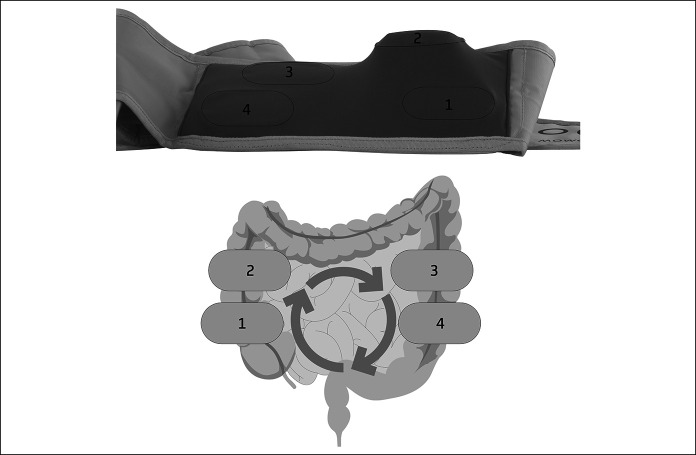
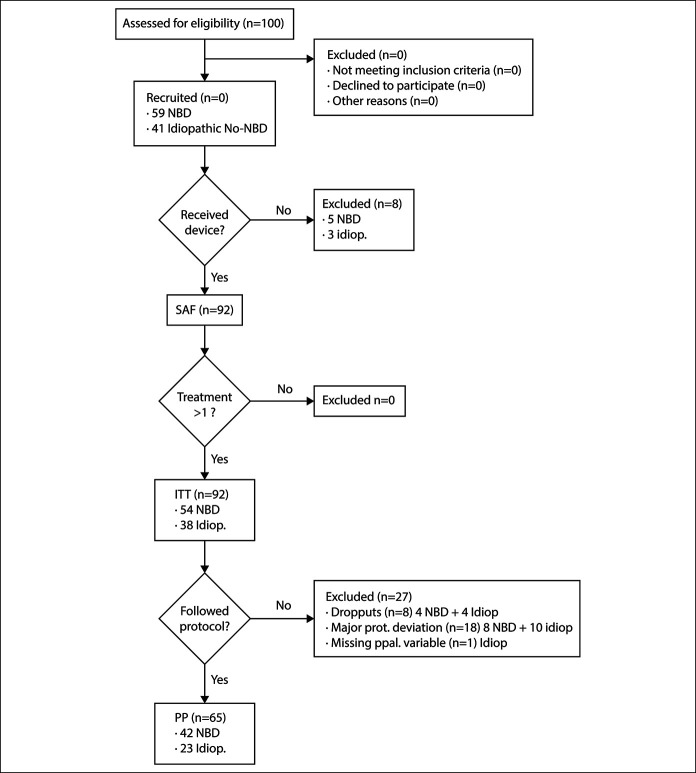
INTRODUCTION: Chronic constipation is associated with various comorbidities and reduced quality of life. Current solutions, either pharmacological or invasive, show limited efficacy. Manual colon-specific massage is a well-established intervention to treat chronic constipation, but it should be applied daily. MOWOOT automatically provides intermittent colonic exo-peristalsis (ICE) treatment like that in manual massage. METHODS: This study assessed the safety and effectiveness of the ICE device to treat chronic constipation due to neurogenic bowel dysfunction or idiopathic causes with high component of pelvic floor disorders. The ICE device was used daily for 20 minutes over 4 weeks. Each participant was followed for 9 consecutive weeks. The same outcome measures (primary: complete bowel movements per week; secondary: Knowles Eccersley Scott Symptom Score and Patient Assessment of Constipation Quality of Life among others) were assessed at baseline (V1), last intervention weeks (V2), and post-treatment (V3). Responders were defined for selected outcomes as better results at V2 respect to V1. RESULTS: N = 92 adult patients constituted the intention-to-treat population, with N = 65 as the per protocol population. Adherence (quantity of treatment received) was ≥95% in the intention-to-treat population. Adverse events related with the treatment were low (8.7%). Using the device significantly increased the number of complete bowel movements per week (V2 − V1 = 1.8 [2.7], P < 0.0001), reduced the symptoms of chronic constipation (Knowles Eccersley Scott Symptom Score V2 − V1 = −3.9 [5.0], P < 0.0001), improved quality of life (Patient Assessment of Constipation Quality of Life V2 − V1 = −0.7 [0.8], P < 0.0001), and facilitated a reduction in laxatives. Colon transit and fecal consistency were not modified. There was a high number of responders (>70%). DISCUSSION: Considering safety, adherence, and efficacy being demonstrated, the results favor the use of MOWOOT to treat chronic constipation (Visual abstract, Supplementary Digital Content 1, http://links.lww.com/CTG/A440). JOURNAL/cltg/04.03/01720094-202012000-00001/inline-graphic1/v/2023-10-30T213506Z/r/image-tiff
Overview
The claims and statistics of this paper haven’t been checked yet.
Free: it reads the open-access text and checks the first 5 claims that cite a source we can check. Create a free account to check every claim.
Integrity signals
Registry
Cites
Statistics
Figures
Verification
Claims the paper makes
The claims and statistics of this paper haven’t been checked yet.
Free: it reads the open-access text and checks the first 5 claims that cite a source we can check. Create a free account to check every claim.
Self-check
Percentages, sums and reported differences re-computed from the paper’s own numbers.
The self-check needs the paper’s full text.
Citations
Cites
Longstreth, G. F., Thompson, W. G., Chey, W. D., Houghton, L. A., Mearin, F., & Spiller, R. C. (2006) · Gastroenterology · doi:10.1053/j.gastro.2005.11.061 · Cited by 4,856
Stool form scale as a useful guide to intestinal transit time
Lewis, S. J., & Heaton, K. W. (1997) · Scandinavian Journal of Gastroenterology · doi:10.3109/00365529709011203 · Cited by 3,244 · cited 1×
“Bristol stool scale (28) is a worldwide used visual analog scale (VAS) that semiquantitatively assesses fecal consistency from 1 (hard, pellet feces) to 7 (liquid diarrhea).”
MethodFunctional Anorectal Disorders
Bharucha, A. E., Wald, A., Enck, P., & Rao, S. (2006) · Gastroenterology · doi:10.1053/j.gastro.2005.11.064 · Cited by 775
Autonomic and endocrine control of cardiovascular function
Gordan, R., Gwathmey, J. K., & Xie, L.-H. (2015) · World Journal of Cardiology · doi:10.4330/wjc.v7.i4.204 · Cited by 714 · cited 1×
“restoring parasympathetic tone and stimulating somatoautonomic reflexes (18,40,41), 4.”
BackgroundPractical tips for surgical research: blinding: who, what, when, why, how?
Karanicolas, P. J., Farrokhyar, F., & Bhandari, M. (2010) · Europe PMC (PubMed Central) · Cited by 585
Development and validation of the Patient Assessment of Constipation Quality of Life questionnaire
Marquis, P., De La Loge, C., Dubois, D., McDermott, A., & Chassany, O. (2005) · Scandinavian Journal of Gastroenterology · doi:10.1080/00365520510012208 · Cited by 584 · cited 1×
“The Patient Assessment of Constipation Quality of Life (PAC-QoL (30)) is a validated self-reported questionnaire that measures quality of life of subjects with constipation.”
BackgroundCortisol decreases and serotonin and dopamine increase following massage therapy
FIELD, T., HERNANDEZ-REIF, M., DIEGO, M., SCHANBERG, S., & KUHN, C. (2005) · International Journal of Neuroscience · doi:10.1080/00207450590956459 · Cited by 574 · cited 1×
“stimulation of colonic motility by increasing serotonin levels (42), and 5.”
BackgroundRao, S. S. C., Bharucha, A. E., Chiarioni, G., Felt-Bersma, R., Knowles, C., Malcolm, A., & Wald, A. (2016) · Gastroenterology · doi:10.1053/j.gastro.2016.02.009 · Cited by 527
The Health-Related Quality of Life and Economic Burden of Constipation
Dennison, C., Prasad, M., Lloyd, A., Bhattacharyya, S. K., Dhawan, R., & Coyne, K. (2005) · PharmacoEconomics · doi:10.2165/00019053-200523050-00006 · Cited by 396
Chiarioni, G., Salandini, L., & Whitehead, W. E. (2005) · Gastroenterology · doi:10.1053/j.gastro.2005.05.015 · Cited by 377
Research works printed but not linked: 3
- Guyton AC Hall JE Textbook of Medical Physiology, 11th edn Chapter 63 Elsevier Saunders, Elsevier Inc: Philadelphia, PA, 2006.
- Bharucha AE Camilleri M Physiology of the colon and it's measurement. In Peters JH Pemberton JH Yeo CJ (eds). Shackleford's Surgery of the Alimentary Tract. Saunders: Philadelphia, PA, 2007.
- Holzer P Physiology of the Gastrointestinal Tract, 5th edn Raven Press: Nueva York, 2012.
Cited by
British Society of Gastroenterology guidelines on the management of irritable bowel syndrome
Vasant, D. H., Paine, P. A., Black, C. J., Houghton, L. A., Everitt, H. A., Corsetti, M., Agrawal, A., Aziz, I., Farmer, A. D., Eugenicos, M. P., et al. (2021) · Gut · doi:10.1136/gutjnl-2021-324598 · Cited by 592
Constipation in Cancer Patients — an Update of Clinical Evidence
Dzierżanowski, T., & Mercadante, S. (2022) · Current Treatment Options in Oncology · doi:10.1007/s11864-022-00976-y · Cited by 48
Huang, S.-Y., Chiao, C., & Chien, L. (2024) · International Journal of Nursing Studies · doi:10.1016/j.ijnurstu.2024.104936 · Cited by 24
Zhang, Y., Ramoo, V., Chui, P. L., & Hilmi, I. N. (2025) · Alimentary Pharmacology & Therapeutics · doi:10.1111/apt.70103 · Cited by 5
“While the exact mechanism remains unclear, a possible explanation is that abdominal vibration may have a synergistic effect with walking exercise, boosting gastrointestinal motility and reducing colonic transit time [37, 38].”
Tang, X., Shi, P. A., Luo, Z., & Yu, H. (2025) · Electronics · doi:10.3390/electronics14061123 · Cited by 5
Tang, X., Shi, P. A., Yu, H., Li, S., Xin, X., Luo, Z., & Fu, J. (2025) · Actuators · doi:10.3390/act14060296 · Cited by 4
Zakaryaei, S. A., Ravanbakhsh, M., Javaherizadeh, H., Hakimzadeh, M., & Yazdi, M. J. S. (2024) · Arquivos de Gastroenterologia · doi:10.1590/s0004-2803.24612023-146 · Cited by 5
Bremer, J., Bremer, J., König, M., Kossmehl, P. P., Kurze, I., Obereisenbuchner, J., Weinschenk, E., & Herrero, I. (2023) · Spinal Cord Series and Cases · doi:10.1038/s41394-023-00597-z · Cited by 2
“Even though selfperceived severity of constipation worsens significantly over time in SCI individuals [27], the reported abandon rate for TAI treatment at 21 months in SCI individuals was 38% [28], whereas adherence to ICE treatment in previous studies and in this survey, particularly after >12 months of use, was >95%…”
Influentialdo Amaral, D. C., Silva, A. B. D. S., Ribeiro, R. M., Domenico, E. B. L. D., Moreira, R. S. L., & Teraoka, E. C. (2022) · Ciência Cuidado e Saúde · doi:10.4025/ciencuidsaude.v21i0.61197 · Cited by 2
Step on the accelerator: modern treatment of constipation
Staursky, D., Shimoga, D., & Sharma, A. (2023) · Current Opinion in Gastroenterology · doi:10.1097/mog.0000000000000982 · Cited by 2
The Vibrating Capsule: Safety and Tolerability in Patients With Chronic Idiopathic Constipation
Curtin, B. F., Quigley, E. M. M., Chey, W. D., Lembo, A. J., Brenner, D. M., Spiegel, B. M. R., & Rao, S. S. C. (2025) · Neurogastroenterology & Motility · doi:10.1111/nmo.15004 · Cited by 8
Delgado, M. E., Benet, J., & Herrero-Fresneda, I. (2026) · Clinical and Translational Gastroenterology · doi:10.14309/ctg.0000000000001027 · Cited by 2
“Previous clinical trials have shown that such medical devices applying abdominal massage are safe, well tolerated, and e ff ective in improving bowel function in individuals with chronic or neurogenic constipation (14 – 17).”
Self-citationTang, X., Shi, P. A., Luo, Z., Li, S., & Yu, H. (2025) · Machines · doi:10.3390/machines13060441 · Cited by 1
Sharma, A., & Rao, S. S. C. (2022) · Alimentary Pharmacology & Therapeutics · doi:10.1111/apt.16910 · Cited by 1
Drug Therapies for Non-motor Symptoms and Gut PD
Triadafilopoulos, G. (2024) · Springer eBooks · doi:10.1007/978-3-031-77171-2_6
Common Therapies in Onco-neurogastroenterology
Triadafilopoulos, G. (2025) · Springer eBooks · doi:10.1007/978-3-031-98848-6_18
Finlayson, J., Goodman, K., Crockett, J., Sharma, S., Kelly, J., Sellers, C., & Hagen, S. (2026) · Journal of Applied Research in Intellectual Disabilities · doi:10.1111/jar.70207
“This device was considered safe to use and effective for the treatment of constipation (McClurg et al. 2020).”
Lopes, J. (2026) · Semina Ciências Biológicas e da Saúde · doi:10.5433/1679-0367.2026v47n1p3
“Es-ses resultados são coerentes com os de McClurg et al. (2020) (14) , que demonstraram benefícios da terapia manual na melhora do trânsito intestinal e na redução do tempo de permanência fecal no cólon.”
Metadata
- Authors
- McClurg, D., Booth, L., & Herrero-Fresneda, I.
- Affiliations
- Glasgow Caledonian University (GB)
- Department of Scientific and Medical, usMIMA S.L., Barcelona, Spain.
- Venue
- Clinical and Translational Gastroenterology
- Published
- 2020-11-16
- Volume
- 11
- Issue
- 12
- Pages
- e00267
- ISSN
- 2155-384X (ISSN-L)
- PMC
- PMC7671882
- OpenAlex
- W3099841997
- Semantic Scholar
- 93e4d7a84c22c2358ec5c225db0ef7c458c1a55f
- Cited by
- 18
- References
- 59
- Citations by year
- 2026: 3 · 2025: 6 · 2024: 3 · 2023: 2 · 2022: 3 · 2021: 1
- FWCI
- 1.30
- Type
- journal article
- Language
- en
- Open access
- gold
- doi.org
- Licence
- Locations
- Clinical and Translational Gastroenterology (publishedVersion, cc-by-nc-nd)
- PubMed Central (publishedVersion, cc-by-nc-nd)
- PubMed (publishedVersion)
- ResearchOnline (acceptedVersion, cc-by-nc-nd)
- ResearchOnline (Glasgow Caledonian University) (submittedVersion, cc-by-nc-nd)
- Topics
- Health Sciences › Medicine › Gastroenterology › Gastrointestinal motility and disorders
- Health Sciences › Medicine › Urology › Pelvic floor disorders treatments
- Health Sciences › Medicine › Surgery › Congenital gastrointestinal and neural anomalies
- Keywords
- chronic constipation, neurogenic bowel dysfunction, idiopathic constipation, pelvic floor dysfunction, stool frequency, constipation quality of life
- MeSH terms
- Adult, Aged, Colon, Combined Modality Therapy, Constipation, Defecation, Female, Humans, Male, Massage, Middle Aged, Peristalsis, Prospective Studies, Quality of Life, Treatment Outcome, Laxatives, Young Adult
About these checks
Registry, retraction, Cites and statistics results are computed, not judged, with one exception: a printed reference that no index lists is read once by a model before it counts as a citation error. Claims are extracted by a model and kept only when their quote appears verbatim in the text; each cited source is then checked, with a model’s help, for whether it says what the claim relies on. Those verdicts can be wrong — read the claim’s quote and the cited source before relying on one.
Statistics and arithmetic are recomputed, not judged.
Confidence bands are shown only for fields calibrated on our annotated test set. None is calibrated yet, so no band is shown.
What counts as a claim ›How we measure confidence ›How we check this ›
Are you an author, or do you see a problem with this page? Request a review
Data sources
Bibliographic data: Semantic Scholar, OpenAlex, Crossref.
Contains information from the Semantic Scholar Academic Graph Datasets, made available under the ODC Attribution License (ODC-BY 1.0).
Semantic Scholar’s data is described in: Kinney, R., et al. (2023). The Semantic Scholar Open Data Platform. arXiv:2301.10140.
