

Safety and Efficacy of Intermittent Colonic Exoperistalsis Device to Treat Chronic Constipation: A Prospective Multicentric Clinical Trial
Open accessThe DOI matches its Crossref record; 59 of the 59 references it cites were found in a registry or an index.
Abstract
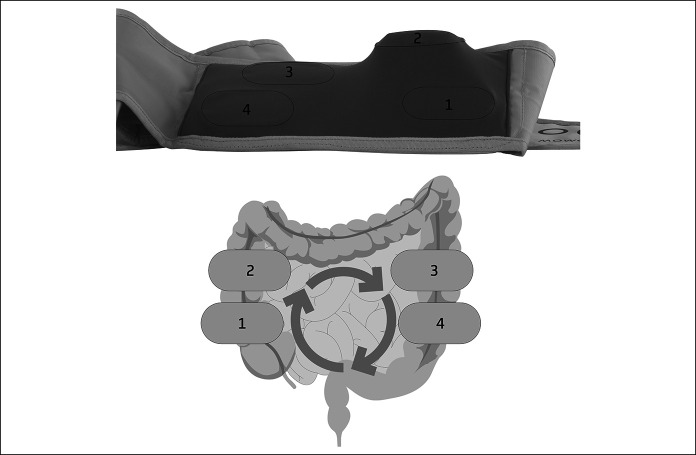
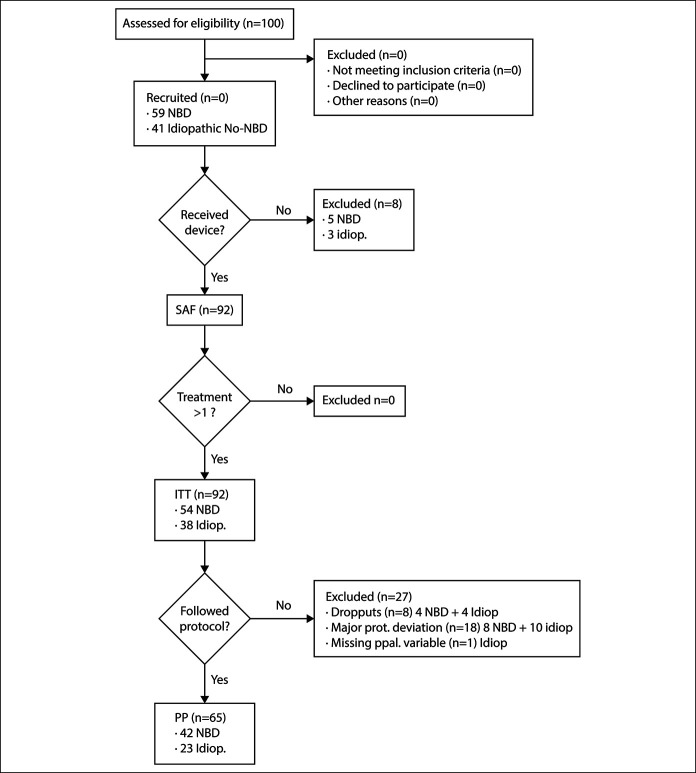
INTRODUCTION: Chronic constipation is associated with various comorbidities and reduced quality of life. Current solutions, either pharmacological or invasive, show limited efficacy. Manual colon-specific massage is a well-established intervention to treat chronic constipation, but it should be applied daily. MOWOOT automatically provides intermittent colonic exo-peristalsis (ICE) treatment like that in manual massage. METHODS: This study assessed the safety and effectiveness of the ICE device to treat chronic constipation due to neurogenic bowel dysfunction or idiopathic causes with high component of pelvic floor disorders. The ICE device was used daily for 20 minutes over 4 weeks. Each participant was followed for 9 consecutive weeks. The same outcome measures (primary: complete bowel movements per week; secondary: Knowles Eccersley Scott Symptom Score and Patient Assessment of Constipation Quality of Life among others) were assessed at baseline (V1), last intervention weeks (V2), and post-treatment (V3). Responders were defined for selected outcomes as better results at V2 respect to V1. RESULTS: N = 92 adult patients constituted the intention-to-treat population, with N = 65 as the per protocol population. Adherence (quantity of treatment received) was ≥95% in the intention-to-treat population. Adverse events related with the treatment were low (8.7%). Using the device significantly increased the number of complete bowel movements per week (V2 − V1 = 1.8 [2.7], P < 0.0001), reduced the symptoms of chronic constipation (Knowles Eccersley Scott Symptom Score V2 − V1 = −3.9 [5.0], P < 0.0001), improved quality of life (Patient Assessment of Constipation Quality of Life V2 − V1 = −0.7 [0.8], P < 0.0001), and facilitated a reduction in laxatives. Colon transit and fecal consistency were not modified. There was a high number of responders (>70%). DISCUSSION: Considering safety, adherence, and efficacy being demonstrated, the results favor the use of MOWOOT to treat chronic constipation (Visual abstract, Supplementary Digital Content 1, http://links.lww.com/CTG/A440). JOURNAL/cltg/04.03/01720094-202012000-00001/inline-graphic1/v/2023-10-30T213506Z/r/image-tiff
Overview
The claims and statistics of this paper haven’t been checked yet.
Free: it reads the open-access text and checks the first 5 claims that cite a source we can check. Create a free account to check every claim.
Integrity signals
Registry
Cites
Statistics
Figures
Verification
Claims the paper makes
The claims and statistics of this paper haven’t been checked yet.
Free: it reads the open-access text and checks the first 5 claims that cite a source we can check. Create a free account to check every claim.
Self-check
Percentages, sums and reported differences re-computed from the paper’s own numbers.
The self-check needs the paper’s full text.
Citations
Cites
Longstreth, G. F., Thompson, W. G., Chey, W. D., Houghton, L. A., Mearin, F., & Spiller, R. C. (2006) · Gastroenterology · doi:10.1053/j.gastro.2005.11.061 · Cited by 4,856
Stool form scale as a useful guide to intestinal transit time
Lewis, S. J., & Heaton, K. W. (1997) · Scandinavian Journal of Gastroenterology · doi:10.3109/00365529709011203 · Cited by 3,244 · cited 1×
“Bristol stool scale (28) is a worldwide used visual analog scale (VAS) that semiquantitatively assesses fecal consistency from 1 (hard, pellet feces) to 7 (liquid diarrhea).”
MethodFunctional Anorectal Disorders
Bharucha, A. E., Wald, A., Enck, P., & Rao, S. (2006) · Gastroenterology · doi:10.1053/j.gastro.2005.11.064 · Cited by 775
Autonomic and endocrine control of cardiovascular function
Gordan, R., Gwathmey, J. K., & Xie, L.-H. (2015) · World Journal of Cardiology · doi:10.4330/wjc.v7.i4.204 · Cited by 714 · cited 1×
“restoring parasympathetic tone and stimulating somatoautonomic reflexes (18,40,41), 4.”
BackgroundPractical tips for surgical research: blinding: who, what, when, why, how?
Karanicolas, P. J., Farrokhyar, F., & Bhandari, M. (2010) · Europe PMC (PubMed Central) · Cited by 585
Development and validation of the Patient Assessment of Constipation Quality of Life questionnaire
Marquis, P., De La Loge, C., Dubois, D., McDermott, A., & Chassany, O. (2005) · Scandinavian Journal of Gastroenterology · doi:10.1080/00365520510012208 · Cited by 584 · cited 1×
“The Patient Assessment of Constipation Quality of Life (PAC-QoL (30)) is a validated self-reported questionnaire that measures quality of life of subjects with constipation.”
BackgroundCortisol decreases and serotonin and dopamine increase following massage therapy
FIELD, T., HERNANDEZ-REIF, M., DIEGO, M., SCHANBERG, S., & KUHN, C. (2005) · International Journal of Neuroscience · doi:10.1080/00207450590956459 · Cited by 574 · cited 1×
“stimulation of colonic motility by increasing serotonin levels (42), and 5.”
BackgroundRao, S. S. C., Bharucha, A. E., Chiarioni, G., Felt-Bersma, R., Knowles, C., Malcolm, A., & Wald, A. (2016) · Gastroenterology · doi:10.1053/j.gastro.2016.02.009 · Cited by 527
The Health-Related Quality of Life and Economic Burden of Constipation
Dennison, C., Prasad, M., Lloyd, A., Bhattacharyya, S. K., Dhawan, R., & Coyne, K. (2005) · PharmacoEconomics · doi:10.2165/00019053-200523050-00006 · Cited by 396
Chiarioni, G., Salandini, L., & Whitehead, W. E. (2005) · Gastroenterology · doi:10.1053/j.gastro.2005.05.015 · Cited by 377
Crossover and Self-Controlled Designs in Clinical Research
Louis, T. A., Lavori, P. W., Bailar, J. C., & Polansky, M. (1984) · New England Journal of Medicine · doi:10.1056/nejm198401053100106 · Cited by 339
Diagnosis and management of chronic constipation in adults
Rao, S. S. C., Rattanakovit, K., & Patcharatrakul, T. (2016) · Nature Reviews Gastroenterology & Hepatology · doi:10.1038/nrgastro.2016.53 · Cited by 337 · cited 1×
“Furthermore, constipation is associated with increased psychological distress and reduced patient’s health-related quality of life (8,11).”
BackgroundKnowles, C. H., Eccersley, J. A., Scott, M. S., Walker, S. M., Reeves, B., & Lunniss, P. J. (2000) · Diseases of the Colon & Rectum · doi:10.1007/bf02236639 · Cited by 259 · cited 1×
“Knowles Eccersley Scott Symptom Score (KESS (27)) is an 11itemquestionnaire todiagnose constipation.”
BackgroundAnorectal functional testing: review of collective experience1
Azpiroz, F., Enck, P., & Whitehead, W. E. (2002) · The American Journal of Gastroenterology · doi:10.1111/j.1572-0241.2002.05450.x · Cited by 216 · cited 1×
“The idiopathic subjects underwent anorectal manometry (31,32) and a physical examination to assess possible functional defecation dysfunction (FDD).”
BackgroundEvaluation of colonic myoelectrical activity in health and functional disorders.
Bueno, L., Fioramonti, J., Ruckebusch, Y., Frexinos, J., & Coulom, P. (1980) · Gut · doi:10.1136/gut.21.6.480 · Cited by 183
The use of abdominal massage to treat chronic constipation
Sinclair, M. (2010) · Journal of Bodywork and Movement Therapies · doi:10.1016/j.jbmt.2010.07.007 · Cited by 176
Review article: anthranoid laxatives and their potential carcinogenic effects
GORKOM, B. A. P. V., VRIES, E. G. E. D., KARRENBELD, & KLEIBEUKER (1999) · Alimentary Pharmacology & Therapeutics · doi:10.1046/j.1365-2036.1999.00468.x · Cited by 173 · cited 1×
“Chronic constipation is associatedwith various comorbidities, such as fecal incontinence, fecal impaction, hemorrhoids, rectal prolapse, etc, (6–8) and, although rare, there are several potentially life-threatening complications (9,10).”
BackgroundBampton, P. (2000) · The American Journal of Gastroenterology · doi:10.1016/s0002-9270(99)00898-9 · Cited by 164
Parkinson disease with constipation: clinical features and relevant factors
Yu, Q.-J., Yu, S.-Y., Zuo, L.-J., Lian, T.-H., Hu, Y., Wang, R.-D., Piao, Y.-S., Guo, P., Liu, L., Jin, Z., et al. (2018) · Scientific Reports · doi:10.1038/s41598-017-16790-8 · Cited by 134
McClurg, D., Hagen, S., Hawkins, S. A., & Lowe-Strong, A. S. (2010) · Multiple Sclerosis Journal · doi:10.1177/1352458510384899 · Cited by 132
Self-citationHepatitis after chronic abuse of senna
Beuers, U. H., Spengler, U., & Pape, G. R. (1991) · The Lancet · doi:10.1016/0140-6736(91)91012-j · Cited by 126
Emmanuel, A. V., & Kamm, M. A. (2001) · Gut · doi:10.1136/gut.49.2.214 · Cited by 125
The normal range and a simple diagram for recording whole gut transit time
Evans, R., Kamm, M., Hinton, J., & Lennard-jones, J. E. (1992) · International Journal of Colorectal Disease · doi:10.1007/bf01647654 · Cited by 118 · cited 1×
“4 markers in the colon are classified under delayed CT (29).”
BackgroundThe Effect of Abdominal Massage on Bowel Function in Patients with Spinal Cord Injury
Ayaş, Ş., Leblebici, B., Sözay, S., Bayramoğlu, M., & Niron, E. A. (2006) · American Journal of Physical Medicine & Rehabilitation · doi:10.1097/01.phm.0000247649.00219.c0 · Cited by 116 · cited 1×
“The benefits of abdominal massage in spinal cord injury people, who likely do have more definable impairments in abdominal wall contractile function, has been already described (34).”
BackgroundPreziosi, G., Gordon–Dixon, A., & Emmanuel, A. V. (2018) · Degenerative Neurological and Neuromuscular Disease · doi:10.2147/dnnd.s138835 · Cited by 109 · cited 1×
“Transanal irrigation has also shown some efficacy but is not always continued (51).”
BackgroundAcute Liver Failure with Renal Impairment Related to the Abuse of Senna Anthraquinone Glycosides
Vanderperren, B., Rizzo, M., Angenot, L., Haufroid, V., Jadoul, M., & Hantson, P. (2005) · Annals of Pharmacotherapy · doi:10.1345/aph.1e670 · Cited by 104
Management of chronic constipation in adults
Krogh, K., Chiarioni, G., & Whitehead, W. E. (2017) · United European Gastroenterology Journal · doi:10.1177/2050640616663439 · Cited by 103
A review of blinding in randomized controlled trials found results inconsistent and questionable
Boutron, I., Estellat, C., & Ravaud, P. (2005) · Journal of Clinical Epidemiology · doi:10.1016/j.jclinepi.2005.04.006 · Cited by 101
Global audit on bowel perforations related to transanal irrigation
Christensen, P., Krogh, K., Perrouin-Verbe, B., Leder, D., Bazzocchi, G., Jakobsen, B. P., & Emmanuel, A. V. (2015) · Techniques in Coloproctology · doi:10.1007/s10151-015-1400-8 · Cited by 93 · cited 1×
“Further steps include “minimal” invasive solutions (enemas and transanal irrigation) and finally highly invasive surgical procedures (colonic pacemakers implants or stoma) (9,17).”
BackgroundBloating and Abdominal Distension: Old Misconceptions and Current Knowledge
Malagelada, J. R., Accarino, A. M., & Azpiroz, F. (2017) · The American Journal of Gastroenterology · doi:10.1038/ajg.2017.129 · Cited by 93 · cited 1×
“improving microbiota composition (43) and reducing abdominal bloating (44,45).”
BackgroundClinical review of treatment options for select nonmotor symptoms of Parkinson's disease
Wood, L. D., Neumiller, J. J., Setter, S. M., & Dobbins, E. K. (2010) · The American Journal of Geriatric Pharmacotherapy · doi:10.1016/j.amjopharm.2010.08.002 · Cited by 92
The Effect of Abdominal Massage on Constipation and Quality of Life
Turan, N., & Aştı, T. A. (2016) · Gastroenterology Nursing · doi:10.1097/sga.0000000000000202 · Cited by 87
Smith, T. K., Park, K. J., & Hennig, G. W. (2014) · Journal of Neurogastroenterology and Motility · doi:10.5056/jnm14092 · Cited by 81
Dinning, P. G., Szczesniak, M. M., & Cook, I. J. (2008) · Neurogastroenterology & Motility · doi:10.1111/j.1365-2982.2007.01060.x · Cited by 78 · cited 1×
“Mechanical mobilization and propulsion of feces (37,38), 2.”
BackgroundIntestinal Crosstalk between Microbiota and Serotonin and its Impact on Gut Motility
Ge, X., Pan, J., Liu, Y., Wang, H., Zhou, W., & Wang, X. (2018) · Current Pharmaceutical Biotechnology · doi:10.2174/1389201019666180528094202 · Cited by 77 · cited 1×
“improving microbiota composition (43) and reducing abdominal bloating (44,45).”
BackgroundEfficient ways exist to obtain the optimal sample size in clinical trials in rare diseases
van der Lee, J. H., Wesseling, J., Tanck, M. W. T., & Offringa, M. (2008) · Journal of Clinical Epidemiology · doi:10.1016/j.jclinepi.2007.07.008 · Cited by 71
Management of bowel problems in older people: an update
Potter, J., & Wagg, A. (2005) · Clinical Medicine · doi:10.7861/clinmedicine.5-3-289 · Cited by 64 · cited 1×
“The prevalence is up to 80% in patients with neurological conditions (2–4), such as spinal cord injury, multiple sclerosis, or Parkinson disease, and up to 60% in the elderly, especially if living in residential or care home settings (5).”
BackgroundElectrical and contractile activities of the human rectosigmoid.
Sarna, S. J., Latimer, P. R., Campbell, D., & Waterfall, W. E. (1982) · Gut · doi:10.1136/gut.23.8.698 · Cited by 59
Serra, J., Mascort-Roca, J., Marzo‐Castillejo, M., Aros, S. D., Santos, J. F., Rubio, E., & Mearin, F. (2016) · Gastroenterología y Hepatología · doi:10.1016/j.gastrohep.2016.02.007 · Cited by 57
Mechanism of abdominal massage for difficult defecation in a patient with myelopathy (HAM/TSP)
Liu, Z., Sakakibara, R., Odaka, T., Uchiyama, T., Yamamoto, T., Ito, T., & Hattori, T. (2005) · Journal of Neurology · doi:10.1007/s00415-005-0825-9 · Cited by 51
Methodological choices for the clinical development of medical devices
Bernard, A., Vaneau, M., Fournel, I., Galmiche, H., Nony, P., & Dubernard, J. M. (2014) · Medical Devices Evidence and Research · doi:10.2147/mder.s63869 · Cited by 50
Abdominal massage for people with constipation: a cost utility analysis
Lämås, K., Lindholm, L. H., Engström, B., & Jacobsson, C. (2010) · Journal of Advanced Nursing · doi:10.1111/j.1365-2648.2010.05339.x · Cited by 47
Existing and emerging therapies for managing constipation and diarrhea
Bharucha, A. E., Wouters, M. M., & Tack, J. (2017) · Current Opinion in Pharmacology · doi:10.1016/j.coph.2017.10.015 · Cited by 43
Prevalence and Pathophysiology of Functional Constipation Among Women in Catalonia, Spain
Ribas, Y., Saldaña, E., Martí-Ragué, J., & Clavé, P. (2011) · Diseases of the Colon & Rectum · doi:10.1097/dcr.0b013e31822cb5c2 · Cited by 42 · cited 1×
“The idiopathic subjects underwent anorectal manometry (31,32) and a physical examination to assess possible functional defecation dysfunction (FDD).”
BackgroundSerra, J., Mascort-Roca, J., Marzo‐Castillejo, M., Aros, S. D., Santos, J. F., Rubio, E., & Mearin, F. (2017) · Gastroenterología y Hepatología (English Edition) · doi:10.1016/j.gastre.2017.03.013 · Cited by 39
Ron, Y., Halpern, Z., Safadi, R., Dickman, R. M., Dekel, R., & Sperber, A. D. (2014) · Neurogastroenterology & Motility · doi:10.1111/nmo.12485 · Cited by 38 · cited 2×
“95%) in contrastwith another innovative but invasive solution also intended to induce peristalsis (46).”
BackgroundResultClayton, D. G. (1982) · British Journal of Clinical Pharmacology · doi:10.1111/j.1365-2125.1982.tb01407.x · Cited by 35
Current management strategies and therapeutic targets in chronic constipation
Emmanuel, A. V. (2010) · Therapeutic Advances in Gastroenterology · doi:10.1177/1756283x10384173 · Cited by 27
Knowles, C. H., Eccersley, J., Scott, S. M., Walker, S. M., Reeves, B. C., & Lunniss, P. J. (2000) · Gastroenterology · doi:10.1016/s0016-5085(00)80553-3 · Cited by 26
Medical Therapy of Constipation: Current Standards and Beyond
Andresen, V., & Layer, P. (2018) · Visceral Medicine · doi:10.1159/000488695 · Cited by 26
Appropriate Use of Laxatives in the Older Person
Pont, L., Fisher, M., & Williams, K. A. (2019) · Drugs & Aging · doi:10.1007/s40266-019-00701-9 · Cited by 25 · cited 1×
“However, most laxative agents show limited efficacy for the chronic use, especially in the elderly or neurogenic bowel dysfunction (NBD) populations with comorbid conditions and concomitant medications and the potential for adverse events (AEs) (15,16).”
BackgroundStercoral perforation of the rectosigmoid colon due to chronic constipation
Celayir, F., Köksal, H. M., & Uludağ, M. (2017) · International Journal of Surgery Case Reports · doi:10.1016/j.ijscr.2017.09.002 · Cited by 23 · cited 2×
“Chronic constipation is associatedwith various comorbidities, such as fecal incontinence, fecal impaction, hemorrhoids, rectal prolapse, etc, (6–8) and, although rare, there are several potentially life-threatening complications (9,10).”
BackgroundGulick, E. E. (2011) · International Journal of Nursing Studies · doi:10.1016/j.ijnurstu.2011.02.002 · Cited by 22
Comparison of four sequential methods allowing for early stopping of comparative clinical trials
Sebille, V., & Bellissant, É. (2000) · Clinical Science · doi:10.1042/cs0980569 · Cited by 21
Does abdominal massage relieve constipation?
McClurg, D., & Lowe-Strong, A. S. (2011) · PubMed · Cited by 18
Self-citationConstipation as a presenting symptom
Lawthom, C., Durdey, P., & Hughes, T. (2003) · The Lancet · doi:10.1016/s0140-6736(03)14365-6 · Cited by 14 · cited 1×
“People with multiple sclerosis have a higher incidence of constipation compared with the general population, but the causative factors are not fully understood (50).”
BackgroundChronic Constipation: Current Management and Challenges
Storr, M. (2011) · Canadian Journal of Gastroenterology and Hepatology · doi:10.1155/2011/527151 · Cited by 6
Sequential Design for Clinical Trials Evaluating a Prosthetic Heart Valve
Hamilton, C., Lu, M., Lewis, S., & Anderson, W. (2012) · The Annals of Thoracic Surgery · doi:10.1016/j.athoracsur.2011.07.091 · Cited by 6
Shubov, A., & Taw, L. B. (2015) · Global Advances in Health and Medicine · doi:10.7453/gahmj.2014.081 · Cited by 4 · cited 1×
“restoring parasympathetic tone and stimulating somatoautonomic reflexes (18,40,41), 4.”
Background
Research works printed but not linked: 3
- Guyton AC Hall JE Textbook of Medical Physiology, 11th edn Chapter 63 Elsevier Saunders, Elsevier Inc: Philadelphia, PA, 2006.
- Bharucha AE Camilleri M Physiology of the colon and it's measurement. In Peters JH Pemberton JH Yeo CJ (eds). Shackleford's Surgery of the Alimentary Tract. Saunders: Philadelphia, PA, 2007.
- Holzer P Physiology of the Gastrointestinal Tract, 5th edn Raven Press: Nueva York, 2012.
Cited by
British Society of Gastroenterology guidelines on the management of irritable bowel syndrome
Vasant, D. H., Paine, P. A., Black, C. J., Houghton, L. A., Everitt, H. A., Corsetti, M., Agrawal, A., Aziz, I., Farmer, A. D., Eugenicos, M. P., et al. (2021) · Gut · doi:10.1136/gutjnl-2021-324598 · Cited by 592
Constipation in Cancer Patients — an Update of Clinical Evidence
Dzierżanowski, T., & Mercadante, S. (2022) · Current Treatment Options in Oncology · doi:10.1007/s11864-022-00976-y · Cited by 48
Huang, S.-Y., Chiao, C., & Chien, L. (2024) · International Journal of Nursing Studies · doi:10.1016/j.ijnurstu.2024.104936 · Cited by 24
Zhang, Y., Ramoo, V., Chui, P. L., & Hilmi, I. N. (2025) · Alimentary Pharmacology & Therapeutics · doi:10.1111/apt.70103 · Cited by 5
“While the exact mechanism remains unclear, a possible explanation is that abdominal vibration may have a synergistic effect with walking exercise, boosting gastrointestinal motility and reducing colonic transit time [37, 38].”
Tang, X., Shi, P. A., Luo, Z., & Yu, H. (2025) · Electronics · doi:10.3390/electronics14061123 · Cited by 5
Metadata
- Authors
- McClurg, D., Booth, L., & Herrero-Fresneda, I.
- Affiliations
- Glasgow Caledonian University (GB)
- Department of Scientific and Medical, usMIMA S.L., Barcelona, Spain.
- Venue
- Clinical and Translational Gastroenterology
- Published
- 2020-11-16
- Volume
- 11
- Issue
- 12
- Pages
- e00267
- ISSN
- 2155-384X (ISSN-L)
- PMC
- PMC7671882
- OpenAlex
- W3099841997
- Semantic Scholar
- 93e4d7a84c22c2358ec5c225db0ef7c458c1a55f
- Cited by
- 18
- References
- 59
- Citations by year
- 2026: 3 · 2025: 6 · 2024: 3 · 2023: 2 · 2022: 3 · 2021: 1
- FWCI
- 1.30
- Type
- journal article
- Language
- en
- Open access
- gold
- doi.org
- Licence
- Locations
- Clinical and Translational Gastroenterology (publishedVersion, cc-by-nc-nd)
- PubMed Central (publishedVersion, cc-by-nc-nd)
- PubMed (publishedVersion)
- ResearchOnline (acceptedVersion, cc-by-nc-nd)
- ResearchOnline (Glasgow Caledonian University) (submittedVersion, cc-by-nc-nd)
- Topics
- Health Sciences › Medicine › Gastroenterology › Gastrointestinal motility and disorders
- Health Sciences › Medicine › Urology › Pelvic floor disorders treatments
- Health Sciences › Medicine › Surgery › Congenital gastrointestinal and neural anomalies
- Keywords
- chronic constipation, neurogenic bowel dysfunction, idiopathic constipation, pelvic floor dysfunction, stool frequency, constipation quality of life
- MeSH terms
- Adult, Aged, Colon, Combined Modality Therapy, Constipation, Defecation, Female, Humans, Male, Massage, Middle Aged, Peristalsis, Prospective Studies, Quality of Life, Treatment Outcome, Laxatives, Young Adult
About these checks
Registry, retraction, Cites and statistics results are computed, not judged, with one exception: a printed reference that no index lists is read once by a model before it counts as a citation error. Claims are extracted by a model and kept only when their quote appears verbatim in the text; each cited source is then checked, with a model’s help, for whether it says what the claim relies on. Those verdicts can be wrong — read the claim’s quote and the cited source before relying on one.
Statistics and arithmetic are recomputed, not judged.
Confidence bands are shown only for fields calibrated on our annotated test set. None is calibrated yet, so no band is shown.
What counts as a claim ›How we measure confidence ›How we check this ›
Are you an author, or do you see a problem with this page? Request a review
Data sources
Bibliographic data: Semantic Scholar, OpenAlex, Crossref.
Contains information from the Semantic Scholar Academic Graph Datasets, made available under the ODC Attribution License (ODC-BY 1.0).
Semantic Scholar’s data is described in: Kinney, R., et al. (2023). The Semantic Scholar Open Data Platform. arXiv:2301.10140.
