

Artificial Intelligence Enabled Mobile Chatbot Psychologist using AIML and Cognitive Behavioral Therapy
Open accessThe DOI matches its Crossref record; 54 of the 54 references it cites were found in a registry or an index; none of the 21 sources its claims cite is checked for support yet.
Abstract
In recent years, the demand for mental health services has increased exponentially, prompting the need for accessible, cost-effective, and efficient solutions. This paper introduces an Artificial Intelligence (AI) enabled mobile chatbot psychologist that leverages AIML (Artificial Intelligence Markup Language) and Cognitive Behavioral Therapy (CBT) to provide psychological support. The chatbot is designed to facilitate mental health care by offering personalized CBT interventions to individuals experiencing psychological distress. The proposed mobile chatbot psychologist employs AIML, a language created to facilitate human-computer interactions, to understand user inputs and generate contextually appropriate responses. To ensure the efficacy of the chatbot, it is equipped with a knowledge base comprising CBT principles and techniques, enabling it to provide targeted psychological interventions. The integration of CBT allows the chatbot to address a wide range of mental health issues, including anxiety, depression, stress, and phobias, by helping users identify and challenge cognitive distortions. The paper discusses the development and implementation of the mobile chatbot psychologist, detailing the AIML-based conversational engine and the incorporation of CBT techniques. The chatbot's effectiveness is evaluated through a series of user studies involving participants with varying levels of psychological distress. Results demonstrate the chatbot's ability to deliver personalized interventions, with users reporting significant improvements in their mental well-being. The AI-enabled mobile chatbot psychologist offers a promising solution to bridge the gap in mental health care, providing an easily accessible, cost-effective, and scalable platform for psychological support. This innovative approach can serve as a valuable adjunct to traditional therapy and help reduce the burden on mental health professionals, while empowering individuals to take charge of their mental well-being.
Overview
CoChat Summary
TL;DR
The paper describes an AI-enabled mobile chatbot psychologist intended to deliver CBT-based support, built with RASA NLU and described as using AIML/CBT. It reports high NLU intent/entity performance but does not report concrete user-study outcomes.
Key findings
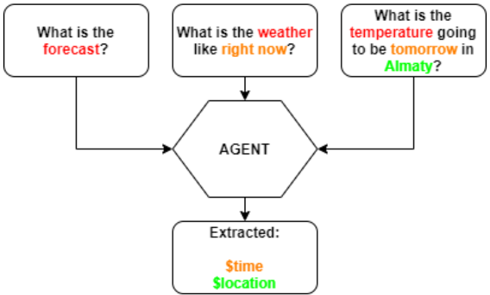
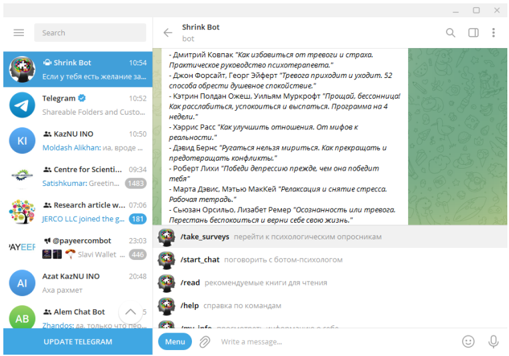
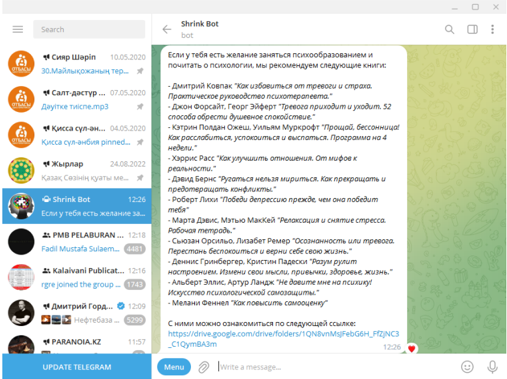
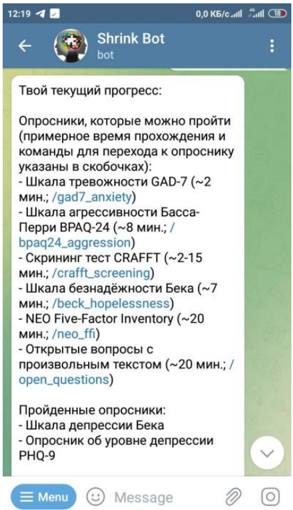
- The chatbot was implemented with RASA NLU for Kazakh, with menus for surveys, chat, reading, help, info, about bot, reset, and psychological tests including GAD-7, BPAQ-24, Crafft, Beck hopelessness, NEO-5, and Beck depression.
- Rasa NLU intent accuracy is reported as 0.99375; entity integrity is 0.92; entity extract score is 1.
- Table I reports diagnosis intent 600/600 correct, confirm 12/12, and greetings 5/9, with “how are you?” misrecognized as “diagnosis.”
- The abstract and introduction claim user studies showed significant improvements in mental well-being, but no participant numbers or outcome statistics are provided in the text.
Methods
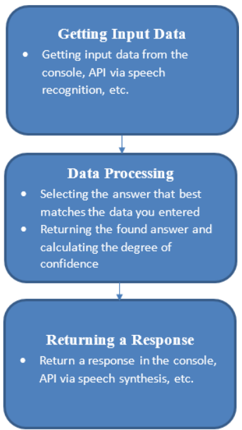
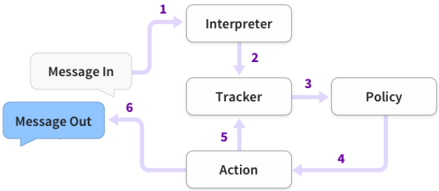
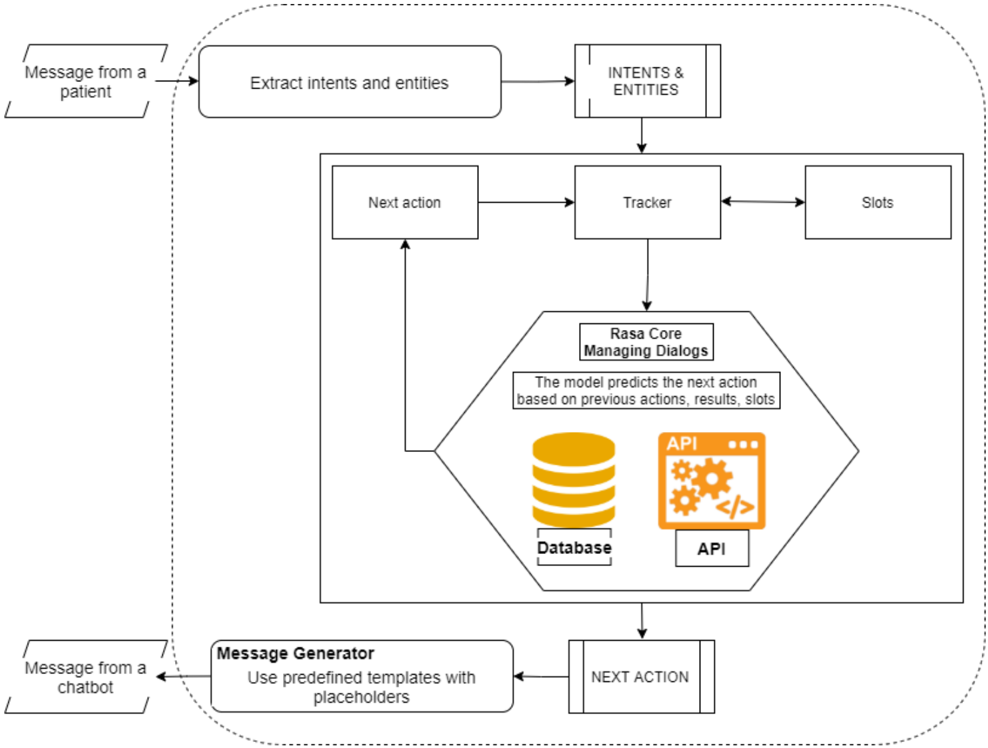
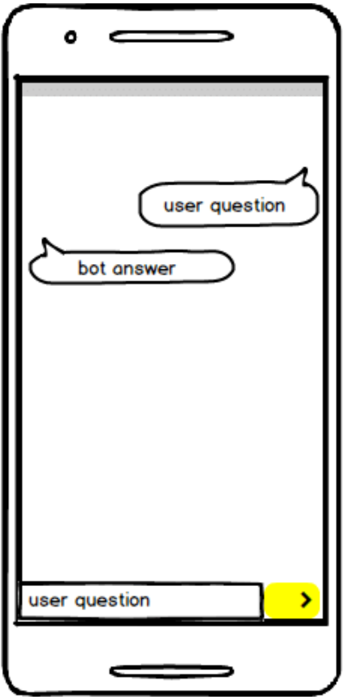
- Design: a mobile chatbot psychologist using a CBT knowledge base and conversational engine; the abstract/introduction say AIML, while the implementation section uses RASA Open Source/RASA NLU with intents, entities, utterances, and confidence scoring.
- Data/sample: training expressions for intents; the fundamental intent had 17 training expressions. Evaluation used RASA NLU training/test evidence and a confusion table. User studies are mentioned but sample size and recruitment are not reported.
- Main analysis: RASA NLU intent classification accuracy, entity integrity, entity extraction score, and confusion matrix; no statistical analysis of clinical outcomes is reported.
Limitations
- Paper-stated: privacy/data security concerns, ethical and safety considerations, uncertain clinical effectiveness, need for ongoing support and maintenance, and risk of over-reliance instead of professional care.
- Evident from the text: the evaluation is mainly NLU performance rather than clinical effectiveness; user-study results are asserted without numbers; a training error misclassifies “how are you?” as “diagnosis”; and the chatbot is rule-limited and built for Kazakh.
Model-written summary. Check it against the paper before relying on it.
Integrity signals
Registry
Cites
Statistics
Figures
Verification
Claims the paper makes
0 Valid · 0 Not valid · 20 Not checked · 13 Own results and interpretations
A result the paper reports from its own data — it cites no other source for it, so there is none to check. The quote shows it is in the paper.
In the paper
“According to the findings, the Rasa NLU system has an accuracy of 0.99375 with regard to its intended use.”
§ Artificial Intelligence Enabled Mobile Chatbot Psychologist using AIML and Cognitive Behavioral Therapy > B. Analysis of the Results
plain- Asserted: passes — The authors put it forward as true.
- Checkable: passes — It can be checked against evidence.
- Load-bearing: unclear — It is unclear whether the paper’s conclusions depend on it.
- Based: passes — The paper gives a reason why it holds.
In the paper
“In the context of mental health, chatbots can be designed to offer psychological support, guidance, and interventions to individuals experiencing psychological distress [3].”
§ Artificial Intelligence Enabled Mobile Chatbot Psychologist using AIML and Cognitive Behavioral Therapy > INTRODUCTION
What the sources say
- Not checked yetcites [3]
plain- Asserted: passes — The authors put it forward as true.
- Checkable: passes — It can be checked against evidence.
- Load-bearing: passes — The paper’s conclusions depend on it.
- Based: passes — The paper gives a reason why it holds.
In the paper
“Similarly, [24] found that a chatbot-based intervention was effective in reducing symptoms of anxiety in a non-clinical population.”
§ Artificial Intelligence Enabled Mobile Chatbot Psychologist using AIML and Cognitive Behavioral Therapy > D. Relevance and Significance of Chatbots, AIML, and CBT in Mental Health Care
What the sources say
- Not checked yetcites [24]
plainstates a cause- Asserted: passes — The authors put it forward as true.
- Checkable: passes — It can be checked against evidence.
- Load-bearing: passes — The paper’s conclusions depend on it.
- Based: passes — The paper gives a reason why it holds.
In the paper
“For instance, [23] evaluated the effectiveness of a chatbot utilizing CBT techniques in reducing symptoms of depression and anxiety, demonstrating significant improvements in participants' mental well-being.”
§ Artificial Intelligence Enabled Mobile Chatbot Psychologist using AIML and Cognitive Behavioral Therapy > D. Relevance and Significance of Chatbots, AIML, and CBT in Mental Health Care
What the sources say
- Not checked yetcites [23]
boostedstates a cause- Asserted: passes — The authors put it forward as true.
- Checkable: passes — It can be checked against evidence.
- Load-bearing: passes — The paper’s conclusions depend on it.
- Based: passes — The paper gives a reason why it holds.
In the paper
“While the AI-enabled mobile chatbot psychologist aims to provide evidence-based CBT interventions, the effectiveness of these interventions depends on the chatbot's ability to accurately interpret user inputs and deliver appropriate responses [46].”
§ Artificial Intelligence Enabled Mobile Chatbot Psychologist using AIML and Cognitive Behavioral Therapy > C. Ensuring Clinical Effectiveness
What the sources say
- Not checked yetcites [46]
plainstates a possible cause- Asserted: passes — The authors put it forward as true.
- Checkable: passes — It can be checked against evidence.
- Load-bearing: passes — The paper’s conclusions depend on it.
- Based: passes — The paper gives a reason why it holds.
7 more claims
Create a free account to see all 33 claims and to verify the 21 references still open.
- It may state two separate claims as one. 15
- Probably not a substantial claim. 18
Claims other papers make about this one
Each is checked against this paper’s own text: does it say what the citing paper says it does?
In the citing paper
“There is initial evidence that such chatbots may be effective in reducing depressive and anxiety symptoms, as well as stress [33-36].”
From The Opportunities and Risks of Large Language Models in Mental Health (2024) · cites this paper as [34]
In the citing paper
“Overall, evidence suggests that AI chatbots may be effective in alleviating symptoms of depression, anxiety, and stress [45] [46] [47] [48] [49] [50] [51].”
From "I tell him everything that I do": An investigation of privacy and safety implications of AI companion usage (2025) · cites this paper as [46]
Self-check
Percentages, sums and reported differences re-computed from the paper’s own numbers.
Rated minor: it would not touch a result — a value no result rests on, a p-value that stays on the same side of the significance level, or a conflict that is clerical, resolved elsewhere in the paper, or outside its own findings.
In the paper
“TABLE I. OBTAINED RESULTS Approach Confirm Greetings Bye Diagnosis Total Confirm 12 0 0 0 12 Greetings 0 5 0 4 9 Bye 0 0 16 0 0 Diagnosis 0 0 0 600 600 Total 12 8 12 600 632”
§ Artificial Intelligence Enabled Mobile Chatbot Psychologist using AIML and Cognitive Behavioral Therapy > B. Analysis of the Results
Reported 8 · recomputed 5
Rated minor: it would not touch a result — a value no result rests on, a p-value that stays on the same side of the significance level, or a conflict that is clerical, resolved elsewhere in the paper, or outside its own findings.
In the paper
“TABLE I. OBTAINED RESULTS Approach Confirm Greetings Bye Diagnosis Total Confirm 12 0 0 0 12 Greetings 0 5 0 4 9 Bye 0 0 16 0 0 Diagnosis 0 0 0 600 600 Total 12 8 12 600 632”
§ Artificial Intelligence Enabled Mobile Chatbot Psychologist using AIML and Cognitive Behavioral Therapy > B. Analysis of the Results
Reported 12 · recomputed 16
Citations
Cites
Interacting with educational chatbots: A systematic review
Kuhail, M. A., Alturki, N., Alramlawi, S., & Alhejori, K. (2023) · Education and Information Technologies · doi:10.1007/s10639-022-11177-3 · Cited by 841
Dai, C.-P., & Ke, F. (2022) · Computers and Education: Artificial Intelligence · doi:10.1016/j.caeai.2022.100087 · Cited by 271
Schachner, T., Keller, R., & v Wangenheim, F. (2020) · Journal of Medical Internet Research · doi:10.2196/20701 · Cited by 267 · cited 1×
“This paper presents an AI-enabled mobile chatbot psychologist that leverages Artificial Intelligence Markup Language (AIML) and Cognitive Behavioral Therapy (CBT) to offer personalized psychological interventions [4].”
BackgroundZhai, C., & Wibowo, S. (2023) · Computers and Education: Artificial Intelligence · doi:10.1016/j.caeai.2023.100134 · Cited by 261 · cited 1×
“While the AI-enabled mobile chatbot psychologist aims to provide evidence-based CBT interventions, the effectiveness of these interventions depends on the chatbot's ability to accurately interpret user inputs and deliver appropriate responses [46].”
BackgroundSong, S. W., & Shin, M. (2024) · International Journal of Human–Computer Interaction · doi:10.1080/10447318.2022.2121038 · Cited by 244 · cited 1×
“The chatbot could be further enhanced by incorporating multimodal input and output channels, such as voice recognition, speech synthesis, and emotion recognition through facial expressions or voice tone analysis [53].”
BackgroundBendig, E., Erb, B., Schulze-Thuesing, L., & Baumeister, H. (2022) · Verhaltenstherapie · doi:10.1159/000501812 · Cited by 214 · cited 1×
“CBT is based on the principle that maladaptive thought patterns and behaviors contribute to the development and maintenance of psychological distress [20].”
Fidan, M., & Gencel, N. (2022) · Journal of Educational Computing Research · doi:10.1177/07356331221077901 · Cited by 186 · cited 1×
“Some notable examples include: Woebot: Developed by Stanford University researchers, Woebot is an AI-powered chatbot designed to provide CBT-based interventions for individuals experiencing depression and anxiety [25].”
A survey on providing customer and public administration based services using AI: chatbot
Nirala, K. K., Singh, N. K., & Purani, V. S. (2022) · Multimedia Tools and Applications · doi:10.1007/s11042-021-11458-y · Cited by 159
Artificial intelligence and mobile apps for mental healthcare: a social informatics perspective
Gamble, A. (2020) · Aslib Journal of Information Management · doi:10.1108/ajim-11-2019-0316 · Cited by 146
Schöbel, S., Schmitt, A., Benner, D., Saqr, M., Janson, A., & Leimeister, J. M. (2024) · Information Systems Frontiers · doi:10.1007/s10796-023-10375-9 · Cited by 127 · cited 1×
“To improve the chatbot's natural language understanding and generation capabilities, future research could explore the integration of advanced AI techniques, such as deep learning algorithms and transformer-based models like OpenAI's GPT series [54].”
Research works printed but not linked: 4
- Prajapati, N., Mhaske, V., Dubey, S., & kumar Soni, P. (2022). Chatbot for medical assistance: a review. International Journal of Recent Advances in Multidisciplinary Topics, 3(3), 66-70.
- Huq, S. M., Maskeliūnas, R., & Damaševičius, R. (2022). Dialogue agents for artificial intelligence-based conversational systems for cognitively disabled: a systematic review. Disability and Rehabilitation: Assistive Technology, 1-20.
- Park, D. M., Jeong, S. S., & Seo, Y. S. (2022). Systematic Review on Chatbot Techniques and Applications. Journal of Information Processing Systems, 18(1), 26-47.
- Bendig, E., Erb, B., Schulze-Thuesing, L., & Baumeister, H. (2022). The next generation: chatbots in clinical psychology and psychotherapy to foster mental health-a scoping review. Verhaltenstherapie, 32(1), 64-76.
Cited by
Enhancing mental health with Artificial Intelligence: Current trends and future prospects
Olawade, D. B., Wada, O. Z., Odetayo, A., David-Olawade, A. C., Asaolu, F., & Eberhardt, J. (2024) · Journal of Medicine, Surgery, and Public Health · doi:10.1016/j.glmedi.2024.100099 · Cited by 514
“Virtual therapists and chatbots provide a discreet and stigma-free platform for individuals to engage with mental health support [96].”
BackgroundThe Opportunities and Risks of Large Language Models in Mental Health
Lawrence, H. R., Schneider, R. A., Rubin, S. B., Matarić, M. J., McDuff, D. J., & Jones Bell, M. (2024) · JMIR Mental Health · doi:10.2196/59479 · Cited by 235
“Policies related to data security should be strict and in line with relevant mental health data protection regulations [34].”
BackgroundHua, Y., Siddals, S., Ma, Z., Galatzer‐Levy, I., Xia, W., Hau, C., Na, H., Flathers, M., Linardon, J., Ayubcha, C., et al. (2025) · World Psychiatry · doi:10.1002/wps.21352 · Cited by 117
Introduction to large language models (LLMs) for dementia care and research
Treder, M. S., Lee, S., & Tsvetanov, K. A. (2024) · Frontiers in Dementia · doi:10.3389/frdem.2024.1385303 · Cited by 63
From screens to scenes: A survey of embodied AI in healthcare
Liu, Y., Cao, X., Chen, T., Jiang, Y., You, J., Wu, M., Wang, X., Feng, M., Jin, Y., & Chen, J. (2025) · Information Fusion · doi:10.1016/j.inffus.2025.103033 · Cited by 92
Transforming healthcare with chatbots: Uses and applications—A scoping review
Barreda, M., Cantarero, D., Coca, D., Delgado, A., Lanza‐León, P., Lera, J., Montalbán, R., & Pérez, F. (2025) · Digital Health · doi:10.1177/20552076251319174 · Cited by 72
AI Chatbots for Psychological Health for Health Professionals: Scoping Review
Baek, G., Cha, C., & Han, J.-H. (2025) · JMIR Human Factors · doi:10.2196/67682 · Cited by 54
“Previous research has shown that AI chatbots can improve coping skills through natu-ral conversations with users [7], enhance the user experience, facilitate effective intervention delivery [13,14], and provide interventions tailored to specific needs [13,14].”
History of generative Artificial Intelligence (AI) chatbots: past, present, and future development
Al-Amin, M., Ali, M. S., Salam, A., Khan, A., Ali, A., Ullah, A., Alam, M. N., & Chowdhury, S. K. (2024) · arXiv · doi:10.48550/arxiv.2402.05122 · Cited by 39
Gkintoni, E., Vantaraki, F., Skoulidi, C., Anastassopoulos, P., & Vantarakis, A. (2024) · Medicina · doi:10.3390/medicina60122085 · Cited by 54
Promoting Cognitive Health in Elder Care with Large Language Model-Powered Socially Assistive Robots
Lima, M. R. D., O'Connell, A., Zhou, F. B., Nagahara, A., Hulyalkar, A., Deshpande, A., Thomason, J., Vaidyanathan, R., & Matarić, M. J. (2025) · CHI Conference on Human Factors in Computing Systems · doi:10.1145/3706598.3713582 · Cited by 33
Boit, S., & Patil, R. (2025) · JMIR Mental Health · doi:10.2196/75078 · Cited by 46
“For instance, a novel prompting strategy inspired by DBT has demonstrated significant improvements in response accuracy on smaller LLMs by translating key DBT skills like Wise Mind, Observation, Description, and Effectiveness into prompt components [74].”
Artificial intelligence and psychoanalysis: is it time for psychoanalyst.AI?
Rabeyron, T. (2025) · Frontiers in Psychiatry · doi:10.3389/fpsyt.2025.1558513 · Cited by 25
Shi, J., Wang, Z., Zhou, J., Liu, C., Sun, P. Z. H., Zhao, E., & Lü, L. (2025) · IEEE Journal of Biomedical and Health Informatics · doi:10.1109/jbhi.2025.3594133 · Cited by 31
Xie, Z. (2025) · Social Media + Society · doi:10.1177/20563051251323391 · Cited by 18
“As artificial intelligence and deep learning technology continue to make breakthroughs, chatbots have become an important way for people to obtain health information (Ludin et al., 2022; Omarov et al., 2023; Softic et al., 2021).”
Orrù, L., & Mannarini, S. (2026) · Clinical Psychology & Psychotherapy · doi:10.1002/cpp.70242 · Cited by 17
Ai Powered Chatbot for Mental Health Treatment
Radhakrishnan, J., Vijayaraghavan, A., Ajay Karthik, R., Ceralaathan, G., & Sai Sailesh, S. (2024) · International Conference on Technological Innovations and Advance Computing (TIACOMP) · doi:10.1109/tiacomp64125.2024.00037 · Cited by 15
Advancing Healthcare Accessibility: Development of an AI-Driven Multimodal Chatbot
Garimella, B. S., Garlapati, H. S., Choul, S., Cherukuri, R., & Lanke, P. (2024) · International Conference on Intelligent Technologies (CONIT) · doi:10.1109/conit61985.2024.10626795 · Cited by 13
E-mental Health in the Age of AI: Data Safety, Privacy Regulations and Recommendations
Zhang, H., Mao, Y., Lin, Y., & Zhang, D. (2025) · ALPHA PSYCHIATRY · doi:10.31083/ap44279 · Cited by 11
“Research has also demonstrated the feasibility of using AI chatbots to deliver mental health support, with findings highlighting their effectiveness in alleviating anxiety and depressive symptoms [14].”
Incorporating AI Into Military Behavioral Health: A Narrative Review
McConnon, A. D., Nash, A. J., Roberts, J. R., Juni, S. Z., Derenbecker, A., Shanahan, P., & Waters, A. J. (2025) · Military Medicine · doi:10.1093/milmed/usaf162 · Cited by 9
Li, Y., Ding, X. X., Chen, Y., Li, Y., & Ma, N. (2025) · Designing Interactive Systems Conference · doi:10.1145/3715336.3735795 · Cited by 20
The Use of Artificial Intelligence for Personalized Treatment in Psychiatry
Jalali, S., You, Q., Xu, V., Chen, L., Zini, J., Zamorano, T., Luo, Y., Friesen, T., Fontana, G. J., & Benrimoh, D. A. (2025) · Current Psychiatry Reports · doi:10.1007/s11920-025-01656-y · Cited by 9
Henriksen, A., Asadi, R., Kulyk, O., Gerdes, A., & Mayer, P. (2025) · 2025 European Symposium on Usable Security (EuroUSEC) · doi:10.1109/eurousec69254.2025.00011 · Cited by 8
Aliyeva, A., Kenjayeva, B., Kizdarbekova, M., Kaldarova, B., Mamikov, S., Omarov, B. S., Omarov, N., Toktarova, A., & Adali, E. (2025) · Engineering Technology & Applied Science Research · doi:10.48084/etasr.12721 · Cited by 8
“Nevertheless, CNN architectures inherently focus on local dependencies and are limited in their capacity to capture long-term sequential information [11].”
Self-citationKoltcov, S., Surkov, A., Koltsova, O. Y., & Ignatenko, V. (2024) · PeerJ Computer Science · doi:10.7717/peerj-cs.2395 · Cited by 8
Zhu, Y. (2024) · Journal of clinical technology and theory. · doi:10.54254/3049-5458/2024.18639 · Cited by 6
Sak, M. E., Sonlu, S., & Güdükbay, U. (2025) · Computer Animation and Virtual Worlds · doi:10.1002/cav.70033 · Cited by 5
Artificial Intelligence (AI) in Healthcare: A Comprehensive Overview
Dutta, U., Baruah, S., & Baruah, S. (2025) · Advances in computational intelligence and robotics book series · doi:10.4018/979-8-3693-9735-0.ch001 · Cited by 4
Guidelines for Integrating Technology in Clinical Practice
Taylor, N. C., Springer, P. R., & Bischoff, R. J. (2025) · International Journal of Systemic Therapy · doi:10.1080/2692398x.2025.2496839 · Cited by 3
“Artificial intelligence chatbots are even providing services for those in crisis (Omarov et al., 2023).”
Carneiro, L. S. R. D. S. F., & Gomes, A. F. P. (2025) · Advances in computational intelligence and robotics book series · doi:10.4018/979-8-3373-5072-1.ch008 · Cited by 6
The Fusion of Minds: Navigating the Confluence of AI, ML, and Psychology in the Digital Era
(2024) · Journal of Mathematical Techniques and Computational Mathematics · doi:10.33140/jmtcm.03.06.01 · Cited by 6
Applications of AI-powered Conversational Chatbot for Mental Health
Chang, Y.-L. B. (2024) · Highlights in Science Engineering and Technology · doi:10.54097/4vcjj296 · Cited by 3
Data Security and Privacy Considerations in Mental Health Settings
Wu, L. (2025) · Advances in medical technologies and clinical practice book series · doi:10.4018/979-8-3693-3112-5.ch011 · Cited by 5
Lin, C., Cheng Ann, C. H. E. N., Xia, Y. Q., Wang, R., Zhang, L., Han, L., Hai, D., Dai, C., Dai, T., Cao, L., et al. (2025) · Sleep Medicine X · doi:10.1016/j.sleepx.2025.100157 · Cited by 4
“Ethical and privacy issues are equally critical [89]; safeguarding sensitive health data requires robust confidentiality and compliance frameworks.”
Kian, M., Zong, M., Fischer, K., Velentza, A.-M., Singh, A., Shrestha, K., Sang, P., Upadhyay, S., Browning, W., Faruki, M. A., et al. (2025) · IEEE RO-MAN · doi:10.1109/ro-man63969.2025.11217887 · Cited by 6
“They can also be used to support CBT interventions [11].”
Savio, A., Srivastava, M., Jose, M. R., Kumar, N., Elanjickal, C. S., & Singh, K. (2026) · Discover Mental Health · doi:10.1007/s44192-026-00391-x · Cited by 2
“The model achieved a 99.4% test success rate, although the authors note that greater cultural and situational diversity is required for improved generalisability [17].”
InfluentialAI Integration in Mental Health Services: Examining Trends in the USA and Peoria, Illinois
Hinrichs, M. M., Wang, J., Roe, C., & Johnston, E. (2025) · Artificial intelligence, simulation and society · doi:10.1007/978-3-031-71678-2_12 · Cited by 3
Smart Farming with Sooty Tern Optimization based LS-HGNet Classification Model
Krishnan, V. G., Vikranth, B., Sumithra, M., Laxmi, B. P., & Gowri, B. S. (2024) · International Journal of experimental research and review · doi:10.52756/ijerr.2024.v37spl.008 · Cited by 2
A Survey of Health Care Chatbot for Patient Support
Girish, P., Kumar, M., & Chidaravalli, S. (2024) · International Journal of Advanced Research in Science Communication and Technology · doi:10.48175/ijarsct-15337 · Cited by 1
Gamne, R., Wajpeyi, S. M., & Bobade, S. (2025) · Multidisciplinary Reviews · doi:10.31893/multirev.2025280 · Cited by 1
Halvadia, N. B., & Vaitheeswaran, A. (2025) · Lecture notes in networks and systems · doi:10.1007/978-981-96-1744-9_41 · Cited by 1
AI-Powered Mental Health Solutions: Exploring Opportunities and Addressing Challenges
Bansal, R., & Sharda, D. (2026) · Lecture notes in networks and systems · doi:10.1007/978-981-96-9932-2_31 · Cited by 2
EFEKTIVITAS CHATBOT AI DIBANDINGKAN LAYANAN KONSELOR MANUSIA DALAM DUKUNGAN KESEHATAN MENTAL
Sutrisno, N. A., Sofiana, S. R., & Nuurfathina, N. (2026) · Jurnal Informatika dan Teknik Elektro Terapan · doi:10.23960/jitet.v14i1.8587 · Cited by 4
Al-Wahedi, M., Ismail, S., Alkhofani, W., & Azman, A. (2024) · Psychology · doi:10.4236/psych.2024.159087 · Cited by 4
Anvari, S. S., Ppali, S., Hernandez, D. X. G., & Wehbe, R. R. (2026) · CHI Conference on Human Factors in Computing Systems · doi:10.1145/3772318.3791326 · Cited by 2
From waitlists to well-being: An analytical approach to AI-supported mental healthcare
Cai, J., Likvornik, N. F., & Zychlinski, N. (2026) · IISE Transactions · doi:10.1080/24725854.2026.2679528 · Cited by 1
Sinchana, B. U., Hiremath, T. G., & Priyanka, H., V (2024) · International Journal of Advanced Research in Science Communication and Technology · doi:10.48175/ijarsct-15324 · Cited by 2
Artificial Intelligence in Cognitive Behavioral Therapy
Tzioumaki, N., Arvanitaki, E., & Xirakia, E. (2025) · Advances in computational intelligence and robotics book series · doi:10.4018/979-8-3373-5072-1.ch010 · Cited by 3
Comprehension and Verification of Ontology Increments via AIML and Alice Bot
Sathsara, D. M. S., & Vidanage, K. (2024) · International Conference on Advances in Technology and Computing (ICATC) · doi:10.1109/icatc64549.2024.11025340
“The main reasons associated with this selection is as follows: Unlike technologies like IBM Watson[26], Dialog Flow[27], RAZA[28]; AIML[29] and Alice Bot[30] integration do not require domain specific training to create a verbalized model.”
KI-Anwendungen in der Praxis Soziale Arbeit und angrenzender Professionen – ein Überblick
Plafky, C. S., & Badertscher, H. (2025) · Springer eBooks · doi:10.1007/978-3-658-49009-6_2
Castillo, M. L. G., de Luna, R. G., Tubola, O. D., Torres, A. A., Oldan, B. R. M., Gorom, J. N. A., Javier, N. T., Arias, G. E., & Villanueva, C. P. C. (2025) · International Workshop on Artificial Intelligence and Education (WAIE) · doi:10.1109/waie67422.2025.11381172
“AI-powered chatbots, in particular, have shown promise in alleviating symptoms of depression and anxiety using techniques such as Cognitive Behavioral Therapy (CBT), Natural Language Processing (NLP), and empathetic response generation [11][12][13].”
Advancements in Psychotherapy and Treatment: The Use of AI Interventions for Psychopathologies
Varma, A., Saraiya, A. S., Maheshwari, E., Tuli, K., Srivastava, S., & Suresh, S. (2026) · Advances in computational intelligence and robotics book series · doi:10.4018/979-8-3373-1325-2.ch007 · Cited by 1
Artificial Intelligence Agents in Mental Health: A Systematic Review and Meta AnalysisPreprint
Zhu, L., Wang, W., Liang, Z., Tan, W., Chen, B., Lin, X., Yu, H., Yu, H., Li, X., Jiao, J., et al. (2026) · medRxiv · doi:10.64898/2026.04.21.26351365 · Cited by 2
AI and Mental Health Innovations in Detection, Prevention, and Support for Learners
Murshidi, G. H. A., Munir, S., Munir, Z., Opoku, M. P., Nuryana, Z., & Zaabi, A. A. (2026) · Advances in computational intelligence and robotics book series · doi:10.4018/979-8-3373-4222-1.ch019
Das, S., Khondakar, K. R., Mazumdar, H., Penumathsa, L. V., & Adivishnu, A. (2025) · IEEE International Conference on Smart Innovations in Systems, Infrastructure, Mechanical, Power, AI and Computing Technologies (SISIMPACT) · doi:10.1109/sisimpact67725.2025.11439852
Erümit, A. K., & Özmen, S. (2026) · Discover Artificial Intelligence · doi:10.1007/s44163-026-01333-w
“…internet-delivered online therapies [43], computer-assisted cognitive behavioral therapies [32], video-based internet interventions (e.g., Uni Virtual Clinic-Lite) [20], wearable technologies developed for stress monitoring [16], and AI-supported applications (e.g., Youper) [10, 33, 39, 44, 58].”
An Automated Domain and Schema-Agnostic Workflow for Ontology Verbalization using AIML and ALICE Bot
Vidanage, K., Weerasinghe, S., & Perera, T. (2026) · International Conference on Inventive Computation Technologies (ICICT) · doi:10.1109/icict68280.2026.11511019
“Technologies such as DialogFlow [20], IBM Watson [21], RAZA [22], AIML [23] do not require datasets to be exposed for the training requirements.”
Mu, J., & Sun, P. (2026) · Well-Being Sciences Review · doi:10.54844/wsr.2026.1139
A bibliometric analysis of artificial intelligence and well-being research over the past decade
Wijaya, T. T., Na’imah, T., Nuryana, Z., Herdian, H., & Setiyawan, A. (2026) · Discover Artificial Intelligence · doi:10.1007/s44163-026-01542-3
Efficacy of AI virtual tutors in emotional self-regulation for children and adolescents (ages 6–18)
Herrerías, C. G. (2026) · Frontiers in Education · doi:10.3389/feduc.2026.1804786
AIML-Based Automated HR Management System
Boddukoori, D., Balamurugan, J., Lakshmi, R. V., Gudwani, S., Basi Reddy., A., & Mahendran, P. (2026) · BENTHAM SCIENCE PUBLISHERS eBooks · doi:10.2174/9798898814441126060004
Artificial intelligence analytics for diagnosis, prognosis, and outcomes prediction
Jalali, S., You, Q., Xu, V., Chen, L., Zini, J., Zamorano, T., Luo, Y., Friesen, T., Fontana, G. J., & Benrimoh, D. A. (2026) · Elsevier eBooks · doi:10.1016/b978-0-443-33151-0.00009-5
Creation of Cognitive Behavioral Chatbots for Mental Health
Joshi, M., Pushpa, J., Sharon, M., & Dash, M. (2026) · Wiley eBooks · doi:10.1002/9781394392872.ch13
Artificial intelligence dalam kesehatan mental: tinjauan perkembangan literatur
Lofandri, W., Fajri, B. R., & Jannah, M. R. (2025) · SCHOULID Indonesian Journal of School Counseling · doi:10.23916/086855011
Subjectivités et environnements numériques
Rabeyron, T., & Potier, R. (2026) · Dunod eBooks · doi:10.3917/dunod.jung.2026.01.0236
Цифровая трансформация психологического сопровождения личности в тензионных состояниях
Фрейманис, И. Ф., & Игнатова, Е. С. (2026) · Психиатрия психотерапия и клиническая психология · doi:10.34883/pi.2026.17.1.027
The opportunities and risks of large language models in mental health
Lawrence, H. R., Schneider, R. A., Rubin, S. B., Mataric, M. J., McDuff, D. J., & Bell, M. J. (2024) · arXiv · doi:10.48550/arxiv.2403.14814
“Policies related to data security should be strict and in line with relevant mental health data protection regulations [34].”
Background
Metadata
- Authors
- Omarov, B., Zhumanov, Z., Gumar, A., & Kuntunova, L.
- Affiliations
- Suleyman Demirel University (KZ)
- Mukhametzhan Tynyshbayev ALT University (KZ)
- Venue
- International Journal of Advanced Computer Science and Applications
- Published
- 2023
- Volume
- 14
- Issue
- 6
- ISSN
- 2156-5570 (ISSN-L)
- 2158-107X
- OpenAlex
- W4383426667
- Cited by
- 60
- References
- 54
- Citations by year
- 2026: 16 · 2025: 28 · 2024: 16
- FWCI
- 15.46
- Type
- journal article
- Language
- en
- Open access
- diamond
- doi.org
- Licence
- cc-by
- Locations
- International Journal of Advanced Computer Science and Applications (publishedVersion, cc-by)
- International Journal of Advanced Computer Science and Applications (submittedVersion, cc-by)
- Topics
- Social Sciences › Psychology › Applied Psychology › Digital Mental Health Interventions
- Physical Sciences › Computer Science › Artificial Intelligence › Emotion and Mood Recognition
- Social Sciences › Psychology › Social Psychology › Social Robot Interaction and HRI
- Keywords
- cognitive behavioral therapy, mental health support, conversational AI, cognitive distortions, anxiety, depression, stress, phobia, psychological distress, user study
About these checks
Registry, retraction, Cites and statistics results are computed, not judged, with one exception: a printed reference that no index lists is read once by a model before it counts as a citation error. Claims are extracted by a model and kept only when their quote appears verbatim in the text; each cited source is then checked, with a model’s help, for whether it says what the claim relies on. Those verdicts can be wrong — read the claim’s quote and the cited source before relying on one.
A language model drew the claims from the paper on 2026-10-06, under version 3 of the claim definition (model deepseek-v4.1-flash, prompt extract-v3).
A second model labelled each claim on 2026-10-06 (model jev-1.13-20260917, definition revision gold-guideline-v0.2).
Statistics and arithmetic are recomputed, not judged.
Confidence bands are shown only for fields calibrated on our annotated test set. None is calibrated yet, so no band is shown.
What counts as a claim ›How we measure confidence ›How we check this ›
Are you an author, or do you see a problem with this page? Request a review
Data sources
Bibliographic data: Semantic Scholar, OpenAlex, Crossref.
Contains information from the Semantic Scholar Academic Graph Datasets, made available under the ODC Attribution License (ODC-BY 1.0).
Semantic Scholar’s data is described in: Kinney, R., et al. (2023). The Semantic Scholar Open Data Platform. arXiv:2301.10140.
