

The Association between Respiratory Infection and Air Pollution in the Setting of Air Quality Policy and Economic Change
Open accessThe DOI matches its Crossref record; 44 of the 44 references it cites were found in a registry or an index.
Abstract
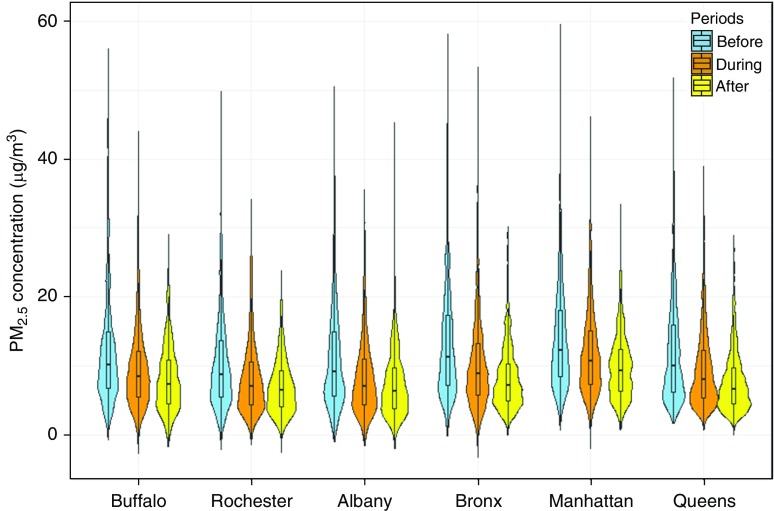
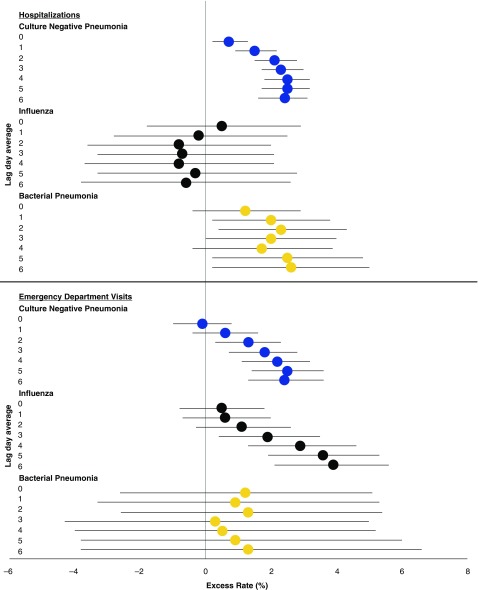
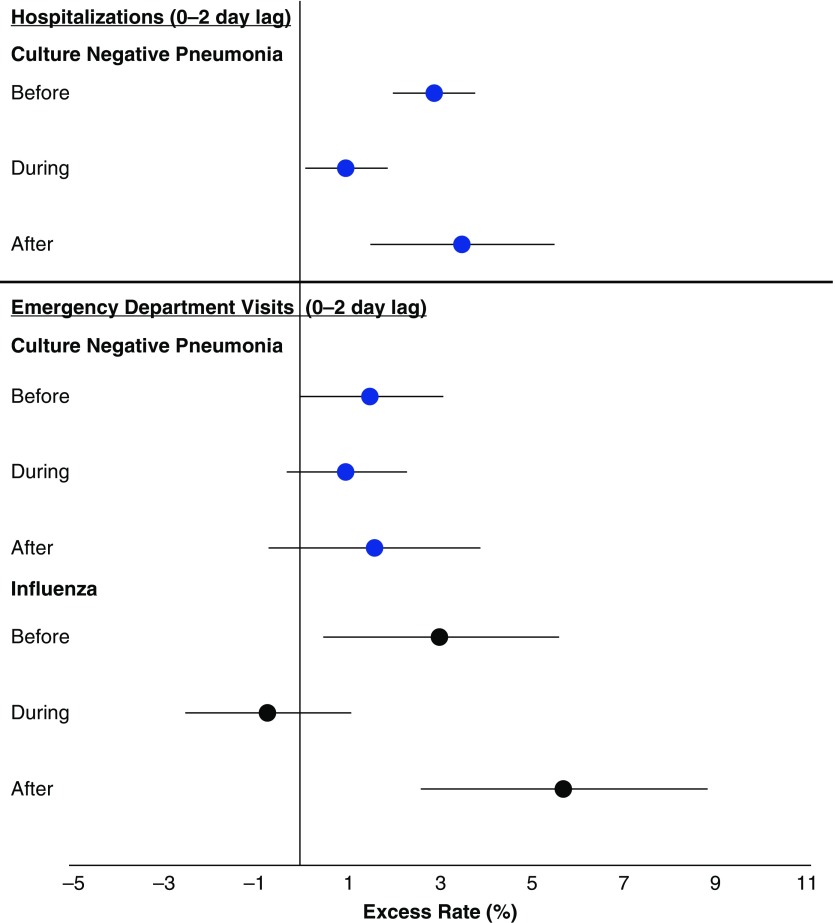
Rationale: Fine particulate matter air pollution of 2.5 μm or less in diameter (PM2.5) has been associated with an increased risk of respiratory disease, but assessments of specific respiratory infections in adults are lacking. Objectives: To estimate the rate of respiratory infection healthcare encounters in adults associated with acute increases in PM2.5 concentrations. Methods: Using case–crossover methods, we studied 498,118 adult New York State residents with a primary diagnosis of influenza, bacterial pneumonia, or culture-negative pneumonia upon hospitalization or emergency department (ED) visit (2005–2016). We estimated the relative rate of healthcare encounters associated with increases in PM2.5 in the previous 1–7 days and explored differences before (2005–2007), during (2008–2013), and after (2014–2016) implementation of air quality policies and economic changes. Results: Interquartile range increases in PM2.5 over the previous 7 days were associated with increased excess rates (ERs) of culture-negative pneumonia hospitalizations (2.5%; 95% confidence interval [CI], 1.7–3.2%) and ED visits (2.5%; 95% CI, 1.4–3.6%), and increased ERs of influenza ED visits (3.9%; 95% CI, 2.1–5.6%). Bacterial pneumonia hospitalizations, but not ED visits, were associated with increases in PM2.5 and, though imprecise, were of a similar magnitude to culture-negative pneumonia (Lag Day 6 ER, 2.3%; 95% CI, 0.3–4.3). Increased relative rates of influenza ED visits and culture-negative pneumonia hospitalizations were generally larger in the “after” period (P < 0.025 for both outcomes), compared with the “during” period, despite reductions in overall PM2.5 concentrations. Conclusions: Increased rates of culture-negative pneumonia and influenza were associated with increased PM2.5 concentrations during the previous week, which persisted despite reductions in PM2.5 from air quality policies and economic changes. Though unexplained, this temporal variation may reflect altered toxicity of different PM2.5 mixtures or increased pathogen virulence.
Overview
The claims and statistics of this paper haven’t been checked yet.
Free: it reads the open-access text and checks the first 5 claims that cite a source we can check. Create a free account to check every claim.
Integrity signals
Registry
Cites
Statistics
Figures
Verification
Claims the paper makes
The claims and statistics of this paper haven’t been checked yet.
Free: it reads the open-access text and checks the first 5 claims that cite a source we can check. Create a free account to check every claim.
Claims other papers make about this one
Each is checked against this paper’s own text: does it say what the citing paper says it does?
The cited source says what the claim attributes to it.
In the citing paper
“increased rates of culture-negative pneumonia and influenza were associated with increased PM2.5 concentrations during the previous week”
From Is Pollution the Primary Driver of Infectious Syndemics? (2024) · cites this paper as [30]
Self-check
Percentages, sums and reported differences re-computed from the paper’s own numbers.
The self-check needs the paper’s full text.
Citations
Cites
Health Effects of Fine Particulate Air Pollution: Lines that Connect
Pope, C. A., & Dockery, D. W. (2006) · Journal of the Air & Waste Management Association · doi:10.1080/10473289.2006.10464485 · Cited by 6,583
Cohen, A. J., Brauer, M., Burnett, R., Anderson, H. R., Frostad, J., Estep, K., Balakrishnan, K., Brunekreef, B., Dandona, L., Dandona, R., et al. (2017) · The Lancet · doi:10.1016/s0140-6736(17)30505-6 · Cited by 6,583
The Case-Crossover Design: A Method for Studying Transient Effects on the Risk of Acute Events
Maclure, M. (1991) · American Journal of Epidemiology · doi:10.1093/oxfordjournals.aje.a115853 · Cited by 2,327
Community-Acquired Pneumonia Requiring Hospitalization among U.S. Adults
Jain, S., Self, W. H., Wunderink, R. G., Fakhran, S., Balk, R., Bramley, A. M., Reed, C., Grijalva, C. G., Anderson, E. J., Courtney, D. M., et al. (2015) · New England Journal of Medicine · doi:10.1056/nejmoa1500245 · Cited by 2,323
Innate immune recognition of viral infection
Kawai, T., & Akira, S. (2006) · Nature Immunology · doi:10.1038/ni1303 · Cited by 1,899
The biology of influenza viruses
Bouvier, N. M., & Palese, P. (2008) · Vaccine · doi:10.1016/j.vaccine.2008.07.039 · Cited by 1,186
Model selection for ecologists: the worldviews of AIC and BIC
Aho, K., Derryberry, D., & Peterson, T. (2014) · Ecology · doi:10.1890/13-1452.1 · Cited by 1,165
Exposure measurement error in time-series studies of air pollution: concepts and consequences
Zeger, S. L., Thomas, D., Dominici, F., Samet, J. M., Schwartz, J., Dockery, D., & Cohen, A. (2000) · Environmental Health Perspectives · doi:10.1289/ehp.00108419 · Cited by 1,156
Incubation periods of acute respiratory viral infections: a systematic review
Lessler, J., Reich, N. G., Brookmeyer, R., Perl, T. M., Nelson, K. E., & Cummings, D. A. (2009) · The Lancet Infectious Diseases · doi:10.1016/s1473-3099(09)70069-6 · Cited by 883
Surveillance of Vaccination Coverage Among Adult Populations — United States, 2014
Williams, W. W., Lu, P.-J., O’Halloran, A., Kim, D. K., Grohskopf, L. A., Pilishvili, T., Skoff, T. H., Nelson, N. P., Harpaz, R., Markowitz, L. E., et al. (2016) · MMWR. Surveillance Summaries · doi:10.15585/mmwr.ss6501a1 · Cited by 500
Research works printed but not linked: 1
- Xia T Kovochich M Nel A The role of reactive oxygen species and oxidative stress in mediating particulate matter injury Clin Occup Environ Med 2006 5 817 836 17110294
Cited by
Inflammatory effects of particulate matter air pollution
Arias-Pérez, R. D., Taborda, N. A., Gómez, D. M., Narvaez, J. F., Porras, J., & Hernandez, J. C. (2020) · Environmental Science and Pollution Research · doi:10.1007/s11356-020-10574-w · Cited by 408
Effects of air pollutants on the transmission and severity of respiratory viral infections
Domingo, J. L., & Rovira, J. (2020) · Environmental Research · doi:10.1016/j.envres.2020.109650 · Cited by 387
“Croft et al. (2019) investigated nearly 500,000 adults from the state of New York with a diagnosis of influenza, bacterial pneumonia, or culture-negative pneumonia, between 2005 and 2016, with the objective of associating the rate of these infections to the increases of PM2.”
Indoor Air Pollution and Respiratory Health
Raju, S., Siddharthan, T., & McCormack, M. C. (2020) · Clinics in Chest Medicine · doi:10.1016/j.ccm.2020.08.014 · Cited by 217
Garcia, A., Santa-Helena, E., De Falco, A., de Paula Ribeiro, J., Gioda, A., & Gioda, C. R. (2023) · Water, Air, & Soil Pollution · doi:10.1007/s11270-023-06278-9 · Cited by 167
“5 induced systemic inflammatory response and increased hospitalization rates due to lung diseases, such as asthma (Tian et al., 2017), pneumonia, and influenza (Croft et al., 2019; Zhang et al., 2017).”
BackgroundSARS-CoV-2 infection, COVID-19 pathogenesis, and exposure to air pollution: What is the connection?
Woodby, B., Arnold, M. M., & Valacchi, G. (2021) · Annals of the New York Academy of Sciences · doi:10.1111/nyas.14512 · Cited by 160
The short-term effects of air pollutants on influenza-like illness in Jinan, China
Su, W., Wu, X., Geng, X., Zhao, X., Liu, Q., & Liu, T. (2019) · BMC Public Health · doi:10.1186/s12889-019-7607-2 · Cited by 157
Sulaymon, I. D., Zhang, Y., Hopke, P. K., Zhang, Y., Hua, J., & Mei, X. (2020) · Atmospheric Research · doi:10.1016/j.atmosres.2020.105362 · Cited by 130
“5 concentrations and a variety of cardiovascular and respiratory health endpoints, including mortality, hospital admissions, emergency department visits, other medical visits, respiratory illness and symptoms, and physiologic changes in pulmonary function (e.g., Ayuni et al., 2014; Pope and Dockery, 2006; Zhang et al.…”
Self-citationHealth Effects Associated with PM2.5: a Systematic Review
Sharma, S., Chandra, M., & Kota, S. H. (2020) · Current Pollution Reports · doi:10.1007/s40726-020-00155-3 · Cited by 144
Croft, D. P., Zhang, W., Lin, S., Thurston, S. W., Hopke, P. K., van Wijngaarden, E., Squizzato, S., Masiol, M., Utell, M. J., & Rich, D. Q. (2019) · Environmental Science & Technology · doi:10.1021/acs.est.9b04295 · Cited by 121
Self-citationImpact of climate and ambient air pollution on the epidemic growth during COVID-19 outbreak in Japan
Azuma, K., Kagi, N., Kim, H., & Hayashi, M. (2020) · Environmental Research · doi:10.1016/j.envres.2020.110042 · Cited by 122
Changes in the acute response of respiratory diseases to PM2.5 in New York State from 2005 to 2016
Hopke, P. K., Croft, D. P., Zhang, W., Lin, S., Masiol, M., Squizzato, S., Thurston, S. W., van Wijngaarden, E., Utell, M. J., & Rich, D. Q. (2019) · The Science of The Total Environment · doi:10.1016/j.scitotenv.2019.04.357 · Cited by 110
Self-citationAir pollution and respiratory infections: the past, present, and future
Monoson, A., Schott, E., Ard, K., Kilburg-Basnyat, B., Tighe, R. M., Pannu, S., & Gowdy, K. M. (2023) · Toxicological Sciences · doi:10.1093/toxsci/kfad003 · Cited by 95
Kogevinas, M., Castaño‐Vinyals, G., Karachaliou, M., Espinosa, A., de Cid, R., García‐Aymerich, J., Carreras, A., Cortés, B., Pleguezuelos, V., Jiménez, A., et al. (2021) · Environmental Health Perspectives · doi:10.1289/ehp9726 · Cited by 100
“Results from the COVICAT cohort are consistent with the broader literature linking air pollution exposure with hospital admission for other viral respiratory infections, such as influenza and pneumonia (Croft et al. 2019; Domingo and Rovira 2020).”
ResultLiu, Y., Austin, E., Xiang, J., Gould, T. R., Larson, T., & Seto, E. (2021) · GeoHealth · doi:10.1029/2020gh000359 · Cited by 87
“5 exposure, especially for children (Croft et al., 2018; Dominici et al., 2006; Horne et al., 2018).”
Sulaymon, I. D., Zhang, Y., Hopke, P. K., Hu, J., Zhang, Y., Li, L., Xj, M., Gong, K., Shi, Z., Zhao, B., et al. (2021) · Environmental Research · doi:10.1016/j.envres.2021.111186 · Cited by 78
Self-citationRisk Factors for Respiratory Viral Infections: A Spotlight on Climate Change and Air Pollution
Burbank, A. J. (2023) · Journal of Asthma and Allergy · doi:10.2147/jaa.s364845 · Cited by 74
“Short-term exposure to increased PM was associated with increased susceptibility to respiratory infections including influenza(24,52) and influenza-like illness, RSV bronchiolitis,(25,26,56) and acute lower respiratory tract infections (LTRI)(22) including pneumonia.(23,24,57) Chen et al observed that across 47 Chines…”
BackgroundContribution of Particulates to Airborne Disease Transmission and Severity: A Review
Myung, H., & Joung, Y. S. (2024) · Environmental Science & Technology · doi:10.1021/acs.est.3c08835 · Cited by 69
Acute Effects of Ambient Air Pollution on Asthma Emergency Department Visits in Ten U.S. States
Bi, J., D’Souza, R. R., Moss, S. E., Senthilkumar, N., Russell, A. G., Scovronick, N., Chang, H. H., & Ebelt, S. (2023) · Environmental Health Perspectives · doi:10.1289/ehp11661 · Cited by 61
“41,42 The single-day lag model had a similar structure with only one pollution term on a speci fi c day and a corresponding b coe ffi cient.”
Montgomery, M. T., Sajuthi, S. P., Cho, S., Everman, J. L., Rios, C. L., Goldfarbmuren, K. C., Jackson, N. D., Saef, B. A., Cromie, M. M., Eng, C. S., et al. (2020) · American Journal of Respiratory Cell and Molecular Biology · doi:10.1165/rcmb.2019-0454oc · Cited by 68
Hopke, P. K., Croft, D. P., Zhang, W., Lin, S., Masiol, M., Squizzato, S., Thurston, S. W., van Wijngaarden, E., Utell, M. J., & Rich, D. Q. (2019) · Environmental Research · doi:10.1016/j.envres.2019.108912 · Cited by 59
Self-citationMa, J., Chiu, Y., Kao, C., Chuang, C.-N., Chen, C., Lai, C., & Kuo, M. (2024) · European Respiratory Review · doi:10.1183/16000617.0259-2023 · Cited by 87
Yang, C., Chen, Y.-A., Chan, Y.-W., Lee, C.-L., Tsan, Y., Chan, W., & Liu, P. (2020) · The Journal of Supercomputing · doi:10.1007/s11227-020-03182-5 · Cited by 51
“Though unexplained, this temporal variation may reflect altered toxicity of different PM 2.5 mixtures or increased pathogen virulence [6–15].”
BackgroundInfluentialAir Pollution Is Associated with COVID-19 Incidence and Mortality in Vienna, Austria
Hutter, H., Poteser, M., Moshammer, H. M., Lemmerer, K., Mayer, M., Weitensfelder, L., Wallner, P., & Kundi, M. (2020) · International Journal of Environmental Research and Public Health · doi:10.3390/ijerph17249275 · Cited by 49
Meo, S. A., Abukhalaf, A. A., Sami, W., & Hoang, T. D. (2021) · Journal of King Saud University - Science · doi:10.1016/j.jksus.2021.101373 · Cited by 52
Sulaymon, I. D., Zhang, Y., Hu, J., Hopke, P. K., Zhang, Y., Zhao, B., Xing, J., Li, L., & Mei, X. (2021) · Journal of Environmental Management · doi:10.1016/j.jenvman.2021.112827 · Cited by 45
Self-citationMinh, V. T. T., Tín, T. T., & To, H. T. (2021) · Aerosol and Air Quality Research · doi:10.4209/aaqr.210108 · Cited by 50
Pompilio, A., & Bonaventura, G. D. (2020) · Critical Reviews in Microbiology · doi:10.1080/1040841x.2020.1816894 · Cited by 48
Flores‐Ramírez, R., Berumen-Rodríguez, A. A., Martínez-Castillo, M. A., Alcántara-Quintana, L. E., Díaz‐Barriga, F., & de León-Martínez, L. D. (2021) · Global Public Health · doi:10.1080/17441692.2021.1923777 · Cited by 55
Sofowote, U. M., Healy, R. M., Su, Y., Debosz, J., Noble, M., Munoz, A., Jeong, C., Wang, J. M., Hilker, N., Evans, G. J., et al. (2020) · The Science of The Total Environment · doi:10.1016/j.scitotenv.2020.143225 · Cited by 43
Self-citationMasiol, M., Squizzato, S., Chalupa, D., Rich, D. Q., & Hopke, P. K. (2018) · The Science of The Total Environment · doi:10.1016/j.scitotenv.2018.11.111 · Cited by 48
Self-citationKapwata, T., Wright, C. Y., du Preez, D. J., Kunene, Z., Mathee, A., Ikeda, T., Landman, W. A., Maharaj, R., Sweijd, N. A., Minakawa, N., et al. (2021) · The Science of The Total Environment · doi:10.1016/j.scitotenv.2021.148307 · Cited by 42
Şahin, Ü. A. (2020) · Aerosol and Air Quality Research · doi:10.4209/aaqr.2020.05.0239 · Cited by 38
“5 (r = 0.45) and; PM10 (r = 0.40) (Croft et al., 2019).”
InfluentialNeurodegenerative hospital admissions and long-term exposure to ambient fine particle air pollution
van Wijngaarden, E., Rich, D. Q., Zhang, W., Thurston, S. W., Lin, S., Croft, D. P., Squizzato, S., Masiol, M., & Hopke, P. K. (2020) · Annals of Epidemiology · doi:10.1016/j.annepidem.2020.09.012 · Cited by 39
Self-citationKirwa, K., Eckert, C., Vedal, S., Hajat, A., & Kaufman, J. D. (2021) · BMJ Open Respiratory Research · doi:10.1136/bmjresp-2020-000866 · Cited by 42
Sherris, A. R., Begum, B. A., Baiocchi, M., Goswami, D. R., Hopke, P. K., Brooks, W. A., & Luby, S. P. (2021) · Environmental Pollution · doi:10.1016/j.envpol.2021.118073 · Cited by 42
Self-citationMa, Q., Qi, Y., Shan, Q., Liu, S., & He, H. (2020) · Environmental Research · doi:10.1016/j.envres.2020.109949 · Cited by 37
Nozza, E., Valentini, S., Melzi, G., Vecchi, R., & Corsini, E. (2021) · The Science of The Total Environment · doi:10.1016/j.scitotenv.2021.146391 · Cited by 36
The effect of air pollution on the transcriptomics of the immune response to respiratory infection
Croft, D. P., Burton, D. S., Nagel, D. J., Bhattacharya, S., Falsey, A. R., Georas, S. N., Hopke, P. K., Johnston, C. J., Kottmann, R. M., Litonjua, A. A., et al. (2021) · Scientific Reports · doi:10.1038/s41598-021-98729-8 · Cited by 35
“5) concentrations have been associated with increased emergency department (ED) visits for influenza and culture negative pneumonia in adults [2].”
BackgroundSelf-citationSulaymon, I. D., Zhang, Y., Hopke, P. K., Hu, J., Rupakheti, D., Xie, X., Zhang, Y., Ajibade, F. O., Hua, J., & She, Y. (2021) · Journal of Cleaner Production · doi:10.1016/j.jclepro.2021.129641 · Cited by 30
Self-citationLu, B., Wang, Y., Zhu, Z., Zhang, Z., Dong, T., Li, F., Gao, Y., Du, X., & Qu, Z. (2020) · Epidemiology and Infection · doi:10.1017/s0950268820001387 · Cited by 29
Ku, Y., Kwon, S. B., Yoon, J., Mun, S., & Chang, M. Y. (2022) · Clinical and Experimental Otorhinolaryngology · doi:10.21053/ceo.2021.01536 · Cited by 38
“Croft et al. [28] studied 500,000 adults diagnosed with influenza, bacterial pneumonia, or culture-negative pneumonia in New York and reported that the incidence of culture-negative pneumonia and influenza was associated with an increase in PM 2.5 concentrations over the previous weeks.”
InfluentialBi, J., D’Souza, R. R., Rich, D. Q., Hopke, P. K., Russell, A. G., Liu, Y., Chang, H. H., & Ebelt, S. (2020) · Environmental Research · doi:10.1016/j.envres.2020.109967 · Cited by 29
Self-citationAirborne particulate matter in Tehran’s ambient air
Torkashvand, J., Jafari, A. J., Hopke, P. K., Shahsavani, A., Hadei, M., & Kermani, M. (2021) · Journal of Environmental Health Science and Engineering · doi:10.1007/s40201-020-00573-x · Cited by 26
Self-citationChen, Y., Rich, D. Q., Masiol, M., & Hopke, P. K. (2023) · Atmospheric Environment · doi:10.1016/j.atmosenv.2023.119996 · Cited by 26
“Although substantial progress in improving air quality had been made from 1970 to the early 2000s, it was clear that to protect public health, further reductions would be needed (e.g., Zhang et al., 2018; Croft et al., 2019; Hopke et al., 2019).”
Self-citationThe interplay between energy technologies and human health: Implications for energy transition
Sadegh Seddighi, K., Anthony, E. J., Seddighi, H., & Johnsson, F. (2023) · Energy Reports · doi:10.1016/j.egyr.2023.04.351 · Cited by 35
Lin, S., Xue, Y., Thandra, S., Qi, Q., Hopke, P. K., Thurston, S. W., Croft, D. P., Utell, M. J., & Rich, D. Q. (2024) · Environmental Pollution · doi:10.1016/j.envpol.2024.124585 · Cited by 28
Self-citationAir pollutants and outpatient visits for influenza-like illness in Beijing, China
Li, X., Xu, J., Wang, W., Liang, J.-J., Deng, Z., Du, J., Xie, M.-Z., Wang, X., Liu, Y., Cui, F., et al. (2021) · PeerJ · doi:10.7717/peerj.11397 · Cited by 27
Land, W. G. (2020) · International Journal of Environmental Research · doi:10.1007/s41742-020-00276-z · Cited by 23
“5 mm or less in diameter are associated with increased rates of respiratory infections, including influenza (Croft et al. 2019).”
BackgroundRadmanesh, E., Maleki, H., Goudarzi, G., Zahedi, A., Kalkhajeh, S. G., Hopke, P. K., Mard, S. A., & Olad, S. (2019) · Aeolian Research · doi:10.1016/j.aeolia.2019.100541 · Cited by 23
Self-citationReview of scientific research on air quality and environmental health risk and impact for PICTS
Hilly, J. J., Singh, K., Jagals, P., Mani, F. S., Turagabeci, A., Ashworth, M., Mataki, M., Morawska, L., Knibbs, L. D., Stuetz, R. M., et al. (2024) · The Science of The Total Environment · doi:10.1016/j.scitotenv.2024.173628 · Cited by 37
Impact of Air Pollution on Lung Function among Preadolescent Children in Two Cities in Poland
Dąbrowiecki, P., Adamkiewicz, Ł., Mucha, D., Czechowski, P. O., Soliński, M., Chciałowski, A., & Badyda, A. J. (2021) · Journal of Clinical Medicine · doi:10.3390/jcm10112375 · Cited by 21
“Air pollution has been linked to an increased risk of respiratory infections [36], which could explain the increased frequency of coughing episodes in Zabrze.”
BackgroundShahbaz, M. A., Martikainen, M., Rönkkö, T. J., Komppula, M., Jalava, P., & Roponen, M. (2020) · Environmental Research · doi:10.1016/j.envres.2020.110244 · Cited by 23
Banan, Z., & Gernand, J. M. (2020) · Energy Policy · doi:10.1016/j.enpol.2020.111979 · Cited by 20
Landguth, E. L., Knudson, J., Graham, J., Orr, A., Coyle, E. A., Smith, P. G., Semmens, E. O., & Noonan, C. W. (2024) · Environmental Health · doi:10.1186/s12940-024-01082-2 · Cited by 36
“In New York, USA, increases in PM 2.5 from the previous 7 days were found to be associated with hospital visits for culture-negative pneumonia and bacterial pneumonia [18].”
BackgroundInfluentialTao, Y., Zhang, X., Qiu, G., Spillmann, M., Ji, Z., & Wang, J. (2022) · Environment International · doi:10.1016/j.envint.2022.107266 · Cited by 19
Wang, M., Hopke, P. K., Masiol, M., Thurston, S. W., Cameron, S. J., Ling, F. S. K., van Wijngaarden, E., Croft, D. P., Squizzato, S., Thevenet-Morrison, K. N., et al. (2019) · Environmental Health · doi:10.1186/s12940-019-0521-3 · Cited by 20
Self-citationChanging Emissions Results in Changed PM2.5 Composition and Health Impacts
Hopke, P. K., & Hidy, G. M. (2022) · Atmosphere · doi:10.3390/atmos13020193 · Cited by 20
Self-citationImpaired PPARγ activation by cadmium exacerbates infection-induced lung injury
Larson‐Casey, J. L., Liu, S., Pyles, J. M., Lapi, S. E., Saleem, K., Antony, V. B., Gonzalez, M. L., Crossman, D. K., & Carter, A. B. (2023) · JCI Insight · doi:10.1172/jci.insight.166608 · Cited by 21
“JCI Insight 2023;8(9):e166608 https://doi.”
BackgroundNational Trends in Oral Antibiotic Prescribing in United States Physician Offices from 2009 to 2016
Young, E. H., Panchal, R. M., Yap, A., & Reveles, K. R. (2020) · Pharmacotherapy The Journal of Human Pharmacology and Drug Therapy · doi:10.1002/phar.2456 · Cited by 19
Chen, N., Shi, J., Huang, J., Yu, W., Liu, R., Gu, L., Yang, R., Yu, Z., Liu, Q., Yang, Y., et al. (2020) · BMC Public Health · doi:10.1186/s12889-020-8423-4 · Cited by 17
Analysis and Interpretation of Global Air Quality
Sharma, S., Mishra, R. R., Joshi, V., & Kour, K. (2020) · International Conference on Computing, Communication and Networking Technologies (ICCCNT) · doi:10.1109/icccnt49239.2020.9225532 · Cited by 16
“As we speak about the harmful effects of air pollution [6], we also need to be mindful of air pollutants and to see how we can determine whether or not we are effective at breathing air quality as shown in Table I.”
BackgroundHealth system adaptation to climate change: a Peruvian case study
Aracena, S., Barboza, M., Zamora, V., Salaverry, O., & Montag, D. (2020) · Health Policy and Planning · doi:10.1093/heapol/czaa072 · Cited by 22
Hopke, P. K., & Hill, E. (2021) · Atmospheric Pollution Research · doi:10.1016/j.apr.2021.01.018 · Cited by 16
Self-citationClimate Change and the Future of Allergies and Asthma
Burbank, A. J. (2025) · Current Allergy and Asthma Reports · doi:10.1007/s11882-025-01201-0 · Cited by 18
Willis, M. D., Hill, E., Kile, M. L., Carozza, S. E., & Hystad, P. (2020) · International Journal of Epidemiology · doi:10.1093/ije/dyaa137 · Cited by 16
Sulaymon, I. D., Zhang, Y., Hopke, P. K., Guo, S., Ye, F., Sun, J., Zhu, Y., & Hu, J. (2023) · Atmospheric Research · doi:10.1016/j.atmosres.2023.106940 · Cited by 14
Self-citationMechanism of ambient particulate matter and respiratory infections
Buonfiglio, L. G. V., & Comellas, A. P. (2020) · Journal of Thoracic Disease · doi:10.21037/jtd.2019.12.33 · Cited by 19
“For example, epidemiologic data showed that high PM exposure increased the risk of culture negative pneumonia (10).”
Gram-Positive Pneumonia: Possibilities Offered by Phage Therapy
Fernández, L., Cima-Cabal, M. D., Duarte, A. C., Rodrı́guez, A., Garcı́a-Suárez, M. D. M., & García, P. (2021) · Antibiotics · doi:10.3390/antibiotics10081000 · Cited by 13
“In general, avoiding air pollution is also considered an important factor, given that an increase in pneumonia hospitalization rates has been observed in contaminated environments [31].”
BackgroundJin, L., Zhou, T., Fang, S., Zhou, X., Han, B., & Bai, Y. (2022) · Air Quality Atmosphere & Health · doi:10.1007/s11869-022-01244-6 · Cited by 13
Seasonal associations between air pollutants and influenza in 10 cities of southern China
Zhang, R. Y., Li, Y., Bi, P., Wu, S., Meng, Y., Meng, Y., Wang, Y., Wang, S., Huang, Y., Liang, J., et al. (2023) · International Journal of Hygiene and Environmental Health · doi:10.1016/j.ijheh.2023.114200 · Cited by 14
Wildfire Smoke Exposure: Covid19 Comorbidity?
Leifer, I., Kleinman, M. T., Blake, D. R., Tratt, D. M., & Marston, C. (2021) · Journal of Respiration · doi:10.3390/jor1010007 · Cited by 13
“5 was associated with increased adult pneumonia and influenza infection rates after a 5-to-7-day lag [7].”
BackgroundFinancing Costs and Health Effects of Air Pollution in the Tri-City Agglomeration
Czechowski, P. O., Piksa, K., Dąbrowiecki, P., Oniszczuk-Jastrząbek, A. I., Czermański, E., Owczarek, T., Badyda, A. J., & Cirella, G. T. (2022) · Frontiers in Public Health · doi:10.3389/fpubh.2022.831312 · Cited by 14
Co-occurrence of pneumoconiosis with COPD, pneumonia and lung cancer
Rayens, N. T., Rayens, E. A., & Tighe, R. M. (2022) · Occupational Medicine · doi:10.1093/occmed/kqac079 · Cited by 15
Sulaymon, I. D., Zhang, Y., Hopke, P. K., Ye, F., Gong, K., Mao, J., & Hu, J. (2023) · Journal of Geophysical Research Atmospheres · doi:10.1029/2022jd038360 · Cited by 19
Self-citationSun, Z., Ji, N., Jiang, J., Tao, Y., Zhang, E., Yang, X., Wang, Z., Chen, Z., Huang, M., & Zhang, M. (2021) · Frontiers in Microbiology · doi:10.3389/fmicb.2020.525976 · Cited by 12
Kotsiou, O. S., Kotsios, V. S., Lampropoulos, I. C., Zidros, T., Zarogiannis, S. G., & Gourgoulianis, K. I. (2021) · International Journal of Environmental Research and Public Health · doi:10.3390/ijerph18105088 · Cited by 11
Breitner, S., Su, C., Franck, U. F., Wiedensohler, A., Cyrys, J., Pan, X., Wichmann, H. ‐., Schneider, A. E., & Peters, A. (2021) · Frontiers in Environmental Science · doi:10.3389/fenvs.2021.624180 · Cited by 11
“Once an infection occurs, increased pulmonary and systemic inflammation may also contribute to, for example, greater pneumonia (Pirozzi et al., 2017; Croft et al., 2019).”
BackgroundSmyth, T., & Jaspers, I. (2023) · American Journal of Physiology-Lung Cellular and Molecular Physiology · doi:10.1152/ajplung.00085.2023 · Cited by 13
Yount, C., Utell, M. J., Hopke, P. K., Thurston, S. W., Lin, S., Ling, F. S. K., Chen, Y., Chalupa, D., Deng, X., & Rich, D. Q. (2022) · Environmental Research · doi:10.1016/j.envres.2022.114445 · Cited by 10
“, 2018), respiratory infections (Croft et al., 2019), and respiratory diseases/events (Hopke et al.”
BackgroundSelf-citationKotsiou, O. S., Saharidis, G. K. D., Kalantzis, G., Fradelos, Ε. C., & Gourgoulianis, K. I. (2021) · International Journal of Environmental Research and Public Health · doi:10.3390/ijerph18136748 · Cited by 14
Air Pollution: A Neglected Risk Factor for Dementia in Latin America and the Caribbean
dos Santos, N. V., Yariwake, V. Y., Marques, K. D. V., Veras, M. M., & Fajersztajn, L. (2021) · Frontiers in Neurology · doi:10.3389/fneur.2021.684524 · Cited by 15
Huh, H., Kim, E., Yoon, U. A., Choi, M. J., Lee, H., Kwon, S., Kim, C. T., Kim, D. K., Kim, Y. S., Lim, C. S., et al. (2022) · Kidney Research and Clinical Practice · doi:10.23876/j.krcp.21.228 · Cited by 10
“Although most studies on air pollution and risk of infection have focused on the relationship between fine particulate matter and respiratory infection, air pollution has also been shown to be associated with peritoneal-related infections and pneumonia [29].”
BackgroundYang, J., Xu, X. J., Ma, X., Wang, Z., You, Q., Shan, W., Yang, Y., Bo, X., & Yin, C. (2023) · Environmental Science and Pollution Research · doi:10.1007/s11356-023-28682-8 · Cited by 13
“Croft et al. (2019) reported that the incidence of pneumonia and influenza was closely linked with the PM 2.5 concentration in the previous weeks.”
BackgroundInfluentialReckien, D. (2021) · Planning Theory & Practice · doi:10.1080/14649357.2021.1951578 · Cited by 12
“, 2020), and other respiratory diseases like pneumonia and influenza (Croft et al., 2019; Zhao et al., 2019) are connected.”
BackgroundIs Pollution the Primary Driver of Infectious Syndemics?
Singer, M. (2024) · Pathogens · doi:10.3390/pathogens13050370 · Cited by 8
“Additionally, Croft et al. [30], in a study of adults from New York State, concluded that “increased rates of culture-negative pneumonia and influenza were associated with increased PM 2.5 concentrations during the previous week”.”
BackgroundInfluentialRoudreo, B., & Puangthongthub, S. (2024) · Journal of Preventive Medicine and Public Health · doi:10.3961/jpmph.23.349 · Cited by 8
“Additionally, Croft et al. [18] reported in a New York study that a significant association was present between higher rates of influenza and increased PM 2.5 levels over the preceding 1-7 days.”
BackgroundMethodInfluentialOrr, A., Kendall, R. L., Jaffar, Z. H., Graham, J., Migliaccio, C. T., Knudson, J., Noonan, C. W., & Landguth, E. L. (2025) · Frontiers in Epidemiology · doi:10.3389/fepid.2025.1475141 · Cited by 11
Lin, S., Xue, Y., Thandra, S., Qi, Q., Thurston, S. W., Croft, D. P., Utell, M. J., Hopke, P. K., & Rich, D. Q. (2024) · Journal of Hazardous Materials · doi:10.1016/j.jhazmat.2024.136737 · Cited by 8
Self-citationNguyen, H. T., Ramachandran, S., Nguyen, D., & Roper, C. (2025) · Environmental Pollution · doi:10.1016/j.envpol.2025.126150 · Cited by 9
Zhang, S., Chen, X., Dai, C., Wang, J., & Wang, H. (2021) · Environmental Geochemistry and Health · doi:10.1007/s10653-021-01154-z · Cited by 8
Simões, M., Zorn, J., Hogerwerf, L., Velders, G. J. M., Portengen, L., Gerlofs-Nijland, M. E., Dijkema, M., Strak, M., Jacobs, J. H., Wesseling, J., et al. (2024) · International Journal of Hygiene and Environmental Health · doi:10.1016/j.ijheh.2024.114382 · Cited by 8
Broin, E. Ó., Kelly, J. A., Santos, G. S., Grythe, H., Svendby, T., Solberg, S., Kelleher, L., & Clinch, J. P. (2022) · Atmospheric Environment X · doi:10.1016/j.aeaoa.2022.100155 · Cited by 10
Gandhi, C. K., Mikerov, A. N., Durrani, F., Umstead, T. M., Hu, S., Wang, G., Phelps, D. S., & Floros, J. (2020) · Microorganisms · doi:10.3390/microorganisms8091354 · Cited by 7
Saha, B., Debnath, A., & Saha, B. (2020) · doi:10.21203/rs.3.rs-34647/v1 · Cited by 7
Landguth, E. L., Knudson, J., Graham, J., Orr, A., Coyle, E. A., Smith, P. G., Semmens, E. O., & Noonan, C. W. (2023) · Research Square · doi:10.21203/rs.3.rs-3438033/v1 · Cited by 7
Kim, S., Yi, S., Kim, H., Park, S.-M., Hwang, T. K., Jung, S.-A., Kim, H.-S., Jeon, K., Hopke, P. K., Koutrakis, P., et al. (2024) · Environmental Research · doi:10.1016/j.envres.2024.120230 · Cited by 8
Self-citationKim, H., Lee, H. W., Park, J., Lee, C. H., & Lee, C. (2020) · Environmental Research Letters · doi:10.1088/1748-9326/abccf6 · Cited by 5
Galsuren, J., Dambadarjaa, D., Tighe, R. M., Gray, G. C., & Zhang, J. J. (2025) · Current Environmental Health Reports · doi:10.1007/s40572-025-00484-9 · Cited by 10
“A case-crossover study in US found that interquartile range increases in PM 2.5 over the preceding seven days were associated with a 3.9% rise in emergency room visits for influenza [27].”
InfluentialSulaymon, I. D., Mhawish, A., Qahtani, J. A., Shang, J., Alomary, M. A., Hopke, P. K., & Zhang, Y. (2025) · Atmospheric Research · doi:10.1016/j.atmosres.2025.108527 · Cited by 5
Self-citationSevere Acute Respiratory Syndrome and Particulate Matter Exposure: A Systematic Review
PODURY, S., Kwon, S., Javed, U., Farooqi, M. S., Li, Y., Liu, M., Grünig, G., & Nolan, A. (2023) · Life · doi:10.3390/life13020538 · Cited by 5
Metadata
- Authors
- Croft, D. P., Zhang, W., Lin, S., Thurston, S. W., Hopke, P. K., Masiol, M., Squizzato, S., van Wijngaarden, E., Utell, M. J., & Rich, D. Q.
- Affiliations
- University of Rochester Medicine (US)
- State University of New York (US)
- Clarkson University (US)
- Corresponding author
- Croft, Daniel P.
- ORCID
- Venue
- Annals of the American Thoracic Society
- Publisher
- Oxford University Press (OUP)
- Published
- 2019-03-01
- Volume
- 16
- Issue
- 3
- Pages
- 321-330
- ISSN
- 2325-6621 (ISSN-L)
- 2329-6933
- PMC
- PMC6394122
- OpenAlex
- W2899743447
- Semantic Scholar
- 1062b42ee8f9adf26dd8eb7ad905ffa22fafb1bd
- Cited by
- 161
- References
- 42
- Citations by year
- 2026: 14 · 2025: 11 · 2024: 18 · 2023: 17 · 2022: 23 · 2021: 33 · 2020: 35 · 2019: 9
- FWCI
- 9.63
- Type
- journal article
- Language
- en
- Open access
- hybrid
- doi.org
- Locations
- Annals of the American Thoracic Society (publishedVersion, cc-by)
- Europe PMC (PubMed Central) (publishedVersion, cc-by)
- PubMed Central (publishedVersion, cc-by)
- PubMed (publishedVersion)
- ARCA (Università Ca' Foscari Venezia) (submittedVersion, cc-by)
- Funders
- National Institutes of Health (ES01247, HL066988, T32 - HL066988 -1, HL066988-1)
- National Heart, Lung, and Blood Institute (T32HL066988)
- National Institute of Environmental Health Sciences (P30ES001247)
- Topics
- Physical Sciences › Environmental Science › Health, Toxicology and Mutagenesis › Air Quality and Health Impacts
- Physical Sciences › Environmental Science › Health, Toxicology and Mutagenesis › Indoor Air Quality and Microbial Exposure
- Health Sciences › Medicine › Pulmonary and Respiratory Medicine › Asthma and respiratory diseases
- Keywords
- PM2.5, respiratory infections, influenza, bacterial pneumonia, air quality policy, economic change, hospitalization, emergency department visits, air pollution health effects, New York State
- MeSH terms
- Adolescent, Adult, Aged, Aged, 80 and over, Air Pollution, Costs and Cost Analysis, Female, Follow-Up Studies, Health Policy, Hospitalization, Humans, Male, Middle Aged, Respiratory Tract Infections, Retrospective Studies, Risk Factors, Socioeconomic Factors, United States, Incidence, Health Care Costs, Risk Assessment, Particulate Matter, Young Adult
About these checks
Registry, retraction, Cites and statistics results are computed, not judged, with one exception: a printed reference that no index lists is read once by a model before it counts as a citation error. Claims are extracted by a model and kept only when their quote appears verbatim in the text; each cited source is then checked, with a model’s help, for whether it says what the claim relies on. Those verdicts can be wrong — read the claim’s quote and the cited source before relying on one.
Statistics and arithmetic are recomputed, not judged.
Confidence bands are shown only for fields calibrated on our annotated test set. None is calibrated yet, so no band is shown.
What counts as a claim ›How we measure confidence ›How we check this ›
Are you an author, or do you see a problem with this page? Request a review
Data sources
Bibliographic data: Semantic Scholar, OpenAlex, Crossref.
Contains information from the Semantic Scholar Academic Graph Datasets, made available under the ODC Attribution License (ODC-BY 1.0).
Semantic Scholar’s data is described in: Kinney, R., et al. (2023). The Semantic Scholar Open Data Platform. arXiv:2301.10140.
