

The DOI matches its Crossref record; 3 of the 3 references it cites were found in a registry or an index.
Rice, beans and trade crops on the early maritime Silk Route in Southeast Asia
Overview
The claims and statistics of this paper haven’t been checked yet.
Run the check — free, no account needed. It reads the open-access text and checks the sources it cites.
Integrity signals
Registry
Cites
Statistics
Figures
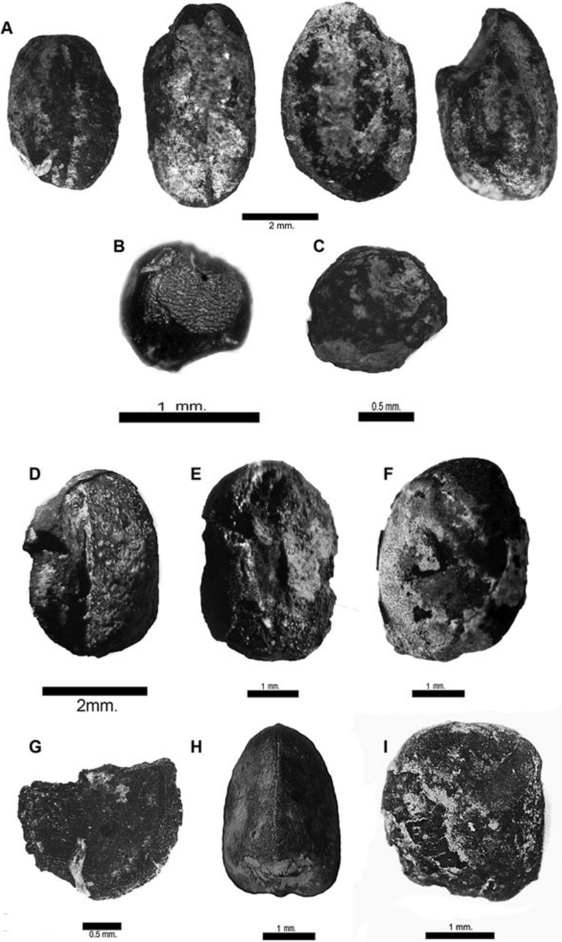
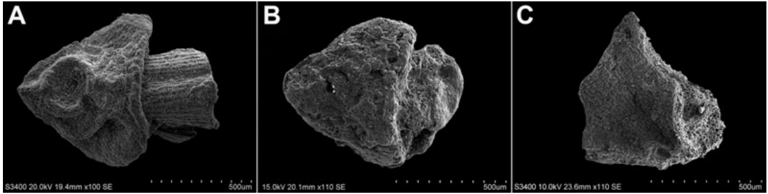
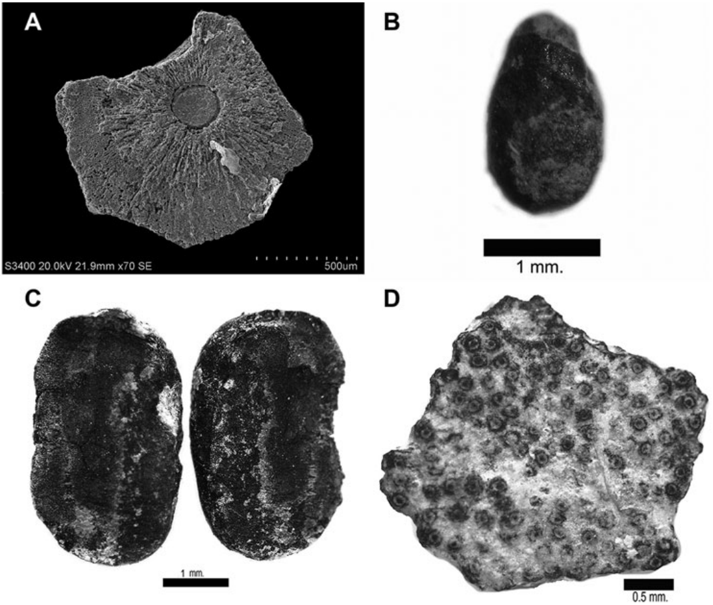
Verification
Claims the paper makes
The claims and statistics of this paper haven’t been checked yet.
Run the check — free, no account needed. It reads the open-access text and checks the sources it cites.
Claims other papers make about this one
Each is checked against this paper’s own text: does it say what the citing paper says it does?
In the citing paper
“The site also has Indian pulses, including horse gram and mung from late-to mid-centuries bce contexts, and possibly even South Asian cotton (Castillo et al. 2016).”
From Recent Developments in the Archaeology of Long-Distance Connections Across the Ancient Indian Ocean (2023) · cites this paper as Castillo et al. 2016
In the citing paper
“At Phu Khao Thong (Thailand), contact with South Asia comes in the form of Indian Rouletted Ware, a sherd with a second-century ce Tamil-Brahmi inscription (the earliest to date in Southeast Asia), and even a single sesame seed (Bellina et al. 2014, Castillo et al. 2016).”
From Recent Developments in the Archaeology of Long-Distance Connections Across the Ancient Indian Ocean (2023) · cites this paper as Castillo et al. 2016
Self-check
Percentages, sums and reported differences re-computed from the paper’s own numbers.
The self-check needs the paper’s full text.
Citations
Cites
Water management and labour in the origins and dispersal of Asian rice
Fuller, D. Q., & Qin, L. (2009) · World Archaeology · doi:10.1080/00438240802668321 · Cited by 296
Self-citationNon-human genetics, agricultural origins and historical linguistics in South Asia
Fuller, D. Q. (2007) · Vertebrate Paleobiology and Paleoanthropology Series · doi:10.1007/1-4020-5562-5_18 · Cited by 87
Self-citationRice in Thailand: The Archaeobotanical Contribution
Castillo, C. (2011) · Rice · doi:10.1007/s12284-011-9070-2 · Cited by 85
Self-citation
Research works printed but not linked: 52
- Van der Maesen, 1989, Plant resources of South-east Asia no. 1: pulses, 39
- Shivashankar, 1989, Plant resources of South-east Asia no. 1: pulses, 48
- 10.3406/befeo.2006.6040 · DOI
- 10.1355/9789814311175-005 · DOI
- 10.1007/s10722-004-7939-2 · DOI
- Niyomdham, 1991, Plant resources of South-east Asia no. 2: edible fruits and nuts, 128
- 10.3406/befeo.2006.6041 · DOI
- 10.1007/s001220051387 · DOI
- 10.1355/9789814311175-007 · DOI
- Galinato, 1999, Upland rice weeds of South and Southeast Asia
- 10.1093/acprof:osobl/9780199549061.001.0001 · DOI
- van Wyk, 2005, Food plants of the world
- van der Veen, 2011, Consumption, trade and innovation: exploring the botanical remains from the Roman and Islamic ports at Quseir al-Qadim, Egypt
- Fuller, 2016, The Oxford handbook of the archaeology of food and diet
- Soerjani, 1987, Weeds of rice in Indonesia
- Castillo, 2015, Archaeogenetic study of prehistoric rice remains from Thailand and India: evidence of early japonica in South and Southeast Asia, Archaeological and Anthropological Sciences, 1
- 10.15184/aqy.2015.94 · DOI
- Weisskopf, 2013, Encyclopedia of global archaeology, 1479
- 10.1086/659308 · DOI
- Tomber, 2008, Indo-Roman trade: from pots to pepper
- 10.6090/jarq.45.23 · DOI
- Castillo, 2010, 50 years of archaeology in Southeast Asia: essays in honour of Ian Glover, 90
- Castillo C. 2013. The archaeobotany of Khao Sam Kaeo and Phu Khao Thong: the agriculture of late prehistoric Southern Thailand. Unpublished PhD dissertation, University College London.
- Anderson, 1993, Plants and people of the Golden Triangle: ethnobotany of the hill tribes of northern Thailand
- Bellina, 2014, Khao Sam Kaeo: an early port-city between the Indian Ocean and the South China Sea
- 10.1007/BF02858644 · DOI
- 10.1006/jasc.2001.0779 · DOI
- Miller, 1969, The spice trade of the Roman Empire 29 BC to AD 641
- 10.1017/S0959774314000547 · DOI
- Jacq-Hergoualc'h, 2002, The Malay Peninsula: crossroads of the maritime Silk Road (100 BC–1300 AD), 10.1163/9789047400684 · DOI
- 10.1179/174963106x123232 · DOI
- Pokharia, 2011, Archaeobotany and archaeology at Kanmer, a Harappan site in Kachchh, Gujarat: evidence for adaptation in response to climatic variability, Current Science, 100, 1833
- Nuttonson, 1963, The physical environment and agriculture of Thailand
- 10.3406/befeo.2006.6039 · DOI
- 10.1663/0013-0001(2004)058[0330:HALOSI]2.0.CO;2 · DOI
- 10.1016/j.jas.2013.04.026 · DOI
- 10.1007/BF02859868 · DOI
- 10.1007/978-94-010-0314-8 · DOI
- Cameron, 2010, 50 years of archaeology in Southeast Asia: essays in honour of Ian Glover, 141
- Calò, 2009, The distribution of bronze drums in early Southeast Asia: trade routes and cultural spheres, 10.30861/9781407303963 · DOI
- 10.1006/jasc.1998.0364 · DOI
- Burkill, 1935, A dictionary of the economic products of the Malay Peninsula
- Fuller D.Q. 2008. The spread of textile production and textile crops in India beyond the Harappan zone: an aspect of the emergence of craft specialization and systematic trade, in T. Osada & A. Uesugi (ed.) Linguistics, archaeology and the human past (Occasional Papers 3): 1--26. Kyoto: Indus Project, Research Institute for Humanity and Nature.
- 10.1007/s12231-012-9204-5 · DOI
- Allen, 2009, La campagne 2009 de la mission Franco-Thai en peninsule Thai-Malaise, 20
- 10.1007/BF02866522 · DOI
- 10.1007/s10722-003-6019-3 · DOI
- Bellina, 2014, Before Siam was born, 68
- Fuller, 2009, Plantes et societés (Études Ocean Indien 42–43), 13
- 10.1016/j.jas.2010.05.008 · DOI
- Giblin, 2011, First- and second-millennium AD agriculture in Rwanda: archaeobotanical finds and radiocarbon dates from seven sites, Vegetation History and Archaeobotany, 20, 253
- 10.1007/s12520-010-0035-y · DOI · Paper page
Cited by
Sorted by citations
Ancient crops provide first archaeological signature of the westward Austronesian expansion
Crowther, A., Lucas, L., Helm, R., Horton, M., Shipton, C., Wright, H. T., Walshaw, S., Pawlowicz, M., Radimilahy, C., Douka, K., et al. (2016) · Proceedings of the National Academy of Sciences · doi:10.1073/pnas.1522714113 · Cited by 288
Self-citationWhy Rice Farmers Don’t Sail: Coastal Subsistence Traditions and Maritime Trends in Early China
Qin, L., & Fuller, D. Q. (2019) · The Archaeology of Asia-Pacific Navigation · doi:10.1007/978-981-32-9256-7_9 · Cited by 88
Self-citationSocial responses to climate change in Iron Age north-east Thailand: new archaeobotanical evidence
Castillo, C. C., Higham, C. F. W., Miller, K., Chang, N., Douka, K., Higham, T. F. G., & Fuller, D. Q. (2018) · Antiquity · doi:10.15184/aqy.2018.198 · Cited by 61
Self-citationThree thousand years of farming strategies in central Thailand
d'Alpoim Guedes, J., Hanson, S., Lertcharnrit, T., Weiss, A. D., Pigott, V. C., Higham, C. F. W., Higham, T. F. G., & Weber, S. A. (2020) · Antiquity · doi:10.15184/aqy.2020.8 · Cited by 23
Recent Developments in the Archaeology of Long-Distance Connections Across the Ancient Indian Ocean
Abraham, S. A. (2023) · Annual Review of Anthropology · doi:10.1146/annurev-anthro-101819-110124 · Cited by 7
Metadata
- Authors
- Castillo, C. C., Bellina, B., & Fuller, D. Q.
- Venue
- Antiquity
- Publisher
- Antiquity Publications
- Published
- 2016-09-15
- Volume
- 90
- Issue
- 353
- Pages
- 1255-1269
- ISSN
- 0003-598X
- 1745-1744
- Cited by
- 60
- References
- 3
- Language
- en
About these checks
Registry, retraction, Cites and statistics results are computed, not judged, with one exception: a printed reference that no index lists is read once by a model before it counts as a citation error. Claims are extracted by a model and kept only when their quote appears verbatim in the text; each cited source is then checked, with a model’s help, for whether it says what the claim relies on. Those verdicts can be wrong — read the claim’s quote and the cited source before relying on one.
Statistics and arithmetic are recomputed, not judged.
Confidence bands are shown only for fields calibrated on our annotated test set. None is calibrated yet, so no band is shown.
What counts as a claim ›How we measure confidence ›How we check this ›
Are you an author, or do you see a problem with this page? Request a review
