

The DOI matches its Crossref record; 4 of the 4 references it cites were found in a registry or an index.
Aberrant Rab11-Dependent Trafficking of the Neuronal Glutamate Transporter EAAC1 Causes Oxidative Stress and Cell Death in Huntington's Disease
Abstract
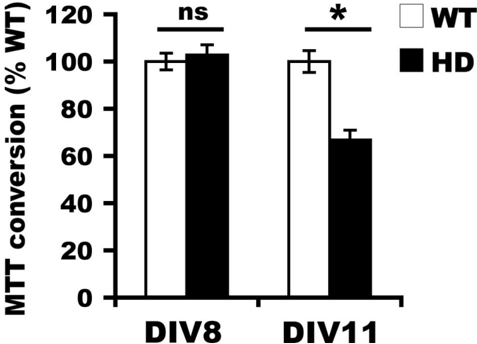
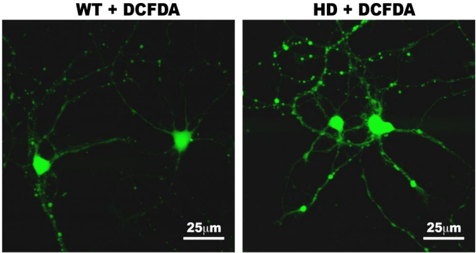
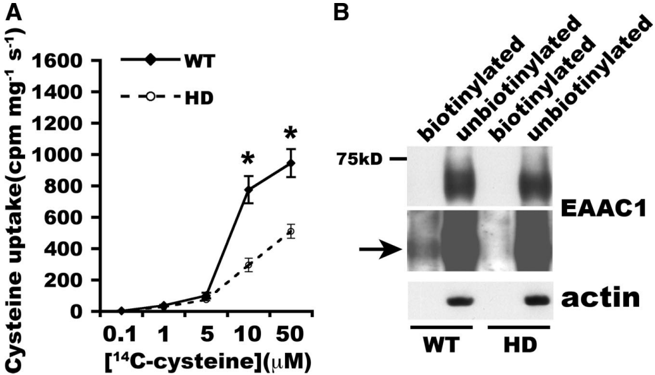
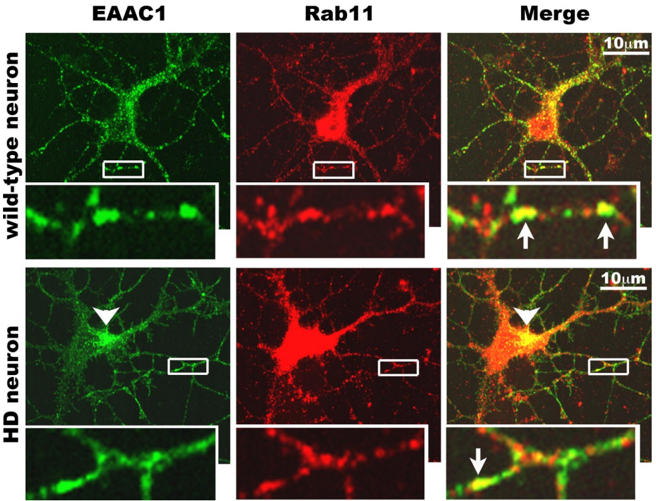
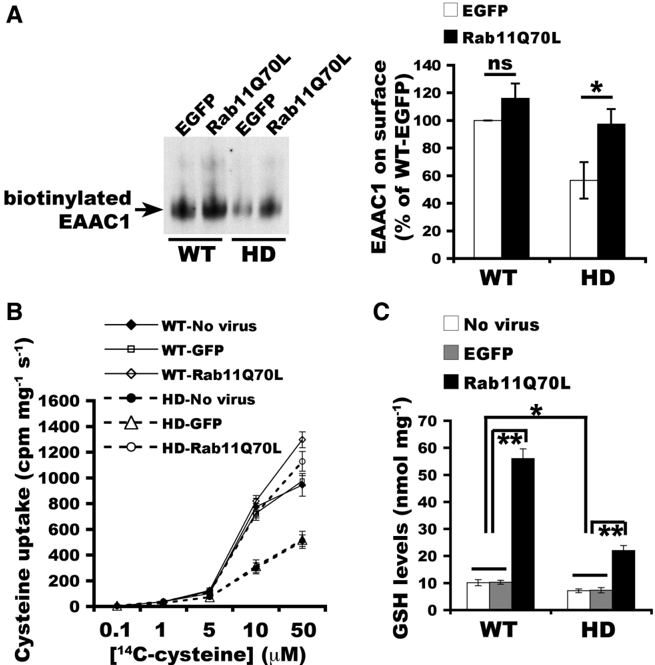
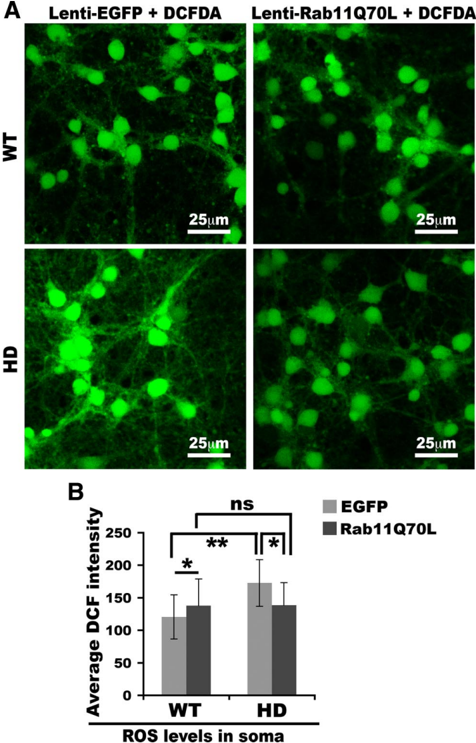
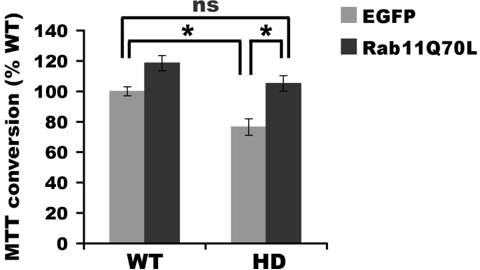
Oxidative stress contributes to neurodegeneration in Huntington's disease (HD). However, the origins of oxidative stress in HD remain unclear. Studies in HD transgenic models suggest involvement of mitochondrial dysfunction, which would lead to overproduction of reactive oxygen species (ROS). Impaired mitochondria complexes occur in late stages of HD but not in presymptomatic or early-stage HD patients. Thus, other mechanisms may account for the earliest source of oxidative stress caused by endogenous mutant huntingtin. Here, we report that decreased levels of a major intracellular antioxidant glutathione coincide with accumulation of ROS in primary HD neurons prepared from embryos of HD knock-in mice (HD 140Q/140Q ), which have human huntingtin exon 1 with 140 CAG repeats inserted into the endogenous mouse huntingtin gene. Uptake of extracellular cysteine through the glutamate/cysteine transporter EAAC1 is required for de novo synthesis of glutathione in neurons. We found that, compared with wild-type neurons, HD neurons had lower cell surface levels of EAAC1 and were deficient in taking up cysteine. Constitutive trafficking of EAAC1 from recycling endosomes relies on Rab11 activity, which is defective in the brain of HD 140Q/140Q mice. Enhancement of Rab11 activity by expression of a dominant-active Rab11 mutant in primary HD neurons ameliorated the deficit in cysteine uptake, increased levels of intracellular glutathione, normalized clearance of ROS, and improved neuronal survival. Our data support a novel mechanism for oxidative stress in HD: Rab11 dysfunction slows trafficking of EAAC1 to the cell surface and impairs cysteine uptake, thereby leading to deficient synthesis of glutathione.
Overview
The claims and statistics of this paper haven’t been checked yet.
Run the check — free, no account needed. It reads the open-access text and checks the sources it cites.
Integrity signals
Registry
Cites
Statistics
Figures
Verification
Claims the paper makes
The claims and statistics of this paper haven’t been checked yet.
Run the check — free, no account needed. It reads the open-access text and checks the sources it cites.
Claims other papers make about this one
Each is checked against this paper’s own text: does it say what the citing paper says it does?
In the citing paper
“The HD mutation is known to reduce the production of active rab11, thereby slowing endosomal recycling of receptors and transporters to the cell surface [23-26].”
From Glucose transporter 3 is a rab11-dependent trafficking cargo and its transport to the cell surface is reduced in neurons of CAG140 Huntington’s disease mice (2014) · cites this paper as [26]
In the citing paper
“Rab11 regulates numerous receptors and transporters trafficking onto cell surfaces; its diminished activity in HD cells affects the recycling of transferrin receptor and neuronal glutamate/cysteine transporter EAAC1.”
From Glucose transporter 3 is a rab11-dependent trafficking cargo and its transport to the cell surface is reduced in neurons of CAG140 Huntington’s disease mice (2014) · cites this paper as [26]
Self-check
Percentages, sums and reported differences re-computed from the paper’s own numbers.
The self-check needs the paper’s full text.
Citations
Cites
The role of mitochondria in reactive oxygen species metabolism and signaling
Starkov, A. A. (2008) · Annals of the New York Academy of Sciences · doi:10.1196/annals.1427.015 · Cited by 846
Recycling Endosomes Supply AMPA Receptors for LTP
Park, M., Penick, E. C., Edwards, J. G., Kauer, J. A., & Ehlers, M. D. (2004) · Science · doi:10.1126/science.1102026 · Cited by 730
Neuronal glutathione deficiency and age-dependent neurodegeneration in the EAAC1 deficient mouse
Aoyama, K., Suh, S. W., Hamby, A. M., Liu, J., Chan, W. Y., Chen, Y., & Swanson, R. A. (2006) · Nature Neuroscience · doi:10.1038/nn1609 · Cited by 484
Age-dependent vulnerability of the striatum to the mitochondrial toxin 3-nitropropionic acid
Brouillet, E., Jenkins, B. G., Hyman, B. T., Ferrante, R. J., Kowall, N. W., Srivastava, R., Roy, D. S., Rosen, B. R., & Beal, M. F. (1993) · Journal of Neurochemistry · doi:10.1111/j.1471-4159.1993.tb05859.x · Cited by 367
Research works printed but not linked: 55
- 10.1074/jbc.M801570200 · DOI
- 10.1254/jphs.08R01CR · DOI
- 10.1016/j.neurobiolaging.2005.04.001 · DOI
- 10.1515/BC.2009.033 · DOI
- Beal, 1993, Neurochemical and histologic characterization of striatal excitotoxic lesions produced by the mitochondrial toxin 3-nitropropionic acid, J Neurosci, 13, 4181, 10.1523/JNEUROSCI.13-10-04181.1993 · DOI
- 10.1091/mbc.E05-07-0607 · DOI
- 10.1073/pnas.92.15.7105 · DOI
- Chen, 2002, Expression of a variant form of the glutamate transporter GLT1 in neuronal cultures and in neurons and astrocytes in the rat brain, J Neurosci, 22, 2142, 10.1523/JNEUROSCI.22-06-02142.2002 · DOI
- 10.1523/JNEUROSCI.1586-03.2004 · DOI
- 10.1046/j.1471-4159.2003.01630.x · DOI
- 10.1111/j.1460-9568.1997.tb00757.x · DOI
- 10.1093/cercor/8.2.108 · DOI
- Davis, 1998, Multiple signaling pathways regulate cell surface expression and activity of the excitatory amino acid carrier 1 subtype of Glu transporter in C6 glioma, J Neurosci, 18, 2475, 10.1523/JNEUROSCI.18-07-02475.1998 · DOI
- Dedeoglu, 2002, Therapeutic effects of cystamine in a murine model of Huntington's disease, J Neurosci, 22, 8942, 10.1523/JNEUROSCI.22-20-08942.2002 · DOI
- 10.1074/jbc.M807055200 · DOI
- 10.1016/S0301-0082(99)00060-X · DOI · Paper page
- 10.1159/000017337 · DOI
- 10.1046/j.1471-4159.2000.0751709.x · DOI
- 10.1111/j.1471-4159.2004.02726.x · DOI
- 10.1093/hmg/ddm023 · DOI
- 10.1523/JNEUROSCI.3213-07.2008 · DOI
- 10.1111/j.1471-4159.2007.04881.x · DOI
- 10.1073/pnas.160170397 · DOI
- 10.1006/exnr.2000.7626 · DOI
- 10.1016/j.neuint.2004.10.006 · DOI
- 10.1002/(SICI)1096-9861(20000313)418:3<255::AID-CNE2>3.0.CO;2-6 · DOI
- 10.1523/JNEUROSCI.3590-07.2007 · DOI
- 10.1007/s00415-007-0611-y · DOI
- 10.1016/j.nbd.2009.08.003 · DOI · Paper page
- 10.1128/MCB.00420-09 · DOI · Paper page
- 10.1016/S0896-6273(00)80953-8 · DOI
- 10.1016/j.neuint.2008.02.007 · DOI
- 10.1111/j.1460-9568.2006.04686.x · DOI
- 10.1097/00005072-199111000-00005 · DOI
- 10.1016/S0753-3322(99)80001-8 · DOI
- 10.1111/j.1471-4159.2006.03978.x · DOI
- 10.1111/j.1600-0854.2009.00911.x · DOI
- 10.1111/j.1471-4159.2006.04361.x · DOI
- 10.1023/B:NERE.0000018843.83770.4b · DOI
- 10.1111/j.1471-4159.2005.03255.x · DOI
- 10.1038/88821 · DOI
- 10.1016/0896-6273(94)90038-8 · DOI
- 10.1046/j.1432-1327.2000.01595.x · DOI
- 10.1016/0006-8993(82)90344-4 · DOI
- 10.1016/S0006-8993(01)02342-3 · DOI
- 10.1002/ana.410360305 · DOI · Paper page
- 10.1093/hmg/ddl248 · DOI
- 10.1038/88825 · DOI
- 10.1002/jnr.1077 · DOI
- 10.1038/ncb1807 · DOI
- 10.1091/mbc.E06-07-0593 · DOI · Paper page
- 10.1016/S0006-8993(99)01228-7 · DOI
- 10.1093/hmg/11.9.1137 · DOI
- 10.1016/0022-510X(80)90028-3 · DOI
- Zerangue, 1996, Interaction of l-cysteine with a human excitatory amino acid transporter, J Physiol, 493, 419, 10.1113/jphysiol.1996.sp021393 · DOI
Cited by
Sorted by citations
Excitatory Amino Acid Transporters in Physiology and Disorders of the Central Nervous System
Malik, A. R., & Willnow, T. E. (2019) · International Journal of Molecular Sciences · doi:10.3390/ijms20225671 · Cited by 170
Quinti, L., Dayalan Naidu, S., Träger, U., Chen, X., Kegel-Gleason, K., Llères, D., Connolly, C., Chopra, V., Low, C., Moniot, S., et al. (2017) · Proceedings of the National Academy of Sciences · doi:10.1073/pnas.1614943114 · Cited by 140
Self-citationTejeda, G., & Díaz-Guerra, M. (2017) · International Journal of Molecular Sciences · doi:10.3390/ijms18020268 · Cited by 126
White, J. A., Anderson, E., Zimmerman, K., Zheng, K. H., Rouhani, R., & Gunawardena, S. (2015) · Human Molecular Genetics · doi:10.1093/hmg/ddv415 · Cited by 67
McClory, H., Williams, D., Sapp, E., Gatune, L. W., Wang, P., DiFiglia, M., & Li, X. (2014) · Acta Neuropathologica Communications · doi:10.1186/s40478-014-0178-7 · Cited by 60
Self-citationAxonopathy in Huntington's disease
Li, J.-Y., & Conforti, L. (2013) · Experimental Neurology · doi:10.1016/j.expneurol.2012.08.010 · Cited by 55
The long and the short of aberrant ciliogenesis in Huntington disease
Liu, J.-P., & Zeitlin, S. O. (2011) · Journal of Clinical Investigation · doi:10.1172/jci60243 · Cited by 19
Metadata
- Authors
- Li, X., Valencia, A., Sapp, E., Masso, N., Alexander, J., Reeves, P., Kegel, K. B., Aronin, N., & DiFiglia, M.
- Venue
- The Journal of Neuroscience
- Publisher
- Society for Neuroscience
- Published
- 2010-03-31
- Volume
- 30
- Issue
- 13
- Pages
- 4552-4561
- ISSN
- 0270-6474
- 1529-2401
- Cited by
- 147
- References
- 4
- Language
- en
About these checks
Registry, retraction, Cites and statistics results are computed, not judged, with one exception: a printed reference that no index lists is read once by a model before it counts as a citation error. Claims are extracted by a model and kept only when their quote appears verbatim in the text; each cited source is then checked, with a model’s help, for whether it says what the claim relies on. Those verdicts can be wrong — read the claim’s quote and the cited source before relying on one.
Statistics and arithmetic are recomputed, not judged.
Confidence bands are shown only for fields calibrated on our annotated test set. None is calibrated yet, so no band is shown.
What counts as a claim ›How we measure confidence ›How we check this ›
Are you an author, or do you see a problem with this page? Request a review
