

Rhomboid intramembrane protease YqgP licenses bacterial membrane protein quality control as adaptor of FtsH AAA protease
Open accessThe DOI matches its Crossref record; 85 of the 86 references it cites were found in a registry or an index.
Abstract
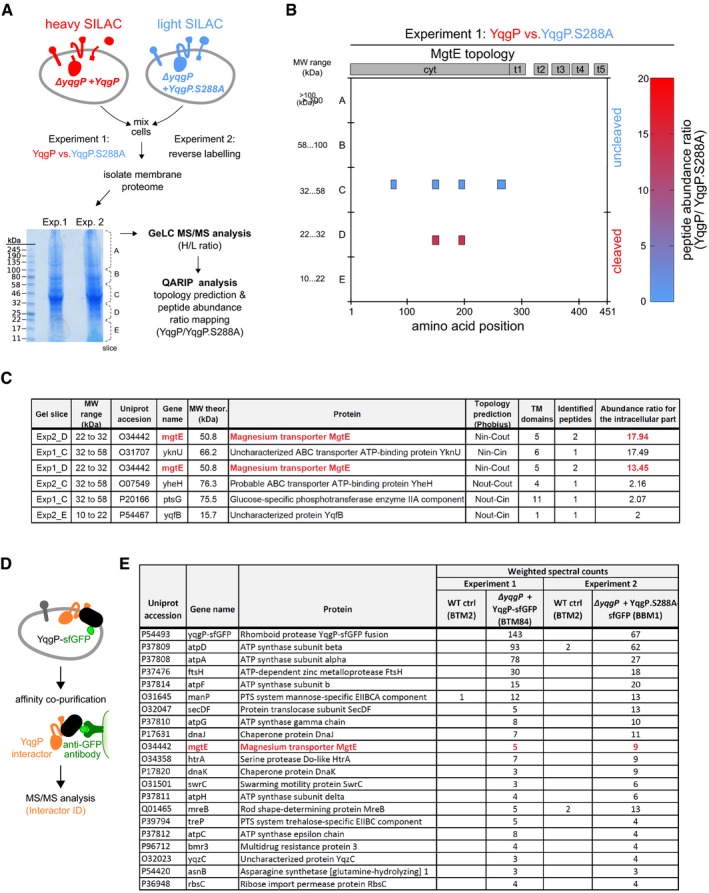
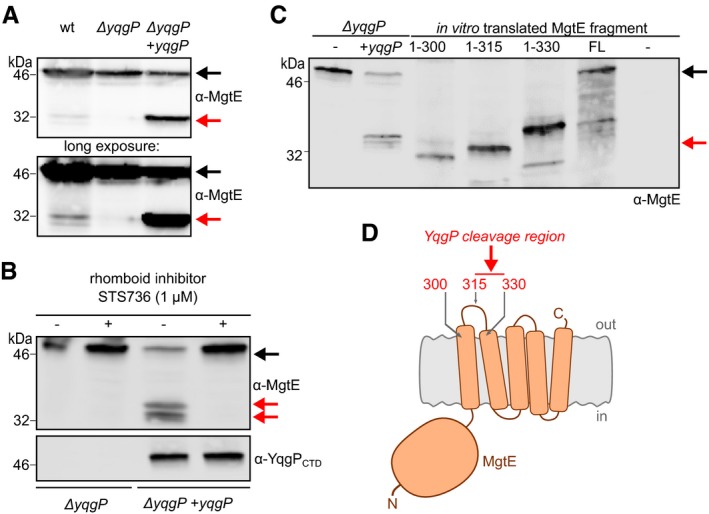
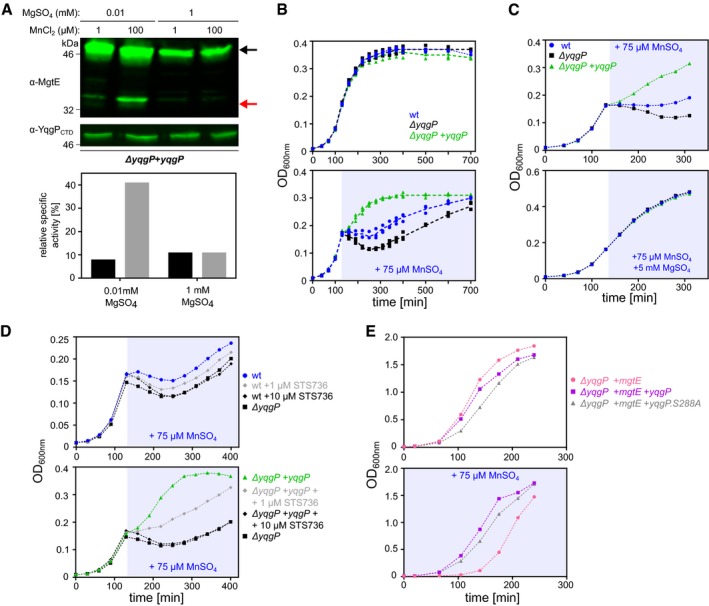
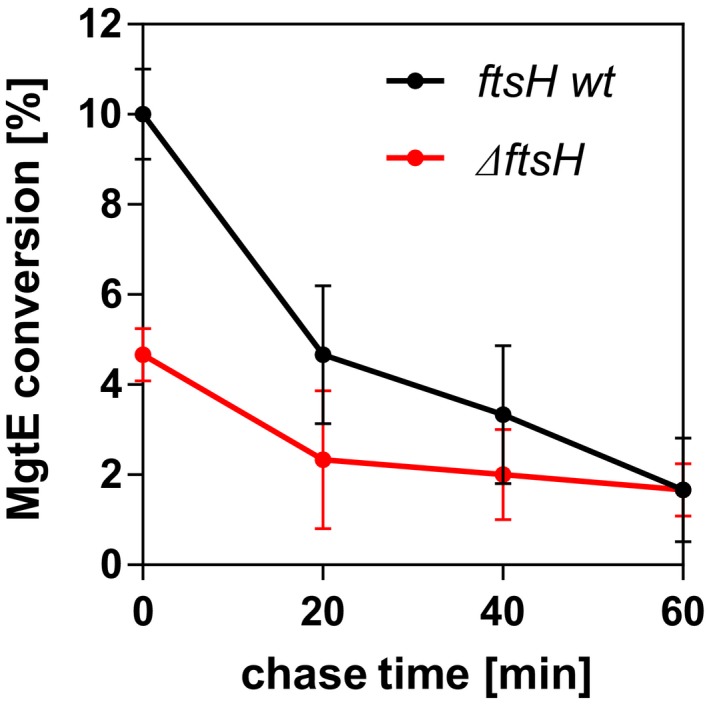
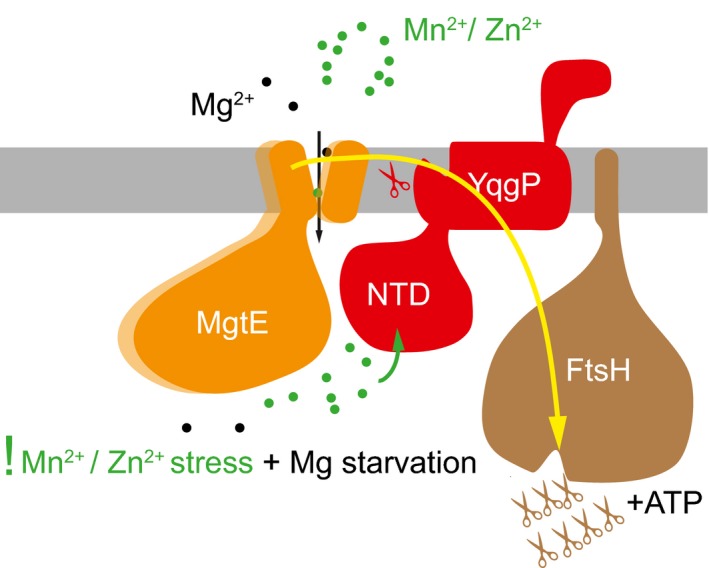
Magnesium homeostasis is essential for life and depends on magnesium transporters, whose activity and ion selectivity need to be tightly controlled. Rhomboid intramembrane proteases pervade the prokaryotic kingdom, but their functions are largely elusive. Using proteomics, we find that Bacillus subtilis rhomboid protease YqgP interacts with the membrane‐bound ATP‐dependent processive metalloprotease FtsH and cleaves MgtE, the major high‐affinity magnesium transporter in B. subtilis . MgtE cleavage by YqgP is potentiated in conditions of low magnesium and high manganese or zinc, thereby protecting B. subtilis from Mn 2+ /Zn 2+ toxicity. The N‐terminal cytosolic domain of YqgP binds Mn 2+ and Zn 2+ ions and facilitates MgtE cleavage. Independently of its intrinsic protease activity, YqgP acts as a substrate adaptor for FtsH, a function that is necessary for degradation of MgtE. YqgP thus unites protease and pseudoprotease function, hinting at the evolutionary origin of rhomboid pseudoproteases such as Derlins that are intimately involved in eukaryotic ER‐associated degradation (ERAD). Conceptually, the YqgP‐FtsH system we describe here is analogous to a primordial form of “ERAD” in bacteria and exemplifies an ancestral function of rhomboid‐superfamily proteins.
Overview
The claims and statistics of this paper haven’t been checked yet.
Free: it reads the open-access text and checks the first 5 claims that cite a source we can check. Create a free account to check every claim.
Integrity signals
Registry
Cites
Statistics
Figures
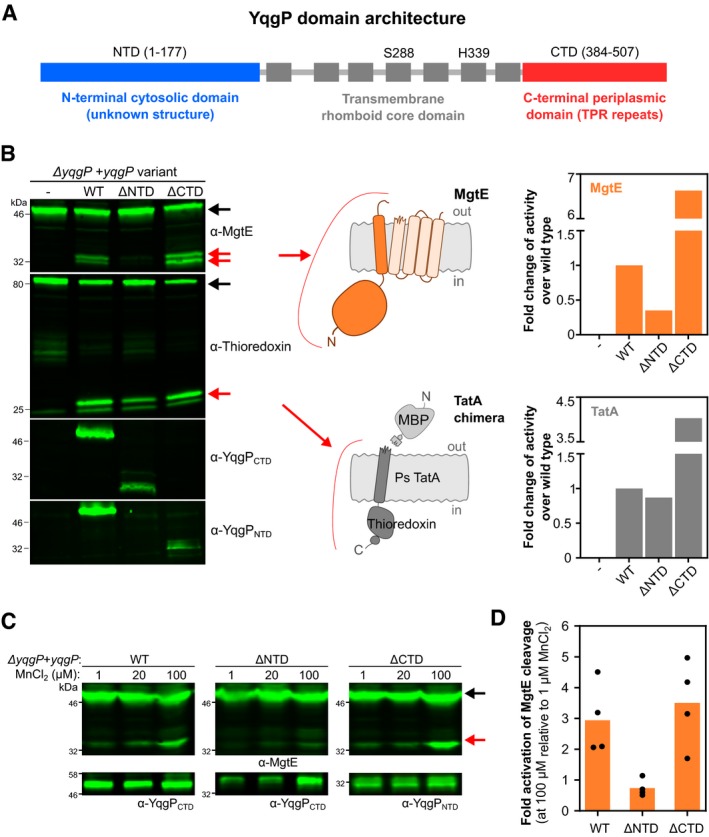
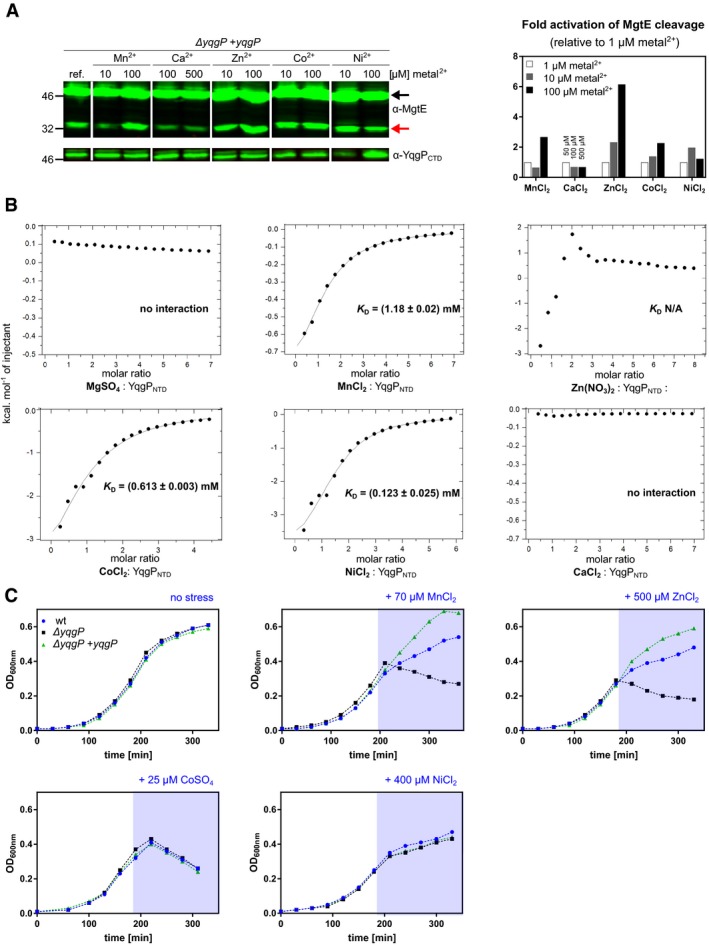
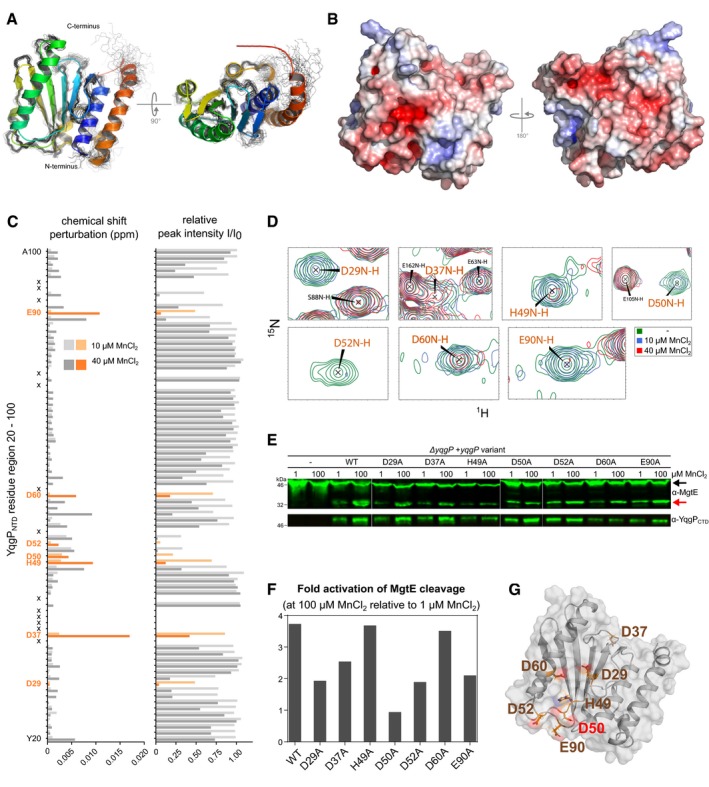
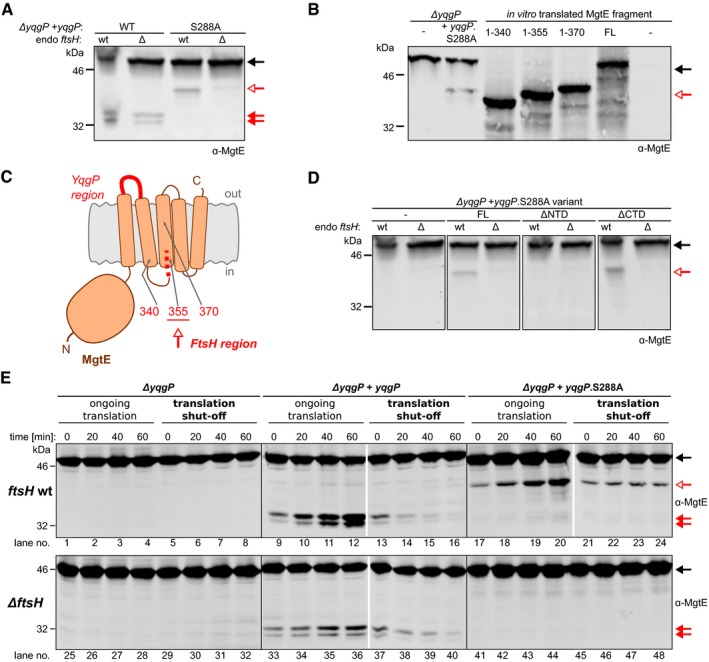
Verification
Claims the paper makes
The claims and statistics of this paper haven’t been checked yet.
Free: it reads the open-access text and checks the first 5 claims that cite a source we can check. Create a free account to check every claim.
Claims other papers make about this one
Each is checked against this paper’s own text: does it say what the citing paper says it does?
The source backs part of the claim, not all of it — or backs it for a different population, condition or comparison.
In the citing paper
“yqgP-glpG is a membrane protease that partners with the membrane protease ftsH/0039 and is responsible for degradation of metal transporters such as mgtA/0787 to prevent ion toxicity.88,89”
From Toward the Complete Functional Characterization of a Minimal Bacterial Proteome (2022) · cites this paper as [88]
Experimental — accuracy not yet measured
Self-check
Percentages, sums and reported differences re-computed from the paper’s own numbers.
The self-check needs the paper’s full text.
Citations
Cites
Cox, J., & Mann, M. (2008) · Nature Biotechnology · doi:10.1038/nbt.1511 · Cited by 14,855 · cited 3×
“The quantitative mass spectrometric data files were processed and analysed using MaxQuant (v1.”
InfluentialPerez-Riverol, Y., Csordas, A., Bai, J., Bernal-Llinares, M., Hewapathirana, S., Kundu, D. J., Inuganti, A., Griss, J., Mayer, G., Eisenacher, M., et al. (2019) · Nucleic Acids Research · doi:10.1093/nar/gky1106 · Cited by 6,693
TALOS+: a hybrid method for predicting protein backbone torsion angles from NMR chemical shifts
Shen, Y., Delaglio, F., Cornilescu, G., & Bax, A. (2009) · Journal of Biomolecular NMR · doi:10.1007/s10858-009-9333-z · Cited by 2,516 · cited 1×
“In addition, backbone torsion angle constraints, generated from assigned chemical shifts using the TALOS + program (Shen et al , 2009), were included in the calculations.”
A Combined Transmembrane Topology and Signal Peptide Prediction Method
Käll, L., Krogh, A., & Sonnhammer, E. L. L. (2004) · Journal of Molecular Biology · doi:10.1016/j.jmb.2004.03.016 · Cited by 2,450 · cited 1×
“Transmembrane topology predictions were obtained using Phobius (Ka¨ll et al , 2004), and additional sequence visualisations were obtained using QARIP software (Ivankov et al , 2013; Fig 1).”
Smith, M. C. M. (1991) · FEBS Letters · doi:10.1016/0014-5793(91)80059-c · Cited by 1,519
Herrmann, T., Güntert, P., & Wüthrich, K. (2002) · Journal of Molecular Biology · doi:10.1016/s0022-2836(02)00241-3 · Cited by 1,460 · cited 1×
“The family of converged structures for YqgP NTD was initially calculated using Dyana 2.1 (Herrmann et al , 2002).”
InfluentialCondition-Dependent Transcriptome Reveals High-Level Regulatory Architecture in Bacillus subtilis
Nicolas, P., Mäder, U., Dervyn, E., Rochat, T., Leduc, A., Pigeonneau, N., Bidnenko, E., Marchadier, E., Hoebeke, M., Aymerich, S., et al. (2012) · Science · doi:10.1126/science.1206848 · Cited by 910 · cited 1×
“All B. subtilis strains used in this study were derived from the 168 trpC2 + strain (Nicolas et al , 2012; Koo et al , 2017), and construction details of the strains are listed in Table EV2.”
Holm, L., & Laakso, L. M. (2016) · Nucleic Acids Research · doi:10.1093/nar/gkw357 · Cited by 868 · cited 1×
“Structural similarity search using Dali server (Holm & Laakso, 2016) identified a number of structurally related proteins, with no conserved functional role but enriched in DNA/RNA polymerases and modifying enzymes (Table EV4).”
Deutsch, E. W., Csordas, A., Sun, Z., Jarnuczak, A., Perez-Riverol, Y., Ternent, T., Campbell, D. S., Bernal-Llinares, M., Okuda, S., Kawano, S., et al. (2017) · Nucleic Acids Research · doi:10.1093/nar/gkw936 · Cited by 865 · cited 1×
“The mass spectrometry (MS) proteomic data have been deposited to the ProteomeXchange Consortium (http://proteomecentral.prote omexchange.org) (Deutsch et al , 2017) via the PRIDE (Perez-Riverol et al , 2019) partner repository with the dataset identifiers PXD014578…”
Metal homeostasis and resistance in bacteria
Chandrangsu, P., Rensing, C., & Helmann, J. D. (2017) · Nature Reviews Microbiology · doi:10.1038/nrmicro.2017.15 · Cited by 812 · cited 3×
“It is known that MgtE homologs can also transport Mn 2+ (Takeda et al , 2014) under low Mg 2+ concentration (Mg starvation) and that high concentrations of Mn 2+ are toxic for bacteria, mainly because Mn 2+ can mis-metalate Mg 2+ -binding sites (Hohle & O’Brian, 2014; Chandrangsu et al , 2017).”
Research works printed but not linked: 1
- Harwood CR, Cutting SM (1990) Molecular biological methods for Bacillus. Chichester; New York, NY: Wiley
Cited by
Maintenance of organellar protein homeostasis by ER-associated degradation and related mechanisms
Lemberg, M. K., & Stříšovský, K. (2021) · Molecular Cell · doi:10.1016/j.molcel.2021.05.004 · Cited by 153
The ins and outs of Bacillus proteases: activities, functions and commercial significance
Harwood, C. R., & Kikuchi, Y. (2021) · FEMS Microbiology Reviews · doi:10.1093/femsre/fuab046 · Cited by 125
“This cleavage takes place under conditions of low magnesium and high manganese or zinc, protecting the cells from Mn2+/Zn2+ toxicity (Began et al. 2020).”
BackgroundDo, T., Page, J. E., & Walker, S. (2020) · Journal of Biological Chemistry · doi:10.1074/jbc.rev119.010155 · Cited by 110
“ActH is structurally distinct from EnvC, NlpD, and FtsEX and resembles a rhomboid serine protease, a family of proteins that is widespread in bacteria but whose biological roles have remained largely mysterious (115, 116).”
BackgroundA Central Role for Magnesium Homeostasis during Adaptation to Osmotic Stress
Wendel, B. M., Pi, H., Krüger, L., Herzberg, C., Stülke, J., & Helmann, J. D. (2022) · mBio · doi:10.1128/mbio.00092-22 · Cited by 57
PARL Protease: A Glimpse at Intramembrane Proteolysis in the Inner Mitochondrial Membrane
Lysyk, L., Brassard, R., Touret, N., & Lemieux, M. J. (2020) · Journal of Molecular Biology · doi:10.1016/j.jmb.2020.04.006 · Cited by 49
Nejatfard, A., Wauer, N. A., Bhaduri, S., Conn, A. B., Gourkanti, S., Singh, N., Kuo, T., Kandel, R., Amaro, R. E., & Neal, S. E. (2021) · Cell Reports · doi:10.1016/j.celrep.2021.109840 · Cited by 47
“There is a large subclass of the rhomboid superfamily that lacks residues for proteolysis and is known as rhomboid pseudoproteases (Lemberg and Freeman, 2007; Lemberg and Adrain, 2016; Began et al., 2020).”
Microbial metal physiology: ions to ecosystems
Helmann, J. D. (2025) · Nature Reviews Microbiology · doi:10.1038/s41579-025-01213-7 · Cited by 58
“For example, intracellular magnesium ion (Mg 2+ ) feedback inhibits the major Mg 2+ importer MgtE 58,59 , and when Mn 2+ or Zn 2+ (low-affinity MgtE substrates) are in excess, B. subtilis MgtE is targeted for proteolysis 60 .”
Daza, M. V. B., Almeida-Santos, A. C., Novais, C., Read, A., Alves, V., Cocconcelli, P. S., Freitas, A. R., & Peixe, L. M. S. V. (2022) · Microbiology Spectrum · doi:10.1128/spectrum.03268-22 · Cited by 44
“The function and structure descriptions of GluP within the Bacillota phylum may suggest the potential function of GluP in enterococci; however, this exceeds the scope of this study (10).”
BackgroundRhomboid protease RHBDL4 promotes retrotranslocation of aggregation-prone proteins for degradation
Bock, J., Kühnle, N., Knopf, J. D., Landscheidt, N., Lee, J., Ye, Y., & Lemberg, M. K. (2022) · Cell Reports · doi:10.1016/j.celrep.2022.111175 · Cited by 41
“The parallel of bacterial rhomboid proteases in membrane protein quality control (Began et al., 2020; Liu et al., 2020) to derlins and RHBDL4 in ERAD suggests that rhomboid family proteins represent an ancient proteostasis factor (Lemberg and Strisovsky, 2021).”
BackgroundRegulation of Bacterial Manganese Homeostasis and Usage During Stress Responses and Pathogenesis
Martin, J. E., & Waters, L. S. (2022) · Frontiers in Molecular Biosciences · doi:10.3389/fmolb.2022.945724 · Cited by 40
“8) Metal-dependent protein factors, such as proteases, can directly control protein levels, as when the YqgP protease degrades theMg transporter MgtA (Began et al., 2020).”
BackgroundInfluentialThe complex life of rhomboid pseudoproteases
Adrain, C., & Cavadas, M. A. S. (2020) · FEBS Journal · doi:10.1111/febs.15548 · Cited by 31
Yokoyama, T., Niinae, T., Tsumagari, K., Imami, K., Ishihama, Y., Hizukuri, Y., & Akiyama, Y. (2021) · Journal of Biological Chemistry · doi:10.1016/j.jbc.2021.100673 · Cited by 33
Cellular Adaptations to Cytoplasmic Mg2+ Limitation
Groisman, E. A., & Chan, C. (2021) · Annual Review of Microbiology · doi:10.1146/annurev-micro-020518-115606 · Cited by 36
Poláchová, E., Bach, K., Heuten, E., Stanchev, S., Tichá, A., Lampe, P., Majer, P., Langer, T., Lemberg, M. K., & Stříšovský, K. (2022) · Journal of Medicinal Chemistry · doi:10.1021/acs.jmedchem.2c01092 · Cited by 31
Toward the Complete Functional Characterization of a Minimal Bacterial Proteome
Bianchi, D. M., Pelletier, J. F., Hutchison, C. A., Glass, J. I., & Luthey-Schulten, Z. (2022) · The Journal of Physical Chemistry B · doi:10.1021/acs.jpcb.2c04188 · Cited by 22
Region-specific H3K9me3 gain in aged somatic tissues in Caenorhabditis elegans
Li, C.-L. F., Pu, M., Wang, W., Chaturbedi, A., Emerson, F. J., & Lee, S. S. (2021) · PLoS Genetics · doi:10.1371/journal.pgen.1009432 · Cited by 23
Grieve, A. G., Yeh, Y.-C., Chang, Y.-F., Huang, H., Zarcone, L., Breuning, J., Johnson, N., Stříšovský, K., Brown, M. H., Parekh, A. B., et al. (2021) · Molecular Cell · doi:10.1016/j.molcel.2021.10.025 · Cited by 27
Kandel, R., & Neal, S. E. (2020) · Biochimica et Biophysica Acta (BBA) - Molecular Cell Research · doi:10.1016/j.bbamcr.2020.118793 · Cited by 26
Neurological pathogenesis of SARS-CoV-2 (COVID-19): from virological features to clinical symptoms
Kase, Y., & Okano, H. (2021) · Inflammation and Regeneration · doi:10.1186/s41232-021-00165-8 · Cited by 20
Yücel, S. S., & Lemberg, M. K. (2020) · Journal of Molecular Biology · doi:10.1016/j.jmb.2020.05.014 · Cited by 17
Cryo-EM structure of transmembrane AAA+ protease FtsH in the ADP state
Liu, W., Schoonen, M., Wang, T., McSweeney, S. M., & Liu, Q. (2022) · Communications Biology · doi:10.1038/s42003-022-03213-2 · Cited by 16
Page, J. E., Skiba, M. A., Do, T., Kruse, A. C., & Walker, S. (2022) · Proceedings of the National Academy of Sciences · doi:10.1073/pnas.2201141119 · Cited by 12
“Strains used are HG003 (1) wild-type, (2) ∆lytH, (3) ∆actH, (4) ∆actH pactH, (5) ∆actH pactH[2355 367], (6) ∆actH pactH[1-178, 365-487], (7) ∆actH pactH[151-178, 365-487], and (8) ∆actH pactH[337356”
Flipping the switch: dynamic modulation of membrane transporter activity in bacteria
Elston, R., Mulligan, C., & Thomas, G. H. (2023) · Microbiology · doi:10.1099/mic.0.001412 · Cited by 16
“…YqgP has an additional role in directing the MgtE to FtsH for further degradation, a function that surprisingly does not depend on the catalytic activity of the rhomboid domain [145], but which is in fact a phenomenon already known from some other eukaryotic rhomboid proteins such as derlins [144].”
BackgroundCharacterization of FtsH Essentiality in Streptococcus mutans via Genetic Suppression
Wang, Y., Cao, W., Merritt, J. L., Xie, Z., & Liu, H. (2021) · Frontiers in Genetics · doi:10.3389/fgene.2021.659220 · Cited by 11
Yeast derlin Dfm1 employs a chaperone-like function to resolve misfolded membrane protein stress
Kandel, R., Jung, J., Syau, D., Kuo, T., Songster, L. D., Horn, C., Chapman, C., Aguayo, A., Duttke, S. H. C., Benner, C. W., et al. (2023) · PLoS Biology · doi:10.1371/journal.pbio.3001950 · Cited by 12
“Rhomboid proteins are a widely conserved family of proteins, found in all domains of life [20–23].”
Bach, K., Dohnálek, J., Škerlová, J., Kuzmík, J., Poláchová, E., Stanchev, S., Majer, P., Fanfrlík, J., Pecina, A., Řezáč, J., et al. (2024) · European Journal of Medicinal Chemistry · doi:10.1016/j.ejmech.2024.116606 · Cited by 10
Atherton, E., Brown, S., Papiez, E., Restrepo, M. I., & Borton, D. A. (2021) · Scientific Reports · doi:10.1038/s41598-021-01616-5 · Cited by 10
Differential processing of VesB by two rhomboid proteases in Vibrio cholerae
Roberts, C. S., Shannon, A., Korotkov, K. V., & Sandkvist, M. (2024) · mBio · doi:10.1128/mbio.01270-24 · Cited by 8
“Several approaches have been used to probe for substrates, including genetic screens and bioinformatic approaches based on substrate characteristics, with limited success (8, 9).”
Characterization of TseB: A new actor in cell wall elongation in Bacillus subtilis
Delisle, J., Cordier, B., Audebert, S., Pophillat, M., Cluzel, C., Espinosa, L., Grangeasse, C., Galinier, A., & Doan, T. (2021) · Molecular Microbiology · doi:10.1111/mmi.14798 · Cited by 8
Self-citationBrucella abortus Encodes an Active Rhomboid Protease: Proteome Response after Rhomboid Gene Deletion
Marchesini, M. I., Poetsch, A., Guidolin, L. S., & Comerci, D. J. (2022) · Microorganisms · doi:10.3390/microorganisms10010114 · Cited by 7
The genes mgtE and spoVG are involved in zinc tolerance of Staphylococcus aureus
Schürmann, J., Fischer, M. A., Herzberg, M., Reemtsma, T., Strommenger, B., Werner, G., Schuster, C. F., & Layer, F. (2024) · Applied and Environmental Microbiology · doi:10.1128/aem.00453-24 · Cited by 8
Functional Genomics Uncovers Pleiotropic Role of Rhomboids in Corynebacterium glutamicum
Luenenschloss, A., ter Veld, F., Albaum, S. P., Neddermann, T., Wendisch, V. F., & Poetsch, A. (2022) · Frontiers in Microbiology · doi:10.3389/fmicb.2022.771968 · Cited by 5
Derlins with scissors: primordial ERAD in bacteria
Knopf, J. D., & Lemberg, M. K. (2020) · The EMBO Journal · doi:10.15252/embj.2020105012 · Cited by 5
“While GlpG and Rhom7 degrade orphan subunits that are not incorporated into functional complexes, YqgP regulates the abundance of the active MgtE magnesium transporter.”
InfluentialRhomboid protease GlpG regulates type 1 pili quality control and virulence in pathogenic E. coli
Lu, J., Arutyunova, E. I., Hartley, B., Wong, J., Chung, H., Buchan, L., Armstrong, H., Phanse, S., Young, H. S., Wine, E., et al. (2025) · Nature Communications · doi:10.1038/s41467-025-67697-2 · Cited by 6
“When K12 MG1655 Δ glpG was transformed with the plasmid bearing active GlpG, we observed notably decreased amount of aggregates, con fi rming GlpG ’ s role in protein quality con-trol as seen in many other rhomboid proteases 34,35 .”
4-Oxo-β-lactams as Covalent Inhibitors of the Mitochondrial Intramembrane Protease PARL
Ji, S., Bach, K., Miriyala, V. M., Dohnálek, J., Riopedre-Fernández, M., Lepšı́k, M., van de Plassche, M. A. T., Vanhoutte, R., Barniol‐Xicota, M., Moreira, R., et al. (2024) · ACS Medicinal Chemistry Letters · doi:10.1021/acsmedchemlett.4c00384 · Cited by 3
Chai-Danino, M., Ravensary-Modin, N., Vladimirov, V. I., Onyshchuk, T., Plöhn, M., Barshap, A. B. D., Bsoul, A., Peled‐Zehavi, H., & Fluman, N. (2026) · Nature Communications · doi:10.1038/s41467-026-69829-8 · Cited by 6
A mouse model of microglia-specific ablation in the embryonic central nervous system
Li, C., Konishi, H., Nishiwaki, K., Sato, K., Miyata, T., & Kiyama, H. (2021) · Neuroscience Research · doi:10.1016/j.neures.2021.06.002 · Cited by 3
Bohg, C., Dubanych, Y., Kosteletos, S., Xiao, T., Neuenschwander, M., Utesch, T., Lisurek, M., Öster, C., Oder, A., Seyffarth, C., et al. (2026) · Angewandte Chemie International Edition · doi:10.1002/anie.202514067 · Cited by 1
“In Gram positives, YqgP in Bacillus subtilis mediates the sensing and degradation of mis-metallated magnesium transporters [ 12 ].”
Rhomboid protease Rhbdl2 influences macrophage recruitment and wound repair in zebrafish
Gourkanti, S., Ramakrishnan, G., Cheung, J., Schoen, T. J., Munoz, Y., Chavez, R. M., Dohnálek, J., Martin, K., Lovett-Barron, M., Whisenant, T. C., et al. (2026) · The Journal of Cell Biology · doi:10.1083/jcb.202602106 · Cited by 2
An in vitro platform for the enzymatic characterization of the rhomboid protease RHBDL4
Bhaduri, S., Braza, M. K. E., Stanchev, S., Tauber, M., Al-Bawab, R., Liu, L. J., Trujillo, D. F., Solorio-Kirpichyan, K., Srivastava, A., Sanlley-Hernandez, J., et al. (2025) · Journal of Biological Chemistry · doi:10.1016/j.jbc.2025.108275 · Cited by 2
“They have high potency and selectivity towards other rhomboid proteases including bacterial GlpG (Tichá et al. 2017), bacterial YqgP (29), Plasmodium falciparum ROM4 (Gandhi et al. 2020), human PARL (21, 30), and RHBDL2 (21) rhomboid proteases, and their mechanism was shown to be slow binding and noncompetitive (Tichá…”
InfluentialFrom mechanism to substratome: Unraveling mysteries of γ-secretase
Steiner, H., Breimann, S., Kamp, F., & Frishman, D. (2026) · Journal of Biological Chemistry · doi:10.1016/j.jbc.2026.113287 · Cited by 1
Rhomboid proteases: key players at the cell surface within haloarchaea
Costa, M. I., Cerletti, M., Paggi, R. A., Frecha, S. D., Zoratti, V., Latorre, L., Castro, R. E. D., & Giménez, M. I. (2025) · Frontiers in Microbiology · doi:10.3389/fmicb.2025.1547649 · Cited by 1
Castro, R. E. D., Giménez, M. I., Cerletti, M., Paggi, R. A., & Costa, M. I. (2022) · Frontiers in Microbiology · doi:10.3389/fmicb.2022.940865 · Cited by 1
Nejatfard, A., Wauer, N. A., Bhaduri, S., Conn, A. B., Gourkanti, S., Singh, N., Kuo, T., Kandel, R., Amaro, R. E., & Neal, S. E. (2021) · SSRN Electronic Journal · doi:10.2139/ssrn.3811835 · Cited by 1
Bach, K., Dohnálek, J., Škerlová, J., Kuzmík, J., Poláchová, E., Stanchev, S., Majer, P., Fanfrlík, J., Pecina, A., Řezáč, J., et al. (2024) · SSRN Electronic Journal · doi:10.2139/ssrn.4798512
Okuno, T., & Ogura, T. (2025) · Elsevier eBooks · doi:10.1016/b978-0-443-28849-4.00222-8
Lu, J., Arutyunova, E. I., Hartley, B., Wong, J., Chung, H., Buchan, L., Armstrong, H., Phanse, S., Young, H. S., Wine, E., et al. (2025) · bioRxiv (Cold Spring Harbor Laboratory) · doi:10.1101/2025.09.09.675128
Death, taxes, and rhomboids: Understanding the ubiquitous roles of the rhomboid protein superfamily
Sawczyc, H., Kosteletos, S., & Lange, A. (2025) · Journal of Biological Chemistry · doi:10.1016/j.jbc.2025.110699 · Cited by 4
“…concentration, where high intracellular magnesium concentration leads to cleavage of magnesium transporter MgtE by YqgP in Bacillus subtilis (106), and another being the regulation of lipogenesis by RHBDL4, where higher relative levels of fatty acid saturation lead to preferential…”
Bohg, C., Dubanych, Y., Kosteletos, S., Xiao, T., Neuenschwander, M., Utesch, T., Lisurek, M., Öster, C., Oder, A., Seyffarth, C., et al. (2026) · Angewandte Chemie · doi:10.1002/ange.202514067
Regulation of mixotrophy in Synechocystis by a rhomboid protease
Ibrahim, I. M., Harrison, D. J. A., Blunskyte-Hendley, M., Ferrara, B. T., & Thompson, E. P. (2026) · Microbiology · doi:10.1099/mic.0.001673
“…mutant also support a hypothesis of Slr1461 being a proteolytically active enzyme, but it must be noted that regulatory roles for inactive rhomboids are plausible in bacteria [68], since an ‘adaptor’ function was reported for the Bacillus enzyme when acting in concert with an FtsH [37].”
Membrane Protein Insertion in Cells: Principles, Pathways, and Quality Control
Peled‐Zehavi, H., Yemini, R., & Fluman, N. (2026) · Chemical Reviews · doi:10.1021/acs.chemrev.5c01033
Intramembrane proteolysis: principles of substrate recognition and membrane protein fate
Avci, D., Steigleder, S. S., & Lemberg, M. K. (2026) · Trends in Biochemical Sciences · doi:10.1016/j.tibs.2026.09.005
BindingDB (2026) · UC San Diego · doi:10.7270/q2st7vp0
Metadata
- Authors
- Began, J., Cordier, B., Březinová, J., Delisle, J., Hexnerová, R., Srb, P., Rampírová, P., Kožíšek, M., Baudet, M., Couté, Y., Galinier, A., Veverka, V., Doan, T., & Strisovsky, K.
- Affiliations
- Czech Academy of Sciences (CZ)
- Centre National de la Recherche Scientifique (FR)
- Inserm (FR)
- Corresponding author
- Doan, Thierry
- ORCID
- Venue
- The EMBO Journal
- Published
- 2020-01-13
- Volume
- 39
- Issue
- 10
- Pages
- e102935-e102935
- ISSN
- 0261-4189 (ISSN-L)
- 1460-2075
- PMC
- PMC7231995
- OpenAlex
- W3000556229
- Cited by
- 55
- References
- 86
- Citations by year
- 2026: 9 · 2025: 8 · 2024: 6 · 2023: 2 · 2022: 11 · 2021: 13 · 2020: 6
- FWCI
- 4.69
- Type
- journal article
- Language
- en
- Open access
- hybrid
- doi.org
- Licence
- other-oa
- creativecommons.org/licenses/by/4.0/ (tdm)
- creativecommons.org/licenses/by/4.0/ (vor)
- Locations
- The EMBO Journal (publishedVersion, other-oa)
- PubMed Central (publishedVersion, cc-by)
- PubMed (publishedVersion)
- HAL (submittedVersion, other-oa)
- Funders
- Ministerstvo Školství, Mládeže a Tělovýchovy (LO1302)
- EC European Regional Development Fund (CZ.02.1.01/0.0/0.0/16_019/0000729)
- Agence Nationale de la Recherche (ANR-10-INBS-08-01)
- GrantováAgentura, Univerzita Karlova (170214)
- EC FP7 FP7 Ideas: European Research Council (PIRG08-GA-2010-276750)
- Gilead Sciences & IOCB Research Centre
- National Subvention for Development of Research Organisations (61388963)
- CNRS
- Marie-Curie International Reintegration Grant (PIRG08-GA-2010-276750)
- Aix-Marseille University
- Fondation pour la Recherche Médicale (FDT20160435133)
- Czech Science Foundation (18-09556S)
- Topics
- Life Sciences › Biochemistry, Genetics and Molecular Biology › Genetics › Bacterial Genetics and Biotechnology
- Life Sciences › Biochemistry, Genetics and Molecular Biology › Molecular Biology › Heat shock proteins research
- Life Sciences › Biochemistry, Genetics and Molecular Biology › Molecular Biology › Ubiquitin and proteasome pathways
- Keywords
- MgTe, magnesium transporter, Bacillus subtilis, membrane protein quality control, metal ion binding, ER-associated degradation
- MeSH terms
- ATPases Associated with Diverse Cellular Activities, Bacillus subtilis, Bacterial Proteins, Membrane Proteins, Endopeptidases, Gene Expression Regulation, Bacterial, Proteomics
About these checks
Registry, retraction, Cites and statistics results are computed, not judged, with one exception: a printed reference that no index lists is read once by a model before it counts as a citation error. Claims are extracted by a model and kept only when their quote appears verbatim in the text; each cited source is then checked, with a model’s help, for whether it says what the claim relies on. Those verdicts can be wrong — read the claim’s quote and the cited source before relying on one.
Statistics and arithmetic are recomputed, not judged.
Confidence bands are shown only for fields calibrated on our annotated test set. None is calibrated yet, so no band is shown.
What counts as a claim ›How we measure confidence ›How we check this ›
Are you an author, or do you see a problem with this page? Request a review
Data sources
Bibliographic data: Semantic Scholar, OpenAlex, Crossref.
Contains information from the Semantic Scholar Academic Graph Datasets, made available under the ODC Attribution License (ODC-BY 1.0).
Semantic Scholar’s data is described in: Kinney, R., et al. (2023). The Semantic Scholar Open Data Platform. arXiv:2301.10140.
