

Pharmacological CDK4/6 inhibition reveals a p53‐dependent senescent state with restricted toxicity
Open accessThe DOI matches its Crossref record; 52 of the 54 references it cites were found in a registry or an index.
Abstract
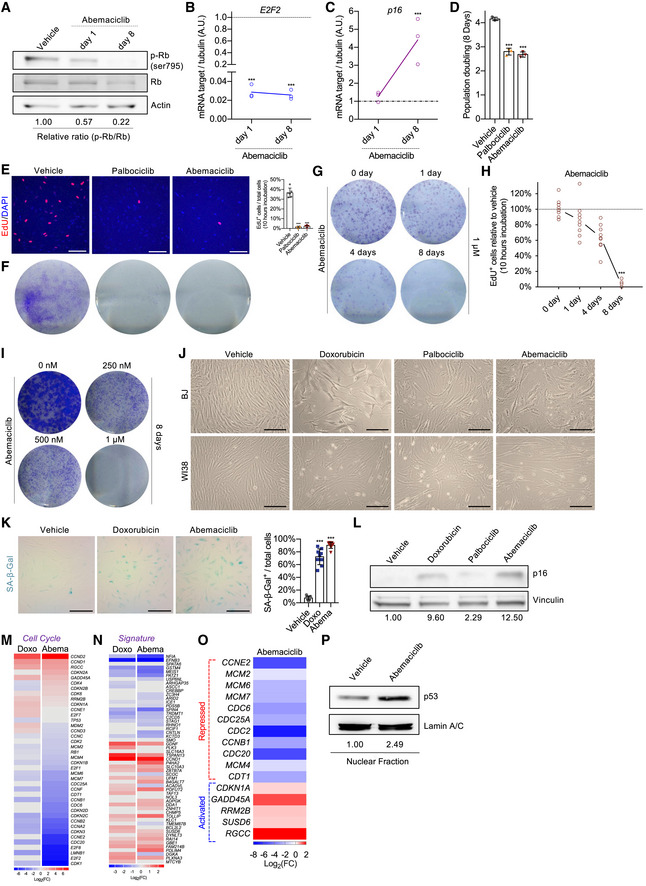
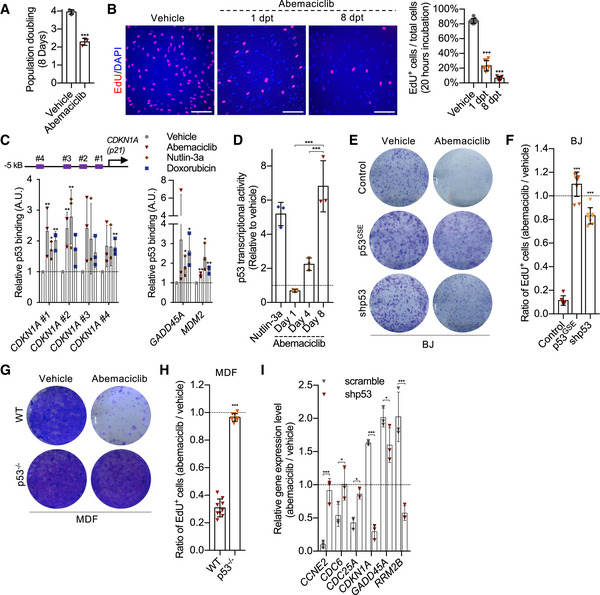
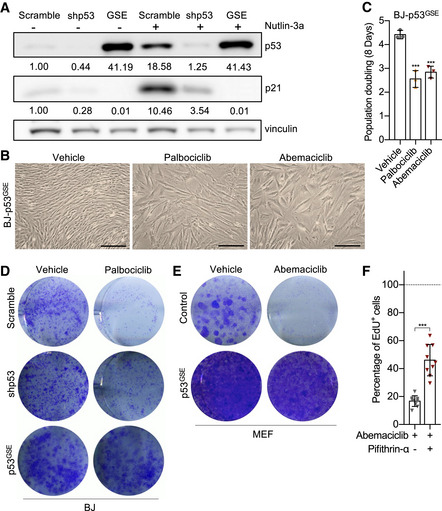
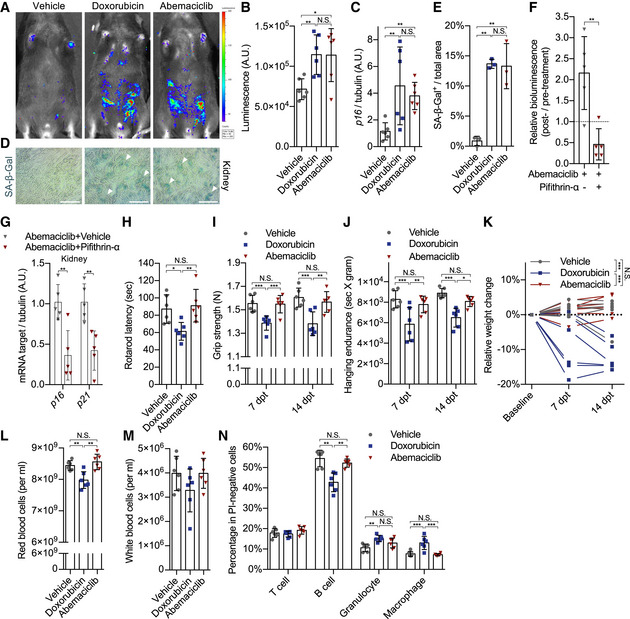
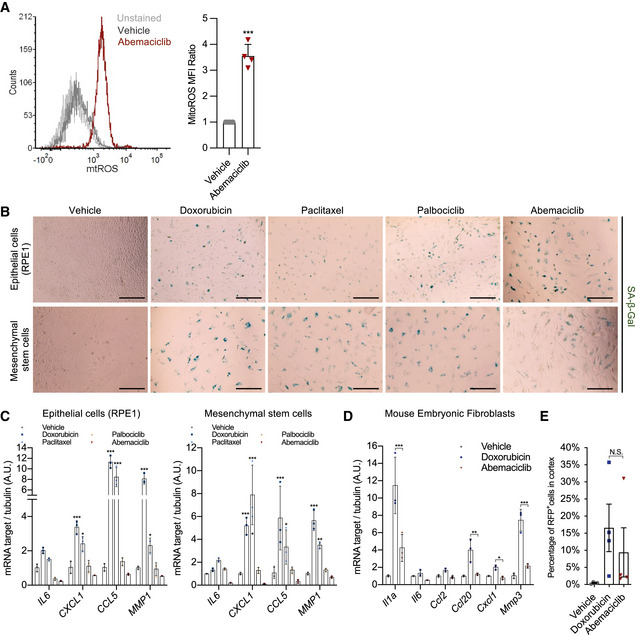
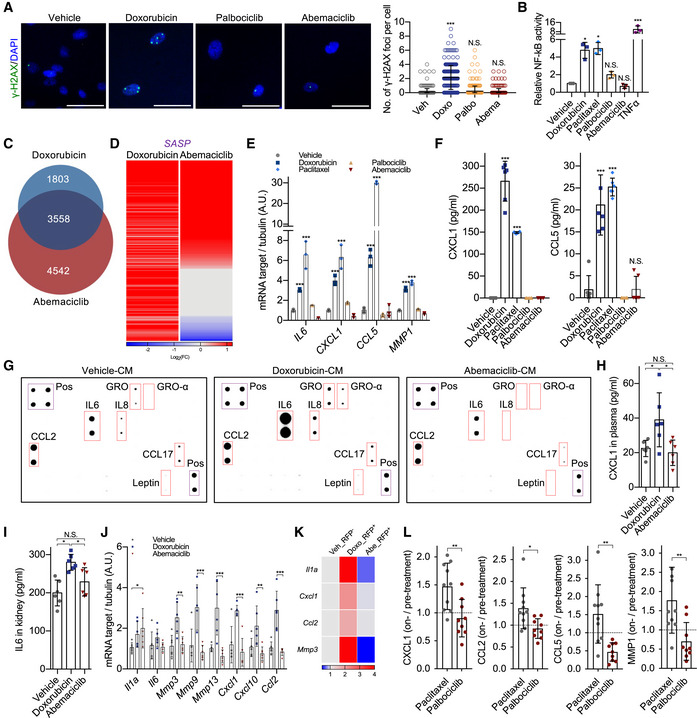
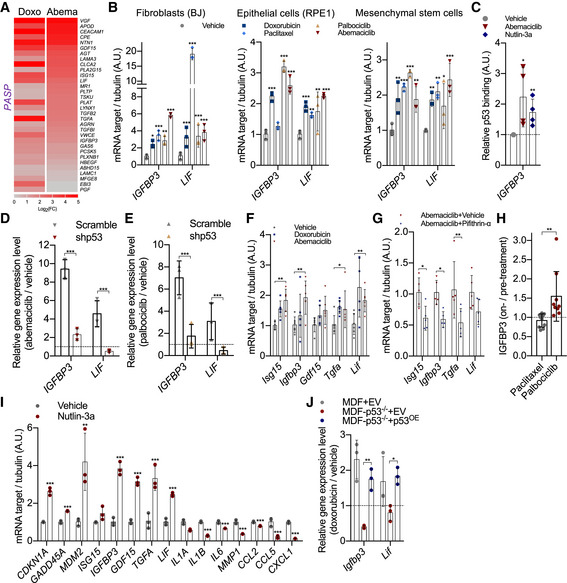
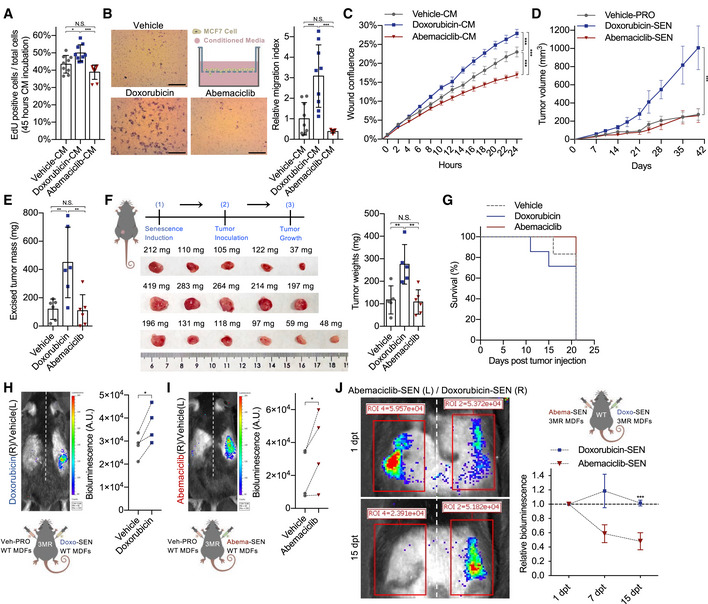
Cellular senescence is a state of stable growth arrest and a desired outcome of tumor suppressive interventions. Treatment with many anti-cancer drugs can cause premature senescence of non-malignant cells. These therapy-induced senescent cells can have pro-tumorigenic and pro-disease functions via activation of an inflammatory secretory phenotype (SASP). Inhibitors of cyclin-dependent kinases 4/6 (CDK4/6i) have recently proven to restrain tumor growth by activating a senescence-like program in cancer cells. However, the physiological consequence of exposing the whole organism to pharmacological CDK4/6i remains poorly characterized. Here, we show that exposure to CDK4/6i induces non-malignant cells to enter a premature state of senescence dependent on p53. We observe in mice and breast cancer patients that the CDK4/6i-induced senescent program activates only a partial SASP enriched in p53 targets but lacking pro-inflammatory and NF-κB-driven components. We find that CDK4/6i-induced senescent cells do not acquire pro-tumorigenic and detrimental properties but retain the ability to promote paracrine senescence and undergo clearance. Our results demonstrate that SASP composition is exquisitely stress-dependent and a predictor for the biological functions of different senescence subsets.
Overview
The claims and statistics of this paper haven’t been checked yet.
Free: it reads the open-access text and checks the first 5 claims that cite a source we can check. Create a free account to check every claim.
Integrity signals
Registry
Cites
Statistics
Figures
Verification
Claims the paper makes
The claims and statistics of this paper haven’t been checked yet.
Free: it reads the open-access text and checks the first 5 claims that cite a source we can check. Create a free account to check every claim.
Claims other papers make about this one
Each is checked against this paper’s own text: does it say what the citing paper says it does?
The source backs part of the claim, not all of it — or backs it for a different population, condition or comparison.
In the citing paper
“Studies in mouse models have demonstrated that TIS promotes cardiac dysfunction, inflammation, bone loss, muscle weakness, renal and hepatic failure, haematopoietic insufficiency, and overall frailty 27,111,202 .”
From Senescence and cancer — role and therapeutic opportunities (2022) · cites this paper as [111]
Experimental — accuracy not yet measuredThe source backs part of the claim, not all of it — or backs it for a different population, condition or comparison.
In the citing paper
“The proportion of senescent cancer cells in mice exposed to the CDK4/6 inhibitor abemaciclib was comparable to that in mice exposed to doxorubicin, but mice exposed abemaciclib suffered less from detrimental effects owing to a reduction in pro- inflammatory SASP factors 111 .”
From Senescence and cancer — role and therapeutic opportunities (2022) · cites this paper as [111]
Experimental — accuracy not yet measuredThe source backs part of the claim, not all of it — or backs it for a different population, condition or comparison.
In the citing paper
“Importantly, despite the marked reduction in the inflammatory SASP response, CDK4/6 inhibition triggers antitumour immunity and favours senescent cell removal 111,153 .”
From Senescence and cancer — role and therapeutic opportunities (2022) · cites this paper as [111]
Experimental — accuracy not yet measuredThe source backs part of the claim, not all of it — or backs it for a different population, condition or comparison.
In the citing paper
“CDK4/6 inhibitor- induced senescent non- malignant and malignant cells largely lack pro- inflammatory SASP factors 111,153 .”
From Senescence and cancer — role and therapeutic opportunities (2022) · cites this paper as [111]
Experimental — accuracy not yet measured
Self-check
Percentages, sums and reported differences re-computed from the paper’s own numbers.
The self-check needs the paper’s full text.
Citations
Cites
Moderated estimation of fold change and dispersion for RNA-seq data with DESeq2
Love, M. I., Huber, W., & Anders, S. (2014) · Genome Biology · doi:10.1186/s13059-014-0550-8 · Cited by 95,106
Hallmarks of Cancer: The Next Generation
Hanahan, D., & Weinberg, R. A. (2011) · Cell · doi:10.1016/j.cell.2011.02.013 · Cited by 66,590 · cited 1×
“Unrestrained proliferation is one of the common hallmarks of cancer cells and a major target for anti-cancer interventions (Hanahan & Weinberg, 2011).”
The senescence-associated secretory phenotype: the dark side of tumor suppression
Coppé, J.-P., Desprez, P.-Y., Krtolica, A., & Campisi, J. (2010) · Annual Review of Pathology: Mechanisms of Disease · doi:10.1146/annurev-pathol-121808-102144 · Cited by 5,206
Inflammageing: chronic inflammation in ageing, cardiovascular disease, and frailty
Ferrucci, L., & Fabbri, E. (2018) · Nature Reviews Cardiology · doi:10.1038/s41569-018-0064-2 · Cited by 3,690 · cited 1×
“In accordance, pro-inflammatory SASP factors are elevated in cancer patients suffering from a variety of adverse reactions to cancer therapies (Pierce et al , 2009; Ferrucci & Fabbri, 2018).”
Palbociclib and letrozole in advanced breast cancer
Finn, R. S., Martin, M., Rugo, H. S., Jones, S., Im, S.-A., Gelmon, K., Harbeck, N., Lipatov, O. N., Walshe, J. M., Moulder, S., et al. (2016) · New England Journal of Medicine · doi:10.1056/nejmoa1607303 · Cited by 3,007 · cited 1×
“…(LY2835219), and ribociclib (LEE011) are approved for the treatment of hormone-sensitive and HER2-negative advanced breast cancer patients, where they have been shown to improve progression-free survival in largely metastasized breast cancer patient cohorts (Finn et al , 2016; Goetz et al , 2017).”
Hallmarks of Cellular Senescence
Hernandez-Segura, A., Nehme, J., & Demaria, M. (2018) · Trends in Cell Biology · doi:10.1016/j.tcb.2018.02.001 · Cited by 2,605 · cited 4×
“Drug-treated cells were replated on coverslip in a 24-well plate (3 × 10 4 cells/well) and cultured for 10 or 20 h in the presence of EdU (10 l M), then fixed and stained as previously described (Hernandez-Segura et al , 2018a).”
InfluentialSelf-citationSenescence and tumour clearance is triggered by p53 restoration in murine liver carcinomas
Xue, W., Zender, L., Miething, C., Dickins, R. A., Hernando, E., Krizhanovsky, V., Cordon-Cardo, C., & Lowe, S. W. (2007) · Nature · doi:10.1038/nature05529 · Cited by 2,473 · cited 1×
“In particular, because cells with PASP only were cleared at a faster rate, it will be interesting to identify PASP factors that facilitate, and NASP factors that interfere with, immune responses (Ventura et al , 2007; Xue et al , 2007; Iannello & Raulet, 2013; Stokes et al , 2019).”
Persistent DNA damage signalling triggers senescence-associated inflammatory cytokine secretion
Rodier, F., Coppé, J.-P., Patil, C. K., Hoeijmakers, W. A. M., Muñoz, D. P., Raza, S. R., Freund, A., Campeau, E., Davalos, A. R., & Campisi, J. (2009) · Nature Cell Biology · doi:10.1038/ncb1909 · Cited by 2,232
Four faces of cellular senescence
Rodier, F., & Campisi, J. (2011) · Journal of Cell Biology · doi:10.1083/jcb.201009094 · Cited by 2,070 · cited 1×
“…chemo-and radiotherapy, cause high level of DNA damage in quickly proliferating cells and often achieve tumor suppression by leading cells into senescence — a stable form of growth arrest dependent on the upregulation of cyclin-dependent kinase (CDK) inhibitors p16 and p21 (Rodier & Campisi, 2011).”
An Essential Role for Senescent Cells in Optimal Wound Healing through Secretion of PDGF-AA
Demaria, M., Ohtani, N., Youssef, S. A., Rodier, F., Toussaint, W., Mitchell, J. R., Laberge, R.-M., Vijg, J., Van Steeg, H., Dollé, M. E. T., et al. (2014) · Developmental Cell · doi:10.1016/j.devcel.2014.11.012 · Cited by 2,045
Self-citation
Research works printed but not linked: 1
- Laberge R‐M, Sun YU, Orjalo AV, Patil CK, Freund A, Zhou L, Curran S, Davalos AR, Wilson‐Edell KA, Liu SU et al (2015b) MTOR regulates the pro‐tumorigenic senescence‐associated secretory phenotype by promoting IL1A translation. Nat Cell Biol 17: 1049– 1061 26147250 PMC4691706 · DOI · Paper page
Cited by
Items 101–112 of 112
Zhang, Y., Zhang, Y., You, J., Lu, Z., & Zhao, T. (2026) · Frontiers in Immunology · doi:10.3389/fimmu.2026.1786697
“Prolonged CDK4/6 inhibition with abemaciclib can induce a p53-dependent senescent state in primary fi broblasts and in vivo models, suggesting that similar stromal changes may also occur in the TME (118).”
Blue period - features of senescence 30 years after beta-galactosidase
Kuehnemann, C., & Wiley, C. D. (2026) · Aging · doi:10.18632/aging.206380
Fatty acid synthesis therapy-induced senescence (FASTIS) in cancer cells
Verdura, S., Llop‐Hernández, À., der Steen, T. V., Encinar, J. A., Martín-Castillo, B., Cuyàs, E., Lupu, R., & Menéndez, J. A. (2026) · Cell Death and Disease · doi:10.1038/s41419-026-08992-8
“If clinically validated, this metabolic adaptation to targeted lipogenesis inhibition could be exploited therapeutically through rational “ one-two punch ” senogenic-(immuno)senolytic strategies.”
CDK4/6 inhibition induces a senescence-associated secretory phenotype via delayed NF-κB activation
Yeung, J. L.-H., Rendleman, J., Westcott, L. A., Ou, A., Pressler, M., Pagane, N., Duba, I., Hosuru, R., Tumenbayar, B., & Risca, V. I. (2026) · Life Science Alliance · doi:10.26508/lsa.202603790
“Although NF-κ B’s role in senescence induced by oncogene activation is established (Chien et al, 2011; Salminen et al, 2012), its activation in CDK4/6i-induced senescence was surprising, as prior studies failed to detect NF-κ B activity (Goel et al, 2017; Wang et al, 2022; Lee et al, 2024).”
Molecular Mechanisms and Molecular Subtype-Specific Responses to Paclitaxel in Breast Cancer Cells
Çifci, K. U., Çelik, A. B., Gülüm, L., Ada, S., Demir, M., & Tutar, Y. (2026) · Molecules · doi:10.3390/molecules31142431
“In BC cells, CDK4/6 dysregulation, TP53-associated signaling, and telomere instability are considered key drivers of senescence induction [27,28].”
Klaver, D., Gander, H., Frena, B., Martin, M., Amato, M., Richter, J., Pichler, R., & Thurnher, M. (2026) · Molecular Biomedicine · doi:10.1186/s43556-026-00515-3 · Cited by 1
“The CDK4/6 inhibitor abemaciclib (ABE) can induce a p53-dependent senescent state [71], underlying its therapeutic efficacy in cancer.”
Senescence of the immune system in SLE: Pathogenic mechanisms and therapeutic implications
Jiang, X., Liang, Z., Zhao, C., Li, F., Su, Q., Wang, Y., Zhang, S., & Cheng, T. (2026) · Autoimmunity Reviews · doi:10.1016/j.autrev.2026.104152
Bleomycin as an Inducer of Senescence in RAW 264.7 MacrophagesPreprint
Kavianpour, K., Hihn, O., Baotić, M., Weigelin, B., Pichler, B. J., & Bézière, N. (2026) · Research Square · doi:10.21203/rs.3.rs-10316466/v1
Shao, F., Ren, Z., Shi, L., Sun, Y., Sun, W., Tang, J., Yingsailamu, Ding, Z., Zhang, J., & Zang, Y. (2026) · The EMBO Journal · doi:10.1038/s44318-026-00885-y
Fuentes-Baile, M., Encinar, J. A., Araujo‐Abad, S., Pérez-Valenciano, E., García-Morales, P., Fuertes-García, L., Romero, C. D. J., & Saceda, M. (2026) · bioRxiv (Cold Spring Harbor Laboratory) · doi:10.64898/2026.09.18.752547
Cellular senescence: six decades of discovery and reinvention
Klaver, M., Steeneken, L. S., Veeningen, N., Altulea, A., & Demaria, M. (2026) · The EMBO Journal · doi:10.1038/s44318-026-00922-w
Self-citationYu, S., Gong, X. Q., Yang, Y., Duan, Y., Zhang, S., Wang, Y., Wang, Z., Bi, C., & Sun, H. (2026) · Science Advances · doi:10.1126/sciadv.aea2001
“Consequently, p53-dependent senescence is critical for the efficacy of CDK4/6i ( 10 ).”
Metadata
- Authors
- Wang, B., Varela‐Eirin, M., Brandenburg, S. M., Hernandez‐Segura, A., van Vliet, T., Jongbloed, E. M., Wilting, S. M., Ohtani, N., Jager, A., & Demaria, M.
- Affiliations
- University Medical Center Groningen (NL)
- Erasmus MC (NL)
- Osaka City University (JP)
- Corresponding author
- Demaria, Marco
- ORCID
- Venue
- The EMBO Journal
- Published
- 2022-01-05
- Volume
- 41
- Issue
- 6
- Pages
- e108946-e108946
- ISSN
- 0261-4189 (ISSN-L)
- 1460-2075
- PMC
- PMC8922251
- OpenAlex
- W4206812574
- Semantic Scholar
- 18b36d20596ce9b9eae556bc04fab08b715e1596
- Cited by
- 113
- References
- 54
- Citations by year
- 2026: 27 · 2025: 27 · 2024: 29 · 2023: 18 · 2022: 12
- FWCI
- 13.31
- Type
- journal article
- Language
- en
- Open access
- hybrid
- doi.org
- Licence
- public-domain
- creativecommons.org/licenses/by/4.0/ (tdm)
- creativecommons.org/licenses/by/4.0/ (vor)
- Locations
- The EMBO Journal (publishedVersion, public-domain)
- PubMed Central (publishedVersion, cc-by)
- PubMed (publishedVersion)
- University of Groningen research database (University of Groningen / Centre for Information Technology) (publishedVersion, cc-by)
- EUR Research Repository (Erasmus University Rotterdam) (acceptedVersion, public-domain)
- EUR Research Repository (Erasmus University Rotterdam) (submittedVersion, cc-by)
- University of Groningen research database (University of Groningen / Centre for Information Technology) (submittedVersion, cc-by)
- Funders
- KWF Kankerbestrijding (10989)
- Topics
- Life Sciences › Biochemistry, Genetics and Molecular Biology › Cell Biology › Telomeres, Telomerase, and Senescence
- Health Sciences › Medicine › Oncology › Cancer-related Molecular Pathways
- Health Sciences › Medicine › Oncology › Advanced Breast Cancer Therapies
- Keywords
- cellular senescence, CDK4/6 inhibitors, p53, senescence-associated secretory phenotype, premature senescence, paracrine senescence, NF-κB, breast cancer, drug-induced senescence
- MeSH terms
- Animals, Antineoplastic Agents, Breast Neoplasms, Female, Humans, Tumor Suppressor Protein p53, NF-kappa B, Cellular Senescence, Cyclin-Dependent Kinase 4, Cyclin-Dependent Kinase 6, Mice
About these checks
Registry, retraction, Cites and statistics results are computed, not judged, with one exception: a printed reference that no index lists is read once by a model before it counts as a citation error. Claims are extracted by a model and kept only when their quote appears verbatim in the text; each cited source is then checked, with a model’s help, for whether it says what the claim relies on. Those verdicts can be wrong — read the claim’s quote and the cited source before relying on one.
Statistics and arithmetic are recomputed, not judged.
Confidence bands are shown only for fields calibrated on our annotated test set. None is calibrated yet, so no band is shown.
What counts as a claim ›How we measure confidence ›How we check this ›
Are you an author, or do you see a problem with this page? Request a review
Data sources
Bibliographic data: Semantic Scholar, OpenAlex, Crossref.
Contains information from the Semantic Scholar Academic Graph Datasets, made available under the ODC Attribution License (ODC-BY 1.0).
Semantic Scholar’s data is described in: Kinney, R., et al. (2023). The Semantic Scholar Open Data Platform. arXiv:2301.10140.
