

Cell line authentication: a necessity for reproducible biomedical research
Open accessThe DOI matches its Crossref record; 39 of the 39 references it cites were found in a registry or an index.
Abstract
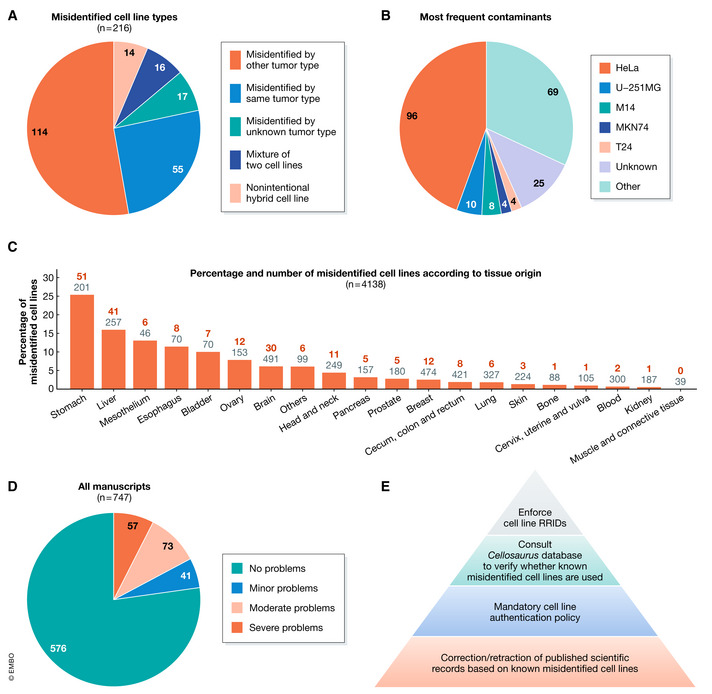
Immortalized or continuous cell lines are invaluable tools in basic and preclinical research. However, the widespread use of misidentified cell lines is a serious threat to scientific reproducibility. Based on the experiences of mandatory cell line authentication at the International Journal of Cancer (IJC), we provide an overview of the issues pertinent to misidentified cell lines and discuss available solutions. We also summarize the lessons learned, revealing that at least 5% of the human cell lines used in manuscripts considered for peer review are misidentified. About 4% of the considered manuscripts are rejected for severe cell line problems, and most are subsequently published in other journals. In order to diminish such malpractice and its consequences for the scientific record, we postulate that strict multi-layered quality control is essential. Besides journals and publishers, we encourage scientists, research institutions, and funders to take action on the matter and revise their respective policies. Hence, we provide concrete recommendations on introducing regular authentication schemes and staff training, and discuss future steps for enhancing good cell culture practices.
Overview
The claims and statistics of this paper haven’t been checked yet.
Free: it reads the open-access text and checks the first 5 claims that cite a source we can check. Create a free account to check every claim.
Integrity signals
Registry
Cites
Statistics
Figures
Verification
Claims the paper makes
The claims and statistics of this paper haven’t been checked yet.
Free: it reads the open-access text and checks the first 5 claims that cite a source we can check. Create a free account to check every claim.
Claims other papers make about this one
Each is checked against this paper’s own text: does it say what the citing paper says it does?
The source backs part of the claim, not all of it — or backs it for a different population, condition or comparison.
In the citing paper
“Adopted by pharmaceutical companies and academia for the characterization of primary and immortalized cells [11,19], STR profiling is well established with standard protocols published by the American National Standards Institute (”
From The history, landscape, and outlook of human cell line authentication and security (2024) · cites this paper as [11]
Experimental — accuracy not yet measuredThe source backs part of the claim, not all of it — or backs it for a different population, condition or comparison.
In the citing paper
“A conservatively estimated 22.9% rate of papers touched by CCCM-related issues means that $2.03 billion was invested in possibly-questionable research [11].”
From The history, landscape, and outlook of human cell line authentication and security (2024) · cites this paper as [11]
Experimental — accuracy not yet measuredThe cited source says what the claim attributes to it.
In the citing paper
“The identification of verifiable errors such as wrongly identified nucleotide sequences (38,39,54,56) or misidentified or contaminated cell line models (97) could immediately precipitate the publication of an indexed editorial note (10) or expression of concern.”
From Protection of the human gene research literature from contract cheating organizations known as research paper mills (2022) · cites this paper as [97]
The cited source says what the claim attributes to it.
In the citing paper
“Misidentified or cross‐contaminated cell lines are a widespread and concerning issue that undermines research integrity in the life sciences. 5 , 6”
From Cell line authentication and validation is a key requirement for Journal of Cell Communication and Signaling publications (2025) · cites this paper as [5]
The cited source says what the claim attributes to it.
In the citing paper
“Finally, due to cross-contamination and/or uncertainty over donor origins, many human cell lines are known to be wrongly identified (21–25).”
From Misspellings or “miscellings”—Non‐verifiable and unknown cell lines in cancer research publications (2024) · cites this paper as [24]
1 more claim about this paper
Create a free account to see every claim other papers make about this one.
Self-check
Percentages, sums and reported differences re-computed from the paper’s own numbers.
The self-check needs the paper’s full text.
Citations
Cites
Next-generation characterization of the Cancer Cell Line Encyclopedia
Ghandi, M., Huang, F. W., Jané-Valbuena, J., Kryukov, G. V., Lo, C. C., McDonald, E. R., Barretina, J., Gelfand, E. T., Bielski, C. M., Li, H., et al. (2019) · Nature · doi:10.1038/s41586-019-1186-3 · Cited by 3,394 · cited 1×
“…genomics, epige-nomics, transcriptomics, proteomics, and metabolomics data) of more than 1,000 cancer cell lines are already publicly available (Ghandi et al , 2019; Nusinow et al , 2020), providing scientists with a wealth of information for direct analyses or for selecting the best models…”
Quantitative Proteomics of the Cancer Cell Line Encyclopedia
Nusinow, D. P., Szpyt, J., Ghandi, M., Rose, C. M., McDonald, E. R., Kalocsay, M., Jané-Valbuena, J., Gelfand, E., Schweppe, D. K., Jedrychowski, M., et al. (2020) · Cell · doi:10.1016/j.cell.2019.12.023 · Cited by 957 · cited 1×
“…transcriptomics, proteomics, and metabolomics data) of more than 1,000 cancer cell lines are already publicly available (Ghandi et al , 2019; Nusinow et al , 2020), providing scientists with a wealth of information for direct analyses or for selecting the best models for their research.”
The Cellosaurus, a Cell-Line Knowledge Resource
Bairoch, A. (2018) · Journal of Biomolecular Techniques JBT · doi:10.7171/jbt.18-2902-002 · Cited by 807 · cited 2×
“The Cellosaurus is a knowledge resource that aims to document all cell lines used in biomedical research (Bairoch, 2018), and provides already a wealth of information on more than 102,000 human cell lines (current release March 2022).”
Check your cultures! A list of cross‐contaminated or misidentified cell lines
Capes‐Davis, A., Theodosopoulos, G., Atkin, I., Drexler, H. G., Kohara, A., MacLeod, R. A. F., Masters, J. R., Nakamura, Y., Reid, Y. A., Reddel, R. R., et al. (2010) · International Journal of Cancer · doi:10.1002/ijc.25242 · Cited by 520 · cited 2×
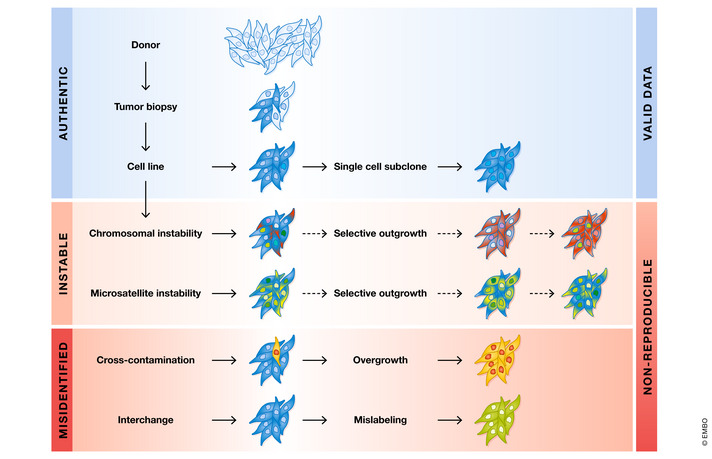
“Unfortunately, too often poor laboratory practice, like inadvertent cross-contamination or mislabeling, results in misidentified cell lines that no longer correspond to their original donor (Fig 1) (Capes-Davis et al , 2010).”
Self-citationShort tandem repeat profiling provides an international reference standard for human cell lines
Masters, J. R., Thomson, J. A., Daly-Burns, B., Reid, Y. A., Dirks, W. G., Packer, P., Toji, L. H., Ohno, T., Tanabe, H., Arlett, C. F., et al. (2001) · Proceedings of the National Academy of Sciences · doi:10.1073/pnas.121616198 · Cited by 478 · cited 1×
“Although various methods are suitable for authentication testing (Castro et al , 2013; Yu et al , 2015; Zhang et al , 2020), short tandem repeat (STR) profiling is the international reference standard for cell line authentication (Masters et al , 2001).”
Self-citationGuidelines for the use of cell lines in biomedical research
Geraghty, R. J., Capes-Davis, A., Davis, J. M., Downward, J., Freshney, R. I., Knezevic, I., Lovell-Badge, R., Masters, J. R. W., Meredith, J., Stacey, G. N., et al. (2014) · British Journal of Cancer · doi:10.1038/bjc.2014.166 · Cited by 464 · cited 2×
“For further and detailed instructions on good cell culture practice, we refer to the “Guidance document on good in vitro method practices (GIVIMP)” by the Organization for Economic Co-operation and Development (OECD, 2018), and other best practice documents (Geraghty et al , 2014).”
Self-citationThe Costs of using Unauthenticated, Over-Passaged Cell Lines: How Much more Data do we Need?
Hughes, P., Marshall, D., Reid, Y., Parkes, H., & Gelber, C. (2007) · BioTechniques · doi:10.2144/000112598 · Cited by 434 · cited 1×
“Since then many studies unmasking misidentified cell lines have been published (Nelson-Rees & Flander-meyer, 1977; MacLeod et al , 1999) (partly reviewed by (Hughes et al , 2007)), and in 2010, a register of known misidentified cell lines was set up (Capes-Davis et al , 2010).”
Widespread intraspecies cross-contamination of human tumor cell lines arising at source
MacLeod, R. A. F., Dirks, W. G., Matsuo, Y., Kaufmann, M., Milch, H., & Drexler, H. G. (1999) · International Journal of Cancer · doi:10.1002/(sici)1097-0215(19991112)83:4<555::aid-ijc19>3.0.co;2-2 · Cited by 364 · cited 2×
“The establishment of new cell line models is an important but difficult task, as cross-contamination at the source is one of the most common causes for the development of misidentified cell lines (MacLeod et al , 1999).”
Self-citationApparent HeLa Cell Contamination of Human Heteroploid Cell Lines
GARTLER, S. M. (1968) · Nature · doi:10.1038/217750a0 · Cited by 226 · cited 2×
“More than 50 years after Stanley Gartler showed that HEp-2 is a derivative of the cervical adenocarcinoma HeLa cell line (Gartler, 1968), we at the International Journal of Cancer ( IJC ) still receive manuscripts in which HEp-2 is used as a supposed laryngeal carcinoma cell line.”
A resource for cell line authentication, annotation and quality control
Yu, M., Selvaraj, S. K., Liang-Chu, M. M. Y., Aghajani, S., Busse, M., Yuan, J., Lee, G., Peale, F., Klijn, C., Bourgon, R., et al. (2015) · Nature · doi:10.1038/nature14397 · Cited by 225 · cited 2×
“Although various methods are suitable for authentication testing (Castro et al , 2013; Yu et al , 2015; Zhang et al , 2020), short tandem repeat (STR) profiling is the international reference standard for cell line authentication (Masters et al , 2001).”
Cited by
Kuś-Słowińska, M., Ibragimow, I., & Piotrowska‐Kempisty, H. (2023) · Pharmaceutics · doi:10.3390/pharmaceutics15112523 · Cited by 186
“Moreover, the authenticity of the internal Caco-2 cell line can be confirmed using STR profiling (ang. short tandem repeats) [52].”
BackgroundISSCR standards for the use of human stem cells in basic research
Ludwig, T. E., Andrews, P. W., Barbaric, I., Benvenisty, N., Bhattacharyya, A., Crook, J. M., Daheron, L. M., Draper, J. S., Healy, L. E., Huch, M., et al. (2023) · Stem Cell Reports · doi:10.1016/j.stemcr.2023.08.003 · Cited by 126
“Despite the now well-known example of many tumor cell lines being contaminated by HeLa cells (Horbach and Halffman, 2017), in a recent analysis by the International Journal of Cancer, at least 5% of papers used misidentified human cell lines (Souren et al., 2022).”
BackgroundByrne, J. A., Park, Y., Richardson, R. A. K., Pathmendra, P., Sun, M., & Stoeger, T. (2022) · Nucleic Acids Research · doi:10.1093/nar/gkac1139 · Cited by 46
Antibody characterization is critical to enhance reproducibility in biomedical research
Kahn, R. A., Virk, H., Laflamme, C., Houston, D. W., Polinski, N. K., Meijers, R., Levey, A. I., Saper, C. B., Errington, T. M., Turn, R. E., et al. (2024) · eLife · doi:10.7554/elife.100211 · Cited by 32
Impact of mechanical cues on key cell functions and cell-nanoparticle interactions
Elblová, P., Lunová, M., Dejneka, A., Jirsa, M., & Lunov, O. (2024) · Discover Nano · doi:10.1186/s11671-024-04052-2 · Cited by 28
Scancar, B., Byrne, J. A., Causeur, D., & Barnett, A. G. (2026) · BMJ · doi:10.1136/bmj-2025-087581 · Cited by 39
“46 However, their marked overrepresentation among misidentified cell lines—25% and 15% of all such lines, respectively 47 —is striking.”
Misspellings or “miscellings”—Non‐verifiable and unknown cell lines in cancer research publications
Oste, D. J., Pathmendra, P., Richardson, R. A. K., Johnson, G., Ao, Y., Arya, M. D., Enochs, N. R., Hussein, M., Kang, J., Lee, A., et al. (2024) · International Journal of Cancer · doi:10.1002/ijc.34995 · Cited by 18
Self-citationAspiroz, L. S., Mennecozzi, M., Batlle‐Morera, L., Corneo, B., Healy, L. E., Kotter, M., Kurtz, A., Ludwig, T. E., Mummery, C. L., Pera, M. F., et al. (2025) · Stem Cell Reports · doi:10.1016/j.stemcr.2025.102531 · Cited by 20
“Ultimately, education and training in all stages of research careers are crucial for increasing awareness and fostering adoption of best practices and standards (Freedman et al., 2015b; Souren et al., 2022).”
Yang, M., He, J., Xia, S., Wang, Y., Xiong, J., Liao, C., Li, N., Qu, S., & Shen, C. (2023) · Human Cell · doi:10.1007/s13577-023-01011-4 · Cited by 14
“In order to guarantee the scientific result, cell line authentication is a prerequisite before any research project commences [4–6].”
Luis, D. D., Liehr, T., Kankel, S., Weise, A., Pentzold, C., Buhl, E. M., Hardt, K., Keller, D. T., Schröder, S. K., & Weiskirchen, R. (2025) · Frontiers in Cell and Developmental Biology · doi:10.3389/fcell.2025.1648639 · Cited by 14
Advancements in Preclinical Models of Pancreatic Cancer
Salu, P., & Reindl, K. M. (2024) · Pancreas · doi:10.1097/mpa.0000000000002277 · Cited by 15
Spatial -omics technologies: the new enterprise in 3D breast cancer models
Pierantoni, L., Reis, R. L., Silva‐Correia, J., Oliveira, J. M., & Heavey, S. (2023) · Trends in biotechnology · doi:10.1016/j.tibtech.2023.07.003 · Cited by 16
Cattaneo, A., Bellenghi, M., Ferroni, E., Mangia, C., Marconi, M., Rizza, P., Borghini, A., Martini, L., Luciani, M. N., Ortona, E., et al. (2024) · Journal of Personalized Medicine · doi:10.3390/jpm14090908 · Cited by 20
“However, in most cases, published data do not state the sex of the organisms from which the stabilized cell lines or freshly isolated cells have originated [63,64].”
BackgroundWilson, A., Dasyam, N., O'Hagan, F., Farrell, D. M., Turner, C., Jay, A., Schmidt, A., Beddow, R., Lillis, T., Chin, T., et al. (2025) · Scientific Reports · doi:10.1038/s41598-025-95903-0 · Cited by 16
The Problem of Irreproducible Bioscience Research
Flier, J. S. (2022) · Perspectives in biology and medicine · doi:10.1353/pbm.2022.0032 · Cited by 12
Variable characteristics overlooked in human K-562 leukemia cell lines with a common signature
Kasai, F., Mizukoshi, K., & Nakamura, Y. (2024) · Scientific Reports · doi:10.1038/s41598-024-60271-8 · Cited by 13
“Cell line authentication by STR analysis is mandatory for submitting manuscripts to major journals as it helps prevent the publication of misidentified cell lines 17 .”
The history, landscape, and outlook of human cell line authentication and security
Harbut, E., Makris, Y., Pertsemlidis, A., & Bleris, L. (2024) · SLAS Discovery · doi:10.1016/j.slasd.2024.100194 · Cited by 8
Caruso, G., Fresta, C. G., Fidilio, A., Lazzara, F., Musso, N., Cardaci, V., Drago, F., Caraci, F., & Bucolo, C. (2023) · Molecules · doi:10.3390/molecules28083324 · Cited by 11
“The authentication of the cell line used in this study (ARPE-19) was performed by Eurofins Genomics Europe Applied Genomics GmbH (Ebersberg, Germany) [65] (Supplementary material: Supplementary Files S1–S5).”
MethodInfluentialGenetic Characterization of Rat Hepatic Stellate Cell Line PAV-1
Gäberlein, K., Schröder, S. K., Nanda, I., Steinlein, C., Haaf, T., Buhl, E. M., Sauvant, P., Sapin, V., Abergel, A., & Weiskirchen, R. (2023) · Cells · doi:10.3390/cells12121603 · Cited by 9
“Cell line misidentification is highly frequent and the portion of misidentified cell lines can thus only be uncovered by implementing a strict mandatory cell line authentication policy [16].”
BackgroundMolecular characterization of the murine Leydig cell lines TM3 and MLTC-1
Schröder, S. K., Hardt, K., Keller, D. T., Pinoé-Schmidt, M., Buhl, E. M., & Weiskirchen, R. (2025) · Frontiers in Endocrinology · doi:10.3389/fendo.2025.1715307 · Cited by 7
“This typically involves transcriptomic analysis of the cells and determining their short tandem repeat (STR) pro fi le (22, 25).”
Leon, C., Manley, E., Neely, A., Castillo, J., Correa, M. R., Velarde, D. A., Yang, M., Puente, P. E., Romero, D. I., Ren, B., et al. (2023) · Frontiers in Oncology · doi:10.3389/fonc.2023.1187585 · Cited by 6
Weiskirchen, R., Almeida, J., & Chaqour, B. (2025) · Journal of Cell Communication and Signaling · doi:10.1002/ccs3.70029 · Cited by 5
Best Practice for Cell Banking Techniques Used in Cell Cultivated Products
Food Standards Agency, Strauss, B., Kleinsorge, B., & Lotfian, P. (2025) · FSA research and evidence. · doi:10.46756/001c.144239 · Cited by 5
Cheng, F., Li, P., Xu, S., Zhang, C., Liang, H., & Ding, Z. (2024) · Aging · doi:10.18632/aging.205595 · Cited by 6
Modelling sex differences of neurological disorders in vitro
Castro‐Aldrete, L., Einsiedler, M., Cuní‐López, C., Vanhaelen, Q., Silvestri, A., Ferretti, M. T., de Gennaro, M. E., Putignano, G., Guix, M., Marino, N., et al. (2025) · Nature Reviews Bioengineering · doi:10.1038/s44222-025-00355-w · Cited by 4
Weiskirchen, R. (2025) · Research Integrity and Peer Review · doi:10.1186/s41073-025-00170-2 · Cited by 8
“Authentication steps such as short tandem repeat (STR) profiling and mycoplasma testing, while widely advocated [3, 4], are still not uniformly required by all journals.”
InfluentialWeiskirchen, R. (2022) · Frontiers in Public Health · doi:10.3389/fpubh.2022.1002484 · Cited by 4
“Moreover, it is estimated that 5% of the human cell lines used in manuscripts considered for peer review are misidentified (16).”
BackgroundResearch reporting guidelines for cell lines: more than just a recommendation
Weiskirchen, R. (2023) · Annals of Translational Medicine · doi:10.21037/atm-23-1208 · Cited by 4
“The general prevalence of misidentified cell lines and their impact on reproducibility has recently been discussed (23).”
BackgroundInfluentialInnovative use of forensic STRs for authentication of human cell lines stored over 34 years
Chen, A., Chen, J., Xuan, Y., Zhao, J., Ji, C., & Zhang, S. (2025) · Journal of Translational Genetics and Genomics · doi:10.20517/jtgg.2025.08 · Cited by 4
Žymantaitė, E., Gabrielaitė, M., Pašukonienė, V., & Mlynska, A. (2025) · Disease Models & Mechanisms · doi:10.1242/dmm.052451 · Cited by 3
Byrne, J. A. (2025) · Anesthesia & Analgesia · doi:10.1213/ane.0000000000007854 · Cited by 3
Establishment of Breast Cancer Organoids: A Systematic Review and Meta‐Analysis
Rocha, V. M., Katayama, M. L. H., Amorim, L. O., de Oliveira, B. D., López, R. V. M., & Folgueira, M. A. A. K. (2026) · International Journal of Breast Cancer · doi:10.1155/ijbc/6534449 · Cited by 2
Korch, C. T. (2026) · Current Protocols · doi:10.1002/cpz1.70387 · Cited by 2
What is happening to immunohistochemistry?
Gautron, L. (2023) · BioEssays · doi:10.1002/bies.202300056 · Cited by 2
“Misidentification of cell lines has been a recognized problem since the late 1960s.[6]”
BackgroundInfluentialVučković, N., Hoppe‐Seyler, K., & Riemer, A. B. (2023) · Cancers · doi:10.3390/cancers15153810 · Cited by 2
Andrews, J. M., Lloyd, M. W., Neuhauser, S. B., Bundy, M., Jocoy, E. L., Airhart, S. D., Bult, C. J., Evrard, Y. A., Chuang, J. H., & Baker, S. J. (2024) · Bioinformatics · doi:10.1093/bioinformatics/btae713 · Cited by 2
“A 2022 study of the mandatory cell line authentication at the International Journal of Cancer revealed that at least 5% of human cell lines in submitted manuscripts between July 2018 and June 2021 were misidentified (Souren et al. 2022).”
Reflecting the human lip in vitro: Cleft lip skin and mucosa keratinocytes keep their identities
Rihs, S., Parisi, L., Lauener, A., Mansour, F. A., Schnyder, I., Dekany, G. M., Scala, G. C. L., Katsaros, C., & Degen, M. (2024) · Oral Diseases · doi:10.1111/odi.14844 · Cited by 3
Assessment of adhering and invading properties of Escherichia coli strains
Iebba, V. (2024) · Methods in cell biology · doi:10.1016/bs.mcb.2024.08.011 · Cited by 1
Le, P. N., Keysar, S. B., Miller, B., Morton, J. J., Chimed, T.-S., Alzofon, N., Nieto, C., Davies, K. D., Thomas, C. M., Weaver, A. N., et al. (2025) · Molecular Carcinogenesis · doi:10.1002/mc.70025 · Cited by 1
Establishment and Application of a 16‐Loci STR Method for Rat Cell Line Authentication
Yang, M., Xu, T., Li, N., Sun, Y., Huang, W., Liang, X., & Shen, C. (2025) · The FASEB Journal · doi:10.1096/fj.202501145r · Cited by 1
Beyond genomics: 3D microtumor assays for rapid, clinically relevant functional drug testing
Chan, M., & Gujral, T. S. (2025) · Oncogene · doi:10.1038/s41388-025-03637-0 · Cited by 1
“This is analogous to the early standardization efforts in 2D culture models, which led to the development of SOPs for validating the authenticity and reproducibility of cell lines [38].”
Fischer, Y., Mosher, J. T., Barbaric, I., Spits, C., & Pera, M. (2026) · Stem Cell Reports · doi:10.1016/j.stemcr.2025.102780 · Cited by 2
Cell line authentication: a commercial service provider perspective
Ralston, E., & Haskayne, C. (2026) · Frontiers in Cell and Developmental Biology · doi:10.3389/fcell.2026.1843943 · Cited by 1
“(Fusenig et al., 2017; Souren et al., 2022).”
Alghamdi, H. (2026) · Ageing Research Reviews · doi:10.1016/j.arr.2026.103322 · Cited by 2
Critical comment on "Inhibitory effects of Raddeanin A on hepatocellular carcinoma cells"
Weiskirchen, R. (2025) · Journal of Ethnopharmacology · doi:10.1016/j.jep.2025.119537 · Cited by 1
La independencia del Regulador Hipotecario
Brey, E. R. (2008) · Dialnet (Universidad de la Rioja)
KAHYA, H., & Karaduman, T. (2022) · İstanbul Gelişim Üniversitesi Sağlık Bilimleri Dergisi · doi:10.38079/igusabder.1114239
Editorial: Methods in cancer genetics
D’Aguanno, S., & Buczkowicz, P. (2023) · Frontiers in Oncology · doi:10.3389/fonc.2023.1227854
“Furthermore, it is estimated that between one quarter to one-third of cell lines used by researchers are contaminated or misidentified (1).”
BackgroundTen Strategies to Increase Information (and Reduce Sample Size)
Reynolds, P. S. (2023) · Wiley eBooks · doi:10.1002/9781119800002.ch3
Machine Learning-based Approaches to Integrate Heterogeneous Data for Biological Knowledge Transfer
Park, Y. (2024) · eDiss (Georg-August-Universität Göttingen) · doi:10.53846/goediss-10534 · Cited by 3
Artifacts of analysis in cell line identification by short tandem repeat profiling
Malchenkova, A. A., & Kosobokova, E. N. (2024) · CARDIOVASCULAR THERAPY AND PREVENTION · doi:10.15829/1728-8800-2024-4121 · Cited by 1
Su, Y., Tang, H., Miao, X., Yu, C., Chai, C., Huang, W. B., Li, L., Zheng, J., Xu, T., Jin, F., et al. (2025) · Human Cell · doi:10.1007/s13577-025-01276-x
“Currently, most eCCA cell lines are of Japanese or Thai origin. eCCA cell lines with a Chinese genetic background are rare, limiting their ability to represent the genotype and phenotype of Chinese CCA, which significantly hampers preclinical research on CCA [25, 26].”
Better understanding of laboratory animal genetics will improve reproducibility
Pavlovic, G., Wells, S., Hérault, Y., & Teboul, L. (2025) · PLoS Biology · doi:10.1371/journal.pbio.3003464
“The issue of incomplete characterization of experimental models in science is not unique to laboratory animal research [7,10,11].”
Prevention of Misidentification of Cell Lines/Authentication Methods for Cell Lines
Kohara, A. (2025) · Current human cell research and applications · doi:10.1007/978-981-95-0587-6_5
Index of human cells in *Human Cell*, 2025
Kasai, F., & Kataoka, H. (2025) · Human Cell · doi:10.1007/s13577-025-01335-3
“This indicates a high rate of misidentifi-cation in Chinese laboratories [8], which may be reflected in manuscripts and publications that use misidentified cell lines [9].”
Falida, K., Ohl, Y., & Plass, C. (2026) · International Journal of Cancer · doi:10.1002/ijc.70359
Self-citationDevelopment and characterization of immortalized mouse intestinal epithelial cell lines
Zhou, J. Y., Espenschied, S. T., Lu, Q., Karell, P. E., Lewis, K. J., Newhall, K. P., Han, Y., Bambroo, M., Job, A., & Stappenbeck, T. S. (2026) · Scientific Reports · doi:10.1038/s41598-026-38295-z
“However, a notable limitation is a lack of rigorous authentication 5 as well as their inability to fully replicate the physiological characteristics of primary intestinal epithelial cells, which reduces the translational relevance of findings.”
He, G., Lian, Z., Ni, W., Song, J., Yan, C., Wang, C., & Wang, Q. (2026) · International Immunopharmacology · doi:10.1016/j.intimp.2026.116564
Parra, L. G., Sendyk, D. E., Verstraeten, S. V., Salafia, A. F., Favale, N. O., Gómez, E. M., Tome, M. C. F., & Casali, C. I. (2026) · Journal of Cellular Physiology · doi:10.1002/jcp.70187
“Additionally, the canine origin of the cell line was authenticated within the past 3 years using species‐specific PCR amplification targeting the mitochondrial cytochrome C oxidase subunit I gene sequence (Ono et al. 2007), as was indicated for non‐human cell lines (Souren et al. 2022).”
A decade-long retrospective analysis of cell line authentication in China using over 10,000 samples
Chen, C., Zhao, X. L., He, Y., Chen, X., & Gao, Y. (2026) · Communications Biology · doi:10.1038/s42003-026-10482-8
Bodnar, A. G., Roger, L. M., & Traylor‐Knowles, N. (2026) · Frontiers in Marine Science · doi:10.3389/fmars.2026.1866991
“Cell identi fi cation and validation are the foundation for reliable and reproducible cell culture systems (Souren et al., 2022).”
Tang, K., Wairong, Z., Zhang, J. N., Wang, G. Q., Shi, W., Yue, M., Lin, Y., Fu, Y., & Zhou, Z. (2026) · Frontiers in Pharmacology · doi:10.3389/fphar.2026.1821689
“Frontiers in Pharmacology frontiersin.org 13 misidentification has led to widespread misleading results in gastric cancer research (Souren et al., 2022).”
New Dimensions in Diabetic Kidney Disease Research: Advanced Organoids and Organs-on-a-Chip
Duan, S., Tang, M., Wang, N., Xu, T., He, M., Xu, S., Jh, Z., Gu, Z. Z., Chen, Z., & Liu, Y. (2026) · BME Frontiers · doi:10.34133/bmef.0296
“Continuous cell lines, with their unlimited proliferative potential, provide stable and scalable alternatives for mechanistic exploration and drug screening [ 22 ].”
Applications in Modern Research
Badal, S. (2026) · Springer eBooks · doi:10.1007/978-3-032-28873-8_6
Badal, S. (2026) · Springer eBooks · doi:10.1007/978-3-032-28873-8_10
Cell Lines and Culture Systems
Badal, S. (2026) · Springer eBooks · doi:10.1007/978-3-032-28873-8_4
The Representation Problem/Implications for Precision Medicine
Badal, S. (2026) · Springer eBooks · doi:10.1007/978-3-032-28873-8_7
Fundamental Principles of Cell Culture
Badal, S. (2026) · Springer eBooks · doi:10.1007/978-3-032-28873-8_3
Badal, S. (2026) · Springer eBooks · doi:10.1007/978-3-032-28873-8_8
Comparison of Cell Line-Derived and Patient-Derived Xenograft Technologies in Oncology (Review)
Gantsova, E. A., Arutyunyan, I. V., Perevyazkina, G. D., Gordon, К. В., & Fatkhudinov, T. (2026) · Bulletin of Experimental Biology and Medicine · doi:10.1007/s10517-026-06735-5
Beyond the flask: cancer cell lines and the limits of biological extrapolation
Bekheir, S. A., Maghsoudi, A. S., Alizadeh, A. M., & Abdollahi, M. R. (2026) · Cancer Treatment and Research Communications · doi:10.1016/j.ctarc.2026.101470
Lifecycle tissue engineering: An AI-enabled multimodal sensing and digital twin roadmap
Liu, X., Zhou, Y., Wang, C., Tu, L., Zhao, X., Gu, J., Sun, Q., Xing, M. M. Q., & Yang, Y. (2026) · Bioactive Materials · doi:10.1016/j.bioactmat.2026.06.044
Metadata
- Authors
- Souren, N. Y., Fusenig, N. E., Heck, S., Dirks, W. G., Capes‐Davis, A., Bianchini, F., & Plass, C.
- Affiliations
- Leibniz Institute DSMZ – German Collection of Microorganisms and Cell Cultures (DE)
- The University of Sydney (AU)
- German Cancer Research Center (DE)
- Corresponding author
- Plass, Christoph
- ORCID
- Venue
- The EMBO Journal
- Published
- 2022-06-27
- Volume
- 41
- Issue
- 14
- Pages
- e111307-e111307
- ISSN
- 0261-4189 (ISSN-L)
- 1460-2075
- PMC
- PMC9289526
- OpenAlex
- W4283585349
- Cited by
- 73
- References
- 39
- Citations by year
- 2026: 23 · 2025: 19 · 2024: 13 · 2023: 12 · 2022: 5
- FWCI
- 12.10
- Type
- journal article
- Language
- en
- Open access
- hybrid
- doi.org
- Licence
- cc-by
- creativecommons.org/licenses/by/4.0/ (tdm)
- creativecommons.org/licenses/by/4.0/ (vor)
- Locations
- The EMBO Journal (publishedVersion, cc-by)
- PubMed Central (publishedVersion, cc-by)
- PubMed (publishedVersion)
- Topics
- Physical Sciences › Computer Science › Information Systems › Research Data Management Practices
- Social Sciences › Library and Information Sciences › Academic Publishing and Open Access
- Life Sciences › Biochemistry, Genetics and Molecular Biology › Molecular Biology › Viral Infectious Diseases and Gene Expression in Insects
- Keywords
- cell line authentication, scientific reproducibility, research integrity, quality control, peer review, research misconduct
- MeSH terms
- Cell Line Authentication, Cell Line, Humans, Reproducibility of Results, Cell Culture Techniques, Biomedical Research
About these checks
Registry, retraction, Cites and statistics results are computed, not judged, with one exception: a printed reference that no index lists is read once by a model before it counts as a citation error. Claims are extracted by a model and kept only when their quote appears verbatim in the text; each cited source is then checked, with a model’s help, for whether it says what the claim relies on. Those verdicts can be wrong — read the claim’s quote and the cited source before relying on one.
Statistics and arithmetic are recomputed, not judged.
Confidence bands are shown only for fields calibrated on our annotated test set. None is calibrated yet, so no band is shown.
What counts as a claim ›How we measure confidence ›How we check this ›
Are you an author, or do you see a problem with this page? Request a review
Data sources
Bibliographic data: Semantic Scholar, OpenAlex, Crossref.
Contains information from the Semantic Scholar Academic Graph Datasets, made available under the ODC Attribution License (ODC-BY 1.0).
Semantic Scholar’s data is described in: Kinney, R., et al. (2023). The Semantic Scholar Open Data Platform. arXiv:2301.10140.
