

Proteasome subunit PSMC3 variants cause neurosensory syndrome combining deafness and cataract due to proteotoxic stress
Open accessPublished version of a preprint
The DOI matches its Crossref record; 96 of the 96 references it cites were found in a registry or an index.
Abstract
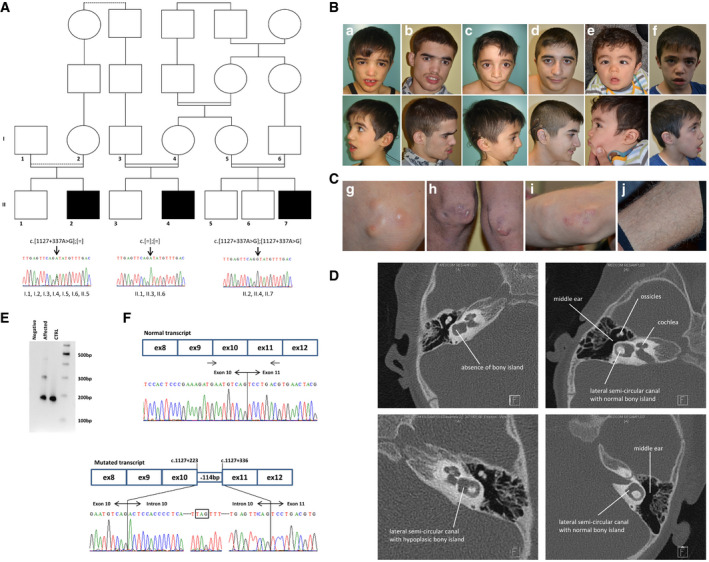
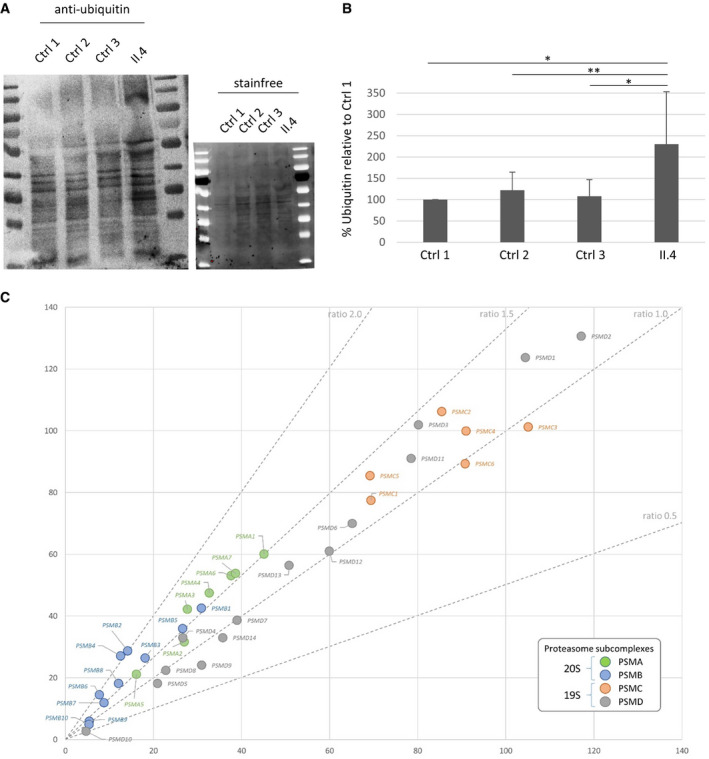
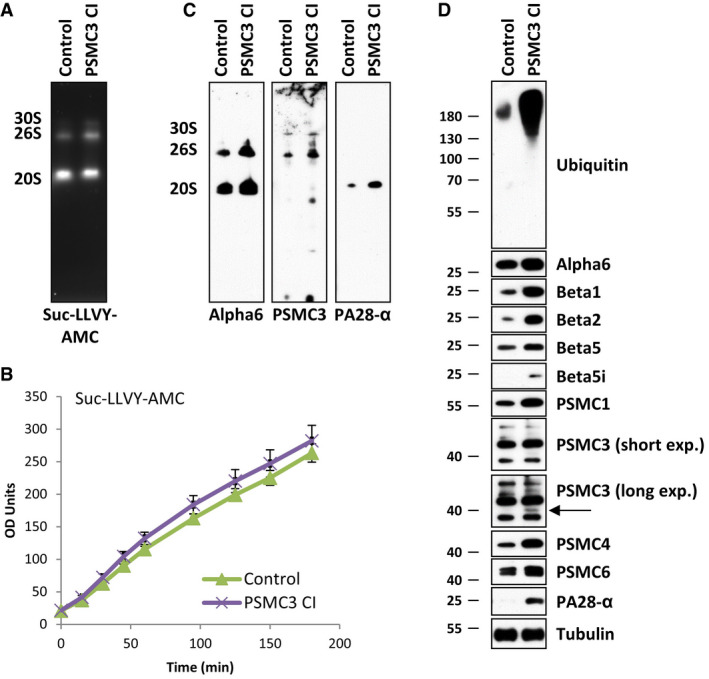
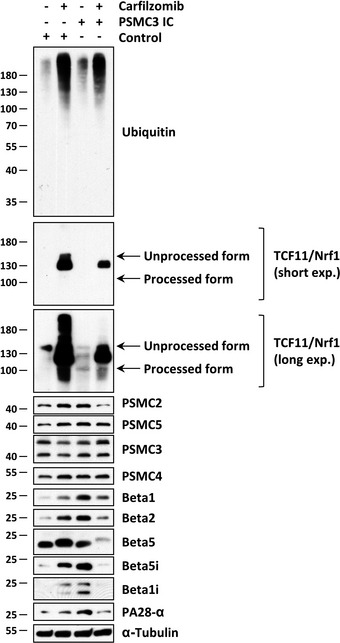
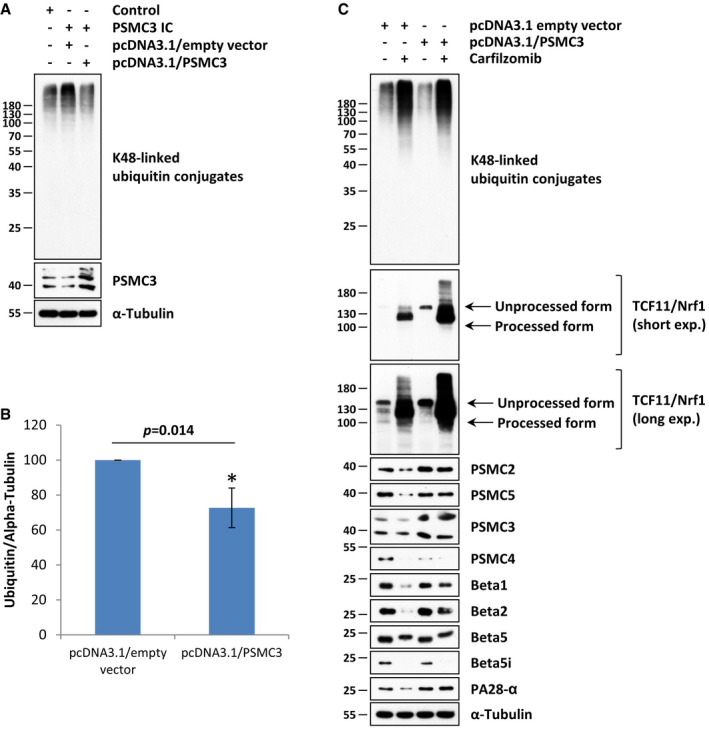
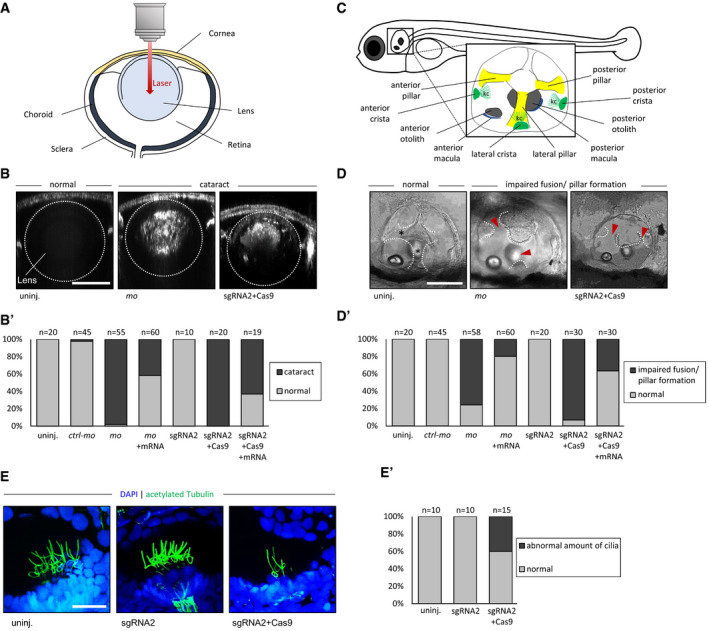
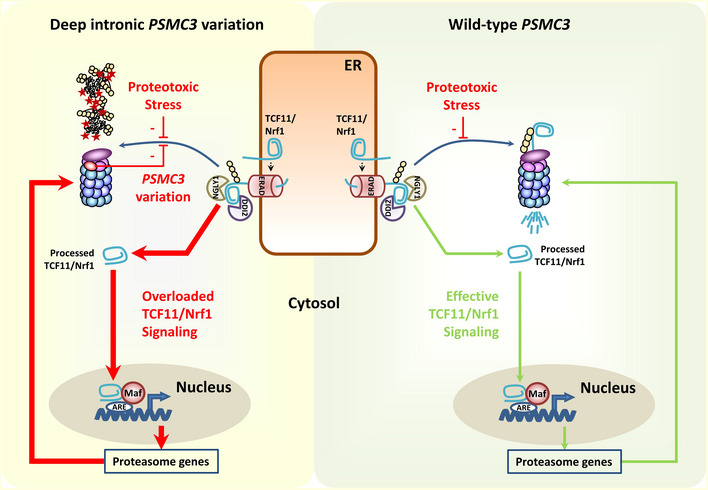
The ubiquitin–proteasome system degrades ubiquitin‐modified proteins to maintain protein homeostasis and to control signalling. Whole‐genome sequencing of patients with severe deafness and early‐onset cataracts as part of a neurological, sensorial and cutaneous novel syndrome identified a unique deep intronic homozygous variant in the PSMC3 gene, encoding the proteasome ATPase subunit Rpt5, which lead to the transcription of a cryptic exon. The proteasome content and activity in patient's fibroblasts was however unaffected. Nevertheless, patient's cells exhibited impaired protein homeostasis characterized by accumulation of ubiquitinated proteins suggesting severe proteotoxic stress. Indeed, the TCF11/Nrf1 transcriptional pathway allowing proteasome recovery after proteasome inhibition is permanently activated in the patient's fibroblasts. Upon chemical proteasome inhibition, this pathway was however impaired in patient's cells, which were unable to compensate for proteotoxic stress although a higher proteasome content and activity. Zebrafish modelling for knockout in PSMC3 remarkably reproduced the human phenotype with inner ear development anomalies as well as cataracts, suggesting that Rpt5 plays a major role in inner ear, lens and central nervous system development.
Overview
The claims and statistics of this paper haven’t been checked yet.
Free: it reads the open-access text and checks the first 5 claims that cite a source we can check. Create a free account to check every claim.
Integrity signals
Registry
Cites
Statistics
Figures
Verification
Claims the paper makes
The claims and statistics of this paper haven’t been checked yet.
Free: it reads the open-access text and checks the first 5 claims that cite a source we can check. Create a free account to check every claim.
Claims other papers make about this one
Each is checked against this paper’s own text: does it say what the citing paper says it does?
The source backs part of the claim, not all of it — or backs it for a different population, condition or comparison.
In the citing paper
“Previous published work has shown that nonsense or missense variants of proteasome subunits PSMB1 [18], PSMC3 [19, 20], and PSMD12 [22, 23] are associated with neurodevelopmental disorders.”
From PSMC5 insufficiency and P320R mutation impair proteasome function (2024) · cites this paper as [20]
Experimental — accuracy not yet measuredThe source backs part of the claim, not all of it — or backs it for a different population, condition or comparison.
In the citing paper
“These variants affect the protein levels of proteasome subunits, or decreases their incorporation into 20S and 26S proteasome and also the assembly of 20S and 26S proteasome [18–20, 22, 23].”
From PSMC5 insufficiency and P320R mutation impair proteasome function (2024) · cites this paper as [20]
Experimental — accuracy not yet measuredThe cited source says what the claim attributes to it.
In the citing paper
“Furthermore, mutations in genes encoding proteasome subunits result in neurodevelopmental disorders, as exemplified by variants of genes encoding the 20S CP subunit PSMB1 (β1) [18] and the 19S RP subunits PSMC3 [19, 20] and PSMD12 [21–23].”
From PSMC5 insufficiency and P320R mutation impair proteasome function (2024) · cites this paper as [20]
Self-check
Percentages, sums and reported differences re-computed from the paper’s own numbers.
The self-check needs the paper’s full text.
Citations
Cites
The Sequence Alignment/Map format and SAMtools
Li, H., Handsaker, B., Wysoker, A., Fennell, T., Ruan, J., Homer, N., Marth, G., Abecasis, G., Durbin, R., & 1000 Genome Project Data Processing Subgroup (2009) · Bioinformatics · doi:10.1093/bioinformatics/btp352 · Cited by 62,041 · cited 1×
“The UnifiedGenotyper and HaplotypeCaller modules of the Genome Analysis ToolKit (GATK) (DePristo et al., 2011), Platypus (https://github.com/andyrimmer/Platypus) and Samtools (Li et al., 2009) were used for calling both SNV and indel.”
Fast and accurate short read alignment with Burrows-Wheeler transform
Li, H., & Durbin, R. (2009) · Bioinformatics · doi:10.1093/bioinformatics/btp324 · Cited by 58,607
A global reference for human genetic variation
The 1000 Genomes Project Consortium, authors, C., Auton, A., Abecasis, G. R., Steering committee, Altshuler, D. M., Durbin, R. M., Abecasis, G. R., Bentley, D. R., Chakravarti, A., et al. (2015) · Nature · doi:10.1038/nature15393 · Cited by 18,247
Differential expression analysis for sequence count data
Anders, S., & Huber, W. (2010) · Genome Biology · doi:10.1186/gb-2010-11-10-r106 · Cited by 15,581 · cited 1×
“…experiments against the negative control IPs using a homebrewed R package as described previsously (Chicois et al., 2018) except that that the size factor used to scale samples were calculated according to the DESeq normalisation method (i.e. median of ratios method (Anders and Huber, 2010)).”
A method and server for predicting damaging missense mutations.
Adzhubei, I. A., Schmidt, S., Peshkin, L., Ramensky, V. E., Gerasimova, A., Bork, P., Kondrashov, A. S., & Sunyaev, S. R. (2010) · Nature Methods · doi:10.1038/nmeth0410-248 · Cited by 13,194 · cited 1×
“This variant, reported previously with a gnomAD frequency of 0.018%, was predicted tolerated by SIFT(Ng and Henikoff, 2003) and neutral by PolyPhen-2 (Adzhubei et al., 2010) and was finally manually ruled out, as we were unable to explain the patients phenotype based on the gene function.”
InfluentialA framework for variation discovery and genotyping using next-generation DNA sequencing data
DePristo, M. A., Banks, E., Poplin, R., Garimella, K. V., Maguire, J. R., Hartl, C., Philippakis, A. A., del Angel, G., Rivas, M. A., Hanna, M., et al. (2011) · Nature Genetics · doi:10.1038/ng.806 · Cited by 11,456 · cited 4×
“4-46) was used for calling both SNV and indel (DePristo et al., 2011).”
InfluentialAnalysis of protein-coding genetic variation in 60,706 humans
Exome Aggregation Consortium, Lek, M., Karczewski, K. J., Minikel, E. V., Samocha, K. E., Banks, E., Fennell, T., O’Donnell-Luria, A. H., Ware, J. S., Hill, A. J., et al. (2016) · Nature · doi:10.1038/nature19057 · Cited by 9,587 · cited 1×
“…of more than 1% in public variation databases including the 1000 Genomes (1000 Genomes Project Consortium et al., 2015), the gnomAD database (Lek et al., 2016), the DGV (MacDonald et al., 2014) or our internal exome database, (ii) variants in 5′ and 3′ UTR, downstream, upstream, intronic…”
The mutational constraint spectrum quantified from variation in 141,456 humans
Karczewski, K. J., Francioli, L. C., Tiao, G., Cummings, B. B., Alföldi, J., Wang, Q., Collins, R. L., Laricchia, K. M., Ganna, A., Birnbaum, D. P., et al. (2020) · Nature · doi:10.1038/s41586-020-2308-7 · Cited by 9,434
Integrative Genomics Viewer (IGV): high-performance genomics data visualization and exploration
Thorvaldsdottir, H., Robinson, J. T., & Mesirov, J. P. (2013) · Briefings in Bioinformatics · doi:10.1093/bib/bbs017 · Cited by 9,049
The zebrafish book : a guide for the laboratory use of zebrafish (Danio rerio)
Westerfield, M. (1995) · Medical Entomology and Zoology · Cited by 6,813
Cited by
Proteotoxic stress and the ubiquitin proteasome system
Kandel, R., Jung, J., & Neal, S. E. (2023) · Seminars in Cell and Developmental Biology · doi:10.1016/j.semcdb.2023.08.002 · Cited by 145
“As a result, the Nrf1 pathway becomes exhausted and cannot be further activated by proteotoxic stress, which can be deleterious to the cells and is a potential cause of this developmental disorder [144].”
BackgroundOut of Control: The Role of the Ubiquitin Proteasome System in Skeletal Muscle during Inflammation
Haberecht-Müller, S., Krüger, E., & Fielitz, J. (2021) · Biomolecules · doi:10.3390/biom11091327 · Cited by 108
Self-citationRole of Proteasomes in Inflammation
Goetzke, C. C., Ebstein, F., & Kallinich, T. (2021) · Journal of Clinical Medicine · doi:10.3390/jcm10081783 · Cited by 82
“2021, 10, 1783 6 of 19 or PSMC3 [86] were not associated with typical PRAAS phenotypes, as they were found in patients suffering from neurodevelopmental delay (NDD).”
BackgroundSelf-citationUbiquitin proteasome system in immune regulation and therapeutics
Bhat, S. A., Vasi, Z., Adhikari, R., Gudur, A., Ali, A., Jiang, L., Ferguson, R., Liang, D., & Kuchay, S. (2022) · Current Opinion in Pharmacology · doi:10.1016/j.coph.2022.102310 · Cited by 76
Ebstein, F., Küry, S., Papendorf, J. J., & Krüger, E. (2021) · Frontiers in Molecular Neuroscience · doi:10.3389/fnmol.2021.733012 · Cited by 60
“…the Stankiewicz-Isidor syndrome (STISS), a neurosensory syndrome combining deafness and cataract as well as a disorder characterized by microcephaly, intellectual disability, developmental delay and short stature, respectively, (Kury et al., 2017; Ansar et al., 2020; Kroll-Hermi et al., 2020).”
BackgroundSelf-citationClinical genetics of Charcot–Marie–Tooth disease
Higuchi, Y., & Takashima, H. (2022) · Journal of Human Genetics · doi:10.1038/s10038-022-01031-2 · Cited by 60
Protein clearance strategies for disease intervention
Hommen, F., Bilican, S., & Vílchez, D. (2021) · Journal of Neural Transmission · doi:10.1007/s00702-021-02431-y · Cited by 51
Goldbach‐Mansky, R. T., Alehashemi, S., & de Jesus, A. A. (2024) · Nature Reviews Rheumatology · doi:10.1038/s41584-024-01184-8 · Cited by 54
Ansar, M., Ebstein, F., Özkoç, H., Paracha, S. A., Iwaszkiewicz, J., Gesemann, M., Zoete, V., Ranza, E., Santoni, F. A., Sarwar, M. T., et al. (2020) · Human Molecular Genetics · doi:10.1093/hmg/ddaa032 · Cited by 44
Self-citationAnalysis of Pathogenic Pseudoexons Reveals Novel Mechanisms Driving Cryptic Splicing
Keegan, N., Wilton, S. D., & Fletcher, S. (2022) · Frontiers in Genetics · doi:10.3389/fgene.2021.806946 · Cited by 42
Ebstein, F., Küry, S., Most, V., Rosenfelt, C., Scott-Boyer, M.-P., van Woerden, G. M., Besnard, T., Papendorf, J. J., Studencka-Turski, M., Wang, T., et al. (2023) · Science Translational Medicine · doi:10.1126/scitranslmed.abo3189 · Cited by 36
Self-citationHaploinsufficiency of PSMD12 Causes Proteasome Dysfunction and Subclinical Autoinflammation
Yan, K., Zhang, J., Lee, P. Y., Tao, P., Wang, J., Wang, S., Zhou, Q., & Dong, M. (2022) · Arthritis & Rheumatology · doi:10.1002/art.42070 · Cited by 33
“while deficiency of other proteasome-associated genes, such as PSMC3 and PSMB1, may cause only neurodevelopmental disorders (8,9).”
BackgroundPapendorf, J. J., Krüger, E., & Ebstein, F. (2022) · Cells · doi:10.3390/cells11091422 · Cited by 39
Self-citationvan der Made, C. I., Kersten, S., Chorin, O., Engelhardt, K. R., Ramakrishnan, G., Griffin, H. R., van der Loeff, I. S., Venselaar, H., Raas‐Rothschild, A., Segev, M., et al. (2024) · The American Journal of Human Genetics · doi:10.1016/j.ajhg.2024.02.013 · Cited by 26
Stankiewicz-Isidor syndrome: expanding the clinical and molecular phenotype
Isidor, B., Ebstein, F., Hurst, A., Vincent, M., Bader, I., Rudy, N. L., Cogne, B., Mayr, J., Brehm, A., Bupp, C., et al. (2022) · Genetics in Medicine · doi:10.1016/j.gim.2021.09.005 · Cited by 24
Self-citationImmunoproteasome Function in Normal and Malignant Hematopoiesis
Santamaría, N. T., Ebstein, F., Heidel, F. H., & Krüger, E. (2021) · Cells · doi:10.3390/cells10071577 · Cited by 31
“Recently, two reports have associated variants in the PSMC3 gene with severe congenital deafness, early-onset cataracts, and various neurological features [113] and PSMB1 variants with microcephaly, intellectual disability, developmental delay, and short stature [114].”
BackgroundSelf-citationYan, J., Zhang, X., Wang, H., Jia, X., Wang, R., Wu, S., Zhu, Z., Tan, M., & Horng, T. (2024) · Cell Reports · doi:10.1016/j.celrep.2024.114780 · Cited by 30
Zheng, C., Liu, S., Zhang, X., Hu, Y., Shang, X., Zhu, Z., Huang, Y., Wu, G., Xiao, Y., Du, Z., et al. (2022) · Frontiers in Aging Neuroscience · doi:10.3389/fnagi.2022.880576 · Cited by 25
“As a protein of the ubiquitin-proteasome degradation pathway, PSMC3 has been shown to cause neurosensory syndrome by combing deafness and cataract (Kröll-Hermi et al., 2020).”
BackgroundARPC5 deficiency leads to severe early-onset systemic inflammation and mortality
Sindram, E., Caballero-Oteyza, A., Kogata, N., Huang, S. C. M., Alizadeh, Z., Gámez-Díaz, L. Y., Fazlollahi, M. R., Peng, X. P., Grimbacher, B., Way, M., et al. (2023) · Disease Models & Mechanisms · doi:10.1242/dmm.050145 · Cited by 19
“Similarly, mutations in the evolutionarily and functionally related proteasomal subunits also lead to syndromic conditions featuring predominantly hematologic, inflammatory and/or neurologic phenotypes (Kury et al., 2017; Torrelo, 2017; Ansar et al., 2020; Kroll-Hermi et al., 2020).”
PSMC1 variant causes a novel neurological syndrome
Aharoni, S., Proskorovski‐Ohayon, R., Krishnan, R. K., Yogev, Y., Wormser, O., Hadar, N., Bakhrat, A., Alshafee, I., Gombosh, M., Agam, N., et al. (2022) · Clinical Genetics · doi:10.1111/cge.14195 · Cited by 19
“nent of a base subunit of the RP: a biallelic variant in PSMC3, encoding one of the ATPase subunits, causing a neurosensory syndrome combining neurodevelopmental anomalies (autism, ataxia, mild intellectual disability) and mild facial dysmorphism, with early-onset deafness.(23) The ambiguous genitalia with micropenis,…”
BackgroundXue, N., Song, L., Song, Q., Santos‐Sacchi, J., Wu, H., & Navaratnam, D. S. (2021) · Hearing Research · doi:10.1016/j.heares.2021.108347 · Cited by 17
Akter, H., Rahman, M. M., Sarker, S., Basiruzzaman, M., Islam, M. M., Rahaman, A., Rahaman, M. A., Eshaque, T. B., Dity, N. J., Sarker, S., et al. (2023) · Frontiers in Genetics · doi:10.3389/fgene.2023.955631 · Cited by 18
Zhang, X., van Rooij, J., Wakabayashi, Y., Hwang, S., Yang, Y., Ghanbari, M., Bos, D., Levy, D. A., Johnson, A. D., van Meurs, J. B. J., et al. (2021) · BMC Medical Genomics · doi:10.1186/s12920-020-00838-2 · Cited by 16
“Another proteasomal subunit, PSMC3 mutation is associated with subcutaneous calcifications [41], indicating that this lincRNA RP11-245 J9.”
BackgroundProteasome disorders and inborn errors of immunity
Poli, M. C. (2023) · Immunological Reviews · doi:10.1111/imr.13299 · Cited by 13
Deb, W., Rosenfelt, C., Vignard, V., Papendorf, J. J., Möller, S., Wendlandt, M., Studencka-Turski, M., Cogné, B., Besnard, T., Ruffier, L., et al. (2024) · The American Journal of Human Genetics · doi:10.1016/j.ajhg.2024.05.016 · Cited by 11
Self-citationKuang, G., Salowe, R., & O’Brien, J. M. (2023) · Genes · doi:10.3390/genes14020338 · Cited by 12
Substrate-specific effects of natural genetic variation on proteasome activity
Collins, M. A., Avery, R., & Albert, F. W. (2023) · PLOS Genetics · doi:10.1371/journal.pgen.1010734 · Cited by 11
Substrate-Specific Effects of Natural Genetic Variation on Proteasome Activity
Collins, M. A., Avery, R. R., & Albert, F. W. (2021) · doi:10.1101/2021.11.23.469794 · Cited by 11
Cuinat, S., Bézieau, S., Deb, W., Mercier, S., Vignard, V., Isidor, B., Küry, S., & Ebstein, F. (2024) · Genes & Diseases · doi:10.1016/j.gendis.2023.101130 · Cited by 10
“…results in a recessive neurosensory syndrome characterized by intellectual disability, ataxia, peripheral polyneuropathy, deafness, and cataract, attributed to a deep intronic mutation, 37 the other one presents a dominant form of NDD featuring type I IFN production, caused by missense variants.”
BackgroundSelf-citation(2022) · doi:10.7554/elife.79570 · Cited by 10
Du, H., Dardas, Z., Jolly, A., Grochowski, C. M., Jhangiani, S. N., Li, H., Muzny, D. M., Fatih, J. M., Yeşil, G., Elcioglu, N. H., et al. (2023) · Nucleic Acids Research · doi:10.1093/nar/gkad1223 · Cited by 10
Zhang, J., Tao, P., Deuitch, N. T., Yu, X., Aksentijevich, I. A., & Zhou, Q. (2024) · Journal of Clinical Immunology · doi:10.1007/s10875-024-01692-y · Cited by 11
Wang, Y., Wang, Y., Iriki, T., Hashimoto, E., Inami, M., Hashimoto, S., Watanabe, A., Takano, H., Motosugi, R., Hirayama, S., et al. (2025) · Nature Communications · doi:10.1038/s41467-025-56867-x · Cited by 13
“Anintronic homozygous variant in PSMC3 and heterozygous de novo nonsense mutations in PSMD12 have been reported to cause neurodevelopmental disorders 19,20 .”
Wang, J., Uddin, M. N., Li, Q., Aierken, A., Li, M., Wang, R., Yan, Q.-Z., Adi, D., Gai, M., & Wu, Y. (2022) · Oxidative Medicine and Cellular Longevity · doi:10.1155/2022/8401924 · Cited by 12
DDI2 protease activity controls embryonic development and inflammation via TCF11/NRF1Preprint
Sivá, M., Haberecht-Müller, S., Procházková, M., Procházka, J., Sedlák, F., Chawengsaksophak, K., Kašpárek, P., Sedláček, R., Konvalinka, J., Krüger, E., et al. (2020) · bioRxiv (Cold Spring Harbor Laboratory) · doi:10.1101/2020.12.16.423023 · Cited by 9
“The TCF11/NRF1 transcriptional pathway was unable to promote proteasome recovery resulting in a fulminant proteotoxic crisis (Kroll-Hermi et al., 2020).”
BackgroundSelf-citationConjunctival transcriptomics in ocular mucous membrane pemphigoid
Panthagani, J., Suleiman, K., Vincent, R. C., Ong, H. S., Wallace, G. R., & Rauz, S. (2023) · The Ocular Surface · doi:10.1016/j.jtos.2023.09.005 · Cited by 9
Dafun, A. S., Živković, D., Leon‐Icaza, S. A., Möller, S., Froment, C., Bonnet, D., de Jesus, A. A., Alric, L., Quaranta, M., Ferrand, A., et al. (2023) · Cells · doi:10.3390/cells12060844 · Cited by 9
Self-citationKüry, S., Stanton, J. E., van Woerden, G., Hsieh, T.-C., Rosenfelt, C., Scott-Boyer, M. P., Most, V., Wang, T., Papendorf, J. J., de Konink, C., et al. (2024) · doi:10.1101/2024.01.13.24301174 · Cited by 6
Self-citationThe ubiquitin-proteasome system in normal hearing and deafness
Pouyo, R., Chung, K., Delacroix, L., & Malgrange, B. (2021) · Hearing Research · doi:10.1016/j.heares.2021.108366 · Cited by 7
Generation and identification of a conditional knockout allele for the PSMD11 gene in mice
Zhao, L., Zhao, J., Zhang, Y., Wang, L., Zuo, L., Niu, A., Zhang, W., Xue, X., Zhao, S., Sun, C., et al. (2021) · BMC Developmental Biology · doi:10.1186/s12861-020-00233-1 · Cited by 7
DDI2 protease controls embryonic development and inflammation via TCF11/NRF1
Nedomova, M., Haberecht-Müller, S., Möller, S., Venz, S., Procházková, M., Procházka, J., Sedlák, F., Chawengsaksophak, K., Hammer, E., Kašpárek, P., et al. (2024) · iScience · doi:10.1016/j.isci.2024.110893 · Cited by 15
Self-citationPreprint articles as a tool for teaching data analysis and scientific communication
Scheifele, L. Z., Tsotakos, N., & Wolyniak, M. J. (2021) · PLoS ONE · doi:10.1371/journal.pone.0261622 · Cited by 7
Disatham, J., Brennan, L., Cvekl, A., & Kantorow, M. (2023) · Biomolecules · doi:10.3390/biom13040693 · Cited by 6
PSMC5 insufficiency and P320R mutation impair proteasome function
Yu, Z.-Q., Carmichael, J., Collins, G. A., D'Agostino, M. D., Lessard, M., Firth, H. V., Harijan, P., Fry, A. E., Dean, J., Zhang, J., et al. (2024) · Human Molecular Genetics · doi:10.1093/hmg/ddae085 · Cited by 4
“These variants affect the protein levels of proteasome subunits, or decreases their incorporation into 20S and 26S proteasome and also the assembly of 20S and 26S proteasome [18– 20, 22, 23].”
InfluentialZhao, P., Xu, S., Huang, Z., Deng, P., & Zhang, Y. (2021) · PLoS ONE · doi:10.1371/journal.pone.0253219 · Cited by 4
“PSMC3 encodes 26S regulatory subunit 6A, also known as the 26S proteasome AAA-ATPase subunit (Rpt5) of the 19S proteasome complex, which is responsible for recognizing, unfolding, and transporting substrates to the 20S protease cavity of the proteasome [21].”
BackgroundPetrucci, T., Guilhaumou, S., Berrandou, T.-E., Gensemer, C., Georges, A. B., Huff, M. L., Fustier, M., Esmael, A., Henry, J., Jaye, O., et al. (2025) · medRxiv · doi:10.1101/2025.09.19.25336146 · Cited by 7
“42 PSMC3, a 19S AAA-ATPase proteasome subunit, is critical for central nervous system development and has been linked to neurosensory syndrome in humans 43 and rare neurodevelopmental disorders 44 .”
Küry, S., Stanton, J. E., van Woerden, G. M., Bosc-Rosati, A., Hsieh, T.-C., Bray, L., Oloudé, M., Rosenfelt, C., Scott-Boyer, M. P., Most, V., et al. (2025) · Nature Communications · doi:10.1038/s41467-025-65556-8 · Cited by 3
Shu, T., Zhang, Y., Sun, T., & Zhu, Y. (2024) · Molecular and Cellular Endocrinology · doi:10.1016/j.mce.2024.112269 · Cited by 4
Ebstein, F., Küry, S., Most, V., Rosenfelt, C. S., Scott‐Boyer, M., van Woerden, G. M., Besnard, T., Papendorf, J. J., Studencka‐Turski, M., Wang, T., et al. (2021) · medRxiv · doi:10.1101/2021.12.07.21266342 · Cited by 3
“564 Recently, a homozygous deep intronic variant creating a cryptic exon in the PSMC3 gene 565 was linked to a familial recessive neurosensory syndrome [52].”
Self-citationDeficiency of psmb6 suppresses proteasome activity and promotes apoptosis in larval zebrafish brain
Xiao, W., Cheng, J., Zhang, L., Li, X., Zhang, J., & Ning, G. (2025) · Biochemical and Biophysical Research Communications · doi:10.1016/j.bbrc.2025.151574 · Cited by 3
Type I Interferonopathies: Fifteen Years On, From Concept to Therapeutic Perspectives
Ünal, D., Melki, I., & Frémond, M. (2026) · Current Rheumatology Reports · doi:10.1007/s11926-026-01228-w · Cited by 2
“Finally, PSMD12 haploinsufficiency, and more broadly, heterozygous loss-of-function variants in other 19S regulatory particle genes ( PSMC1 , PSMC3 , PSMC5 ) have been associated to neurodevelopmental phenotypes, with some patients showing an increased IFN signature [80, 92–96].”
Bi-allelic PRMT9 loss-of-function variants cause a syndromic form of intellectual disability
Kröll‐Hermi, A., Stoetzel, C., Etard, C., Halabelian, L., Schaefer, É., Scheidecker, S., Kahrizi, K., Payman, J., Geoffroy, V., Prasad, M. K., et al. (2025) · The American Journal of Human Genetics · doi:10.1016/j.ajhg.2025.10.014 · Cited by 1
“50,51 The individual presents clinical manifestations overlapping those of other PRMT9 individuals (global developmental delay, hy-potonia, moderate intellectual disability, epilepsy with enlargement of the lateral ventricles, and bilateral fronto-parietal cortical furrows).”
Self-citationYanagi, K. S., Chen, B. J., Kunjo, S. O., Topalidou, I., & Lehrbach, N. J. (2026) · PLoS Genetics · doi:10.1371/journal.pgen.1012273 · Cited by 2
Purification and Identification of the 20S Proteasome Complex from Zebrafish
Hasan, A. M., Jyoti, M. M. S., Rana, M. R., Rezanujjaman, M., & Tokumoto, T. (2022) · Zebrafish · doi:10.1089/zeb.2021.0064 · Cited by 1
“14,15,28 For example, mis-sense mutation in the b6 subunit (Tyr103His in human PSMB1 gene) was related to neurodevelopmental disorder.”
You, Y., Bai, C., Wang, W., Zhan, T., Hu, X., Hao, F., Xia, M., Liu, Y., Ma, T., Liu, Y., et al. (2023) · Scientific Reports · doi:10.1038/s41598-023-40003-0 · Cited by 1
Cuinat, S., Bezieau, S., Deb, W., Mercier, S., Vignard, V., Toutain, B., Isidor, B., Küry, S., & Ebstein, F. (2024) · médecine/sciences · doi:10.1051/medsci/2023221 · Cited by 2
Self-citationVignard, V., Baruteau, A., Toutain, B., Mercier, S., Isidor, B., Redon, R., Schott, J., Küry, S., Bezieau, S., Monsoro-Burq, A. H., et al. (2024) · Frontiers in Cell and Developmental Biology · doi:10.3389/fcell.2024.1370905
Self-citationASAP-ID: Proximity Labelling With Small Tags
Lyu, R., Ruff, K. M., Palmer, C. S., Ramirez, A. E., Ormsby, A. R., Scott, D. J., Pappu, R. V., Stojanovski, D., Stroud, D. A., & Hatters, D. M. (2026) · Molecular & Cellular Proteomics · doi:10.1016/j.mcpro.2026.101616 · Cited by 1
Zhao, L., Zhao, J., Zhang, Y., Wang, L., Zuo, L., Niu, A., Zhang, W., Xue, X., Zhao, S., Sun, C., et al. (2021) · Figshare · doi:10.6084/m9.figshare.13671101
Zhang, X., van Rooij, J., Wakabayashi, Y., Hwang, S., Yang, Y., Ghanbari, M., Bos, D., Levy, D. A., Johnson, A. D., van Meurs, J. B. J., et al. (2021) · Figshare · doi:10.6084/m9.figshare.13889181
Zhao, L., Zhao, J., Zhang, Y., Wang, L., Zuo, L., Niu, A., Zhang, W., Xue, X., Zhao, S., Sun, C., et al. (2021) · Figshare · doi:10.6084/m9.figshare.13671104
Molecular mechanisms in rare proteasomopathies
Möller, S., Alvarez, F. L., Thiel, F. G., Wendlandt, M., & Krüger, E. (2026) · EULAR Rheumatology Open · doi:10.1016/j.ero.2025.12.005
Self-citationMaddala, R., Lankford, L. K., Skiba, N. P., & Rao, P. V. (2026) · Investigative Ophthalmology & Visual Science · doi:10.1167/iovs.67.5.45
Yu, J., Xu, M. M., Wu, X., Kang, W.-B., Zou, W.-Y., Liu, Q., Zhang, D., & Yao, Y. (2026) · Molecular Psychiatry · doi:10.1038/s41380-026-03664-7
“Similarly, PSMC3 knockdown showed speci fi c enrichment in proteasome-related pathways, re fl ecting its function as a key component of the proteasome complex [48].”
The ubiquitin–proteasome system and proteostasis in the cochlea and sensorineural hearing disorders
Zhong, Y., Kong, B., Xu, J., Huang, W., Pan, Y., Liu, Y., Xiang, M., Ye, B., & Shen, Y. (2026) · Molecular Biomedicine · doi:10.1186/s43556-026-00616-z
“Among them, PSMC1 and PSMC3 are ATPase subunits, while PSMD12 is a non-ATPase subunit [77, 78].”
Metadata
- Authors
- Kröll‐Hermi, A., Ebstein, F., Stoetzel, C., Geoffroy, V., Schaefer, E., Scheidecker, S., Bär, S., Takamiya, M., Kawakami, K., Zieba, B. A., Studer, F., Pelletier, V., Eyermann, C., Speeg‐Schatz, C., Laugel, V., Lipsker, D., Sandron, F., McGinn, S., Boland, A., Deleuze, J., Kuhn, L., Chicher, J., Hammann, P., Friant, S., Etard, C., Krüger, E., Muller, J., Strähle, U., & Dollfus, H.
- Affiliations
- Karlsruhe Institute of Technology (DE)
- Universitätsmedizin Greifswald (DE)
- Inserm (FR)
- Centre National de la Recherche Scientifique (FR)
- National Institute of Genetics (JP)
- Hôpitaux Universitaires de Strasbourg (FR)
- Commissariat à l'Énergie Atomique et aux Énergies Alternatives (FR)
- Corresponding author
- Krüger, Elke
- Muller, Jean
- Strähle, Uwe
- Dollfus, Hélène
- ORCID
- Kröll‐Hermi, Ariane
- Ebstein, Frédéric
- Geoffroy, Véronique
- Scheidecker, Sophie
- Bär, Séverine
- Takamiya, Masanari
- Kawakami, Koichi
- Speeg‐Schatz, Claude
- Laugel, Vincent
- Lipsker, Dan
- Sandron, Florian
- McGinn, Steven
- Boland, Anne
- Deleuze, Jean‐François
- Chicher, Johana
- Hammann, Philippe
- Friant, Sylvie
- Krüger, Elke
- Muller, Jean
- Strähle, Uwe
- Dollfus, Hélène
- Venue
- EMBO Molecular Medicine
- Published
- 2020-06-05
- Volume
- 12
- Issue
- 7
- Pages
- e11861-e11861
- ISSN
- 1757-4676 (ISSN-L)
- 1757-4684
- PMC
- PMC7338805
- OpenAlex
- W3034019369
- Cited by
- 65
- References
- 95
- Citations by year
- 2026: 7 · 2025: 5 · 2024: 12 · 2023: 13 · 2022: 10 · 2021: 16 · 2020: 2
- FWCI
- 3.33
- Type
- journal article
- Language
- en
- Open access
- gold
- doi.org
- Licence
- other-oa
- creativecommons.org/licenses/by/4.0/ (tdm)
- creativecommons.org/licenses/by/4.0/ (vor)
- Locations
- EMBO Molecular Medicine (publishedVersion, other-oa)
- bioRxiv (Cold Spring Harbor Laboratory) (acceptedVersion)
- PubMed Central (publishedVersion, cc-by)
- PubMed (publishedVersion)
- HAL (submittedVersion, other-oa)
- DOAJ (DOAJ: Directory of Open Access Journals) (submittedVersion, cc-by-sa)
- Greater South Information System
- Funders
- Agence Nationale de la Recherche (ANR-10-LABX-0013)
- Molecular Medicine Research Consortium of the University of Greifswald (FOVB-2018-11)
- Fritz-Thyssen Foundation (Az. 10.16.2.022MN)
- German Research Foundation (SFBTRR186 A13, SFBTRR 167 A04)
- NBRP and NBRP/Fundamental Technologies Upgrading Program from AMED
- JED-Belgique to Foundation
- Topics
- Life Sciences › Biochemistry, Genetics and Molecular Biology › Molecular Biology › Ubiquitin and proteasome pathways
- Life Sciences › Neuroscience › Cellular and Molecular Neuroscience › Genetic Neurodegenerative Diseases
- Life Sciences › Neuroscience › Sensory Systems › Hearing, Cochlea, Tinnitus, Genetics
- Keywords
- proteasome, proteotoxic stress, deafness, cataract, cryptic exons, intronic variants, proteostasis, ubiquitinated protein accumulation, inner ear development, lens development, zebrafish model, fibroblasts
- MeSH terms
- ATPases Associated with Diverse Cellular Activities, Adolescent, Animals, Cataract, Child, Child, Preschool, Consanguinity, Deafness, Female, Humans, Infant, Male, Mutation, Pedigree, Phenotype, Stress, Physiological, Syndrome, Zebrafish, Ubiquitin, Zebrafish Proteins, Proteasome Endopeptidase Complex, Nuclear Respiratory Factor 1, Proteolysis, Proteasome Inhibitors
About these checks
Registry, retraction, Cites and statistics results are computed, not judged, with one exception: a printed reference that no index lists is read once by a model before it counts as a citation error. Claims are extracted by a model and kept only when their quote appears verbatim in the text; each cited source is then checked, with a model’s help, for whether it says what the claim relies on. Those verdicts can be wrong — read the claim’s quote and the cited source before relying on one.
Statistics and arithmetic are recomputed, not judged.
Confidence bands are shown only for fields calibrated on our annotated test set. None is calibrated yet, so no band is shown.
What counts as a claim ›How we measure confidence ›How we check this ›
Are you an author, or do you see a problem with this page? Request a review
Data sources
Bibliographic data: Semantic Scholar, OpenAlex, Crossref.
Contains information from the Semantic Scholar Academic Graph Datasets, made available under the ODC Attribution License (ODC-BY 1.0).
Semantic Scholar’s data is described in: Kinney, R., et al. (2023). The Semantic Scholar Open Data Platform. arXiv:2301.10140.
