

Adrenal suppression in patients taking inhaled glucocorticoids is highly prevalent and management can be guided by morning cortisol
Open accessThe DOI matches its Crossref record; 48 of the 48 references it cites were found in a registry or an index.
Abstract
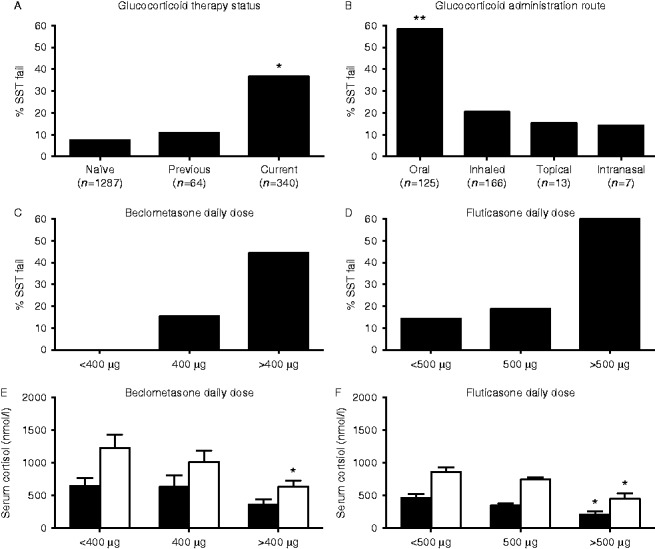
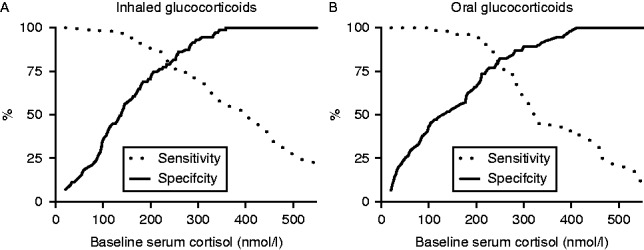
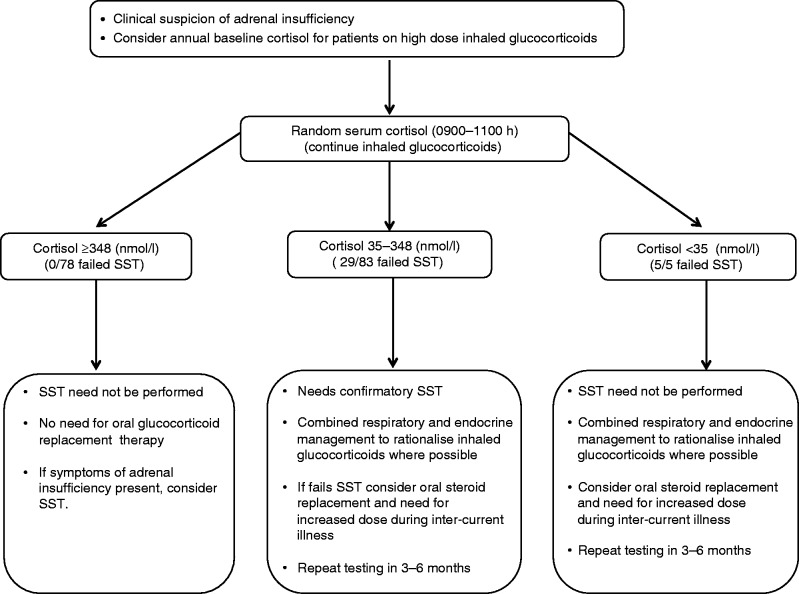
Context: Up to 3% of US and UK populations are prescribed glucocorticoids (GC). Suppression of the hypothalamo–pituitary–adrenal axis with the potential risk of adrenal crisis is a recognized complication of therapy. The 250 μg short Synacthen stimulation test (SST) is the most commonly used dynamic assessment to diagnose adrenal insufficiency. There are challenges to the use of the SST in routine clinical practice, including both the staff and time constraints and a significant recent increase in Synacthen cost. Methods: We performed a retrospective analysis to determine the prevalence of adrenal suppression due to prescribed GCs and the utility of a morning serum cortisol for rapid assessment of adrenal reserve in the routine clinical setting. Results: In total, 2773 patients underwent 3603 SSTs in a large secondary/tertiary centre between 2008 and 2013 and 17.9% ( n =496) failed the SST. Of 404 patients taking oral, topical, intranasal or inhaled GC therapy for non-endocrine conditions, 33.2% ( n =134) had a subnormal SST response. In patients taking inhaled GCs without additional GC therapy, 20.5% (34/166) failed an SST and suppression of adrenal function increased in a dose-dependent fashion. Using receiver operating characteristic curve analysis in patients currently taking inhaled GCs, a basal cortisol ≥348 nmol/l provided 100% specificity for passing the SST; a cortisol value <34 nmol/l had 100% sensitivity for SST failure. Using these cut-offs, 50% ( n =83) of SSTs performed on patients prescribed inhaled GCs were unnecessary. Conclusion: Adrenal suppression due to GC treatment, particularly inhaled GCs, is common. A basal serum cortisol concentration has utility in helping determine which patients should undergo dynamic assessment of adrenal function.
Overview
The claims and statistics of this paper haven’t been checked yet.
Free: it reads the open-access text and checks the first 5 claims that cite a source we can check. Create a free account to check every claim.
Integrity signals
Registry
Cites
Statistics
Figures
Verification
Claims the paper makes
The claims and statistics of this paper haven’t been checked yet.
Free: it reads the open-access text and checks the first 5 claims that cite a source we can check. Create a free account to check every claim.
Claims other papers make about this one
Each is checked against this paper’s own text: does it say what the citing paper says it does?
The source backs part of the claim, not all of it — or backs it for a different population, condition or comparison.
In the citing paper
“Importantly, all steroid-dependent patients are at risk of adrenal crisis [17].”
From Guidelines for the management of glucocorticoids during the peri‐operative period for patients with adrenal insufficiency (2020) · cites this paper as [17]
Experimental — accuracy not yet measuredThe source backs part of the claim, not all of it — or backs it for a different population, condition or comparison.
In the citing paper
“Patients taking physiological replacement doses of corticosteroids for either primary or secondary adrenal insuf fi ciency are at signi fi cant risk of adrenal crisis and must be given stress doses of hydrocortisone during the peri-operative period.”
From Guidelines for the management of glucocorticoids during the peri‐operative period for patients with adrenal insufficiency (2020) · cites this paper as [17]
Experimental — accuracy not yet measuredThe source backs part of the claim, not all of it — or backs it for a different population, condition or comparison.
In the citing paper
“These report a variable number of patients (approximately one third to a half) not achieving the target cortisol concentration when 5 mg or more of prednisolone was administered [17].”
From Guidelines for the management of glucocorticoids during the peri‐operative period for patients with adrenal insufficiency (2020) · cites this paper as [17]
Experimental — accuracy not yet measuredThe source backs part of the claim, not all of it — or backs it for a different population, condition or comparison.
In the citing paper
“Of note, among all inhaled glucocorticoids fluticasone propionate is most frequently associated with the development of symptomatic glucocorticoid-induced adrenal insufficiency and exogenous Cushing syndrome (100, 104, 107-111).”
From European Society of Endocrinology and Endocrine Society Joint Clinical Guideline: Diagnosis and Therapy of Glucocorticoid-induced Adrenal Insufficiency (2024) · cites this paper as [100]
Experimental — accuracy not yet measuredThe source backs part of the claim, not all of it — or backs it for a different population, condition or comparison.
In the citing paper
“Not only oral but also inhalation, topical, nasal, intra-articular and intravenous administration of GCs may lead to adrenal suppression.”
From Glucocorticoid withdrawal-an overview on when and how to diagnose adrenal insufficiency in clinical practice (2021) · cites this paper as [23]
Experimental — accuracy not yet measured
6 more claims about this paper
Create a free account to see every claim other papers make about this one.
Self-check
Percentages, sums and reported differences re-computed from the paper’s own numbers.
The self-check needs the paper’s full text.
Citations
Cites
Sgk1-Dependent Stimulation of Cardiac Na+/H+Exchanger Nhe1 by Dexamethasone
Voelkl, J., Pasham, V., Ahmed, M. S. E., Walker, B., Szteyn, K., Kuhl, D., Metzler, B., Alesutan, I., & Lang, F. (2013) · Cellular Physiology and Biochemistry · doi:10.1159/000350120 · Cited by 857
The natural history of cushing's syndrome
Plotz, C. M., Knowlton, A. I., & Ragan, C. (1952) · The American Journal of Medicine · doi:10.1016/0002-9343(52)90027-2 · Cited by 763
Use of oral corticosteroids in the United Kingdom
van Staa, T. P. (2000) · QJM · doi:10.1093/qjmed/93.2.105 · Cited by 529
Premature Mortality in Patients with Addison’s Disease: A Population-Based Study
Bergthorsdottir, R., Leonsson-Zachrisson, M., Odén, A., & Johannsson, G. (2006) · The Journal of Clinical Endocrinology & Metabolism · doi:10.1210/jc.2006-0076 · Cited by 490
Souverein, P. C., Berard, A., Van Staa, T. P., Cooper, C., Egberts, A. C. G., Leufkens, H. G. M., & Walker, B. R. (2004) · Heart · doi:10.1136/hrt.2003.020180 · Cited by 482
Diagnosis and management of adrenal insufficiency
Bancos, I., Hahner, S., Tomlinson, J., & Arlt, W. (2015) · The Lancet Diabetes & Endocrinology · doi:10.1016/s2213-8587(14)70142-1 · Cited by 467
Self-citationA RATIONAL APPROACH FOR ASSESSING THE HYPOTHALAMO-PITUITARY-ADRENAL AXIS
Stewart, P. M., Seckl, J. R., Corrie, J., Edwards, C. R. W., & Padfield, P. L. (1988) · The Lancet · doi:10.1016/s0140-6736(88)92020-x · Cited by 418
Self-citationPrevalence of oral glucocorticoid usage in the United States: a general population perspective
Overman, R. A., Yeh, J., & Deal, C. L. (2013) · Arthritis Care & Research · doi:10.1002/acr.21796 · Cited by 405
Corticotropin tests for hypothalamic-pituitary- adrenal insufficiency: a metaanalysis
Kazlauskaite, R., Evans, A. T., Villabona, C. V., Abdu, T. A. M., Ambrosi, B., Atkinson, A. B., Choi, C. H., Clayton, R. N., Courtney, C. H., Gonc, E. N., et al. (2008) · The Journal of Clinical Endocrinology & Metabolism · doi:10.1210/jc.2008-0710 · Cited by 385
Schlaghecke, R., Kornely, E., Santen, R. T., & Ridderskamp, P. (1992) · New England Journal of Medicine · doi:10.1056/nejm199201233260403 · Cited by 381
Cited by
Items 101–154 of 154
Silva, V. B., Cardoso, J., Brandão, M. E., Mesquita, I., & Pereira, M. T. (2023) · Cureus · doi:10.7759/cureus.34367 · Cited by 6
“Due to excess exogenous glucocorticoids, usually with treatments longer than three weeks, prolonged adrenal suppression and SAI can be established [2,17].”
BackgroundRamesh, A. V., Pufulete, M., Reeves, B. C., Fletcher, S. J., Tomlinson, J., & Gibbison, B. (2020) · Anaesthesia · doi:10.1111/anae.15176 · Cited by 4
“Up to one-third of patients on therapeutic corticosteroids show evidence of adrenal suppression when well [2]; in theory, these patients could be unable to increase endogenous production to cover surgical stress.”
BackgroundSelf-citationSecondary Adrenal Insufficiency: New Aspects of Diagnosis and Therapy
Nuralieva, N. F., Moscow, R. F., Yukina, M. Y., & Troshina, E. A. (2021) · Doctor Ru · doi:10.31550/1727-2378-2021-20-2-51-59 · Cited by 3
“Важно отметить, что для оценки функции ГГНО на фоне продолжающегося приема глюкокортикоидов следует применять системы определения уровня кортизола методом иммуноанализа, не обладающие перекрестной реактивностью с лекарственными препаратами [10].”
Heald, A. H., Mordaunt, M., Gallant, N., Baker, H., Majeed, W., Kochhar, R. S., Syed, A. A., Mudaliar, R. N., Abushufa, R., Hanna, F., et al. (2025) · Clinical Endocrinology · doi:10.1111/cen.15279 · Cited by 4
“…by measurement of the acute response at 30 and sometimes also at 60 min following injection of synthetic corticotropin (ACTH[1 ‐ 24 ]) A morning serum cortisol level can potentially also be used to screen for adrenocortical insufficiency [6, 7] followed by a SST if results are indeterminant.”
Adrenal insufficiency in pediatric kidney transplantation recipients
Chae, H. H., Ahmed, A., Bone, J. N., Abdulhussein, F. S., Amed, S., Patel, T., & Blydt‐Hansen, T. D. (2024) · Pediatric Transplantation · doi:10.1111/petr.14768 · Cited by 3
Cushing's syndrome secondary to inhaled fluticasone
Gómez, Á. S., García, M. J. A., Cortés, J. M. S., & Ruiz, C. M. (2022) · Endocrinología Diabetes y Nutrición (English ed ) · doi:10.1016/j.endien.2022.06.005 · Cited by 4
Lessons to learn from the 2024 NICE guideline on adrenal insufficiency
Dong, J., & Tomlinson, J. (2024) · The Lancet Diabetes & Endocrinology · doi:10.1016/s2213-8587(24)00307-3 · Cited by 2
Self-citationTosun, B. G., Turan, S., Haklar, G., Bereket, A., & Güran, T. (2025) · Hormone Research in Paediatrics · doi:10.1159/000544945 · Cited by 2
Goldbloom, E. B., & Ahmet, A. H. (2019) · Paediatrics & Child Health · doi:10.1093/pch/pxy174 · Cited by 2
“While a first morning cortisol value of ≥ 350 to 500 nmol/L can predict normal HPA axis function (23,27,28), levels between 100 and 350 nmol/L are poorly predictive of HPA axis function.”
BackgroundPark, J., Titman, A., Lancaster, G., Selvarajah, B., Collingwood, C., Powell, D., Das, U., Dharmaraj, P., Didi, M., Senniappan, S., et al. (2022) · Journal of the Endocrine Society · doi:10.1210/jendso/bvac043 · Cited by 3
Lassoued, N., Zantour, B., Alaya, W., & Sfar, M. H. (2022) · Heliyon · doi:10.1016/j.heliyon.2022.e09559 · Cited by 2
Canonica, G. W., Mazziotti, G., Repici, A., Povero, M., Castello, L., Pradelli, L., Dobreva, M., Fanelli, F., Saab, J. P., & Savarino, E. V. (2024) · Journal of Allergy and Clinical Immunology Global · doi:10.1016/j.jacig.2024.100383 · Cited by 2
“The sponsor will be involved in the review and approval of relevant project documents.”
Dermatological Manifestations in Endocrine Disorders
Mudgal, M., & Dharmarajan, T. S. (2025) · Springer eBooks · doi:10.1007/978-3-031-53888-9_38-1 · Cited by 2
Spot and Morning Cortisol in Comparison to Low Dose Short Synacthen® Test
Cheung, K. K.-T., So, W., Ronald, C. W., Kong, A. P. S., & Chow, F. C. (2015) · Journal of the ASEAN Federation of Endocrine Societies · doi:10.15605/jafes.030.02.10 · Cited by 2
Safely Withdrawing Glucocorticoid Therapy: A Case-Based Approach
Alenazi, M., Aldahmani, K. M., & Imran, S. A. (2024) · Journal of Diabetes and Endocrine Practice · doi:10.1055/s-0044-1788035 · Cited by 2
“10 Notably, GC-induced AI has been reported with all GC formulations, 11 – 13 and while there is some uncertainty about the amount and duration of exogenous GCs that are associated with HPA suppression, 9 it is generally assumed that any patient taking more than the equivalent of 5.7mg/m 2 /d of…”
Liang, Y., Li, R., Fumagalli, L., & Booker, C. L. (2025) · Journal of Pain · doi:10.1016/j.jpain.2025.105458 · Cited by 2
Diddhenipothage, S. A. D. M., Warden, J., Herbert, K., Pofi, R., Joseph, R. N., Coupe, N. A., Payne, M., Tomlinson, J., & Turner, H. E. (2026) · Clinical Endocrinology · doi:10.1111/cen.70137 · Cited by 2
Self-citationThe lupus damage index revision program: Results from the item generation and reduction phases
Kundakci, B., Barber, M. R. W., Clarke, A. E., Johnson, S. R., Mak, A., Brunner, H. I., İnanç, M., Ramsey‐Goldman, R., Ruiz‐Irastorza, G., Ginzler, E. M., et al. (2026) · Lupus Science & Medicine · doi:10.1136/lupus-2026-002282 · Cited by 1
Síndrome de Cushing secundario a fluticasona inhalada
Gómez, Á. S., García, M. J. A., Cortés, J. M. S., & Ruiz, C. M. (2021) · Endocrinología Diabetes y Nutrición · doi:10.1016/j.endinu.2021.05.008 · Cited by 1
Bareille, P. J., Tomkins, S. A., Imber, V., Tayob, M. S., Dunn, K., Mehta, R. S., & Khindri, S. K. (2020) · Allergy Asthma and Clinical Immunology · doi:10.1186/s13223-020-0406-6 · Cited by 1
Management of a case of COVID-19 with adrenal crisis at a semi-urban primary healthcare center
Podder, C. S., Chowdhury, N., & Haque, W. M. M. U. (2020) · BIRDEM Medical Journal · doi:10.3329/birdem.v10i0.50998 · Cited by 1
Forty Years Of Unrecognized Hypopituitarism Diagnosed By Physical Exam
Hudspeth, V., Fischer, W. A., & DeCherney, G. S. (2016) · AACE Clinical Case Reports · doi:10.4158/ep161426.cr
Garrahy, A., Cuesta, M., & Thompson, C. J. (2017) · Endocrinology · doi:10.1007/978-3-319-38681-2_14-1
Serpoi, G., & Cucu, C. (2018) · Medicina Moderna - Modern Medicine · doi:10.31689/rmm.2018.25.2.95
Drugs That Act on the Respiratory Tract
Coupe, B., Griffiths, A. L., & Davies, G. A. (2016) · Side effects of drugs annual · doi:10.1016/bs.seda.2016.08.008
Adrenal Insufficiency, “Relative Adrenal Insufficiency,” or None of the Above?
Vamvini, M. T., & Hennessey, J. V. (2019) · Springer eBooks · doi:10.1007/978-3-030-22720-3_12
The Prevalence of Hypothalamic-Pituitary-Adrenal Axis Suppression in Children with Persistent Asthma
Şakar, M., Özdoğan, Ş., Uçar, A., Kaya, A., Aksoy, S., & Yildirmak, Y. (2019) · Iranian Journal of Pediatrics · doi:10.5812/ijp.90891
“In the literature, low BMI values are reported among the risk factors of adrenal suppression (14).”
BackgroundMethodManaging patients with endocrine dysfunction during COVID-19: Review of literatures
Patro, P. M., & Rao, K. V. J. (2020) · Journal of Medical and Scientific Research · doi:10.17727/jmsr.2020/8s1-11
“The prevalence of adrenal insufficiency in these patients is high (~50%) irrespective of mode of delivery [4].”
BackgroundAhmet, A. H., Rowan-Legg, A., & Pancer, L. (2021) · Paediatrics & Child Health · doi:10.1093/pch/pxab016
9) From the Perspective of Endocrinology to Share with Physicians Amid the Coronavirus Pandemic
Tanabe, A. (2020) · Nihon Naika Gakkai Zasshi · doi:10.2169/naika.109.2037
Tomlinson, J. (2021) · Oxford University Press eBooks · doi:10.1093/med/9780198851899.003.0003
Self-citationSheikhdavoodi, N., Gheraati, M., Hashemipour, S., Badri, M., Rastgoo, N., Shokri, A., Esmaielzade, S., Karbasi, M., & Esmaeilzadeh, K. (2021) · The Journal of Qazvin University of Medical Sciences · doi:10.32598/jqums.25.3.2
“, a considerable number of patients (20%) who had taken inhaled corticosteroids had various ranges of renal failure [15].”
BackgroundOmeroglu, M., & Arslan, Ş. (2022) · Genel Tıp Dergisi · doi:10.54005/geneltip.1136552
Corticosteroid Insufficiency in High-Risk Surgical Patients
Annane, D., & Asehnoun, K. (2023) · Springer eBooks · doi:10.1007/978-3-031-17273-1_51
Insufficienza surrenalica da sospensione di glucocorticoidi esogeni
Vincenzi, L., Sbardella, E., & Isidori, A. M. (2023) · L Endocrinologo · doi:10.1007/s40619-023-01319-1
“Un altro ampio studio su pazienti sottoposti a test di stimolazione con ACTH sintetico per IS ha suggerito che le misurazioni mattutine del cortisolo possono sostituire il test dinamico, con cut-off del cortisolo di 221 e 347 nmol/L che mostrano una sensibilità dell’86% e del 95%, rispettivamente [17].”
BackgroundHonour, J. W. (2023) · Elsevier eBooks · doi:10.1016/b978-0-12-818124-9.00012-7
Vaduva, P., & Bertherat, J. Y. (2024) · EMC - Tratado de Medicina · doi:10.1016/s1636-5410(24)49082-x · Cited by 1
Rojas, S. G., Gómez, M. D. P. P. G. P., Zuluaga, N. A., Torres, A. C. F., Múnera, O. L. M., Palacio‐Petri, S., Niño-Serna, L. F., & Rodríguez‐Martínez, C. E. (2024) · Respiratory The American Medical Journal · doi:10.33590/respiramj/yyjc8735
Are we putting patients on steroid treatment at risk under anaesthesia?
Tomlinson, J. (2024) · Anaesthesia · doi:10.1111/anae.16375 · Cited by 1
“As an example, it is estimated to occur in up to 10% of patients treated with inhaled corticosteroids [11, 12].”
Self-citationHypothalamic–pituitary–adrenal suppression
Kelsall, A., & Newell-Price, J. D. C. (2024) · Elsevier eBooks · doi:10.1016/b978-0-443-13825-6.00139-4
Yoğun Bakımda Güncel Konular (Bahar)
Taşkıran, İ., Emgin, Ö., Özgüngör, Y., Haftacı, E., Güneş, M., Yavuz, M., Aydoğan, U., Aydoğan, E., Kırmızıgül, E., Çapar, A., et al. (2025) · Akademisyen Kitabevi eBooks · doi:10.37609/akya.3612
Nolan, J. D., Brown, S. J., Henley, D., & Lim, E. M. (2025) · The Journal of Clinical Endocrinology & Metabolism · doi:10.1210/clinem/dgaf424 · Cited by 1
Diagnostic performance of morning serum cortisol for glucocorticoid weaning in children and adults
Arshad, M. F., Ahmed, A., Beddows, S., Marsh, I., Mullamitha, A., Newell-Price, J. D. C., Ross, R. J. M., Elder, C. J., & Debono, M. (2025) · European Journal of Endocrinology · doi:10.1093/ejendo/lvaf215
Lanyan, L., Zhaobi, L., & Zheng, H. (2025) · Research Square · doi:10.21203/rs.3.rs-7512846/v1
Adrenal Insufficiency: Diagnostic Approaches, Treatments, and Outcomes Volume II
(2025) · Frontiers research topics · doi:10.3389/978-2-8325-7003-6
CAI Score for the Diagnosis of Central Adrenal Insufficiency
Almalki, M., Saygılı, E. S., Aboalsamh, N., Alghassab, A. S., Alshammari, Y., Alali, F., Alghufaili, S., Alshehri, H., Alshahrani, A. S., & Elhassan, Y. (2025) · Journal of the Endocrine Society · doi:10.1210/jendso/bvaf167
“Values in the indeterminate “grey zone” (5-12 μ g/dL; 140-350 nmol/L) remain diagnostically ambiguous, requiring further evaluation such as with dynamic testing [15], with caution needed in patients on inhaled glucocorticoids due to their high prevalence of adrenal suppression [16].”
The Clinical Impact of Corticosteroid Supplementation in Febrile Patients with Adrenal Insufficiency
Kwon, H., Lee, S. E., Park, J. H., Ko, J. W., & Kim, B. (2026) · Yonsei Medical Journal · doi:10.3349/ymj.2025.0008
Ling, F., Wu, M., GuoYu, Zhou, R., Han, L., Wang, J., Ma, L., & Jia, A. (2026) · BMC Endocrine Disorders · doi:10.1186/s12902-026-02171-8
“However, a recent systematic review of 71 studies demonstrated that cortisol fluctuations during the perioperative period were highest in patients undergoing open surgery or general anesthesia [34].”
Turska, E., Lewandowski, K. C., Symonowicz, I., Kobus, M., Horzelski, W., Kubiatowski, T., Marchewka, J., & Kalinka, E. (2026) · Frontiers in Endocrinology · doi:10.3389/fendo.2026.1810229
Tosun, B. G., Gacemer, H. A., Helvacıoğlu, D., Turan, S., Bereket, A., & Güran, T. (2026) · Journal of Clinical Research in Pediatric Endocrinology · doi:10.4274/jcrpe.galenos.2026.2026-1-17
“Very low basal cortisol levels are suggestive of AI, whereas higher concentrations may indicate preserved hypothalamo-pituitary-adrenal (HPA) axis function (4,11,25,26,27,28,29).”
Drug-Induced Intracranial Hypertension
Zedde, M., Causin, F., & Pascarella, R. (2026) · Springer eBooks · doi:10.1007/978-3-032-23618-0_11
Gaston, L. S., Jorgensen, B., Friedman, H., Sherman, M. S., & Majzoub, J. A. (2026) · Endocrinology · doi:10.1210/endocr/bqag081
The Lupus Damage Index Revision Program: Results From the Item Generation and Reduction Phases
Kundakci, B., Barber, M. R. W., Clarke, A. E., Johnson, S. R., Mak, A., Brunner, H. I., İnanç, M., Ramsey‐Goldman, R., Ruiz‐Irastorza, G., Ginzler, E. M., et al. (2026) · Arthritis Care & Research · doi:10.1002/acr.80102
Management of Endocrine Disorders and the Pharmacist's Role: Adrenal Insufficiency
Sweeting, A., & Chua, E. L. (2026) · Elsevier eBooks · doi:10.1016/b978-0-443-26472-6.00211-4
Metadata
- Authors
- Woods, C. P., Argese, N., Chapman, M., Boot, C., Webster, R., Dabhi, V., Grossman, A. B., Toogood, A. A., Arlt, W., Stewart, P. M., Crowley, R. K., & Tomlinson, J. W.
- Affiliations
- University Hospitals Birmingham NHS Foundation Trust (GB)
- University of Leeds (GB)
- Corresponding author
- Tomlinson, Jeremy W
- ORCID
- Venue
- European Journal of Endocrinology
- Publisher
- Oxford University Press (OUP)
- Published
- 2015-11
- Volume
- 173
- Issue
- 5
- Pages
- 633-642
- ISSN
- 0804-4643 (ISSN-L)
- 1479-683X
- PMC
- PMC4588051
- OpenAlex
- W2117978928
- Cited by
- 152
- References
- 48
- Citations by year
- 2026: 9 · 2025: 10 · 2024: 16 · 2023: 14 · 2022: 13 · 2021: 17 · 2020: 23 · 2019: 17 · 2018: 10 · 2017: 10 · 2016: 12 · 2015: 1
- FWCI
- 9.54
- Type
- journal article
- Language
- en
- Open access
- hybrid
- doi.org
- Licence
- Locations
- European Journal of Endocrinology (publishedVersion, cc-by-nc)
- PubMed Central (publishedVersion, cc-by)
- PubMed (publishedVersion)
- White Rose Research Online (University of Leeds, The University of Sheffield, University of York) (acceptedVersion)
- University of Birmingham Research Portal (University of Birmingham) (submittedVersion, cc-by)
- Spiral (Imperial College London) (submittedVersion, cc-by)
- Funders
- National Institute for Health and Care Research (NF-SI-0508-10356)
- Topics
- Health Sciences › Medicine › Endocrinology, Diabetes and Metabolism › Adrenal Hormones and Disorders
- Life Sciences › Neuroscience › Behavioral Neuroscience › Stress Responses and Cortisol
- Health Sciences › Medicine › Endocrinology, Diabetes and Metabolism › Thyroid Disorders and Treatments
- Keywords
- adrenal suppression, inhaled corticosteroids, adrenal insufficiency, hypothalamic-pituitary-adrenal axis, adrenal reserve, adrenal crisis, glucocorticoid dose, prevalence, unnecessary testing
- MeSH terms
- Administration, Inhalation, Adrenal Insufficiency, Adult, Cosyntropin, Glucocorticoids, United Kingdom, Humans, Hydrocortisone, Hypothalamo-Hypophyseal System, Pituitary-Adrenal System, Retrospective Studies, Prevalence
About these checks
Registry, retraction, Cites and statistics results are computed, not judged, with one exception: a printed reference that no index lists is read once by a model before it counts as a citation error. Claims are extracted by a model and kept only when their quote appears verbatim in the text; each cited source is then checked, with a model’s help, for whether it says what the claim relies on. Those verdicts can be wrong — read the claim’s quote and the cited source before relying on one.
Statistics and arithmetic are recomputed, not judged.
Confidence bands are shown only for fields calibrated on our annotated test set. None is calibrated yet, so no band is shown.
What counts as a claim ›How we measure confidence ›How we check this ›
Are you an author, or do you see a problem with this page? Request a review
Data sources
Bibliographic data: Semantic Scholar, OpenAlex, Crossref.
Contains information from the Semantic Scholar Academic Graph Datasets, made available under the ODC Attribution License (ODC-BY 1.0).
Semantic Scholar’s data is described in: Kinney, R., et al. (2023). The Semantic Scholar Open Data Platform. arXiv:2301.10140.
