

Adrenal suppression in patients taking inhaled glucocorticoids is highly prevalent and management can be guided by morning cortisol
Open accessThe DOI matches its Crossref record; 46 of the 48 references it cites were found in a registry or an index.
Abstract
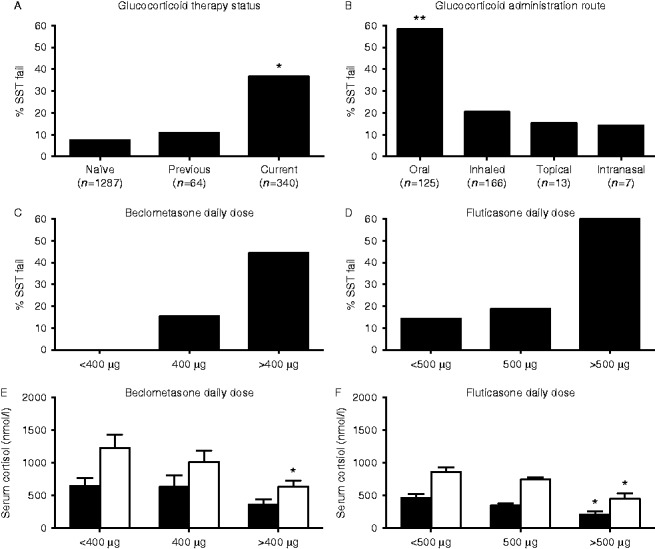
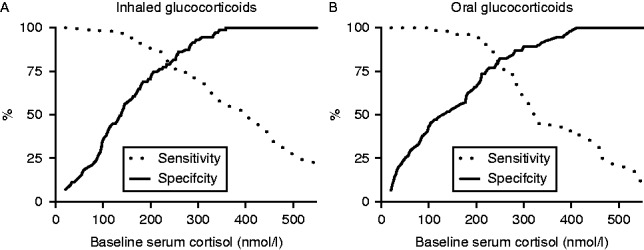
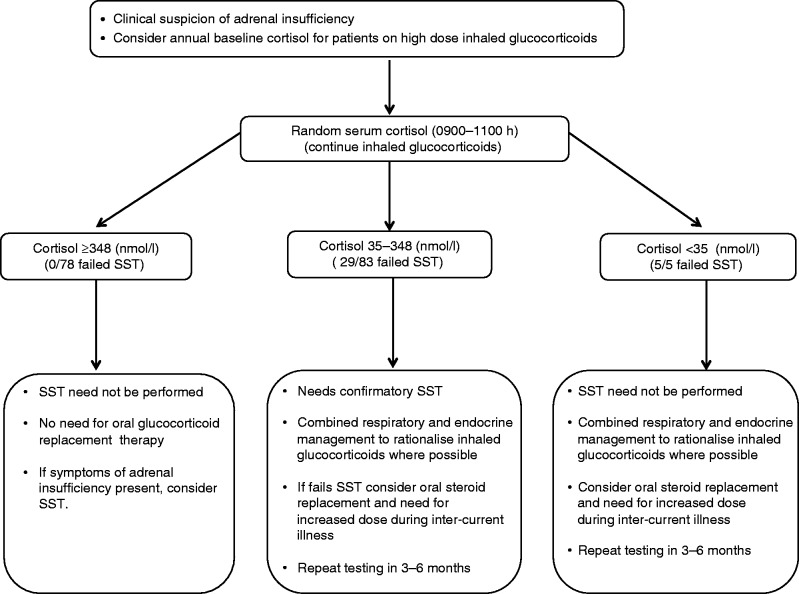
Context: Up to 3% of US and UK populations are prescribed glucocorticoids (GC). Suppression of the hypothalamo–pituitary–adrenal axis with the potential risk of adrenal crisis is a recognized complication of therapy. The 250 μg short Synacthen stimulation test (SST) is the most commonly used dynamic assessment to diagnose adrenal insufficiency. There are challenges to the use of the SST in routine clinical practice, including both the staff and time constraints and a significant recent increase in Synacthen cost. Methods: We performed a retrospective analysis to determine the prevalence of adrenal suppression due to prescribed GCs and the utility of a morning serum cortisol for rapid assessment of adrenal reserve in the routine clinical setting. Results: In total, 2773 patients underwent 3603 SSTs in a large secondary/tertiary centre between 2008 and 2013 and 17.9% ( n =496) failed the SST. Of 404 patients taking oral, topical, intranasal or inhaled GC therapy for non-endocrine conditions, 33.2% ( n =134) had a subnormal SST response. In patients taking inhaled GCs without additional GC therapy, 20.5% (34/166) failed an SST and suppression of adrenal function increased in a dose-dependent fashion. Using receiver operating characteristic curve analysis in patients currently taking inhaled GCs, a basal cortisol ≥348 nmol/l provided 100% specificity for passing the SST; a cortisol value <34 nmol/l had 100% sensitivity for SST failure. Using these cut-offs, 50% ( n =83) of SSTs performed on patients prescribed inhaled GCs were unnecessary. Conclusion: Adrenal suppression due to GC treatment, particularly inhaled GCs, is common. A basal serum cortisol concentration has utility in helping determine which patients should undergo dynamic assessment of adrenal function.
Overview
The claims and statistics of this paper haven’t been checked yet.
Free: it reads the open-access text and checks the first 5 claims that cite a source we can check. Create a free account to check every claim.
Integrity signals
Registry
Cites
Statistics
Figures
Verification
Claims the paper makes
The claims and statistics of this paper haven’t been checked yet.
Free: it reads the open-access text and checks the first 5 claims that cite a source we can check. Create a free account to check every claim.
Claims other papers make about this one
Each is checked against this paper’s own text: does it say what the citing paper says it does?
The source backs part of the claim, not all of it — or backs it for a different population, condition or comparison.
In the citing paper
“Importantly, all steroid-dependent patients are at risk of adrenal crisis [17].”
From Guidelines for the management of glucocorticoids during the peri‐operative period for patients with adrenal insufficiency (2020) · cites this paper as [17]
Experimental — accuracy not yet measuredThe source backs part of the claim, not all of it — or backs it for a different population, condition or comparison.
In the citing paper
“Patients taking physiological replacement doses of corticosteroids for either primary or secondary adrenal insuf fi ciency are at signi fi cant risk of adrenal crisis and must be given stress doses of hydrocortisone during the peri-operative period.”
From Guidelines for the management of glucocorticoids during the peri‐operative period for patients with adrenal insufficiency (2020) · cites this paper as [17]
Experimental — accuracy not yet measuredThe source backs part of the claim, not all of it — or backs it for a different population, condition or comparison.
In the citing paper
“These report a variable number of patients (approximately one third to a half) not achieving the target cortisol concentration when 5 mg or more of prednisolone was administered [17].”
From Guidelines for the management of glucocorticoids during the peri‐operative period for patients with adrenal insufficiency (2020) · cites this paper as [17]
Experimental — accuracy not yet measuredThe source backs part of the claim, not all of it — or backs it for a different population, condition or comparison.
In the citing paper
“Of note, among all inhaled glucocorticoids fluticasone propionate is most frequently associated with the development of symptomatic glucocorticoid-induced adrenal insufficiency and exogenous Cushing syndrome (100, 104, 107-111).”
From European Society of Endocrinology and Endocrine Society Joint Clinical Guideline: Diagnosis and Therapy of Glucocorticoid-induced Adrenal Insufficiency (2024) · cites this paper as [100]
Experimental — accuracy not yet measuredThe source backs part of the claim, not all of it — or backs it for a different population, condition or comparison.
In the citing paper
“Not only oral but also inhalation, topical, nasal, intra-articular and intravenous administration of GCs may lead to adrenal suppression.”
From Glucocorticoid withdrawal-an overview on when and how to diagnose adrenal insufficiency in clinical practice (2021) · cites this paper as [23]
Experimental — accuracy not yet measured
6 more claims about this paper
Create a free account to see every claim other papers make about this one.
Self-check
Percentages, sums and reported differences re-computed from the paper’s own numbers.
The self-check needs the paper’s full text.
Citations
Cites
Sgk1-Dependent Stimulation of Cardiac Na+/H+Exchanger Nhe1 by Dexamethasone
Voelkl, J., Pasham, V., Ahmed, M. S. E., Walker, B., Szteyn, K., Kuhl, D., Metzler, B., Alesutan, I., & Lang, F. (2013) · Cellular Physiology and Biochemistry · doi:10.1159/000350120 · Cited by 857
The natural history of cushing's syndrome
Plotz, C. M., Knowlton, A. I., & Ragan, C. (1952) · The American Journal of Medicine · doi:10.1016/0002-9343(52)90027-2 · Cited by 763
Use of oral corticosteroids in the United Kingdom
van Staa, T. P. (2000) · QJM · doi:10.1093/qjmed/93.2.105 · Cited by 529
Premature Mortality in Patients with Addison’s Disease: A Population-Based Study
Bergthorsdottir, R., Leonsson-Zachrisson, M., Odén, A., & Johannsson, G. (2006) · The Journal of Clinical Endocrinology & Metabolism · doi:10.1210/jc.2006-0076 · Cited by 490
Souverein, P. C., Berard, A., Van Staa, T. P., Cooper, C., Egberts, A. C. G., Leufkens, H. G. M., & Walker, B. R. (2004) · Heart · doi:10.1136/hrt.2003.020180 · Cited by 482
Diagnosis and management of adrenal insufficiency
Bancos, I., Hahner, S., Tomlinson, J., & Arlt, W. (2015) · The Lancet Diabetes & Endocrinology · doi:10.1016/s2213-8587(14)70142-1 · Cited by 467
Self-citationA RATIONAL APPROACH FOR ASSESSING THE HYPOTHALAMO-PITUITARY-ADRENAL AXIS
Stewart, P. M., Seckl, J. R., Corrie, J., Edwards, C. R. W., & Padfield, P. L. (1988) · The Lancet · doi:10.1016/s0140-6736(88)92020-x · Cited by 418
Self-citationPrevalence of oral glucocorticoid usage in the United States: a general population perspective
Overman, R. A., Yeh, J., & Deal, C. L. (2013) · Arthritis Care & Research · doi:10.1002/acr.21796 · Cited by 405
Corticotropin tests for hypothalamic-pituitary- adrenal insufficiency: a metaanalysis
Kazlauskaite, R., Evans, A. T., Villabona, C. V., Abdu, T. A. M., Ambrosi, B., Atkinson, A. B., Choi, C. H., Clayton, R. N., Courtney, C. H., Gonc, E. N., et al. (2008) · The Journal of Clinical Endocrinology & Metabolism · doi:10.1210/jc.2008-0710 · Cited by 385
Schlaghecke, R., Kornely, E., Santen, R. T., & Ridderskamp, P. (1992) · New England Journal of Medicine · doi:10.1056/nejm199201233260403 · Cited by 381
Cited by
Husebye, E. S., Pearce, S. H., Krone, N. P., & Kämpe, O. (2021) · The Lancet · doi:10.1016/s0140-6736(21)00136-7 · Cited by 378
Inhaled Corticosteroids Safety and Adverse Effects in Patients with Asthma
Heffler, E., Madeira, L. N. G., Ferrando, M., Puggioni, F., Racca, F., Malvezzi, L., Passalacqua, G., & Canonica, G. W. (2018) · The Journal of Allergy and Clinical Immunology: In Practice · doi:10.1016/j.jaip.2018.01.025 · Cited by 233
Hahner, S., Ross, R. J., Arlt, W., Bancos, I., Burger-Stritt, S., Torpy, D. J., Husebye, E. S., & Quinkler, M. (2021) · Nature Reviews Disease Primers · doi:10.1038/s41572-021-00252-7 · Cited by 223
Self-citationEndocrine and metabolic aspects of the COVID-19 pandemic
Marazuela, M., Giustina, A., & Puig-Domingo, M. (2020) · Reviews in Endocrine and Metabolic Disorders · doi:10.1007/s11154-020-09569-2 · Cited by 217
“This issue is important, as around 5% of the world’s population is taking chronic corticosteroids and there is a high prevalence of AI among these patients [80].”
BackgroundEvaluation of Bone Age in Children: A Mini-Review
Cavallo, F., Mohn, A., Chiarelli, F., & Giannini, C. (2021) · Frontiers in Pediatrics · doi:10.3389/fped.2021.580314 · Cited by 166
Beuschlein, F., Else, T., Bancos, I., Hahner, S., Hamidi, O., van Hulsteijn, L., Husebye, E. S., Karavitaki, N., Prete, A., Vaidya, A., et al. (2024) · The Journal of Clinical Endocrinology & Metabolism · doi:10.1210/clinem/dgae250 · Cited by 172
Woodcock, T., Barker, P., Daniel, S., Fletcher, S., Wass, J. A. H., Tomlinson, J. W., Misra, U., Dattani, M., Arlt, W., & Vercueil, A. (2020) · Anaesthesia · doi:10.1111/anae.14963 · Cited by 163
“These report a variable number of patients (approximately one third to a half) not achieving the target cortisol concentration when 5 mg or more of prednisolone was administered [17].”
BackgroundSelf-citationGlucocorticoid induced adrenal insufficiency
Prete, A., & Bancos, I. (2021) · BMJ · doi:10.1136/bmj.n1380 · Cited by 155
Bone Age: A Handy Tool for Pediatric Providers
Creo, A. L., & Schwenk, W. F. (2017) · PEDIATRICS · doi:10.1542/peds.2017-1486 · Cited by 161
Salivary cortisol and cortisone in the clinical setting
Blair, J., Adaway, J., Keevil, B., & Ross, R. (2017) · Current Opinion in Endocrinology, Diabetes & Obesity · doi:10.1097/med.0000000000000328 · Cited by 138
Beuschlein, F., Else, T., Bancos, I., Hahner, S., Hamidi, O., van Hulsteijn, L. T., Husebye, E. S., Karavitaki, N., Prete, A., Vaidya, A., et al. (2024) · European Journal of Endocrinology · doi:10.1093/ejendo/lvae029 · Cited by 157
Puig‐Domingo, M., Marazuela, M., Yıldız, B. O., & Giustina, A. (2021) · Endocrine · doi:10.1007/s12020-021-02734-w · Cited by 122
“under chronic glucocorticoid treatment, a high prevalence of adrenal insufficiency potentially impacting COVID-19 has been reported [92, 93].”
BackgroundAdrenal insufficiency: Physiology, clinical presentation and diagnostic challenges
Martin‐Grace, J., Dineen, R., Sherlock, M., & Thompson, C. J. (2020) · Clinica Chimica Acta · doi:10.1016/j.cca.2020.01.029 · Cited by 134
Our Response to COVID-19 as Endocrinologists and Diabetologists
Kaiser, U. B., Mirmira, R. G., & Stewart, P. M. (2020) · The Journal of Clinical Endocrinology & Metabolism · doi:10.1210/clinem/dgaa148 · Cited by 115
“The prevalence of adrenal insufficiency in these patients is high (~50%) irrespective of mode of delivery (2).”
BackgroundSelf-citationvan Ruiten, H. J. A., Bettolo, C. M., Cheetham, T. D., Eagle, M., Lochmüller, H., Straub, V. W., Bushby, K. M. D., & Guglieri, M. (2016) · European Journal of Paediatric Neurology · doi:10.1016/j.ejpn.2016.07.020 · Cited by 100
Rational oral corticosteroid use in adult severe asthma: A narrative review
Chung, L. P., Upham, J. W., Bardin, P. G., & Hew, M. (2020) · Respirology · doi:10.1111/resp.13730 · Cited by 88
Sbardella, E., Isidori, A. M., Woods, C. P., Argese, N., Tomlinson, J. W., Shine, B., Jafar‐Mohammadi, B., & Grossman, A. B. (2017) · Clinical Endocrinology · doi:10.1111/cen.13232 · Cited by 89
“Our results confirm previous data concerning the usefulness of morning cortisol 366 level in the assessment of adrenal reserve (23), but this is the first study that 367”
BackgroundMethodResultInfluentialSelf-citationGuidance for the prevention and emergency management of adult patients with adrenal insufficiency
Simpson, H., Tomlinson, J., Wass, J., Dean, J., & Arlt, W. (2020) · Clinical Medicine · doi:10.7861/clinmed.2019-0324 · Cited by 78
Self-citationPhilpott, H., Dougherty, M., Reed, C. C., Caldwell, M., Kirk, D., Torpy, D. J., & Dellon, E. S. (2018) · Alimentary Pharmacology & Therapeutics · doi:10.1111/apt.14573 · Cited by 81
Mebrahtu, T. F., Morgan, A. W., Keeley, A., Baxter, P. D., Stewart, P. M., & Pujades-Rodriguez, M. (2019) · The Journal of Clinical Endocrinology & Metabolism · doi:10.1210/jc.2019-00153 · Cited by 75
“Previous studies have reported absolute risk estimates for adrenal insufficiency (1, 8, 10) and Cushing syndrome (11) in adults treated with glucocorticoids.”
BackgroundSelf-citationCuesta, M., Slattery, D., Goulden, E. L., Gupta, S., Tatro, E., Sherlock, M., Tormey, W. P., O'Neill, S. J., & Thompson, C. J. (2019) · Clinical Endocrinology · doi:10.1111/cen.13937 · Cited by 68
Pofi, R., Feliciano, C., Sbardella, E., Argese, N., Woods, C. P., Grossman, A. B., Jafar-Mohammadi, B., Gleeson, H., Lenzi, A., Isidori, A. M., et al. (2018) · The Journal of Clinical Endocrinology & Metabolism · doi:10.1210/jc.2018-00529 · Cited by 67
Self-citationHome waking salivary cortisone to screen for adrenal insufficiency
Debono, M., Elder, C. J., Lewis, J., Fearnside, J., Caunt, S., Dixon, S., Jacques, R. M., Newell-Price, J., Whitaker, M. J., Keevil, B., et al. (2023) · NEJM Evidence · doi:10.1056/evidoa2200182 · Cited by 66
Cuesta, M., Garrahy, A., Slattery, D., Gupta, S., Hannon, A. M., Forde, H., McGurren, K., Sherlock, M., Tormey, W., & Thompson, C. J. (2016) · Clinical Endocrinology · doi:10.1111/cen.13128 · Cited by 65
Borresen, S. W., Klose, M., Baslund, B., Rasmussen, Å. K., Hilsted, L., Friis-Hansen, L., Locht, H., Hansen, A., Hetland, M. L., Lydolph, M. C., et al. (2017) · European Journal of Endocrinology · doi:10.1530/eje-17-0251 · Cited by 63
Kumar, R., & Wassif, W. (2022) · Journal of Clinical Pathology · doi:10.1136/jclinpath-2021-207895 · Cited by 69
Neuroimaging and biomarker evidence of neurodegeneration in asthma
Rosenkranz, M. A., Dean, D., Bendlin, B. B., Jarjour, N. N., Esnault, S. J., Zetterberg, H., Heslegrave, A., Evans, M. D., Davidson, R. J., & Busse, W. W. (2021) · Journal of Allergy and Clinical Immunology · doi:10.1016/j.jaci.2021.09.010 · Cited by 52
What we have to know about corticosteroids use during Sars-Cov-2 infection
Ferraù, F., Ceccato, F., Cannavò, S., & Scaroni, C. M. (2020) · Journal of Endocrinological Investigation · doi:10.1007/s40618-020-01384-5 · Cited by 54
SIAD: practical recommendations for diagnosis and management
Cuesta, M., Garrahy, A., & Thompson, C. J. (2016) · Journal of Endocrinological Investigation · doi:10.1007/s40618-016-0463-3 · Cited by 54
“There is good evidence that inhaled steroids are an underestimated cause of adrenal suppression [35]; in patients with hyponatremia and previous steroid inhalation, an early morning cortisol has been shown to be highly predictive of adrenal suppression [35].”
BackgroundPerioperative glucocorticoid management based on current evidence
Seo, K. H. (2021) · Anesthesia and Pain Medicine · doi:10.17085/apm.20089 · Cited by 51
“However, AI has been reported to occur in more than 60% of patients taking high-dose oral prednisone ( > 40 mg) even after only about 6 days [11,14].”
BackgroundGurnell, M., Heaney, L. G., Price, D., & Menzies-Gow, A. N. (2021) · Journal of Internal Medicine · doi:10.1111/joim.13273 · Cited by 52
Pelewicz, K., & Miśkiewicz, P. (2021) · Diagnostics · doi:10.3390/diagnostics11040728 · Cited by 44
Ahmet, A. H., Mokashi, A. S., Goldbloom, E. B., Huot, C., Juřenčák, R., Krishnamoorthy, P., Rowan-Legg, A., Kim, H. L., Pancer, L., & Kovesi, T. (2019) · BMJ Paediatrics Open · doi:10.1136/bmjpo-2019-000569 · Cited by 46
Approach to the Patient With Glucocorticoid-induced Adrenal Insufficiency
Borresen, S. W., Klose, M., Glintborg, D., Watt, T., Andersen, M., & Feldt‐Rasmussen, U. (2022) · The Journal of Clinical Endocrinology & Metabolism · doi:10.1210/clinem/dgac151 · Cited by 48
Group 2: Adrenal insufficiency: screening methods and confirmation of diagnosis
Chanson, P., Guignat, L., Goichot, B., Chabre, O., Samara‐Boustani, D., Reynaud, R., Simon, D., Tabarin, A., Gruson, D., Reznik, Y., et al. (2017) · Annales d Endocrinologie · doi:10.1016/j.ando.2017.10.005 · Cited by 43
Elliot, E. R., Theodoraki, A., Jain, L., Marshall, N., Boffito, M., Baldeweg, S. E., & Waters, L. J. (2016) · Clinical Medicine · doi:10.7861/clinmedicine.16-5-412 · Cited by 44
Jenkins, C. R., Wen, F., Martin, A. M., Barnes, P. J., Celli, B. R., Zhong, N., Zheng, J.-P., Scaria, A., Tanna, G. L. D., Bradbury, T., et al. (2020) · European Respiratory Journal · doi:10.1183/13993003.03338-2020 · Cited by 36
Iatrogenic adrenal insufficiency in adults
Martin‐Grace, J., Tomkins, M., O’Reilly, M., & Sherlock, M. (2024) · Nature Reviews Endocrinology · doi:10.1038/s41574-023-00929-x · Cited by 40
“…(non-acutely unwell) patient, a morning cortisol concentration of 100 nmol/l is generally accepted as highly suggestive of adrenal insufficiency 229,231,232 , whilst a concentration of >300–400 nmol/l excludes the diagnosis (the exact threshold depends on the assay used) 68,136,140,230,231 (Fig.”
Sagar, R. C., Mackie, S. L., Morgan, A. W., Stewart, P. M., & Abbas, A. (2021) · Clinical Endocrinology · doi:10.1111/cen.14405 · Cited by 38
Self-citationInhaled Corticosteroids and Endocrine Effects in Childhood
Allen, D. B. (2020) · Endocrinology and Metabolism Clinics of North America · doi:10.1016/j.ecl.2020.07.003 · Cited by 31
Laugesen, K., Petersen, I., Sørensen, H. T., & Jørgensen, J. O. L. (2019) · PLoS ONE · doi:10.1371/journal.pone.0212259 · Cited by 30
“It is well known that use of other glucocorticoid formulations, such as inhaled and injectable forms and glucocorticoids acting on the intestine, also increases the risk of iatrogenic adrenal insufficiency [29, 30].”
BackgroundBorresen, S. W., Thorgrimsen, T. B., Jensen, B., Hilsted, L., Bartels, E. M., Feldt‐Rasmussen, U., & Locht, H. (2020) · Rheumatology · doi:10.1093/rheumatology/keaa011 · Cited by 31
Impact of Hyponatremia on COPD Exacerbation Prognosis
García-Sanz, M.-T., Martínez-Gestoso, S., Calvo-Álvarez, U., Doval-Oubiña, L., Camba-Matos, S., Rábade, C., Rodríguez‐García, C., & González‐Barcala, F. J. (2020) · Journal of Clinical Medicine · doi:10.3390/jcm9020503 · Cited by 28
“Other contributing factors could include the loss of volume and sodium through lungs and skin as a result of hyperventilation and temperature in patients with pneumonia, or adrenal suppression due to corticosteroid treatment—even inhaled—frequent in patients with COPD [36].”
BackgroundAutoimmune primary adrenal insufficiency -current diagnostic approaches and future perspectives
Wolff, A. S. B., Kucuka, I., & Oftedal, B. E. (2023) · Frontiers in Endocrinology · doi:10.3389/fendo.2023.1285901 · Cited by 32
Amrein, K., Martucci, G., & Hahner, S. (2017) · Intensive Care Medicine · doi:10.1007/s00134-017-4954-2 · Cited by 31
“SAI is caused by traumatic brain injury, tumors, and hemorrhagic/ischemic lesions of the hypothalamic-pituitary axis but also by chronic glucocorticoid treatment lasting more than 3–4 weeks, even including topical administration such as aerosols for asthma and COPD or creams used for skin problems [8].”
BackgroundAllergy clinics in times of the SARS-CoV-2 pandemic: an integrated model
Malipiero, G., Heffler, E. M., Pelaia, C., Puggioni, F., Racca, F., Ferri, S., Spinello, L., Merigo, M., Lamacchia, D., Cataldo, G., et al. (2020) · Clinical and Translational Allergy · doi:10.1186/s13601-020-00333-y · Cited by 27
“Steroid-sparing effect of biologics is a potential advantage over steroid therapy since patients on chronic steroid therapy can be affected by subclinical adrenal insufficiency [20].”
BackgroundBeltrametti, S. P., Ianniello, A., & Ricci, C. (2016) · Therapeutics and Clinical Risk Management · doi:10.2147/tcrm.s112685 · Cited by 30
“16,68,69 Interestingly, assessment of the plasma cortisol response to ACTH injection in RA patients before and after 12 weeks of treatment with low-dose prednisolone (7.5 mg/day) unveiled a 35% reduction in the mean values of plasma cortisol levels at 60 minutes in the prednisolone group but not in…”
InfluentialAhmet, A. H., Rowan-Legg, A., & Pancer, L. (2021) · Paediatrics & Child Health · doi:10.1093/pch/pxab015 · Cited by 26
Tashkin, D. P., Miravitlles, M., Celli, B. R., Metzdorf, N., Mueller, A., Halpin, D. M. G., & Anzueto, A. (2018) · Respiratory Research · doi:10.1186/s12931-018-0874-0 · Cited by 24
Karangizi, A. H. K., Al-Shaghana, M., Logan, S., Criseno, S., Webster, R., Boelaert, K., Hewins, P., & Harper, L. (2019) · BMC Nephrology · doi:10.1186/s12882-019-1354-6 · Cited by 23
Self-citationMackenzie, S. D., Gifford, R. M., Boyle, L. D., Crane, M. S., Strachan, M. W. J., & Gibb, F. W. (2019) · Clinical Endocrinology · doi:10.1111/cen.14071 · Cited by 22
Rushworth, R. L., Chrisp, G. L., & Torpy, D. J. (2018) · Endocrine Practice · doi:10.4158/ep-2017-0117 · Cited by 22
Bochud, M., Ponte, B., Pruijm, M. T., Ackermann, D., Guessous, I., Ehret, G., Escher, G., Groessl, M., Younes, S. E., d’Uscio, C. H., et al. (2019) · The Journal of Clinical Endocrinology & Metabolism · doi:10.1210/jc.2018-01942 · Cited by 27
The management of glucocorticoid deficiency: Current and future perspectives
Dineen, R., Martin‐Grace, J., Thompson, C. J., & Sherlock, M. (2020) · Clinica Chimica Acta · doi:10.1016/j.cca.2020.03.006 · Cited by 22
The Contribution of Oral and Inhaled Glucocorticoids to Adrenal Insufficiency in Asthma
Brennan, V., Martin‐Grace, J., Greene, G., Heverin, K., Mulvey, C., McCartan, T., Lombard, L., Walsh, J., MacHale, E., Srinivasan, S., et al. (2022) · The Journal of Allergy and Clinical Immunology In Practice · doi:10.1016/j.jaip.2022.05.031 · Cited by 23
Ebrahimi, F., Widmer, A., Wagner, U., Müeller, B., Schüetz, P., Christ‐Crain, M., & Kutz, A. (2019) · European Journal of Endocrinology · doi:10.1530/eje-19-0469 · Cited by 21
Casale, T. B., Burnette, A. F., BOURDIN, A. A., Howarth, P. H., Hahn, B. A., Stach-Klysh, A., & Khurana, S. (2022) · Therapeutic Advances in Respiratory Disease · doi:10.1177/17534666221107313 · Cited by 20
Pediatric neuromuscular disorders: Care considerations during the COVID-19 pandemic
Stratton, A., Roberts, R. O., III, Kupfer, O., Carry, T., Parsons, J. A., & Apkon, S. D. (2020) · Journal of Pediatric Rehabilitation Medicine · doi:10.3233/prm-200768 · Cited by 18
“subsequent adrenal insufficiency and immunosuppression [32,33].”
Topical clobetasol treatment for oral lichen planus can cause adrenal insufficiency
Einarsdottir, M. J., Bankvall, M., Robledo‐Sierra, J., Rödström, P., Bergthorsdottir, R., Trimpou, P., Hasséus, B., & Ragnarsson, Ó. (2023) · Oral Diseases · doi:10.1111/odi.14588 · Cited by 19
Adrenal insufficiency associated with long-term use of inhaled steroid in asthma
Choi, I. S., Sim, D. W., Kim, S., & Wui, J.-W. (2016) · Annals of Allergy Asthma & Immunology · doi:10.1016/j.anai.2016.10.002 · Cited by 18
Pre-test cortisol levels in predicting short synacthen test outcome: a retrospective analysis
Ravindran, R., Carter, J. L., Kumar, A., Capatana, F., Khan, I. N., Adlan, M. A., & Premawardhana, L. D. (2022) · Clinical Medicine Insights Endocrinology and Diabetes · doi:10.1177/11795514221093316 · Cited by 17
Raschi, E., Fusaroli, M., Massari, F., Mollica, V., Repaci, A., Ardizzoni, A., Poluzzi, E., Pagotto, U., & Di Dalmazi, G. (2022) · The Journal of Clinical Endocrinology & Metabolism · doi:10.1210/clinem/dgac359 · Cited by 17
Inhaled glucocorticoid-induced metabolome changes in asthma
Daley‐Yates, P. T., Keppler, B. R., Brealey, N., Shabbir, S. S., Singh, D., & Barnes, N. C. (2022) · European Journal of Endocrinology · doi:10.1530/eje-21-0912 · Cited by 18
Nanzer, A. M., Chowdhury, A. B., Raheem, A., Roxas, C., FERNANDES, M. R., Thomson, L., Green, L., Dhariwal, J., d’Ancona, G., Kent, B. D., et al. (2020) · European Respiratory Journal · doi:10.1183/13993003.02273-2019 · Cited by 17
Glucocorticoid induced adrenal insufficiency
Garrahy, A., Tomlinson, J., & Pal, A. (2022) · BMJ · doi:10.1136/bmj-2021-065137 · Cited by 18
Self-citationDiddhenipothage, S. A. D. M., Beck, K., Loo, H., Amiyangoda, C. G. K., Pofi, R., Tomlinson, J., & Pal, A. (2023) · Clinical Endocrinology · doi:10.1111/cen.14934 · Cited by 17
“, evaluated the utility of morning cortisol (09:00−12:00 h) to assess adrenal reserve in patients with glucocorticoids exposure and showed that baseline cortisol of ≥410 nmol/l predicted a test pass with 100% specificity in patients prescribed with GCs (n = 404) and baseline cortisol of 348 nmol/l predicted a definite…”
BackgroundSelf-citationChacón, A. G. M., Wang, C., Waqar, D., Syeda, S. A., Kumar, R., & Meghana, D. R. (2023) · Cureus · doi:10.7759/cureus.38948 · Cited by 29
“…adrenal insufficiency, including different pathologies of the adrenal gland (primary adrenal insufficiency, PAI), hypothalamic or pituitary pathology (secondary adrenal insufficiency, SAI), or suppression of the hypothalamic-pituitary-adrenal (HPA) axis by exogenous glucocorticoids (GCs) [2,4,5].”
BackgroundFluid and electrolyte disorders following traumatic brain injury
Tomkins, M., Green, D., O’Reilly, M., & Sherlock, M. (2025) · Best Practice & Research Clinical Endocrinology & Metabolism · doi:10.1016/j.beem.2025.102014 · Cited by 17
Adrenal insufficiency from steroid-containing complementary therapy: importance of detailed history
Kempegowda, P., Quinn, L. M., Shepherd, L. M., Kauser, S., Johnson, B., Lawson, A., & Bates, A. T. (2019) · Endocrinology Diabetes and Metabolism Case Reports · doi:10.1530/edm-19-0047 · Cited by 15
Ibrahim, A., Dahlqvist, P. M., Olsson, T., Lundgren, D. W., Werner, M., Suhr, O. B., & Karling, P. (2017) · Therapeutic Advances in Gastroenterology · doi:10.1177/1756283x17730748 · Cited by 15
“…suggests the need for oral hydrocortisone treatment, and a serum cortisol between 100–348 nmol/L suggests further investigation with an LDSST. 11,33 Limitations This is a retrospective observational study, and the decision to test for HPA axis function was made by clinical judgment and not in a…”
BackgroundInhaled corticosteroids and HPA axis suppression: how important is it and how should it be managed?
Bondugulapati, L. N. R., & Rees, A. (2016) · Clinical Endocrinology · doi:10.1111/cen.13073 · Cited by 17
“32 The authors estimated that up to 50% of Synacthen tests might thus be avoided by adopting these basal cortisol cut-offs.”
Salehmohamed, M. R., Griffin, M., Branigan, T. B., Cuesta, M., & Thompson, C. J. (2017) · Irish Journal of Medical Science (1971 -) · doi:10.1007/s11845-017-1607-y · Cited by 14
“However, as patients receiving supraphysiological doses of immunosuppressive steroids for more than 2 weeks are at risk of adrenal insufficiency after steroid withdrawal [6], sick day management is equally important when glucocorticoids are prescribed to suppress the inflammation of diseases such as asthma and arthrit…”
BackgroundKawahara, T., Tsuji, M., Tominaga, N., Toyama, N., & Toda, M. (2022) · Journal of the Endocrine Society · doi:10.1210/jendso/bvac119 · Cited by 13
“The most common cause of tertiary AI is chronic exogenous administration of synthetic glucocorticoids, which causes prolonged suppression of hypothalamic CRH secretion through negative feedback mechanisms [18, 19].”
BackgroundThe Glucocorticoid Taper: A Primer for the Clinicians
Priya, G., Laway, B. A., Ayyagari, M., Gupta, M., Bhat, G. H. K., & Dutta, D. (2024) · Indian Journal of Endocrinology and Metabolism · doi:10.4103/ijem.ijem_410_23 · Cited by 14
Arshad, M. F., Elder, C., Newell-Price, J., Ross, R., & Debono, M. (2024) · The Journal of Clinical Endocrinology & Metabolism · doi:10.1210/clinem/dgae059 · Cited by 12
Barra, C. B., Fontes, M. J. F., Cintra, M. T. G., Cruz, R. C., Rocha, J. A. G., Guimarães, M. C. C., & Silva, I. N. (2017) · Revista da Associação Médica Brasileira · doi:10.1590/1806-9282.63.10.899 · Cited by 14
Idiopathic intracranial hypertension as a presenting sign of adrenal insufficiency
Shenouda, S., Al-Farawi, K., Dolan, J., & Flesher, S. (2018) · SAGE Open Medical Case Reports · doi:10.1177/2050313x17753787 · Cited by 12
Liddell, B. S., Oberlin, J. M., & Hsu, D. P. (2016) · Journal of Asthma · doi:10.1080/02770903.2016.1196370 · Cited by 10
“Recent studies evaluating hair or urinary cortisol level may be a solution for HPAA suppression screening [26,27].”
BackgroundAdrenal Insufficiency in Cystic Fibrosis: A Rare Phenomenon?
Préville-Ratelle, S., Coriati, A., Ménard, A., Bourdeau, I., Tremblay, F., & Berthiaume, Y. (2018) · Canadian Respiratory Journal · doi:10.1155/2018/3629031 · Cited by 10
“Identifying and proposing a management plan where ACTH stimulation is not the primary test that is done but it should be used only to confirm the diagnosis before beginning therapy would be important [26].”
BackgroundUlhaq, I., Ahmad, T., Khoja, A. A., & Islam, N. (2019) · Pakistan Journal of Medical Sciences · doi:10.12669/pjms.35.5.1208 · Cited by 10
Outcomes of the short Synacthen test: what is the role of the 60 min sample in clinical practice?
Dineen, R., Mohamed, A. H. H., Gunness, A., Rakovac, A., Cullen, E., Barnwell, N., Neary, C., Behan, L., Boran, G. P., Gibney, J., et al. (2019) · Postgraduate Medical Journal · doi:10.1136/postgradmedj-2019-136669 · Cited by 10
Disorders of the adrenal cortex
Sherlock, M., & Gurnell, M. (2020) · doi:10.1093/med/9780198746690.003.0249 · Cited by 10
Fertility and pregnancy in adrenal insufficiency
Green, D., Dineen, R., O’Reilly, M., & Sherlock, M. (2023) · Endocrine Connections · doi:10.1530/ec-23-0088 · Cited by 14
Prevalence of adrenal insufficiency among patients with euvolemic hyponatremia
Kumar, A., Ghosh, M., & Jacob, J. J. (2021) · Endocrine Connections · doi:10.1530/ec-21-0500 · Cited by 13
Barker, O., Ramesh, A. V., Kangesan, I., Barnes, J., Harrogate, S., Gupta, R., Reeves, B. C., & Gibbison, B. (2024) · Anaesthesia · doi:10.1111/anae.16388 · Cited by 9
“Although there is growing evidence that the hypothalamic – pituitary – adrenal axis may be downregulated at doses as low as 2.5 mg of daily oral prednisolone equivalent, the response to different doses, durations and routes of administration are highly heterogeneous [2, 3].”
InfluentialUse of inhaled corticosteroids in COPD: improving efficacy
Yang, I. A., Shaw, J. G., Goddard, J. R., Clarke, M., & Reid, D. W. (2016) · Expert Review of Respiratory Medicine · doi:10.1586/17476348.2016.1151789 · Cited by 11
“A recent study showed that 34/166 patients using ICS had HPA axis suppression including 22/104 on fluticasone, 6/36 on beclometasone, 4/21 on budesonide, and 2/5 on ciclesonide, and the prevalence of HPA axis suppression was greatest in those taking the largest ICS doses [55].”
BackgroundKalaria, T., Agarwal, M., Kaur, S., Hughes, L., Sharrod-Cole, H., Chaudhari, R., Gherman-Ciolac, C., Chopra, R., Okeke, V., Ford, C., et al. (2020) · Annals of Clinical Biochemistry International Journal of Laboratory Medicine · doi:10.1177/0004563220961745 · Cited by 7
Glucocorticoid deficiency and syndrome of inappropriate antidiuresis: an underdiagnosed association?
Garrahy, A., & Thompson, C. J. (2017) · Annals of Clinical Biochemistry International Journal of Laboratory Medicine · doi:10.1177/0004563217743776 · Cited by 8
Barbar, B., Mathieson, C., Boot, C., Quinton, R., James, A., Perros, P., Pearce, S. H. S., Napier, C., Gan, E. H., Mitchell, A. L., et al. (2023) · Clinical Endocrinology · doi:10.1111/cen.14919 · Cited by 6
Self-citationAdrenal Suppression Secondary to Interaction of Combined Inhaled Corticosteroid and Antifungal Agent
Pimentel, J. L., KAPADIA, C. R., Newbern, D., & Shaibi, G. Q. (2018) · AACE Clinical Case Reports · doi:10.4158/accr-2017-0187 · Cited by 6
Diagnosis and management of secondary adrenal crisis
Martel‐Duguech, L., Poirier, J., Bourdeau, I., & Lacroix, A. (2024) · Reviews in Endocrine and Metabolic Disorders · doi:10.1007/s11154-024-09877-x · Cited by 8
Pokrzywa, A., Ambroziak, U., Foroncewicz, B., Macech, M., Pączek, L., Florczak, M., Mucha, K., & Bednarczuk, T. (2019) · Polskie Archiwum Medycyny Wewnętrznej · doi:10.20452/pamw.15091 · Cited by 8
Incidence of hypocortisolism with long‐term budesonide irrigation for chronic rhinosinusitis
Silva, B. R. C., Tyler, M. A., Ma, Y., Wang, J., Nayak, J. V., Patel, Z. M., & Hwang, P. H. (2023) · International Forum of Allergy & Rhinology · doi:10.1002/alr.23227 · Cited by 6
Pelewicz, K., & Miśkiewicz, P. (2024) · Journal of Endocrinological Investigation · doi:10.1007/s40618-024-02304-7 · Cited by 7
“According to the current knowledge, GC-induced AI can result from not only oral but also inhalation [7, 8], topical [9], and intra-articular [10] administration of GCs. Long-acting GCs, such as dexamethasone and betamethasone, or doses exceeding 5 mg of prednisolone equivalent, particularly when…”
Lawrence, N., Arshad, M. F., Pofi, R., Ashby, S., Dawson, J., Tomlinson, J., Newell-Price, J. D. C., Ross, R. J. M., Elder, C. J., & Debono, M. (2023) · Journal of the Endocrine Society · doi:10.1210/jendso/bvad127 · Cited by 5
“Values of less than 20 nmol/L to 200 nmol/L are cited as predictive for AI and levels of greater than 330 nmol/L to 506 nmol/L have been proposed to assume adequate adrenal function [12-18].”
BackgroundSelf-citationPeri‐operative steroid management in the paediatric population
Heath, C., Siafarikas, A., Sommerfield, A., & von Ungern‐Sternberg, B. S. (2021) · Acta Anaesthesiologica Scandinavica · doi:10.1111/aas.13952 · Cited by 5
Adrenal function in cystic fibrosis
Rayas, M. S., Kelly, A. T., Hughan, K. S., Daley, T. C., & Zangen, D. (2019) · Journal of Cystic Fibrosis · doi:10.1016/j.jcf.2019.08.023 · Cited by 5
Guzmán, V., Kenny, R. A., & Feeney, J. C. (2020) · Psychoneuroendocrinology · doi:10.1016/j.psyneuen.2020.104701 · Cited by 6
Mandura, R. A., Khawjah, D., Alharbi, A., & Arishi, N. (2023) · Saudi Journal of Ophthalmology · doi:10.4103/sjopt.sjopt_173_21 · Cited by 4
“Although the evidence does not support the presence of a correlation between steroids use and IIH,[30] previous studies reported that steroids withdrawal is significantly correlated,[31] which can be explained by the induced adrenocortical insufficiency.[32]”
BackgroundGarrahy, A., Cuesta, M., & Thompson, C. J. (2018) · Endocrinology · doi:10.1007/978-3-319-44444-4_14 · Cited by 4
Metadata
- Authors
- Woods, C. P., Argese, N., Chapman, M., Boot, C., Webster, R., Dabhi, V., Grossman, A. B., Toogood, A. A., Arlt, W., Stewart, P. M., Crowley, R. K., & Tomlinson, J. W.
- Affiliations
- University Hospitals Birmingham NHS Foundation Trust (GB)
- University of Leeds (GB)
- Corresponding author
- Tomlinson, Jeremy W
- ORCID
- Venue
- European Journal of Endocrinology
- Publisher
- Oxford University Press (OUP)
- Published
- 2015-11
- Volume
- 173
- Issue
- 5
- Pages
- 633-642
- ISSN
- 0804-4643 (ISSN-L)
- 1479-683X
- PMC
- PMC4588051
- OpenAlex
- W2117978928
- Cited by
- 152
- References
- 48
- Citations by year
- 2026: 9 · 2025: 10 · 2024: 16 · 2023: 14 · 2022: 13 · 2021: 17 · 2020: 23 · 2019: 17 · 2018: 10 · 2017: 10 · 2016: 12 · 2015: 1
- FWCI
- 9.54
- Type
- journal article
- Language
- en
- Open access
- hybrid
- doi.org
- Licence
- Locations
- European Journal of Endocrinology (publishedVersion, cc-by-nc)
- PubMed Central (publishedVersion, cc-by)
- PubMed (publishedVersion)
- White Rose Research Online (University of Leeds, The University of Sheffield, University of York) (acceptedVersion)
- University of Birmingham Research Portal (University of Birmingham) (submittedVersion, cc-by)
- Spiral (Imperial College London) (submittedVersion, cc-by)
- Funders
- National Institute for Health and Care Research (NF-SI-0508-10356)
- Topics
- Health Sciences › Medicine › Endocrinology, Diabetes and Metabolism › Adrenal Hormones and Disorders
- Life Sciences › Neuroscience › Behavioral Neuroscience › Stress Responses and Cortisol
- Health Sciences › Medicine › Endocrinology, Diabetes and Metabolism › Thyroid Disorders and Treatments
- Keywords
- adrenal suppression, inhaled corticosteroids, adrenal insufficiency, hypothalamic-pituitary-adrenal axis, adrenal reserve, adrenal crisis, glucocorticoid dose, prevalence, unnecessary testing
- MeSH terms
- Administration, Inhalation, Adrenal Insufficiency, Adult, Cosyntropin, Glucocorticoids, United Kingdom, Humans, Hydrocortisone, Hypothalamo-Hypophyseal System, Pituitary-Adrenal System, Retrospective Studies, Prevalence
About these checks
Registry, retraction, Cites and statistics results are computed, not judged, with one exception: a printed reference that no index lists is read once by a model before it counts as a citation error. Claims are extracted by a model and kept only when their quote appears verbatim in the text; each cited source is then checked, with a model’s help, for whether it says what the claim relies on. Those verdicts can be wrong — read the claim’s quote and the cited source before relying on one.
Statistics and arithmetic are recomputed, not judged.
Confidence bands are shown only for fields calibrated on our annotated test set. None is calibrated yet, so no band is shown.
What counts as a claim ›How we measure confidence ›How we check this ›
Are you an author, or do you see a problem with this page? Request a review
Data sources
Bibliographic data: Semantic Scholar, OpenAlex, Crossref.
Contains information from the Semantic Scholar Academic Graph Datasets, made available under the ODC Attribution License (ODC-BY 1.0).
Semantic Scholar’s data is described in: Kinney, R., et al. (2023). The Semantic Scholar Open Data Platform. arXiv:2301.10140.
