

Tobacco product use among adults—United States, 2019.
Open accessThe DOI matches its Crossref record; 4 of the 4 references it cites were found in a registry or an index.
Abstract
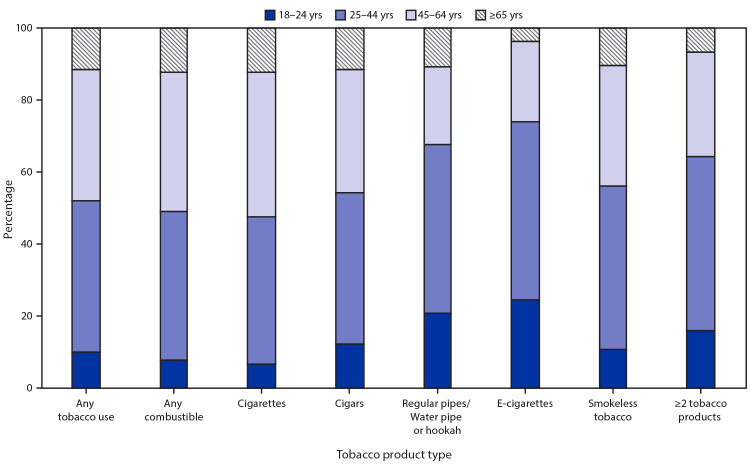
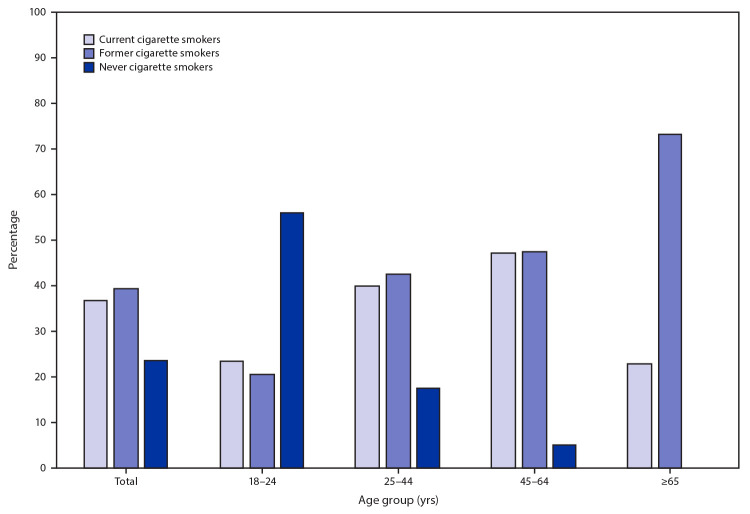
The prevalence of any current tobacco product use was higher among males; adults aged ≤65 years; non-Hispanic American Indian/Alaska Native (AI/AN) adults; those whose highest level of educational attainment was a General Educational Development (GED) certificate; those with an annual household income <$35,000; lesbian, gay, or bisexual (LGB) adults; uninsured adults and those with Medicaid; those with a disability; or those with mild, moderate, or severe generalized anxiety disorder. E-cigarette use was highest among adults aged 18-24 years (9.3%), with over half (56.0%) of these young adults reporting that they had never smoked cigarettes. Implementing comprehensive, evidence-based, population level interventions (e.g., tobacco price increases, comprehensive smoke-free policies, high-impact antitobacco media campaigns, and barrier-free cessation coverage), in coordination with regulation of the manufacturing, marketing, and sale of all tobacco products, can reduce tobacco-related disease and death in the United States (1,4). As part of a comprehensive approach, targeted interventions are also warranted to reach subpopulations with the highest prevalence of use, which might vary by tobacco product type.
Overview
The claims and statistics of this paper haven’t been checked yet.
Free: it reads the open-access text and checks the first 5 claims that cite a source we can check. Create a free account to check every claim.
Integrity signals
Registry
Cites
Statistics
Figures
Verification
Claims the paper makes
The claims and statistics of this paper haven’t been checked yet.
Free: it reads the open-access text and checks the first 5 claims that cite a source we can check. Create a free account to check every claim.
Self-check
Percentages, sums and reported differences re-computed from the paper’s own numbers.
The self-check needs the paper’s full text.
Citations
Cites
The Health consequences of smoking—50 years of progress : a report of the Surgeon General
Lushniak, B. D., Samet, J. M., Pechacek, T. F., Norman, L., & Taylor, P. A. (2014) · Cited by 4,990
Tobacco Product Use and Cessation Indicators Among Adults — United States, 2018
Creamer, M. R., Wang, T. W., Babb, S., Cullen, K. A., Day, H., Willis, G., Jamal, A., & Neff, L. (2019) · MMWR. Morbidity and Mortality Weekly Report · doi:10.15585/mmwr.mm6845a2 · Cited by 892
Self-citationBinnie, V, McHugh, S., Macpherson, L., Borland, B., Moir, K., & Malik, K. (2004) · Oral Diseases · doi:10.1111/j.1601-0825.2004.01018.x · Cited by 134
Agaku, I. T., & King, B. A. (2014) · American Journal of Epidemiology · doi:10.1093/aje/kwu182 · Cited by 45
Research works printed but not linked: 1
- US Department of Health and Human Services. Smoking cessation. A report of the Surgeon General. Atlanta, GA: US Department of Health and Human Services, CDC; 2020. https://www.hhs.gov/sites/default/files/2020-cessation-sgr-full-report.pdf 32255575
Cited by
Items 401–500 of 983
Feng, M., Carter, C. C., Page, S., Emery, S., Tran, H., & Kostygina, G. (2025) · Journal of Health Communication · doi:10.1080/10810730.2025.2462682 · Cited by 12
Vinci, C., Sutton, S. K., Yang, M.-J., Jones, S. R., Kumar, S., & Wetter, D. W. (2025) · JMIR mhealth and uhealth · doi:10.2196/55379 · Cited by 12
Trends in pancreatic cancer mortality among US adults, 1999–2023
Wu, T., Bian, Z., Qin, N., & Chen, J. (2025) · BMC Gastroenterology · doi:10.1186/s12876-025-04354-4 · Cited by 9
“Research indicates persistently high smoking rates in the U.S. Midwest alongside a significant rise in e-cig-arette use [45].”
Heckman, C. J., Wackowski, O. A., Mukherjee, R., Hatsukami, D. K., Stepanov, I. S., Delnevo, C. D., & Steinberg, M. B. (2021) · International Journal of Environmental Research and Public Health · doi:10.3390/ijerph18126494 · Cited by 9
“Although smoking prevalence has decreased in recent years, approximately 34 million Americans continue to smoke [1].”
BackgroundGanz, O., King, J. L., Giovenco, D. P., Hrywna, M., Strasser, A. A., & Delnevo, C. D. (2021) · International Journal of Environmental Research and Public Health · doi:10.3390/ijerph18126628 · Cited by 9
“This is likely a reflection of the fact that smaller pack sizes are disproportionately purchased by younger people, who are more likely to use multiple products compared with older adults [1,51].”
BackgroundE-cigarette device type and combustible tobacco use: Results from a pooled analysis of 10,482 youth
Kong, G., Chaffee, B. W., Wu, R., Krishnan‐Sarin, S., Liu, F., Leventhal, A. M., McConnell, R., & Barrington‐Trimis, J. L. (2022) · Drug and Alcohol Dependence · doi:10.1016/j.drugalcdep.2022.109279 · Cited by 9
Silver, N. A., Rahman, B., Folger, S., Bertrand, A., Khatib, B., Gbenro, M., & Schillo, B. (2022) · Nicotine & Tobacco Research · doi:10.1093/ntr/ntac095 · Cited by 11
Dai, H. D., & Leventhal, A. M. (2022) · Preventive Medicine Reports · doi:10.1016/j.pmedr.2022.102048 · Cited by 11
“The latest National Health Interview Survey (NHIS) data reported that current (some days or daily) e-cigarette use among U.S. adults declined to 3.7 %% in 2020 (Cornelius et al., 2022).”
BackgroundInfluentialAddiction potential of combustible menthol cigarette alternatives: a randomised cross-over trial
Wagener, T. L., Mehta, T. R., Hinton, A. M., Schulz, J. A., Erath, T. G., Tidey, J. W., Brinkman, M. C., Wilson, C., & Villanti, A. C. (2022) · Tobacco Control · doi:10.1136/tc-2022-057421 · Cited by 10
Nicotine, alcohol, and caffeine use among individuals with untreated obstructive sleep apnea
Baldassarri, S. R., Chu, J., Deng, A., Xu, Z., Blohowiak, R. F., Byrne, S., Kushida, C. A., Yaggi, H. K., & Zinchuk, A. V. (2023) · Sleep And Breathing · doi:10.1007/s11325-023-02830-3 · Cited by 12
“Smoking remains the leading preventable cause of death [21].”
BackgroundBanerjee, S., Alabaster, A. L., Adams, A. S., Fogelberg, R., Patel, N., & Young‐Wolff, K. C. (2023) · BMJ Open · doi:10.1136/bmjopen-2022-068629 · Cited by 9
A Comparison of Mental Health Symptoms among Adults Who Vape Nicotine, Cannabis, or Both
Salinas, K. Z., Saran, S., Saulnier, K. G., Hoglen, B., Houser, K. R., Krebs, N. M., Kaynak, Ö., Bordner, C. R., Yingst, J. M., Foulds, J., et al. (2023) · Substance Use & Misuse · doi:10.1080/10826084.2023.2294956 · Cited by 9
“Vaping has become an increasingly popular method for nicotine and cannabis administration (Cornelius et al., 2020; Hammond et al., 2021), but data on dual nicotine and cannabis vaping rates and health outcomes is still limited.”
BackgroundToljić, M., Nikolić, N., Joksić, I., Čarkić, J., Munjas, J., Orlić, N. K., & Milašin, J. (2024) · Journal of Reproductive Immunology · doi:10.1016/j.jri.2024.104211 · Cited by 9
Association between the use of electronic cigarettes and myocardial infarction in U.S. adults
Bajaña, M. J. F., Zevallos, J. C., Chérrez-Ojeda, I., Alvarado-Villa, G., Green, T., Kirimi, B., Jaramillo, D., Félix, M., Vanegas, E., Farfan, A., et al. (2024) · BMC Public Health · doi:10.1186/s12889-024-19561-z · Cited by 9
“Tobacco smoking declined by 8.4% from 2005 to 2020, and surprisingly, e-cigarette use increased by 9.9% from 2017 to 2020 in the U.S. [4, 28].”
BackgroundInfluentialDai, H. D., Reyes, S., Buckley, J., & Maloney, P. (2024) · Cancer Epidemiology Biomarkers & Prevention · doi:10.1158/1055-9965.epi-24-0955 · Cited by 9
Yan, Z., Pu, X., Cai, Y., Chang, X., Liu, Z., & Liu, R. (2025) · Biogerontology · doi:10.1007/s10522-025-10185-3 · Cited by 11
“Nicotine exposure, which ranked second in contributing to mortality risk in this study, highlights a serious public health issue currently faced by the American population (Cornelius et al. 2020).”
Generative artificial intelligence and machine learning methods to screen social media content
Sharp, K., Ouellette, R. R., Singh, R. S. R., DeVito, E. E., Kamdar, N., de la Noval, A., Murthy, D., & Kong, G. (2025) · PeerJ Computer Science · doi:10.7717/peerj-cs.2710 · Cited by 10
“…used nicotine/ tobacco product among youth and young adults for the past decade ( National Center for Chronic Disease Prevention and Health Promotion (US) Of fi ce on Smoking and Health, 2016 ; Cullen et al., 2018 ; Cornelius et al., 2020 ), many of whom are now reaching child-rearing age.”
Liu, J., Brighton, E., Tam, A., Godino, J., Brouwer, K. C., Smoot, C. B., Matthews, E., Mohn, P., Kirby, C. A., Zhu, S., et al. (2021) · Preventive Medicine Reports · doi:10.1016/j.pmedr.2021.101541 · Cited by 9
“Studies show that the median prevalence of tobacco use in FQHC patient populations is 29.3% (Flocke et al., 2017), compared to 20.8% in the general population (Cornelius et al., 2020).”
BackgroundInfluentialCorelli, R. L., Merchant, K. R., Hilts, K. E., Kroon, L. A., Vatanka, P., Hille, B. T., & Hudmon, K. S. (2021) · Research in Social and Administrative Pharmacy · doi:10.1016/j.sapharm.2021.09.001 · Cited by 9
Arana‐Chicas, E., Cartujano‐Barrera, F., Ogedegbe, C., Ellerbeck, E. F., Cox, L. S., Graves, K. D., Díaz, F. J., Catley, D., & Cupertino, A. P. (2021) · International Journal of Environmental Research and Public Health · doi:10.3390/ijerph182010859 · Cited by 10
“8%) are current cigarette smokers [7] and they are more likely to start smoking as they acculturate to the U.”
BackgroundPerceptions of cigarettes and e-cigarettes: does health literacy matter?
Marx, J. M., Miller, A., Windsor, A., Locke, J., & Frazier, E. (2021) · Journal of American College Health · doi:10.1080/07448481.2021.1979008 · Cited by 13
“57 The present study did not find any differences based on gender identity of participants, suggesting that beliefs among college students may be independent of gender identity.”
BackgroundPatel, M. S., Patel, S. B., & Steinberg, M. B. (2021) · Annals of Internal Medicine · doi:10.7326/aitc202112210 · Cited by 10
Assessment of worker chemical exposures in California vape shops
Attfield, K. R., Zalay, M., Zwack, L. M., Glassford, E. K., LeBouf, R. F., & Materna, B. L. (2022) · Journal of Occupational and Environmental Hygiene · doi:10.1080/15459624.2022.2036341 · Cited by 9
“In youth surveys in the United States, prevalence of frequent use doubled between 2017 and 2019 (Hammond et al. 2020), with estimates of current e-cigarette users in high school of 3.0 million in 2020 (19.6”
BackgroundInfluentialDarmon, S., Park, A. B., Lovejoy, L. A., Shriver, C. D., Zhu, K., & Ellsworth, R. E. (2022) · International Journal of Environmental Research and Public Health · doi:10.3390/ijerph19074084 · Cited by 9
“7% of adult females being current smokers [2].”
BackgroundShort- and Long-Term Cigarette and Tobacco Abstinence Among Daily and Nondaily Older Smokers
Avila, J. C., Berg, C. J., Robinson, J. D., & Ahluwalia, J. S. (2022) · Nicotine & Tobacco Research · doi:10.1093/ntr/ntac116 · Cited by 9
Borrelli, B., Endrighi, R., Jurasic, M. M., Hernandez, H., Jones, E. A., Ospina, J., Cabral, H., Quintiliani, L. M., & Werntz, S. (2022) · BMC Public Health · doi:10.1186/s12889-022-13427-y · Cited by 9
Min, J.-Y., Levin, J. R., & Weinberger, A. H. (2022) · Journal of Substance Abuse Treatment · doi:10.1016/j.jsat.2022.108834 · Cited by 9
Anesthesiologists and the Other Pandemic: Tobacco Use
Warner, D. O. (2022) · Anesthesiology · doi:10.1097/aln.0000000000004346 · Cited by 9
Luu, N. M., Phan, T. H., Oh, J., & Myung, S. (2022) · Nicotine & Tobacco Research · doi:10.1093/ntr/ntac266 · Cited by 9
Hof, J. V., Wang, W., Matsushita, K., HEISS, G. M., Folsom, A. R., Widome, R., & Lutsey, P. L. (2023) · American Journal of Preventive Medicine · doi:10.1016/j.amepre.2023.01.001 · Cited by 9
Khanna, N., Klyushnenkova, E., Gaynor, A., Dark, M., Melamed, J., Bennett, M. E., & Deepak, J. (2023) · The Journal of the American Board of Family Medicine · doi:10.3122/jabfm.2022.220410r1 · Cited by 9
“3%).(4) E-cigarette usage is associated with smoking initiation(5,6) and potentially can lead to dangerous pulmonary injuries, such as E-cigarette, or Vaping Use-Associated Lung Injury (EVALI).”
BackgroundLee, J. G. L., Goldstein, A., Pan, W., & Ribisl, K. M. (2015) · International Journal of Environmental Research and Public Health · doi:10.3390/ijerph120808790 · Cited by 11
Chew, R., Wenger, M., Guillory, J. E., Nonnemaker, J. M., & Kim, A. E. (2022) · Journal of Medical Internet Research · doi:10.2196/30257 · Cited by 9
“Social media marketing of ENDS products coincides with the increasing prevalence of ENDS use among youths and young adults [7-11].”
BackgroundNoel, J. K., Rosenthal, S. R., & Sammartino, C. J. (2022) · Journal of Public Health · doi:10.1093/pubmed/fdac023 · Cited by 9
The metabotropic glutamate receptor 5 as a biomarker for psychiatric disorders
(2023) · International Review of Neurobiology · doi:10.1016/bs.irn.2022.10.007 · Cited by 8
Mello, Z. R., Kakar, V., & Jaramillo, J. (2025) · Social Science & Medicine · doi:10.1016/j.socscimed.2025.117941 · Cited by 8
Tobacco 21’s Impact Amid the E-Cigarette Surge
Roberts, M. E., Keller-Hamilton, B. L., & Teferra, A. A. (2022) · Public Health Reports · doi:10.1177/00333549211061772 · Cited by 8
Kendzor, D. E., Businelle, M. S., Vidrine, D. J., Frank-Pearce, S. G., Shih, Y. T., Dallery, J., Alexander, A. C., Boozary, L. K., Waring, J. J. C., & Ehlke, S. J. (2022) · Contemporary Clinical Trials · doi:10.1016/j.cct.2022.106701 · Cited by 9
Green, R., Roche, D. J. O., & Ray, L. A. (2022) · Alcohol and Alcoholism · doi:10.1093/alcalc/agac017 · Cited by 8
A synthesis of local cigar pack policies in the US
Jensen, J. K., Delnevo, C. D., Merten, J. W., Torton, B., & Azagba, S. (2022) · Preventive Medicine Reports · doi:10.1016/j.pmedr.2022.101865 · Cited by 8
Sanchez, S., Deck, A., Baskerville, N. B., & Chaiton, M. (2023) · JMIR Research Protocols · doi:10.2196/42956 · Cited by 9
“Consequentially, vaping prevalence is also greatest among those aged 18 to 24 years and 15 to 17 years [11,18,19].”
Experiences and Perceptions of E-Cigarette Cessation for Young Adults in Rural Communities
Gwon, S. H., Thongpriwan, V., Mobarki, A. A., Eyadat, A. M., & Noonan, D. (2023) · Nursing Research · doi:10.1097/nnr.0000000000000692 · Cited by 8
Noonan, D., Frisbee, S., Bittencourt, L., Rubenstein, D., McClernon, F. J., & Carroll, D. M. (2024) · The Journal of Rural Health · doi:10.1111/jrh.12870 · Cited by 8
Stodghill, J. D., Finnigan, A., Newcomb, A. B., Lita, E., Liu, C., & Teicher, E. J. (2021) · Surgical Infections · doi:10.1089/sur.2020.477 · Cited by 8
Ahuja, N. A., Kedia, S., Dillon, P., Jiang, Y., & Yu, X. (2021) · Addictive Behaviors · doi:10.1016/j.addbeh.2021.107016 · Cited by 8
Abuhay, D. A., Gela, Y. Y., & Getu, A. A. (2021) · International Journal of Hypertension · doi:10.1155/2021/1482500 · Cited by 11
Harris, A. C., Muelken, P., Alcheva, A., Stepanov, I. S., & LeSage, M. G. (2022) · Frontiers in Neuroscience · doi:10.3389/fnins.2022.868088 · Cited by 8
Breland, A. B., Carroll, D. M., Denlinger-Apte, R. L., Ross, J. C., Soto, C., White, C. M., Donny, E. C., Fagan, P., Gardiner, P., Eissenberg, T., et al. (2022) · Preventive Medicine · doi:10.1016/j.ypmed.2022.107117 · Cited by 9
Dearfield, C. T., Horn, K. A., Crandell, I., & Bernat, D. H. (2022) · BMJ Open · doi:10.1136/bmjopen-2021-059821 · Cited by 8
Osibogun, O. I., Erinoso, O. A., Gautam, P., Bursac, Z., & Osibogun, A. O. (2022) · Addictive Behaviors · doi:10.1016/j.addbeh.2022.107435 · Cited by 8
Neighborhood distribution of availability of newer tobacco products: A US four-site study, 2021
Rose, S. W., Annabathula, A., Westneat, S., van de Venne, J., Hrywna, M., Ackerman, C., Lee, J. G. L., Sesay, M., Giovenco, D. P., Spillane, T. E., et al. (2022) · Preventive Medicine Reports · doi:10.1016/j.pmedr.2022.102028 · Cited by 8
Zvolensky, M. J., Shepherd, J. M., Clausen, B. K., Garey, L., Redmond, B. Y., & Asfar, T. (2023) · Addictive Behaviors · doi:10.1016/j.addbeh.2023.107627 · Cited by 9
Romm, K. F., Dopke, C., Price, O. A., Pannell, A., Williams, R., & Berg, C. J. (2023) · American Journal on Addictions · doi:10.1111/ajad.13418 · Cited by 8
Perceived message effectiveness of cigar warning themes among adults in the United States
Ross, J. C., Kowitt, S. D., Jarman, K. L., Ranney, L. M., Lazard, A. J., Thrasher, J. F., Sheeran, P., & Goldstein, A. O. (2023) · Preventive Medicine Reports · doi:10.1016/j.pmedr.2023.102236 · Cited by 8
Llanes, K. D., Ling, P. M., Guillory, J. E., & Vogel, E. A. (2023) · Journal of Medical Internet Research · doi:10.2196/46153 · Cited by 9
“The prevalence of nicotine vaporizer use (ie, e-cigarette use, commonly called nicotine “vaping”) is higher among young (versus older) adults [1] and increased between 2017 and 2020 [2].”
Longitudinal effects of cigarette pictorial warning labels among young adults
Johnson, A. C., Simmens, S. J., Turner, M. M., Evans, W. D., Strasser, A. A., & Mays, D. M. (2021) · Journal of Behavioral Medicine · doi:10.1007/s10865-021-00258-2 · Cited by 8
Shartle, K. (2021) · SSM - Population Health · doi:10.1016/j.ssmph.2021.100925 · Cited by 8
Case, K. R., Clendennen, S. L., Shah, J., Tsevat, J., & Harrell, M. B. (2022) · Addictive Behaviors Reports · doi:10.1016/j.abrep.2022.100408 · Cited by 10
“…Leventhal, 2019) According to more recent data, in 2019, 9.3% of 18 to 24-year-olds re-ported current (i.e. now using e-cigarettes on “ some ” or “ most days ” ) e-cigarette use (Cornelius et al., 2019) Similarly, vaping has become a popular method for using marijuana products among young people.”
InfluentialGanz, O., Jeong, M., Schroth, K. R. J., & Hrywna, M. (2022) · PLoS ONE · doi:10.1371/journal.pone.0265470 · Cited by 8
“Current cigarette use was defined as having smoked at least 100 cigarettes in one’s lifetime and currently smoking every day or some days [21].”
BackgroundYoung‐Wolff, K. C., Slama, N. E., Alexeeff, S., Prochaska, J. J., Fogelberg, R., & Sakoda, L. C. (2022) · Preventive Medicine · doi:10.1016/j.ypmed.2022.107151 · Cited by 8
The interactive effects of JUUL flavor and nicotine concentration on addiction potential.
Peasley‐Miklus, C., Klemperer, E. M., Hughes, J. R., Villanti, A. C., Krishnan‐Sarin, S., DeSarno, M., Mosca, L., Su, A., Cassidy, R. N., & Feinstein, M. J. P. (2023) · Experimental and Clinical Psychopharmacology · doi:10.1037/pha0000591 · Cited by 8
Parvez, A., Percac‐Lima, S., & Saadi, A. (2022) · Journal of Immigrant and Minority Health · doi:10.1007/s10903-022-01409-6 · Cited by 8
Novogrodsky, E., Haramati, L. B., Gomez, G. V., Goldman, J., Rosenfeld, C., Rosenblum, J. K., Sayre, J. W., Hoyt, A. C., Goldin, J. G., & Milch, H. S. (2023) · The Journal of the American Board of Family Medicine · doi:10.3122/jabfm.2022.220423r1 · Cited by 8
Brown, C. R. H., & Faulkner, P. (2021) · Nicotine & Tobacco Research · doi:10.1093/ntr/ntab176 · Cited by 8
Gautam, P., Kalan, M. E., Li, W., Taleb, Z. B., Vargas-Rivera, M., Jebai, R., Osibogun, O. I., & Maziak, W. (2022) · International Journal of Behavioral Medicine · doi:10.1007/s12529-022-10074-w · Cited by 8
Pain, smoking, and moderating effect of gender in a large, representative sample of Danish adults
Aigner, C. J., & Dammeyer, J. (2022) · Journal of Addictive Diseases · doi:10.1080/10550887.2022.2078641 · Cited by 8
Levy, D. E., Lee, S. S., Qian, Y., Shebl, F. M., Goldberg, S. L., Mulroy, N. M., Anderson, N. K., Hyle, E. P., Becker, J. E., & Reddy, K. P. (2025) · BMC Public Health · doi:10.1186/s12889-025-22658-8 · Cited by 7
Wang, A., Zauche, L. H., Crider, K. S., Mai, C. T., Qi, Y. P., Yeung, L. F., & Williams, J. L. (2025) · American Journal of Preventive Medicine · doi:10.1016/j.amepre.2025.107947 · Cited by 8
Wilkinson, A. V., Swann, A. C., Graham, D. P., Patriquin, M. A., Salas, R., Nielsen, D. A., & Kosten, T. R. (2022) · Journal of Affective Disorders · doi:10.1016/j.jad.2022.05.114 · Cited by 9
Lu, Y., Kwong, K., Wells, J., Edwards, A., Chen, Z., Tseng, T., & Zhang, K. (2023) · Scientific Reports · doi:10.1038/s41598-023-27624-1 · Cited by 7
Denlinger-Apte, R. L., Cassidy, R. N., Donny, E. C., Godin, J., Hatsukami, D. K., Strahley, A. E., Wiseman, K. D., Colby, S. M., & Tidey, J. W. (2023) · Preventive Medicine Reports · doi:10.1016/j.pmedr.2023.102163 · Cited by 7
“(Gentzke et al., 2022; Cornelius et al., 2020) AYA tend to underestimate the health risks of smoking and overestimate their likelihood of quitting in the future.”
BackgroundPorticella, N., Cannon, J. S., Wu, C. L., Ferguson, S. G., Thrasher, J. F., Hackworth, E. E., & Niederdeppe, J. (2023) · Health Education & Behavior · doi:10.1177/10901981231210520 · Cited by 7
“BIPOC and low SES individuals are overrepresented among U.S. smokers (Cornelius et al., 2020), are disproportionately targeted by tobacco marketing (Balbach et al., 2003; Carroll et al., 2020; Mills et al., 2022), and tend to suffer more burden from and are more likely to die from tobacco-related…”
BackgroundCarnes, M. U., Quach, B. C., Zhou, L., Han, S., Tao, R., Mandal, M., Deep‐Soboslay, A., Marks, J. A., Page, G. P., Maher, B. S., et al. (2024) · Neuropsychopharmacology · doi:10.1038/s41386-024-01885-4 · Cited by 7
Outcomes of a Comprehensive Mobile Vaping Cessation Program in Adults Who Vape Daily: Cohort Study
Marler, J. D., Fujii, C. A., Utley, M. T., Balbierz, D. J., Galanko, J. A., & Utley, D. S. (2024) · JMIR Formative Research · doi:10.2196/57376 · Cited by 8
Karelitz, J. L., He, Y., Becker, E., & Vansickel, A. R. (2025) · Harm Reduction Journal · doi:10.1186/s12954-025-01170-7 · Cited by 7
A Comprehensive Approach to Increase Adult Tobacco Cessation
VanFrank, B. K., & Presley-Cantrell, L. R. (2021) · JAMA · doi:10.1001/jama.2020.23608 · Cited by 8
Wang, Y., Max, W. B., Yao, T., Keeler, C., & Sung, H. (2021) · Addiction · doi:10.1111/add.15504 · Cited by 7
Recent Updates of Pharmacotherapy for Smoking Cessation
Hwang, J. S., & Lee, C. M. (2021) · Korean Journal of Family Practice · doi:10.21215/kjfp.2021.11.6.403 · Cited by 7
Spears, C. A., Jones, D. M., Cottrell‐Daniels, C., Elahi, H., Strosnider, C. L., Luong, J., Weaver, S. R., & Pechacek, T. F. (2022) · International Journal of Environmental Research and Public Health · doi:10.3390/ijerph19031157 · Cited by 7
“nationally representative data [16] indicate that adults with household income < USD 35,000 (vs.”
BackgroundPokhrel, P., Kawamoto, C. T., Pagano, I., & Herzog, T. A. (2022) · Addiction · doi:10.1111/add.15815 · Cited by 8
Correlates of U.S. Young adults’ awareness of alcohol use as a behavioral risk factor for cancer
Long, L., Alalwan, M. A., Keller-Hamilton, B. L., Slater, M. D., & Mays, D. M. (2022) · Preventive Medicine Reports · doi:10.1016/j.pmedr.2022.101765 · Cited by 7
Chung, M., Lee, J. S., & Kang, J. (2022) · Infection and Chemotherapy · doi:10.3947/ic.2021.0146 · Cited by 7
“At home in the United States, he intermittently complained of chest tightness, and 2 days later the patient died suddenly.”
BackgroundInfluentialAssociations between perceived source credibility, e-cigarettes, and e-cigarette ad perceptions
Lee, D. N., Liu, J., Keller-Hamilton, B. L., Patterson, J. G., Wedel, A. V., Vázquez‐Otero, C., & Stevens, E. M. (2022) · Preventive Medicine Reports · doi:10.1016/j.pmedr.2022.101862 · Cited by 7
Dedousis, D., Vassiliou, A. N., Cao, S., Yammani, D., Kyasaram, R. K., Shanahan, J., Keinath, M. C., Zhang, A. L., Hsu, M. L., Fu, P., et al. (2022) · JTO Clinical and Research Reports · doi:10.1016/j.jtocrr.2022.100375 · Cited by 7
“Nevertheless, men use tobacco at higher rates than women.(33) If tobacco use was an underlying explanation of the survival differences, then controlling for sex should shrink the survival gap, whereas we report a significant increase (p < 0.”
BackgroundGill, A. A., Alford, B., Balmer, J., Lutz, E. A., Glogower, F. D., & Palm, C. K. (2022) · Substance Abuse · doi:10.1080/08897077.2022.2095075 · Cited by 7
“adult population also sees the highest e-cigarette use rates among males, white, non-Hispanics and those ages 18–24.(4) The study also demonstrated Service members who screened ‘positive’ for hazardous drinking, had increased odds of being an e-cigarette user; aligning to published research for the U.”
BackgroundAn ecological momentary assessment study of outcome expectancies and smoking lapse in daily life
Potter, L. N., Schlechter, C. R., Shono, Y., Lam, C. Y., Cinciripini, P. M., & Wetter, D. W. (2022) · Drug and Alcohol Dependence · doi:10.1016/j.drugalcdep.2022.109587 · Cited by 7
Tobacco/nicotine use among individuals using cannabis for therapeutic purposes
Steinberg, M. L., Rosen, R., Billingsley, B., Shah, D., Bender, M., Shargo, K., Aamir, A., & Bridgeman, M. B. (2022) · American Journal on Addictions · doi:10.1111/ajad.13323 · Cited by 7
Mubarak, N., Wynn, A., Tapasak, B., Collins, A. P., Mubarak, N., Gonzalez, C., Mariño, G., & Mayne, S. L. (2022) · Journal of Public Health Research · doi:10.1177/22799036221102759 · Cited by 10
Aboelsaad, M., Soliman, O., Medhat, A., Khalil, O. R. S., AlWahsh, M., Wageh, Y., ElSaied, A., ElShrkawy, H., Abdulhafiz, H., Sayed, M., et al. (2022) · The Journal of Smoking Cessation · doi:10.1155/2022/1879270 · Cited by 7
Patel, S. K., Dilley, J. E., Carlone, A., Deckard, E. R., Meneghini, R. M., & Sonn, K. A. (2023) · Arthroplasty Today · doi:10.1016/j.artd.2022.101082 · Cited by 7
“While tobacco usage is declining compared to previous years, a recent study reported that approximately 1 in 5 adults in the United States still use tobacco products [30].”
ResultPredictors of Discontinued E-Cigarette Use at One-Year Follow-Up in a Sample of Young Adults
Pokhrel, P., Kawamoto, C. T., Mettias, H., Elwir, T., & Herzog, T. A. (2023) · International Journal of Environmental Research and Public Health · doi:10.3390/ijerph20064770 · Cited by 10
“Recent data show that an increasing proportion of young adult current e-cigarette users have never smoked cigarettes or have never been regular cigarette smokers [2].”
BackgroundPeer-Facilitated Tobacco Cessation in a Prison Setting: A Proof of Concept Study
Garver‐Apgar, C. E., Morris, C. M., Pavlik, J., Lenartz, T., & Hamm, M. (2023) · Tobacco Use Insights · doi:10.1177/1179173x231168511 · Cited by 8
“Compared to women and older adults, men and younger adults also have higher rates of tobacco use, and these demographics are similarly over-represented in justice settings.(3) Those who have been in prison also face a host of stressors that reinforce unhealthy behaviors, including unemployment, housing insecurity, low…”
BackgroundLe, T. T. T., Issabakhsh, M., Li, Y., Sánchez‐Romero, L. M., Tan, J., Meza, R., Levy, D. T., & Méndez, D. (2023) · Nicotine & Tobacco Research · doi:10.1093/ntr/ntad066 · Cited by 7
Vijayaraghavan, M., Hartman-Filson, M., Vyas, P., Katyal, T., Nguyen, T., & Handley, M. A. (2023) · Health Promotion Practice · doi:10.1177/15248399231174925 · Cited by 7
Association of Vaping Identity and e-Cigarette Perceptions among Young Adults Who Vape
Lee, D. N., Liu, J., Oduguwa, K., & Stevens, E. M. (2023) · Substance Use & Misuse · doi:10.1080/10826084.2023.2223286 · Cited by 8
“In the United States, 9.3% of young adults (18–24 years old) are currently using e-cigarettes (Cornelius et al., 2020).”
BackgroundInfluentialAlHarthi, A., Alasmari, F. F., AlSharari, S. D., Al-Rasheed, N. M., Alshammari, M. A., & Alshammari, T. K. (2023) · Brain Sciences · doi:10.3390/brainsci13101417 · Cited by 8
Cigarettes and e-cigarettes use among US adults with multimorbidity
Osibogun, O. I., Li, W., Jebai, R., & Kalan, M. E. (2024) · Drug and Alcohol Dependence Reports · doi:10.1016/j.dadr.2024.100231 · Cited by 9
Sohel, M. S., Sifullah, M. K., Hossain, B., Sarker, M. F. H., Zaman, N. T., & Obaidullah, M. (2024) · BMC Public Health · doi:10.1186/s12889-024-18696-3 · Cited by 9
“…long hours, and limited access to healthcare, amplifying their susceptibility to health problems [46, 47]. d. Tobacco Consumption : There is a prevalence of tobacco use among undocumented migrants, which contributes to their overall health risks and exacerbates existing health conditions [48, 49].”
BackgroundReasons for Pack Size Purchase among US Adults Who Purchase Cigars
King, J. L., Bilić, A., & Merten, J. W. (2021) · International Journal of Environmental Research and Public Health · doi:10.3390/ijerph18157790 · Cited by 7
“Cigar use remains a public health concern, with nearly 12 million adults in the United States (US) reporting past 30 day use in 2019 [1].”
BackgroundNguyen, N. P. T., Kapiteni, K., Straus, E. R., & Guydish, J. R. (2021) · American Journal on Addictions · doi:10.1111/ajad.13206 · Cited by 7
Metadata
- Authors
- Cornelius, M. E., Wang, T. W., Jamal, A., Loretan, C. G., & Neff, L. J.
- Affiliations
- Centers for Disease Control and Prevention (US)
- Corresponding author
- Cornelius, Monica E.
- Venue
- MMWR. Morbidity and Mortality Weekly Report
- Published
- 2020-11-20
- Volume
- 69
- Issue
- 46
- Pages
- 1736-1742
- ISSN
- 0149-2195 (ISSN-L)
- 1545-861X
- PMC
- PMC7676638
- OpenAlex
- W3103711573
- Cited by
- 975
- References
- 4
- Citations by year
- 2026: 30 · 2025: 68 · 2024: 127 · 2023: 199 · 2022: 331 · 2021: 181 · 2020: 9
- FWCI
- 108.29
- Type
- journal article
- Language
- en
- Open access
- diamond
- doi.org
- Locations
- MMWR Morbidity and Mortality Weekly Report (publishedVersion)
- PubMed Central (publishedVersion, cc-by)
- PubMed (publishedVersion)
- Topics
- Health Sciences › Medicine › Public Health, Environmental and Occupational Health › Smoking Behavior and Cessation
- Health Sciences › Medicine › Oncology › Global Cancer Incidence and Screening
- Health Sciences › Medicine › Epidemiology › Substance Abuse Treatment and Outcomes
- Keywords
- tobacco product use, vaping, cigarette smoking, tobacco use prevalence, sociodemographic disparities, young adults, uninsured adults, Medicaid, disability, anxiety disorders, tobacco control interventions, tobacco product regulation, tobacco price increases, smoke-free policies
- MeSH terms
- Adolescent, Adult, Aged, Female, Humans, Male, Middle Aged, Tobacco Use Disorder, United States, Young Adult, Tobacco Products
About these checks
Registry, retraction, Cites and statistics results are computed, not judged, with one exception: a printed reference that no index lists is read once by a model before it counts as a citation error. Claims are extracted by a model and kept only when their quote appears verbatim in the text; each cited source is then checked, with a model’s help, for whether it says what the claim relies on. Those verdicts can be wrong — read the claim’s quote and the cited source before relying on one.
Statistics and arithmetic are recomputed, not judged.
Confidence bands are shown only for fields calibrated on our annotated test set. None is calibrated yet, so no band is shown.
What counts as a claim ›How we measure confidence ›How we check this ›
Are you an author, or do you see a problem with this page? Request a review
Data sources
Bibliographic data: Semantic Scholar, OpenAlex, Crossref.
Contains information from the Semantic Scholar Academic Graph Datasets, made available under the ODC Attribution License (ODC-BY 1.0).
Semantic Scholar’s data is described in: Kinney, R., et al. (2023). The Semantic Scholar Open Data Platform. arXiv:2301.10140.
