

The DOI matches its Crossref record; 4 of the 4 references it cites were found in a registry or an index.
Outbreak Associated with SARS-CoV-2 B.1.617.2 (Delta) Variant in an Elementary School — Marin County, California, May–June 2021
Open accessAbstract
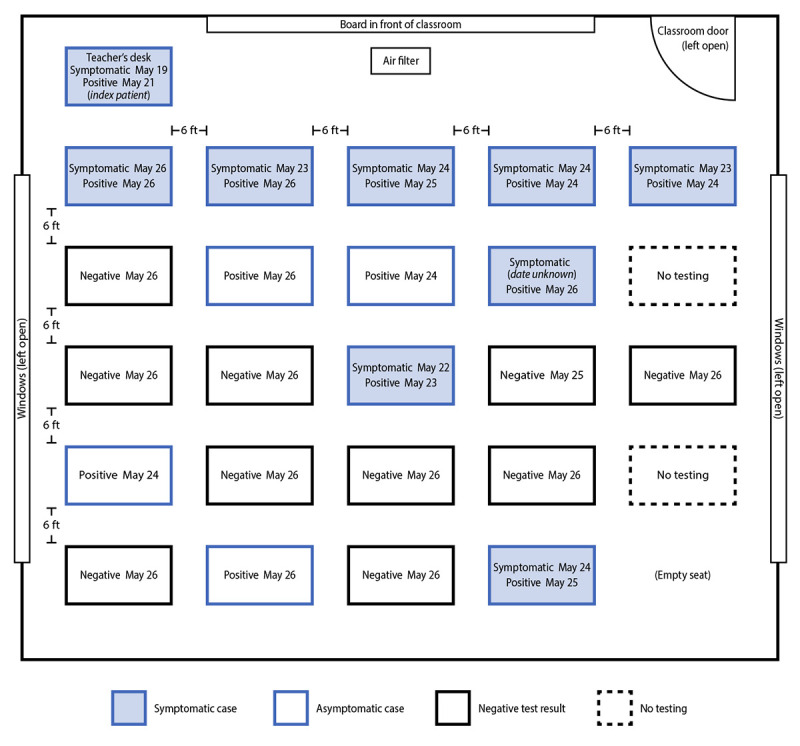
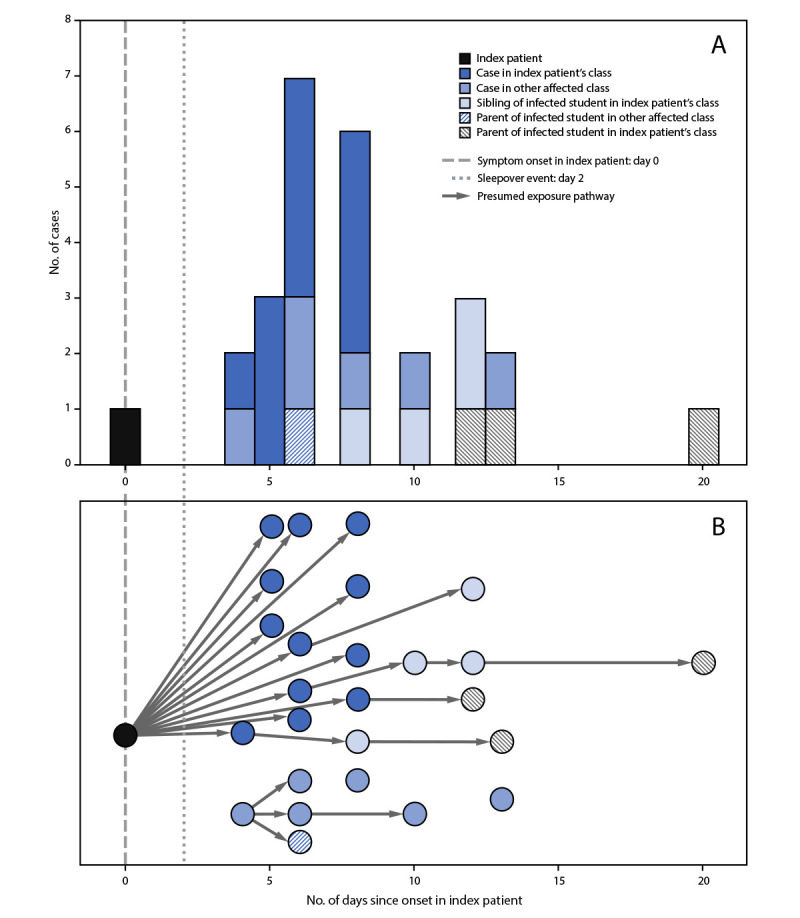
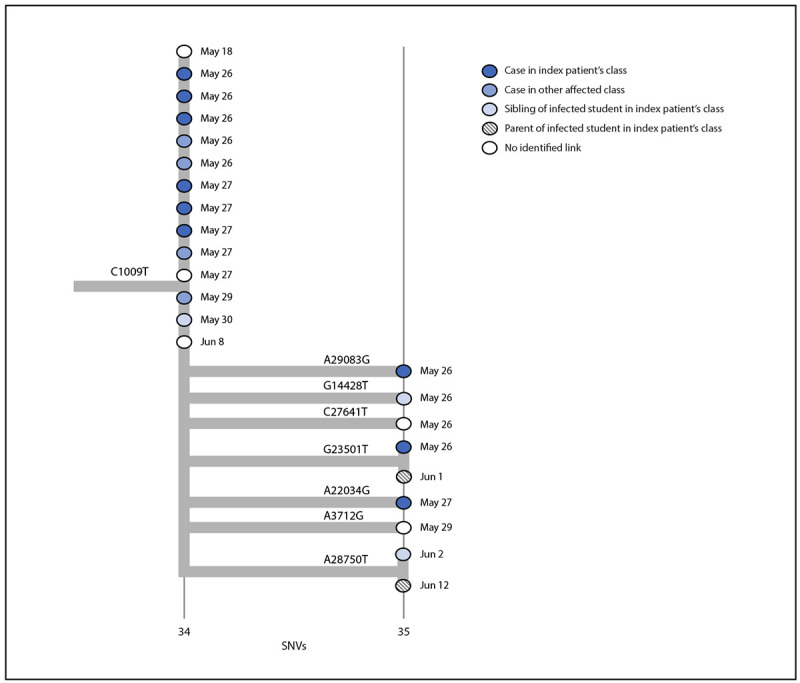
On May 25, 2021, the Marin County Department of Public Health (MCPH) was notified by an elementary school that on May 23, an unvaccinated teacher had reported receiving a positive test result for SARS-CoV-2, the virus that causes COVID-19. The teacher reported becoming symptomatic on May 19, but continued to work for 2 days before receiving a test on May 21. On occasion during this time, the teacher read aloud unmasked to the class despite school requirements to mask while indoors. Beginning May 23, additional cases of COVID-19 were reported among other staff members, students, parents, and siblings connected to the school. To characterize the outbreak, on May 26, MCPH initiated case investigation and contact tracing that included whole genome sequencing (WGS) of available specimens. A total of 27 cases were identified, including that of the teacher. During May 23-26, among the teacher's 24 students, 22 students, all ineligible for vaccination because of age, received testing for SARS-CoV-2; 12 received positive test results. The attack rate in the two rows seated closest to the teacher's desk was 80% (eight of 10) and was 28% (four of 14) in the three back rows (Fisher's exact test; p = 0.036). During May 24-June 1, six of 18 students in a separate grade at the school, all also too young for vaccination, received positive SARS-CoV-2 test results. Eight additional cases were also identified, all in parents and siblings of students in these two grades. Among these additional cases, three were in persons fully vaccinated in accordance with CDC recommendations (1). Among the 27 total cases, 22 (81%) persons reported symptoms; the most frequently reported symptoms were fever (41%), cough (33%), headache (26%), and sore throat (26%). WGS of all 18 available specimens identified the B.1.617.2 (Delta) variant. Vaccines are effective against the Delta variant (2), but risk of transmission remains elevated among unvaccinated persons in schools without strict adherence to prevention strategies. In addition to vaccination for eligible persons, strict adherence to nonpharmaceutical prevention strategies, including masking, routine testing, facility ventilation, and staying home when symptomatic, are important to ensure safe in-person learning in schools (3).
Overview
The claims and statistics of this paper haven’t been checked yet.
Run the check — free, no account needed. It reads the open-access text and checks the sources it cites.
Integrity signals
Registry
Cites
Statistics
Figures
Verification
Claims the paper makes
The claims and statistics of this paper haven’t been checked yet.
Run the check — free, no account needed. It reads the open-access text and checks the sources it cites.
Claims other papers make about this one
Each is checked against this paper’s own text: does it say what the citing paper says it does?
The cited source says what the claim attributes to it.
In the citing paper
“School-age children represent a high proportion of Covid-19 cases,10 and they may play an important role in the transmission of SARS-CoV-2,11,12 including spread of the highly transmissible B.1.617.2 (or delta) variant.13,14”
From Evaluation of the BNT162b2 Covid-19 Vaccine in Children 5 to 11 Years of Age (2022) · cites this paper as [14]
In the citing paper
“With the prioritization of older age groups for vaccination, school-age children now account for an increasing proportion of cases and hospitalizations as compared with their proportion early in the pandemic,10,22,23,24 and school outbreaks are occurring.14,25”
From Evaluation of the BNT162b2 Covid-19 Vaccine in Children 5 to 11 Years of Age (2022) · cites this paper as [14]
Self-check
Percentages, sums and reported differences re-computed from the paper’s own numbers.
The self-check needs the paper’s full text.
Citations
Cites
Effectiveness of Covid-19 Vaccines against the B.1.617.2 (Delta) Variant
Lopez Bernal, J., Andrews, N., Gower, C., Gallagher, E., Simmons, R., Thelwall, S., Stowe, J., Tessier, E., Groves, N., Dabrera, G., et al. (2021) · New England Journal of Medicine · doi:10.1056/nejmoa2108891 · Cited by 2,889
Brown, C., Vostok, J., Johnson, H., Burns, M., Gharpure, R. V., Sami, S., Sabo, R. T., Hall, N. B., Foreman, A., Schubert, P. L., et al. (2021) · MMWR Morbidity and Mortality Weekly Report · doi:10.15585/mmwr.mm7031e2 · Cited by 491
Turakhia, Y., Thornlow, B. P., Hinrichs, A. S., Maio, N. D., Gozashti, L., Lanfear, R., Haussler, D. H., & Corbett-Detig, R. B. (2021) · Nature Genetics · doi:10.1038/s41588-021-00862-7 · Cited by 414
Self-citationDougherty, K., Mannell, M., Naqvi, O. H., Matson, D., & Stone, J. (2021) · MMWR Morbidity and Mortality Weekly Report · doi:10.15585/mmwr.mm7028e2 · Cited by 145
Cited by
Sorted by citations
Evaluation of the BNT162b2 Covid-19 Vaccine in Children 5 to 11 Years of Age
Walter, E. B., Talaat, K. R., Sabharwal, C., Gurtman, A., Lockhart, S., Paulsen, G. C., Barnett, E. D., Muñoz, F. M., Maldonado, Y., Pahud, B. A., et al. (2022) · New England Journal of Medicine · doi:10.1056/nejmoa2116298 · Cited by 593
Woodworth, K. R., Moulia, D., Collins, J. P., Hadler, S. C., Jones, J. M., Reddy, S. C., Chamberland, M. E., Campos-Outcalt, D. E., Morgan, R. L., Brooks, O. T., et al. (2021) · MMWR Morbidity and Mortality Weekly Report · doi:10.15585/mmwr.mm7045e1 · Cited by 165
Severity of Acute COVID-19 in Children <18 Years Old March 2020 to December 2021
Forrest, C. B., Burrows, E. K., Mejías, A., Razzaghi, H., Christakis, D., Jhaveri, R. R., Lee, G. M., Pajor, N. M., Rao, S., Thacker, D., et al. (2022) · PEDIATRICS · doi:10.1542/peds.2021-055765 · Cited by 94
Klompas, M., Milton, D. K., Rhee, C., Baker, M. A., & Leekha, S. (2021) · Annals of Internal Medicine · doi:10.7326/m21-2780 · Cited by 86
Jehn, M., McCullough, J. M., Dale, A. P., Gue, M., Eller, B., Cullen, T., & Scott, S. E. (2021) · MMWR. Morbidity and Mortality Weekly Report · doi:10.15585/mmwr.mm7039e1 · Cited by 79
Kläser, K., Molteni, E., Graham, M. S., Canas, L. S., Österdahl, M. F., Antonelli, M., Chen, L., Deng, J., Murray, B. A. K., Kerfoot, E., et al. (2022) · Scientific Reports · doi:10.1038/s41598-022-14016-0 · Cited by 63
Transmission Dynamics of the Delta Variant of SARS-CoV-2 Infections in South Korea
Hwang, H., Lim, J., Song, S., Achangwa, C., Sim, W., Kim, G., & Ryu, S. (2021) · The Journal of Infectious Diseases · doi:10.1093/infdis/jiab586 · Cited by 55
Biological Properties of SARS-CoV-2 Variants: Epidemiological Impact and Clinical Consequences
Hoteit, R., & Yassine, H. M. (2022) · Vaccines · doi:10.3390/vaccines10060919 · Cited by 47
Revisiting COVID-19 policies: 10 evidence-based recommendations for where to go from here
Halperin, D. T., Hearst, N., Hodgins, S., Bailey, R. C., Klausner, J. D., Jackson, H., Wamai, R. G., Ladapo, J. A., Over, M., Baral, S., et al. (2021) · BMC Public Health · doi:10.1186/s12889-021-12082-z · Cited by 47
Srikrishna, D. (2022) · The Science of The Total Environment · doi:10.1016/j.scitotenv.2022.155884 · Cited by 43
SARS-CoV-2 viral load is associated with risk of transmission to household and community contacts
Bhavnani, D., James, E. R., Johnson, K. E., Beaudenon‐Huibregtse, S., Chang, P., Rathouz, P. J., Weldon, M., Matouschek, A. T., & Young, A. E. (2022) · BMC Infectious Diseases · doi:10.1186/s12879-022-07663-1 · Cited by 39
Daniell, H., Nair, S. K., Guan, H., Guo, Y., Kulchar, R. J., Torres, M. D. T., Shahed-Al-Mahmud, M., Wakade, G., Liu, Y.-M., Marques, A. D., et al. (2022) · Biomaterials · doi:10.1016/j.biomaterials.2022.121671 · Cited by 38
matOptimize: a parallel tree optimization method enables online phylogenetics for SARS-CoV-2
Ye, C., Thornlow, B. P., Hinrichs, A. S., Krämer, A., Mirchandani, C., Torvi, D., Lanfear, R., Corbett-Detig, R. B., & Turakhia, Y. (2022) · Bioinformatics · doi:10.1093/bioinformatics/btac401 · Cited by 36
Self-citationMcLeod, R. S., Hopfe, C. J., Bodenschatz, E., Moriske, H., Pöschl, U., Salthammer, T., Curtius, J., Helleis, F., Niessner, J., Herr, C. E. W., et al. (2022) · Indoor Air · doi:10.1111/ina.13142 · Cited by 31
Molecular detection of SARS‐CoV‐2 strains and differentiation of Delta variant strains
Hamill, V. A., Noll, L. W., Lu, N., Tsui, W. N. T., Porter, E. P., Gray, M., Sebhatu, T. T., Goerl, K., Brown, S. J., Palinski, R. M., et al. (2021) · Transboundary and Emerging Diseases · doi:10.1111/tbed.14443 · Cited by 29
Marr, L. C., & Samet, J. M. (2024) · Environmental Health Perspectives · doi:10.1289/ehp13878 · Cited by 28
Effective high-throughput RT-qPCR screening for SARS-CoV-2 infections in children
Dewald, F., Suárez, I., Johnen, R., Großbach, J., Morán-Tovar, R., Steger, G., Joachim, A., Horemheb-Rubio, G., Fries, M., Behr, F., et al. (2022) · Nature Communications · doi:10.1038/s41467-022-30664-2 · Cited by 26
SARS-CoV-2 Transmission and Prevention in the Era of the Delta Variant
Meyerowitz, E. A., & Richterman, A. G. (2022) · Infectious Disease Clinics of North America · doi:10.1016/j.idc.2022.01.007 · Cited by 26
Shen, Y., Courtney, J. M., Anfinrud, P., & Bax, A. (2022) · Proceedings of the National Academy of Sciences · doi:10.1073/pnas.2203086119 · Cited by 24
School Safety, Masking, and the Delta Variant
Boutzoukas, A. E., Zimmerman, K. O., & Benjamin, D. K. (2021) · PEDIATRICS · doi:10.1542/peds.2021-054396 · Cited by 22
Head, J. R., Andrejko, K. L., & Remais, J. V. (2021) · The Lancet Regional Health - Americas · doi:10.1016/j.lana.2021.100133 · Cited by 22
Investigation of a Limited but Explosive COVID-19 Outbreak in a German Secondary School
Baumgarte, S., Hartkopf, F., Hölzer, M., von Kleist, M., Neitz, S., Kriegel, M., & Bollongino, K. (2022) · Viruses · doi:10.3390/v14010087 · Cited by 22
Capponi, M., Pulvirenti, F., Cinicola, B. L., Brindisi, G., Conti, M. G., Colaiocco, G., Castro, G. D., Guido, C. A., Duse, M., Midulla, F., et al. (2022) · Vaccines · doi:10.3390/vaccines10071056 · Cited by 21
Lateral Flow Immunoassays for Detecting Viral Infectious Antigens and Antibodies
Alhabbab, R. Y. (2022) · Micromachines · doi:10.3390/mi13111901 · Cited by 25
Molecular detection of SARS‐CoV‐2 and differentiation of Omicron and Delta variant strains
Tsui, W. N. T., Hamill, V. A., Noll, L. W., Lu, N., Porter, E. P., Harbidge, D. G., Cox, E., Richardson, C., Gray, M., Sebhatu, T. T., et al. (2022) · Transboundary and Emerging Diseases · doi:10.1111/tbed.14497 · Cited by 19
Association of Child Masking With COVID-19–Related Closures in US Childcare Programs
Murray, T. S., Malik, A. A., Shafiq, M., Lee, A., Harris, C. D., Klotz, M., Humphries, J. E., Patel, K. M., Wilkinson, D., Yildirim, I. B., et al. (2022) · JAMA Network Open · doi:10.1001/jamanetworkopen.2021.41227 · Cited by 19
Measures implemented in the school setting to contain the COVID-19 pandemic
Littlecott, H., Krishnaratne, S., Burns, J., Rehfuess, E. A., Sell, K., Klinger, C., Strahwald, B., Movsisyan, A., Metzendorf, M., Schoenweger, P., et al. (2024) · Cochrane Database of Systematic Reviews · doi:10.1002/14651858.cd015029.pub2 · Cited by 18
Severe Acute Respiratory Syndrome Coronavirus 2 Infections in Children
Chow, E. J., & Englund, J. A. (2022) · Infectious Disease Clinics of North America · doi:10.1016/j.idc.2022.01.005 · Cited by 21
The vaccination threshold for SARS-CoV-2 depends on the indoor setting and room ventilation
Mikszewski, A., Stabile, L., Buonanno, G., & Morawska, L. (2021) · BMC Infectious Diseases · doi:10.1186/s12879-021-06884-0 · Cited by 18
Child mask mandates for COVID-19: a systematic review
Sandlund, J., Duriseti, R. S., Ladhani, S. N., Stuart, K., Noble, J., & Høeg, T. B. (2023) · Archives of Disease in Childhood · doi:10.1136/archdischild-2023-326215 · Cited by 15
Considerations for the Safe Operation of Schools During the Coronavirus Pandemic
Lordan, R., Prior, S., Hennessy, E. J., Naik, A. S., Ghosh, S., Paschos, G. K., Skarke, C., Barekat, K., Hollingsworth, T., Juska, S. A., et al. (2021) · Frontiers in Public Health · doi:10.3389/fpubh.2021.751451 · Cited by 16
In-person schooling and associated COVID-19 risk in the United States over spring semester 2021
Wiens, K. E., Smith, C. P., Badillo‐Goicoechea, E., Grantz, K. H., Grabowski, M. K., Azman, A. S., Stuart, E. A., & Lessler, J. (2022) · Science Advances · doi:10.1126/sciadv.abm9128 · Cited by 15
Non-pharmaceutical interventions for COVID-19: a systematic review on environmental control measures
Madhusudanan, A., Iddon, C. R., Çevik, M., Naismith, J. H., & Fitzgerald, S. (2023) · Philosophical Transactions of the Royal Society A Mathematical Physical and Engineering Sciences · doi:10.1098/rsta.2023.0130 · Cited by 15
Clinical and genomic signatures of SARS-CoV-2 Delta breakthrough infections in New York
Duerr, R., Dimartino, D., Marier, C., Zappile, P., Levine, S., François, F., Iturrate, E., Wang, G., Dittmann, M., Lighter, J., et al. (2022) · EBioMedicine · doi:10.1016/j.ebiom.2022.104141 · Cited by 14
Nelson, S. B., Dugdale, C. M., Bilinski, A., Cosar, D., Pollock, N. R., & Ciaranello, A. L. (2021) · medRxiv · doi:10.1101/2021.09.22.21263900 · Cited by 14
Wadford, D. A., Baumrind, N., Baylis, E. F., Bell, J., Bouchard, E. L., Crumpler, M., Foote, E. M., Gilliam, S., Glaser, C. A., Hacker, J. K., et al. (2023) · Frontiers in Public Health · doi:10.3389/fpubh.2023.1249614 · Cited by 12
Self-citationPotential of Endogenous Oxytocin in Endocrine Treatment and Prevention of COVID-19
Wang, S. C., Zhang, F., Zhu, H. F., Yang, H.-P., Liu, Y., Wang, P., Parpura, V., & Wang, Y. (2022) · Frontiers in Endocrinology · doi:10.3389/fendo.2022.799521 · Cited by 12
Air Purifier Intervention for Respiratory Viral Exposure in Elementary Schools
Sun, Y., Haghnazari, D., Huang, C., Baig, A., Kim, M., Cunningham, A., Skeen, C., Wolfson, J. M., Ferguson, S. T., Pratt, E. D., et al. (2025) · JAMA Network Open · doi:10.1001/jamanetworkopen.2025.36951 · Cited by 11
Li, H., Lin, H., Chen, X., Li, H., Li, H., Lin, S., Huang, L., Chen, G., Zheng, G., Wang, S., et al. (2022) · Frontiers in Cellular and Infection Microbiology · doi:10.3389/fcimb.2022.814782 · Cited by 13
Campeau, L., Thistlethwaite, F., Yao, J., Hobbs, A. J., Shahriari, A., Vijh, R., Ng, C., Fung, C., Russel, S., Zlosnik, J. E. A., et al. (2022) · Canadian Journal of Public Health · doi:10.17269/s41997-022-00659-z · Cited by 10
Compressive pangenomics using mutation-annotated networks
Walia, S., Motwani, H., Tseng, Y.-H., Smith, K., Corbett-Detig, R. B., & Turakhia, Y. (2026) · Nature Genetics · doi:10.1038/s41588-025-02478-7 · Cited by 10
Self-citationMori, T., Akamatsu, T., Kuwabara, K., & Hayashi, M. (2022) · Energies · doi:10.3390/en15051781 · Cited by 10
Lorthe, E., Bellon, M., Michielin, G., Berthelot, J., Zaballa, M.-E., Pennacchio, F., Bekliz, M., Laubscher, F., Arefi, F., Perez‐Saez, J., et al. (2022) · PLoS ONE · doi:10.1371/journal.pone.0272663 · Cited by 10
Morris, D. R., Qu, Y., Thomason, K. S., de Mello, A. H., Preble, R. G., Menachery, V. D., Casola, A., & Garofalo, R. P. (2023) · bioRxiv (Cold Spring Harbor Laboratory) · doi:10.1101/2023.05.24.542043 · Cited by 10
MacIntyre, C. R., Chughtai, A. A., Kunasekaran, M. P., Tawfiq, E., & Greenhalgh, T. (2025) · BMJ · doi:10.1136/bmj-2023-078573 · Cited by 9
Muñoz, F. M. (2021) · Archives of Pediatrics and Adolescent Medicine · doi:10.1001/jamapediatrics.2021.4225 · Cited by 9
A SARS-CoV-2 outbreak associated with vaccine breakthrough in an acute care hospital
Park, S. Y., Kim, T. H., Lee, E. J., Loeb, M. B., Jeong, Y. S., Kim, J. H., Oh, S. M., Cheong, S., Park, H., Jo, S., et al. (2022) · American Journal of Infection Control · doi:10.1016/j.ajic.2022.05.010 · Cited by 9
Høeg, T. B., Haslam, A., & Prasad, V. K. (2023) · The American Journal of Medicine · doi:10.1016/j.amjmed.2023.08.026 · Cited by 9
Variational Phylodynamic Inference Using Pandemic-scale Data
Ki, C., & Terhorst, J. (2022) · Molecular Biology and Evolution · doi:10.1093/molbev/msac154 · Cited by 9
COVID‐19 vaccination in children as a global dilemma through an ethical lens: A retrospective review
Assadi, M., Kiani, M., Gooshki, E. S., Aryanian, Z., Afshar, Z. M., & Hatami, P. (2022) · Health Science Reports · doi:10.1002/hsr2.976 · Cited by 8
Waltenburg, M. A., Whaley, M. J., Chancey, R. J., Donnelly, M. A. P., Chuey, M. R., Soto, R. A., Schwartz, N. G., Chu, V. T., Sleweon, S., McCormick, D. W., et al. (2022) · The Journal of Pediatrics · doi:10.1016/j.jpeds.2022.04.032 · Cited by 8
Short Term Impact of Coronavirus Disease 2019 Vaccination in Children in Korea
Lee, H., Choi, E. H., Park, Y.-J., & Choe, Y. J. (2022) · Journal of Korean Medical Science · doi:10.3346/jkms.2022.37.e124 · Cited by 7
Donovan, C. V., Worrell, M. C., Steinberg, J., Montgomery, B. K., Young, R., Richardson, G., Dawson, P., Dinh, T. H., Botkin, N., Fitzpatrick, T., et al. (2022) · Public Health Reports · doi:10.1177/00333549221109003 · Cited by 7
Chen, L., Huang, H., Wang, Z., Deng, K., & Huang, H. (2022) · Talanta · doi:10.1016/j.talanta.2022.123352 · Cited by 7
Simulating COVID19 transmission from observed movement
Zhang, Y., Tao, Y., Shyu, M., Perry, L. K., Warde, P. R., Messinger, D. S., & Song, C. (2022) · Scientific Reports · doi:10.1038/s41598-022-07043-4 · Cited by 8
Evolving infectious disease dynamics shape school-based intervention effectiveness
Perez‐Saez, J., Bellon, M., Lessler, J., Berthelot, J., Hodcroft, E. B., Michielin, G., Pennacchio, F., Lamour, J., Laubscher, F., L’Huillier, A. G., et al. (2025) · Nature Communications · doi:10.1038/s41467-025-61925-5 · Cited by 6
Moeller, L., Wallburg, F., Kaule, F., & Schoenfelder, S. (2022) · International Journal of Environmental Research and Public Health · doi:10.3390/ijerph19106279 · Cited by 7
Tang, W., Chen, T., Slocum, Z., Lan, Y., Delmelle, E. M., Chen, D., Mittal, N., Rice, J., Shukla, T., Lin, S., et al. (2022) · medRxiv · doi:10.1101/2021.12.29.21268516 · Cited by 6
Ostmann, P., Derwein, D., Rewitz, K., Kremer, M., & Müller, D. (2024) · Atmosphere · doi:10.3390/atmos15010140 · Cited by 5
Ikuse, T., Aizawa, Y., Shobukawa, Y., Tomiyama, N., Nakayama, H., Takahashi, M., Muto, K., Hasegawa, S., Takahashi, M., Kon, M., et al. (2022) · The Pediatric Infectious Disease Journal · doi:10.1097/inf.0000000000003607 · Cited by 5
Pens down: An outbreak of the B.1.617.2 SARS-CoV-2 variant in an Australian high school, August 2021
Allen, K., Marmor, A., & Pourmarzi, D. (2022) · Communicable Diseases Intelligence · doi:10.33321/cdi.2022.46.44 · Cited by 5
Missing science: A scoping study of COVID-19 epidemiological data in the United States
Bhatia, R., Sledge, I., & Baral, S. (2022) · PLoS ONE · doi:10.1371/journal.pone.0248793 · Cited by 6
Callies, M., Kabouche, I., Desombere, I., Merckx, J., Roelants, M., Vermeulen, M., & Duysburgh, E. (2023) · BMC Public Health · doi:10.1186/s12889-023-15806-5 · Cited by 5
Alishaq, M., Jeremijenko, A. M., Nafady‐Hego, H., Ajmi, J. A. A., Elgendy, M., Thomas, A. G., Coyle, P. V., Elgendy, H. M., Abou‐Samra, A., & Butt, A. A. (2021) · BMC Public Health · doi:10.1186/s12889-021-12134-4 · Cited by 4
How to Deal With Vaccine Breakthrough Infection With SARS-CoV-2 Variants
Guo, Y., Jun, M., Liu, C., Chen, G., Chi, Y., Zheng, S., & Wang, H. (2022) · Frontiers in Public Health · doi:10.3389/fpubh.2022.842303 · Cited by 4
Xiang, B., Zhang, Y., Ling, Q., Xie, Z., Li, N., & Wu, D. (2022) · PubMed Central · Cited by 4
Differential Infectivity of Original and Delta Variants of SARS-CoV-2 in Children Compared to Adults
Garnett, L., Tse, C., Funk, D. J., Dust, K., Tran, K. N., Hedley, A., Poliquin, G., Bullard, J., & Strong, J. E. (2022) · Microbiology Spectrum · doi:10.1128/spectrum.00395-22 · Cited by 4
Ahsan, M., Shaik, R. A., Mallick, A. K., Banawas, S., Alruwaili, T. A. M., Alanazi, Y. A., Alzahrani, H. S., Ahmad, R. K., Ahmad, M. S., Alanazi, F., et al. (2023) · Vaccines · doi:10.3390/vaccines11020207 · Cited by 4
Does equipoise exist for masking children for COVID-19?
Høeg, T. B., González‐Dambrauskas, S., & Prasad, V. K. (2023) · Public Health in Practice · doi:10.1016/j.puhip.2023.100428 · Cited by 4
Back to the Basics: A COVID ‐19 Surveillance Program Within a Local School District
Ganesh, P. R., May, R., Dandurand, M., Graham, J., Rose, J., Gullett, H., Covell, D., & Stange, K. C. (2022) · Journal of School Health · doi:10.1111/josh.13149 · Cited by 4
Pandemic-scale phylogeneticsPreprint
Ye, C., Thornlow, B. P., Krämer, A., McBroome, J., Hinrichs, A. S., Corbett-Detig, R. B., & Turakhia, Y. (2021) · bioRxiv (Cold Spring Harbor Laboratory) · doi:10.1101/2021.12.03.470766 · Cited by 4
Self-citationUShER-TB: scalable, comprehensive, accessible phylogenomic analysis of Mycobacterium tuberculosis
Karim, L., Martínez-Martínez, F. J., O’Farrell, A., Hinrichs, A. S., Sanderson, T., Iqbal, Z., Kozyreva, V. K., Bell, J., López, M. G., Comas, I., et al. (2026) · Microbial Genomics · doi:10.1099/mgen.0.001859 · Cited by 3
Self-citationLessons Learned From the COVID-19 Pandemic in K-12 Education
Zimmerman, K. O., & Benjamin, D. K. (2023) · PEDIATRICS · doi:10.1542/peds.2023-060352o · Cited by 3
Characterising COVID-19 school and childcare outbreaks in Canada in 2021: a surveillance study
Patterson, K. A., McGill, E., Dam, D., Bellos, A., Coulby, C., & McCormick, R. (2024) · BMJ Public Health · doi:10.1136/bmjph-2023-000248 · Cited by 3
Epidemiology and Transmission Dynamics of COVID-19 in an Urban Pediatric US Population
Sebastian, T., Carlson, J. J., Gaensbauer, J. T., & Podewils, L. J. (2022) · Public Health Reports · doi:10.1177/00333549221105232 · Cited by 3
Merckx, J., Crèvecoeur, J., Proesmans, K., Hammami, N., Denys, H., & Hens, N. (2022) · BMC Public Health · doi:10.1186/s12889-022-14250-1 · Cited by 3
COVID-19 Outbreak during Summer Courses at an Elementary School
Pantoja-Melendez, C. A., la Torre, G. S. G.-D., Duran-Robertson, M., Peterson-Marquard, K., Núñez-Amador, S., Gómez-Bocanegra, V., Ibáñez-Cervantes, G., Vargas‐De‐León, C., & Cureño-Díaz, M. A. (2023) · Children · doi:10.3390/children10030418 · Cited by 3
Hirotsu, Y., Tsutsui, T., Kakizaki, Y., Miyashita, Y., Iwase, F., Maejima, M., Sugiura, H., Mochizuki, H., & Omata, M. (2021) · Research Square · doi:10.21203/rs.3.rs-957198/v1 · Cited by 3
Epidemic Surveillance Models for Containing the Spread of SARS-CoV-2 Variants: Taiwan ExperiencePreprint
Yen, A. M., Chen, T. H.-H., Chang, W.-J., Lin, T.-Y., Jen, H.-H., Hsu, C.-Y., Wang, S., Dang, H. D., & Chen, S. L. (2021) · medRxiv · doi:10.1101/2021.10.19.21265107 · Cited by 3
Lee, S. S., Weitz, M., Ardlie, K., Bantham, A., Schuckel, M. F., Goehringer, K., Hogue, C., Hosking, R., Mortimer, K., Saadat, A., et al. (2022) · Journal of School Health · doi:10.1111/josh.13152 · Cited by 2
Epidemiology and Control: From Principles to Pandemics
Kaslow, R. A., & Bell, D. M. (2022) · Springer eBooks · doi:10.1007/978-1-4939-9544-8_1-1 · Cited by 2
Zheng, B., Chen, H., Xia, W., Jiang, Y., & Zhang, J. (2024) · Public Health · doi:10.1016/j.puhe.2024.01.014 · Cited by 2
Singh, P., Misra, G., Mishra, N., Anvikar, A. R., & Potdar, V. A. (2025) · Methods · doi:10.1016/j.ymeth.2025.04.006 · Cited by 2
A COVID-19 primer for primary care clinicians
Burkhardt, M. C., Winter, K., Alter, S. J., & Klatte, J. M. (2022) · Current problems in pediatric and adolescent health care · doi:10.1016/j.cppeds.2022.101180 · Cited by 2
Galičič, A., Kranjec, N., Rožanec, J., Obid, I., Grilc, E., Gabrovec, B., & Fafangel, M. (2022) · Processes · doi:10.3390/pr10101947 · Cited by 2
López-Orozco, W., Mendoza-Huízar, L. H., Álvarez‐Romero, G. A., & Torres-Valencia, J. M. (2023) · PÄDI Boletín Científico de Ciencias Básicas e Ingenierías del ICBI · doi:10.29057/icbi.v10i20.9755 · Cited by 2
Nycz, E., Deng, Y., Dyke, M. E. V., Bratcher, A. M., Shi, J., Iachan, R., Berney, K., Jones, J. M., & Clarke, K. E. N. (2024) · Microbiology Spectrum · doi:10.1128/spectrum.00691-24 · Cited by 2
Kwon, E., Blank, G., Starkey, S. Y., Chapman, C., Lategan, C., Shulha, H. P., Kitchin, V., Silverberg, S. L., Sauve, L. J., & Sadarangani, M. (2025) · The Pediatric Infectious Disease Journal · doi:10.1097/inf.0000000000004733 · Cited by 2
Bai, H., Phinney, S., Angell, K. E., Grimm, B. L., Tegomoh, B., Figliomeni, J., Abdalhamid, B. A., Khan, A. S., Donahue, M. A., Brett‐Major, D. M., et al. (2022) · Public Health Reports · doi:10.1177/00333549221123582 · Cited by 2
Contribuições para a qualidade do ar interior em salas de aula pós pandemia de COVID-19
Silva, S. V. D. O., & Pagel, É. C. (2023) · PARC Pesquisa em Arquitetura e Construção · doi:10.20396/parc.v14i00.8670256 · Cited by 2
Prasad, S. V., Mukherjee, G., Bobdey, S., Kaushik, S. K., Yadav, A. K., Teli, P. T., Vaidya, R., Karade, S. K., & Singh, S. (2022) · Medical Journal Armed Forces India · doi:10.1016/j.mjafi.2022.02.008 · Cited by 2
Fontes, B., Landgraf, T., Stoddard, J., & Velasquez, N. (2022) · Applied Biosafety · doi:10.1089/apb.2022.0010 · Cited by 1
Jones, E. F., Singh, V., Holingue, C., Errichetti, C. L., Myers, L., Sherby, M. R., Gurnett, C. A., Newland, J. G., & Kalb, L. G. (2022) · Frontiers in Education · doi:10.3389/feduc.2022.949430 · Cited by 1
Sustainable Green Doped Nanomaterials for Emerging Contaminants Removal
Rani, M., Ankit, Yadav, J., & Shanker, U. (2022) · Springer eBooks · doi:10.1007/978-3-030-69023-6_88-1 · Cited by 1
Rosenberg, M. S., Carroll, A. E., Menachemi, N., Inman, H., Agard, A., Hiller, K. M., & Dbeibo, L. (2023) · Journal of American College Health · doi:10.1080/07448481.2022.2155459 · Cited by 1
Funk, T., Espenhain, L., Møller, F. T., & Ethelberg, S. (2023) · Epidemiology and Infection · doi:10.1017/s0950268823001188 · Cited by 1
Jones, M., & Jetelina, K. K. (2023) · American Journal of Epidemiology · doi:10.1093/aje/kwad161 · Cited by 1
The Role of Children in the Transmission of SARS-CoV-2, a Shifting Paradigm
Arguedas, A. G., Swerdlow, D. L., & Curcio, D. (2023) · Infectious Diseases in Clinical Practice · doi:10.1097/ipc.0000000000001297 · Cited by 1
Paff, S., Ereman, R. R., Santora, L., Dominik, B., McGrath, A., Soriano, J., Arambula, K., Baz, C., Willis, M. D., & George, M. F. (2021) · Cureus · doi:10.7759/cureus.19821 · Cited by 1
Self-citationBertram, R., Bartsch, V., Sodmann, J., Hennig, L., Müjde, E., Stock, J., Ruedig, V., Sodmann, P., Tödt, D., Steinmann, E., et al. (2022) · Vaccines · doi:10.3390/vaccines10030432 · Cited by 1
Metadata
- Authors
- Lam-Hine, T., McCurdy, S. A., Santora, L., Duncan, L., Corbett-Detig, R., Kapusinszky, B., & Willis, M.
- Corresponding author
- Lam-Hine, Tracy
- Venue
- MMWR. Morbidity and Mortality Weekly Report
- Published
- 2021-09-03
- Volume
- 70
- Issue
- 35
- Pages
- 1214-1219
- ISSN
- 0149-2195 (ISSN-L)
- 1545-861X
- PMC
- PMC8422870
- OpenAlex
- W3198028366
- Cited by
- 124
- References
- 4
- Citations by year
- 2026: 4 · 2025: 7 · 2024: 8 · 2023: 20 · 2022: 65 · 2021: 20
- FWCI
- 8.94
- Type
- journal article
- Language
- en
- Open access
- diamond
- doi.org
- Locations
- MMWR Morbidity and Mortality Weekly Report (publishedVersion)
- Europe PMC (PubMed Central) (publishedVersion, cc-by)
- PubMed Central (publishedVersion, cc-by)
- PubMed (publishedVersion)
- eScholarship (California Digital Library) (submittedVersion, cc-by)
- Funders
- Pfizer
- California Department of Public Health
- Moderna
- Centers for Disease Control and Prevention
- Topics
- Health Sciences › Medicine › Infectious Diseases › SARS-CoV-2 and COVID-19 Research
- Physical Sciences › Mathematics › Modeling and Simulation › COVID-19 epidemiological studies
- Health Sciences › Medicine › Pulmonary and Respiratory Medicine › Infection Control and Ventilation
- Keywords
- COVID-19 outbreak, Delta variant, elementary school, attack rate, whole genome sequencing, contact tracing, non-pharmaceutical interventions, Marin County, children and adolescents, vaccine effectiveness, asymptomatic transmission, household transmission
- MeSH terms
- School Teachers, COVID-19, SARS-CoV-2, COVID-19 Vaccines, Adult, California, Child, Disease Outbreaks, Humans, Masks, Schools, Contact Tracing
About these checks
Registry, retraction, Cites and statistics results are computed, not judged, with one exception: a printed reference that no index lists is read once by a model before it counts as a citation error. Claims are extracted by a model and kept only when their quote appears verbatim in the text; each cited source is then checked, with a model’s help, for whether it says what the claim relies on. Those verdicts can be wrong — read the claim’s quote and the cited source before relying on one.
Statistics and arithmetic are recomputed, not judged.
Confidence bands are shown only for fields calibrated on our annotated test set. None is calibrated yet, so no band is shown.
What counts as a claim ›How we measure confidence ›How we check this ›
Are you an author, or do you see a problem with this page? Request a review
