

The DOI matches its Crossref record; 22 of the 22 references it cites were found in a registry or an index.
Early identification of autism spectrum disorder among children aged 4 years—Early Autism and Developmental Disabilities Monitoring Network, six sites, United States, 2016.
Open accessAbstract
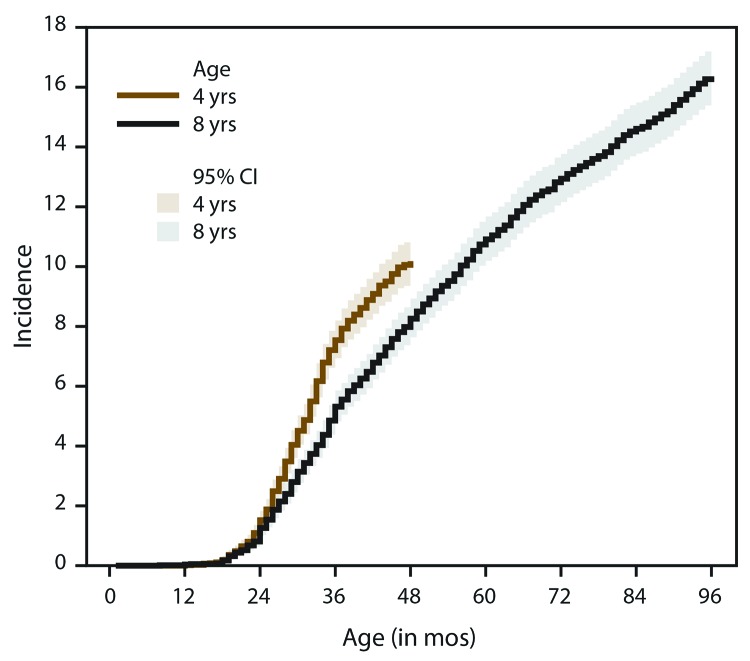
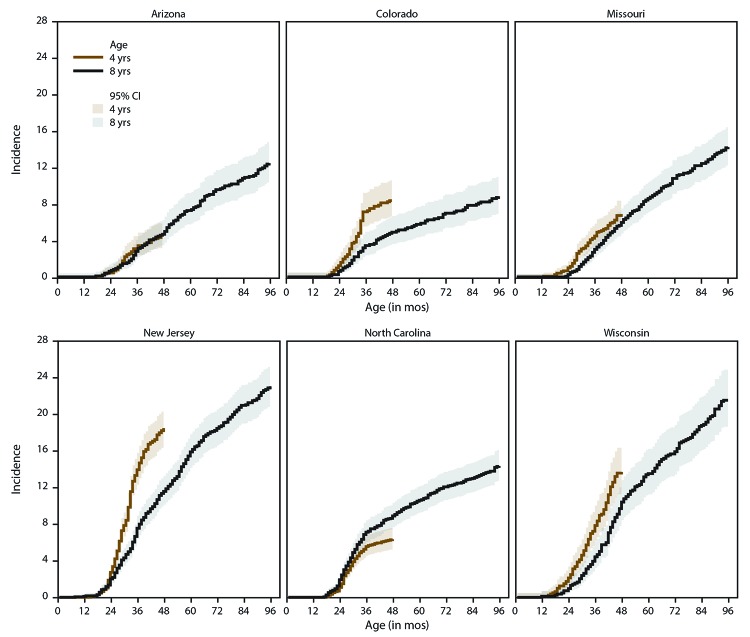
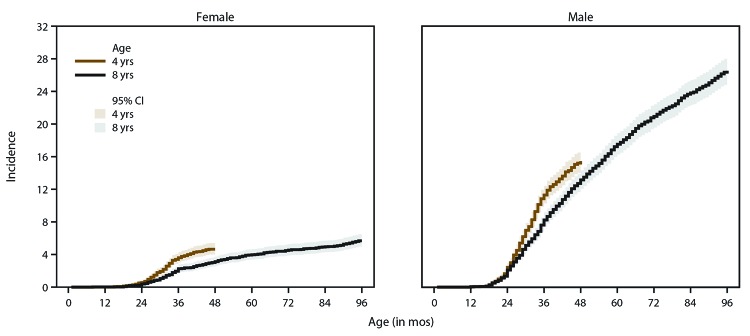
PROBLEM/CONDITION: Autism spectrum disorder (ASD). PERIOD COVERED: 2016. DESCRIPTION OF SYSTEM: The Early Autism and Developmental Disabilities Monitoring (Early ADDM) Network, a subset of the overall ADDM Network, is an active surveillance program that estimates ASD prevalence and monitors early identification of ASD among children aged 4 years. Children included in surveillance year 2016 were born in 2012 and had a parent or guardian who lived in the surveillance area in Arizona, Colorado, Missouri, New Jersey, North Carolina, or Wisconsin, at any time during 2016. Children were identified from records of community sources including general pediatric health clinics, special education programs, and early intervention programs. Data from comprehensive evaluations performed by community professionals were abstracted and reviewed by trained clinicians using a standardized ASD surveillance case definition with criteria from the Diagnostic and Statistical Manual of Mental Disorders, Fifth Edition (DSM-5). RESULTS: In 2016, the overall ASD prevalence was 15.6 per 1,000 (one in 64) children aged 4 years for Early ADDM Network sites. Prevalence varied from 8.8 per 1,000 in Missouri to 25.3 per 1,000 in New Jersey. At every site, prevalence was higher among boys than among girls, with an overall male-to-female prevalence ratio of 3.5 (95% confidence interval [CI] = 3.1-4.1). Prevalence of ASD between non-Hispanic white (white) and non-Hispanic black (black) children was similar at each site (overall prevalence ratio: 0.9; 95% CI = 0.8-1.1). The prevalence of ASD using DSM-5 criteria was lower than the prevalence using Diagnostic and Statistical Manual of Mental Disorders, Fourth Edition, Text Revision (DSM-IV-TR) criteria at one of four sites that used criteria from both editions. Among sites where ≥60% of children aged 4 years had information about intellectual disability (intelligence quotient ≤70 or examiner's statement of intellectual disability documented in an evaluation), 53% of children with ASD had co-occurring intellectual disability. Of all children aged 4 years with ASD, 84% had a first evaluation at age ≤36 months and 71% of children who met the surveillance case definition had a previous ASD diagnosis from a community provider. Median age at first evaluation and diagnosis for this age group was 26 months and 33 months, respectively. Cumulative incidence of autism diagnoses received by age 48 months was higher for children aged 4 years than for those aged 8 years identified in Early ADDM Network surveillance areas in 2016. INTERPRETATION: In 2016, the overall prevalence of ASD in the Early ADDM Network using DSM-5 criteria (15.6 per 1,000 children aged 4 years) was higher than the 2014 estimate using DSM-5 criteria (14.1 per 1,000). Children born in 2012 had a higher cumulative incidence of ASD diagnoses by age 48 months compared with children born in 2008, which indicates more early identification of ASD in the younger group. The disparity in ASD prevalence has decreased between white and black children. Prevalence of co-occurring intellectual disability was higher than in 2014, suggesting children with intellectual disability continue to be identified at younger ages. More children received evaluations by age 36 months in 2016 than in 2014, which is consistent with Healthy People 2020 goals. Median age at earliest ASD diagnosis has not changed considerably since 2014. PUBLIC HEALTH ACTION: More children aged 4 years with ASD are being evaluated by age 36 months and diagnosed by age 48 months, but there is still room for improvement in early identification. Timely evaluation of children by community providers as soon as developmental concerns have been identified might result in earlier ASD diagnoses, earlier receipt of evidence-based interventions, and improved developmental outcomes.
Overview
The claims and statistics of this paper haven’t been checked yet.
Run the check — free, no account needed. It reads the open-access text and checks the sources it cites.
Integrity signals
Registry
Cites
Statistics
Figures
Verification
Claims the paper makes
The claims and statistics of this paper haven’t been checked yet.
Run the check — free, no account needed. It reads the open-access text and checks the sources it cites.
Claims other papers make about this one
Each is checked against this paper’s own text: does it say what the citing paper says it does?
The source backs part of the claim, not all of it — or backs it for a different population, condition or comparison.
In the citing paper
“Surveillance among children aged 4 years in 2016 (8) indicated similar prevalence among children of different racial and ethnic groups, consistent with trends among children aged 8 years (9).”
From Early Identification of Autism Spectrum Disorder Among Children Aged 4 Years — Autism and Developmental Disabilities Monitoring Network, 11 Sites, United States, 2018 (2021) · cites this paper as [8]
Experimental — accuracy not yet measuredThe cited source says what the claim attributes to it.
In the citing paper
“The 2018 estimate for children aged 4 years was lower than the 23.0 per 1,000 ASD prevalence among children aged 8 years (11), a finding consistent with previous reports (8,13).”
In the citing paper
“Although prevalence has been lower among children aged 4 years than aged 8 years in each reporting year, comparing cumulative incidence of identification by age 48 months has consistently indicated higher rates of ASD identification in younger cohorts (i.e., children born more recently) (9–11).”
In the citing paper
“In addition, ASD identification measured by cumulative incidence of diagnosis by age 48 months was higher among children aged 4 years (born in 2012) compared with children aged 8 years (born in 2008), suggesting increased early identification of ASD among the younger cohort (8).”
In the citing paper
“The ASD prevalence of 17.0 per 1,000 children aged 4 years for 2018 was higher than for 2016, when prevalence was 15.6 per 1,000 (8).”
In the citing paper
“In 2016, prevalence was higher among Hispanic compared with White children aged 4 years higher at one site (New Jersey) and overall (8).”
In the citing paper
“The sex ratio is one example of how differences in identification of children without intellectual disability can affect patterns observed at older ages, with a higher ratio of boys to girls at age 8 years than at age 4 years, consistent with previous reports (8,9).”
In the citing paper
“Children with co-occurring intellectual disability are more likely to be identified earlier than children without intellectual disability, as indicated by an earlier median age at identification among this group (11) as well as the consistently higher proportion of children with intellectual disability at age 4 years (8,13) than at age 8 years (9,11,17).”
Self-check
Percentages, sums and reported differences re-computed from the paper’s own numbers.
The self-check needs the paper’s full text.
Citations
Cites
Diagnostic and Statistical Manual of Mental Disorders
American Psychiatric Association (2013) · doi:10.1176/appi.books.9780890425596 · Cited by 116,369
Baio, J., Wiggins, L., Christensen, D. L., Maenner, M. J., Daniels, J., Warren, Z., Kurzius-Spencer, M., Zahorodny, W., Robinson, C., Rosenberg, et al. (2018) · MMWR. Surveillance Summaries · doi:10.15585/mmwr.ss6706a1 · Cited by 6,078
Self-citationMaenner, M. J., Shaw, K. A., Baio, J., EdS1, Washington, A., Patrick, M., DiRienzo, M., Christensen, D. L., Wiggins, L. D., Pettygrove, S., et al. (2020) · MMWR. Surveillance Summaries · doi:10.15585/mmwr.ss6904a1 · Cited by 3,780 · cited 4×
“In contrast, children aged 8 years with ASD and intellectual disability were more likely to be evaluated and receive an ASD diagnosis at a younger age (8).”
BackgroundInfluentialSelf-citationWhat Is the Male-to-Female Ratio in Autism Spectrum Disorder? A Systematic Review and Meta-Analysis
Loomes, R., Hull, L., & Mandy, W. P. L. (2017) · Journal of the American Academy of Child & Adolescent Psychiatry · doi:10.1016/j.jaac.2017.03.013 · Cited by 2,804
Identification and Evaluation of Children With Autism Spectrum Disorders
Johnson, C. P., Myers, S. M., & and the Council on Children With Disabilities (2007) · Pediatrics · doi:10.1542/peds.2007-2361 · Cited by 2,011
Christensen, D. L., Baio, J., Braun, K. V. N., Bilder, D., Charles, J., Constantino, J. N., Daniels, J., Durkin, M. S., Fitzgerald, R. T., Kurzius-Spencer, M., et al. (2016) · MMWR. Surveillance Summaries · doi:10.15585/mmwr.ss6503a1 · Cited by 1,964
Self-citationRice, C. E. (2009) · PsycEXTRA Dataset · doi:10.1037/e562722010-001 · Cited by 762
Cited by
Sorted by citations
Maenner, M. J., Shaw, K. A., Baio, J., EdS1, Washington, A., Patrick, M., DiRienzo, M., Christensen, D. L., Wiggins, L. D., Pettygrove, S., et al. (2020) · MMWR. Surveillance Summaries · doi:10.15585/mmwr.ss6904a1 · Cited by 3,780
Self-citationMaenner, M. J., Warren, Z., Williams, A. R., Amoakohene, E., Bakian, A. V., Bilder, D. A., Durkin, M. S., Fitzgerald, R. T., Furnier, S. M., Hughes, M. M., et al. (2023) · MMWR. Surveillance Summaries · doi:10.15585/mmwr.ss7202a1 · Cited by 2,706
Self-citationShaw, K. A., Williams, S., Patrick, M. E., Valencia-Prado, M., Durkin, M. S., Howerton, E. M., Ladd-Acosta, C. M., Pas, E. T., Bakian, A. V., Bartholomew, P., et al. (2025) · MMWR. Surveillance Summaries · doi:10.15585/mmwr.ss7402a1 · Cited by 867
Self-citationSalari, N., Rasoulpoor, S., Rasoulpoor, S., Shohaimi, S., Jafarpour, S., Abdoli, N., Khaledi-Paveh, B., & Mohammadi, M. (2022) · Italian Journal of Pediatrics · doi:10.1186/s13052-022-01310-w · Cited by 571
Age at autism spectrum disorder diagnosis: A systematic review and meta-analysis from 2012 to 2019
Hof, M. V. ’., Tisseur, C., van Berckelear-Onnes, I., van Nieuwenhuyzen, A. D. Y., Daniels, A. M., Deen, M. L., Hoek, H. W., & Ester, W. A. (2020) · Autism · doi:10.1177/1362361320971107 · Cited by 592
Metadata
- Authors
- Shaw, K. A., Maenner, M. J., Baio, J., EdS1, Washington, A., Christensen, D. L., Wiggins, L. D., Pettygrove, S., Andrews, J. G., White, T., Rosenberg, C. R., Constantino, J. N., Fitzgerald, R. T., Zahorodny, W., Shenouda, J., Daniels, J. L., Salinas, A., Durkin, M. S., & Dietz, P. M.
- Affiliations
- University of North Carolina at Chapel Hill (US)
- Rutgers, The State University of New Jersey (US)
- Corresponding author
- Shaw, Kelly A.
- ORCID
- Venue
- MMWR. Surveillance Summaries
- Published
- 2020-03-27
- Volume
- 69
- Issue
- 3
- Pages
- 1-11
- ISSN
- 1545-8636 (ISSN-L)
- 1546-0738
- PMC
- PMC7119643
- OpenAlex
- W3013358449
- Cited by
- 286
- References
- 22
- Citations by year
- 2026: 17 · 2025: 36 · 2024: 30 · 2023: 50 · 2022: 65 · 2021: 67 · 2020: 19
- FWCI
- 26.99
- Type
- journal article
- Language
- en
- Open access
- diamond
- doi.org
- Locations
- MMWR Surveillance Summaries (publishedVersion)
- PubMed Central (publishedVersion, cc-by)
- PubMed (publishedVersion)
- UA Campus Repository (The University of Arizona) (acceptedVersion, public-domain)
- Carolina Digital Repository (University of North Carolina at Chapel Hill) (submittedVersion)
- UNC Libraries
- Funders
- National Institute of Environmental Health Sciences (P30ES010126)
- Topics
- Life Sciences › Neuroscience › Cognitive Neuroscience › Autism Spectrum Disorder Research
- Health Sciences › Medicine › Psychiatry and Mental health › Child Nutrition and Feeding Issues
- Social Sciences › Psychology › Clinical Psychology › Family and Disability Support Research
- Keywords
- autism spectrum disorder, autism prevalence, early detection, DSM-5 diagnostic criteria, DSM-IV-TR diagnostic criteria, sex differences in prevalence, racial and ethnic differences, early intervention programs, special education programs
- MeSH terms
- Autism Spectrum Disorder, Child, Preschool, Female, Humans, Male, Population Surveillance, United States, Prevalence, Diagnostic and Statistical Manual of Mental Disorders, Early Diagnosis
About these checks
Registry, retraction, Cites and statistics results are computed, not judged, with one exception: a printed reference that no index lists is read once by a model before it counts as a citation error. Claims are extracted by a model and kept only when their quote appears verbatim in the text; each cited source is then checked, with a model’s help, for whether it says what the claim relies on. Those verdicts can be wrong — read the claim’s quote and the cited source before relying on one.
Statistics and arithmetic are recomputed, not judged.
Confidence bands are shown only for fields calibrated on our annotated test set. None is calibrated yet, so no band is shown.
What counts as a claim ›How we measure confidence ›How we check this ›
Are you an author, or do you see a problem with this page? Request a review
