

Assisted Reproductive Technology Surveillance—United States, 2017
Open accessThe DOI matches its Crossref record; 59 of the 62 references it cites were found in a registry or an index.
Abstract
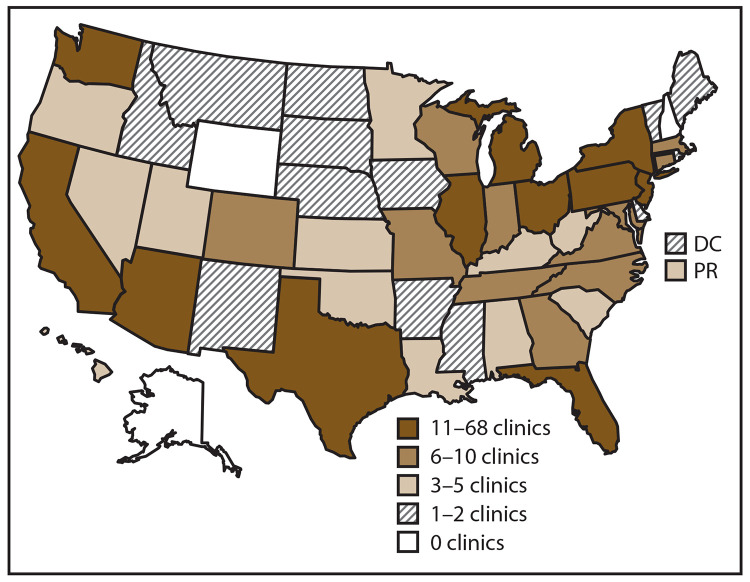
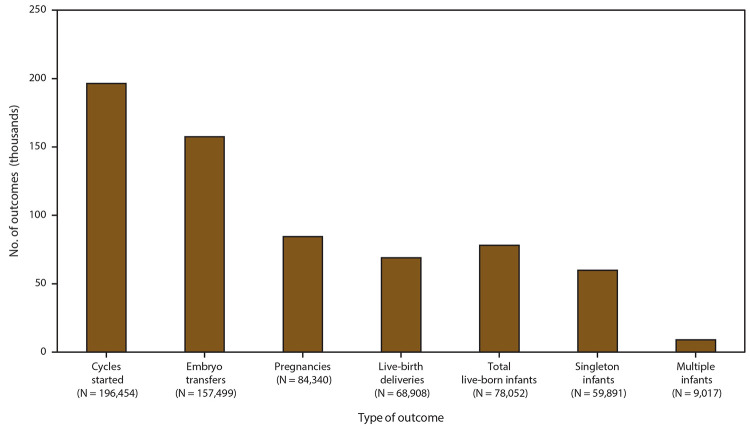
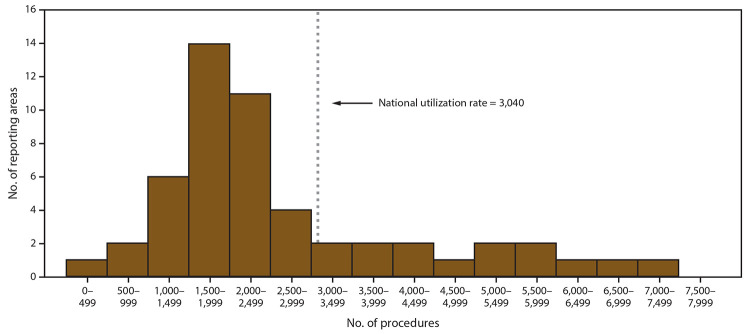
PROBLEM/CONDITION: Since the first U.S. infant conceived with assisted reproductive technology (ART) was born in 1981, both the use of ART and the number of fertility clinics providing ART services have increased steadily in the United States. ART includes fertility treatments in which eggs or embryos are handled in the laboratory (i.e., in vitro fertilization [IVF] and related procedures). Although the majority of infants conceived through ART are singletons, women who undergo ART procedures are more likely than women who conceive naturally to have multiple-birth infants because multiple embryos may be transferred. Multiple births can pose substantial risks for both mothers and infants, including obstetric complications, preterm birth (<37 weeks), and low birthweight (<2,500 g). This report provides state-specific information for the United States (including the District of Columbia and Puerto Rico) on ART procedures performed in 2017 and compares birth outcomes that occurred in 2017 (resulting from ART procedures performed in 2016 and 2017) with outcomes for all infants born in the United States in 2017. PERIOD COVERED: 2017. DESCRIPTION OF SYSTEM: In 1995, CDC began collecting data on ART procedures performed in fertility clinics in the United States as mandated by the Fertility Clinic Success Rate and Certification Act of 1992 (Public Law 102-493 [October 24, 1992]). Data are collected through the National ART Surveillance System (NASS), a web-based data collection system developed by CDC. This report includes data from the 50 states, the District of Columbia, and Puerto Rico. RESULTS: In 2017, a total of 196,454 ART procedures (range: 162 in Alaska to 24,179 in California) with at least one embryo transferred were performed in 448 U.S. fertility clinics and reported to CDC. These procedures resulted in 68,908 live-birth deliveries (range: 67 in Puerto Rico to 8,852 in California) and 78,052 infants born (range: 85 in Puerto Rico to 9,926 in California). Nationally, the number of ART procedures performed per 1 million women of reproductive age (15-44 years) was 3,040. ART use rates exceeded the national rate in 14 states (Connecticut, Delaware, District of Columbia, Hawaii, Illinois, Maryland, Massachusetts, New Hampshire, New Jersey, New York, Rhode Island, Utah, Vermont, and Virginia). ART use exceeded 1.5 times the national rate in seven states (Connecticut, the District of Columbia, Illinois, Maryland, Massachusetts, New Jersey, and New York). Nationally, among all ART transfer procedures, the average number of embryos transferred increased slightly with increasing age (1.3 among women aged <35 years, 1.4 among women aged 35-37 years, and 1.5 among women aged >37 years). This year, single-embryo transfer (SET) rates among all embryo-transfer procedures are presented instead of elective single-embryo transfer procedures previously reported. Nationally, SET rates were 67.3% (range: 38.9% in South Dakota to 90.4% in Delaware), 65.0% (range: 23.6% in Puerto Rico to 89.4% in Delaware), and 60.0% (range: 28.6% in Puerto Rico to 83.1% in Delaware) among women aged <35 years, aged 35-37 years, and aged >37 years, respectively. In 2017, ART contributed to 1.9% of all infants born in the United States (range: 0.4% in Puerto Rico to 5.0% in Massachusetts). Approximately 73.6% of ART-conceived infants were singleton infants. Overall, ART contributed to 14.7% of all multiple births, including 14.7% of all twin infants and 17.3% of all triplets and higher-order infants. ART-conceived twins accounted for approximately 96.5% (18,890 of 19,570) of all ART-conceived infants born in multiple deliveries. The percentage of multiple births was higher among infants conceived with ART (26.4%) than among all infants born in the total birth population (3.4%). Approximately 25.5% of ART-conceived infants were twins, and 0.9% were triplets and higher-order infants. Nationally, infants conceived with ART contributed to 4.5% of all low birthweight (<2,500 g) infants. Among ART-conceived infants, 20.2% had low birthweight, compared with 8.3% among all infants. ART-conceived infants contributed to 5.3% of all preterm (gestational age <37 weeks) infants. The percentage of preterm births was higher among infants conceived with ART (27.8%) than among all infants born in the total birth population (9.9%). The percentage of low birthweight among singletons was 8.1% among ART-conceived infants and 6.6% among all infants born. The percentage of preterm births among ART-conceived singleton infants was 14.0%, compared with 8.1% among all singleton infants. The percentages of small for gestational age infants was 7.6% among ART-conceived infants, compared with 9.9% among all infants. INTERPRETATION: Although singleton infants accounted for the majority of ART-conceived infants, multiple births from ART still contributed to a substantial proportion of all twins, triplets, and higher-order infants born in the United States. Variations in SET
Overview
The claims and statistics of this paper haven’t been checked yet.
Free: it reads the open-access text and checks the first 5 claims that cite a source we can check. Create a free account to check every claim.
Integrity signals
Registry
Cites
Statistics
Figures
Verification
Claims the paper makes
The claims and statistics of this paper haven’t been checked yet.
Free: it reads the open-access text and checks the first 5 claims that cite a source we can check. Create a free account to check every claim.
Self-check
Percentages, sums and reported differences re-computed from the paper’s own numbers.
The self-check needs the paper’s full text.
Citations
Cites
Pandey, S., Shetty, A., Hamilton, M., Bhattacharya, S., & Maheshwari, A. (2012) · Human Reproduction Update · doi:10.1093/humupd/dms018 · Cited by 786
The Contribution of Preterm Birth to Infant Mortality Rates in the United States
Callaghan, W. M., MacDorman, M. F., Rasmussen, S. A., Qin, C., & Lackritz, E. M. (2006) · Pediatrics · doi:10.1542/peds.2006-0860 · Cited by 586
(2019) · PubMed · Cited by 535
Three decades of twin births in the United States, 1980-2009.
Martin, J. A., Hamilton, B. E., & Osterman, M. J. K. (2012) · PubMed · Cited by 398
Workshop Group, T. E. C. (2000) · Human Reproduction · doi:10.1093/humrep/15.8.1856 · Cited by 379
United States Birth Weight Reference Corrected For Implausible Gestational Age Estimates
Talge, N. M., Mudd, L. M., Sikorskii, A., & Basso, O. (2014) · Pediatrics · doi:10.1542/peds.2013-3285 · Cited by 338
Trends in Multiple Births Conceived Using Assisted Reproductive Technology, United States, 1997–2000
Reynolds, M. A., Schieve, L. A., Martin, J. A., Jeng, G., & Macaluso, M. (2003) · Pediatrics · doi:10.1542/peds.111.s1.1159 · Cited by 309
Fertility Treatments and Multiple Births in the United States
Kulkarni, A. D., Jamieson, D. J., Jones, H. W., Kissin, D. M., Gallo, M. F., Macaluso, M., & Adashi, E. Y. (2013) · New England Journal of Medicine · doi:10.1056/nejmoa1301467 · Cited by 308
Self-citationCardiovascular Malformations Among Preterm Infants
Tanner, K., Sabrine, N., & Wren, C. (2005) · Pediatrics · doi:10.1542/peds.2005-0397 · Cited by 274
Guidance on the limits to the number of embryos to transfer: a committee opinion
Penzias, A., Bendikson, K., Butts, S., Coutifaris, C., Fossum, G., Falcone, T., Gitlin, S., Gracia, C., Hansen, K., La Barbera, A., et al. (2017) · Fertility and Sterility · doi:10.1016/j.fertnstert.2017.02.107 · Cited by 237
Research works printed but not linked: 1
- Behrman RE, Butler AS, eds. Institute of Medicine (US) Committee on Understanding Premature Birth and Assuring Healthy Outcomes. Premature birth: causes, consequences, and prevention. Washington, DC: National Academies Press; 2007. 20669423
Cited by
Items 101–184 of 184
Pitfalls in Imaging of Female Infertility
DeBenedectis, C. M., Ghosh, E., & Lazarus, E. (2015) · Seminars in Roentgenology · doi:10.1053/j.ro.2015.08.006 · Cited by 7
Zhang, Y., Hong, X., Gao, W., Lv, J., Yu, C., Wang, S., Huang, T., Sun, D., Liao, C., Pang, Z., et al. (2021) · Twin Research and Human Genetics · doi:10.1017/thg.2021.33 · Cited by 5
Self-citationDepciuch, J., Paja, W., Pancerz, K., Uzun, Ö., Bulut, H., Tarhan, N., & Güleken, Z. (2023) · Journal of Raman Spectroscopy · doi:10.1002/jrs.6510 · Cited by 5
Clinical application of noninvasive prenatal testing in twin pregnancies: a single-center experience
Luo, Y., Hu, B., Long, Y., Pan, Y., Jiang, L., Xiong, W., Xu, H., Xu, L., & Wang, D. (2023) · Expert Review of Molecular Diagnostics · doi:10.1080/14737159.2023.2193291 · Cited by 5
Yang, L., Tian, X., Li, H., Sun, J. L., & Zhou, W. (2023) · European journal of medical research · doi:10.1186/s40001-023-01591-9 · Cited by 5
“However, the impact of a male partner, who provides half of the genetic information for the offspring, on the outcomes of pregnancy, especially during ART treatment, is often overlooked [1, 2].”
BackgroundDong, J., Yan, S., Qian, C., & Wang, X. (2021) · JBRA · doi:10.5935/1518-0557.20210078 · Cited by 5
Bibancos, M., Cavagnoli, M., Bonetti, T. C., Semaco, E., Motta, E. L. A., & Serafini, P. C. (2015) · JBRA · doi:10.5935/1518-0557.20150045 · Cited by 5
Fineman, D. C., Baer, R. J., Chambers, C., Rajagopal, S. K., Maltepe, E., Rinaudo, P. F., Fineman, J. R., Jelliffe‐Pawlowski, L. L., & Steurer, M. A. (2019) · Pediatric Pulmonology · doi:10.1002/ppul.24457 · Cited by 5
Why does mode of conception affect early breastfeeding outcomes? A retrospective cohort study
Weng, S., Chien, L., Huang, Y.-T., Huang, Y., & Chang, M. (2022) · PLoS ONE · doi:10.1371/journal.pone.0265776 · Cited by 8
Christoforidis, C., & Anastasiadou, S. (2025) · Sci · doi:10.3390/sci7040149 · Cited by 4
Bibliometric analysis and visualization of literature on assisted reproduction technology
Meng, F., Deng, S., Wang, L., Zhou, Y., Zhao, M., Li, H., Liu, D., Gao, G., Liao, X., & Wang, J. (2022) · Frontiers in Medicine · doi:10.3389/fmed.2022.1063040 · Cited by 5
Liu, A. H.-C., Shah, T., Wu, H., Lieman, H., Singh, M., Pollack, S. E., & Jindal, S. (2024) · American Journal of Obstetrics and Gynecology · doi:10.1016/j.ajog.2024.07.007 · Cited by 4
Fouks, Y., Bortoletto, P. E., Chang, J. P., Penzias, A. S., Vaughan, D. A., & Sakkas, D. (2024) · Reproductive BioMedicine Online · doi:10.1016/j.rbmo.2024.104432 · Cited by 4
Adopción embrionaria: estado de la cuestión ético-jurídica en el Perú
Valdivia, C. S., Valderrama, G. C., Moscoso, A. A. B., Flor, A. T., & Garaycochea, M. B. (2023) · Persona y Bioética · doi:10.5294/pebi.2022.26.2.7 · Cited by 4
Badreldin, N., Peress, D. A., Yee, L. M., & Battarbee, A. N. (2020) · American Journal of Perinatology · doi:10.1055/s-0039-3402720 · Cited by 4
Dash, H. R., & Patel, A. (2025) · International Journal of Legal Medicine · doi:10.1007/s00414-025-03513-2 · Cited by 4
Naruse, S., Nakajima, M., Aoki, Y., Shigemi, D., Kamijo, K., Kaszynski, R. H., Ohbe, H., Sasabuchi, Y., Aso, S., Matsui, H., et al. (2025) · Critical Care · doi:10.1186/s13054-025-05597-z · Cited by 3
Fertility treatment and risk of non-gynecological cancer: a systematic review
Kim, S., Mo, J.-A., Kim, H.-J., & Choe, S.-O. (2026) · Archives of Gynecology and Obstetrics · doi:10.1007/s00404-025-08264-4 · Cited by 3
Price, H. R., Pang, N., Kim, H., Coughtrie, M. W. H., & Collier, A. C. (2022) · Journal of Assisted Reproduction and Genetics · doi:10.1007/s10815-021-02371-2 · Cited by 5
“1 3 decreased by a general move to single embryo transfer methodologies [11], ART pregnancies still account for close to 20% of multiple births in the USA, even though the prevalence in the total population is only 1–2% [12, 13].”
BackgroundTaniguchi, M., Akinaga, C., Suzuki, K., Tarui, K., Tamura, N., Shiko, Y., Kawasaki, Y., & Nakajima, Y. (2023) · Journal of Anesthesia · doi:10.1007/s00540-023-03268-3 · Cited by 3
Hu, Q., Zeng, Z., Liu, H., Liao, H., Xu, T., & Yu, H. (2024) · BMC Pregnancy and Childbirth · doi:10.1186/s12884-024-06599-5 · Cited by 3
Yes, Elective Single-Embryo Transfer Should Be the Standard of Care
Kissin, D. M., Boulet, S. L., & Adashi, E. Y. (2015) · Springer eBooks · doi:10.1007/978-3-319-17849-3_12 · Cited by 3
Self-citationOno, T., Miura, Y., Kaga, M., Sato, T., & Sanjo, M. (2021) · Pediatric Cardiology · doi:10.1007/s00246-021-02765-0 · Cited by 3
Bedrick, B. S., Nickel, K. B., Riley, J. K., Jain, T., & Jungheim, E. S. (2023) · JAMA Network Open · doi:10.1001/jamanetworkopen.2022.51739 · Cited by 4
Londero, A. P., Massarotti, C., Xholli, A., Fruscalzo, A., & Cagnacci, A. (2023) · Journal of Personalized Medicine · doi:10.3390/jpm13071144 · Cited by 3
“Our results confirmed disparities in ART and OST utilization with low prevalence among Black-only race and Hispanic origin [21,50].”
BackgroundResultFragouli, E., & Wells, D. (2014) · Wiley eBooks · doi:10.1002/9780470015902.a0025706 · Cited by 3
Wang, Y., Gao, L., Zhong, Q., Bao, L., Xu, J., & Zhang, L. (2025) · Frontiers in Nutrition · doi:10.3389/fnut.2025.1605601 · Cited by 2
“Despite advancements in assisted reproductive technologies, infertility remains a challenging condition with limited treatment success rates (5, 6).”
Maternal Morbidity and Medically Assisted Reproduction Treatment Types
Pelikh, A., Smith, K. R., Myrskylä, M., Debbink, M. P., & Goisis, A. (2024) · Obstetrics and Gynecology · doi:10.1097/aog.0000000000005808 · Cited by 3
“41,42 However, the lack of state-funded pro-vision and high treatment costs may encourage multiple embryo transfers in the United States, emphasizing the need for awareness campaigns on eSET ’ s benefits, which can offer comparable pregnancy success rates while reducing maternal morbidity risks.”
OPINIONS In vitro babies – medical and legal aspects: a European and North American perspective
Gadzinowski, J., Merritt, T. A., Jopek, A., Kochański, A., Lavery, A. P., & Merritt, T. (2014) · Biotechnologia · doi:10.5114/bta.2012.46565 · Cited by 2
de Melo, A. S., de Paula, C. T. V., Santos, T. L. D., Faria, V. A. C., Rufato, M. A. F., Barboza, R. P., & Barreto, J. (2020) · Fertility and Sterility · doi:10.1016/j.fertnstert.2020.08.1327 · Cited by 2
The ART of medicine: Counselling women with liver disease about assisted reproductive technology
Flemming, J. A., & Vélez, M. P. (2021) · Journal of Hepatology · doi:10.1016/j.jhep.2021.03.007 · Cited by 2
Are assisted reproductive technology twins different?
Stern, J. E., & Diop, H. (2021) · Fertility and Sterility · doi:10.1016/j.fertnstert.2021.05.102 · Cited by 2
Sharma, M., Fineman, D. C., Keller, R. L., Maltepe, E., Rinaudo, P. F., & Steurer, M. A. (2024) · Journal of Perinatology · doi:10.1038/s41372-024-01866-x · Cited by 1
Children born to subfertile couples, how are they doing? Evidence from research
Schottler, N., & Sutcliffe, A. G. (2024) · Archives of Disease in Childhood · doi:10.1136/archdischild-2023-326023 · Cited by 1
Anisa, L. N. (2024) · FIKRI Jurnal Kajian Agama Sosial dan Budaya · doi:10.25217/jf.v9i1.4701 · Cited by 1
Comparative outcomes of day 4 versus day 5 embryo transfers by fertilization method
Tao, L., Zheng, B., Li, G., Geng, Y., Yang, Z.-W., Dai, H., Ma, J., & Dai, F.-F. (2026) · Frontiers in Endocrinology · doi:10.3389/fendo.2026.1740765 · Cited by 1
“The most effective measure to reduce multiple pregnancies is to reduce the number of embryos transferred (35, 36).”
Du, R., Tian, Y., Shi, A.-J., Gu, H., Li, Y., & Wang, M. (2023) · Human Fertility · doi:10.1080/14647273.2023.2213448 · Cited by 1
“With the development and more common usage of ART, the incidence of twin pregnancy is increasing (Sunderam et al., 2020).”
BackgroundSafarova, A. F. (2023) · Reproductive health of woman · doi:10.30841/2708-8731.7.2023.292603 · Cited by 3
Lu, R., Rodgers‐Melnick, S. N., Flyckt, R. L., Kim, S. T., Srinivasan, R., Dusek, J. A., & Kaiser, C. M. (2025) · Global Advances in Integrative Medicine and Health · doi:10.1177/27536130251349116 · Cited by 2
Manouchehri, E., Jalalmarvi, F., Ghavami, V., Mirfeizi, Z., Khadem, N., & Sahebari, M. (2025) · International Journal of Rheumatic Diseases · doi:10.1111/1756-185x.70374 · Cited by 1
“In light of these challenges, assisted reproductive technologies (ART), encompassing a variety of techniques such as in vitro fertilization (IVF), have become a critical option for couples facing infertility [16–18].”
Xiao, Z., Wang, F., Yang, Y., Xiao, T., Chen, J., Li, M., Liao, H., Chu, C., Fan, X., & Zhang, J. V. (2025) · Frontiers in Cell and Developmental Biology · doi:10.3389/fcell.2025.1725350 · Cited by 1
“Beyond the endometrium itself, our study reveals that the LeH regimen favorably modulates the uterine cavity (Sang et al., 2020; Zhang et al., 2017) and systemic environments.”
Mohammed, A. J. (2021) · Indian Journal of Forensic Medicine & Toxicology · doi:10.37506/ijfmt.v15i1.13507 · Cited by 1
Multiple Gestations and Assisted Reproductive Technology
Komorowski, A. S., & Jungheim, E. S. (2023) · Elsevier eBooks · doi:10.1016/b978-0-323-82823-9.00005-2 · Cited by 1
Xia, S., You, K., Lin, M., Huang, L., He, Z., Huang, X., & Luo, Y. (2023) · BMC Pregnancy and Childbirth · doi:10.1186/s12884-023-06064-9 · Cited by 1
“With the advent of assisted reproductive technology (ART), the incidence of multiple pregnancies has increased, and triplet pregnancies now account for approximately 0.9% of all pregnancies [1, 2].”
BackgroundInfluentialPahlevanynejad, S., Danaee, N., & Safdari, R. (2023) · Journal of Biomedical Physics and Engineering · doi:10.31661/jbpe.v0i0.2105-1345 · Cited by 1
Dionysopoulou, A., Stewen, K., Degirmenci, Y., Schiestl, L. J., Hofmann, K., Hasenburg, A., & Schwab, R. M. (2025) · Journal of Clinical Medicine · doi:10.3390/jcm14134476 · Cited by 1
“This phenomenon may be attributed to the fact that the incidence of multiple pregnancies is disproportionately increasing, driven by factors such as advancing maternal age and the widespread utilization of assisted reproductive techniques (ART) [30].”
5 Infertility and assisted reproduction
Maclean, A. (2004) · Routledge eBooks · doi:10.4324/9781843148913-19 · Cited by 1
Is Endometriosis a Surgical Disease?
Yong, P. J. (2014) · Surgery Current Research · doi:10.4172/2161-1076.1000164
Dhanvij, M., & Dalvi, S. A. (2020) · International Journal of Clinical Obstetrics and Gynaecology · doi:10.33545/gynae.2020.v4.i5b.682
Hryhurko, D. O. (2021) · Здобутки клінічної і експериментальної медицини · doi:10.11603/1811-2471.2021.v.i1.11733
Şahin, G., Acet, F., Göker, E. N. T., & Tavmergen, E. (2021) · Aegean Journal of Obstetrics and Gynecology · doi:10.46328/aejog.v3i3.108
Nie, Y., Qiao, X., Li, S., Pan, Z., Zhang, J., & Xu, L. (2022) · Journal of International Medical Research · doi:10.1177/03000605221075506
“Herein, a case of dichorionic quadruplet pregnancy, comprising monozygotic triplets and a singleton, after intracytoplasmic sperm injection and transfer of two fresh embryos without assisted hatching, is presented, together with a specific review of possible risk factors for the occurrence of monozygotic high-order pr…”
BackgroundInfluentialLi, Y. (2022) · MOspace Institutional Repository (University of Missouri) · doi:10.32469/10355/93973
Gong, B., Huang, X., Luo, Z., Wang, W.-R., & Ding, L. (2023) · Research Square · doi:10.21203/rs.3.rs-2859380/v1
Schwarze, J.-E., Crosby, J. A., Musri, C., & Zegers-Hochschild, F. (2012) · JBRA · doi:10.5935/1518-0557.2012.16.6.04
Bedrick, B. S., Nickel, K. B., Riley, J. K., Jain, T., & Jungheim, E. S. (2023) · Obstetrical & Gynecological Survey · doi:10.1097/01.ogx.0000947124.53578.bc
Grover, S. (2023) · Springer eBooks · doi:10.1007/978-981-19-6145-8_21
In vitro fertilization/intracytoplasmic sperm injection
Mathes, M. A., Papatheodorou, A., Oraiopoulou, C., Bardhi, E., Schon, S. B., & Drakopoulos, P. (2024) · Elsevier eBooks · doi:10.1016/b978-0-323-93047-5.00032-5
Noninvasive Evaluation of Mouse Embryo Development Using Time-lapse Optical Coherence Microscopy
Wang, F., Hao, S., Park, K., Ahmady, A., & Zhou, C. (2024) · Optics in the Life Sciences · doi:10.1364/oct.2024.cs5e.3
Võ, T. K. Q., Nguyễn, V. L., & Nguyễn, T. H. (2024) · Tạp chí Y Dược học Cần Thơ · doi:10.58490/ctump.2024i79.2857
Autism Spectrum Disorder and In Vitro Fertilization
Alexiou, A. T., Kalaniotis, K., Stavridou, A., & Kalianioti, I. (2025) · IGI Global eBooks · doi:10.4018/979-8-3693-8176-2.ch003
Influence of assisted hatching on pregnancy outcomes in women with poor ovarian response: An RCT
Firouzabadi, R. D., Homayoon, N., Arabian, S., Dehghanpour, F., Mangoli, E., Barzegar, H., & Garizi, S. Z. (2025) · International Journal of Reproductive BioMedicine (IJRM) · doi:10.18502/ijrm.v23i6.19398
“Since the first infant conceived through assisted reproductive technology was born in the United States in 1981, the use of advanced methods to address infertility has increased substantially (2).”
Wu, M., Wang, S.-C., Su, P., Tsai, L., Chen, P., Li, C.-J., Wu, H., & Chang, C. (2025) · Medicina · doi:10.3390/medicina61091571
“%) was the most commonly reported reason for ART [13].”
Chen, H., Shao, H., Xu, L., & Wang, X. (2025) · PLoS ONE · doi:10.1371/journal.pone.0329943
“It is estimated that over 8 million children have been born through ART, and this number continues to grow [1].”
Hood, R. B., Hipp, H. S., Nagy, Z. P., Spencer, J. B., Shapiro, D. B., & Gaskins, A. J. (2025) · Journal of Gynecology Obstetrics and Human Reproduction · doi:10.1016/j.jogoh.2025.103020
Sun, Y., Shen, Q., Xi, H., 随刘才, Fu, Y., & Zhao, J. (2024) · Figshare · doi:10.6084/m9.figshare.26170594
Rao, M., Tang, L., Wang, L., Chen, M., Yan, G., & Zhao, S. (2022) · Figshare · doi:10.6084/m9.figshare.19497886
Xia, S., You, K., Lin, M., 黄林环, He, Z., Huang, X., & Luo, Y. (2023) · Figshare · doi:10.6084/m9.figshare.24425603
Goit, R., Gupta, P., Nguyen, L., Patel, S., Rana, K. K., Jaiswal, S., Bekoju, P., Shrestha, R., & Nguyen, D. (2026) · Clinical Case Reports · doi:10.1002/ccr3.71911 · Cited by 1
“Higher-order multifetal pregnancies account for approximately 0.9% of pregnancies resulting from assisted reproductive technology (ART) [3].”
InfluentialEROĞLU, C., Eroğlu, Ö. O., & Çağlar, A. T. (2026) · Journal of Clinical Medicine · doi:10.3390/jcm15083129
“…use of assisted reproductive technologies (ART) have significantly increased the incidence of twin pregnancies in recent decades; this epidemiological shift has further highlighted the clinical importance of identifying high-risk twin pregnancies at the earliest possible gestational age [3,4].”
Prevention of Multifetal Pregnancy: The Role of Elective Single Embryo Transfer Policy
Fouks, Y., & Yogev, Y. (2026) · Springer eBooks · doi:10.1007/978-3-032-23479-7_17
Tao, L., Zheng, B., Dai, F.-F., Geng, Y., Li, G.-Z., Dai, H., Yang, Z.-W., Wang, S.-S., Ma, J., & Kong, L. (2026) · Frontiers in Endocrinology · doi:10.3389/fendo.2026.1776207
Patel, S., Sadek, S., Bart, Y., Stokes, S., & Figueroa, H. M. (2026) · American Journal of Perinatology · doi:10.1055/a-2909-9397
Wasian, G., Lestari, S. W., Agustinus, A., Margiana, R., Assakura, G. N., & Purwanto, M. G. (2026) · Journal of Advanced Pharmaceutical Technology amp Research · doi:10.4103/japtr.japtr_44_26
“[1] Success rates remain modest globally, around 24%–29%, [2,3] with challenges increasing in difficult cases such as immature oocytes and asthenozoospermia.”
He, F., Peng, E., Lin, J., Mao, Z., Lu, X., Xu, H., Guo, L., Zou, Y., Wang, J., Lü, S., et al. (2026) · Frontiers in Endocrinology · doi:10.3389/fendo.2026.1849095
Tsai, M.-C., Wang, P.-Y., Tsai, C., Fu, H.-S., Chien, L.-W., & Au, H. (2026) · Endocrine Practice · doi:10.1016/j.eprac.2026.08.023
Metadata
- Authors
- Sunderam, S., Kissin, D. M., Zhang, Y., Jewett, A., Boulet, S. L., Warner, L., Kroelinger, C. D., & Barfield, W. D.
- Affiliations
- Centers for Disease Control and Prevention (US)
- National Center for Chronic Disease Prevention and Health Promotion (US)
- Corresponding author
- Sunderam, Saswati
- ORCID
- Venue
- MMWR. Surveillance Summaries
- Published
- 2020-12-18
- Volume
- 69
- Issue
- 9
- Pages
- 1-20
- ISSN
- 1545-8636 (ISSN-L)
- 1546-0738
- PMC
- PMC7755269
- OpenAlex
- W3110803468
- Cited by
- 176
- References
- 62
- Citations by year
- 2026: 10 · 2025: 15 · 2024: 15 · 2023: 28 · 2022: 47 · 2021: 22 · 2020: 6
- FWCI
- 24.70
- Type
- journal article
- Language
- en
- Open access
- diamond
- doi.org
- Licence
- public-domain
- Locations
- MMWR Surveillance Summaries (publishedVersion, public-domain)
- Europe PMC (PubMed Central) (publishedVersion, cc-by)
- PubMed Central (publishedVersion, cc-by)
- PubMed (publishedVersion)
- Topics
- Health Sciences › Medicine › Pediatrics, Perinatology and Child Health › Assisted Reproductive Technology and Twin Pregnancy
- Health Sciences › Medicine › Reproductive Medicine › Reproductive Health and Technologies
- Health Sciences › Medicine › Public Health, Environmental and Occupational Health › Reproductive Health and Contraception
- Keywords
- assisted reproduction, in vitro fertilization, fertility clinics, live birth rate, multiple births, preterm birth, low birth weight, birth outcomes, state comparison
- MeSH terms
- Adolescent, Adult, Female, Humans, Infant, Low Birth Weight, Infant, Newborn, Infant, Premature, Population Surveillance, Pregnancy, Pregnancy Outcome, Pregnancy, Multiple, United States, Reproductive Techniques, Assisted, Premature Birth, Young Adult
About these checks
Registry, retraction, Cites and statistics results are computed, not judged, with one exception: a printed reference that no index lists is read once by a model before it counts as a citation error. Claims are extracted by a model and kept only when their quote appears verbatim in the text; each cited source is then checked, with a model’s help, for whether it says what the claim relies on. Those verdicts can be wrong — read the claim’s quote and the cited source before relying on one.
Statistics and arithmetic are recomputed, not judged.
Confidence bands are shown only for fields calibrated on our annotated test set. None is calibrated yet, so no band is shown.
What counts as a claim ›How we measure confidence ›How we check this ›
Are you an author, or do you see a problem with this page? Request a review
Data sources
Bibliographic data: Semantic Scholar, OpenAlex, Crossref.
Contains information from the Semantic Scholar Academic Graph Datasets, made available under the ODC Attribution License (ODC-BY 1.0).
Semantic Scholar’s data is described in: Kinney, R., et al. (2023). The Semantic Scholar Open Data Platform. arXiv:2301.10140.
