

Assisted Reproductive Technology Surveillance—United States, 2017
Open accessThe DOI matches its Crossref record; 59 of the 62 references it cites were found in a registry or an index.
Abstract
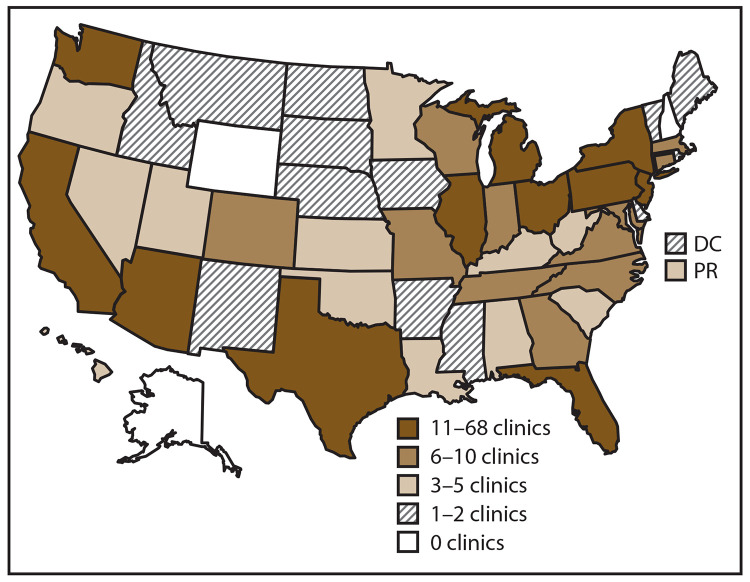
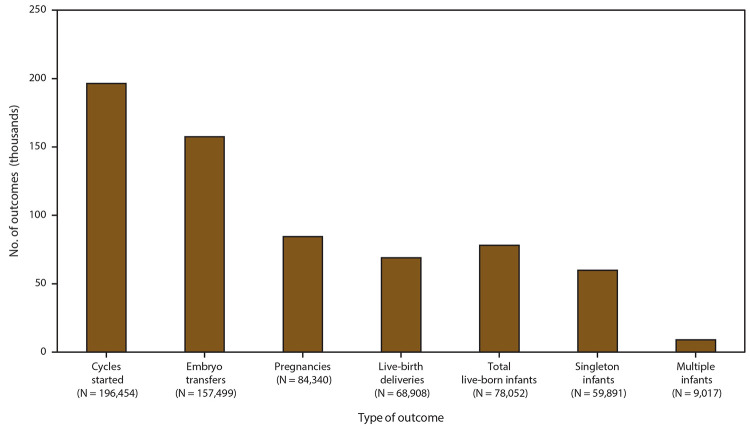
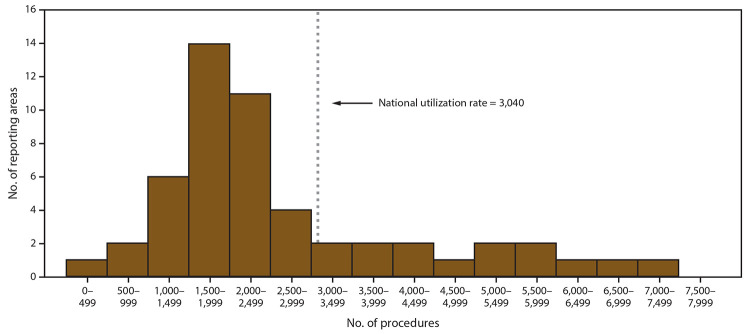
PROBLEM/CONDITION: Since the first U.S. infant conceived with assisted reproductive technology (ART) was born in 1981, both the use of ART and the number of fertility clinics providing ART services have increased steadily in the United States. ART includes fertility treatments in which eggs or embryos are handled in the laboratory (i.e., in vitro fertilization [IVF] and related procedures). Although the majority of infants conceived through ART are singletons, women who undergo ART procedures are more likely than women who conceive naturally to have multiple-birth infants because multiple embryos may be transferred. Multiple births can pose substantial risks for both mothers and infants, including obstetric complications, preterm birth (<37 weeks), and low birthweight (<2,500 g). This report provides state-specific information for the United States (including the District of Columbia and Puerto Rico) on ART procedures performed in 2017 and compares birth outcomes that occurred in 2017 (resulting from ART procedures performed in 2016 and 2017) with outcomes for all infants born in the United States in 2017. PERIOD COVERED: 2017. DESCRIPTION OF SYSTEM: In 1995, CDC began collecting data on ART procedures performed in fertility clinics in the United States as mandated by the Fertility Clinic Success Rate and Certification Act of 1992 (Public Law 102-493 [October 24, 1992]). Data are collected through the National ART Surveillance System (NASS), a web-based data collection system developed by CDC. This report includes data from the 50 states, the District of Columbia, and Puerto Rico. RESULTS: In 2017, a total of 196,454 ART procedures (range: 162 in Alaska to 24,179 in California) with at least one embryo transferred were performed in 448 U.S. fertility clinics and reported to CDC. These procedures resulted in 68,908 live-birth deliveries (range: 67 in Puerto Rico to 8,852 in California) and 78,052 infants born (range: 85 in Puerto Rico to 9,926 in California). Nationally, the number of ART procedures performed per 1 million women of reproductive age (15-44 years) was 3,040. ART use rates exceeded the national rate in 14 states (Connecticut, Delaware, District of Columbia, Hawaii, Illinois, Maryland, Massachusetts, New Hampshire, New Jersey, New York, Rhode Island, Utah, Vermont, and Virginia). ART use exceeded 1.5 times the national rate in seven states (Connecticut, the District of Columbia, Illinois, Maryland, Massachusetts, New Jersey, and New York). Nationally, among all ART transfer procedures, the average number of embryos transferred increased slightly with increasing age (1.3 among women aged <35 years, 1.4 among women aged 35-37 years, and 1.5 among women aged >37 years). This year, single-embryo transfer (SET) rates among all embryo-transfer procedures are presented instead of elective single-embryo transfer procedures previously reported. Nationally, SET rates were 67.3% (range: 38.9% in South Dakota to 90.4% in Delaware), 65.0% (range: 23.6% in Puerto Rico to 89.4% in Delaware), and 60.0% (range: 28.6% in Puerto Rico to 83.1% in Delaware) among women aged <35 years, aged 35-37 years, and aged >37 years, respectively. In 2017, ART contributed to 1.9% of all infants born in the United States (range: 0.4% in Puerto Rico to 5.0% in Massachusetts). Approximately 73.6% of ART-conceived infants were singleton infants. Overall, ART contributed to 14.7% of all multiple births, including 14.7% of all twin infants and 17.3% of all triplets and higher-order infants. ART-conceived twins accounted for approximately 96.5% (18,890 of 19,570) of all ART-conceived infants born in multiple deliveries. The percentage of multiple births was higher among infants conceived with ART (26.4%) than among all infants born in the total birth population (3.4%). Approximately 25.5% of ART-conceived infants were twins, and 0.9% were triplets and higher-order infants. Nationally, infants conceived with ART contributed to 4.5% of all low birthweight (<2,500 g) infants. Among ART-conceived infants, 20.2% had low birthweight, compared with 8.3% among all infants. ART-conceived infants contributed to 5.3% of all preterm (gestational age <37 weeks) infants. The percentage of preterm births was higher among infants conceived with ART (27.8%) than among all infants born in the total birth population (9.9%). The percentage of low birthweight among singletons was 8.1% among ART-conceived infants and 6.6% among all infants born. The percentage of preterm births among ART-conceived singleton infants was 14.0%, compared with 8.1% among all singleton infants. The percentages of small for gestational age infants was 7.6% among ART-conceived infants, compared with 9.9% among all infants. INTERPRETATION: Although singleton infants accounted for the majority of ART-conceived infants, multiple births from ART still contributed to a substantial proportion of all twins, triplets, and higher-order infants born in the United States. Variations in SET
Overview
The claims and statistics of this paper haven’t been checked yet.
Free: it reads the open-access text and checks the first 5 claims that cite a source we can check. Create a free account to check every claim.
Integrity signals
Registry
Cites
Statistics
Figures
Verification
Claims the paper makes
The claims and statistics of this paper haven’t been checked yet.
Free: it reads the open-access text and checks the first 5 claims that cite a source we can check. Create a free account to check every claim.
Self-check
Percentages, sums and reported differences re-computed from the paper’s own numbers.
The self-check needs the paper’s full text.
Citations
Cites
Pandey, S., Shetty, A., Hamilton, M., Bhattacharya, S., & Maheshwari, A. (2012) · Human Reproduction Update · doi:10.1093/humupd/dms018 · Cited by 786
The Contribution of Preterm Birth to Infant Mortality Rates in the United States
Callaghan, W. M., MacDorman, M. F., Rasmussen, S. A., Qin, C., & Lackritz, E. M. (2006) · Pediatrics · doi:10.1542/peds.2006-0860 · Cited by 586
(2019) · PubMed · Cited by 535
Three decades of twin births in the United States, 1980-2009.
Martin, J. A., Hamilton, B. E., & Osterman, M. J. K. (2012) · PubMed · Cited by 398
Workshop Group, T. E. C. (2000) · Human Reproduction · doi:10.1093/humrep/15.8.1856 · Cited by 379
United States Birth Weight Reference Corrected For Implausible Gestational Age Estimates
Talge, N. M., Mudd, L. M., Sikorskii, A., & Basso, O. (2014) · Pediatrics · doi:10.1542/peds.2013-3285 · Cited by 338
Trends in Multiple Births Conceived Using Assisted Reproductive Technology, United States, 1997–2000
Reynolds, M. A., Schieve, L. A., Martin, J. A., Jeng, G., & Macaluso, M. (2003) · Pediatrics · doi:10.1542/peds.111.s1.1159 · Cited by 309
Fertility Treatments and Multiple Births in the United States
Kulkarni, A. D., Jamieson, D. J., Jones, H. W., Kissin, D. M., Gallo, M. F., Macaluso, M., & Adashi, E. Y. (2013) · New England Journal of Medicine · doi:10.1056/nejmoa1301467 · Cited by 308
Self-citationCardiovascular Malformations Among Preterm Infants
Tanner, K., Sabrine, N., & Wren, C. (2005) · Pediatrics · doi:10.1542/peds.2005-0397 · Cited by 274
Guidance on the limits to the number of embryos to transfer: a committee opinion
Penzias, A., Bendikson, K., Butts, S., Coutifaris, C., Fossum, G., Falcone, T., Gitlin, S., Gracia, C., Hansen, K., La Barbera, A., et al. (2017) · Fertility and Sterility · doi:10.1016/j.fertnstert.2017.02.107 · Cited by 237
Research works printed but not linked: 1
- Behrman RE, Butler AS, eds. Institute of Medicine (US) Committee on Understanding Premature Birth and Assuring Healthy Outcomes. Premature birth: causes, consequences, and prevention. Washington, DC: National Academies Press; 2007. 20669423
Cited by
In vitro fertilization with single euploid blastocyst transfer: a randomized controlled trial
Forman, E. J., Hong, K. H., Ferry, K. M., Tao, X., Taylor, D., Levy, B., Treff, N. R., & Scott, R. T. (2013) · Fertility and Sterility · doi:10.1016/j.fertnstert.2013.02.056 · Cited by 497
(2021) · Obstetrics & Gynecology · doi:10.1097/aog.0000000000004397 · Cited by 309
“Data from 2017 showed substantial variations in single embryo transfer rates among states and territories, reflecting variations in embryo-transfer practices among fertility clinics, which might in part account for higher multiple birth from ART observed in some states and territories (28).”
InfluentialAssisted Reproductive Technology Surveillance — United States, 2018
Sunderam, S., Kissin, D. M., Zhang, Y., Jewett, A., Boulet, S. L., Warner, L., Kroelinger, C. D., & Barfield, W. D. (2022) · MMWR. Surveillance Summaries · doi:10.15585/mmwr.ss7104a1 · Cited by 243
Self-citationClinical rationale for cryopreservation of entire embryo cohorts in lieu of fresh transfer
Shapiro, B. S., Daneshmand, S. T., Garner, F. C., Aguirre, M., & Hudson, C. (2014) · Fertility and Sterility · doi:10.1016/j.fertnstert.2014.04.018 · Cited by 218
Opdahl, S., Henningsen, A. A., Tiitinen, A., Bergh, C., Pinborg, A., Romundstad, P. R., Wennerholm, U. B., Gissler, M., Skjærven, R., & Romundstad, L. B. (2015) · Human Reproduction · doi:10.1093/humrep/dev090 · Cited by 213
El-Toukhy, T., Campo, R., Khalaf, Y., Tabanelli, C., Gianaroli, L., Gordts, S. S., Gordts, S., Mestdagh, G., Mardesic, T., Voboril, J., et al. (2016) · The Lancet · doi:10.1016/s0140-6736(16)00258-0 · Cited by 202
Hvidtjørn, D., Schieve, L., Schendel, D., Jacobsson, B., Sværke, C., & Thorsen, P. (2009) · Archives of Pediatrics & Adolescent Medicine · doi:10.1001/archpediatrics.2008.507 · Cited by 144
Oocyte aging underlies female reproductive aging: biological mechanisms and therapeutic strategies
Igarashi, H., Takahashi, T., & Nagase, S. (2015) · Reproductive Medicine and Biology · doi:10.1007/s12522-015-0209-5 · Cited by 116
Pereira, N., Reichman, D. E., Goldschlag, D. E., Lekovich, J. P., & Rosenwaks, Z. (2015) · Journal of Assisted Reproduction and Genetics · doi:10.1007/s10815-015-0434-1 · Cited by 118
Ovarian hyperstimulation syndrome: A review for emergency clinicians
Timmons, D. B., Montrief, T., Koyfman, A., & Long, B. (2019) · The American Journal of Emergency Medicine · doi:10.1016/j.ajem.2019.05.018 · Cited by 136
Assisted reproductive technologies and perinatal morbidity: interrogating the association
Barnhart, K. T. (2013) · Fertility and Sterility · doi:10.1016/j.fertnstert.2012.12.032 · Cited by 77
Risk of Cancer in Children Conceived by Assisted Reproductive Technology
Reigstad, M. M., Larsen, I. K., Myklebust, T. Å., Robsahm, T. E., Oldereid, N. B., Brinton, L. A., & Storeng, R. (2016) · PEDIATRICS · doi:10.1542/peds.2015-2061 · Cited by 64
Tan, Y., Gao, Y. M., Lin, G., Fu, M., Li, X., Yin, X., Du, J., Li, J., Li, W., Peng, H., et al. (2016) · Prenatal Diagnosis · doi:10.1002/pd.4837 · Cited by 59
Public views on polygenic screening of embryos
Meyer, M. N., Tan, T., Benjamin, D. J., Laibson, D., & Turley, P. (2023) · Science · doi:10.1126/science.ade1083 · Cited by 62
Stephen, E. H., Chandra, A., & King, R. B. (2015) · Fertility and Sterility · doi:10.1016/j.fertnstert.2015.10.007 · Cited by 61
Queering reproductive access: reproductive justice in assisted reproductive technologies
Tam, M. (2021) · Reproductive Health · doi:10.1186/s12978-021-01214-8 · Cited by 75
“In contrast to the Canadian context, fertility clinics in the US performing ART are required to report data to the Centers for Disease Control and Prevention through the Society for Assisted Reproductive Technology Clinic Outcome Reporting System [65].”
MethodPersonalized prediction of first-cycle in vitro fertilization success
Choi, B., Bosch, E., Lannon, B. M., Léveillé, M.-C., Wong, W. H., Leader, A., Pellicer, A., Penzias, A. S., & Yao, M. W. M. (2013) · Fertility and Sterility · doi:10.1016/j.fertnstert.2013.02.016 · Cited by 55
Ma, S., Peng, Y., Hu, L., Wang, X., Xiong, Y., Tang, Y., Tan, J., & Gong, F. (2022) · Reproductive Biology and Endocrinology · doi:10.1186/s12958-022-00899-1 · Cited by 49
“4%, and simultaneous steady decreases in preterm birth and low birth weight rates have also been observed [5, 6].”
BackgroundCardiometabolic health of children conceived by assisted reproductive technologies
Yeung, E. H., & Druschel, C. M. (2013) · Fertility and Sterility · doi:10.1016/j.fertnstert.2012.12.015 · Cited by 50
Leukocyte telomere length in children born following blastocyst-stage embryo transfer
Wang, C., Gu, Y., Zhou, J. Y., Zang, J., Ling, X., Li, H., Hu, L., Xu, B., Zhang, B., Qin, N., et al. (2022) · Nature Medicine · doi:10.1038/s41591-022-02108-3 · Cited by 49
Lee, J. C., Badell, M. L., & Kawwass, J. F. (2022) · Reproductive Biology and Endocrinology · doi:10.1186/s12958-021-00869-z · Cited by 41
“Inherent to the evaluation of safety in ART is the difficulty determining the contribution that underlying causes of infertility contribute to these outcomes versus potential risk from the ART procedures themselves.”
BackgroundInfluentialRacial/ethnic disparities in infertility treatment utilization in the US, 2011–2019
Dongarwar, D., Mercado-Evans, V., Adu-Gyamfi, S., Laracuente, M., & Salihu, H. M. (2022) · Systems Biology in Reproductive Medicine · doi:10.1080/19396368.2022.2038718 · Cited by 46
“The total number of ART performing fertility clinics in the US increased from 451 in 2011 to 498 in 2017 and paired with a greater volume of procedures per clinic, likely has contributed to increased utilization (Sunderam et al. 2014, 2020).”
BackgroundPerinatal outcome after fetal reduction from twin to singleton: to reduce or not to reduce?
Haas, J., Sasson, A. M., Barzilay, E., Tovi, S. M., Orvieto, R., Weisz, B., Lipitz, S., & Yinon, Y. (2014) · Fertility and Sterility · doi:10.1016/j.fertnstert.2014.10.027 · Cited by 42
Yang, A.-M., Xu, X., Han, Y., Wei, J., Hao, G. M., Cui, N., Zhao, Z.-J., Wang, W., & Huang, X. (2021) · Frontiers in Endocrinology · doi:10.3389/fendo.2021.683236 · Cited by 44
“Centers for Disease Control and Prevention (CDC) reported that PL rate among pregnancies conceived through ART was 29% in the United States between 1999-2002 (4), while, in 2016 and 2017, PL rates decreased to about 18% (26, 27).”
BackgroundBoeri, L., Fallara, G., Pozzi, E., Belladelli, F., Corsini, C., Raffo, M., Schifano, N., Capogrosso, P., d'Arma, A., Montorsi, F., et al. (2022) · Andrology · doi:10.1111/andr.13213 · Cited by 43
Styer, A. K., Luke, B., Vitek, W., Christianson, M. S., Baker, V. L., Christy, A. Y., & Polotsky, A. J. (2016) · Fertility and Sterility · doi:10.1016/j.fertnstert.2016.02.034 · Cited by 36
Pozzi, E., Boeri, L., Candela, L., Capogrosso, P., Cazzaniga, W., Fallara, G., Cignoli, D., Belladelli, F., Cornelius, J., Abbate, C., et al. (2021) · Andrology · doi:10.1111/andr.13071 · Cited by 34
Kaltsas, A., Dimitriadis, F., Zachariou, D., Zikopoulos, A., Symeonidis, E. N., Markou, E., Tien, D. M. B., Takenaka, A., Sofikitis, N., & Zachariou, A. (2023) · Medicina · doi:10.3390/medicina59101835 · Cited by 39
Sites, C. K., Bachilova, S., Gopal, D., Cabral, H., Coddington, C. C., & Stern, J. E. (2021) · American Journal of Obstetrics and Gynecology · doi:10.1016/j.ajog.2021.04.235 · Cited by 35
Bu, F.-L., Feng, X., Yang, X., Ren, J., & Cao, H. (2020) · BMC Women s Health · doi:10.1186/s12905-020-00973-z · Cited by 31
Raja, N. S., Russell, C. B., & Moravek, M. B. (2022) · Fertility and Sterility · doi:10.1016/j.fertnstert.2022.04.012 · Cited by 28
Cohen, B., Bernson, D., Sappenfield, W. M., Kirby, R. S., Kissin, D. M., Zhang, Y., Copeland, G. E., Zhang, Z. M., Macaluso, M., & Collaborative, S. M. A. R. T. (. (2014) · Paediatric and Perinatal Epidemiology · doi:10.1111/ppe.12110 · Cited by 30
Self-citationMeng, Q., Xu, Y., Zheng, A., Li, H., Ding, J., Xu, Y., Pu, Y., Wang, W., & Wu, H. (2022) · Fertility and Sterility · doi:10.1016/j.fertnstert.2022.02.015 · Cited by 29
Vasodilators for women undergoing fertility treatment
Gutarra-Vilchez, R. B., Urrútia, G., Glujovsky, D., Coscia, A., & Bonfill, X. (2014) · Cochrane Database of Systematic Reviews · doi:10.1002/14651858.cd010001.pub2 · Cited by 25
Mani, S. R., Ghosh, J., Rhon‐Calderón, E. A., Lan, Y., Ord, T. S., Kalliora, C., Chan, J., Schultz, B. M., Vaughan-Williams, E., Coutifaris, C., et al. (2022) · Human Molecular Genetics · doi:10.1093/hmg/ddac138 · Cited by 28
Galdini, A., Fesslová, V., Gaeta, G., Candiani, M., Pozzoni, M., Chiarello, C., & Cavoretto, P. I. (2021) · Journal of Clinical Medicine · doi:10.3390/jcm10225363 · Cited by 24
Microfluidic chip as a promising evaluation method in assisted reproduction: A systematic review
Wu, T., Wu, Y., Yan, J., Zhang, J., & Wang, S. (2023) · Bioengineering & Translational Medicine · doi:10.1002/btm2.10625 · Cited by 24
Parents of Children with Sickle Cell Disease Are Interested in Preimplantation Genetic Testing
Attia, M., Kripalani, S., Darbari, I., & Nickel, R. S. (2020) · The Journal of Pediatrics · doi:10.1016/j.jpeds.2020.04.027 · Cited by 21
Vasodilators for women undergoing fertility treatment
Gutarra-Vilchez, R. B., Bonfill, X., Glujovsky, D., Viteri-García, A. A., Runzer-Colmenares, F. M., & Martínez‐Zapata, M. J. (2018) · Cochrane Database of Systematic Reviews · doi:10.1002/14651858.cd010001.pub3 · Cited by 24
Twinning in ART: Single embryo transfer policy
Fouks, Y., & Yogev, Y. (2022) · Best Practice & Research Clinical Obstetrics & Gynaecology · doi:10.1016/j.bpobgyn.2022.03.010 · Cited by 19
Importance of real-time measurement of sperm head morphology in intracytoplasmic sperm injection
Itoi, F., Miyamoto, T., Himaki, T., Honnma, H., Sano, M., & Ueda, J. (2021) · Zygote · doi:10.1017/s0967199421000307 · Cited by 20
“Globally, the number of patients treated using ART is increasing every year (Calhaz-Jorge et al., 2017; Irahara et al., 2017; De Geyter et al., 2018; Sunderam et al., 2020).”
BackgroundLiu, T., Gao, R., Liu, Y., Zhao, K., Su, X., Wong, H. C., Li, L., Xie, B., Huang, Y., Qiu, C., et al. (2022) · Frontiers in Pediatrics · doi:10.3389/fped.2022.839882 · Cited by 19
“For certain IVF procedures, about 75% of them use ICSI technology (36).”
BackgroundYuan, G., Lv, B., Du, X., Zhang, H., Zhao, M., Liu, Y., & Hao, C. (2023) · PeerJ · doi:10.7717/peerj.14762 · Cited by 24
Tire, B., & Öztürk, S. (2023) · Journal of Ovarian Research · doi:10.1186/s13048-023-01211-4 · Cited by 19
“The National Centers for Disease Control and Prevention (CDC) report in 2017 revealed that 1.9% of all live births became as a result of ARTs in the United States [3].”
BackgroundInfluentialChiu, Y., Yland, J. J., Rinaudo, P. F., Hsu, J., McGrath, S., Hernández–Díaz, S., & Hernán, M. Á. (2022) · Fertility and Sterility · doi:10.1016/j.fertnstert.2022.02.003 · Cited by 22
Ma, W., Xiao, J., Song, Y., Ding, J., Tan, X., Song, K., & Zhang, M. (2017) · Journal of Huazhong University of Science and Technology [Medical Sciences] · doi:10.1007/s11596-017-1747-3 · Cited by 18
Frozen Embryo Transfer and Preeclampsia Risk
Severino, A. I., & Póvoa, A. M. (2021) · Journal of Gynecology Obstetrics and Human Reproduction · doi:10.1016/j.jogoh.2021.102167 · Cited by 22
Rao, M., Tang, L., Wang, L., Chen, M., Yan, G., & Zhao, S. (2022) · Reproductive Biology and Endocrinology · doi:10.1186/s12958-022-00933-2 · Cited by 17
“fertilization (IVF) and intracytoplasmic sperm injection (ICSI) cycles result in a live birth [2, 3].”
BackgroundJiang, Y., Wang, L., Wang, S., Shen, H., Wang, B., Zheng, J., Yang, J., Ma, B., & Zhang, X. (2023) · Journal of obstetrics and gynaecology research · doi:10.1111/jog.15797 · Cited by 21
Li, J., Liu, Y., Huang, H., & Li, J. (2024) · Frontiers in Cardiovascular Medicine · doi:10.3389/fcvm.2024.1287060 · Cited by 20
The past, present, and future of the semen analysis
Eisenberg, M. L. (2022) · Fertility and Sterility · doi:10.1016/j.fertnstert.2021.11.031 · Cited by 16
Stanford, J. B., Parnell, T. A., Kantor, K., Reeder, M. R., Najmabadi, S., Johnson, K., Musso, I., Hartman, H., Tham, E. H., Winter, I., et al. (2022) · Human Reproduction Open · doi:10.1093/hropen/hoac033 · Cited by 17
Cao, Y., Liang, C., Shen, L., Zhang, Z., Jiang, T., Li, D., Zou, W., Wang, J., Zong, K., Liang, D., et al. (2022) · Frontiers in Endocrinology · doi:10.3389/fendo.2022.906849 · Cited by 16
“In 2017, in vitro fertilization (IVF) accounted for 99% of all assisted reproductive technologies (ARTs) used in America (2); only 42% of cycles could achieve clinical pregnancies.”
MethodMalloy, M. H. (2015) · Journal of Perinatology · doi:10.1038/jp.2015.91 · Cited by 16
Lee, J. C., Desantis, C. E., Yartel, A. K., Kissin, D. M., & Kawwass, J. F. (2022) · American Journal of Obstetrics and Gynecology · doi:10.1016/j.ajog.2022.10.046 · Cited by 19
Self-citationGonzález-Foruria, I., García, S., Álvarez, M., Racca, A., Hernández, M., Polyzos, N. P., & Coroleu, B. (2023) · Fertility and Sterility · doi:10.1016/j.fertnstert.2023.04.038 · Cited by 18
Agarwal, A. K., Selvam, M. K. P., Baskaran, S., Finelli, R., Leisegang, K., Zenoaga-Barbăroşie, C., Pushparaj, P. N., Robert, K. A., Ambar, R. F., Iovine, C., et al. (2020) · Andrologia · doi:10.1111/and.13842 · Cited by 17
Fenwick, E. A. L., Eze, A. G., D’Hooghe, T. M., Pandey, S., Chaudhari, V., Ostawal, A., Luyten, J., & Harty, G. T. (2023) · Best Practice & Research Clinical Obstetrics & Gynaecology · doi:10.1016/j.bpobgyn.2023.102340 · Cited by 20
Placental abruption: assessing trends in risk factors over time
schur, E., Baumfeld, Y., Rotem, R., Weintraub, A. Y., & Pariente, G. (2022) · Archives of Gynecology and Obstetrics · doi:10.1007/s00404-022-06638-6 · Cited by 16
Du, M., Zhang, J., Ren, B., & Guan, Y. (2023) · Frontiers in Endocrinology · doi:10.3389/fendo.2023.1156620 · Cited by 14
Kulmann, M. I. R., Martello, C. L., Donatti, L. M., Bos‐Mikich, A., & Frantz, N. (2021) · Journal of Assisted Reproduction and Genetics · doi:10.1007/s10815-021-02235-9 · Cited by 14
“2% of all deliveries in Denmark and Austria, respectively, in 2016 [3, 4].”
BackgroundLi, X., Xie, Q., Luan, T., Su, Y., Zhang, J., Zhang, J., Zhao, C. L., & Ling, X. (2022) · Human Fertility · doi:10.1080/14647273.2022.2053593 · Cited by 18
“If the leading follicle was (cid:4) 18 mm and EMT (cid:4) 7 mm with E 2 (cid:4) 200 pg/ml and P4 1.5 ng/ml, regardless of the LH level, investigators used 10,000 IU of human chorionic gonadotropin (hCG, Lizhu, China) for ovulation triggering according to clinical routine.”
BackgroundInfluentialEmbryo donation: national trends and outcomes, 2004–2019
Lee, J. C., Desantis, C. E., Boulet, S. L., & Kawwass, J. F. (2022) · American Journal of Obstetrics and Gynecology · doi:10.1016/j.ajog.2022.10.045 · Cited by 13
Self-citationFrozen-thawed embryo transfers: time to adopt a more “natural” approach?
Pier, B. D., Havemann, L. M., Quaas, A. M., & Heitmann, R. J. (2021) · Journal of Assisted Reproduction and Genetics · doi:10.1007/s10815-021-02151-y · Cited by 13
Indicators of infertility and fertility care: a systematic scoping review
Nabhan, A. F., Salama, M., Elsayed, M., Nawara, M., Kamel, M., Abuelnaga, Y. G., Ghonim, M., Elshafeey, F., Abdelhadi, R., Gebril, S., et al. (2022) · Human Reproduction Open · doi:10.1093/hropen/hoac047 · Cited by 15
“multiple embryo transfers), provide accurate access to health information, provide information and data to local, national and international stakeholders, disseminate reports of interest to the public, and enhance visibility and awareness of fertility care issues (Davies et al., 2004; Rutstein and Shah, 2004; Malhotra…”
BackgroundMethodInfluentialMaternal and neonatal outcomes associated with infertility
Wang, E. T., Ramos, L., Vyas, N. M., Bhasin, G., Simmons, C. F., & Pisarska, M. D. (2018) · The Journal of Maternal-Fetal & Neonatal Medicine · doi:10.1080/14767058.2018.1449826 · Cited by 12
Wu, X., Gu, H., & Wang, J. (2023) · Frontiers in Pediatrics · doi:10.3389/fped.2023.1210569 · Cited by 13
“Based on the PECOS, the inclusion criteria were: (1) Population: women with twin pregnancies, (2) Exposure: diagnosis of HDP (3) Comparison: No HDP 4: Outcomes: Any maternal and neonatal pregnancy outcomes.”
BackgroundMethodAboulghar, M. M., El-Faissal, Y., Kamel, A., Mansour, R., Serour, G., Aboulghar, M. A., & Islam, Y. (2020) · BMC Pregnancy and Childbirth · doi:10.1186/s12884-020-03033-4 · Cited by 11
Money-Back Guarantees and Service Quality: The Marketing of In Vitro Fertilization Services
Yu, S., Ghosh, M., & Viswanathan, M. (2021) · Journal of Marketing Research · doi:10.1177/00222437211060733 · Cited by 11
“In 2017, about 1.9% of the babies born in the United States were the result of successful IVF treatments provided by 498 ART clinics (Sunderam et al. 2020).”
BackgroundInfluentialInfertility treatment associated with childhood asthma and atopy
Polinski, K. J., Stevens, D. R., Mendola, P., Lin, T.-C., Sundaram, R., Bell, E. M., & Yeung, E. H. (2022) · Human Reproduction · doi:10.1093/humrep/deac070 · Cited by 13
Hu, Y., Zhang, D., Zhang, Q., Yin, T., Jiang, T., He, S., Li, M., Yue, X., Luo, G., Tao, F., et al. (2023) · Biological Trace Element Research · doi:10.1007/s12011-023-03621-3 · Cited by 12
Conception by fertility treatment and cardiometabolic risk in middle childhood
Yeung, E. H., Mendola, P., Sundaram, R., Lin, T.-C., Broadney, M. M., Putnick, D. L., Robinson, S. L., Polinski, K. J., Wactawski‐Wende, J., Ghassabian, A., et al. (2022) · Fertility and Sterility · doi:10.1016/j.fertnstert.2022.04.030 · Cited by 13
Shi, W., Jiang, M., Kan, L., Zhang, T., Yu, Q., Wu, Z., Xue, S., Fei, X., & Jin, C. (2021) · Frontiers in Medicine · doi:10.3389/fmed.2021.785600 · Cited by 10
“Previous studies demonstrated that though the practice of transferring multiple embryos increased the pregnancy rate, whereas the multiple-gestation pregnancies or multiple births enhanced the risks of obstetric complications, PTB and low birth weight (30, 47).”
BackgroundResultLisonkova, S., Bone, J. N., Muraca, G. M., Razaz, N., Boutin, A., Brandt, J. S., Bedaiwy, M. A., Ananth, C. V., & Joseph, K. S. (2022) · Paediatric and Perinatal Epidemiology · doi:10.1111/ppe.12925 · Cited by 10
Wang, M., & Chai, J. (2022) · Frontiers in Pediatrics · doi:10.3389/fped.2022.962190 · Cited by 11
“Indeed, it is common for clinicians to transfer more than one embryo during ART to ensure higher pregnancy rates (6).”
BackgroundAge-related disparities in national maternal mortality trends: A population-based study
Huang, R. S., Spence, A. R., & Abenhaim, H. A. (2025) · PLoS ONE · doi:10.1371/journal.pone.0316578 · Cited by 9
Ma, Y., Bai, F., Gao, L., & Fan, Y. (2021) · Human Fertility · doi:10.1080/14647273.2021.1969043 · Cited by 9
Male factor infertility: Initial workup and diagnosis in primary care
Witherspoon, L., & Flannigan, R. K. (2021) · Canadian Family Physician · doi:10.46747/cfp.6704248 · Cited by 10
Peng, Y., Ma, S., Hu, L., Wang, X., Xiong, Y., Yao, M., Tan, J., & Gong, F. (2022) · Frontiers in Endocrinology · doi:10.3389/fendo.2022.920973 · Cited by 12
Wang, Y., Yi, Y., Guu, H.-F., Chen, Y., Kung, H.-F., Chang, J., Chen, L.-Y., Chuan, S.-T., & Chen, M.-J. (2024) · Frontiers in Endocrinology · doi:10.3389/fendo.2024.1461317 · Cited by 9
“Central to this success is the precise timing of oocyte pick-up before ovulation (1).”
BackgroundJi, W., Hou, B., Li, W., Guo, F., He, P., & Zheng, J. (2021) · BMC Pregnancy and Childbirth · doi:10.1186/s12884-020-03528-0 · Cited by 11
Racial and Ethnic Disparities in the Perinatal Health of Infants Conceived by ART
Lisonkova, S., Ukah, U. V., John, S., Yearwood, L., Muraca, G. M., Razaz, N., Sabr, Y., Yong, P. J., & Bedaiwy, M. A. (2022) · PEDIATRICS · doi:10.1542/peds.2021-055855 · Cited by 10
Adverse outcomes associated with twin pregnancies conceived via in vitro fertilization
Gulersen, M., Eliner, Y., Grunebaum, A. N., Lenchner, E., Bar-El, L., Chervenak, F. A., & Bornstein, E. (2022) · The Journal of Maternal-Fetal & Neonatal Medicine · doi:10.1080/14767058.2022.2122806 · Cited by 12
“Nevertheless, recent data from the United States have demonstrated that up to 25% of pregnancies conceived with IVF are twins and 1% are higher-order multiples [9].”
BackgroundChin, H. B., Kramer, M. R., Mertens, A. C., Spencer, J. B., & Howards, P. P. (2016) · The Journal of Rural Health · doi:10.1111/jrh.12172 · Cited by 9
Feasibility analysis of China's medical insurance coverage of assisted reproductive technology
Huang, R., Yu, J.-Y., He, W., & Liu, R.-H. (2024) · Scientific Reports · doi:10.1038/s41598-024-58640-4 · Cited by 10
“In the United States, the use rate of in IVF is 277% higher in states with complete insurance coverage than in states without coverage 30 .”
BackgroundResultInfluentialPantoja, M., & Fernandes, A. M. D. S. (2014) · International Journal of Gynecology & Obstetrics · doi:10.1016/j.ijgo.2014.07.022 · Cited by 8
A decision tree analysis applied to women aged 43–45: who should be referred for ovum donation?
Bercovich, O., Almog, B., Fouks, Y., Kalma, Y., Hasson, J., Azem, F., & Cohen, Y. (2021) · Reproductive BioMedicine Online · doi:10.1016/j.rbmo.2021.09.025 · Cited by 8
Ayadi, A. M. E., Baer, R. J., Gay, C., Lee, H. C., Obedin‐Maliver, J., Jelliffe‐Pawlowski, L. L., & Lyndon, A. (2022) · Maternal and Child Health Journal · doi:10.1007/s10995-021-03313-1 · Cited by 9
Ombelet, W., Blerkom, J. V., Nargund, G., Janssen, M., Jacobs, P., der Auwera, I. V., Dhont, N., Bosmans, E., Vertessen, V.-J., & Campo, R. (2022) · Reproductive BioMedicine Online · doi:10.1016/j.rbmo.2022.04.009 · Cited by 10
Tierney, K. (2022) · Journal of Assisted Reproduction and Genetics · doi:10.1007/s10815-022-02607-9 · Cited by 8
“The number of clinics in the USA varies by state [5].”
BackgroundGao, W., Tang, W., Li, C., Deng, Y., Chen, Y., Zhang, Y., Pan, X., Yang, C., Liu, Y., Xiong, F., et al. (2025) · Frontiers in Endocrinology · doi:10.3389/fendo.2025.1596178 · Cited by 7
Self-citationNon-invasive Prenatal Testing in Pregnancies Following Assisted Reproduction
Kamath, M. S., Kamath, V., & Chacko, M. P. (2022) · Current Genomics · doi:10.2174/1389202923666220518095758 · Cited by 9
Peipert, B. J., Mebane, S. A., Edmonds, M. E., Watch, L., & Jain, T. (2023) · Obstetrics and Gynecology Clinics of North America · doi:10.1016/j.ogc.2023.08.002 · Cited by 11
Pier, B. D., Roshong, A. J., Santoro, N. F., & Sammel, M. D. (2024) · Fertility and Sterility · doi:10.1016/j.fertnstert.2024.01.002 · Cited by 10
Sun, Y., Shen, Q., Xi, H., Sui, L., Fu, Y., & Zhao, J. (2024) · BMC Pregnancy and Childbirth · doi:10.1186/s12884-024-06597-7 · Cited by 8
Wang, C., Tang, F., Song, B., Li, G., Xing, Q., & Cao, Y. (2022) · Reproductive Biology and Endocrinology · doi:10.1186/s12958-022-00935-0 · Cited by 7
“Although the incidence rate of multifetal pregnancy differs among all reproductive centers worldwide, ART has contributed to a substantial proportion of all twins, triplets, and higher-order infants born [5].”
BackgroundInfluentialWu, Y., Lu, X., Fu, Y., Zhao, J., & Ma, L. (2022) · PeerJ · doi:10.7717/peerj.14424 · Cited by 7
Briana, D. D., & Malamitsi‐Puchner, A. (2020) · The Journal of Maternal-Fetal & Neonatal Medicine · doi:10.1080/14767058.2020.1730804 · Cited by 7
Congenital Anomalies in Multiple Pregnancy: A Literature Review
Shin, J. E., Ko, H. S., Bae, J. Y., Seong, W. J., Ahn, T. G., Han, Y. J., Cho, G. J., & Park, I. Y. (2024) · Obstetrical & Gynecological Survey · doi:10.1097/ogx.0000000000001251 · Cited by 6
Factors associated with large-for-gestational-age infants born after frozen embryo transfer cycles
Roshong, A. J., Desantis, C. E., Yartel, A. K., Heitmann, R. J., Kissin, D. M., & Pier, B. D. (2022) · F&S Reports · doi:10.1016/j.xfre.2022.09.002 · Cited by 8
“332 increasingly used in recent years, over the practice of fresh embryo transfer (1, 2).”
BackgroundSelf-citation
Metadata
- Authors
- Sunderam, S., Kissin, D. M., Zhang, Y., Jewett, A., Boulet, S. L., Warner, L., Kroelinger, C. D., & Barfield, W. D.
- Affiliations
- Centers for Disease Control and Prevention (US)
- National Center for Chronic Disease Prevention and Health Promotion (US)
- Corresponding author
- Sunderam, Saswati
- ORCID
- Venue
- MMWR. Surveillance Summaries
- Published
- 2020-12-18
- Volume
- 69
- Issue
- 9
- Pages
- 1-20
- ISSN
- 1545-8636 (ISSN-L)
- 1546-0738
- PMC
- PMC7755269
- OpenAlex
- W3110803468
- Cited by
- 176
- References
- 62
- Citations by year
- 2026: 10 · 2025: 15 · 2024: 15 · 2023: 28 · 2022: 47 · 2021: 22 · 2020: 6
- FWCI
- 24.70
- Type
- journal article
- Language
- en
- Open access
- diamond
- doi.org
- Licence
- public-domain
- Locations
- MMWR Surveillance Summaries (publishedVersion, public-domain)
- Europe PMC (PubMed Central) (publishedVersion, cc-by)
- PubMed Central (publishedVersion, cc-by)
- PubMed (publishedVersion)
- Topics
- Health Sciences › Medicine › Pediatrics, Perinatology and Child Health › Assisted Reproductive Technology and Twin Pregnancy
- Health Sciences › Medicine › Reproductive Medicine › Reproductive Health and Technologies
- Health Sciences › Medicine › Public Health, Environmental and Occupational Health › Reproductive Health and Contraception
- Keywords
- assisted reproduction, in vitro fertilization, fertility clinics, live birth rate, multiple births, preterm birth, low birth weight, birth outcomes, state comparison
- MeSH terms
- Adolescent, Adult, Female, Humans, Infant, Low Birth Weight, Infant, Newborn, Infant, Premature, Population Surveillance, Pregnancy, Pregnancy Outcome, Pregnancy, Multiple, United States, Reproductive Techniques, Assisted, Premature Birth, Young Adult
About these checks
Registry, retraction, Cites and statistics results are computed, not judged, with one exception: a printed reference that no index lists is read once by a model before it counts as a citation error. Claims are extracted by a model and kept only when their quote appears verbatim in the text; each cited source is then checked, with a model’s help, for whether it says what the claim relies on. Those verdicts can be wrong — read the claim’s quote and the cited source before relying on one.
Statistics and arithmetic are recomputed, not judged.
Confidence bands are shown only for fields calibrated on our annotated test set. None is calibrated yet, so no band is shown.
What counts as a claim ›How we measure confidence ›How we check this ›
Are you an author, or do you see a problem with this page? Request a review
Data sources
Bibliographic data: Semantic Scholar, OpenAlex, Crossref.
Contains information from the Semantic Scholar Academic Graph Datasets, made available under the ODC Attribution License (ODC-BY 1.0).
Semantic Scholar’s data is described in: Kinney, R., et al. (2023). The Semantic Scholar Open Data Platform. arXiv:2301.10140.
