

Detection of all four dengue serotypes in Aedes aegypti female mosquitoes collected in a rural area in Colombia
Open accessThe DOI matches its Crossref record; 35 of the 36 references it cites were found in a registry or an index.
Abstract
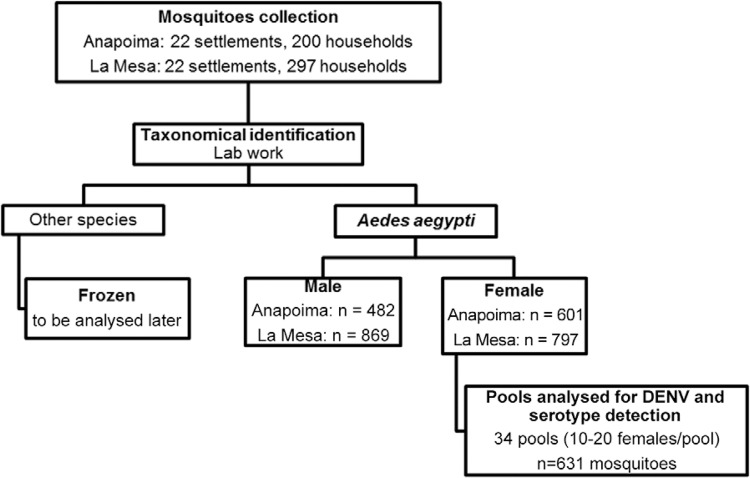
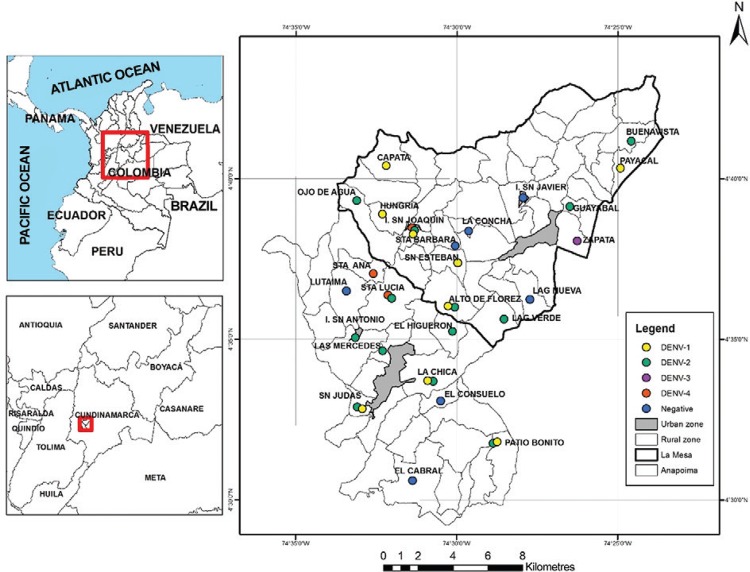
The Aedes aegypti vector for dengue virus (DENV) has been reported in urban and periurban areas. The information about DENV circulation in mosquitoes in Colombian rural areas is limited, so we aimed to evaluate the presence of DENV in Ae. aegypti females caught in rural locations of two Colombian municipalities, Anapoima and La Mesa. Mosquitoes from 497 rural households in 44 different rural settlements were collected. Pools of about 20 Ae. aegypti females were processed for DENV serotype detection. DENV in mosquitoes was detected in 74% of the analysed settlements with a pool positivity rate of 62%. The estimated individual mosquito infection rate was 4.12% and the minimum infection rate was 33.3/1,000 mosquitoes. All four serotypes were detected; the most frequent being DENV-2 (50%) and DENV-1 (35%). Two-three serotypes were detected simultaneously in separate pools. This is the first report on the co-occurrence of natural DENV infection of mosquitoes in Colombian rural areas. The findings are important for understanding dengue transmission and planning control strategies. A potential latent virus reservoir in rural areas could spill over to urban areas during population movements. Detecting DENV in wild-caught adult mosquitoes should be included in the development of dengue epidemic forecasting models.
Overview
The claims and statistics of this paper haven’t been checked yet.
Free: it reads the open-access text and checks the first 5 claims that cite a source we can check. Create a free account to check every claim.
Integrity signals
Registry
Cites
Statistics
Figures
Verification
Claims the paper makes
The claims and statistics of this paper haven’t been checked yet.
Free: it reads the open-access text and checks the first 5 claims that cite a source we can check. Create a free account to check every claim.
Claims other papers make about this one
Each is checked against this paper’s own text: does it say what the citing paper says it does?
The source backs part of the claim, not all of it — or backs it for a different population, condition or comparison.
In the citing paper
“In Latin-America, A. aegypti is expanding into peri-urban and rural areas [10–16].”
From A cross-sectional survey of Aedes aegypti immature abundance in urban and rural household containers in central Colombia (2017) · cites this paper as [16]
Experimental — accuracy not yet measuredThe source backs part of the claim, not all of it — or backs it for a different population, condition or comparison.
In the citing paper
“Dengue transmission and outbreaks, as well as DENV infected mosquitoes are not that uncommon in rural areas [9, 16, 59]”
From A cross-sectional survey of Aedes aegypti immature abundance in urban and rural household containers in central Colombia (2017) · cites this paper as [16]
Experimental — accuracy not yet measuredThe cited source says what the claim attributes to it.
In the citing paper
“Adult A. aegypti collected in 2012–2013 in the rural study area showed high DENV infection rates, with a pool positivity rate of 62% and estimated individual mosquito infection rate of about 4% [16]”
From A cross-sectional survey of Aedes aegypti immature abundance in urban and rural household containers in central Colombia (2017) · cites this paper as [16]
Self-check
Percentages, sums and reported differences re-computed from the paper’s own numbers.
The self-check needs the paper’s full text.
Citations
Cites
The global distribution and burden of dengue
Bhatt, S., Gething, P. W., Brady, O. J., Messina, J. P., Farlow, A. W., Moyes, C. L., Drake, J. M., Brownstein, J. S., Hoen, A. G., Sankoh, O., et al. (2013) · Nature · doi:10.1038/nature12060 · Cited by 10,037 · cited 1×
“…y control de enfermedades transmitidas por vectores - 360-2011) + Corresponding author: castellanosjaime@unbosque.edu.co Received 21 September 2015 Accepted 8 March 2016 Dengue is currently regarded as the most important mosquito-borne viral disease globally (Bhatt et al. 2013, Murray et al. 2013).”
Epidemiology of dengue: past, present and future prospects
Wilder-Smith, A., Murray, & Quam, M. (2013) · Clinical Epidemiology · doi:10.2147/clep.s34440 · Cited by 1,033 · cited 1×
“…y control de enfermedades transmitidas por vectores - 360-2011) + Corresponding author: castellanosjaime@unbosque.edu.co Received 21 September 2015 Accepted 8 March 2016 Dengue is currently regarded as the most important mosquito-borne viral disease globally (Bhatt et al. 2013, Murray et al. 2013).”
BackgroundRUEDA, L. M. (2004) · Zootaxa · doi:10.11646/zootaxa.589.1.1 · Cited by 558 · cited 2×
“Mosquitoes were identified on a frozen table using morphological identification keys (Rueda 2004) and those identified as Ae.”
MethodThe Epidemiology of Dengue in the Americas Over the Last Three Decades: A Worrisome Reality
San Martín, J. L., Brathwaite, O., Zambrano, B., Solórzano, J. O., Bouckenooghe, A., Dayan, G. H., & Guzmán, M. G. (2010) · The American Society of Tropical Medicine and Hygiene · doi:10.4269/ajtmh.2010.09-0346 · Cited by 546 · cited 1×
“Dengue transmission has mainly been documented from urban areas, where it is transmitted by Aedes aegypti (L.) (San Martin et al. 2010).”
BackgroundFocks, D. A., Brenner, R. J., Hayes, J., & Daniels, E. (2000) · The American journal of tropical medicine and hygiene · doi:10.4269/ajtmh.2000.62.11 · Cited by 399
Limited Dengue Virus Replication in Field-Collected Aedes aegypti Mosquitoes Infected with Wolbachia
Frentiu, F. D., Zakir, T., Walker, T., Popovici, J., Pyke, A. T., van den Hurk, A., McGraw, E. A., & O'Neill, S. L. (2014) · PLoS Neglected Tropical Diseases · doi:10.1371/journal.pntd.0002688 · Cited by 344 · cited 2×
“Samples were centrifuged and supernatants used to purify RNA using the QIAmp mini Viral RNA kit (Frentiu et al. 2014) and stored at -80ºC until further use.”
MethodBowman, L. R., Runge-Ranzinger, S., & McCall, P. J. (2014) · PLoS Neglected Tropical Diseases · doi:10.1371/journal.pntd.0002848 · Cited by 337 · cited 1×
“Traditional Stegomyia indices have not proved to be robust indications of dengue transmission (Bowman et al. 2014).”
BackgroundA New, Cost-Effective, Battery-Powered Aspirator for Adult Mosquito Collections
Vazquez-Prokopec, G. M., Galvin, W. A., Kelly, R., & Kitron, U. (2009) · Journal of Medical Entomology · doi:10.1603/033.046.0602 · Cited by 311 · cited 2×
“Resting mosquitoes were captured at two occasions: July 2012 and April 2013, in each household using a Prokopack aspirator (Vazquez-Prokopec et al. 2009).”
MethodScott, T. W., Morrison, A. C., Lorenz, L. H., Clark, G. G., Strickman, D., Kittayapong, P., Zhou, H., & Edman, J. D. (2000) · Journal of Medical Entomology · doi:10.1603/0022-2585-37.1.77 · Cited by 262 · cited 2×
“aegypti per house, respectively (Scott et al. 2000).”
BackgroundDevelopment of Real-Time Reverse Transcriptase PCR Assays To Detect and Serotype Dengue Viruses
Chien, L.-J., Liao, T.-L., Shu, P.-Y., Huang, J.-H., Gubler, D. J., & Chang, G.-J. J. (2006) · Journal of Clinical Microbiology · doi:10.1128/jcm.44.4.1295-1304.2006 · Cited by 227 · cited 1×
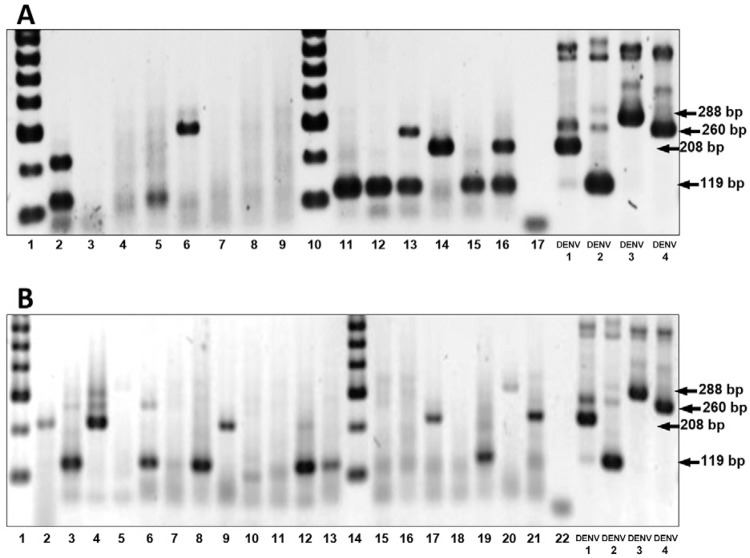
“RT-PCR - DENV were detected using 500 mg extracted RNA in a nested RT-PCR following the protocol described by Chien et al. (2006).”
MethodInsecticide resistance status of Aedes aegypti in 10 localities in Colombia
Ocampo, C. B., Salazar-Terreros, M. J., Mina, N. J., McAllister, J. C., & Brogdon, W. G. (2011) · Acta Tropica · doi:10.1016/j.actatropica.2011.01.007 · Cited by 164 · cited 2×
“aegypti in Colombia (Ocampo et al. 2011), little is known about their presence in rural areas.”
BackgroundEpidemiological Trends of Dengue Disease in Colombia (2000-2011): A Systematic Review
Villar, L. A., Rojas, D. P., Besada-Lombana, S., & Sarti, E. (2015) · PLoS neglected tropical diseases · doi:10.1371/journal.pntd.0003499 · Cited by 141
Quintero, J., Brochero, H., Manrique-Saide, P., Barrera-Pérez, M., Basso, C., Romero, S., Caprara, A., De Lima Cunha, J. C., Beltrán - Ayala, E., Mitchell-Foster, K., et al. (2014) · BMC Infectious Diseases · doi:10.1186/1471-2334-14-38 · Cited by 140 · cited 2×
“aegypti (Quintero et al., 2014; Romero-Vivas et al., 2006).”
BackgroundMÉNDEZ, F., BARRETO, M., ARIAS, J. F., RENGIFO, G., MUÑOZ, J., BURBANO, M. E., & PARRA, B. (2006) · The American Journal of Tropical Medicine and Hygiene · doi:10.4269/ajtmh.2006.74.678 · Cited by 127 · cited 3×
“As most dengue infections in humans are asymptomatic (Méndez et al. 2006, JE Castellanos et al., unpublished observations), the circulation of the virus in the mosquito population and among human hosts could be maintained for long periods in rural areas.”
BackgroundDengue Virus–Infected Aedes aegypti in the Home Environment
Garcia-Rejon, J., Loroño-Pino, M. A., Farfan-Ale, J. A., Flores-Flores, L., Rosado-Paredes, E. D. P., Rivero-Cardenas, N., Najera-Vazquez, R., Gomez-Carro, S., Lira-Zumbardo, V., Gonzalez-Martinez, P., et al. (2008) · The American Journal of Tropical Medicine and Hygiene · doi:10.4269/ajtmh.2008.79.940 · Cited by 126 · cited 2×
“aegypti females per house was found during the peak month of August (using a CDC backpack aspirator for 20 min) (Garcia-Rejon et al. 2008).”
MethodAssessment of arbovirus vector infection rates using variable size pooling
Gu, W., Lampman, R., & Novak, R. J. (2004) · Medical and Veterinary Entomology · doi:10.1111/j.0269-283x.2004.00482.x · Cited by 109 · cited 2×
“…in the concept of the minimum infection rate (MIR), which reflects the lower limit of the true infection rate assuming that only one infected individual exists in a positive pool, i.e., the chance of finding more than one infected individual in a positive pool is negligible (Gu et al. 2004).”
BackgroundPOPULATION DYNAMICS OF AEDES AEGYPTI FROM A DENGUE HYPERENDEMIC URBAN SETTING IN COLOMBIA
Ocampo, C. B., & Wesson, D. M. (2004) · American Journal of Tropical Medicine and Hygiene · doi:10.4269/ajtmh.2004.71.506 · Cited by 86 · cited 1×
“The close contact between mosquitoes and humans results in high endemicity and frequent outbreaks (Ocampo & Wesson 2004).”
BackgroundThavara, U., Siriyasatien, P., Tawatsin, A., Asavadachanukorn, P., Anantapreecha, S., Wongwanich, R., & Mulla, M. S. (2006) · PubMed · Cited by 69
Romero-Vivas, C. M. E., Arango-Padilla, P., & Falconar, A. K. I. (2006) · Annals of Tropical Medicine & Parasitology · doi:10.1179/136485906x105543 · Cited by 63 · cited 2×
“aegypti (Quintero et al., 2014; Romero-Vivas et al., 2006).”
BackgroundPatient-based dengue virus surveillance in Aedes aegypti from Recife, Brazil.
Guedes, D. R. D., Cordeiro, M. T., de Melo-Santos, M. A. V., Magalhães, T., Marques, E. T. A., Regis, L., Furtado, A. F., & Ayres, C. F. J. (2010) · PubMed · Cited by 52
Dengue en Colombia: epidemiología de la reemergencia a la hiperendemia
Espinosa, J. Q. (2015) · Revista Salud Bosque · doi:10.18270/rsb.v5i1.186 · Cited by 48 · cited 2×
“Up to the 1990’s dengue disease appeared mainly in adult populations, however since 2005, children under the age of 15 years have been the most affected group (Padilla et al. 2012).”
BackgroundInfluentialSusceptibilidad de Aedes aegypti a DDT, deltametrina y lambdacialotrina en Colombia
Santacoloma Varón, L., Chaves Córdoba, B., & Brochero, H. L. (2010) · Revista Panamericana de Salud Pública · doi:10.1590/s1020-49892010000100010 · Cited by 44
Olano, V. A., Matiz, M. I., Lenhart, A., Cabezas, L., Vargas, S. L., Jaramillo, J. F., Sarmiento, D., Alexander, N., Stenström, T. A., & Overgaard, H. J. (2015) · Journal of the American Mosquito Control Association · doi:10.2987/moco-31-03-212-222.1 · Cited by 41 · cited 8×
“More recently, our group found Ae. aegypti to be abundant in rural areas of the municipalities of La Mesa and Anapoima in the department of Cundinamarca (Olano et al. 2015).”
BackgroundResultInfluentialSelf-citationStaley, M., Dorman, K. S., Bartholomay, L. C., Fernández-Salas, I., Farfán-Ale, J. A., Loroño-Pino, M. A., Garcia-Rejon, J. E., Ibarra‐Juárez, L. A., & Blitvich, B. J. (2010) · Journal of the American Mosquito Control Association · doi:10.2987/09-5968.1 · Cited by 36 · cited 1×
“The integrity of RNA was confirmed by amplifying a segment of mosquito mRNA to actin-1 using the primers and technique described in Staley et al. (2010).”
MethodThe Reinvasion of Colombia by Aedes aegypti: Aspects to Remember
Groot, H. R. (1980) · American Journal of Tropical Medicine and Hygiene · doi:10.4269/ajtmh.1980.29.330 · Cited by 31 · cited 1×
“A correlation between mosquito infection and dengue case number has been found in Colombia (Groot 1980, Méndez et al. 2006).”
BackgroundBóshell, J., Groot, H. R., Mg, G., Márquez, G., González, M., Gaitán, M. O., Berlie, C., & Martínez, M. (1986) · Biomédica · doi:10.7705/biomedica.v6i3-4.1924 · Cited by 31
Determination of dengue virus serotypes in individual Aedes aegypti mosquitoes in Colombia
ROMERO‐VIVAS, LEAKE, & Falconar (1998) · Medical and Veterinary Entomology · doi:10.1046/j.1365-2915.1998.00117.x · Cited by 31 · cited 3×
“In Colombia, DENV has been detected in Ae. aegypti in urban areas (Groot et al. 1996, Romero-Vivas et al. 1998, Méndez et al. 2006), but no studies, so far, have investigated DENV infection rates in mosquitoes in rural areas.”
BackgroundInfluentialEstudios de arbovirosis en Colombia en la década de 1970
Groot, H. R., Morales, A., Romero, M., Ferro, C., Prías, E., Vidales, H., Buitrago, B., Olano, V. A., Calvache, D. D., Márquez, G., et al. (1996) · Biomédica · doi:10.7705/biomedica.v16i4.915 · Cited by 25 · cited 4×
“This is high compared to Groot et al. (1996), who detected DENV in 33% (9/27) of their pools collected in Armero (Colombia) or Guedes et al. (2010), who found 11% (9/83) of adult mosquito pools and 12% (17/139) of egg pools DENV positive in Brazil.”
BackgroundResultInfluentialSelf-citationOvergaard, H. J., Alexander, N., Mátiz, M. I., Jaramillo, J. F., Olano, V. A., Vargas, S., Sarmiento, D., Lenhart, A., Seidu, R., & Stenström, T. A. (2012) · Trials · doi:10.1186/1745-6215-13-182 · Cited by 21 · cited 2×
“Settlements were selected based on the presence of a public school, as we carried out a dengue and diarrhoea school-based project at the same time (Overgaard et al. 2012).”
MethodResultSelf-citationSusceptibility of LarvalAedes aegyptiandAedes albopictus(Diptera: Culicidae) to Dengue Virus
Bara, J. J., Clark, T. M., & Remold, S. K. (2013) · Journal of Medical Entomology · doi:10.1603/me12140 · Cited by 21 · cited 4×
“Experimentally, larvae can be infected with up to three DENV serotypes (Bara et al. 2013) and despite the lack of reports of natural infections with four serotypes in mosquitoes or humans, that scenario could theoretically be possible in intense transmission areas like in Colombian hyperendemic zones.”
BackgroundInfluentialde la Mora-Covarrubias, A., Jiménez-Vega, F., & Treviño-Aguilar, S. M. (2010) · Salud Pública de México · doi:10.1590/s0036-36342010000200004 · Cited by 19
Aedes Aegypti en zona rural del municipio de La Mesa (Cundinamarca) Colombia, S. A.
Morales, A. (1981) · Biomédica · doi:10.7705/biomedica.v1i4.1806 · Cited by 13 · cited 1×
“Because of their domestic habits, Ae. aegypti is considered an urban mosquito, but it is also found in rural areas in Colombia (Morales 1981, INS 2012).”
Backgroundda Costa, C. A., dos Santos, I. G. C., & Barbosa, M. D. G. (2009) · Revista da Sociedade Brasileira de Medicina Tropical · doi:10.1590/s0037-86822009000600013 · Cited by 12 · cited 1×
“In southern Thailand, infection rates of 5-26% in individually tested mosquitoes were found in different locations (Thavara et al. 2006) and in Mexico and Brazil the urban Ae. aegypti infection rates were also high (Costa et al. 2009, de la MoraCovarrubias et al. 2010).”
BackgroundDetecção do vírus da dengue em populações naturais de mosquitos
Bona, A. C. D., Twerdochlib, A. L., & Navarro-Silva, M. A. (2011) · Boletín de Malariología y Salud Ambiental · Cited by 6
Olano, V. A., Vargas, S., Mátiz, M. I., & Jaramillo, J. F. (2011) · Cited by 2
Self-citation
Research works printed but not linked: 3
- Cabezas L Salas S Matiz MI Jaramillo JF Olano VA 2011 Residuos sólidos como criaderos potenciales de Aedes aegypti en escuelas y viviendas aledañas en el área rural del municipio de Apulo, Cundinamarca Biomedica 31 3 25 26
- MinSalud Ministerio de Salud y Protección Social Colombia 2012 Gestión para la vigilancia entomológica y control de la transmisión de dengue Guía de vigilancia entomológica y control de dengue MinSalud Bogotá 1 126
- WHO World Health Organization 2009 Dengue: guidelines for diagnosis, treatment, prevention, and control WHO Geneva 146 23762963
Cited by
Aedes aegypti vector competence studies: A review
Souza-Neto, J. A., Powell, J. R., & Bonizzoni, M. (2019) · Infection, Genetics and Evolution · doi:10.1016/j.meegid.2018.11.009 · Cited by 498
Lowe, R., Lee, S. A., O'Reilly, K. M., Brady, O. J., Bastos, L., Carrasco-Escobar, G., de Castro Catão, R., Colón-González, F. J., Barcellos, C., Carvalho, M. S., et al. (2021) · The Lancet Planetary Health · doi:10.1016/s2542-5196(20)30292-8 · Cited by 216
Overgaard, H. J., Olano, V. A., Jaramillo, J. F., Matiz, M. I., Sarmiento, D., Stenström, T. A., & Alexander, N. (2017) · Parasites & Vectors · doi:10.1186/s13071-017-2295-1 · Cited by 95
“aegypti collected in 2012–2013 in the rural study area showed high DENV infection rates, with a pool positivity rate of 62% and estimated individual mosquito infection rate of about 4% [16].”
BackgroundSelf-citationJones, R., Kulkarni, M. A., Davidson, T. M. V., & Talbot, B. (2020) · PLoS ONE · doi:10.1371/journal.pone.0220753 · Cited by 109
Lee, S. H., Economou, T., Catão, R. D. C., Barcellos, C., & Lowe, R. (2021) · PLoS neglected tropical diseases · doi:10.1371/journal.pntd.0009773 · Cited by 84
Metadata
- Authors
- Pérez-Castro, R., Castellanos, J. E., Olano, V. A., Matiz, M. I., Jaramillo, J. F., Vargas, S. L., Sarmiento, D. M., Stenström, T. A., & Overgaard, H. J.
- Affiliations
- Universidad El Bosque (CO)
- Universidad El Bosque, Colombia
- Durban University of Technology (ZA)
- Kasetsart University (TH)
- Corresponding author
- Castellanos, Jaime E
- Venue
- Memórias do Instituto Oswaldo Cruz
- Publisher
- FapUNIFESP (SciELO)
- Published
- 2016-04
- Volume
- 111
- Issue
- 4
- Pages
- 233-240
- ISSN
- 0074-0276 (ISSN-L)
- PMC
- PMC4830112
- OpenAlex
- W2332282872
- Cited by
- 86
- References
- 36
- Citations by year
- 2026: 4 · 2025: 4 · 2024: 10 · 2023: 10 · 2022: 8 · 2021: 13 · 2020: 13 · 2019: 7 · 2018: 5 · 2017: 7 · 2016: 4
- FWCI
- 7.56
- Type
- journal article
- Language
- en
- Open access
- diamond
- doi.org
- Licence
- cc-by
- Locations
- Memórias do Instituto Oswaldo Cruz (publishedVersion, cc-by)
- Europe PMC (PubMed Central) (publishedVersion, cc-by)
- PubMed Central (publishedVersion, cc-by)
- PubMed (publishedVersion)
- LA Referencia (Red Federada de Repositorios Institucionales de Publicaciones Científicas) (publishedVersion, other-oa)
- Repositorio Institucional Universidad El Bosque (submittedVersion, cc-by)
- DUT Open Scholar (Durban University of Technology) (submittedVersion)
- Bioline International (Bioline International) (submittedVersion)
- Americanae (AECID Library) (submittedVersion, other-oa)
- DOAJ (DOAJ: Directory of Open Access Journals) (submittedVersion)
- NORA - Norwegian Open Research Archives (submittedVersion, cc-by-nc-nd)
- Greater South Information System
- Funders
- Departamento Administrativo de Ciencia, Tecnología e Innovación (COLCIENCIAS) (360-2011)
- Norges Forskningsråd (201349)
- Topics
- Health Sciences › Medicine › Public Health, Environmental and Occupational Health › Mosquito-borne diseases and control
- Health Sciences › Medicine › Public Health, Environmental and Occupational Health › Dengue and Mosquito Control Research
- Health Sciences › Medicine › Infectious Diseases › Viral Infections and Vectors
- Keywords
- dengue virus, Aedes aegypti, dengue serotypes, mosquito infection, rural areas, dengue vector, dengue virus type 2, DENV-1, dengue transmission
- MeSH terms
- Aedes, Animals, Colombia, Dengue, Dengue Virus, Female, Humans, Insect Vectors, Male, RNA, Viral, Rural Population, Reverse Transcriptase Polymerase Chain Reaction, Serogroup
About these checks
Registry, retraction, Cites and statistics results are computed, not judged, with one exception: a printed reference that no index lists is read once by a model before it counts as a citation error. Claims are extracted by a model and kept only when their quote appears verbatim in the text; each cited source is then checked, with a model’s help, for whether it says what the claim relies on. Those verdicts can be wrong — read the claim’s quote and the cited source before relying on one.
Statistics and arithmetic are recomputed, not judged.
Confidence bands are shown only for fields calibrated on our annotated test set. None is calibrated yet, so no band is shown.
What counts as a claim ›How we measure confidence ›How we check this ›
Are you an author, or do you see a problem with this page? Request a review
Data sources
Bibliographic data: Semantic Scholar, OpenAlex, Crossref.
Contains information from the Semantic Scholar Academic Graph Datasets, made available under the ODC Attribution License (ODC-BY 1.0).
Semantic Scholar’s data is described in: Kinney, R., et al. (2023). The Semantic Scholar Open Data Platform. arXiv:2301.10140.
