

Social support and bipolar disorder
Open accessThe DOI matches its Crossref record; 25 of the 26 references it cites were found in a registry or an index.
Abstract
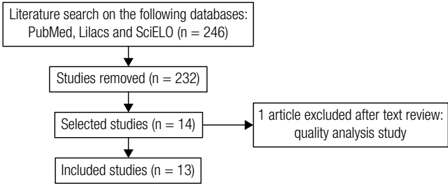
Background Bipolar disorder is a chronic condition that affects the functioning of its carriers in many different ways, even when treated properly. Therefore, it’s also important to identify the psychosocial aspects that could contribute to an improvement of this population’s quality of life. Objective Carry out a literature review on the role of social support in cases of bipolar disorder. Method A research on the following online databases PubMed, Lilacs and SciELO was conducted by using the keywords “social support” or “social networks” and “mood disorders” or “bipolar disorder” or “affective disorder,” with no defined timeline. Results Only 13 studies concerning the topic of social support and BD were found in the search for related articles. Generally speaking, the results show low rates of social support for BD patients. Discussion Despite the growing interest in the overall functioning of patients with bipolar disorder, studies on social support are still rare. Besides, the existing studies on the subject use different methodologies, making it difficult to establish data comparisons.
Overview
The claims and statistics of this paper haven’t been checked yet.
Free: it reads the open-access text and checks the first 5 claims that cite a source we can check. Create a free account to check every claim.
Integrity signals
Registry
Cites
Statistics
Figures
Verification
Claims the paper makes
The claims and statistics of this paper haven’t been checked yet.
Free: it reads the open-access text and checks the first 5 claims that cite a source we can check. Create a free account to check every claim.
Claims other papers make about this one
Each is checked against this paper’s own text: does it say what the citing paper says it does?
The source backs part of the claim, not all of it — or backs it for a different population, condition or comparison.
In the citing paper
“Similarly, social relationships were shown to be related to bipolar disorder and anxiety disorders”
From Associations between loneliness and perceived social support and outcomes of mental health problems: a systematic review (2018) · cites this paper as [69]
Experimental — accuracy not yet measuredThe source backs part of the claim, not all of it — or backs it for a different population, condition or comparison.
In the citing paper
“but there is a lack of evidence to discern cause and effect [69, 70].”
From Associations between loneliness and perceived social support and outcomes of mental health problems: a systematic review (2018) · cites this paper as [69]
Experimental — accuracy not yet measured
Self-check
Percentages, sums and reported differences re-computed from the paper’s own numbers.
The self-check needs the paper’s full text.
Citations
Cites
Sherbourne, C. D., & Stewart, A. L. (1991) · Social Science & Medicine · doi:10.1016/0277-9536(91)90150-b · Cited by 6,643
Prevalence and Correlates of Bipolar Spectrum Disorder in the World Mental Health Survey Initiative
Merikangas, K. R., Jin, R., He, J.-P., Kessler, R. C., Lee, S., Sampson, N. A., Viana, M. C., Andrade, L. H., Hu, C., Karam, E. G., et al. (2011) · Archives of General Psychiatry · doi:10.1001/archgenpsychiatry.2011.12 · Cited by 2,627
Geddes, J. R., & Miklowitz, D. J. (2013) · The Lancet · doi:10.1016/s0140-6736(13)60857-0 · Cited by 848
Griep, R. H., Chor, D., Faerstein, E., Werneck, G. L., & Lopes, C. S. (2005) · Cadernos de Saúde Pública · doi:10.1590/s0102-311x2005000300004 · Cited by 385
Social support and the course of bipolar disorder.
Johnson, S. L., Winett, C. A., Meyer, B., Greenhouse, W. J., & Miller, I. (1999) · Journal of Abnormal Psychology · doi:10.1037/0021-843x.108.4.558 · Cited by 264
Effects of stress and social support on recurrence in bipolar disorder
Cohen, A. N., Hammen, C., Henry, R. M., & Daley, S. E. (2004) · Journal of Affective Disorders · doi:10.1016/j.jad.2003.10.008 · Cited by 206
Social support and self-esteem predict changes in bipolar depression but not mania
Johnson, S. L., Meyer, B., Winett, C., & Small, J. (2000) · Journal of Affective Disorders · doi:10.1016/s0165-0327(99)00133-0 · Cited by 161
Social support in bipolar disorder: its relevance to remission and relapse
Johnson, L., Lundström, O., Åberg‐Wistedt, A., & Mathé, A. A. (2003) · Bipolar Disorders · doi:10.1034/j.1399-5618.2003.00021.x · Cited by 117
The social networks of bipolar affective disorder patients
Romans, S. E., & McPherson, H. (1992) · Journal of Affective Disorders · doi:10.1016/0165-0327(92)90079-l · Cited by 98
Miklowitz, D. J., & Johnson, S. L. (2009) · Clinical Psychology: Science and Practice · doi:10.1111/j.1468-2850.2009.01166.x · Cited by 89
Cited by
Wang, J., Mann, F., Lloyd-Evans, B., Ma, R., & Johnson, S. (2018) · BMC Psychiatry · doi:10.1186/s12888-018-1736-5 · Cited by 1,494
“disorders, but there is a lack of evidence to discern cause and effect [69, 70].”
BackgroundPearce, E., Birken, M., Pais, S., Tamworth, M., Ng, Y., Wang, J., Chipp, B., Crane, E., Schlief, M., Yang, J., et al. (2023) · BMC Psychiatry · doi:10.1186/s12888-023-05069-0 · Cited by 101
“People with eating disorders were found to report receiving less emotional and/or practical social support than general population controls.”
BackgroundResilience dimensions and mental health outcomes in bipolar disorder in a follow‐up study
Echezarraga, A., Calvete, E., González-Pinto, A. M., & Hayas, C. L. (2017) · Stress and Health · doi:10.1002/smi.2767 · Cited by 34
Samuel, T., Nigussie, K., Mirkena, Y., & Azale, T. (2022) · Frontiers in Psychiatry · doi:10.3389/fpsyt.2022.980614 · Cited by 32
Prabhakaran, S., Nagarajan, P., Varadharajan, N., & Menon, V. (2021) · Journal of Psychosocial Rehabilitation and Mental Health · doi:10.1007/s40737-020-00211-7 · Cited by 25
The Meaning of Recovery: The Lived Experience of Patients with Bipolar Disorder in Turkey
Durgu, N., & Dülgerler, Ş. (2020) · Issues in Mental Health Nursing · doi:10.1080/01612840.2020.1818015 · Cited by 18
Social support in patients with bipolar disorder and differing ages at onset
Studart‐Bottó, P., Bezerra‐Filho, S., Sarmento, S., & Miranda‐Scippa, Â. (2021) · Clinical Psychology & Psychotherapy · doi:10.1002/cpp.2617 · Cited by 14
Self-citationUçgun, T., & Öksüz, E. (2024) · Archives of Psychiatric Nursing · doi:10.1016/j.apnu.2024.01.013 · Cited by 9
Bipolar spectrum risk and social network dimensions in emerging adults: Two social sides?
Ibonie, S. G., Young, G. R., Ploe, M. L., Mauss, I. B., Alloy, L. B., Borelli, J. L., Bullock, B., Holley, S. R., Jopling, E. N., Kamble, S. V., et al. (2025) · Journal of Social and Clinical Psychology · doi:10.1521/jscp.2025.44.1.001 · Cited by 8
Hogg, B., Raduà, J., Gardoki-Souto, I., Fontana-McNally, M., Lupo, W., Reinares, M., Jiménez, E., Madre, M., Blanco, L., Cortizo, R., et al. (2023) · Revista de Psiquiatría y Salud Mental · doi:10.1016/j.sjpmh.2023.11.005 · Cited by 7
Costa, K. M. D. Q., de Góes, R. M., & de Morais, M. M. N. (2021) · Jornal Brasileiro de Psiquiatria · doi:10.1590/0047-2085000000355 · Cited by 18
“Também atua na redução de sintomas a longo prazo, favorecendo posturas mais assertivas no tra-tamento e menos estigmas 38 .”
Social Support in Higher Education: Evidence of Validity and Reliability in the Peruvian Context
Millones, D. L. M., Rivalles, R. M., Lara, S. D., Pineda‐Marín, C., & Manrique‐Pino, O. (2021) · Universitas Psychologica · doi:10.11144/javeriana.upsy19.sshe · Cited by 5
“…well-being (Koetsenruijter et al., 2015) as well as emotional health-related variables such as anxiety (Jacobson et al., 2017; Razurel et al., 2017), depression (Anderson et al., 2017; Frison & Eggermont, 2015) and mood disorders (LynchJordan et al., 2015; Studart et al., 2015) among others.”
BackgroundSociocultural determinants of treatment adherence in bipolar disorders: a review of recent trends
Ragesh, G., Hamza, A., & Chaturvedi, S. K. (2016) · International Journal of Culture and Mental Health · doi:10.1080/17542863.2016.1196716 · Cited by 5
Health Literacy and Psychiatric Hospital Readmission
Lewin, E. M. (2021) · The Journal of Continuing Education in Nursing · doi:10.3928/00220124-20210114-09 · Cited by 5
Swerdlow, B. A., Berk, L., & Johnson, S. L. (2023) · Journal of Emotion and Psychopathology · doi:10.55913/joep.v1i1.30 · Cited by 3
Schönthaler, E. M. D., Dalkner, N., Stross, T. M., Bengesser, S., Ilic, J., Fellendorf, F. T., Finner, A., Fleischmann, E., Häussl, A., Georgi, J., et al. (2025) · Frontiers in Human Neuroscience · doi:10.3389/fnhum.2025.1479648 · Cited by 3
Greve, A. N., Hemager, N., Piché, G., Burton, B. K., Ellersgaard, D., Christiani, C. J., Spang, K. S., Plessen, K. J., Jepsen, J. R. M., Mors, O. N., et al. (2025) · Schizophrenia Research · doi:10.1016/j.schres.2025.03.001 · Cited by 1
“The nature of these disorders, i.e., the nature of symptoms, severity of the disorders, or frequent hospitalizations, can hinder the establishment and maintenance of social bonds (Thorup et al., 2006; Eidelman et al., 2012; Greenberg et al., 2014; Palumbo et al., 2015; Studart et al., 2015).”
Zeighami, R., Raeisolhagh, A., & Ranjbaran, M. (2023) · Jundishapur Journal of Chronic Disease Care · doi:10.5812/jjcdc-138664 · Cited by 1
Jimenez, A. M., Abplanalp, S. J., Eisenberger, N. I., Horan, W. P., Lee, J., McCleery, A., Myers, A. C., Miklowitz, D. J., Reavis, E. A., Reddy, L. F., et al. (2025) · Schizophrenia Research Cognition · doi:10.1016/j.scog.2025.100367 · Cited by 4
“Although people with BD are generally less socially impaired than those with SZ, BD is also associated with compromised social support and strained relationships (Studart et al., 2015; Owen et al., 2017).”
Fagbamigbe, A. F., & Makanjuola, V. A. (2017) · Neuropsychiatric Disease and Treatment · doi:10.2147/ndt.s133167 · Cited by 1
علي, ف. أ. و. ت. (2020) · المجلة التربوية لکلية التربية بسوهاج · doi:10.21608/edusohag.2020.103368
ผลของการสนับสนุนทางสังคมแบบกลุ่มต่อการทำหน้าที่ของ ผู้ป่วยโรคอารมณ์แปรปรวนสองขั้ว
พินรัตน์, พ., & แดงด้อมยุทธ์, เ. (2019) · Journal of Nursing Research Innovation and Health · doi:10.58837/chula.jnrih.33.2.3
Łapiński, P., Gimenez, J. B., Ćwiek, M., Sterliński, I., & Świderek, A. (2025) · International Journal of Innovative Technologies in Social Science · doi:10.31435/ijitss.3(47).2025.3844
Pearce, E., Birken, M., Pais, S., Tamworth, M., Ng, Y., Wang, J., Chipp, B., Crane, E., Schlief, M., Yang, J., et al. (2023) · Figshare · doi:10.6084/m9.figshare.24089321
Ayhan, C. H., Aktaş, M. C., Aydar, R., aktaş, S., & Çataldaş, S. K. (2026) · Bipolar Disorders · doi:10.1111/bdi.70170
Borovikov, A. V., & Shchelkova, O. Y. (2026) · Russian Journal for Personalized Medicine · doi:10.18705/2782-3806-2026-6-4-222-229
Qualidade das relações interpessoais no transtorno bipolar : um estudo qualitativo
da Rosa, L. C. (2026) · Lume (Universidade Federal do Rio Grande do Sul)
Metadata
- Authors
- Studart, P. M., Bezerra Filho, S., Studart, A. B. D., Almeida, A. G.-D., & Miranda-Scippa, Â.
- Affiliations
- Universidade Federal da Bahia (BR)
- Escola Bahiana de Medicina e Saúde Pública (BR)
- Venue
- Archives of Clinical Psychiatry (São Paulo)
- Publisher
- FapUNIFESP (SciELO)
- Published
- 2015-08
- Volume
- 42
- Issue
- 4
- Pages
- 95-99
- ISSN
- 0101-6083 (ISSN-L)
- 1806-938X
- OpenAlex
- W2204945869
- Semantic Scholar
- 5b9d3537218d8532dd69772056f83da03493ae9a
- Cited by
- 27
- References
- 26
- Citations by year
- 2026: 2 · 2025: 5 · 2024: 1 · 2023: 6 · 2022: 1 · 2021: 5 · 2020: 2 · 2019: 1 · 2018: 1 · 2017: 2 · 2016: 1
- FWCI
- 1.09
- Type
- journal article
- Language
- en
- Open access
- diamond
- doi.org
- Licence
- cc-by
- Locations
- Archives of Clinical Psychiatry (São Paulo) (publishedVersion, cc-by)
- Americanae (AECID Library) (publishedVersion)
- DOAJ (DOAJ: Directory of Open Access Journals) (submittedVersion)
- LA Referencia (Red Federada de Repositorios Institucionales de Publicaciones Científicas) (submittedVersion, cc-by-nc)
- The Scientific Electronic Library Online (Fundação de Amparo à Pesquisa do Estado de São Paulo) (submittedVersion, other-oa)
- Topics
- Health Sciences › Medicine › Psychiatry and Mental health › Bipolar Disorder and Treatment
- Social Sciences › Psychology › Clinical Psychology › Family Caregiving in Mental Illness
- Social Sciences › Psychology › Clinical Psychology › Personality Disorders and Psychopathology
- Keywords
- bipolar disorder, social support, social networks, psychosocial factors, quality of life, mood disorders, patient functioning
About these checks
Registry, retraction, Cites and statistics results are computed, not judged, with one exception: a printed reference that no index lists is read once by a model before it counts as a citation error. Claims are extracted by a model and kept only when their quote appears verbatim in the text; each cited source is then checked, with a model’s help, for whether it says what the claim relies on. Those verdicts can be wrong — read the claim’s quote and the cited source before relying on one.
Statistics and arithmetic are recomputed, not judged.
Confidence bands are shown only for fields calibrated on our annotated test set. None is calibrated yet, so no band is shown.
What counts as a claim ›How we measure confidence ›How we check this ›
Are you an author, or do you see a problem with this page? Request a review
Data sources
Bibliographic data: Semantic Scholar, OpenAlex, Crossref.
Contains information from the Semantic Scholar Academic Graph Datasets, made available under the ODC Attribution License (ODC-BY 1.0).
Semantic Scholar’s data is described in: Kinney, R., et al. (2023). The Semantic Scholar Open Data Platform. arXiv:2301.10140.
