

The DOI matches its Crossref record; 32 of the 32 references it cites were found in a registry or an index.
Gingival inflammation, enamel defects, and tooth sensitivity in children with amelogenesis imperfecta: a case-control study
Open accessAbstract
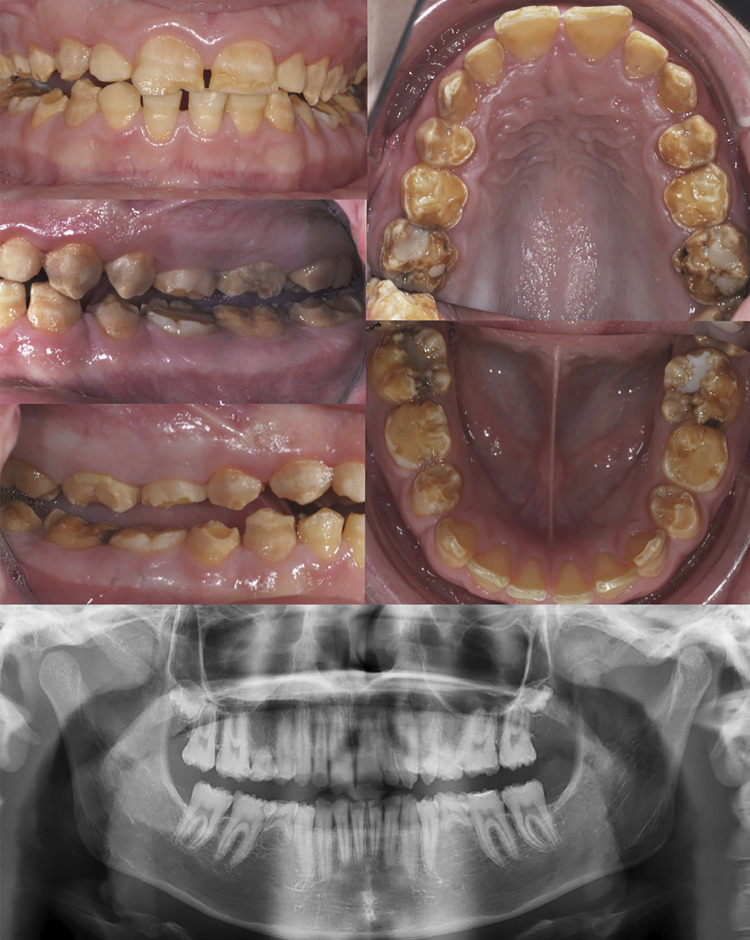
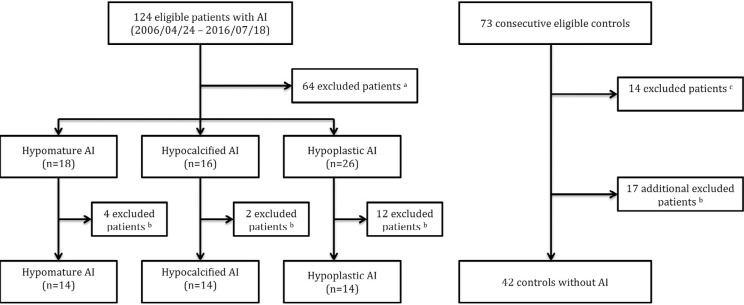
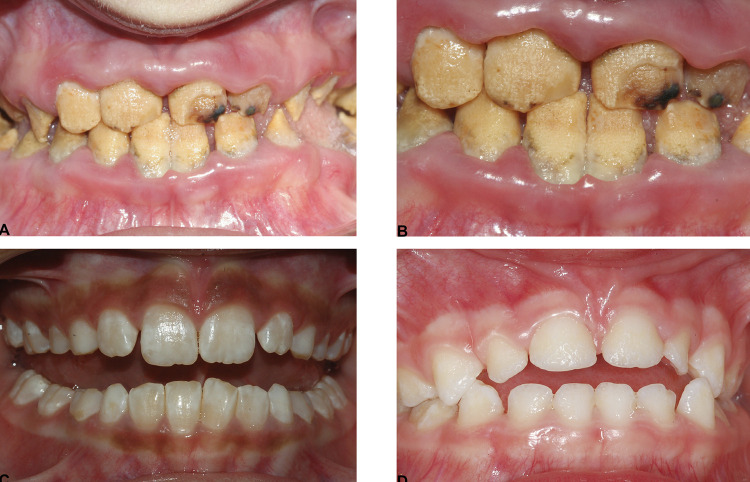
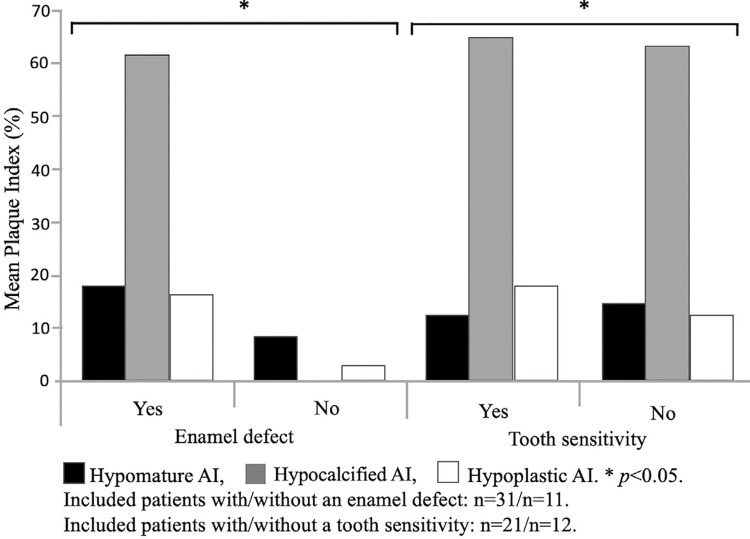
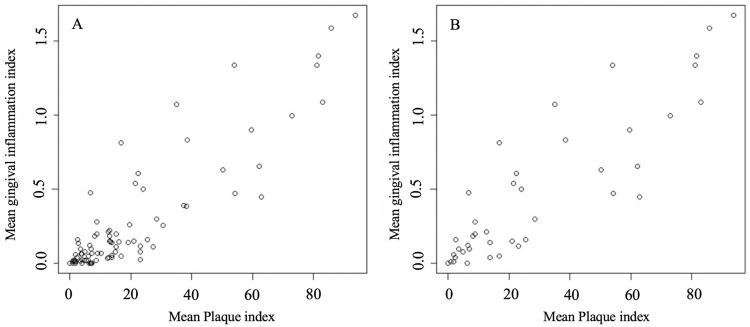
METHODOLOGY: Gingival conditions and tooth sensitivity of young patients with amelogenesis imperfecta lack in depth studies. This case-control study aimed to compare (1) the gingival inflammation, the presence of enamel defects, and tooth sensitivity in young patients with and without amelogenesis imperfecta and (2) to investigate if any difference exists between subtypes of amelogenesis imperfecta. We compared forty-two participants with amelogenesis imperfecta with forty-two controls matched for age, gender, and the number of examined sites. Based on interview, clinical examination, and intraoral photography, we collected data on periodontal conditions, enamel defects and the presence of tooth sensitivity. Comparison tests were performed to investigate if any difference existed between cases and controls; and among cases, between the different subtypes of amelogenesis imperfecta. We performed a post-hoc analysis for any significant difference observed. RESULTS: We observed more gingival inflammation, enamel defects and tooth sensitivity among cases (all p<0.05). Participants with hypocalcified amelogenesis imperfecta had more gingival inflammation, enamel defects, and tooth sensitivity than patients with the hypoplastic and hypomature subtypes (all p<0.05). After adjustment for dental plaque, gingival inflammation was associated with the presence of amelogenesis imperfecta (OR (95%CI) = 1.14 (1.05; 1.24). p<0.01). CONCLUSION: Gingival inflammation, enamel defect and tooth sensitivity are more frequently observed among young patients with amelogenesis imperfecta, and more specifically among children with the hypocalcified subtype.
Overview
The claims and statistics of this paper haven’t been checked yet.
Run the check — free, no account needed. It reads the open-access text and checks the sources it cites.
Integrity signals
Registry
Cites
Statistics
Figures
Verification
Claims the paper makes
The claims and statistics of this paper haven’t been checked yet.
Run the check — free, no account needed. It reads the open-access text and checks the sources it cites.
Claims other papers make about this one
Each is checked against this paper’s own text: does it say what the citing paper says it does?
The source backs part of the claim, not all of it — or backs it for a different population, condition or comparison.
In the citing paper
“Hypomineralized and hypomature forms are associated with severe hypersensitivity or toothache, which can severely restrict physiological use and regular dental care (Parekh et al. 2014; Quandalle et al. 2020).”
From Dental Management of Genetic Dental Disorders: A Critical Review (2025) · cites this paper as Quandalle et al. 2020
Experimental — accuracy not yet measured
Self-check
Percentages, sums and reported differences re-computed from the paper’s own numbers.
The self-check needs the paper’s full text.
Citations
Cites
The Gingival Index, the Plaque Index and the Retention Index Systems
Löe, H. (1967) · The Journal of Periodontology · doi:10.1902/jop.1967.38.6.610 · Cited by 4,247
O'Leary, T. J., Drake, R. B., & Naylor, J. E. (1972) · Journal of Periodontology · doi:10.1902/jop.1972.43.1.38 · Cited by 2,615
Witkop, C. J. (1988) · Journal of Oral Pathology and Medicine · doi:10.1111/j.1600-0714.1988.tb01332.x · Cited by 686
A modified gingival index for use in clinical trials.
Lobene, R. R., Weatherford, T. W., Ross, N. M., Lamm, R., & Menaker, L. (1986) · PubMed · Cited by 648
Crawford, P. J., Aldred, M., & Bloch‐Zupan, A. (2007) · Orphanet Journal of Rare Diseases · doi:10.1186/1750-1172-2-17 · Cited by 317
Amelogenesis Imperfecta; Genes, Proteins, and Pathways
Smith, C. E. L., Poulter, J. A., Antanaviciute, A., Kirkham, J., Brookes, S. J., Inglehearn, C. F., & Mighell, A. J. (2017) · Frontiers in Physiology · doi:10.3389/fphys.2017.00435 · Cited by 302
French legal approach to clinical research
Toulouse, E., Masseguin, C., Lafont, B., Mcgurk, G., Harbonn, A., Roberts, J. A., Granier, S., Dupeyron, A., & Bazin, J. E. (2018) · Anaesthesia Critical Care & Pain Medicine · doi:10.1016/j.accpm.2018.10.013 · Cited by 214
Quirynen, M. (1994) · Journal of Dentistry · doi:10.1016/0300-5712(94)90165-1 · Cited by 155
Poulsen, S., Gjørup, H., Haubek, D., Haukali, G., Hintze, H., Løvschall, H., & Errboe, M. (2008) · Acta Odontologica Scandinavica · doi:10.1080/00016350802192071 · Cited by 151
Inherited defects in tooth structure.
Cj, W., & Rao, S. (1971) · PubMed · Cited by 140
Research works printed but not linked: 1
- Lau EC, 1990, Analysis of human enamel genes: insights into genetic disorders of enamel, Cleft Palate J, 27, 121
Cited by
Management of Amelogenesis Imperfecta in Childhood: Two Case Reports
Möhn, M., Bulski, J. C., Krämer, N., Rahman, A., & Schulz‐Weidner, N. (2021) · International Journal of Environmental Research and Public Health · doi:10.3390/ijerph18137204 · Cited by 22
Advances in clinical diagnosis and management of amelogenesis imperfecta in children and adolescents
Lundgren, G. P., & Dahllöf, G. (2024) · Journal of Dentistry · doi:10.1016/j.jdent.2024.105149 · Cited by 23
Dental Management of Genetic Dental Disorders: A Critical Review
Dujic, H., Bücher, K., Schüler, I. M., Schmidt, P., Hertel, S., Timpel, J., Jablonski-Momeni, A., Schilke, R., Kapferer-Seebacher, I., Zschocke, J., et al. (2025) · Journal of Dental Research · doi:10.1177/00220345241305330 · Cited by 9
“Hypomineralized and hypomature forms are associated with severe hypersensitivity or toothache, which can severely restrict physiological use and regular dental care (Parekh et al. 2014; Quandalle et al. 2020).”
Saleh, S. B. (2023) · Cureus · doi:10.7759/cureus.49968 · Cited by 7
Mathews, D. P., Knight, D. J., O'connor, R. V., & Kōkich, V. G. (2021) · Journal of Esthetic and Restorative Dentistry · doi:10.1111/jerd.12804 · Cited by 7
Metadata
- Authors
- QUANDALLE, C., BOILLOT, A., FOURNIER, B., GARREC, P., DE LA DURE-MOLLA, M., & KERNER, S.
- Affiliations
- Université Paris Cité (FR)
- Université de Paris, France; Rothschild Hospital, France; Hôpital Necker-Enfants Malades, France
- Venue
- Journal of Applied Oral Science
- Publisher
- FapUNIFESP (SciELO)
- Published
- 2020
- Volume
- 28
- Pages
- e20200170-e20200170
- ISSN
- 1678-7757 (ISSN-L)
- 1678-7765
- PMC
- PMC7521421
- OpenAlex
- W3091434814
- Cited by
- 23
- References
- 32
- Citations by year
- 2026: 4 · 2025: 6 · 2024: 6 · 2023: 2 · 2022: 2 · 2021: 3
- FWCI
- 0.57
- Type
- journal article
- Language
- en
- Open access
- diamond
- doi.org
- Licence
- Locations
- Journal of Applied Oral Science (publishedVersion, cc-by)
- PubMed Central (publishedVersion, cc-by)
- PubMed (publishedVersion)
- LA Referencia (Red Federada de Repositorios Institucionales de Publicaciones Científicas) (publishedVersion, cc-by)
- LA Referencia (Red Federada de Repositorios Institucionales de Publicaciones Científicas) (publishedVersion, other-oa)
- DOAJ (DOAJ: Directory of Open Access Journals) (submittedVersion, cc-by-sa)
- Topics
- Health Sciences › Dentistry › General Dentistry › dental development and anomalies
- Health Sciences › Dentistry › General Dentistry › Dental Health and Care Utilization
- Health Sciences › Dentistry › Periodontics › Oral and gingival health research
- Keywords
- amelogenesis imperfecta, gingivitis, enamel defects, dentin hypersensitivity, hypoplastic amelogenesis imperfecta, children, periodontal condition, dental plaque
- MeSH terms
- Amelogenesis Imperfecta, Child, Dental Enamel, Dentin Sensitivity, Female, Humans, Inflammation, Male, Case-Control Studies
About these checks
Registry, retraction, Cites and statistics results are computed, not judged, with one exception: a printed reference that no index lists is read once by a model before it counts as a citation error. Claims are extracted by a model and kept only when their quote appears verbatim in the text; each cited source is then checked, with a model’s help, for whether it says what the claim relies on. Those verdicts can be wrong — read the claim’s quote and the cited source before relying on one.
Statistics and arithmetic are recomputed, not judged.
Confidence bands are shown only for fields calibrated on our annotated test set. None is calibrated yet, so no band is shown.
What counts as a claim ›How we measure confidence ›How we check this ›
Are you an author, or do you see a problem with this page? Request a review
Data sources
Bibliographic data: Semantic Scholar, OpenAlex, Crossref.
Contains information from the Semantic Scholar Academic Graph Datasets, made available under the ODC Attribution License (ODC-BY 1.0).
Semantic Scholar’s data is described in: Kinney, R., et al. (2023). The Semantic Scholar Open Data Platform. arXiv:2301.10140.
