

Physicochemical characteristics of the essential oils of Baccharis dracunculifolia and Baccharis uncinella D.C. (Asteraceae)
Open accessThe DOI matches its Crossref record; 34 of the 34 references it cites were found in a registry or an index; none of the 8 sources its claims cite is checked for support yet.
Abstract
The essential oils of Baccharis dracunculifolia and Baccharis uncinella, which were obtained by hydrodistillation, were physically and chemically characterized for their yield, relative density (d20(20)), refraction index, solubility in ethanol and chemical composition through gas chromatography coupled to mass spectrophotometry (GC/MS). The results showed a yield of 1.5 and 1.65 mL/100g-1, relative density (d20(20)) of 0.9151 and 0.9147, refraction index of 1.4593 and 1.4602, rotatory power of +1.99 and +2.18. Solubility in 70% ethanol was 3.0, in 80% ethanol was 1.0 and in 96.5% ethanol was 1.0, for the oils of B. dracunculifolia and B. uncinella respectively. The evaluations in gas chromatography coupled to mass spectrophotometry showed that the oils studied are similar, presenting 26 constituents among which β-pinene, ε-nerolidol, limonene and spathulenol are highlighted.
Overview
CoChat Summary
TL;DR
Essential oils from *Baccharis dracunculifolia* and *B. uncinella* obtained by hydrodistillation had similar physicochemical properties and chemical profiles. Both oils contained 26 compounds, with β-pinene, ε-nerolidol, limonene, and spathulenol highlighted as major constituents.
Key findings
- Hydrodistillation for 3 h yielded 1.54 mL/100 g for *B. dracunculifolia* and 1.65 mL/100 g for *B. uncinella*; yield was highest for *B. uncinella*.
- Physicochemical values for *B. dracunculifolia* vs *B. uncinella* were: relative density 0.9151 ± 0.0021 vs 0.9147 ± 0.0006; refraction index 1.4593 ± 0.0005 vs 1.4602 ± 0.0015; rotatory power +1.99 ± 0.06 vs +2.18 ± 0.10.
- Solubility in ethanol was identical for both oils: 3.0 volumes of 70% ethanol and 1.0 volume of 80%, 90%, or 96.5% ethanol were needed to solubilize 1 volume of oil.
- GC/MS identified 93.43% of *B. dracunculifolia* oil components and 91.34% of *B. uncinella* oil components; monoterpenes were 48.42% vs 37.86% and sesquiterpenes 45.01% vs 53.48%, with 26 compounds and major β-pinene, ε-nerolidol, limonene, and spathulenol.
Methods
- Essential oils from dry leaves of *B. dracunculifolia* and *B. uncinella* collected in Southwestern Paraná from February to May 2006; hydrodistilled by vapor drag using a Clevenger device for 3 h; material dried at 60 °C to constant weight.
- Physicochemical characterization followed Farmacopéia Brasileira/Pharmacopoeia Helvetica: relative density (d20 20), refraction index at 589.3 nm, rotatory power, and ethanol solubility at 70%, 80%, 90%, and 96.5%.
- Chemical composition by GC/MS using an HP-Innowax column, Wiley library, and Kovats retention indices; yield, relative density, refraction index, and optic rotation were analyzed by ANOVA with Tukey’s test.
Limitations
- Stated: the authors note that published scientific works on the physicochemical characteristics of these oils are inexistent, making further discussion difficult; they also cannot state that solubility is related to oil composition because terpenic and oxygenated compound percentages were similar.
- Evident from the text: samples came from a single region and collection period (Southwestern Paraná, February–May 2006), and no sample size or replication is reported for the GC/MS or physicochemical measurements.
- Evident from the text: the study is limited to two *Baccharis* species and does not experimentally test seasonal, environmental, or geographic variation, although the introduction notes such factors can affect essential oil composition.
Model-written summary. Check it against the paper before relying on it.
Integrity signals
Registry
Cites
Statistics
Figures
Verification
Claims the paper makes
0 Valid · 0 Not valid · 8 Not checked · 16 Own results and interpretations
A result the paper reports from its own data — it cites no other source for it, so there is none to check. The quote shows it is in the paper.
In the paper
“As for the solubility in ethanol it can be seen in Table 3 that the oils display the same behavior, 3 mL of 70% ethanol being necessary to solubilize 1.0 mL of the oils, while at the ethanol concentrations of 80%, 90% and 96.5% 1 mL was needed.”
§ Physicochemical characteristics of the essential oils of Baccharis dracunculifolia and Baccharis uncinella D.C. (Asteraceae) > Physicochemical analyses of the oils
plain- Asserted: passes — The authors put it forward as true.
- Checkable: passes — It can be checked against evidence.
- Load-bearing: unclear — It is unclear whether the paper’s conclusions depend on it.
- Based: passes — The paper gives a reason why it holds.
- Rests on an assumption not shown here.
A result the paper reports from its own data — it cites no other source for it, so there is none to check. The quote shows it is in the paper.
In the paper
“The refraction index revealed that there is not a signifi cant variation between the two oils assessed, yet a higher value was obtained for the oil of B. uncinella (index of 1.4602 ± 0.0015) compared to the oil of B. dracunculifolia (index of 1.4593 ± 0.0005).”
§ Physicochemical characteristics of the essential oils of Baccharis dracunculifolia and Baccharis uncinella D.C. (Asteraceae) > Physicochemical analyses of the oils
plain- Asserted: passes — The authors put it forward as true.
- Checkable: passes — It can be checked against evidence.
- Load-bearing: unclear — It is unclear whether the paper’s conclusions depend on it.
- Based: passes — The paper gives a reason why it holds.
- Rests on an assumption not shown here.
A result the paper reports from its own data — it cites no other source for it, so there is none to check. The quote shows it is in the paper.
In the paper
“As for the analysis of the rotatory power, the results obtained with the samples tested indicated that these are dextrorotatory (deviate the plane of polarized light to the right), the sample of B. uncinella having a larger angle of deviation than the oil of B. dracunculifolia, showing values of +2.18 ± 0.10 and +1.99 ± 0.06, respectively.”
§ Physicochemical characteristics of the essential oils of Baccharis dracunculifolia and Baccharis uncinella D.C. (Asteraceae) > Physicochemical analyses of the oils
hedged- Asserted: passes — The authors put it forward as true.
- Checkable: passes — It can be checked against evidence.
- Load-bearing: unclear — It is unclear whether the paper’s conclusions depend on it.
- Based: passes — The paper gives a reason why it holds.
- Rests on an assumption not shown here.
A result the paper reports from its own data — it cites no other source for it, so there is none to check. The quote shows it is in the paper.
In the paper
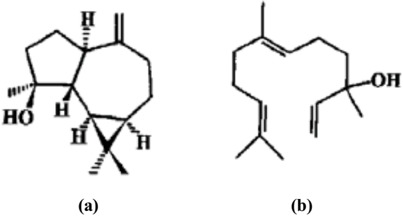
“As for the major constituents, it is observed the occurrence of the monoterpenes β-pinene and limonene in both species and of the sesquiterpenes ε-nerolidol and spathulenol (Figure 1a and 1b), known for their commercial value.”
§ Physicochemical characteristics of the essential oils of Baccharis dracunculifolia and Baccharis uncinella D.C. (Asteraceae) > Gas chromatography coupled to mass spectrophotometry
plain- Asserted: passes — The authors put it forward as true.
- Checkable: passes — It can be checked against evidence.
- Load-bearing: passes — The paper’s conclusions depend on it.
- Based: passes — The paper gives a reason why it holds.
- Rests on an assumption not shown here.
A result the paper reports from its own data — it cites no other source for it, so there is none to check. The quote shows it is in the paper.
In the paper
“The chemical constitution of the oils is very similar, differing only in minor constituents.”
§ Physicochemical characteristics of the essential oils of Baccharis dracunculifolia and Baccharis uncinella D.C. (Asteraceae) > Gas chromatography coupled to mass spectrophotometry
plain- Asserted: passes — The authors put it forward as true.
- Checkable: passes — It can be checked against evidence.
- Load-bearing: passes — The paper’s conclusions depend on it.
- Based: passes — The paper gives a reason why it holds.
- Rests on an assumption not shown here.
5 more claims
Create a free account to see all 24 claims and to verify the 1 reference still open.
- It may state two separate claims as one. 12
- Probably not a substantial claim. 5
Self-check
Percentages, sums and reported differences re-computed from the paper’s own numbers.
Each contradiction between two passages listed here was confirmed by an independent check.
Rated minor: it would not touch a result — a value no result rests on, a p-value that stays on the same side of the significance level, or a conflict that is clerical, resolved elsewhere in the paper, or outside its own findings.
In the paper
§ Physicochemical characteristics of the essential oils of Baccharis dracunculifolia and Baccharis uncinella D.C. (Asteraceae) > CONCLUSION
“After these studies using the methodology described, we can conclude that the best yield was of B. uncinella, with 1.65 mL, followed by B. dracunculifolia with 1.50 mL.100 g -1 ;”
§ Physicochemical characteristics of the essential oils of Baccharis dracunculifolia and Baccharis uncinella D.C. (Asteraceae) > Determination of the yield of the essential oil
“The process of hydrodistillation, which lasted three hours, yielded 1.54 mL.100 g -1 for B. dracunculifolia and 1.65 mL.100 g -1 for B. uncinella.”
Rated minor: it would not touch a result — a value no result rests on, a p-value that stays on the same side of the significance level, or a conflict that is clerical, resolved elsewhere in the paper, or outside its own findings.
In the paper
“Sesquiterpenes 45.01 53.48 β-caryofilene 8 30.490.75 1.76 Aromadendrene 9 31.20 0.08 α-Humulene 10 33.21 0.24 1.12 Germacrene D 11 34.82 0.67 1.34 γ-Murolene 12 35.740.17 -Bicyclogermacrene 13 35.86 1.67 2.33 α-Cadinene 14 36.341.35 2.98”
§ Physicochemical characteristics of the essential oils of Baccharis dracunculifolia and Baccharis uncinella D.C. (Asteraceae) > Gas chromatography coupled to mass spectrophotometry
Reported 53.48 · recomputed 56.46
Citations
Cites
Plant Products as Antimicrobial Agents
Cowan, M. M. (1999) · Clinical Microbiology Reviews · doi:10.1128/cmr.12.4.564 · Cited by 9,043
Registry of mass spectral data
Stenhagen, E., Abrahamsson, S., & McLafferty, F. W. (1974) · Cited by 1,560
Plant Drug Analysis: A Thin Layer Chromatography Atlas
Wagner, H., & Bladt, S. (1996) · Cited by 1,401
Plant drug analysis: a thin layer chromatography atlas
Lederer, M. (1985) · Journal of Chromatography A · doi:10.1016/s0021-9673(01)90416-9 · Cited by 1,111
Identification of Essential Oils by Ion Trap Mass Spectroscopy
(1989) · Elsevier eBooks · doi:10.1016/c2009-0-21675-8 · Cited by 1,007 · cited 2×
“The constituents of the oils were identifi ed through comparison of their mass spectra to those of the Wiley library (GC/MS) and those described by Adams (1995), was well as through comparison of the Kovats’ retention index with literature data (Adams, 1995).”
MethodResultNovel antiviral agents: a medicinal plant perspective
Jassim, S. A. A., & Naji, M. A. (2003) · Journal of Applied Microbiology · doi:10.1046/j.1365-2672.2003.02026.x · Cited by 670 · cited 1×
“…oils perform the function of adaptation of the plant to the environment, acting in the defense against the attack of predators, attraction of pollination agents, protection against water loss and temperature increase and as inhibitors of germination (Feresin et al., 2001, Jassim & Naji, 2003).”
BackgroundSynopsis of the plants known as medicinal and poisonous in Northeast of Brazil
Agra, M. D. F., Freitas, P. F. D., & Barbosa-Filho, J. M. (2007) · Revista Brasileira de Farmacognosia · doi:10.1590/s0102-695x2007000100021 · Cited by 661 · cited 1×
“…with wide dispersion in the States of Santa Catarina, Paraná, São Paulo and Rio Grande do Sul, among other regions of the country, where large numbers of them are used in folk medicine for the control or treatment of several diseases (Nunes et al., 2003; Agra et al., 2007; Oliveira et al., 2007).”
BackgroundAntimicrobial Activity of Essential Oils: A 1976-1986 Literature Review. Aspects of the Test Methods
Janssen, A., Scheffer, J., & Svendsen, A. (1987) · Planta Medica · doi:10.1055/s-2006-962755 · Cited by 521
Navarro, V., Villarreal, M. L., Rojas, G., & Lozoya, X. (1996) · Journal of Ethnopharmacology · doi:10.1016/0378-8741(96)01429-8 · Cited by 296 · cited 1×
“About 98% of the genera are composed of small-sized plants, and are found in all kinds of habitats, but mainly in the mountainous tropical regions of South America (Navarro et al., 1996; Willians et al., 1998).”
BackgroundGênero Baccharis (Asteraceae): aspectos químicos, econômicos e biológicos
Verdi, L. G., Brighente, I. M. C., & Pizzolatti, M. G. (2005) · Química Nova · doi:10.1590/s0100-40422005000100017 · Cited by 213
Research works printed but not linked: 1
- [8]8. Boldt PE 1989. Baccharis (Asteraceae), a review of its taxonomy, phytochemistry, ecology, economic status, natural enemies and the potential for its biological control in the United States. Texas: College Station.
Cited by
Cazella, L. N., Glamočlija, J., Sokóvić, M., Gonçalves, J. E., Linde, G. A., Colauto, N. B., & Gazim, Z. C. (2019) · Frontiers in Plant Science · doi:10.3389/fpls.2019.00027 · Cited by 134
Insecticide activity and toxicity of essential oils against two stored-product insects
Zimmermann, R. C., Aragão, C. E. D. C., de Araújo, P. J. P., Benatto, A., Chaaban, A., Martins, C. E. N., do Amaral, W., Cipriano, R. R., & Zawadneak, M. A. C. (2021) · Crop Protection · doi:10.1016/j.cropro.2021.105575 · Cited by 65
Lage, T. C. D. A., Montanari, R. M., Fernandes, S. A., et al. (2014) · Experimental Parasitology · doi:10.1016/j.exppara.2014.10.011 · Cited by 54
Luchesi, L. A., Paulus, D., Busso, C., et al. (2020) · Natural Product Research · doi:10.1080/14786419.2020.1802267 · Cited by 40
Gazim, Z. C., do Valle, J. S., dos Santos, I. C., Rahal, I. L., Silva, G. C. C., Lopes, A. D., Ruiz, S. P., Faria, M. G. I., Piau, R., & Gonçalves, D. D. (2022) · Frontiers in Pharmacology · doi:10.3389/fphar.2022.1048688 · Cited by 46
Metadata
- Authors
- Fabiane, K. C., Ferronatto, R., Santos, A. C. D., & Onofre, S. B.
- Affiliations
- Universidade Paranaense (BR)
- Universidade de Caxias do Sul (BR)
- Venue
- Revista Brasileira de Farmacognosia
- Published
- 2008-06
- Volume
- 18
- Issue
- 2
- Pages
- 197-203
- ISSN
- 0102-695X (ISSN-L)
- OpenAlex
- W2121889318
- Cited by
- 38
- References
- 32
- Citations by year
- 2026: 1 · 2025: 4 · 2024: 2 · 2023: 4 · 2022: 3 · 2021: 5 · 2020: 2 · 2019: 1 · 2018: 1 · 2017: 2 · 2016: 2 · 2015: 2 · 2014: 1 · 2013: 2 · 2012: 3
- FWCI
- 1.60
- Type
- journal article
- Language
- en
- Open access
- hybrid
- doi.org
- Licence
- cc-by-nc-nd
- www.elsevier.com/tdm/userlicense/1.0/ (tdm)
- Locations
- Revista Brasileira de Farmacognosia (publishedVersion, cc-by-nc-nd)
- LA Referencia (Red Federada de Repositorios Institucionales de Publicaciones Científicas) (publishedVersion, other-oa)
- Americanae (AECID Library) (submittedVersion, other-oa)
- DOAJ (DOAJ: Directory of Open Access Journals) (submittedVersion)
- Topics
- Life Sciences › Agricultural and Biological Sciences › Food Science › Essential Oils and Antimicrobial Activity
- Life Sciences › Agricultural and Biological Sciences › Plant Science › Phytochemistry Medicinal Plant Applications
- Life Sciences › Agricultural and Biological Sciences › Plant Science › Plant chemical constituents analysis
- Keywords
- Baccharis dracunculifolia, essential oils, physicochemical properties, chemical composition, β-pinene, limonene, spathulenol, Asteraceae, ethanol solubility, optical rotation
About these checks
Registry, retraction, Cites and statistics results are computed, not judged, with one exception: a printed reference that no index lists is read once by a model before it counts as a citation error. Claims are extracted by a model and kept only when their quote appears verbatim in the text; each cited source is then checked, with a model’s help, for whether it says what the claim relies on. Those verdicts can be wrong — read the claim’s quote and the cited source before relying on one.
A language model drew the claims from the paper on 2026-10-10, under version 3 of the claim definition (model deepseek-v4.1-flash, prompt extract-v3).
A second model labelled each claim on 2026-10-10 (model jev-1.13-20260917, definition revision gold-guideline-v0.2).
Statistics and arithmetic are recomputed, not judged.
Confidence bands are shown only for fields calibrated on our annotated test set. None is calibrated yet, so no band is shown.
What counts as a claim ›How we measure confidence ›How we check this ›
Are you an author, or do you see a problem with this page? Request a review
How to cite
Cite CoChat for the checks on this page, and the paper for its own findings.
- This page
- CoChat. (2026). Citation check: Physicochemical characteristics of the essential oils of Baccharis dracunculifolia and Baccharis uncinella D.C. (Asteraceae). https://app.cochat.ai/papers/10.1590/s0102-695x2008000200009
- The paper
- Fabiane, K. C., Ferronatto, R., Santos, A. C. D., & Onofre, S. B. (2008). Physicochemical characteristics of the essential oils of Baccharis dracunculifolia and Baccharis uncinella D.C. (Asteraceae). Revista Brasileira de Farmacognosia. https://doi.org/10.1590/s0102-695x2008000200009
Data sources
Bibliographic data: Semantic Scholar, OpenAlex, Crossref.
Contains information from the Semantic Scholar Academic Graph Datasets, made available under the ODC Attribution License (ODC-BY 1.0).
Semantic Scholar’s data is described in: Kinney, R., et al. (2023). The Semantic Scholar Open Data Platform. arXiv:2301.10140.
