

Temporomandibular disorder and generalized joint hypermobility: application of diagnostic criteria
Open accessThe DOI matches its Crossref record; 34 of the 35 references it cites were found in a registry or an index.
Abstract
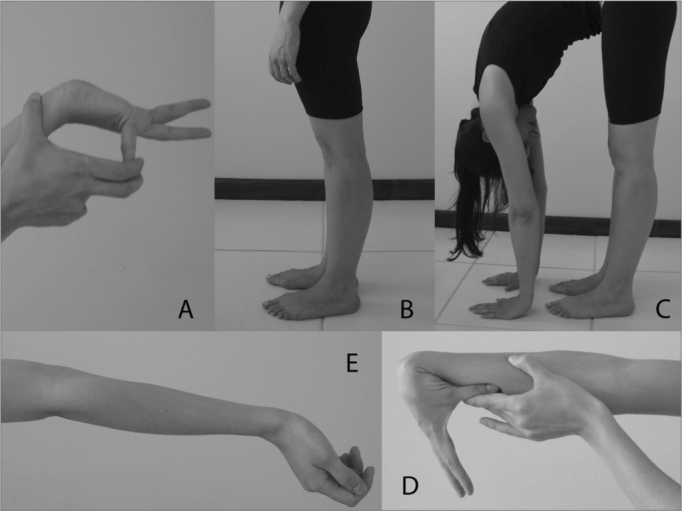
UNLABELLED: Generalized joint hypermobility (GJH) has been considered a predisposing factor for the development of temporomandibular disorder (TMD). AIM: To evaluate clinical and psychosocial aspects in individuals diagnosed with TMD with or without GJH. MATERIALS AND METHODS: Clinical and experimental study, which enrolled 34 women, from 18 to 35 years of age with TMD diagnosed by RDC/TMD. The GJH was assessed by the Beighton score and volunteers were broken down into 2 groups: with GJH (n = 22) and without GJH (n = 12). RESULTS: We found a high percentage of GJH (64. 71%). All participants had myofascial pain; 79. 41% had arthralgia and 41% had disk displacement. There was a correlation between higher GJH scores and higher passive mouth opening amplitude (p = 0.0034), with pain (p = 0.0029) and without pain (p = 0.0081). Greater mandibular range of motion was observed in the group with GJH, except for protrusion. Painful mouth opening was statistically higher in the GJH group (p = 0.0279). CONCLUSIONS: Individuals with TMD associated or not to GJH do not differ significantly regarding clinical and psychosocial aspects, except in the mandibular opening range of motion, which if kept at physiological levels can lead to a late diagnosis of TMD in these individuals.
Overview
The claims and statistics of this paper haven’t been checked yet.
Free: it reads the open-access text and checks the first 5 claims that cite a source we can check. Create a free account to check every claim.
Integrity signals
Registry
Cites
Statistics
Figures
Verification
Claims the paper makes
The claims and statistics of this paper haven’t been checked yet.
Free: it reads the open-access text and checks the first 5 claims that cite a source we can check. Create a free account to check every claim.
Claims other papers make about this one
Each is checked against this paper’s own text: does it say what the citing paper says it does?
The cited source says what the claim attributes to it.
In the citing paper
“However, a conflicting study found a significant positive correlation between mandibular ROM and a positive BS in a study of over 30 women with TMD [36].”
From The Beighton Score as a measure of generalised joint hypermobility (2021) · cites this paper as [36]
Self-check
Percentages, sums and reported differences re-computed from the paper’s own numbers.
The self-check needs the paper’s full text.
Citations
Cites
(1992) · PubMed · Cited by 3,804
Articular mobility in an African population.
Beighton, P., Solomon, L., & Soskolne, C. L. (1973) · Annals of the Rheumatic Diseases · doi:10.1136/ard.32.5.413 · Cited by 1,727
Dworkin, S. F., Huggins, K. H., LeResche, L., Von Korff, M., Howard, J., Truelove, E., & Sommers, E. (1990) · The Journal of the American Dental Association · doi:10.14219/jada.archive.1990.0043 · Cited by 953
Prevalence study of signs and symptoms of temporomandibular disorders in university students
Pedroni, C. R., De Oliveira, A. S., & Guaratini, M. I. (2003) · Journal of Oral Rehabilitation · doi:10.1046/j.1365-2842.2003.01010.x · Cited by 279
Hypermobility and the hypermobility syndrome
Simmonds, J. V., & Keer, R. J. (2007) · Manual Therapy · doi:10.1016/j.math.2007.05.001 · Cited by 263
MANFREDINI, D., CHIAPPE, G., & BOSCO, M. (2006) · Journal of Oral Rehabilitation · doi:10.1111/j.1365-2842.2006.01600.x · Cited by 179
The role of parafunctions, emotions and stress in predicting facial pain
GLAROS, A. G., WILLIAMS, K., & LAUSTEN, L. (2005) · The Journal of the American Dental Association · doi:10.14219/jada.archive.2005.0200 · Cited by 177
Anamnestic Index Severity and Signs and Symptoms of TMD
Bevilaqua-Grossi, D., Chaves, T. C., de Oliveira, A. S., & Monteiro-Pedro, V. (2006) · CRANIO® · doi:10.1179/crn.2006.018 · Cited by 126
Anxiety disorders in the joint hypermobility syndrome
Bulbena, A., Duró, J. C., Porta, M., Martín-Santos, R., Mateo, A., Molina, L., Vallescar, R., & Vallejo, J. (1993) · Psychiatry Research · doi:10.1016/0165-1781(93)90008-5 · Cited by 118
Tartaglia, G. M., da Silva, M. A. M. R., Bottini, S., Sforza, C., & Ferrario, V. F. (2007) · Manual Therapy · doi:10.1016/j.math.2007.05.011 · Cited by 117
Cited by
The Beighton Score as a measure of generalised joint hypermobility
Malek, S., Reinhold, E. J., & Pearce, G. S. (2021) · Rheumatology International · doi:10.1007/s00296-021-04832-4 · Cited by 224
Postural tachycardia syndrome and other forms of orthostatic intolerance in Ehlers-Danlos syndrome
Roma, M., Marden, C. L., De Wandele, I., Francomano, C. A., & Rowe, P. C. (2018) · Autonomic Neuroscience · doi:10.1016/j.autneu.2018.02.006 · Cited by 133
TEMPOROMANDIBULAR DYSFUNCTION, STRESS AND COMMON MENTAL DISORDER IN UNIVERSITY STUDENTS
Augusto, V. G., Perina, K. C. B., Penha, D. S. G., dos Santos, D. C. A., & Oliveira, V. A. S. (2016) · Acta Ortopédica Brasileira · doi:10.1590/1413-785220162406162873 · Cited by 91
Oral and mandibular manifestations in the Ehlers–Danlos syndromes
Mitakides, J., & Tinkle, B. T. (2017) · American Journal of Medical Genetics Part C: Seminars in Medical Genetics · doi:10.1002/ajmg.c.31541 · Cited by 66
Connective tissue, Ehlers–Danlos syndrome(s), and head and cervical pain
Castori, M., Morlino, S., Ghibellini, G., Celletti, C., Camerota, F., & Grammatico, P. (2015) · American Journal of Medical Genetics Part C: Seminars in Medical Genetics · doi:10.1002/ajmg.c.31426 · Cited by 67
“The surgical repertoire various approaches, comprising occipi-tovertebral fusion [Garrido and Sasso, 2012], C1-C2 posterior fixation (Jacobson et al., 2012) and subaxial cervical fixation [Pelton et al., 2012].”
MethodTemporomandibular Joint Dysfunctions: A Systematic Review of Treatment Approaches
González-Sánchez, B., Monterey, P. G., Ramírez-Durán, M. D. V., Garrido-Ardila, E. M., Rodríguez-Mansilla, J., & Jiménez-Palomares, M. (2023) · Journal of Clinical Medicine · doi:10.3390/jcm12124156 · Cited by 115
Chang, T.-H., Yuh, D., Wu, Y., Cheng, W.-C., Lin, F.-G., Shieh, Y., Fu, E., & Huang, R. (2015) · Clinical Oral Investigations · doi:10.1007/s00784-015-1422-7 · Cited by 44
“7 % was seen among individuals with signs and symptoms of TMD [12, 14, 16, 34].”
BackgroundResultDisfunção temporomandibular: revisão sistematizada
Cruz, J. H. D. A., de Sousa, L. X., de Oliveira, B. F., Júnior, F. P. D. A., Alves, M. A. S. G., & Filho, A. A. D. O. (2020) · ARCHIVES OF HEALTH INVESTIGATION · doi:10.21270/archi.v9i6.3011 · Cited by 50
Bech, K., Fogh, F. M., Lauridsen, E., & Sonnesen, L. (2022) · Journal of Oral Rehabilitation · doi:10.1111/joor.13348 · Cited by 22
Painful clicking jaw: a pictorial review of internal derangement of the temporomandibular joint
Mehndiratta, A., Kumar, J., Manchanda, A., Singh, I., Mohanty, S., Seth, N., & Gautam, R. (2019) · Polish Journal of Radiology · doi:10.5114/pjr.2019.92287 · Cited by 19
Temporomandibular Joint Hypermobility Manifestation Based on Clinical Observations.
Nosouhian, S., Haghighat, A., Mohammadi, I., Shadmehr, E., Davoudi, A., & Badrian, H. (2015) · PubMed Central · Cited by 17
Kulesa-Mrowiecka, M., Piech, J., & Gaździk, T. S. (2021) · Journal of Clinical Medicine · doi:10.3390/jcm10173808 · Cited by 26
“The presence of HJS has been shown to be a risk factor for the development of TMD [14,18,31,32].”
BackgroundResultInfluentialGiacomo, P. D., Celli, M., Ierardo, G., Polimeni, A., & Paolo, C. D. (2018) · Journal of International Society of Preventive and Community Dentistry · doi:10.4103/jispcd.jispcd_103_18 · Cited by 16
“[4‐11] In this kind of patients, temporomandibular joints (TMJ) are often hypermobile, subluxe and can dislocate.[1,12,13] TMJ dislocation is noted to occur more often in women than in the general population.”
BackgroundHaghigaht, A., Davoudi, A., Рыбалов, О. В., & Hatami, A. (2014) · Journal of Clinical and Experimental Dentistry · doi:10.4317/jced.51562 · Cited by 17
“Also, the position of the head and body of mandible and emotional tensions may affect the bodily adaptations and realignments of tooth and TMJ (3,4).”
BackgroundAutonomic function in chronic fatigue syndrome with and without painful temporomandibular disorder
Robinson, L. J., Durham, J., Maclachlan, L., & Newton, J. L. (2015) · Fatigue Biomedicine Health & Behavior · doi:10.1080/21641846.2015.1091152 · Cited by 15
“A self-report instrument was used to identify painful TMD, and despite its excellent psychometric properties, a standardised clinical assessment such as the diagnostic criteria/TMD [15] would enable a more informed clinical diagnosis to be made which subclassified the type of TMD.”
BackgroundInfluentialRibeiro, J. A. D. S., Gomes, G., Aldred, A., Desuó, I. C., & Giacomini, L. A. (2024) · The Yale Journal of Biology and Medicine · doi:10.59249/wgrs1619 · Cited by 19
Pasinato, F., Paz, C. C. D. S. C., Zeredo, J. L. L., Macedo, S. B., & Corrêa, E. C. R. (2016) · Journal of Electromyography and Kinesiology · doi:10.1016/j.jelekin.2016.09.007 · Cited by 10
Self-citationChiodelli, L., Pacheco, A. D. B., Missau, T. S., Silva, A. M. T. D., & Corrêa, E. C. R. (2016) · CoDAS · doi:10.1590/2317-1782/20162014082 · Cited by 9
“This topic has been addressed in previous studies(7-10) that reported GJH as a risk factor for the development of TMD signs and symptoms.”
BackgroundMethodResultSelf-citationChronic pain related to quality of sleep
Tonial, L. F., Stechman‐Neto, J., & Hummig, W. (2014) · Einstein (São Paulo) · doi:10.1590/s1679-45082014ao2825 · Cited by 8
Degenerative bone changes in TMJ assessed by cone beam computed tomography
Azevedo, M. Q. D. A., de Almeida-Barros, R. Q., Donato, L. F. A., Youssef, M. N., JÚNIOR, L. R. C. M., & Panzarella, F. K. (2016) · RGO - Revista Gaúcha de Odontologia · doi:10.1590/1981-863720160002000073191 · Cited by 8
Reproducibility of the Rocabado pain map
Espinoza, S., Varela, D., Richter, C., Sepúlveda, G., & Marfull, N. (2020) · CRANIO® · doi:10.1080/08869634.2020.1816038 · Cited by 10
“Another study in 2018 [27] described pain as the most common reason patients seek TMD treatment, which affects approximately 10% of adults [28]; however, it did not differentiate among the anatomical sectors that are affected by pain.”
BackgroundA Novel Method of Temporomandibular Joint Hypermobility Diagnosis Based on Signal Analysis
Grochala, J., Kajor, M., Grochala, D., Iwaniec, M., Iwaniec, J., & Loster, J. E. (2021) · Journal of Clinical Medicine · doi:10.3390/jcm10215145 · Cited by 4
Chiodelli, L., Pacheco, A. D. B., Missau, T. S., da Silva, A. M. T., & Corrêa, E. C. R. (2015) · Revista CEFAC · doi:10.1590/1982-0216201512514 · Cited by 4
Self-citationFernandes, M. L., Valadas, L. A. R., Neto, E. M. R., Lotif, M. A. L., Melo, F. H. C., & Macena, R. H. M. (2015) · RSBO · doi:10.21726/rsbo.v11i3.863 · Cited by 3
Association between Temporomandibular Dysfunction and Depression in People Living with HIV/AIDS
Oliveira, F. B. M., & Paula, A. B. R. (2016) · International Archives of Medicine · doi:10.3823/2264 · Cited by 3
“The main signs and symptoms of TMD are: orofacial pain, joint sounds, limitation in the range of mandibular movements, headache, earache, ear fullness, hearing loss, perception of tinnitus, vertigo, painful palpation of the temporomandibular structures, sleep disturbances, asymptomatic radiographic changes, standing o…”
BackgroundConfiabilidade intra e interexaminadores do paquímetro nos movimentos mandibulares
Costa, J. S., Amado, F. P., Cruz, J. W. A., Silva, J. P. R., Maciel, L. Y. D. S., & Costa, M. R. D. C. D. (2021) · Research Society and Development · doi:10.33448/rsd-v10i13.21049 · Cited by 2
Ramírez-Paesano, C. R., Clarens, C. R., Segovia, A. S., Bustinza, A. C., Olive, J. R., & Galceran, A. J. (2023) · Orphanet Journal of Rare Diseases · doi:10.1186/s13023-023-02829-9 · Cited by 3
“On the other hand, the presence of migraines, temporo-mandibular joint (TMJ) dysfunction syndrome and myofascial neck pain in patients with JHS are factors that make the diagnosis of craniocervical pain produced by CCI difficult [17, 18] which also increase pain severity.”
BackgroundDemir, F., Tüzüner, T., Baygın, Ö., & Kalyoncu, M. (2020) · JCR Journal of Clinical Rheumatology · doi:10.1097/rhu.0000000000001356 · Cited by 4
“A greater mandibular range of motion was observed in the group with GJH-accompanied TMD.(11) Although most of the research has been done in adult patients, there are a few studies that have evaluated adolescents and children regarding joint mobility and TMD.”
BackgroundRamírez-Paesano, C. R., Galceran, A. J., Vicenҫ, G. G., Bartolomé, O. A., Clarens, C. R., Josep, R. O., Jesús, S. F., & Francisco, M. G. (2020) · Neurology - Research & Surgery · doi:10.33425/2641-4333.1030 · Cited by 3
“Experts have recently considered these two disorders indistinguishable at the clinical level [21,22].”
BackgroundGhosh, A., Horn, P. S., Samaha, M. K., Kacperski, J. E., LeCates, S. L., White, S., Powers, S. W., & Hershey, A. D. (2023) · Neurology Clinical Practice · doi:10.1212/cpj.0000000000200188 · Cited by 3
Gębska, M., Dalewski, B., Pałka, Ł., Kiczmer, P., & Kołodziej, Ł. (2024) · Dental and Medical Problems · doi:10.17219/dmp/183153 · Cited by 4
Tratamento fisioterapêutico na disfunção temporomandibular: um estudo de caso
Arenhart, R., Lazarotto, R., & Thomé, K. (2013) · Revista FisiSenectus · doi:10.22298/rfs.2013.v1.n0.1759 · Cited by 2
Barbosa, C., Gavinha, S., Soares, T., Reis, T., & Manso, M. C. (2024) · Journal of Clinical Medicine · doi:10.3390/jcm14010044 · Cited by 4
“In relation to the study of Pasinato et al. that evaluated GJH and TMD, a prevalence of 54.1% was reported in a sample of 61 females aged 18 to 35 years [37].”
InfluentialRisk factors of temporomandibular disorders: literature review
Fatola, D., Adiputra, S., & Chairunnisa, R. (2021) · Makassar Dental Journal · doi:10.35856/mdj.v10i3.467 · Cited by 1
“The authors found the individuals in the hypermobility group to have a greater mandibular range of motion and the painful mouth opening was statistically higher.(23) A publication by Mitakides et al reported hypermobility in TMD related to other joints systematically.”
Domingues, A. A. (2013) · Portuguese National Funding Agency for Science, Research and Technology (RCAAP Project by FCT) · Cited by 1
Guía, P., Andrea, M., & Astudillo, S. (2015)
Wie erkenne ich als Praktiker craniomandibuläre Dysfunktionen?
Küpper, C., Savvaidis, S., & Küpper, H. (2012) · ZWR - Das Deutsche Zahnärzteblatt · doi:10.1055/s-0032-1306462
Dr.KarthikHegde, M. D. S., Mishra, D. N., Dr.PreetiNair, M. D. S., Srivastava, D. H., Dr.HarshkantGharote, M. D. S., & Jain, D. R. (2016) · International Journal of Advanced Research · doi:10.21474/ijar01/384
Dor crônica relacionada à qualidade do sono Chronic pain related to quality of sleep
Tonial, L. F., Stechman‐Neto, J., & Hummig, W. (2014)
Luxação da Articulação Temporomandibular: da etiologia ao tratamento
Soares, T. (2013) · Portuguese National Funding Agency for Science, Research and Technology (RCAAP Project by FCT)
da Cunha, D. V. (2019) · doi:10.14393/ufu.te.2019.2454 · Cited by 1
Sanguinetti, M., Minvielle, M., & Riva, R. (2021) · Odontoestomatología · doi:10.22592/ode2021n37a3
Temporomandibular Joint Hypermobility - Diagnosis Based on Auscultation and Signals AnalysisPreprint
Lemejda, J. A., Kajor, M., Grochala, D., Iwaniec, M., Iwaniec, J., & Loster, J. E. (2020) · doi:10.21203/rs.3.rs-41127/v1
Landy, S. P. F., Rentería-Guerrero, V., & Pinos-Guillén, O. (2022) · Odontología Activa Revista Científica · doi:10.31984/oactiva.v7i3.790
Joint Hypermobility in Different Periods of Life; An Overview
Lamari, N. M., & Beighton, P. (2023) · In clinical practice · doi:10.1007/978-3-031-34914-0_9
Rayo, G. N. L. (2021) · Universidad Privada San Juan Bautista · doi:10.59590/upsjb/fcs.tecmed.tfyr/tesis/3009
Gündoğdu, Ö. Ö., Çankal, D. A., Kaya, Z., Akarslan, Z. Z., Kırkız, S., & Koçak, Ü. (2024) · Indian Journal of Hematology and Blood Transfusion · doi:10.1007/s12288-024-01786-y
“In one study, the rates of limited mouth opening and disc displacement with a reduction in both joint sides in school students ranged from 3 to 5% [25].”
Suchy, W., & Szymonowicz, M. (2025) · Annals Journal of Dental and Medical Assisting · doi:10.51847/hxrwuookpm
Sousa, C. D. (2013) · Portuguese National Funding Agency for Science, Research and Technology (RCAAP Project by FCT) · Cited by 1
Kalanov, A. (2026) · Springer eBooks · doi:10.1007/978-981-92-2552-1_6
Metadata
- Authors
- Pasinato, F., Souza, J. A., Corrêa, E. C. R., & Silva, A. M. T. D.
- Affiliations
- Universidade Federal de Santa Maria (BR)
- Universidade Federal de São Paulo (BR)
- Corresponding author
- Pasinato, Fernanda
- ORCID
- Venue
- Brazilian Journal of Otorhinolaryngology
- Publisher
- FapUNIFESP (SciELO)
- Published
- 2011-08
- Volume
- 77
- Issue
- 4
- Pages
- 418-425
- ISSN
- 1808-8686 (ISSN-L)
- PMC
- PMC9450698
- OpenAlex
- W2113216937
- Cited by
- 50
- References
- 35
- Citations by year
- 2026: 1 · 2025: 1 · 2024: 4 · 2023: 4 · 2022: 2 · 2021: 7 · 2020: 5 · 2019: 2 · 2018: 2 · 2017: 1 · 2016: 6 · 2015: 7 · 2014: 3 · 2013: 4 · 2012: 1
- FWCI
- 4.32
- Type
- journal article
- Language
- en
- Open access
- gold
- doi.org
- Licence
- cc-by-nc-nd
- Locations
- Brazilian Journal of Otorhinolaryngology (publishedVersion, cc-by-nc-nd)
- PubMed Central (publishedVersion, cc-by)
- PubMed (publishedVersion)
- LA Referencia (Red Federada de Repositorios Institucionales de Publicaciones Científicas) (publishedVersion, other-oa)
- Americanae (AECID Library) (submittedVersion, other-oa)
- DOAJ (DOAJ: Directory of Open Access Journals) (submittedVersion, cc-by-sa)
- LA Referencia (Red Federada de Repositorios Institucionales de Publicaciones Científicas) (submittedVersion, other-oa)
- Topics
- Health Sciences › Dentistry › Oral Surgery › Temporomandibular Joint Disorders
- Health Sciences › Medicine › Psychiatry and Mental health › Fibromyalgia and Chronic Fatigue Syndrome Research
- Health Sciences › Dentistry › Periodontics › Oral and gingival health research
- Keywords
- temporomandibular disorders, generalized joint hypermobility, Beighton score, myofascial pain, joint pain, disc displacement, mandibular range of motion, RDC/TMD diagnostic criteria, psychosocial aspects, women
- MeSH terms
- Adolescent, Adult, Chronic Disease, Cross-Sectional Studies, Depression, Facial Pain, Female, Humans, Joint Instability, Severity of Illness Index, Temporomandibular Joint Disorders, Young Adult
About these checks
Registry, retraction, Cites and statistics results are computed, not judged, with one exception: a printed reference that no index lists is read once by a model before it counts as a citation error. Claims are extracted by a model and kept only when their quote appears verbatim in the text; each cited source is then checked, with a model’s help, for whether it says what the claim relies on. Those verdicts can be wrong — read the claim’s quote and the cited source before relying on one.
Statistics and arithmetic are recomputed, not judged.
Confidence bands are shown only for fields calibrated on our annotated test set. None is calibrated yet, so no band is shown.
What counts as a claim ›How we measure confidence ›How we check this ›
Are you an author, or do you see a problem with this page? Request a review
Data sources
Bibliographic data: Semantic Scholar, OpenAlex, Crossref.
Contains information from the Semantic Scholar Academic Graph Datasets, made available under the ODC Attribution License (ODC-BY 1.0).
Semantic Scholar’s data is described in: Kinney, R., et al. (2023). The Semantic Scholar Open Data Platform. arXiv:2301.10140.
