

Machine learning in concrete durability: challenges and pathways identified by RILEM TC 315-DCS towards enhanced predictive models
Open accessThe DOI matches its Crossref record; 122 of the 122 references it cites were found in a registry or an index; none of the 70 sources its claims cite is checked for support yet.
Abstract
This review provides an in-depth examination of machine learning applications in assessing concrete durability from 2013 to 2024, with a particular focus on critical degradation mechanisms, including carbonation, chloride-induced deterioration, sulfate attack, frost damage, shrinkage, and corrosion. It underscores the field’s heavy reliance on laboratory-based data and notes the limited use of field data and the scarcity of newly generated datasets. The review reveals that most studies utilize existing literature-based datasets, with few contributing novel data and limited open access to these databases, which hampers broader validation and application. The review classifies the features analyzed in studies into categories such as mixture proportions, engineering properties, exposure conditions, test parameters, and chemical compositions, highlighting a growing emphasis on chemical compositions. Modeling approaches are predominantly standalone, though ensemble and hybrid models are increasingly prevalent, with ensemble models showing particularly strong performance in recent years. High accuracy is observed across studies, with ensemble models, neural networks, and hybrid models leading in performance. Furthermore, the review stresses the growing importance of model explainability, noting that model-agnostic methods like SHAP are frequently used and that the focus on explainability has increased. To propel the field forward, the review advocates for the development of diverse new datasets that include both the chemical and physical properties of various mix ingredients and improved data-sharing practices. It recommends adopting a multi-task learning approach to simultaneously address multiple deterioration mechanisms, which can yield deeper insights and support the creation of more durable concrete structures.
Overview
CoChat Summary
TL;DR
This RILEM TC 315-DCS review synthesizes machine learning applications for concrete durability from 2013 to 2024 across carbonation, chloride-induced deterioration, sulfate attack, frost damage, shrinkage, and corrosion. It reports high predictive accuracy but heavy reliance on laboratory and literature data, limited field data and open data, and recommends new datasets, data sharing, and multi-task learning.
Key findings
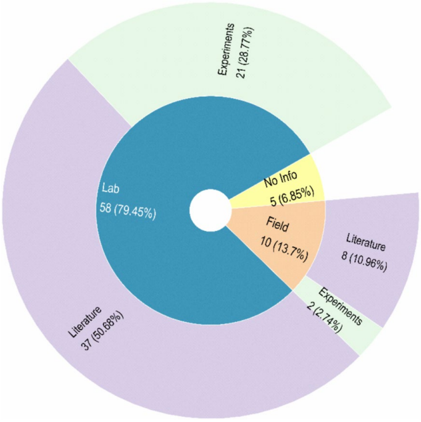
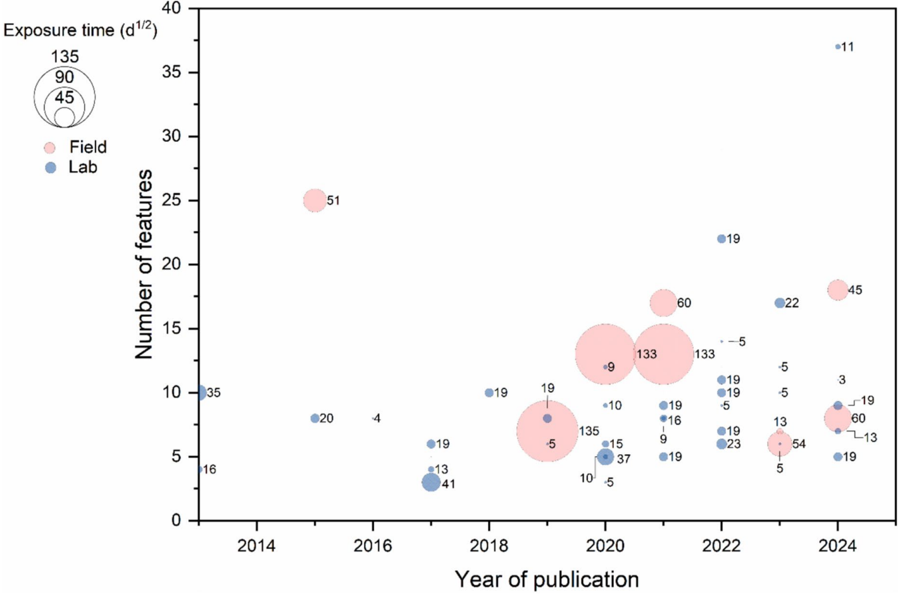
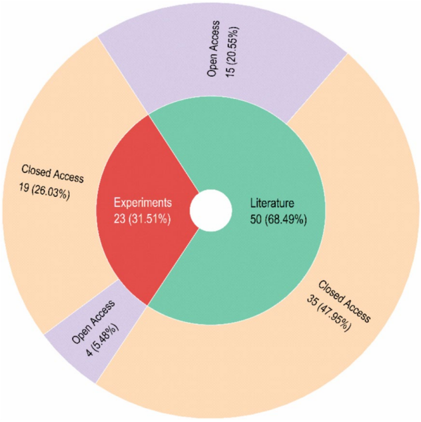
- Data sources are dominated by laboratory studies: 79% used laboratory data, 14% field data, and 7% did not mention origin; 68.49% relied on previously published data versus 31.51% generating their own, and 74% did not provide open access to databases.
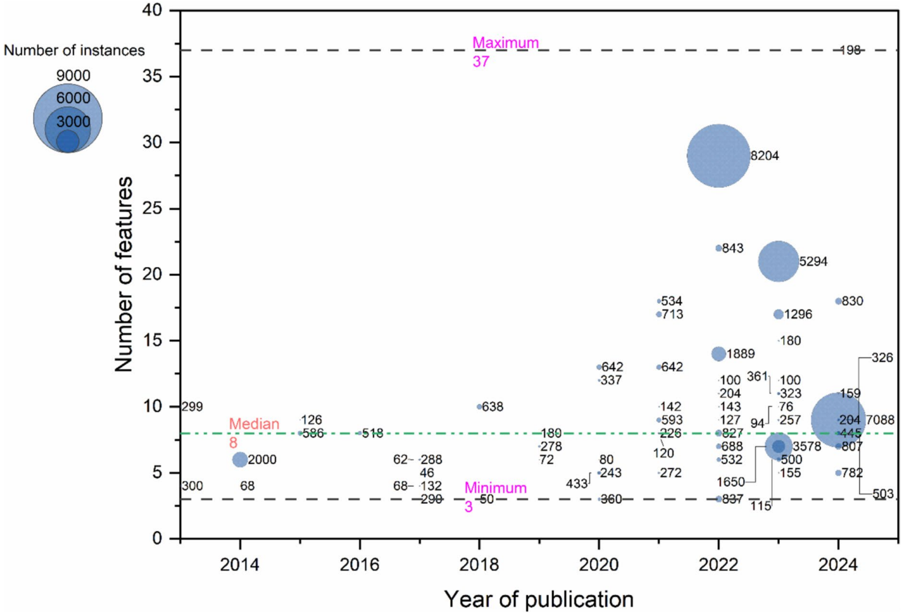
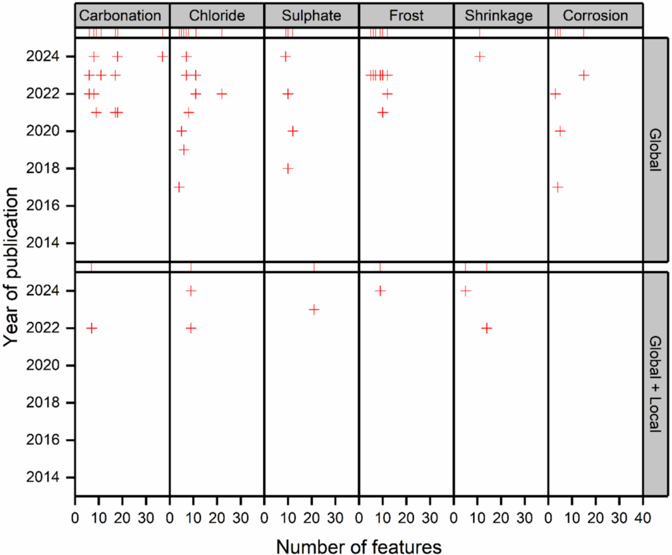
- Feature use ranged from 3 to 37 features with a median of 8; categories were mixture proportions, engineering properties, exposure conditions, test parameters, and chemical compositions, with growing emphasis on chemical composition.
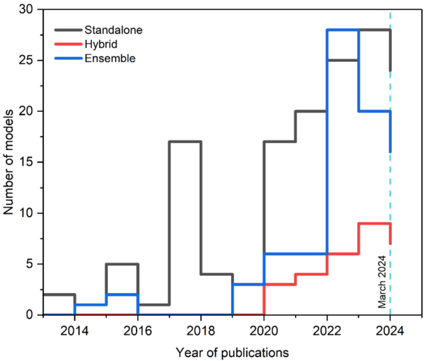
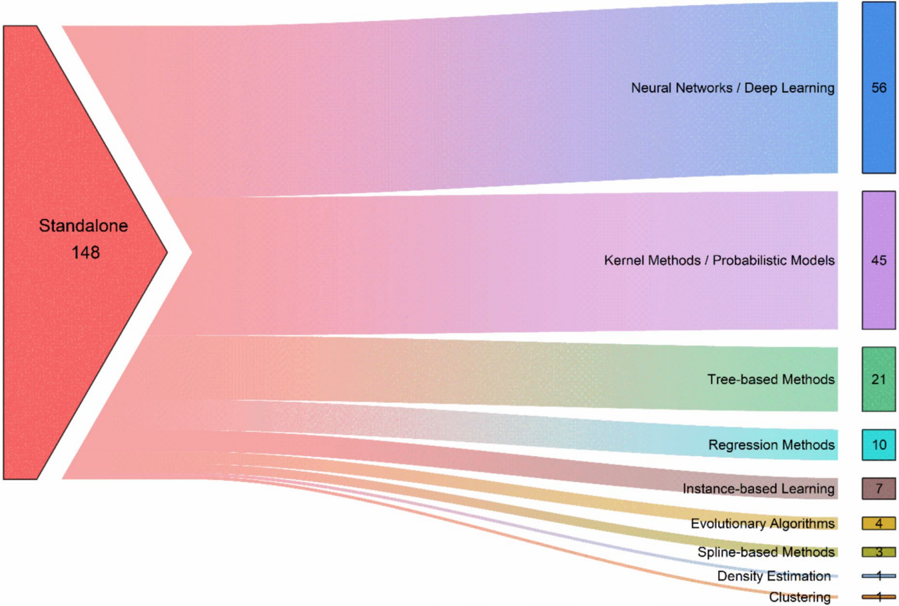
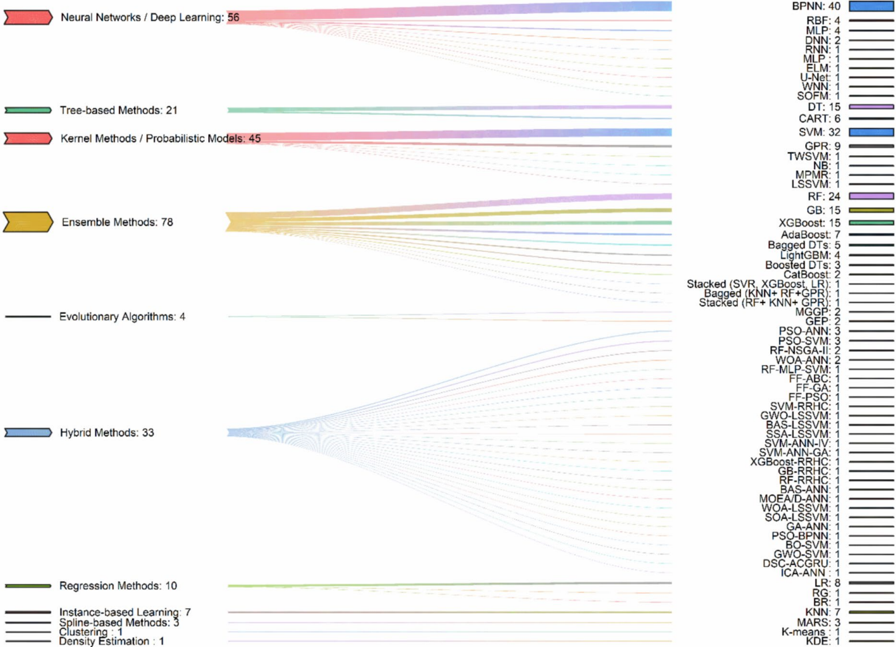
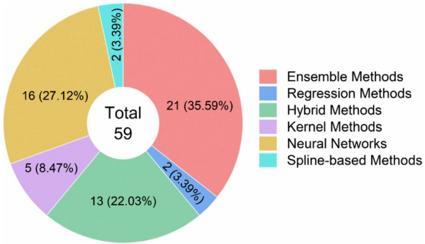
- Modeling was mostly standalone (148/259, 57%), followed by ensemble (78/259, 30%) and hybrid (33/259, 13%); ensemble use increased after 2020, and among best models ensemble represented 36%, neural networks 27%, and hybrid 22%.
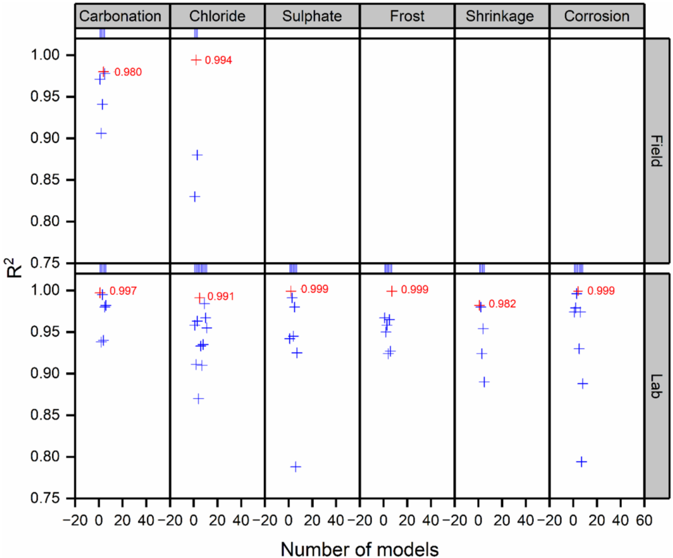
- Reported best test-set R² values ranged from 0.88 to almost 1; examples include carbonation ANN R² = 0.950, chloride profile PSO-SVM R² = 0.994, sulfate GWO-SVM R² = 0.972, frost HGSO-SVM R² = 0.997, and shrinkage ANN R² = 0.967.
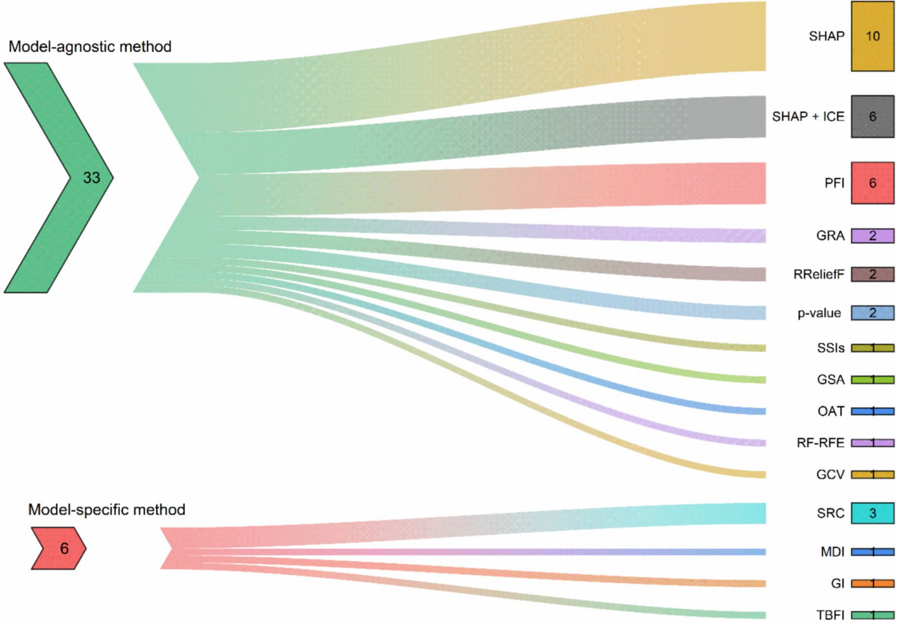
- Explainability was mostly model-agnostic (85%, 33 instances) versus model-specific (15%, 6 instances); SHAP was most frequent at 25%, SHAP+ICE at 15%, and PFI at 15%, with global explainability gaining traction from 2017 and increasing from 2021.
Methods
- Systematic review of peer-reviewed articles published 2013–2024, collected by end of March 2024, from Web of Science, Scopus, and Google Scholar using keywords such as “machine learning,” “durability prediction,” “cementitious materials,” and “concrete.”
- Titles and abstracts were screened, then full texts reviewed; inclusion focused on studies using machine learning for durability assessment, and papers were categorized by durability property, model type, and dataset characteristics.
- Only durability mechanisms explored in at least ten machine learning-based studies were included: carbonation, chloride-induced degradation, corrosion of steel reinforcement, frost damage, shrinkage, and sulfate attack; test-set R² was extracted to analyze trends.
- The review was prepared by members of Focus Group 4 within RILEM TC 315-DCS “Data-driven concrete science” and reviewed and approved by all TC 315-DCS members.
Limitations
- The paper states heavy reliance on laboratory-based data, limited use of field data, scarcity of newly generated datasets, and limited open access, which hampers broader validation and application.
- It states that models often do not account for binder types, consider a limited range of concrete types, rely on accelerated lab tests that may not predict long-term field performance, rarely report generalization capacity, and rarely incorporate fundamental physics or chemistry.
- Evident from the text: the review cutoff at March 2024 makes 2024 coverage incomplete; only six mechanisms with at least ten studies were included; high reported accuracies often came from comparisons of only 1–3 models and varied data preparation, training, and evaluation; field data may be decades old and CEM I-only, limiting relevance to current binder practices.
Model-written summary. Check it against the paper before relying on it.
Integrity signals
Registry
Cites
Statistics
Figures
Verification
Claims the paper makes
0 Valid · 11 Not valid · 51 Not checked · 124 Own results and interpretations
A result the paper reports from its own data — it cites no other source for it, so there is none to check. The quote shows it is in the paper.
In the paper
“highlighting a growing emphasis on chemical compositions.”
§ Machine learning in concrete durability: challenges and pathways identified by RILEM TC 315-DCS towards enhanced predictive models > Abstract
plain- Asserted: passes — The authors put it forward as true.
- Checkable: passes — It can be checked against evidence.
- Load-bearing: unclear — It is unclear whether the paper’s conclusions depend on it.
- Based: passes — The paper gives a reason why it holds.
A result the paper states — it cites no source for it, so there is none to check. The quote shows it is in the paper.
In the paper
“These findings highlight the increasing use of ensemble learning techniques, particularly XGBoost, GBDT, and RF, in predicting concrete frost resistance”
§ Machine learning in concrete durability: challenges and pathways identified by RILEM TC 315-DCS towards enhanced predictive models > 2.2.4 Frost attack
plainstates an association- Asserted: passes — The authors put it forward as true.
- Checkable: passes — It can be checked against evidence.
- Load-bearing: unclear — It is unclear whether the paper’s conclusions depend on it.
- Based: passes — The paper gives a reason why it holds.
In the paper
“For instance, Delgado et al. [83] developed models to capture both chloride penetration depth and diffusion coefficients in concrete subjected to drying-wetting cycles.”
§ Machine learning in concrete durability: challenges and pathways identified by RILEM TC 315-DCS towards enhanced predictive models > 2.2.2 Chloride attack
What the sources say
- Not checked yetcites [83] Delgado JMPQ, Silva FAN, Azevedo AC et al (2020) Artificial neural networks to assess the useful life of reinforced concrete elements deteriorated by accelerated chloride tests. J Build Eng 31:101445. https://doi.org/10.1016/j.jobe.2020.101445 source
plain- Asserted: passes — The authors put it forward as true.
- Checkable: passes — It can be checked against evidence.
- Load-bearing: unclear — It is unclear whether the paper’s conclusions depend on it.
- Based: passes — The paper gives a reason why it holds.
In the paper
“The proposed DSC-ACGRU model exhibited superior efficiency, precision, and accuracy compared to traditional machine learning models (SVM, DT, BPNN) and other deep learning models (CNN, CNN-LSTM).”
§ Machine learning in concrete durability: challenges and pathways identified by RILEM TC 315-DCS towards enhanced predictive models > 2.2.4 Frost attack
What the sources say
- Not checked yetcites [107] Liao X, Yan Q, Su L et al (2024) Automatic assessment of freeze-thaw damage in concrete structures using pie- zoelectric-based active sensing approach and deep learn- ing technique. Eng Struct 302:117453. https:// doi. org/ 10. 1016/j. engst ruct. 2024. 117453 108. Liu K, Zou C, Zhang X, Yan J (2021) Innovative predic- tion models for the frost durability of recycled aggregate concrete using soft computing methods. J Build Eng 34:101822. https:// doi. org/ 10. 1016/j. jobe. 2020. 101822 109. Wu X, Zheng S, Feng Z et al (2022) Prediction of the frost resistance of high-performance concrete base source
plain- Asserted: passes — The authors put it forward as true.
- Checkable: passes — It can be checked against evidence.
- Load-bearing: unclear — It is unclear whether the paper’s conclusions depend on it.
- Based: passes — The paper gives a reason why it holds.
A result the paper reports from its own data — it cites no other source for it, so there is none to check. The quote shows it is in the paper.
In the paper
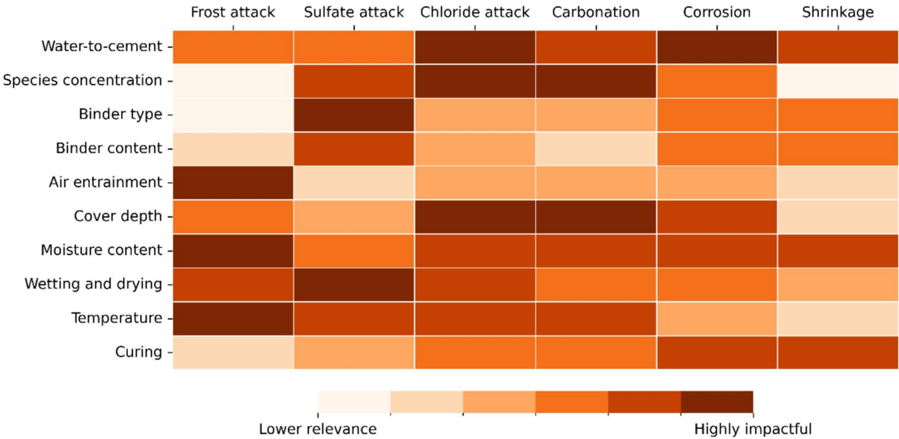
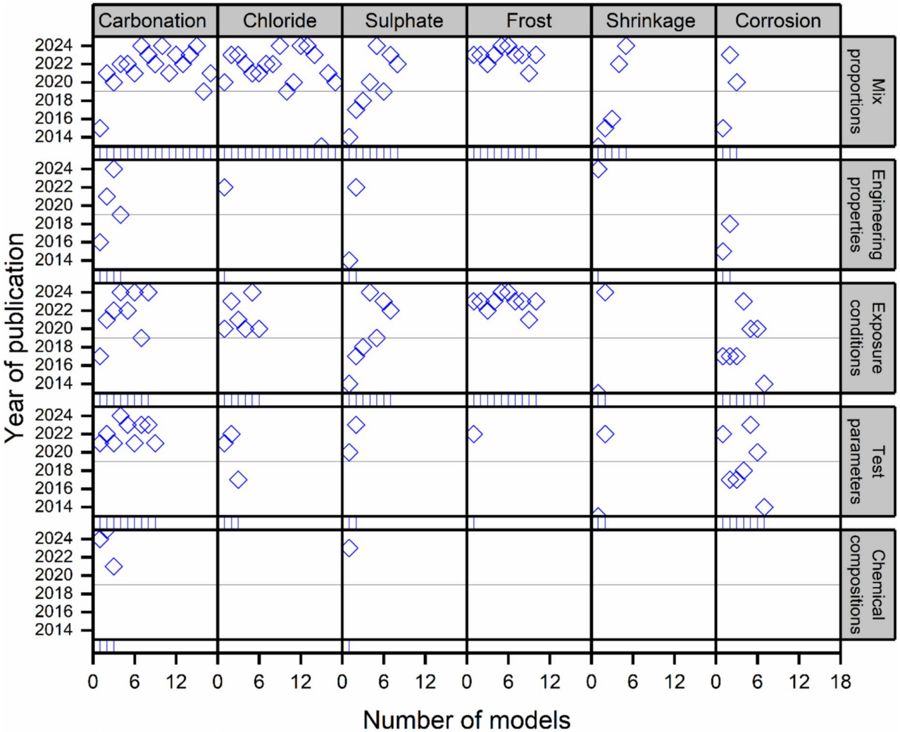
“Among the most frequently addressed features in the models are those related to the concrete mix design and exposure aggressiveness, with varying impact levels (Fig. 1).”
§ Machine learning in concrete durability: challenges and pathways identified by RILEM TC 315-DCS towards enhanced predictive models > 2.2 Review of machine learning models
plainstates an association- Asserted: passes — The authors put it forward as true.
- Checkable: passes — It can be checked against evidence.
- Load-bearing: unclear — It is unclear whether the paper’s conclusions depend on it.
- Based: passes — The paper gives a reason why it holds.
85 more claims
Create a free account to see all 186 claims and to verify the 70 references still open.
- The quote only partly states this claim. 3
- Probably not a substantial claim. 51
- It may state two separate claims as one. 52
Self-check
Percentages, sums and reported differences re-computed from the paper’s own numbers.
Each contradiction between two passages listed here was confirmed by an independent check.
Rated major: it would touch a result — a value a result rests on, reported and recomputed p-values on opposite sides of the significance level, two passages that conflict with no sign which is right, or a cited work retracted before this paper was published.
In the paper
§ Machine learning in concrete durability: challenges and pathways identified by RILEM TC 315-DCS towards enhanced predictive models > 6 Summary
“Esmaeili-Falak et al. [113] optimized SVM with ALO, GWO, and HGSO, with HGSO-SVM achieving the best performance (R 2 = 0.997)”
§ Machine learning in concrete durability: challenges and pathways identified by RILEM TC 315-DCS towards enhanced predictive models > 2.2.4 Frost attack
“Durability factor RAC 10 Mix proportion and exposure conditions 94 Literature Yes Lab Not given SVM 0.924Not given Global 2023 [113]”
Rated minor: it would not touch a result — a value no result rests on, a p-value that stays on the same side of the significance level, or a conflict that is clerical, resolved elsewhere in the paper, or outside its own findings.
In the paper
§ Machine learning in concrete durability: challenges and pathways identified by RILEM TC 315-DCS towards enhanced predictive models > 4.3 Models' performance
“Notably, for field experiments, model performance was reported exclusively for chloride attack and carbonation, as these were the only degradation phenomena modelled using machine learning techniques.”
§ Machine learning in concrete durability: challenges and pathways identified by RILEM TC 315-DCS towards enhanced predictive models > 2.2.5 Shrinkage
“Freezethaw cycles Concrete Not given Freezethaw cycles Not given Experi-ments No Field Not given GBM, GLM, RF, GAM 0.990 --2024 [115]”
Rated minor: it would not touch a result — a value no result rests on, a p-value that stays on the same side of the significance level, or a conflict that is clerical, resolved elsewhere in the paper, or outside its own findings.
In the paper
§ Machine learning in concrete durability: challenges and pathways identified by RILEM TC 315-DCS towards enhanced predictive models > 2.2.1 Carbonation
“Majlesi et al. [69] developed a model to predict the carbonation depth of concrete exposed to long-term (up to 10 years) corrosive environments.”
§ Machine learning in concrete durability: challenges and pathways identified by RILEM TC 315-DCS towards enhanced predictive models > 2.2.1 Carbonation
“Car-bonation depth Concrete structures 6 Concrete quality and environmental conditions Not given DURA-CON project at 24 urban stations in 10 different countries No Natural 2920 (8 years) ANN 0.976 Sensitivity analysis -2023 [69]”
Citations
Cites
Human-level control through deep reinforcement learning
Mnih, V., Kavukcuoglu, K., Silver, D., Rusu, A. A., Veness, J., Bellemare, M. G., Graves, A., Riedmiller, M., Fidjeland, A. K., Ostrovski, G., et al. (2015) · Nature · doi:10.1038/nature14236 · Cited by 30,357
The Elements of Statistical Learning
Hastie, T., Tibshirani, R., & Friedman, J. (2009) · Springer Series in Statistics · doi:10.1007/978-0-387-84858-7 · Cited by 25,970
Arrieta, A. B., Díaz-Rodríguez, N., Del Ser, J., Bennetot, A., Tabik, S., Barbado, A., García, S., Gil-López, S., Molina, D., Benjamins, R., et al. (2019) · arXiv · doi:10.48550/arxiv.1910.10045 · Cited by 11,321 · cited 1×
“One major limitation is that these models often do not account for the various For instance, a study examining the factors affecting chloride penetration in concrete demonstrated that the relative influence of key features evolves over time [139].”
Barredo Arrieta, A., Díaz-Rodríguez, N., Del Ser, J., Bennetot, A., Tabik, S., Barbado, A., Garcia, S., Gil-Lopez, S., Molina, D., Benjamins, R., et al. (2020) · Information Fusion · doi:10.1016/j.inffus.2019.12.012 · Cited by 10,423 · cited 1×
“One major limitation is that these models often do not account for the various For instance, a study examining the factors affecting chloride penetration in concrete demonstrated that the relative influence of key features evolves over time [139].”
Pattern Recognition and Machine Learning
(2006) · doi:10.1007/978-0-387-45528-0 · Cited by 9,824
(2012) · Cited by 9,062
Peeking Inside the Black-Box: A Survey on Explainable Artificial Intelligence (XAI)
Adadi, A., & Berrada, M. (2018) · IEEE Access · doi:10.1109/access.2018.2870052 · Cited by 6,294
Lipton, Z. C. (2018) · Queue · doi:10.1145/3236386.3241340 · Cited by 5,427
The Mythos of Model Interpretability
Lipton, Z. C. (2016) · arXiv · doi:10.48550/arxiv.1606.03490 · Cited by 5,422
(2006) · The MIT Press eBooks · doi:10.7551/mitpress/9780262033589.001.0001 · Cited by 4,280
Research works printed but not linked: 14
- Neville AM, Brooks JJ (2010) Concrete technology, 2nd edn. Pearson Education Limited, Harlow
- Alpaydin E (2020) Introduction to machine learning, 2nd edn. MIT press, Cambridge, MA
- Alpaydin E (2020) Introduction to machine learning, 2nd edn. MIT press, Cambridge, MA 13. Witten IH, Frank E, Hall MA (2011) Data mining: prac- tical machine learning tools and techniques. Morgan Kaufmann, Burlzzington, MA 14.
- Bishop CM (2006) Pattern recognition and machine learning. Springer, Cham
- Chapelle O, Scholkopf B, Zien A (2006) Semi-super- vised learning. MIT Press, London 19. Sutton RS, Barto AG (2018) Reinforcement learning: an introduction, 2nd edn. MIT Press, Cambridge, MA 20.
- Lian S, Zheng K, Zhao Y et al (2023) Investigation the effect of freeze–thaw cycle on fracture mode classification in concrete based on acoustic emission parameter analysis. Constr Build Mater 362:129789. https://doi.org/10.1016/j.conbuildmat.2022.129789 · DOI
- Wu X, Zheng S, Feng Z et al (2022) Prediction of the frost resistance of high-performance concrete based on RF-REF: a hybrid prediction approach. Constr Build Mater 333:127132. https://doi.org/10.1016/j.conbuildmat.2022.127132 · DOI
- Qiao L, Miao P, Xing G et al (2023) Interpretable machine learning model for predicting freeze-thaw damage of dune sand and fiber reinforced concrete. Case Stud Constr Mater 19:e02453. https://doi.org/10.1016/j.cscm.2023.e02453 · DOI
- Zhang J, Zhang M, Dong B, Ma H (2022) Quantitative evaluation of steel corrosion induced deterioration in rubber concrete by integrating ultrasonic testing, machine learning and mesoscale simulation. Cem Concr Compos 128:104426. https://doi.org/10.1016/j.cemconcomp.2022.104426 · DOI · Paper page
- Salami BA, Rahman SM, Oyehan TA et al (2020) Ensemble machine learning model for corrosion initiation time estimation of embedded steel reinforced self-compacting concrete. Measurement 165:108141. https://doi.org/10.1016/j.measurement.2020.108141 · DOI
- Taffese WZ, Nunes S (2024) Machine learning-based prediction of SCC mortar properties across various cement types. In: RILEM conference on sustainable materials & structures: meeting the major challenges of the 21st century-SMS 2024. Toulouse 135.
- Zhang LV, Marani A, Nehdi ML (2022) Chemistry-informed machine learning prediction of compressive strength for alkali-activated materials. Constr Build Mater 316:126103. https://doi.org/10.1016/j.conbuildmat.2021.126103 · DOI · Paper page
- Amey SL, Geiker M, Manning DG et al (2000) Service- life prediction-state-of-the-art report. ACI Committee, Montreal 145.
- Costa A, Appleton J (2001) Concrete carbonation and chloride penetration in a marine environment. Concr Sci Eng 3:242-249 153.
Cited by
Liang, D., Xue, X., Liu, J., Cui, Y., Sun, Z., Zhang, Y., Zhang, T., & Xu, L. (2026) · Developments in the Built Environment · doi:10.1016/j.dibe.2026.100964 · Cited by 50
Muhit, I. B., Al‐Fakih, A., Suntharalingam, T., & Michel, A. (2025) · Archives of Computational Methods in Engineering · doi:10.1007/s11831-025-10373-x · Cited by 29
Miah, M. J., Miah, M. S., Mughal, H., & Hasan, N. M. S. (2025) · Materials · doi:10.3390/ma18143298 · Cited by 26
Concrete Material Variability and Machine Learning Model Performance: A Comprehensive Review
Bahmani, H., Mostafaei, H., Santos, P., & Ferrández, D. (2026) · Buildings · doi:10.3390/buildings16030556 · Cited by 25
Marahla, R. H. A., Shehzad, M. K., Albostami, A. S., Ghadi, M. Q., Aldmour, S. T., & Almarahlleh, N. H. (2025) · KSCE Journal of Civil Engineering · doi:10.1016/j.kscej.2025.100390 · Cited by 18
Getachew, E. M., Taffese, W. Z., Espinosa-Leal, L., & Yehualaw, M. D. (2025) · Sustainability · doi:10.3390/su17188453 · Cited by 16
Self-citationImpact of Early-Age Curing and Environmental Conditions on Shrinkage and Microcracking in Concrete
Bacharz, M., Bacharz, K., & Trąmpczyński, W. (2025) · Materials · doi:10.3390/ma18133185 · Cited by 16
Flah, M., Marani, A., Suleiman, A. R., & Nehdi, M. L. (2026) · Renewable and Sustainable Energy Reviews · doi:10.1016/j.rser.2026.116730 · Cited by 13
Self-citationCouto, R. A., Reis, E. D., Campos, I. A. G., Dalip, D. H., Poggiali, F. S. J., & Ludvig, P. (2025) · Journal of Building Pathology and Rehabilitation · doi:10.1007/s41024-025-00701-w · Cited by 9
Machine learning for predicting compressive strength: The impact of sand gradation in cement mortar
Sathiparan, N. (2025) · Progress in Engineering Science · doi:10.1016/j.pes.2025.100109 · Cited by 8
Padavala, S. S. A. B., Kothuri, D., & Gashe, A. M. (2026) · Scientific Reports · doi:10.1038/s41598-026-48502-6 · Cited by 8
Tijani, I. A., Wakjira, T. G., Kanaan, D. M., Alam, M. S., & Haroglu, H. (2026) · Archives of Computational Methods in Engineering · doi:10.1007/s11831-026-10501-1 · Cited by 7
Effects of recycled micro-powder dosage on concrete durability and prediction model development
Jiao, C., Meng, F., & Wu, M. (2025) · Journal of Building Engineering · doi:10.1016/j.jobe.2025.114747 · Cited by 7
Padavala, S. S. A. B., Kothuri, D., & Gashe, A. M. (2026) · Scientific Reports · doi:10.1038/s41598-026-52618-0 · Cited by 6
A comprehensive review of ceramsite concrete: Design, performance and sustainable applications
Li, Y., Yang, Y., Guo, S., Rahman, M. Z., & Zhu, D. (2025) · Journal of Building Engineering · doi:10.1016/j.jobe.2025.114709 · Cited by 4
Real-Time Concrete Workability Estimation in Transit via an IoT-Enabled Cyber-Physical System
Catti, P., Nikolakis, N., Ntoulmperis, M., Lakkas-Pyknis, V., & Alexopoulos, K. (2025) · Electronics · doi:10.3390/electronics14163289 · Cited by 4
Azimi, N., Hassanshahi, O., Bakhshi, M., Mehdipour, Z., Sangdehi, S. M. S., & Bajāre, D. (2026) · Applied Sciences · doi:10.3390/app16147030 · Cited by 4
Latif, J., Zhang, S., Rehman, S. U., Wajahat, A., Nazir, A., & Imran, A. (2026) · Neurocomputing · doi:10.1016/j.neucom.2026.133502 · Cited by 3
Sustainable Concrete Mix Designs: Multiobjective Optimization through Machine Learning Approaches
Hammoud, A., Karaki, A., Dujović, M., Battalgazy, B., Arróyave, R., & Masad, E. A. (2026) · Journal of Computing in Civil Engineering · doi:10.1061/jccee5.cpeng-6748 · Cited by 3
Data-informed multi-scale prediction of compressive strength in concrete with ground recycled cement
Getachew, E. M., Espinosa-Leal, L., Yehualaw, M. D., & Taffese, W. Z. (2026) · Materials Today Communications · doi:10.1016/j.mtcomm.2026.115277 · Cited by 3
Self-citationTüylü, A. N. A., Tüylü, S., Adıguzel, D., & Demir, I. B. (2026) · Buildings · doi:10.3390/buildings16051059 · Cited by 3
Lee, M., Min, J., Lee, B., Choi, H., & Kim, H.-K. (2026) · Construction and Building Materials · doi:10.1016/j.conbuildmat.2026.146058 · Cited by 2
Kumar, P. P., Giridhar, V., & Ghorpade, V. G. (2026) · Discover Concrete and Cement · doi:10.1007/s44416-026-00092-2 · Cited by 2
Chaitanya, D. V. S. R. K., Narayan, B. B., Raut, U., Sankararao, G. G., Kumar, G. P., Kumar, G. A., & Dash, B. (2025) · Asian Journal of Civil Engineering · doi:10.1007/s42107-025-01464-y · Cited by 2
Taffese, W. Z., & Espinosa-Leal, L. (2026) · Journal of Building Engineering · doi:10.1016/j.jobe.2026.115973 · Cited by 2
Self-citationRai, A., Sharma, U. K., & Ball, R. J. (2026) · Journal of Materials in Civil Engineering · doi:10.1061/jmcee7.mteng-23555 · Cited by 1
Li, J., & Yuan, C. (2026) · Buildings · doi:10.3390/buildings16173471 · Cited by 1
Alqurashi, M. (2025) · Case Studies in Construction Materials · doi:10.1016/j.cscm.2025.e05191 · Cited by 1
Liu, D., Liu, M., Han, H., & Du, S. (2026) · International Journal of Low-Carbon Technologies · doi:10.1093/ijlct/ctag113 · Cited by 1
Sharma, P., Sharma, A., & Senagah, A. (2026) · Scientific Reports · doi:10.1038/s41598-026-67230-5 · Cited by 1
He, Q., Li, Z., & Gong, K. (2026) · arXiv · doi:10.48550/arxiv.2606.06765 · Cited by 1
Rai, P. K., & Srivastava, V. (2026) · The European Physical Journal Plus · doi:10.1140/epjp/s13360-026-07869-1 · Cited by 1
Pandit, S. U., & Patil, V. K. (2026) · Innovative Infrastructure Solutions · doi:10.1007/s41062-026-02748-1 · Cited by 1
Sanit, P., & Prasittisopin, L. (2026) · Discover Artificial Intelligence · doi:10.1007/s44163-026-01747-6 · Cited by 1
Microstructure-based three-dimensional study of sulfate deterioration in variably saturated concrete
Pan, T. (2025) · Journal of Sustainable Cement-Based Materials · doi:10.1080/21650373.2025.2548854 · Cited by 1
Zhou, Y., Zeng, X., Long, G., Xie, Y., Dong, R., Ma, K., Tang, Z., Fu, Q., Pan, Z., & Li, B. (2026) · Journal of Building Engineering · doi:10.1016/j.jobe.2026.117029 · Cited by 1
Prediction Models for Concrete Aging Using Machine Learning
Javvaji, J. S. R. N., Sujatha, M. G., Mamaghani, I. H. P., & Ranganathan, P. (2025) · Cyber Awareness and Research Symposium (CARS) · doi:10.1109/cars67163.2025.11337865
Getachew, E. M., Taffese, W. Z., Espinosa-Leal, L., & Yehualaw, M. D. (2026) · Engineering Applications of Artificial Intelligence · doi:10.1016/j.engappai.2026.115996
Self-citationModeling the concrete carbonation depth using a physics-guided CatBoost algorithm
Abbas, M. M., & Bărbulescu, A. (2026) · World Journal of Engineering · doi:10.1108/wje-07-2026-0513
Azimi, N., Hassanshahi, O., Bakhshi, M., Alzard, M. H. H., & Bajāre, D. (2026) · Construction Materials · doi:10.3390/constrmater6050076
Šomodíková, M., Simwanda, L., Sýkora, M., & Lehký, D. (2026) · Structure and Infrastructure Engineering · doi:10.1080/15732479.2026.2751141
Zhang, C., Cheng, S., Tao, S., & Wang, Z. (2026) · Structural Safety · doi:10.1016/j.strusafe.2026.102749
Kim, J., Lee, D., & Bajāre, D. (2026) · International Journal of Concrete Structures and Materials · doi:10.1186/s40069-026-00965-7
ÖZTEBER, S., Mardani, N., Kobya, V., Göç, G. T., Çavdur, F., & Mardani, A. (2026) · Engineering Science and Technology an International Journal · doi:10.1016/j.jestch.2026.102582
Wang, W., Lu, Y., Zhang, Y., & Lv, Q. (2026) · Case Studies in Construction Materials · doi:10.1016/j.cscm.2026.e06398
Bai, T., Zhao, Y., Liu, T., Umar, H. A., Hu, X., & Shi, C. (2026) · Cement and Concrete Composites · doi:10.1016/j.cemconcomp.2026.106858
A conceptual AI-driven architecture coupling sustainable materials data and structural performance
Mahamat, A. A., & Leklou, N. (2026) · Innovative Infrastructure Solutions · doi:10.1007/s41062-026-03063-5
Akbulut, Z. F., Güler, S., Abbas, Y. M., Ashour, A., Yavuz, D., & Ahmad, S. (2026) · Arabian Journal for Science and Engineering · doi:10.1007/s13369-026-11680-6
Li, H., Qin, L., Guo, T., Wang, T., Tu, Y., Wang, C., & Sas, G. (2026) · SSRN Electronic Journal · doi:10.2139/ssrn.7565026
Tan, T., Lu, X., Li, W., & Tian, B. (2026) · Construction and Building Materials · doi:10.1016/j.conbuildmat.2026.148159
Azimi, N., Hassanshahi, O., Bakhshi, M., Qaderi, S., Ghaderi, F., & Bajāre, D. (2026) · Processes · doi:10.3390/pr14193140
Alagarsamy, R., & Ganesan, L. (2026) · Matéria (Rio de Janeiro) · doi:10.1590/1517-7076-rmat-2025-0692
Proceedings of the 13th Asean Workshop on Information Science and Technology (AWIST 2025)
Luckyardi, S., Mohd, M., & Shirai, K. (2025) · JAIST Repository
Xia, J.-R., Sun, H.-Q., Liu, H.-Z., Zeng, J., & Zhuge, Y. (2026) · Engineering Applications of Artificial Intelligence · doi:10.1016/j.engappai.2026.116777
Ye, J., & Qian, C. (2026) · ACI Materials Journal · doi:10.14359/51751979
Rahman, T., Momin, M. F., Podder, S., Provasha, A. A., & Kumar, L. (2025) · Journal of Building Pathology and Rehabilitation · doi:10.1007/s41024-025-00746-x
Wickramathilake, G. G. T. D., Jayasinghe, C., & Ariyaratne, I. E. (2025) · International Journal of Construction Management · doi:10.1080/15623599.2025.2595504
Varzaneh, A. S., & Naderi, M. (2026) · Modelling—International Open Access Journal of Modelling in Engineering Science · doi:10.3390/modelling7010013
Advanced Machine Learning Approaches for Predicting Long-Term Concrete Shrinkage
Nguyen‐Sy, T. (2026) · Journal of Advanced Concrete Technology · doi:10.3151/jact.24.37
Shrinkage Cracking in Concrete: An Actuarial–Civil Engineering Framework for Insurance Applications
Feres, S., Moubayed, H. A., Halawani, H., Daher, M. M., & Chendeb, N. (2025) · International Conference on Computer and Applications (ICCA) · doi:10.1109/icca66035.2025.11431033
Tran, K. H., Mac, D.-H., & Ngo, N.-K. (2026) · Lecture notes in networks and systems · doi:10.1007/978-3-032-15836-9_23
Faridmehr, I., Ozlutas, K., & Azarsa, M. (2026) · Academia Engineering · doi:10.20935/acadeng8209
AKINTUNDE, O. P., Snyman, J., Ackerman, C. E., & Kupolati, W. K. (2026) · International Journal of Civil Engineering · doi:10.14445/23488352/ijce-v13i5p110
Khan, M. A., Aziz, W., & Ahmed, D. (2026) · Policy Research Journal · doi:10.5281/zenodo.21096494
Khan, M. A., Aziz, W., Aslam, H. M. S., & Ahmed, D. (2026) · Policy Research Journal · doi:10.5281/zenodo.21278982
CONCRETE LABORATORY TESTING IMPORTANCE IN CIVIL STRUCTURE INTEGRITY: A COMPREHENSIVE REVIEW
Khan, M. A., Kanwal, H., Aslam, H. M. S., & Ahmed, D. (2026) · Policy Research Journal · doi:10.5281/zenodo.21295828
Jamshidzehi, H. A., Ghasri, M., & Abbasian, A. R. (2026) · Results in Engineering · doi:10.1016/j.rineng.2026.112700
Slow Dynamics in Concrete: Effects of Temperature, Strength Variation, and Microcracking Damage
Malone, C., & Zhu, J. (2026) · Journal of Nondestructive Evaluation · doi:10.1007/s10921-026-01427-6
Kazemi, R., & Khalvati, A. M. (2026) · Scientific Reports · doi:10.1038/s41598-026-71280-0
AI-Based Durability Prediction of RCC Buildings with Floating Columns using STAAD.Pro Analysis
Solanki, K. S., & Prajapati, M. K. (2026) · International Journal of Advanced Engineering Research and Science · doi:10.22161/ijaers.139.3
Ameh, D., & Oni, R. (2026) · Faculty of Engineering and Technology International Conference · doi:10.63748/afhs4z62
Insights from historical ACR-affected concrete: freeze–thaw resistance under chloride exposure
Turk, T., Štukovnik, P., Marinšek, M., & Bosiljkov, V. (2026) · Materials and Structures · doi:10.1617/s11527-026-03315-x
Amin, M. N., Ahmad, A., Ahmed, E. S., Amin, M. T., Shakir, I., & Faraz, M. I. (2026) · REVIEWS ON ADVANCED MATERIALS SCIENCE · doi:10.1515/rams-2025-0318
Zong, G., Shen, H., Wang, C., & Zhang, X. (2026) · Coatings · doi:10.3390/coatings16111305
Wani, T. I., Rallapalli, S., Robert, D., Singhal, A., & Pramanik, B. K. (2026) · Journal of Cleaner Production · doi:10.1016/j.jclepro.2026.149866
Abdullah, A., & Adedeji, I. (2026) · Research Square · doi:10.21203/rs.3.rs-11132514/v1
Ghahjavarestani, M. K., Hanif, H. R., & Ghafourivayghan, M. (2026) · Scientific Reports · doi:10.1038/s41598-026-80431-2
Sunkpho, J., Devarangadi, M., & Wipulanusat, W. (2026) · Journal of Structural Integrity and Maintenance · doi:10.1080/24705314.2026.2763271
Khan, S. S., Gull, I., Sholla, S., & Shah, A. H. (2026) · Journal of Adhesion Science and Technology · doi:10.1080/01694243.2026.2760417
Sağsöz, A. E., Caf, M., Katipoğlu, O. M., Şengül, S., & Yildiz, A. T. (2026) · Geothermics · doi:10.1016/j.geothermics.2026.103904
Metadata
- Authors
- Taffese, W. Z., Hilloulin, B., Villagran Zaccardi, Y., Marani, A., Nehdi, M. L., Hanif, M. U., Kamath, M., Nunes, S., von Greve-Dierfeld, S., & Kanellopoulos, A.
- Affiliations
- Aalto University (FI)
- École Centrale de Nantes (FR)
- University of Toronto (CA)
- University of Guelph (CA)
- University of Southern Denmark (DK)
- Delft University of Technology (NL)
- University of Hertfordshire (GB)
- Corresponding author
- Taffese, Woubishet Zewdu
- ORCID
- Venue
- Materials and Structures
- Published
- 2025-05
- Volume
- 58
- Issue
- 4
- Pages
- 145
- ISSN
- 0025-5432 (ISSN-L)
- 1359-5997
- 1871-6873
- OpenAlex
- W4410158787
- Cited by
- 83
- References
- 120
- Citations by year
- 2026: 64 · 2025: 19
- FWCI
- 22.08
- Type
- journal article
- Language
- en
- Open access
- hybrid
- doi.org
- Licence
- cc-by
- creativecommons.org/licenses/by/4.0 (tdm)
- creativecommons.org/licenses/by/4.0 (vor, 6 d)
- Locations
- Materials and Structures (publishedVersion, cc-by)
- Aaltodoc (Aalto University) (publishedVersion, other-oa)
- University of Southern Denmark Research Portal (University of Southern Denmark) (publishedVersion, cc-by)
- HAL (submittedVersion, cc-by)
- University of Hertfordshire Research Archive (University of Hertfordshire) (submittedVersion, cc-by)
- Funders
- Aalto University
- Topics
- Physical Sciences › Engineering › Civil and Structural Engineering › Concrete Corrosion and Durability
- Physical Sciences › Engineering › Building and Construction › Structural Behavior of Reinforced Concrete
- Physical Sciences › Engineering › Civil and Structural Engineering › Concrete and Cement Materials Research
- Keywords
- concrete durability, machine learning, concrete deterioration mechanisms, carbonation, chloride-induced deterioration, sulfate attack, frost damage, shrinkage, reinforcement corrosion, ensemble learning, hybrid model, artificial neural networks, model explainability, SHAP, concrete mix design, multi-task learning, durability prediction, data sharing
About these checks
Registry, retraction, Cites and statistics results are computed, not judged, with one exception: a printed reference that no index lists is read once by a model before it counts as a citation error. Claims are extracted by a model and kept only when their quote appears verbatim in the text; each cited source is then checked, with a model’s help, for whether it says what the claim relies on. Those verdicts can be wrong — read the claim’s quote and the cited source before relying on one.
A language model drew the claims from the paper on 2026-11-27, under version 3 of the claim definition (model deepseek-v4.1-flash, prompt extract-v3).
A second model labelled each claim on 2026-11-27 (model jev-1.13-20260917, definition revision gold-guideline-v0.2).
Statistics and arithmetic are recomputed, not judged.
Confidence bands are shown only for fields calibrated on our annotated test set. None is calibrated yet, so no band is shown.
What counts as a claim ›How we measure confidence ›How we check this ›
Are you an author, or do you see a problem with this page? Request a review
Data sources
Bibliographic data: Semantic Scholar, OpenAlex, Crossref.
Contains information from the Semantic Scholar Academic Graph Datasets, made available under the ODC Attribution License (ODC-BY 1.0).
Semantic Scholar’s data is described in: Kinney, R., et al. (2023). The Semantic Scholar Open Data Platform. arXiv:2301.10140.
