

Machine learning in concrete durability: challenges and pathways identified by RILEM TC 315-DCS towards enhanced predictive models
Open accessThe DOI matches its Crossref record; 122 of the 122 references it cites were found in a registry or an index; none of the 70 sources its claims cite is checked for support yet.
Abstract
This review provides an in-depth examination of machine learning applications in assessing concrete durability from 2013 to 2024, with a particular focus on critical degradation mechanisms, including carbonation, chloride-induced deterioration, sulfate attack, frost damage, shrinkage, and corrosion. It underscores the field’s heavy reliance on laboratory-based data and notes the limited use of field data and the scarcity of newly generated datasets. The review reveals that most studies utilize existing literature-based datasets, with few contributing novel data and limited open access to these databases, which hampers broader validation and application. The review classifies the features analyzed in studies into categories such as mixture proportions, engineering properties, exposure conditions, test parameters, and chemical compositions, highlighting a growing emphasis on chemical compositions. Modeling approaches are predominantly standalone, though ensemble and hybrid models are increasingly prevalent, with ensemble models showing particularly strong performance in recent years. High accuracy is observed across studies, with ensemble models, neural networks, and hybrid models leading in performance. Furthermore, the review stresses the growing importance of model explainability, noting that model-agnostic methods like SHAP are frequently used and that the focus on explainability has increased. To propel the field forward, the review advocates for the development of diverse new datasets that include both the chemical and physical properties of various mix ingredients and improved data-sharing practices. It recommends adopting a multi-task learning approach to simultaneously address multiple deterioration mechanisms, which can yield deeper insights and support the creation of more durable concrete structures.
Overview
CoChat Summary
TL;DR
This RILEM TC 315-DCS review synthesizes machine learning applications for concrete durability from 2013 to 2024 across carbonation, chloride-induced deterioration, sulfate attack, frost damage, shrinkage, and corrosion. It reports high predictive accuracy but heavy reliance on laboratory and literature data, limited field data and open data, and recommends new datasets, data sharing, and multi-task learning.
Key findings
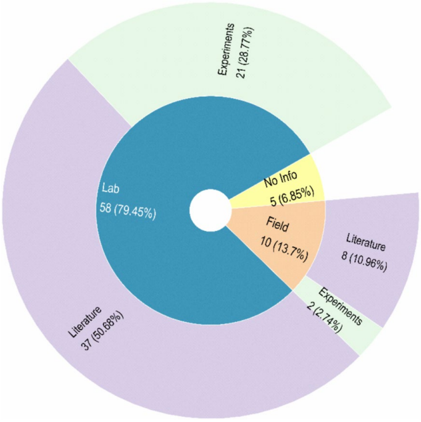
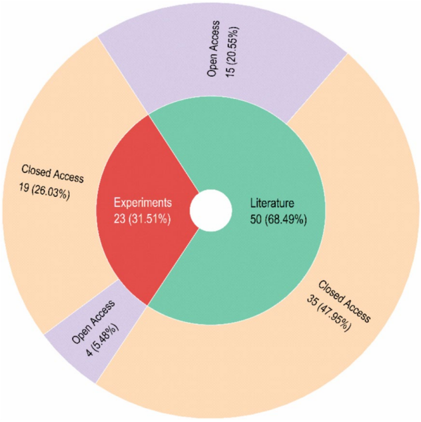
- Data sources are dominated by laboratory studies: 79% used laboratory data, 14% field data, and 7% did not mention origin; 68.49% relied on previously published data versus 31.51% generating their own, and 74% did not provide open access to databases.
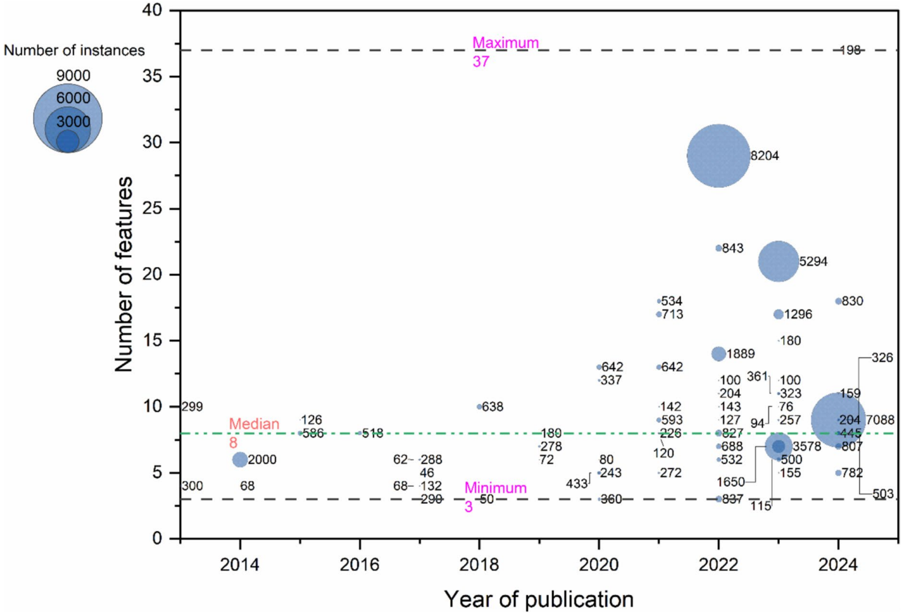
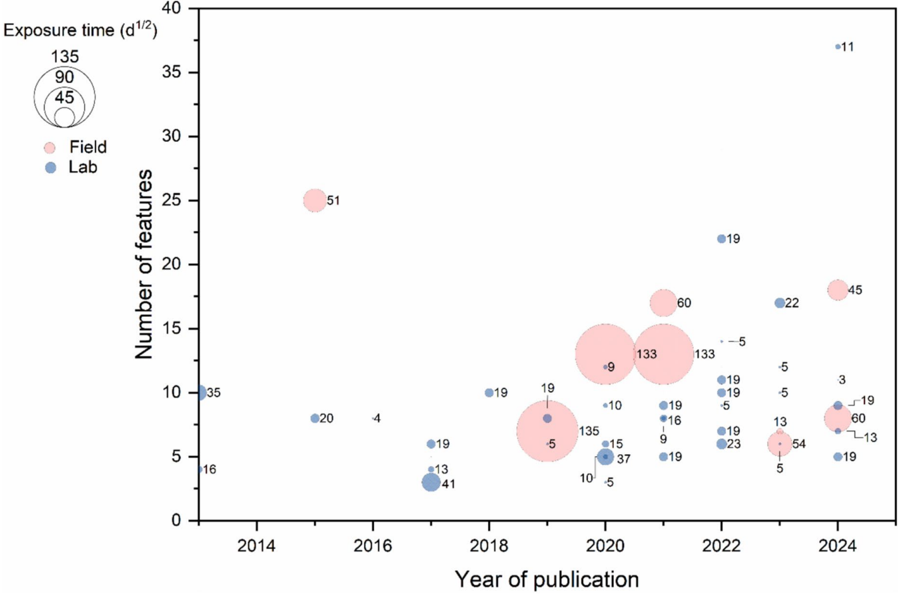
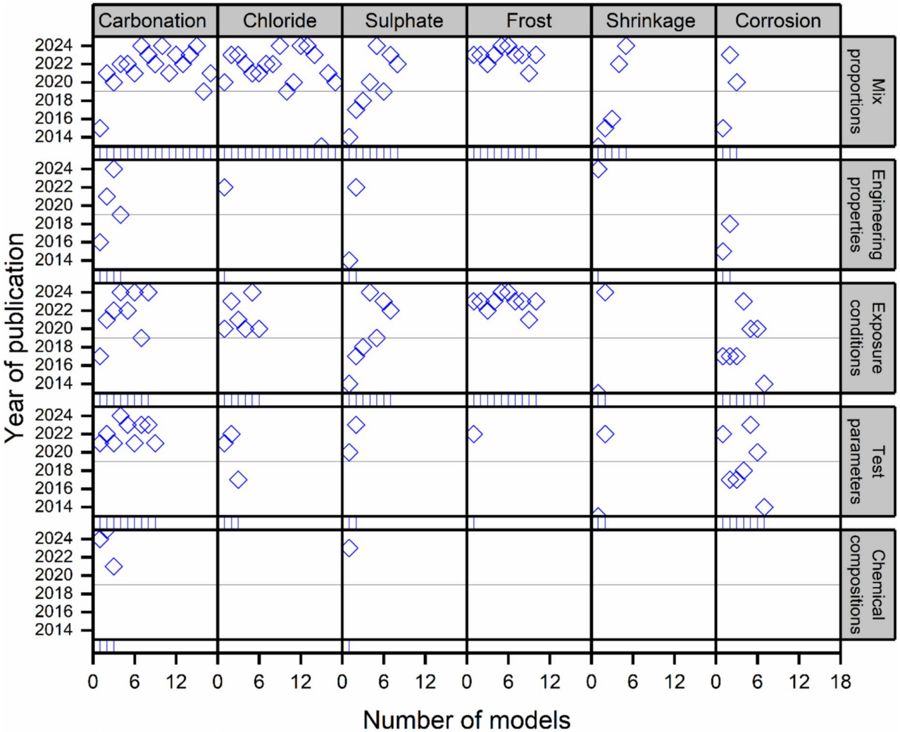
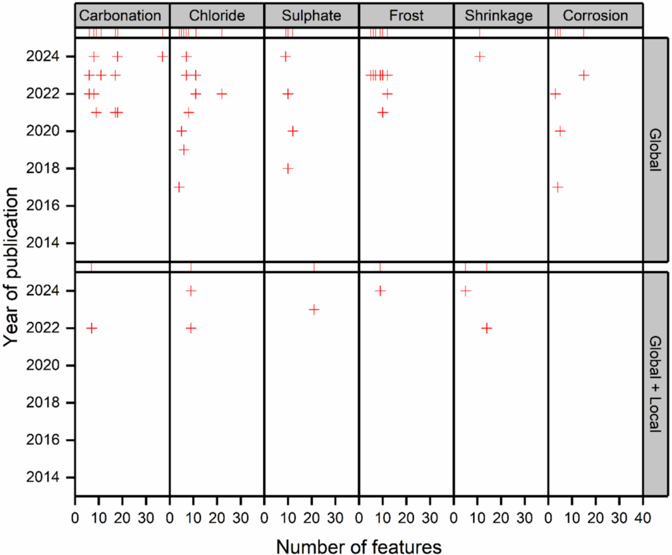
- Feature use ranged from 3 to 37 features with a median of 8; categories were mixture proportions, engineering properties, exposure conditions, test parameters, and chemical compositions, with growing emphasis on chemical composition.
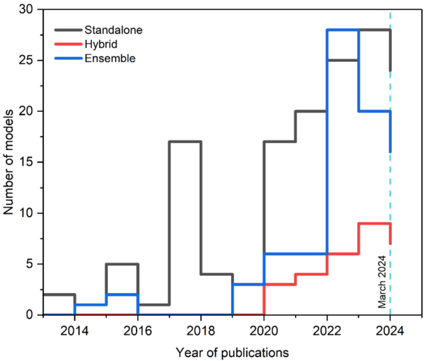
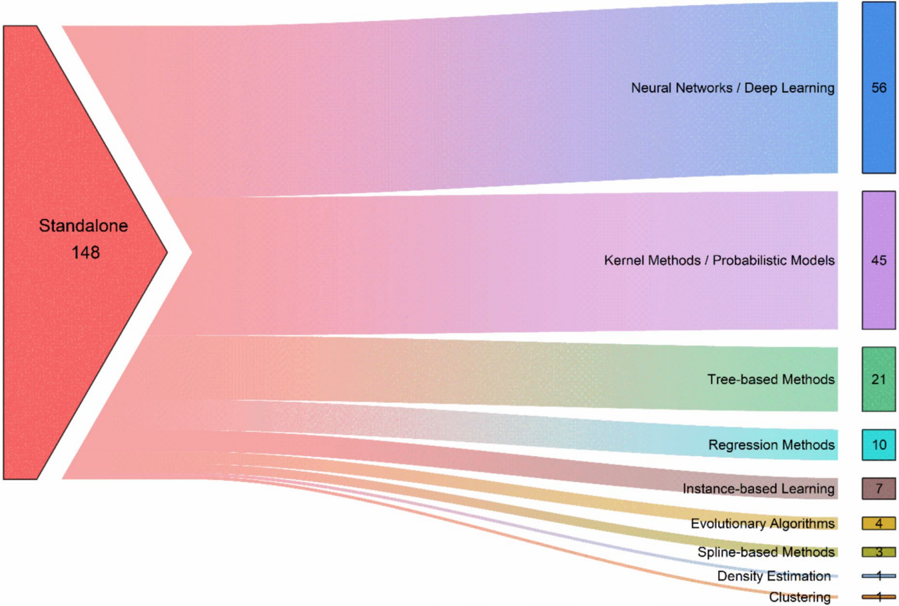
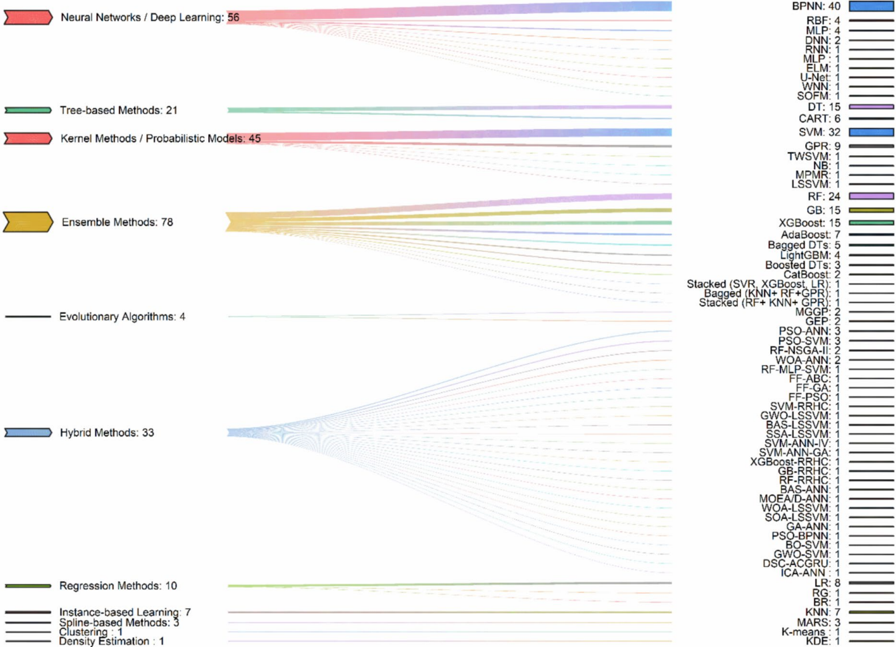
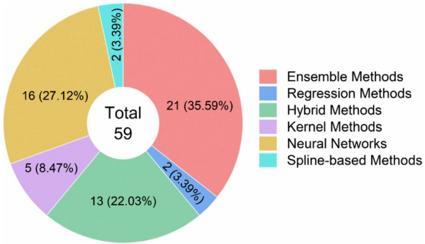
- Modeling was mostly standalone (148/259, 57%), followed by ensemble (78/259, 30%) and hybrid (33/259, 13%); ensemble use increased after 2020, and among best models ensemble represented 36%, neural networks 27%, and hybrid 22%.
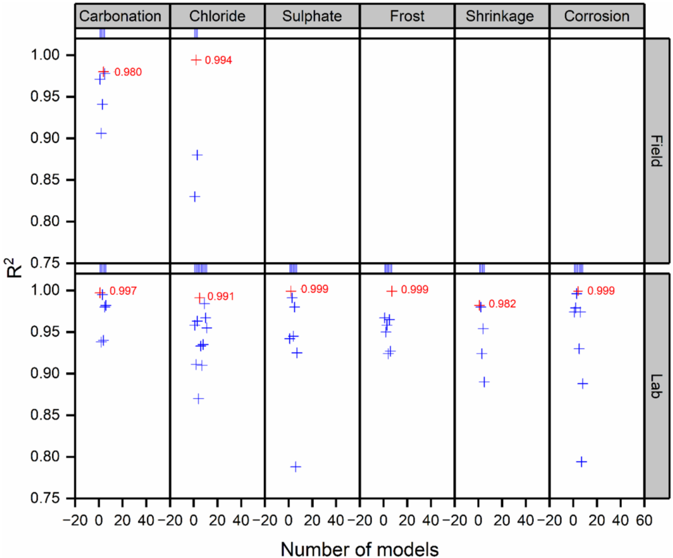
- Reported best test-set R² values ranged from 0.88 to almost 1; examples include carbonation ANN R² = 0.950, chloride profile PSO-SVM R² = 0.994, sulfate GWO-SVM R² = 0.972, frost HGSO-SVM R² = 0.997, and shrinkage ANN R² = 0.967.
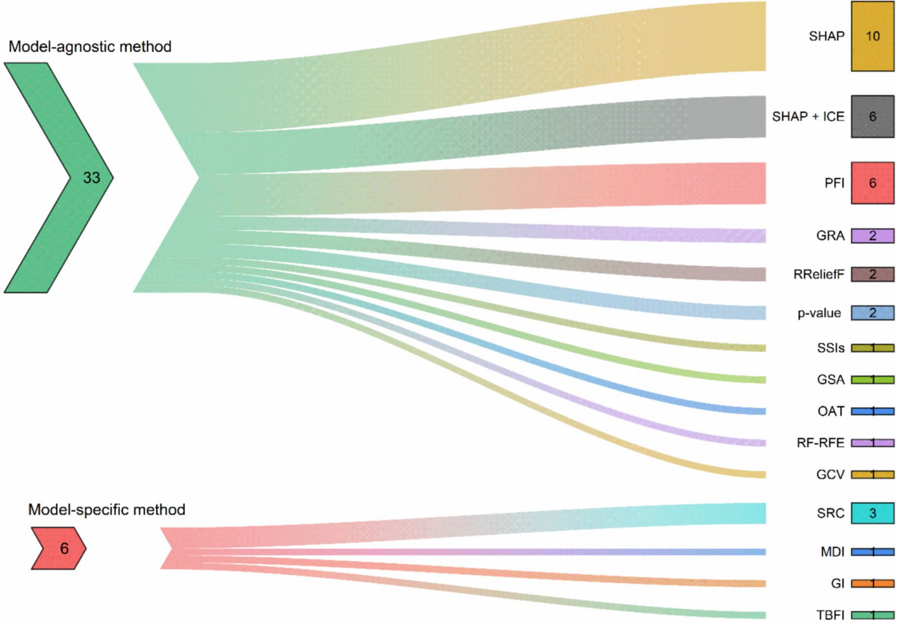
- Explainability was mostly model-agnostic (85%, 33 instances) versus model-specific (15%, 6 instances); SHAP was most frequent at 25%, SHAP+ICE at 15%, and PFI at 15%, with global explainability gaining traction from 2017 and increasing from 2021.
Methods
- Systematic review of peer-reviewed articles published 2013–2024, collected by end of March 2024, from Web of Science, Scopus, and Google Scholar using keywords such as “machine learning,” “durability prediction,” “cementitious materials,” and “concrete.”
- Titles and abstracts were screened, then full texts reviewed; inclusion focused on studies using machine learning for durability assessment, and papers were categorized by durability property, model type, and dataset characteristics.
- Only durability mechanisms explored in at least ten machine learning-based studies were included: carbonation, chloride-induced degradation, corrosion of steel reinforcement, frost damage, shrinkage, and sulfate attack; test-set R² was extracted to analyze trends.
- The review was prepared by members of Focus Group 4 within RILEM TC 315-DCS “Data-driven concrete science” and reviewed and approved by all TC 315-DCS members.
Limitations
- The paper states heavy reliance on laboratory-based data, limited use of field data, scarcity of newly generated datasets, and limited open access, which hampers broader validation and application.
- It states that models often do not account for binder types, consider a limited range of concrete types, rely on accelerated lab tests that may not predict long-term field performance, rarely report generalization capacity, and rarely incorporate fundamental physics or chemistry.
- Evident from the text: the review cutoff at March 2024 makes 2024 coverage incomplete; only six mechanisms with at least ten studies were included; high reported accuracies often came from comparisons of only 1–3 models and varied data preparation, training, and evaluation; field data may be decades old and CEM I-only, limiting relevance to current binder practices.
Model-written summary. Check it against the paper before relying on it.
Integrity signals
Registry
Cites
Statistics
Figures
Verification
Claims the paper makes
0 Valid · 11 Not valid · 51 Not checked · 124 Own results and interpretations
A result the paper reports from its own data — it cites no other source for it, so there is none to check. The quote shows it is in the paper.
In the paper
“highlighting a growing emphasis on chemical compositions.”
§ Machine learning in concrete durability: challenges and pathways identified by RILEM TC 315-DCS towards enhanced predictive models > Abstract
plain- Asserted: passes — The authors put it forward as true.
- Checkable: passes — It can be checked against evidence.
- Load-bearing: unclear — It is unclear whether the paper’s conclusions depend on it.
- Based: passes — The paper gives a reason why it holds.
A result the paper states — it cites no source for it, so there is none to check. The quote shows it is in the paper.
In the paper
“These findings highlight the increasing use of ensemble learning techniques, particularly XGBoost, GBDT, and RF, in predicting concrete frost resistance”
§ Machine learning in concrete durability: challenges and pathways identified by RILEM TC 315-DCS towards enhanced predictive models > 2.2.4 Frost attack
plainstates an association- Asserted: passes — The authors put it forward as true.
- Checkable: passes — It can be checked against evidence.
- Load-bearing: unclear — It is unclear whether the paper’s conclusions depend on it.
- Based: passes — The paper gives a reason why it holds.
In the paper
“For instance, Delgado et al. [83] developed models to capture both chloride penetration depth and diffusion coefficients in concrete subjected to drying-wetting cycles.”
§ Machine learning in concrete durability: challenges and pathways identified by RILEM TC 315-DCS towards enhanced predictive models > 2.2.2 Chloride attack
What the sources say
- Not checked yetcites [83] Delgado JMPQ, Silva FAN, Azevedo AC et al (2020) Artificial neural networks to assess the useful life of reinforced concrete elements deteriorated by accelerated chloride tests. J Build Eng 31:101445. https://doi.org/10.1016/j.jobe.2020.101445 source
plain- Asserted: passes — The authors put it forward as true.
- Checkable: passes — It can be checked against evidence.
- Load-bearing: unclear — It is unclear whether the paper’s conclusions depend on it.
- Based: passes — The paper gives a reason why it holds.
In the paper
“The proposed DSC-ACGRU model exhibited superior efficiency, precision, and accuracy compared to traditional machine learning models (SVM, DT, BPNN) and other deep learning models (CNN, CNN-LSTM).”
§ Machine learning in concrete durability: challenges and pathways identified by RILEM TC 315-DCS towards enhanced predictive models > 2.2.4 Frost attack
What the sources say
- Not checked yetcites [107] Liao X, Yan Q, Su L et al (2024) Automatic assessment of freeze-thaw damage in concrete structures using pie- zoelectric-based active sensing approach and deep learn- ing technique. Eng Struct 302:117453. https:// doi. org/ 10. 1016/j. engst ruct. 2024. 117453 108. Liu K, Zou C, Zhang X, Yan J (2021) Innovative predic- tion models for the frost durability of recycled aggregate concrete using soft computing methods. J Build Eng 34:101822. https:// doi. org/ 10. 1016/j. jobe. 2020. 101822 109. Wu X, Zheng S, Feng Z et al (2022) Prediction of the frost resistance of high-performance concrete base source
plain- Asserted: passes — The authors put it forward as true.
- Checkable: passes — It can be checked against evidence.
- Load-bearing: unclear — It is unclear whether the paper’s conclusions depend on it.
- Based: passes — The paper gives a reason why it holds.
A result the paper reports from its own data — it cites no other source for it, so there is none to check. The quote shows it is in the paper.
In the paper
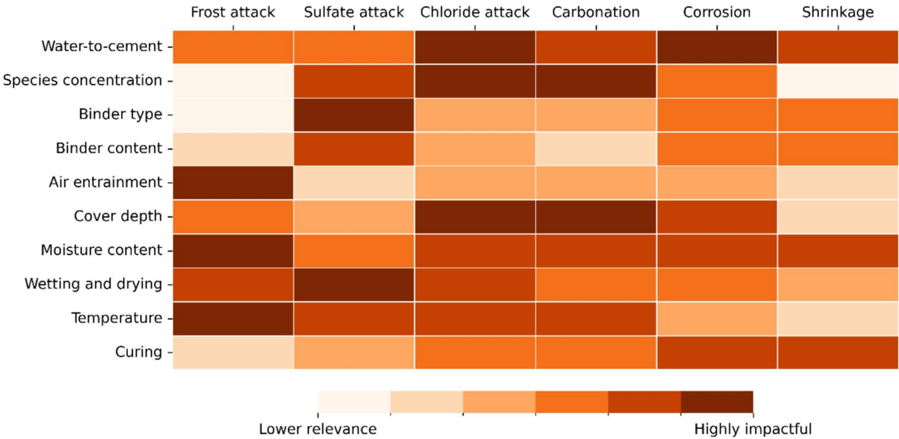
“Among the most frequently addressed features in the models are those related to the concrete mix design and exposure aggressiveness, with varying impact levels (Fig. 1).”
§ Machine learning in concrete durability: challenges and pathways identified by RILEM TC 315-DCS towards enhanced predictive models > 2.2 Review of machine learning models
plainstates an association- Asserted: passes — The authors put it forward as true.
- Checkable: passes — It can be checked against evidence.
- Load-bearing: unclear — It is unclear whether the paper’s conclusions depend on it.
- Based: passes — The paper gives a reason why it holds.
85 more claims
Create a free account to see all 186 claims and to verify the 70 references still open.
- The quote only partly states this claim. 3
- Probably not a substantial claim. 51
- It may state two separate claims as one. 52
Self-check
Percentages, sums and reported differences re-computed from the paper’s own numbers.
Each contradiction between two passages listed here was confirmed by an independent check.
Rated major: it would touch a result — a value a result rests on, reported and recomputed p-values on opposite sides of the significance level, two passages that conflict with no sign which is right, or a cited work retracted before this paper was published.
In the paper
§ Machine learning in concrete durability: challenges and pathways identified by RILEM TC 315-DCS towards enhanced predictive models > 6 Summary
“Esmaeili-Falak et al. [113] optimized SVM with ALO, GWO, and HGSO, with HGSO-SVM achieving the best performance (R 2 = 0.997)”
§ Machine learning in concrete durability: challenges and pathways identified by RILEM TC 315-DCS towards enhanced predictive models > 2.2.4 Frost attack
“Durability factor RAC 10 Mix proportion and exposure conditions 94 Literature Yes Lab Not given SVM 0.924Not given Global 2023 [113]”
Rated minor: it would not touch a result — a value no result rests on, a p-value that stays on the same side of the significance level, or a conflict that is clerical, resolved elsewhere in the paper, or outside its own findings.
In the paper
§ Machine learning in concrete durability: challenges and pathways identified by RILEM TC 315-DCS towards enhanced predictive models > 4.3 Models' performance
“Notably, for field experiments, model performance was reported exclusively for chloride attack and carbonation, as these were the only degradation phenomena modelled using machine learning techniques.”
§ Machine learning in concrete durability: challenges and pathways identified by RILEM TC 315-DCS towards enhanced predictive models > 2.2.5 Shrinkage
“Freezethaw cycles Concrete Not given Freezethaw cycles Not given Experi-ments No Field Not given GBM, GLM, RF, GAM 0.990 --2024 [115]”
Rated minor: it would not touch a result — a value no result rests on, a p-value that stays on the same side of the significance level, or a conflict that is clerical, resolved elsewhere in the paper, or outside its own findings.
In the paper
§ Machine learning in concrete durability: challenges and pathways identified by RILEM TC 315-DCS towards enhanced predictive models > 2.2.1 Carbonation
“Majlesi et al. [69] developed a model to predict the carbonation depth of concrete exposed to long-term (up to 10 years) corrosive environments.”
§ Machine learning in concrete durability: challenges and pathways identified by RILEM TC 315-DCS towards enhanced predictive models > 2.2.1 Carbonation
“Car-bonation depth Concrete structures 6 Concrete quality and environmental conditions Not given DURA-CON project at 24 urban stations in 10 different countries No Natural 2920 (8 years) ANN 0.976 Sensitivity analysis -2023 [69]”
Citations
Cites
Human-level control through deep reinforcement learning
Mnih, V., Kavukcuoglu, K., Silver, D., Rusu, A. A., Veness, J., Bellemare, M. G., Graves, A., Riedmiller, M., Fidjeland, A. K., Ostrovski, G., et al. (2015) · Nature · doi:10.1038/nature14236 · Cited by 30,357
The Elements of Statistical Learning
Hastie, T., Tibshirani, R., & Friedman, J. (2009) · Springer Series in Statistics · doi:10.1007/978-0-387-84858-7 · Cited by 25,970
Arrieta, A. B., Díaz-Rodríguez, N., Del Ser, J., Bennetot, A., Tabik, S., Barbado, A., García, S., Gil-López, S., Molina, D., Benjamins, R., et al. (2019) · arXiv · doi:10.48550/arxiv.1910.10045 · Cited by 11,321 · cited 1×
“One major limitation is that these models often do not account for the various For instance, a study examining the factors affecting chloride penetration in concrete demonstrated that the relative influence of key features evolves over time [139].”
Barredo Arrieta, A., Díaz-Rodríguez, N., Del Ser, J., Bennetot, A., Tabik, S., Barbado, A., Garcia, S., Gil-Lopez, S., Molina, D., Benjamins, R., et al. (2020) · Information Fusion · doi:10.1016/j.inffus.2019.12.012 · Cited by 10,423 · cited 1×
“One major limitation is that these models often do not account for the various For instance, a study examining the factors affecting chloride penetration in concrete demonstrated that the relative influence of key features evolves over time [139].”
Pattern Recognition and Machine Learning
(2006) · doi:10.1007/978-0-387-45528-0 · Cited by 9,824
(2012) · Cited by 9,062
Peeking Inside the Black-Box: A Survey on Explainable Artificial Intelligence (XAI)
Adadi, A., & Berrada, M. (2018) · IEEE Access · doi:10.1109/access.2018.2870052 · Cited by 6,294
Lipton, Z. C. (2018) · Queue · doi:10.1145/3236386.3241340 · Cited by 5,427
The Mythos of Model Interpretability
Lipton, Z. C. (2016) · arXiv · doi:10.48550/arxiv.1606.03490 · Cited by 5,422
(2006) · The MIT Press eBooks · doi:10.7551/mitpress/9780262033589.001.0001 · Cited by 4,280
Half-cell potential measurements—Potential mapping on reinforced concrete structures
Elsener, B., Andrade, C., Gulikers, J., Polder, R. B., & Raupach, M. (2003) · Materials and Structures · doi:10.1007/bf02481526 · Cited by 619
Andrade, C., & Alonso, C. (2004) · Materials and Structures · doi:10.1007/bf02483292 · Cited by 560
von Greve-Dierfeld, S., Lothenbach, B., Vollpracht, A., Wu, B., Huet, B., Andrade, C., Medina, C., Thiel, C., Gruyaert, E., Vanoutrive, H., et al. (2020) · Materials and Structures · doi:10.1617/s11527-020-01558-w · Cited by 508 · cited 1×
“Notably, no public database exists yet, though explainability tools are emerging to help analyze predictions and enhance model interpretability.”
Alexander, M., & Beushausen, H. (2019) · Cement and Concrete Research · doi:10.1016/j.cemconres.2019.04.018 · Cited by 439
Li, Z. (2011) · Wiley eBooks · doi:10.1002/9780470950067 · Cited by 431
Machine learning in concrete science: applications, challenges, and best practices
Li, Z., Yoon, J., Zhang, R., Rajabipour, F., Srubar III, W. V., Dabo, I., & Radlińska, A. (2022) · npj Computational Materials · doi:10.1038/s41524-022-00810-x · Cited by 388 · cited 1×
“To address these challenges, the integration of machine learning techniques has emerged as a promising avenue [10, 11].”
Wang, R., Zhang, Q., & Li, Y. (2022) · Construction and Building Materials · doi:10.1016/j.conbuildmat.2021.126045 · Cited by 338
CPC-18 Measurement of hardened concrete carbonation depth
(1988) · Materials and Structures · doi:10.1007/bf02472327 · Cited by 292
Prediction of surface chloride concentration of marine concrete using ensemble machine learning
Cai, R., Han, T., Liao, W., Huang, J., Li, D., Kumar, A., & Ma, H. (2020) · Cement and Concrete Research · doi:10.1016/j.cemconres.2020.106164 · Cited by 284
Taffese, W. Z., & Sistonen, E. (2017) · Automation in Construction · doi:10.1016/j.autcon.2017.01.016 · Cited by 255
Self-citationChloride Binding Capacity of Various Hydrated Cement Paste Systems
Delagrave, A. (1997) · Advanced Cement Based Materials · doi:10.1016/s1065-7355(97)00007-2 · Cited by 221
Performance-based approaches for concrete durability: State of the art and future research needs
Beushausen, H., Torrent, R., & Alexander, M. G. (2019) · Cement and Concrete Research · doi:10.1016/j.cemconres.2019.01.003 · Cited by 186
Allgaier, J., Mulansky, L., Draelos, R. L., & Pryss, R. (2023) · Artificial Intelligence in Medicine · doi:10.1016/j.artmed.2023.102616 · Cited by 170
Wireless sensor networks for temperature and humidity monitoring within concrete structures
Barroca, N., Borges, L. M., Velez, F. J. D. S., Monteiro, F., Górski, M., & Castro-Gomes, J. P. (2013) · Construction and Building Materials · doi:10.1016/j.conbuildmat.2012.11.087 · Cited by 156
Structural performance of stainless steel reinforced concrete members: A review
Rabi, M., Shamass, R., & Cashell, K. A. (2022) · Construction and Building Materials · doi:10.1016/j.conbuildmat.2022.126673 · Cited by 155
Modeling of corrosion-induced concrete cover cracking: A critical analysis
Jamali, A., Angst, U., Adey, B., & Elsener, B. (2013) · Construction and Building Materials · doi:10.1016/j.conbuildmat.2013.01.019 · Cited by 153
Artificial neural network for predicting drying shrinkage of concrete
Bal, L., & Buyle-Bodin, F. (2013) · Construction and Building Materials · doi:10.1016/j.conbuildmat.2012.08.043 · Cited by 149
Damage Mechanism and Modeling of Concrete in Freeze–Thaw Cycles: A Review
Guo, J., Sun, W., Xu, Y., Lin, W., & Jing, W. (2022) · Buildings · doi:10.3390/buildings12091317 · Cited by 138
Machine learning prediction of carbonation depth in recycled aggregate concrete incorporating SCMs
Nunez, I., & Nehdi, M. L. (2021) · Construction and Building Materials · doi:10.1016/j.conbuildmat.2021.123027 · Cited by 135
Self-citationSetzer, M. J., Fagerlund, G., & Janssen, D. J. (1996) · Materials and Structures · doi:10.1007/bf02485951 · Cited by 135
Ahmad, A., Farooq, F., Ostrowski, K. A., Śliwa-Wieczorek, K., & Czarnecki, S. (2021) · Materials · doi:10.3390/ma14092297 · Cited by 127
Multi objective optimization of recycled aggregate concrete based on explainable machine learning
Wang, S., Xia, P. C., Gong, F., Zeng, Q., Chen, K., & Zhao, Y. (2024) · Journal of Cleaner Production · doi:10.1016/j.jclepro.2024.141045 · Cited by 125
Liu, K., Alam, M. S., Jiang, Z. J., Zheng, J., & Chi, L. (2021) · Construction and Building Materials · doi:10.1016/j.conbuildmat.2021.124382 · Cited by 123
Zhang, L. V., Marani, A., & Nehdi, M. L. (2022) · Construction and Building Materials · doi:10.1016/j.conbuildmat.2021.126103 · Cited by 119
Self-citationCaPrM: Carbonation prediction model for reinforced concrete using machine learning methods
Taffese, W. Z., Sistonen, E., & Puttonen, J. (2015) · Construction and Building Materials · doi:10.1016/j.conbuildmat.2015.09.058 · Cited by 119
Self-citationFélix, E. F., Carrazedo, R., & Possan, E. (2020) · Construction and Building Materials · doi:10.1016/j.conbuildmat.2020.121050 · Cited by 115
Zounemat‐Kermani, M., Stephan, D. A., Barjenbruch, M., & Hinkelmann, R. (2019) · Advanced Engineering Informatics · doi:10.1016/j.aei.2019.101030 · Cited by 110
Salami, B. A., Rahman, S. M., Oyehan, T. A., Maslehuddin, M., & Al-Dulaijan, S. U. (2020) · Measurement · doi:10.1016/j.measurement.2020.108141 · Cited by 106
Microstructure and damage evolution of hydraulic concrete exposed to freeze–thaw cycles
Tian, Z., Zhu, X., Chen, X., Ning, Y., & Zhang, W. (2022) · Construction and Building Materials · doi:10.1016/j.conbuildmat.2022.128466 · Cited by 104
Hoang, N., Chen, C.-T., & Liao, K. (2017) · Measurement · doi:10.1016/j.measurement.2017.08.031 · Cited by 104
A machine learning method for predicting the chloride migration coefficient of concrete
Taffese, W. Z., & Espinosa-Leal, L. (2022) · Construction and Building Materials · doi:10.1016/j.conbuildmat.2022.128566 · Cited by 104
Self-citationQuan Tran, V. (2022) · Construction and Building Materials · doi:10.1016/j.conbuildmat.2022.127103 · Cited by 93
Liu, K., Dai, Z., Zhang, R., Zheng, J., Jiang, Z. J., & Yang, X. (2021) · Construction and Building Materials · doi:10.1016/j.conbuildmat.2021.125917 · Cited by 92
Esmaeili‐Falak, M., & Benemaran, R. S. (2024) · Structural Concrete · doi:10.1002/suco.202300566 · Cited by 91
Corrosion current density prediction in reinforced concrete by imperialist competitive algorithm
Sadowski, Ł., & Nikoo, M. (2014) · Neural Computing and Applications · doi:10.1007/s00521-014-1645-6 · Cited by 88
Prediction of concrete compressive strength due to long term sulfate attack using neural network
Diab, A. M., Elyamany, H. E., Elmoaty, A. E. M. A., & Shalan, A. H. (2014) · Alexandria Engineering Journal · doi:10.1016/j.aej.2014.04.002 · Cited by 86
Lian, S., Zheng, K., Zhao, Y. H., Bi, J., Wang, C., & Huang, Y. S. (2022) · Construction and Building Materials · doi:10.1016/j.conbuildmat.2022.129789 · Cited by 83
Xu, Y., & Jin, R. (2018) · Construction and Building Materials · doi:10.1016/j.conbuildmat.2018.05.124 · Cited by 82
Kumar, S., Rai, B., Biswas, R., Samui, P., & Kim, D. (2020) · Journal of Building Engineering · doi:10.1016/j.jobe.2020.101490 · Cited by 81
Chen, Y., Xu, Y., Wang, L., & Li, T. (2023) · Computers and Geotechnics · doi:10.1016/j.compgeo.2023.105546 · Cited by 74
Hodhod, O. A., & Ahmed, H. I. (2013) · HBRC Journal · doi:10.1016/j.hbrcj.2013.04.001 · Cited by 74
Zhang, J., Zhang, M., Dong, B., & Ma, H. (2022) · Cement and Concrete Composites · doi:10.1016/j.cemconcomp.2022.104426 · Cited by 72
Liu, K.-H., Zheng, J.-K., Pacheco-Torgal, F., & Zhao, X.-Y. (2022) · Construction and Building Materials · doi:10.1016/j.conbuildmat.2022.127613 · Cited by 70
Ehsani, M., Ostovari, M., Mansouri, S., Naseri, H., Jahanbakhsh, H., & Nejad, F. M. (2024) · Construction and Building Materials · doi:10.1016/j.conbuildmat.2024.135331 · Cited by 69
Liu, K., Zou, C., Zhang, X., & Yan, J. (2020) · Journal of Building Engineering · doi:10.1016/j.jobe.2020.101822 · Cited by 69
Najimi, M., Ghafoori, N., & Nikoo, M. (2019) · Journal of Building Engineering · doi:10.1016/j.jobe.2018.12.013 · Cited by 68
A hybrid physics-informed data-driven neural network for CO2 storage in depleted shale reservoirs
Wang, Y.-W., Dai, Z.-X., Wang, G.-S., Chen, L., Xia, Y.-Z., & Zhou, Y.-H. (2024) · Petroleum Science · doi:10.1016/j.petsci.2023.08.032 · Cited by 67
Wu, X., Zheng, S., Feng, Z., Chen, B., Qin, Y., Xu, W. H., & Liu, Y. (2022) · Construction and Building Materials · doi:10.1016/j.conbuildmat.2022.127132 · Cited by 66
Hilloulin, B., & Tran, V. Q. (2022) · Journal of Building Engineering · doi:10.1016/j.jobe.2022.104086 · Cited by 65
Self-citationTaffese, W. Z., & Espinosa-Leal, L. (2022) · Journal of Building Engineering · doi:10.1016/j.jobe.2022.105146 · Cited by 64
Self-citationMachine learning prediction of corrosion rate of steel in carbonated cementitious mortars
Ji, H., & Ye, H. (2023) · Cement and Concrete Composites · doi:10.1016/j.cemconcomp.2023.105256 · Cited by 64
Chen, H., Qian, C., Liang, C., & Kang, W. (2018) · PLoS ONE · doi:10.1371/journal.pone.0191370 · Cited by 59
Estimation of rubberized concrete frost resistance using machine learning techniques
Gao, X., Yang, J., Zhu, H., & Xu, J. (2023) · Construction and Building Materials · doi:10.1016/j.conbuildmat.2023.130778 · Cited by 58
Prediction of concrete corrosion in sewers with hybrid Gaussian processes regression model
Liu, Y., Song, Y., Keller, J., Bond, P. L., & Jiang, G. (2017) · RSC Advances · doi:10.1039/c7ra03959j · Cited by 55
New directions for reinforced concrete coastal structures
Nolan, S., Rossini, M., Knight, C., & Nanni, A. (2021) · Journal of Infrastructure Preservation and Resilience · doi:10.1186/s43065-021-00015-4 · Cited by 54
Mermerdaş, K., & Arbili, M. M. (2015) · Construction and Building Materials · doi:10.1016/j.conbuildmat.2015.07.074 · Cited by 53
Zhang, K., Zhang, K., Bao, R., & Liu, X. (2022) · Journal of Building Engineering · doi:10.1016/j.jobe.2022.105772 · Cited by 53
Machine learning approach in investigating carbonation depth of concrete containing Fly ash
Tran, V. Q., Mai, H. T., To, Q. T., & Nguyen, M. H. (2023) · Structural Concrete · doi:10.1002/suco.202200269 · Cited by 51
Development of hybrid machine learning-based carbonation models with weighting function
Chen, Z., Lin, J., Sagoe-Crentsil, K., & Duan, W. (2022) · Construction and Building Materials · doi:10.1016/j.conbuildmat.2022.126359 · Cited by 45
Taffese, W. Z., & Espinosa-Leal, L. (2023) · Journal of Building Engineering · doi:10.1016/j.jobe.2023.106523 · Cited by 43
Self-citationEvaluation of carbonation progress using AIJ model, FEM analysis, and machine learning algorithms
Lee, H., Lee, H.-S., & Suraneni, P. (2020) · Construction and Building Materials · doi:10.1016/j.conbuildmat.2020.119703 · Cited by 42
Yao, Y., Wang, L., Wittmann, F. H., Belie, N. D., Schlangen, E., Álava, H. E., Wang, Z., Keßler, S., Gehlen, C., Yunus, B. M., et al. (2016) · Materials and Structures · doi:10.1617/s11527-016-0983-5 · Cited by 42
Khan, M., & Javed, M. F. (2023) · Materials Today Communications · doi:10.1016/j.mtcomm.2023.107428 · Cited by 41
Autonomous Corrosion Assessment of Reinforced Concrete Structures: Feasibility Study
Taffese, W. Z., & Nigussie, E. (2020) · Sensors · doi:10.3390/s20236825 · Cited by 41
Self-citationFélix, E. F., Possan, E., & Carrazedo, R. (2019) · Journal of Building Pathology and Rehabilitation · doi:10.1007/s41024-019-0054-8 · Cited by 40
Hilloulin, B., & Tran, V. Q. (2023) · Construction and Building Materials · doi:10.1016/j.conbuildmat.2023.132343 · Cited by 39
Self-citationMarks, M., Glinicki, M., & Gibas, K. (2015) · Materials · doi:10.3390/ma8125483 · Cited by 39
Prediction of autogenous shrinkage of concretes by support vector machine
Liu, J., Yan, K., Zhao, X., & Hu, Y. (2016) · International Journal of Pavement Research and Technology · doi:10.1016/j.ijprt.2016.06.003 · Cited by 39
Liao, X., Yan, Q., Su, L., Qiu, Y., Ren, J., & Zhang, C. (2024) · Engineering Structures · doi:10.1016/j.engstruct.2024.117453 · Cited by 38
Güneyisi, E. M., Mermerdaş, K., Güneyisi, E., & Gesoğlu, M. (2014) · Materials and Structures · doi:10.1617/s11527-014-0269-8 · Cited by 32
Qiao, L., Miao, P., Xing, G., Luo, X., Ma, J., & Farooq, M. (2023) · Case Studies in Construction Materials · doi:10.1016/j.cscm.2023.e02453 · Cited by 31
Vollpracht, A., Gluth, G. J. G., Rogiers, B., Uwanuakwa, I. D., Phung, Q. T., Villagran Zaccardi, Y., Thiel, C., Vanoutrive, H., Etcheverry, J. M., Gruyaert, E., et al. (2024) · Materials and Structures · doi:10.1617/s11527-024-02465-0 · Cited by 31
Self-citationDelgado, J. M. P. Q., Silva, F. A. N., Azevedo, A. C., Silva, D. F., Campello, R. L. B., & Santos, R. L. (2020) · Journal of Building Engineering · doi:10.1016/j.jobe.2020.101445 · Cited by 31
Sun, Z. Y., Li, Y., Yang, B., Han, T., Liu, R., Wang, L., & Su, L. (2024) · Materials Today Communications · doi:10.1016/j.mtcomm.2024.108667 · Cited by 31
Laloy, E., & Jacques, D. (2022) · Transport in Porous Media · doi:10.1007/s11242-022-01779-3 · Cited by 29
Prediction of Carbonation Progress in Concrete Containing Calcareous Fly Ash Co-Binder
Woyciechowski, P., Woliński, P., & Adamczewski, G. (2019) · Materials · doi:10.3390/ma12172665 · Cited by 29
A robust carbonation depth model in recycled aggregate concrete (RAC) using neural network
Concha, N. C. (2023) · Expert Systems with Applications · doi:10.1016/j.eswa.2023.121650 · Cited by 29
Unveiling non-steady chloride migration insights through explainable machine learning
Taffese, W. Z., & Espinosa-Leal, L. (2023) · Journal of Building Engineering · doi:10.1016/j.jobe.2023.108370 · Cited by 29
Self-citationMarani, A., Oyinkanola, T., & Panesar, D. K. (2024) · Cement and Concrete Composites · doi:10.1016/j.cemconcomp.2024.105635 · Cited by 27
Self-citationSignificance of chloride penetration controlling parameters in concrete: Ensemble methods
Taffese, W. Z., & Sistonen, E. (2017) · Construction and Building Materials · doi:10.1016/j.conbuildmat.2017.02.014 · Cited by 27
Self-citationModular Deep Learning Segmentation Algorithm for Concrete Microscopic Images
Hilloulin, B., Bekrine, I., Schmitt, E., & Loukili, A. (2022) · Construction and Building Materials · doi:10.1016/j.conbuildmat.2022.128736 · Cited by 26
Self-citationDeep Learning Modelling and Generalisation of Carbonation Depth in Fly Ash Blended Concrete
Uwanuakwa, I. D. (2020) · Arabian Journal for Science and Engineering · doi:10.1007/s13369-020-05093-2 · Cited by 25
Sun, Z., Li, Y., Li, Y., Su, L., & He, W. (2023) · Materials Today Communications · doi:10.1016/j.mtcomm.2023.106565 · Cited by 24
Prediction of Progressive Frost Damage Development of Concrete Using Machine-Learning Algorithms
haq, M. A. U., Xu, W., Abid, M. A., & Gong, F. (2023) · Buildings · doi:10.3390/buildings13102451 · Cited by 23
Hilloulin, B., Hafidi, A., Boudache, S., & Loukili, A. (2023) · Journal of Building Engineering · doi:10.1016/j.jobe.2023.107951 · Cited by 23
Self-citationAkyüncü, V., Uysal, M., Tanyıldızı, H., & Sümer, M. (2018) · Revista de la construcción · doi:10.7764/rdlc.17.3.337 · Cited by 23
Majlesi, A., Khodadadi Koodiani, H., Troconis de Rincon, O., Montoya, A., Millano, V., Torres-Acosta, A. A., & Rincon Troconis, B. C. (2023) · Journal of Building Engineering · doi:10.1016/j.jobe.2023.106545 · Cited by 22
Machine Learning Method to Explore the Correlation between Fly Ash Content and Chloride Resistance
Wang, R., Huo, Y., Wang, T., Hou, P., Gong, Z., Li, G., & Li, C. (2024) · Materials · doi:10.3390/ma17051192 · Cited by 22
Yao, Y., Wang, L., Wittmann, F. H., Belie, N. D., Schlangen, E., Gehlen, C., Wang, Z., Álava, H. E., Cao, Y., Yunus, B. M., et al. (2017) · Materials and Structures · doi:10.1617/s11527-017-1000-3 · Cited by 22
Evaluation of chloride diffusion in concrete using PSO-BP and BP neural network
Yao, L., Ren, L., & Gong, G. (2021) · IOP Conference Series Earth and Environmental Science · doi:10.1088/1755-1315/687/1/012037 · Cited by 22
Nikoo, M., Sadowski, Ł., & Nikoo, M. (2017) · Coatings · doi:10.3390/coatings7100160 · Cited by 21
Prediction of Carbonation Depth for Concrete Containing Mineral Admixtures Based on Machine Learning
Wei, Y., Chen, P., Cao, S., Wang, H., Liu, Y., Wang, Z., & Zhao, W. (2023) · Arabian Journal for Science and Engineering · doi:10.1007/s13369-023-07645-8 · Cited by 21
Li, Y., Shen, J., Li, Y., Wang, K., & Lin, H. (2024) · Journal of Building Engineering · doi:10.1016/j.jobe.2023.108373 · Cited by 20
Yao, Y., Wang, L., Li, J., Belie, N. D., Shi, X., den Heede, P. V., Zhang, C., Liu, Z., Talakokula, V., Jin, Z., et al. (2023) · Materials and Structures · doi:10.1617/s11527-023-02190-0 · Cited by 19
Deterioration of Steel Reinforced Concrete
Glass, G. K. (2003) · Elsevier eBooks · doi:10.1016/b0-08-043749-4/06140-1 · Cited by 18
Data-Driven Parameter Selection and Modeling for Concrete Carbonation
Duan, K., & Cao, S. (2022) · Materials · doi:10.3390/ma15093351 · Cited by 18
Wang, S., Liu, J., Wang, Q., Dai, R., & Chen, K. (2024) · Journal of Building Engineering · doi:10.1016/j.jobe.2024.109002 · Cited by 18
Modern machine learning techniques and their applications
Ivanović, M. D., & Radovanović, M. (2015) · CRC Press eBooks · doi:10.1201/b18592-153 · Cited by 17
Ocak, A., Bekdaş, G., Işıkdağ, Ü., Nigdeli, S. M., & Bilir, T. (2024) · Journal of Building Engineering · doi:10.1016/j.jobe.2024.110737 · Cited by 16
Prediction of compressive strength of lightweight mortar exposed to sulfate attack
Tanyıldızı, H. (2017) · Computers and Concrete, an International Journal · doi:10.12989/cac.2017.19.2.217 · Cited by 16
Tree Based Approaches for Predicting Concrete Carbonation Coefficient
Londhe, S., Kulkarni, P., Dixit, P., Silva, A., Neves, R., & de Brito, J. (2022) · Applied Sciences · doi:10.3390/app12083874 · Cited by 14
(2011) · doi:10.1201/b12433 · Cited by 14
Wittmann, F. H., Zhao, T., Jiang, F., & Wan, X. (2012) · Restoration of Buildings and Monuments · doi:10.1515/rbm-2012-6510 · Cited by 11
Uwanuakwa, I. D., & Akpınar, P. (2024) · Structural Concrete · doi:10.1002/suco.202300912 · Cited by 10
Machine learning prediction of concrete frost resistance and optimization design of mix proportions
Dai, J., Zhang, Z., Yang, X., Wang, Q., & He, J. Q. (2024) · Journal of Intelligent & Fuzzy Systems · doi:10.3233/jifs-236703 · Cited by 10
Machine learning-aided prediction of shrinkage in modern concrete: Focus on mix proportions and SCMs
Hilloulin, B., & Umunnakwe, R. (2024) · Journal of Building Engineering · doi:10.1016/j.jobe.2024.111410 · Cited by 9
Self-citationQin, Y., Ma, H., Zhang, L., Yin, J., Zheng, X., & Li, S. (2024) · Journal of Mountain Science · doi:10.1007/s11629-023-8389-7 · Cited by 6
Yao, Y., Wang, L., Li, J., Belie, N. D., Shi, X., den Heede, P. V., Zhang, C., Liu, Z., Talakokula, V., Jin, Z., et al. (2023) · Materials and Structures · doi:10.1617/s11527-023-02203-y · Cited by 5
International Conference on Electronics, C. A. N. 2. M., Tallón-Ballesteros, A. J., Cortés-Ancos, E., & López-García, D. A. (2024) · Frontiers in artificial intelligence and applications · doi:10.3233/faia381 · Cited by 5
Online monitoring of reinforced concrete corrosion using sensors
Shi, X. (2024) · Elsevier eBooks · doi:10.1016/b978-0-443-13470-8.00017-4 · Cited by 1
Costa, A. A., & Quarcioni, V. Â. (2024) · Revista IBRACON de Estruturas e Materiais · doi:10.1590/s1983-41952024000600014 · Cited by 1
(2011) · Structural Health Monitoring
Research works printed but not linked: 14
- Neville AM, Brooks JJ (2010) Concrete technology, 2nd edn. Pearson Education Limited, Harlow
- Alpaydin E (2020) Introduction to machine learning, 2nd edn. MIT press, Cambridge, MA
- Alpaydin E (2020) Introduction to machine learning, 2nd edn. MIT press, Cambridge, MA 13. Witten IH, Frank E, Hall MA (2011) Data mining: prac- tical machine learning tools and techniques. Morgan Kaufmann, Burlzzington, MA 14.
- Bishop CM (2006) Pattern recognition and machine learning. Springer, Cham
- Chapelle O, Scholkopf B, Zien A (2006) Semi-super- vised learning. MIT Press, London 19. Sutton RS, Barto AG (2018) Reinforcement learning: an introduction, 2nd edn. MIT Press, Cambridge, MA 20.
- Lian S, Zheng K, Zhao Y et al (2023) Investigation the effect of freeze–thaw cycle on fracture mode classification in concrete based on acoustic emission parameter analysis. Constr Build Mater 362:129789. https://doi.org/10.1016/j.conbuildmat.2022.129789 · DOI
- Wu X, Zheng S, Feng Z et al (2022) Prediction of the frost resistance of high-performance concrete based on RF-REF: a hybrid prediction approach. Constr Build Mater 333:127132. https://doi.org/10.1016/j.conbuildmat.2022.127132 · DOI
- Qiao L, Miao P, Xing G et al (2023) Interpretable machine learning model for predicting freeze-thaw damage of dune sand and fiber reinforced concrete. Case Stud Constr Mater 19:e02453. https://doi.org/10.1016/j.cscm.2023.e02453 · DOI
- Zhang J, Zhang M, Dong B, Ma H (2022) Quantitative evaluation of steel corrosion induced deterioration in rubber concrete by integrating ultrasonic testing, machine learning and mesoscale simulation. Cem Concr Compos 128:104426. https://doi.org/10.1016/j.cemconcomp.2022.104426 · DOI · Paper page
- Salami BA, Rahman SM, Oyehan TA et al (2020) Ensemble machine learning model for corrosion initiation time estimation of embedded steel reinforced self-compacting concrete. Measurement 165:108141. https://doi.org/10.1016/j.measurement.2020.108141 · DOI
- Taffese WZ, Nunes S (2024) Machine learning-based prediction of SCC mortar properties across various cement types. In: RILEM conference on sustainable materials & structures: meeting the major challenges of the 21st century-SMS 2024. Toulouse 135.
- Zhang LV, Marani A, Nehdi ML (2022) Chemistry-informed machine learning prediction of compressive strength for alkali-activated materials. Constr Build Mater 316:126103. https://doi.org/10.1016/j.conbuildmat.2021.126103 · DOI · Paper page
- Amey SL, Geiker M, Manning DG et al (2000) Service- life prediction-state-of-the-art report. ACI Committee, Montreal 145.
- Costa A, Appleton J (2001) Concrete carbonation and chloride penetration in a marine environment. Concr Sci Eng 3:242-249 153.
Cited by
Liang, D., Xue, X., Liu, J., Cui, Y., Sun, Z., Zhang, Y., Zhang, T., & Xu, L. (2026) · Developments in the Built Environment · doi:10.1016/j.dibe.2026.100964 · Cited by 50
Muhit, I. B., Al‐Fakih, A., Suntharalingam, T., & Michel, A. (2025) · Archives of Computational Methods in Engineering · doi:10.1007/s11831-025-10373-x · Cited by 29
Miah, M. J., Miah, M. S., Mughal, H., & Hasan, N. M. S. (2025) · Materials · doi:10.3390/ma18143298 · Cited by 26
Concrete Material Variability and Machine Learning Model Performance: A Comprehensive Review
Bahmani, H., Mostafaei, H., Santos, P., & Ferrández, D. (2026) · Buildings · doi:10.3390/buildings16030556 · Cited by 25
Marahla, R. H. A., Shehzad, M. K., Albostami, A. S., Ghadi, M. Q., Aldmour, S. T., & Almarahlleh, N. H. (2025) · KSCE Journal of Civil Engineering · doi:10.1016/j.kscej.2025.100390 · Cited by 18
Metadata
- Authors
- Taffese, W. Z., Hilloulin, B., Villagran Zaccardi, Y., Marani, A., Nehdi, M. L., Hanif, M. U., Kamath, M., Nunes, S., von Greve-Dierfeld, S., & Kanellopoulos, A.
- Affiliations
- Aalto University (FI)
- École Centrale de Nantes (FR)
- University of Toronto (CA)
- University of Guelph (CA)
- University of Southern Denmark (DK)
- Delft University of Technology (NL)
- University of Hertfordshire (GB)
- Corresponding author
- Taffese, Woubishet Zewdu
- ORCID
- Venue
- Materials and Structures
- Published
- 2025-05
- Volume
- 58
- Issue
- 4
- Pages
- 145
- ISSN
- 0025-5432 (ISSN-L)
- 1359-5997
- 1871-6873
- OpenAlex
- W4410158787
- Cited by
- 83
- References
- 120
- Citations by year
- 2026: 64 · 2025: 19
- FWCI
- 22.08
- Type
- journal article
- Language
- en
- Open access
- hybrid
- doi.org
- Licence
- cc-by
- creativecommons.org/licenses/by/4.0 (tdm)
- creativecommons.org/licenses/by/4.0 (vor, 6 d)
- Locations
- Materials and Structures (publishedVersion, cc-by)
- Aaltodoc (Aalto University) (publishedVersion, other-oa)
- University of Southern Denmark Research Portal (University of Southern Denmark) (publishedVersion, cc-by)
- HAL (submittedVersion, cc-by)
- University of Hertfordshire Research Archive (University of Hertfordshire) (submittedVersion, cc-by)
- Funders
- Aalto University
- Topics
- Physical Sciences › Engineering › Civil and Structural Engineering › Concrete Corrosion and Durability
- Physical Sciences › Engineering › Building and Construction › Structural Behavior of Reinforced Concrete
- Physical Sciences › Engineering › Civil and Structural Engineering › Concrete and Cement Materials Research
- Keywords
- concrete durability, machine learning, concrete deterioration mechanisms, carbonation, chloride-induced deterioration, sulfate attack, frost damage, shrinkage, reinforcement corrosion, ensemble learning, hybrid model, artificial neural networks, model explainability, SHAP, concrete mix design, multi-task learning, durability prediction, data sharing
About these checks
Registry, retraction, Cites and statistics results are computed, not judged, with one exception: a printed reference that no index lists is read once by a model before it counts as a citation error. Claims are extracted by a model and kept only when their quote appears verbatim in the text; each cited source is then checked, with a model’s help, for whether it says what the claim relies on. Those verdicts can be wrong — read the claim’s quote and the cited source before relying on one.
A language model drew the claims from the paper on 2026-11-27, under version 3 of the claim definition (model deepseek-v4.1-flash, prompt extract-v3).
A second model labelled each claim on 2026-11-27 (model jev-1.13-20260917, definition revision gold-guideline-v0.2).
Statistics and arithmetic are recomputed, not judged.
Confidence bands are shown only for fields calibrated on our annotated test set. None is calibrated yet, so no band is shown.
What counts as a claim ›How we measure confidence ›How we check this ›
Are you an author, or do you see a problem with this page? Request a review
Data sources
Bibliographic data: Semantic Scholar, OpenAlex, Crossref.
Contains information from the Semantic Scholar Academic Graph Datasets, made available under the ODC Attribution License (ODC-BY 1.0).
Semantic Scholar’s data is described in: Kinney, R., et al. (2023). The Semantic Scholar Open Data Platform. arXiv:2301.10140.
