

Patient education among nurses: bringing evidence into clinical applicability in Iran
Open accessThe DOI matches its Crossref record; 53 of the 54 references it cites were found in a registry or an index.
Abstract
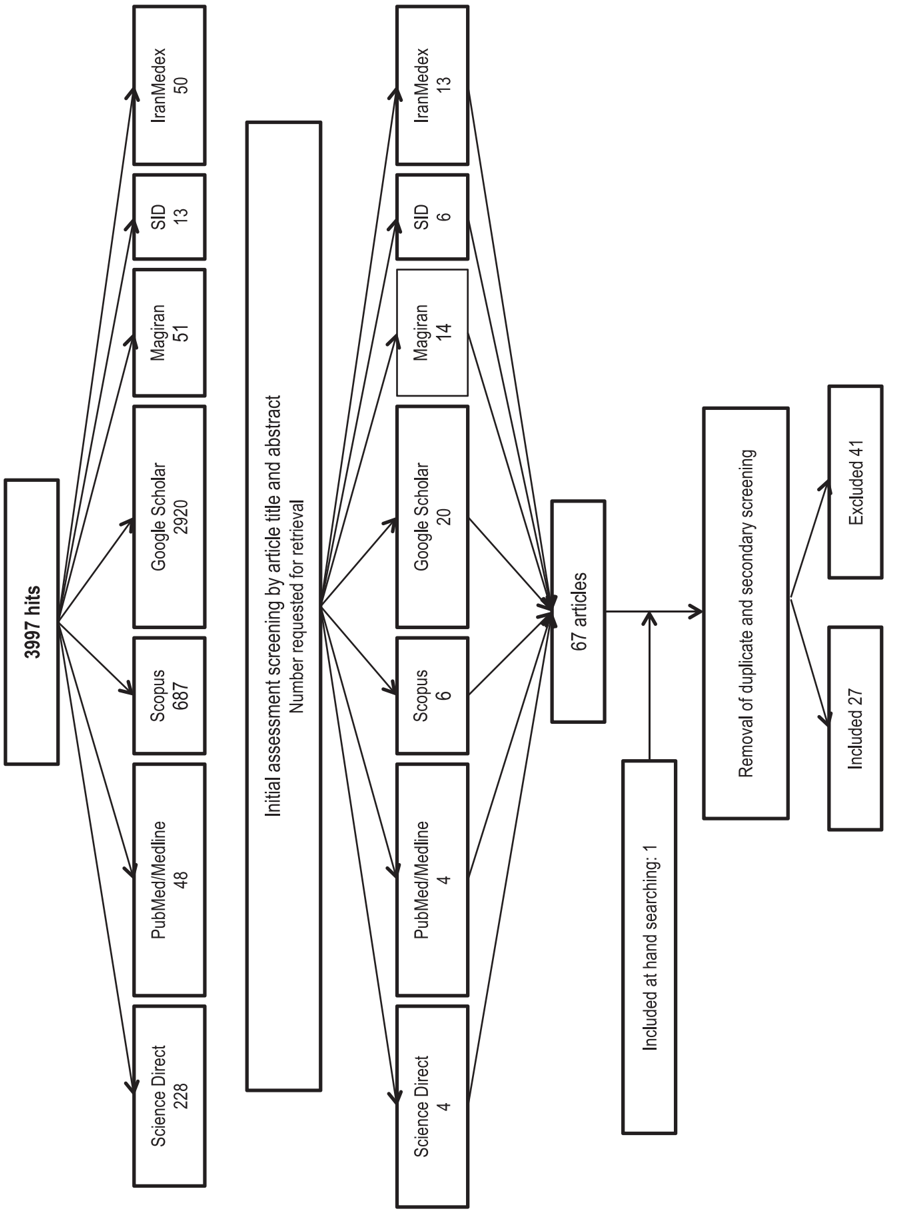
OBJECTIVE: The aim of this study was to present a comprehensive review of the literatures describing barriers and facilitators of patient education (PE) perceived by Iranian nurses in order to explain clinical applicability of patient education. METHODS: Review of the literature was undertaken using the international databases including PubMed/Medline, Scopus, ScienceDirect, as well as Google Scholar. Also, Persian electronic databases such as Magiran, SID and IranMedex were searched. Electronic databases were searched up from conception to September 2014 using search terms: "patient education", " patients education", "patient teaching", "patient training", "nurse", " nurses", " nursing", " and "Iran". Only studies were included that were related to barriers and facilitators of PE among Iranian nurses. RESULTS: Twenty-seven studies were included. The main influential barriers were categorized into three major areas: 1) Nurse-related factors: nursing shortage 2) Administration-related factors: unsupportive organizational culture, and 3) Patient-related factors: low compliance. The most perceived facilitators were recognized as "increasing, selecting and training special nurses for providing PE" and "providing PE courses for nurses and appropriate facilities for PE". CONCLUSION: Iranian nurses encounter barriers in PE, and the most frequently encountered barriers were related to administration factors. These findings have implications for administrators and managers in health settings. In order to promote PE among nurses, administrators should create a supportive environment and use effective strategies to smooth the progress of PE by nurses in their practice in order to ensure optimal outcomes for patients.
Overview
The claims and statistics of this paper haven’t been checked yet.
Free: it reads the open-access text and checks the first 5 claims that cite a source we can check. Create a free account to check every claim.
Integrity signals
Registry
Cites
Statistics
Figures
Verification
Claims the paper makes
The claims and statistics of this paper haven’t been checked yet.
Free: it reads the open-access text and checks the first 5 claims that cite a source we can check. Create a free account to check every claim.
Claims other papers make about this one
Each is checked against this paper’s own text: does it say what the citing paper says it does?
The check wasn’t confident either way, so it gives no verdict — never disputed.
In the citing paper
“Hence, it can be said that optimistic people act more successfully in solving their problems and in their marriage, and do not take a passive position towards the problems and have a more positive viewpoint towards others [40], [41].”
From The efficacy of acceptance and commitment therapy (ACT) matrix on depression and psychological capital of the patients with irritable bowel syndrome (2019) · cites this paper as [41]
Experimental — accuracy not yet measured
Self-check
Percentages, sums and reported differences re-computed from the paper’s own numbers.
The self-check needs the paper’s full text.
Citations
Cites
Nurses’ Reports On Hospital Care In Five Countries
Aiken, L. H., Clarke, S. P., Sloane, D. M., Sochalski, J. A., Busse, R., Clarke, H., Giovannetti, P., Hunt, J., Rafferty, A. M., & Shamian, J. (2001) · Health Affairs · doi:10.1377/hlthaff.20.3.43 · Cited by 1,623
Does patient education in chronic disease have therapeutic value?
Mazzuca, S. A. (1982) · Journal of Chronic Diseases · doi:10.1016/0021-9681(82)90071-6 · Cited by 347
Conceptualising health literacy from the patient perspective
Jordan, J. E., Buchbinder, R., & Osborne, R. H. (2010) · Patient Education and Counseling · doi:10.1016/j.pec.2009.10.001 · Cited by 324
The Crucial Role of Patient Education in Heart Failure
Strömberg, A. (2005) · European Journal of Heart Failure · doi:10.1016/j.ejheart.2005.01.002 · Cited by 265
A meta-analysis of controlled trials of cardiac patient education
Mullen, P. D., Mains, D. A., & Velez, R. (1992) · Patient Education and Counseling · doi:10.1016/0738-3991(92)90194-n · Cited by 212
Educating Patients: Understanding Barriers, Learning Styles, and Teaching Techniques
Beagley, L. (2011) · Journal of PeriAnesthesia Nursing · doi:10.1016/j.jopan.2011.06.002 · Cited by 112
The spectrum of barriers to and facilitators of research utilization in Iranian nursing
Mehrdad, N., Salsali, M., & Kazemnejad, A. (2008) · Journal of Clinical Nursing · doi:10.1111/j.1365-2702.2007.02040.x · Cited by 112
Nurses’ patient-education work: conditional factors - an integrative review
Friberg, F., Granum, V., & Bergh, A. (2012) · Journal of Nursing Management · doi:10.1111/j.1365-2834.2011.01367.x · Cited by 104
The nurse's role in patient education: incongruent perceptions among nurses and patients
Tilley, J. D., Gregor, F., & Thiessen, V. (1987) · Journal of Advanced Nursing · doi:10.1111/j.1365-2648.1987.tb01335.x · Cited by 89
Patient education in Europe: united differences
Visser, A. P., Deccache, A., & Bensing, J. M. (2001) · Patient Education and Counseling · doi:10.1016/s0738-3991(01)00111-2 · Cited by 86
Research works printed but not linked: 6
- Hossein Karimi Moonaghi • Amir Emami Zeydi • Amir Mirhaghi 16. Heshmati Nabavi F, Vanaki Z. Nurses opinions and ranking of patients training barriers. Quarterly Journal of Kerman Faculty of Nursing and Midwifery. 2006; 1:47-52.
- Mazaheri E, Mohammadi R. Health personnel's opinions of Ardabil University of Medical Sciences about the aged patient training barriers. Dena. 2006;1(1):75-82.
- Abbasi M, Nouroozi M, Mehran N. Evaluation of the barriers to patients education from the nurses view point and providing a facilitators model in teaching hospitals of Qom University of Medical Sciences in 2007. Quar J Hosp. 2008; 7:13-6.
- Moridi G, Khaledi S, Barfi M. Education Inhibitory Factors and Facilitators in Sanandaj, Iran, 2007. Dena. 2009; 4(3-4):43-52.
- Mansour ghenaati R, Majidi S, Tabari R. Evaluation of staff nurses' view point regarding the importance of the facilitators and barriers of patients education. Res Med Educ. 2011; 3:27-33.
- Norouzi H, Tohidi S, Karimi Moonaghi H, Behnam Vashini H. The Comporison of the Effects of the Lecture and Self-Learning Module on Nurses, Teaching-Competency to Cardiac Patient Education. J Mazandaran U Med Sci. 2014; 24(1):197-202.
Cited by
Pueyo‐Garrigues, M., Pardavila‐Belio, M. I., Canga, A., Esandi, N., Alfaro‐Díaz, C., & Canga‐Armayor, N. (2021) · Nurse Education in Practice · doi:10.1016/j.nepr.2021.103277 · Cited by 62
Coronavirus Disease 2019 (COVID-19): A Literature Review from a Nursing Perspective
Zeydi, A. E., Ghazanfari, M. J., Sanandaj, F. S., Panahi, R., Mortazavi, H., Karimifar, K., Karkhah, S., & Osuji, J. C. (2021) · Biomedicine · doi:10.37796/2211-8039.1154 · Cited by 48
“The high number of cases and deaths among HCW resulted in a severe shortage of staff, and extreme fatigue and stress among nurses, with the likelihood of weakening the immune system and subsequent increase in infection rates [29].”
BackgroundInfluentialLA EDUCACIÓN EN SALUD, UN ELEMENTO CENTRAL DEL CUIDADO DE ENFERMERÍA
Soto, P., Masalán, P., & Araya, S. B. (2018) · Revista Médica Clínica Las Condes · doi:10.1016/j.rmclc.2018.05.001 · Cited by 38
“Para educar a los pacientes de manera eficaz es indispensable una adherencia estricta a los principios educativos, por lo que todas las variables que tienen un impacto en el proceso de enseñanza-aprendizaje juegan un papel importante (5).”
BackgroundGanji, R., Pakniat, A., Armat, M. R., Tabatabaeichehr, M., & Mortazavi, H. (2018) · Open Access Macedonian Journal of Medical Sciences · doi:10.3889/oamjms.2018.225 · Cited by 42
“Patient education is an essential part of nursing care, with the aim that the patients will live as independently as possible, take their medications properly, and use their aid supplies correctly [21].”
BackgroundKardan-Souraki, M., Moosazadeh, M., Khani, S., & Hamzehgardeshi, Z. (2019) · Open Access Macedonian Journal of Medical Sciences · doi:10.3889/oamjms.2019.045 · Cited by 38
“Given that depression and mood disorders are considered barriers to self-care behaviours [30], the results of this study were noticeable, and the rate of performing breast self-examination for women with a history of underlying diseases was lower than the rate for healthy women.”
ResultPueyo‐Garrigues, M., Pardavila‐Belio, M. I., Whitehead, D., Esandi, N., Canga, A., Elosua, P., & Canga‐Armayor, N. (2020) · Journal of Advanced Nursing · doi:10.1111/jan.14632 · Cited by 49
Li, J., Huang, Y., Fong, D., Chen, J., & Song, Y. (2022) · Journal of Nursing Management · doi:10.1111/jonm.13691 · Cited by 42
Vafaei, S. M., Manzari, Z. S., Heydari, A., Froutan, R., & Amiri‐Farahani, L. (2018) · Open Access Macedonian Journal of Medical Sciences · doi:10.3889/oamjms.2018.303 · Cited by 39
“, [22], Lees [4], and Corben [17], a nursing service auditing method was used to provide valid, clear, and encoded data and consequently improve patient care (Lees) and coordination in the process of recording nursing interventions by the treatment team Ofi et al.”
BackgroundMethodInfluentialHosseininejad, S. M., Jahanian, F., Elyasi, F., Hossein, M., Koulaei, M. E., & Pashaei, S. M. (2019) · Biomedicine · doi:10.1051/bmdcn/2019090319 · Cited by 34
“Supportive preventive measures can be effective for preventing and treating PTSD among nurses in the emergency ward [21, 38, 39].”
BackgroundKola, M. K. S., Jafari, H., Charati, J. Y., & Shafipour, V. (2021) · Journal of Education and Health Promotion · doi:10.4103/jehp.jehp_1481_20 · Cited by 33
“Increasing the level of knowledge led to the improvement of self‐care behaviors, diet and medication, and patient‐caregiver self‐reporting.[15,24,39,40] The results of this study are in line with the results of the study by Figure 1: Flow diagram of the study”
ResultBarriers and facilitators to patient education provided by nurses: A mixed‐method systematic review
Wang, S., Liu, K., Tang, S., Wang, G., Qi, Y., & Chen, Q. (2024) · Journal of Clinical Nursing · doi:10.1111/jocn.17111 · Cited by 26
Clinical competence of Iranian nurses: A systematic review and meta-analysis
Zeydi, A. E., Ghazanfari, M. J., Azizi, E., Darvishi‐Khezri, H., Mortazavi, H., Osuji, J. C., & Karkhah, S. (2022) · Journal of Education and Health Promotion · doi:10.4103/jehp.jehp_352_21 · Cited by 20
“[22] In general, head nurses, as vital members of the treatment team who has the appropriate knowledge and skills, have an essential role in guiding nurses and improving their clinical competence.[53] To create a common language in different areas of clinical skills, nurses, each of whom may have graduated from differ…”
BackgroundMirsharifa, S. M., Mirzaian, B., & Dousti, Y. (2019) · Open Access Macedonian Journal of Medical Sciences · doi:10.3889/oamjms.2019.076 · Cited by 19
“Hence, it can be said that optimistic people act more successfully in solving their problems and in their marriage, and do not take a passive position towards the problems and have a more positive viewpoint towards others [40], [41].”
BackgroundJouybari, L. M., Mojarad, F., & Sanagoo, A. (2019) · Indian Journal of Palliative Care · doi:10.4103/ijpc.ijpc_187_18 · Cited by 15
“[19] Nurses’ desired levels of religious beliefs can lead to improved work ethic and accountability at work.[20] Religious beliefs have positive and significant relationship with organizational commitment,[21] job motivation, and attitude toward patients and nursing”
BackgroundAssadi, T., Sadeghi, F., Noyani, A., Seidabadi, A., & Yekesadat, S. M. (2019) · Open Access Macedonian Journal of Medical Sciences · doi:10.3889/oamjms.2019.744 · Cited by 14
“The higher burnout in females compared to males may be due to their gender properties, situational life factors, unsuitable working conditions and the male’s higher resistance and resilience in the workplace [39], [40].”
BackgroundZeydi, A. E., Moonaghi, H. K., & Heydari, A. (2017) · Electronic physician · doi:10.19082/6102 · Cited by 12
“It has been previously revealed that healthcare providers’ heavy workload is a major barrier to patients’ education, counseling and supervision (23).”
BackgroundSelf-citationFactors Affecting Nurses’ Perceived Organizational Commitment: A Qualitative Study
Sepahvand, F., Atashzadeh‐Shoorideh, F., Parvizy, S., & Tafreshi, M. Z. (2019) · Bangladesh Journal of Medical Science · doi:10.3329/bjms.v18i2.40701 · Cited by 22
Congying, L., Zhang, H., Qin, H., Liu, Y., Xiaoling, C., Lei, R., & Li, B. (2024) · Nurse Education in Practice · doi:10.1016/j.nepr.2024.104042 · Cited by 11
Factors influencing the patient education performance of hemodialysis unit nurses
Jung, M., & Roh, Y. S. (2020) · Patient Education and Counseling · doi:10.1016/j.pec.2020.06.010 · Cited by 17
Li, L., Xu, L., Jia, G., Zhou, X., Tang, X., Zhao, H., Ma, Y., Ma, P., & Chen, J. (2024) · Nurse Education Today · doi:10.1016/j.nedt.2024.106298 · Cited by 13
Pouresmail, Z., Nabavi, F. H., & Rassouli, M. (2023) · BMC Nursing · doi:10.1186/s12912-023-01444-0 · Cited by 16
“In our context, one of the barriers to patient education is unsupportive organizational culture [38].”
BackgroundExploring the Experiences of Iranian Women Regarding Obesity Self-Management: A Qualitative Study
Kaveh, O., & Peyrovi, H. (2019) · Open Access Macedonian Journal of Medical Sciences · doi:10.3889/oamjms.2019.632 · Cited by 10
“Nurses play a key role in active engagement of individuals in managing their condition and avoiding progress, recurrence, or side-effects of their medical condition [15], [16], [17], [18].”
BackgroundMoghadam, S. H., Abdolmaleki, E. Y., Alijani, F., Afrakoti, N. B., & Ganji, J. (2020) · Ethiopian Journal of Health Sciences · doi:10.4314/ejhs.v30i4.9 · Cited by 12
“It has been previously showed that enhancing social capital scopes in patients with diabetes leads to better control of blood glucose level (19,33).”
BackgroundNikraftar, F., Nabavi, F. H., Dastani, M., Mazloum, S. R., & Mirhosseini, S. (2022) · Health Science Reports · doi:10.1002/hsr2.801 · Cited by 8
“However, one of the barriers to the patient education in Iran is shortage of time due to high workload and the disproportionate patient‐nurse ratio.(10) Use of educational materials is one of the methods to overcome these barriers.”
BackgroundAhmadi, Z., Abolhassani, S., Hasheminia, A. M., & Kheiri, S. (2022) · Iranian Journal of Nursing and Midwifery Research · doi:10.4103/ijnmr.ijnmr_92_20 · Cited by 16
“[21,22] In Iran, obstacles such as nursing shortage and lack of sufficient time prevent nurses from educating patients.[21] There are several methods to educate a patient.”
BackgroundKaveh, O., & Peyrovi, H. (2019) · Journal of Family Medicine and Primary Care · doi:10.4103/jfmpc.jfmpc_527_19 · Cited by 7
“[39,40] Since education is mostly done by nurses and as nurses are not that active at obesity clinics, there is a shortage of education services at these clinics and probably it is one of the causes of failure to stick to a diet.[41] Moreover, obesity awareness, understanding the perceived barriers, and facilitators o…”
BackgroundHealth Literacy-Related Knowledge and Experience among Nurses Practicing in Medical-Surgical Wards
AL‐Fayyadh, S., Al‐Jubouri, M. B., AL-Hadrawi, H., Jaafar, S. A., & Hussein, S. M. (2022) · Nurse Media Journal of Nursing · doi:10.14710/nmjn.v12i1.42697 · Cited by 13
Wang, S., Liu, K., Shi, Z., Chen, Q., & Tang, S. (2023) · BMJ Open · doi:10.1136/bmjopen-2023-072905 · Cited by 8
Ildarabadi, E., Tabei, M. G., & Khosh, A. M. (2019) · Open Access Macedonian Journal of Medical Sciences · doi:10.3889/oamjms.2019.275 · Cited by 9
“It has been indicating that self-care training increased a patient's adherence to physical activity, which agreed with the results of this study [24].”
ResultLiu, C., Chen, Z., Qin, H., Yang, Y., Cui, X., Lei, R., & Li, B. (2025) · Journal of Advanced Nursing · doi:10.1111/jan.16728 · Cited by 5
Rocky Road Ahead Of Nursing Presence in the Oncology Care Unit: A Qualitative Study
Mojarad, F. A., Jouybari, L. M., & Sanagoo, A. (2018) · Open Access Macedonian Journal of Medical Sciences · doi:10.3889/oamjms.2018.426 · Cited by 7
“In a study income and benefits were found to significantly increase motivation, and discriminations in payments and the feeling of unfairness in the payment system were among the leading causes of decreased motivation and resignations [29].”
BackgroundSenghor, A. S. (2021) · SociologieS · doi:10.4000/sociologies.9789 · Cited by 5
A Validation Study of the Korean Version of the Nurses’ Patient Education Questionnaire
Jung, M., & Roh, Y. S. (2021) · International Journal of Environmental Research and Public Health · doi:10.3390/ijerph18115609 · Cited by 4
“However, patient education for patients with end-stage renal disease undergo hemodialysis can be challenging and competing with all other topics for hemodialysis unit nurses because they face patient, nurse, and hospital-related barriers for implementing optimal patient education [5,6].”
BackgroundMahmoudi, G., Kheili, M. A. A., & Charati, J. Y. (2022) · Journal of Nursing and Midwifery Sciences · doi:10.4103/jnms.jnms_38_21 · Cited by 4
Factors and barriers influencing practice of health education among nursing students in Jordan
Khamaiseh, A., & Altarawneh, F. Z. (2023) · Journal of Education and Health Promotion · doi:10.4103/jehp.jehp_165_23 · Cited by 7
“[3] Nursing students as a part of the nursing community learn about the importance of health education through their education and are trained to make use of the principles of health education during their encounters with the clients and their families.”
BackgroundGüzel, A., & Yava, A. (2024) · Bingöl Üniversitesi Sağlık Dergisi · doi:10.58605/bingolsaglik.1481592 · Cited by 3
Kabiri, N., Hajebrahimi, S., Alizadeh, G., Azimzadeh, S., Dehkhoda, N., & Talebpour, A. (2020) · International Journal of Evidence-Based Healthcare · doi:10.1097/xeb.0000000000000259 · Cited by 3
Chozom, S. (2022) · Journal Of Nursing Practice · doi:10.30994/jnp.v6i2.270 · Cited by 3
Yousefiazar, A., Ghahramanian, A., Rahmani, A., Feizollahzadeh, H., Sadeghi, M. T., Ghaffarifar, S., & Parizad, R. (2025) · BMJ Open · doi:10.1136/bmjopen-2024-092234 · Cited by 3
Yousefiazar, A., Ghahramanian, A., Rahmani, A., Feizollahzadeh, H., Sadeghi, M. R., Ghaffarifar, S., & Parizad, R. (2025) · Patient Education and Counseling · doi:10.1016/j.pec.2025.109226 · Cited by 7
Exploring the Human Factors Affecting Health Service Managers: A Qualitative Study
Ranjbar, M., Neishabouri, M., & Gorji, M. A. H. (2019) · Open Access Macedonian Journal of Medical Sciences · doi:10.3889/oamjms.2019.475 · Cited by 2
“Although extensive research has been carried out on the classification of the duties and skills that managers needed, far too little attention has been paid to human factors influencing management [8], [15], [16], [17].”
BackgroundShoaran, M., Hajebrahimi, S., Kabiri, N., Salehi‐Pourmehr, H., & Talebpour, A. (2024) · International Journal of Evidence-Based Healthcare · doi:10.1097/xeb.0000000000000425 · Cited by 2
The Relationship Between Years of Education on Nurse Related Barriers of Patient Education
Salam, M. U., Channar, H. B., Khatoon, R., Parveen, R., Rahimoon, M., & Raza, S. (2023) · Journal of Health and Rehabilitation Research · doi:10.61919/jhrr.v3i2.287 · Cited by 2
Penchah, S. G., Pourghane, P., Nikfam, M. R., & Nakhjiri, F. M. (2020) · Education and Ethics in Nursing · doi:10.52547/ethicnurs.9.3.4.9 · Cited by 2
“Invest Educ Enferm 2016; 34(1): 137-51.”
Peña, A. C., Riveros, E. E. R., Rivas, C. C. S., & Lagos, V. G. (2022) · Cultura de los Cuidados · doi:10.14198/cuid.2022.62.07 · Cited by 1
Impacto de curso de obesidad, prediabetes y síndrome metabólico 2019.
Cervantes, J. O. M., Garcés, B. L. M., Mancero, A. G. C., & Lindao, B. G. S. (2021) · REVISTA CIENCIAS PEDAGÓGICAS E INNOVACIÓN · doi:10.26423/rcpi.v9i1.395 · Cited by 1
Costa, D., Matias, J., & Aguiar, F. L. (2022) · IntechOpen eBooks · doi:10.5772/intechopen.103891 · Cited by 1
Kharamin, S., Nourian, K., Mosavi, A., Afroughi, S., AfrasiabiFar, A., nik, S. H., Cheraghi, S., & Niknam, A. (2022) · Journal of Clinical Care and Skills · doi:10.52547/jccs.3.2.73 · Cited by 5
Karimzadeh, Z., Aliakbari, F., Salehi, S., & Raeisi, H. (2023) · Journal of Multidisciplinary Care · doi:10.34172/jmdc.1170
“Studies have shown that Iranian nurses face obstacles in patient education (30). various communication methods are used to educate patients.”
BackgroundEfecto de un plan de alta en los pacientes con falla cardiaca de enero a noviembre de 2019 en Bogotá
Manrique, Y. B., & Muñoz, X. G. (2020) · Repositorio Institucional (Pontificia Universidad Javeriana) · doi:10.11144/javeriana.10554.46190 · Cited by 1
Educando para la salud desde un entorno familiar
Chávez, S. M. (2023) · HUMAN REVIEW International Humanities Review / Revista Internacional de Humanidades · doi:10.37467/revhuman.v12.4669
“Como bien lo menciona Karimi, Emami y Mirhaghi (2016), los profesionales de Enfermería son quienes mayor parte del tiempo pasan con los pacientes, por ende, en este tiempo se promueve el cuidado y se previenen complicaciones, se trabaja con los pacientes, pero también con los familiares, lo que…”
Tabassum, H., Najmusher, H., Viji, C., Jenita, J., Swaathie, V., & Anjum, A. (2022) · International Interdisciplinary Humanitarian Conference for Sustainability (IIHC) · doi:10.1109/iihc55949.2022.10060419
“As a result, nurses must be well prepared to provide high-quality, evidence-based care to COVID-19 patients [3, 4].”
BackgroundEducando para la salud desde un entorno familiar
Chávez, S. M. (2023) · HUMAN REVIEW International Humanities Review / Revista Internacional de Humanidades · doi:10.37819/revhuman.v16i4.1506
El papel del profesional de enfermería en la educación para la salud
Torres-López, K. E., Campos, T. A., & Hernández, R. G. (2025) · Atención Familiar · doi:10.22201/fm.14058871p.2025.3.91624 · Cited by 1
The Role of Nursing Professionals in Health Education
Torres-López, K. E., Campos, T. A., & Hernández, R. G. (2025) · Atención Familiar · doi:10.22201/fm.14058871p.2025.3.91623 · Cited by 1
A Structured Approach to Patient Education: Empowering Nurses Through a Framework
Joseph, R. A., & Gregory, L. (2025) · Journal of Pediatric Surgical Nursing · doi:10.1177/23320249251374301 · Cited by 1
Abaah, T., & Nachinab, G. T.-E. (2026) · BMC Medical Education · doi:10.1186/s12909-026-08834-3
“These findings are consistent with those of other studies that have identified barriers to patient education, such as limited support from the hospital managers, lack of monitoring and evaluation for patient educational activities, workload and inadequate staffing [31, 32].”
Patient Education Barriers: Reflections and Experiences of Primary Healthcare Nurses in Abu Dhabi
Ramavhoya, T. I., Peu, M. D., & Alayed, B. (2026) · IntechOpen eBooks · doi:10.5772/intechopen.1011977
Metadata
- Authors
- Mashhad University of Medical Sciences, Moonaghi, H. K., Emami Zeydi, A., Mashhad University of Medical Sciences, Mirhaghi, A., & Mashhad University of Medical Sciences
- Affiliations
- Mashhad University of Medical Sciences (IR)
- Corresponding author
- Mirhaghi, Amir
- Venue
- Investigación y Educación en Enfermería
- Publisher
- Universidad de Antioquia
- Published
- 2016-02-15
- Volume
- 34
- Issue
- 1
- Pages
- 137-151
- ISSN
- 0120-5307 (ISSN-L)
- OpenAlex
- W2317739338
- Cited by
- 58
- References
- 54
- Citations by year
- 2026: 2 · 2025: 6 · 2024: 5 · 2023: 7 · 2022: 11 · 2021: 6 · 2020: 6 · 2019: 10 · 2018: 4 · 2017: 1
- FWCI
- 9.33
- Type
- journal article
- Language
- es
- Open access
- diamond
- doi.org
- Licence
- cc-by-nc-sa
- Locations
- Investigación y Educación en Enfermería (publishedVersion, cc-by-nc-sa)
- Vitae (Universidad de Antioquia) (publishedVersion)
- PubMed (publishedVersion)
- LA Referencia (Red Federada de Repositorios Institucionales de Publicaciones Científicas) (publishedVersion, other-oa)
- Dialnet (Universidad de la Rioja) (submittedVersion)
- DOAJ (DOAJ: Directory of Open Access Journals) (submittedVersion, cc-by-sa)
- Redalyc (Universidad Autónoma del Estado de México) (submittedVersion)
- Topics
- Health Sciences › Health Professions › General Health Professions › Health Sciences Research and Education
- Health Sciences › Health Professions › General Health Professions › Patient-Provider Communication in Healthcare
- Health Sciences › Nursing › Research and Theory › Nursing education and management
- Keywords
- patient education, barriers and facilitators, nurses, clinical applicability, nursing shortage, organizational culture, medication adherence, nurse training, Iranian nurses
- MeSH terms
- Humans, Iran, Nurses, Patient Compliance, Patient Education as Topic, Organizational Culture, Nurse's Role
About these checks
Registry, retraction, Cites and statistics results are computed, not judged, with one exception: a printed reference that no index lists is read once by a model before it counts as a citation error. Claims are extracted by a model and kept only when their quote appears verbatim in the text; each cited source is then checked, with a model’s help, for whether it says what the claim relies on. Those verdicts can be wrong — read the claim’s quote and the cited source before relying on one.
Statistics and arithmetic are recomputed, not judged.
Confidence bands are shown only for fields calibrated on our annotated test set. None is calibrated yet, so no band is shown.
What counts as a claim ›How we measure confidence ›How we check this ›
Are you an author, or do you see a problem with this page? Request a review
Data sources
Bibliographic data: Semantic Scholar, OpenAlex, Crossref.
Contains information from the Semantic Scholar Academic Graph Datasets, made available under the ODC Attribution License (ODC-BY 1.0).
Semantic Scholar’s data is described in: Kinney, R., et al. (2023). The Semantic Scholar Open Data Platform. arXiv:2301.10140.
