

The DOI matches its Crossref record.
An Approach for Designing a Complex Inductor –Workpiece system for Induction Heating
Abstract
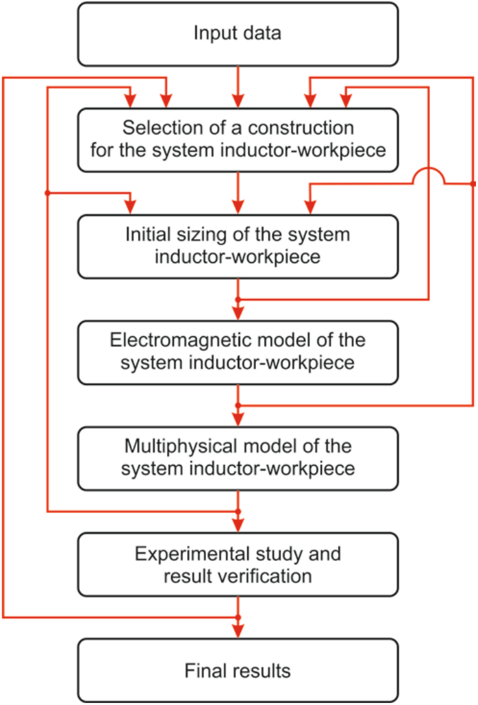
The current paper presents an approach for designing a complex electromagnetic system consisting of an inductor and a workpiece. The approach is based on known methodologies and includes numerical methods for modelling. Using this approach, a methodology for designing the geometry of the inductor, based on the geometry of the workpiece, is suggested. The methodology can be used to develop designs with uniform temperature field, improved quality of the heating process and increased energy efficiency. Experimental study that verifies the advantages of the methodology is presented.
Overview
The claims and statistics of this paper haven’t been checked yet.
Run the check — free, no account needed. It reads the open-access text and checks the sources it cites.
Integrity signals
Registry
Cites
Statistics
Figures
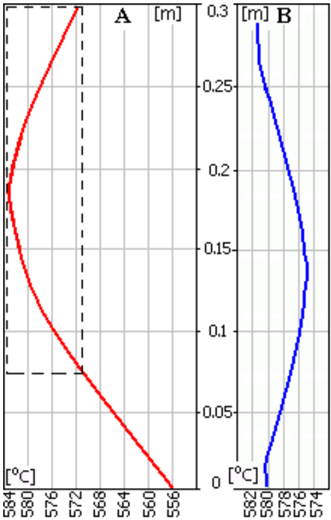
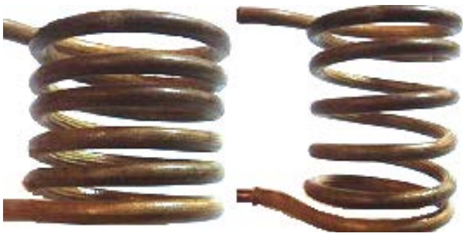
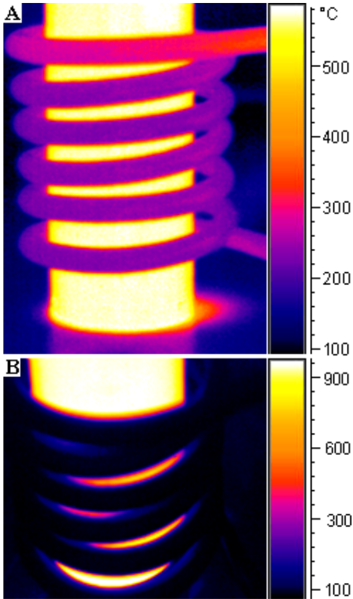
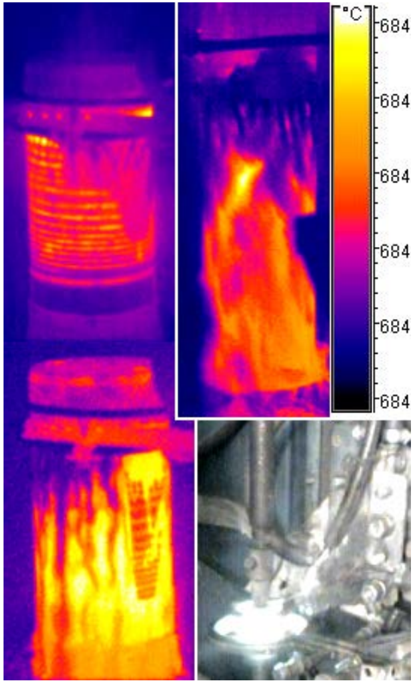
Verification
Claims the paper makes
The claims and statistics of this paper haven’t been checked yet.
Run the check — free, no account needed. It reads the open-access text and checks the sources it cites.
Claims other papers make about this one
Each is checked against this paper’s own text: does it say what the citing paper says it does?
In the citing paper
“Studies focused on the influence of the workpiece characteristics over the heating process [13][14][15] have shown that the inductor geometry characteristics have a critical impact on the electromagnetic field shape and must be considered with the specific workpiece.”
Self-check
Percentages, sums and reported differences re-computed from the paper’s own numbers.
The self-check needs the paper’s full text.
Citations
Cites
No references could be resolved yet.
Research works printed but not linked: 8
- Tahrilov Hr., B. Dimitrov (2010). Effects of the geometrical parameters of a cylindrical inductor on the thermal heating process. Annual Journal of the Technical University of Varna
- Tahrilov Hr., IlLilqnova (2010). Harmonization of the parameters of a system inductor-workpiece with a given technological process. Annual Journal of the Technical University of Varna
- Tahrilov Hr., B. Dimitrov (2011). Comparative study between approaches of analytical studies, numerical modeling and experimental based design for induction heating for cylindrical details; Journal "Electronics and electrical engineering -E+E", Sofia, Bulgaria
- Shokouhmand, H., &Ghaffari, S. (2012). Thermal analysis of moving induction heating of a hollow cylinder with subsequent spray cooling: Effect of velocity, initial position of coil, and geometry. Applied Mathematical Modelling, 36(9), 4304-4323.
- Tavakoli, M. H., Karbaschi, H., &Samavat, F. (2011). Influence of workpiece height on the induction heating process. Mathematical and Computer Modelling,54(1), 50-58.
- Karban, P., &Donátová, M. (2010). Continual induction hardening of steel bodies. Mathematics and Computers in Simulation, 80(8), 1771-1782.
- Kranjc, M., Zupanic, A., Miklavcic, D., &Jarm, T. (2010). Numerical analysis and thermographic investigation of induction heating. International Journal of Heat and Mass Transfer, 53(17), 3585- 3591.
- Di Luozzo, N., Fontana, M., &Arcondo, B. (2012). Modelling of induction heating of carbon steel tubes: Mathematical analysis, numerical simulation and validation. Journal of Alloys and Compounds, 536, S564-S568.
Cited by
Dimitrov, B., Hayatleh, K., Barker, S., & Collier, G. (2021) · Electricity · doi:10.3390/electricity2040026 · Cited by 3
Self-citation
Metadata
- Authors
- Dimitrov, B., Streblau, M., & Marinov, A.
- Affiliations
- Technical University of Varna, “Studentska” street 1, Varna, Bulgaria
- Venue
- TEM Journal
- Published
- 2014-08-26
- Pages
- 244-249
- ISSN
- 2217-8333
- 2217-8309
- Cited by
- 1
- References
- 0
- Language
- en
- Funders
- Bulgarian National Science Fund (МУ03/163)
About these checks
Registry, retraction, Cites and statistics results are computed, not judged, with one exception: a printed reference that no index lists is read once by a model before it counts as a citation error. Claims are extracted by a model and kept only when their quote appears verbatim in the text; each cited source is then checked, with a model’s help, for whether it says what the claim relies on. Those verdicts can be wrong — read the claim’s quote and the cited source before relying on one.
Statistics and arithmetic are recomputed, not judged.
Confidence bands are shown only for fields calibrated on our annotated test set. None is calibrated yet, so no band is shown.
What counts as a claim ›How we measure confidence ›How we check this ›
Are you an author, or do you see a problem with this page? Request a review
How to cite
Cite CoChat for the checks on this page, and the paper for its own findings.
- This page
- CoChat. (2026). Citation check: An Approach for Designing a Complex Inductor –Workpiece system for Induction Heating. https://app.cochat.ai/papers/10.18421/tem33-08
- The paper
- Dimitrov, B., Streblau, M., & Marinov, A. (2014). An Approach for Designing a Complex Inductor –Workpiece system for Induction Heating. TEM Journal. https://doi.org/10.18421/tem33-08
Data sources
Bibliographic data: Semantic Scholar, OpenAlex, Crossref.
Contains information from the Semantic Scholar Academic Graph Datasets, made available under the ODC Attribution License (ODC-BY 1.0).
Semantic Scholar’s data is described in: Kinney, R., et al. (2023). The Semantic Scholar Open Data Platform. arXiv:2301.10140.
