

Ritual Commensality between Human andNon-Human Persons
Open accessThe DOI matches its DataCite record; 22 of the 22 references it cites were found in a registry or an index; none of the 26 sources its claims cite is checked for support yet.
Abstract
In der Kulturanthropologie gilt es mittlerweile als selbstverständlich, dass soziale Beziehungen zum einen durch Praktiken konstruiert werden, die im Zusammenhang mit Nahrungsmitteln und Ernährung stehen, und zum anderen in Lebensmitteln verkörpert sind. In diesem Beitrag wird vorgeschlagen, dass sowohl rituelle als auch alltägliche Kommensalität, die Gestaltung spezifischer sozialer Beziehungen als Ziel oder Konsequenz haben. In dieser Hinsicht unterscheiden sie sich nicht sehr voneinander. Dagegen ergeben sich Differenzen im Bereich der Kommensalität aufgrund der in den Akt des gemeinsamen Essens eingebundenen Personen. Rituelle Kommensalität wird als Möglichkeit gesehen, das soziale Universum und die Ontologie indigener Gruppen in den Anden zu untersuchen, dabei werden archäologische und ethnohistorische Daten herangezogen. Ebenso wird die Rolle untersucht, die diese kommensalen Aktivitäten in der Konstruktion und Auseinandersetzung mit nicht-menschlichen Personen in der späten präkolumbianischen Zeit in den Anden spielten.
Overview
CoChat Summary
TL;DR
The paper argues that ritual commensality in the late pre-Columbian Andes can be used archaeologically to identify other-than-human persons, especially huacas, by showing intentional inclusion of powerful material entities in food-sharing. It combines ethnohistoric accounts of huacas as persons with archaeological case studies of feasting remains associated with rock outcrops, monoliths, and mountains.
Key findings
- Ethnohistoric sources describe huacas as concrete, material, powerful entities and as persons: they could be spouses, have children and siblings, be named, speak and hear, and be clothed; an interpreter of the Huarochirí manuscript concluded huacas were “persons in fact.”
- Archaeological examples at Pueblo Viejo (occupied during Inca expansion, approximately AD 1470–1533), Choquepukio, the Callejón de Huaylas, Tucume, and Catequil/Cerro Icchal show feasting/commensal assemblages in direct association with huaca features, including cooking and serving vessels, camelid, deer, and cuy bones, maize residues, spondylus shell, and metal miniatures.
- At Choquepukio, investigators recorded “banquet wares,” Lucre and Killke style face-neck jars, cooking pots, serving plates, drinking cups and bowls, metal objects, turquoise and shell beads, gold laminate fragments, six small silver discs, and a carved bone spoon.
- The paper concludes that ritual commensality may have been an important way of recognizing and interacting with significant non-human entities as members of the humanly constructed social universe, supporting the conjecture that huacas were understood as non-human persons.
Methods
- Theoretical synthesis of commensality, feasting, personhood, and agency, drawing on Dietler, Gell, and Hallowell, applied to the late pre-Columbian Andes.
- Uses ethnohistoric documents (e.g., Garcilaso de la Vega, Cobo, and the Huarochirí manuscript written in Quechua circa 1598) and archaeological case studies from Peru: Pueblo Viejo, Choquepukio, the Callejón de Huaylas, Tucume, and Catequil/Cerro Icchal.
- Interpretive analysis identifies food-related remains in non-domestic or ritual contexts and associates them with huaca features to infer intentional commensality with non-human persons.
Limitations
- Stated limitations: Not stated in the paper.
- Evident from the text: interpretations rely on colonial ethnohistoric sources and on archaeological associations between food remains and huaca features; the author acknowledges that in some instances remains “might be construed as one-way offerings” rather than shared consumption.
- Evident from the text: the case-study examples are drawn from several sites and regions rather than a systematic sample, and no independent test or quantitative comparison is presented.
Model-written summary. Check it against the paper before relying on it.
Integrity signals
Registry
Cites
Statistics
Figures
Verification
Claims the paper makes
0 Valid · 0 Not valid · 21 Not checked · 34 Own results and interpretations
In the paper
“The investigators also recorded a number of special artifacts including several metal objects; turquoise and shell beads; fragments of gold laminate; six small silver discs; and a carved bone spoon that were found in association with the raised platforms located around the interior perimeter of the room.35”
§ Human and Non-Human Persons. Investigating Native Ontologies in the Late Pre-Columbian Andean World > 3.2 Ritual Commensality and Huacas
What the sources say
- Not matchedcites [35]
The reference list we hold has no entry [35].
plainstates an associationSingle case- Asserted: passes — The authors put it forward as true.
- Checkable: passes — It can be checked against evidence.
- Load-bearing: unclear — It is unclear whether the paper’s conclusions depend on it.
- Based: passes — The paper gives a reason why it holds.
- Not matched
A result the paper reports from its own data — it cites no other source for it, so there is none to check. The quote shows it is in the paper.
In the paper
“Foodstuffs, including meat (e. g., camelid, deer, and cuy), corn, cornmeal (sanku), and corn beer (chicha), as well as the containers and vessels in which these items were prepared and served, were among the most significant components of the archaeological assemblage at several recently identified huaca sites.”
§ Human and Non-Human Persons. Investigating Native Ontologies in the Late Pre-Columbian Andean World > 4 Concluding Thoughts
plain- Asserted: passes — The authors put it forward as true.
- Checkable: passes — It can be checked against evidence.
- Load-bearing: passes — The paper’s conclusions depend on it.
- Based: passes — The paper gives a reason why it holds.
A result the paper states — it cites no source for it, so there is none to check. The quote shows it is in the paper.
In the paper
“Numerous offerings were found in pits located directly below and in front of the stone huaca consisting principally of spondylus shell and miniature representations of objects such”
§ Human and Non-Human Persons. Investigating Native Ontologies in the Late Pre-Columbian Andean World > 3.2 Ritual Commensality and Huacas
plainSingle case- Asserted: passes — The authors put it forward as true.
- Checkable: passes — It can be checked against evidence.
- Load-bearing: passes — The paper’s conclusions depend on it.
- Based: passes — The paper gives a reason why it holds.
A conclusion the paper draws from its own results — it cites no other source for it, so there is none to check. The quote shows it is in the paper.
In the paper
“Such observations suggest a radically different understanding of the nature and categories of being on the part of native peoples in the Andes relative to the European invaders.”
§ Human and Non-Human Persons. Investigating Native Ontologies in the Late Pre-Columbian Andean World > 3 Ethnohistoric Information
hedged- Asserted: passes — The authors put it forward as true.
- Checkable: passes — It can be checked against evidence.
- Load-bearing: passes — The paper’s conclusions depend on it.
- Based: passes — The paper gives a reason why it holds.
In the paper
“Archaeological excavations recently undertaken in the vicinity of the mountain traditionally associated with this oracular huaca (Cerro Icchal) have produced significant architectural remains.39”
§ Human and Non-Human Persons. Investigating Native Ontologies in the Late Pre-Columbian Andean World > 3.2 Ritual Commensality and Huacas
What the sources say
- Not matchedcites [39]
The reference list we hold has no entry [39].
plainSingle case- Asserted: passes — The authors put it forward as true.
- Checkable: passes — It can be checked against evidence.
- Load-bearing: unclear — It is unclear whether the paper’s conclusions depend on it.
- Based: passes — The paper gives a reason why it holds.
- Rests on an assumption not shown here.
- Not matched
15 more claims
Create a free account to see all 55 claims and every source verdict.
- It may state two separate claims as one. 16
- Probably not a substantial claim. 24
- The quote only partly states this claim. 1
Self-check
Percentages, sums and reported differences re-computed from the paper’s own numbers.
Each contradiction between two passages listed here was confirmed by an independent check.
Rated minor: it would not touch a result — a value no result rests on, a p-value that stays on the same side of the significance level, or a conflict that is clerical, resolved elsewhere in the paper, or outside its own findings.
In the paper
§ Human and Non-Human Persons. Investigating Native Ontologies in the Late Pre-Columbian Andean World > 3.2 Ritual Commensality and Huacas
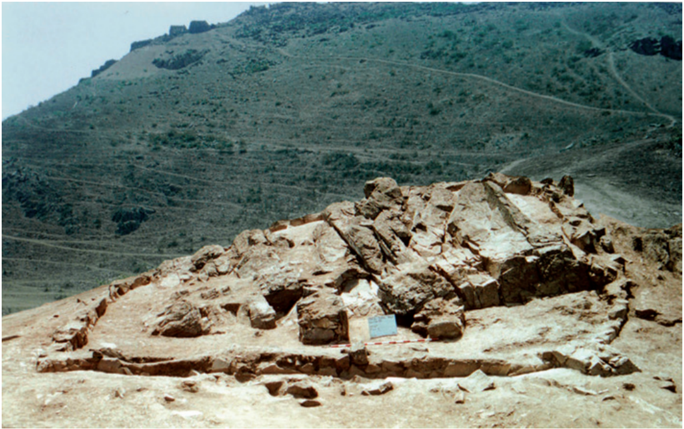
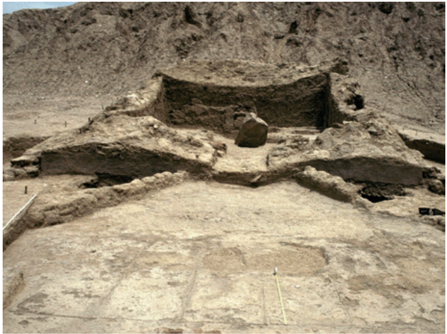
“On the south side of this outcrop, which the investigators refer to as a huaca,foot_25 was a small, stone-lined well connected to a covered canal (Fig. 3).”
§ Human and Non-Human Persons. Investigating Native Ontologies in the Late Pre-Columbian Andean World > 4 Concluding Thoughts
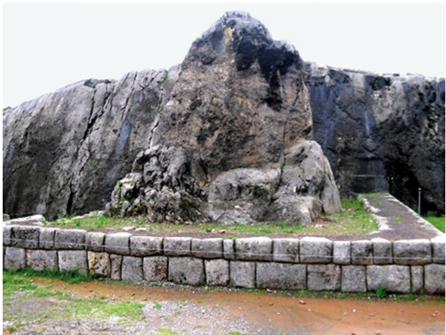
“Figure: 3 Fig. 3 Fig.3Upright stone monolith surrounded by low stone wall at site of Q'enko located above and outside the city of Cuzco.”
Citations
Cites
Reassembling the Social: An Introduction to Actor-Network-Theory
Latour, B. (2005) · doi:10.1093/oso/9780199256044.001.0001 · Cited by 16,778
Art And Agency: An Anthropological Theory
Gell, A. (1998) · doi:10.1093/oso/9780198280132.001.0001 · Cited by 3,460
The Anthropology of Food and Eating
Mintz, S. W., & Du Bois, C. M. (2002) · Annual Review of Anthropology · doi:10.1146/annurev.anthro.32.032702.131011 · Cited by 1,174
How to Make a National Cuisine: Cookbooks in Contemporary India
Appadurai, A. (1988) · Comparative Studies in Society and History · doi:10.1017/s0010417500015024 · Cited by 785
The Technology of Enchantment and the Enchantment of Technology
Gell, A. (1992) · Anthropology Art and Aesthetics · doi:10.1093/oso/9780198277330.003.0003 · Cited by 751
Remembrance of Repasts: An Anthropology of Food and Memory
Sutton, D. E. (2001) · doi:10.5040/9781350044883 · Cited by 592
Tasting food, tasting freedom excursions into eating, culture, and the past
Mintz, S. W. (1997) · Cited by 574
The Archaeology of Personhood: An Anthropological Approach
Fowler, C. (2004) · doi:10.4324/9780203583210 · Cited by 486
Mountain of the condor: Metaphor and ritual in an Andean ayllu
Bastien, J. W. (1978) · Cited by 370
Vogel's Net: Traps as Artworks and Artworks as Traps
Gell, A. (1996) · Journal of Material Culture · doi:10.1177/135918359600100102 · Cited by 315
Deathly waters and hungry mountains agrarian ritual and class formation in an Andean town
Gose, P. (1994) · Cited by 268
Monuments, power and personhood in the British Neolithic
Brück, J. (2001) · Journal of the Royal Anthropological Institute · doi:10.1111/1467-9655.00082 · Cited by 131
Polia, M. (1999) · Pontificia Universidad Católica del Perú eBooks · doi:10.18800/9789972421709 · Cited by 127
Always hungry, never greedy food and the expression of gender in a Melanesian society
Kahn, M. (n.d.) · Cited by 126
Duviols, P. (1967) · Journal de la Société des Américanistes · doi:10.3406/jsa.1967.2269 · Cited by 116
Food in the Domestic Economy of the Tallensi
Fortes, M., & Fortes, S. L. (1936) · Africa · doi:10.2307/1155627 · Cited by 85
Allen, C. J. (1997) · Oxford University Press eBooks · doi:10.1093/oso/9780195097894.003.0005 · Cited by 80
When Utensils Revolt: Mind, Matter, and Modes of Being in the Pre-Columbian Andes
Allen, C. J. (1998) · Res Anthropology and Aesthetics · doi:10.1086/resv33n1ms20166999 · Cited by 54
McEwan, G. F., Oviedo, A. M. G., & Chatfield, M. (2005) · Boletín de Arqueología PUCP · doi:10.18800/boletindearqueologiapucp.200501.010 · Cited by 31
Salomon, F. L. (1998) · Res Anthropology and Aesthetics · doi:10.1086/resv33n1ms20166998 · Cited by 25
Makowski, K., Córdova, M. F., Habetler, P., & Lizárraga, M. (2005) · Boletín de Arqueología PUCP · doi:10.18800/boletindearqueologiapucp.200501.012 · Cited by 14
(1987) · Project Muse (Johns Hopkins University)
Research works printed but not linked: 26
- C. Adams. The Sexual Politics of Meat. New York: Continuum Press, 1990.
- C. de Albornoz. "La Instrucción para Descubrir todas las Guacas del Pirú y sus Camayos y Hazien- das". Journal de la Société des Américanistes 55.1 (1967), 7-39.
- C. Allen. "Body and Soul in Quechua Thought". Journal of Latin American Lore 8.2 (1982), 179-196.
- C. Allen. The Hold Life Has. Washington, D.C.: Smithsonian Institution Press, 1988.
- A. Altvaldsson. "The Powers of Hard Rock: Mean- ing, Transformation, and Continuity in Cultural Symbols in the Andes". Journal of Latin American Cultural Studies 7.2 (1995), 203-223.
- A. Altvaldsson. "El flujo de la vida humana: El significado de terminio-concepto de huaca en los Andes". Hueso Humero 44 (2004), 89-112.
- O. Anigbo. Commensality and Human Relationship among the Igbo. Nsukka: University of Nigeria Press, 1987.
- Bazán del Campo 2007 F. Bazán del Campo. "Las ceremonias especial- izadas de veneración a los huancas". Sian Revista Arqueológica 18 (2007), 3-17.
- J. Chapman. Fragmentation in Archaeology: People, Places, and Broken Objects in the Prehistory of South- eastern Europe. London: Routledge, 2000. Cobo 1964 [1653
- Ed. by M. Dietler and B. Hayden. Washington, D.C.: Smithsonian Institution Press, 2001, 65-114.
- M. Douglas. "Deciphering a Meal". In Implicit Meanings. Ed. by M. Douglas. London: Routledge, 1975, 249-275.
- El Inca Garcilaso de la Vega. Comentarios Reales de los Incas. Vol. 1--2. Buenos Aires: Emece, 1943 [1609].
- J. Goody. Cooking, Cuisine, and Class: A Study in Comparative Sociology. New York: Cambridge Uni- versity Press, 1982.
- C. Lévi-Strauss. "The Culinary Triangle". Partisan Review 33 (1966), 586-595.
- Lévi-Strauss 1969 C. Lévi-Strauss. The Raw and the Cooked. Chicago: University of Chicago Press, 1969.
- McEwan, Chatfield, and Gibaja 2002 G. McEwan, M. Chatfield, and A. Gibaja. "The Archaeology of Inca Origins: Excavations at Chokepukio, Cuzco, Peru". In Andean Archaeol- ogy I: Variations in Sociopolitical Organization. Ed. by W.H. Isbell and H. Silverman. Vol. 1. New York: Kluwer Academic/Plenum Press, 2002, 287-301.
- S. Mennell. All Manners of Food: Eating and Taste in England and France from the Middle Ages to the Present. 2nd ed. Urbana: University of Illinois Press, 1996.
- S. Mintz. Sweetness and Power: The Place of Sugar in Modern History. New York: Viking Press, 1985.
- E. Morales. The Guinea Pig: Healing, Food, and Ritual in the Andes. Tucson: University of Arizona Press, 1995.
- A. Richards. Hunger and Work in a Savage Tribe. London: Routledge, 1932.
- A. Richards. Land, Labour, and Diet in Northern Rhodesia: An Economic Study of the Bemba Tribe. Lon- don: Oxford University Press, 1939.
- Rubel and Rosman 1978 P. Rubel and A. Rosman. Your Own Pigs You May Not Eat. Chicago: University of Chicago Press, 1978.
- F. Salomon. "Introductory Essay: The Huarochiri Manuscript". In Huarochiri Manuscript. Ed. by F. Sa- lomon and G. Urioste. Austin: University of Texas Press, 1991, 1-38.
- F. Salomon. "How the Huacas Were". RES 33 (1998), 7-17.
- M. Strathern. The Gender of the Gift: Problems with Women and Problems with Society in Melanesia. Berke- ley: University of California Press, 1988.
- M. Weismantel. Food, Gender, and Poverty in the Ecuadorian Andes. Philadelphia: University of Penn- sylvania Press, 1988. Illustration credits
Cited by
Still being checked.
Metadata
- Authors
- Bray, T. L.
- Corresponding author
- Bray, Tamara L.
- Venue
- Humboldt-Universität zu Berlin, Exzellenzcluster 264 Topoi
- Publisher
- Humboldt-Universität zu Berlin, Exzellenzcluster 264 Topoi
- Published
- 2015-11-20
- OpenAlex
- W2288172282
- Semantic Scholar
- 943fb5f599ad43083938e9beef2caab836c39d5f
- Cited by
- 0
- References
- 22
- FWCI
- 0.00
- Type
- book chapter
- Language
- de
- Open access
- green
- edoc.hu-berlin.de
- Licence
- Locations
- edoc Publication server (Humboldt University of Berlin) (submittedVersion, cc-by-nc)
- edoc Publication server (Humboldt University of Berlin) (cc-by-nc)
- Humboldt-Universität zu Berlin, Exzellenzcluster 264 Topoi eBooks
- Topics
- Social Sciences › Archeology › Archaeology and ancient environmental studies
- Social Sciences › Arts and Humanities › History › Amazonian Archaeology and Ethnohistory
- Social Sciences › Anthropology › Food, Nutrition, and Cultural Practices
- Keywords
- commensality, Andean indigenous peoples, non-human persons, interpersonal relationships, ontology, Andes, food and social relations
About these checks
Registry, retraction, Cites and statistics results are computed, not judged, with one exception: a printed reference that no index lists is read once by a model before it counts as a citation error. Claims are extracted by a model and kept only when their quote appears verbatim in the text; each cited source is then checked, with a model’s help, for whether it says what the claim relies on. Those verdicts can be wrong — read the claim’s quote and the cited source before relying on one.
A language model drew the claims from the paper on 2026-11-24, under version 3 of the claim definition (model deepseek-v4.1-flash, prompt extract-v3).
A second model labelled each claim on 2026-11-24 (model jev-1.13-20260917, definition revision gold-guideline-v0.2).
Statistics and arithmetic are recomputed, not judged.
Confidence bands are shown only for fields calibrated on our annotated test set. None is calibrated yet, so no band is shown.
What counts as a claim ›How we measure confidence ›How we check this ›
Are you an author, or do you see a problem with this page? Request a review
Data sources
Bibliographic data: Semantic Scholar, OpenAlex, Crossref.
Contains information from the Semantic Scholar Academic Graph Datasets, made available under the ODC Attribution License (ODC-BY 1.0).
Semantic Scholar’s data is described in: Kinney, R., et al. (2023). The Semantic Scholar Open Data Platform. arXiv:2301.10140.
