

The DOI matches its Crossref record; 10 of the 10 references it cites were found in a registry or an index.
Model of Knowledge Transfer Within an Organisation
Open accessAbstract
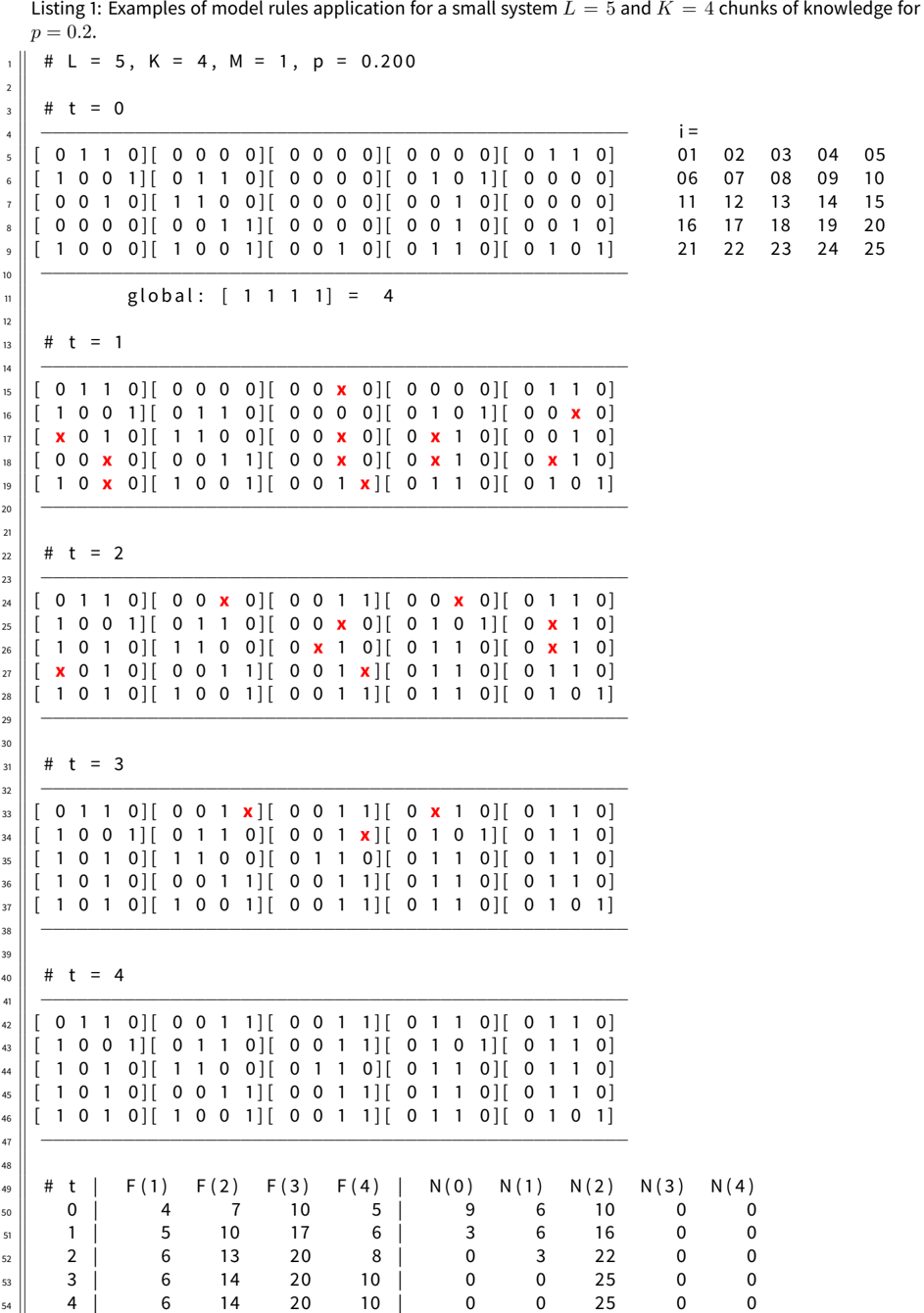
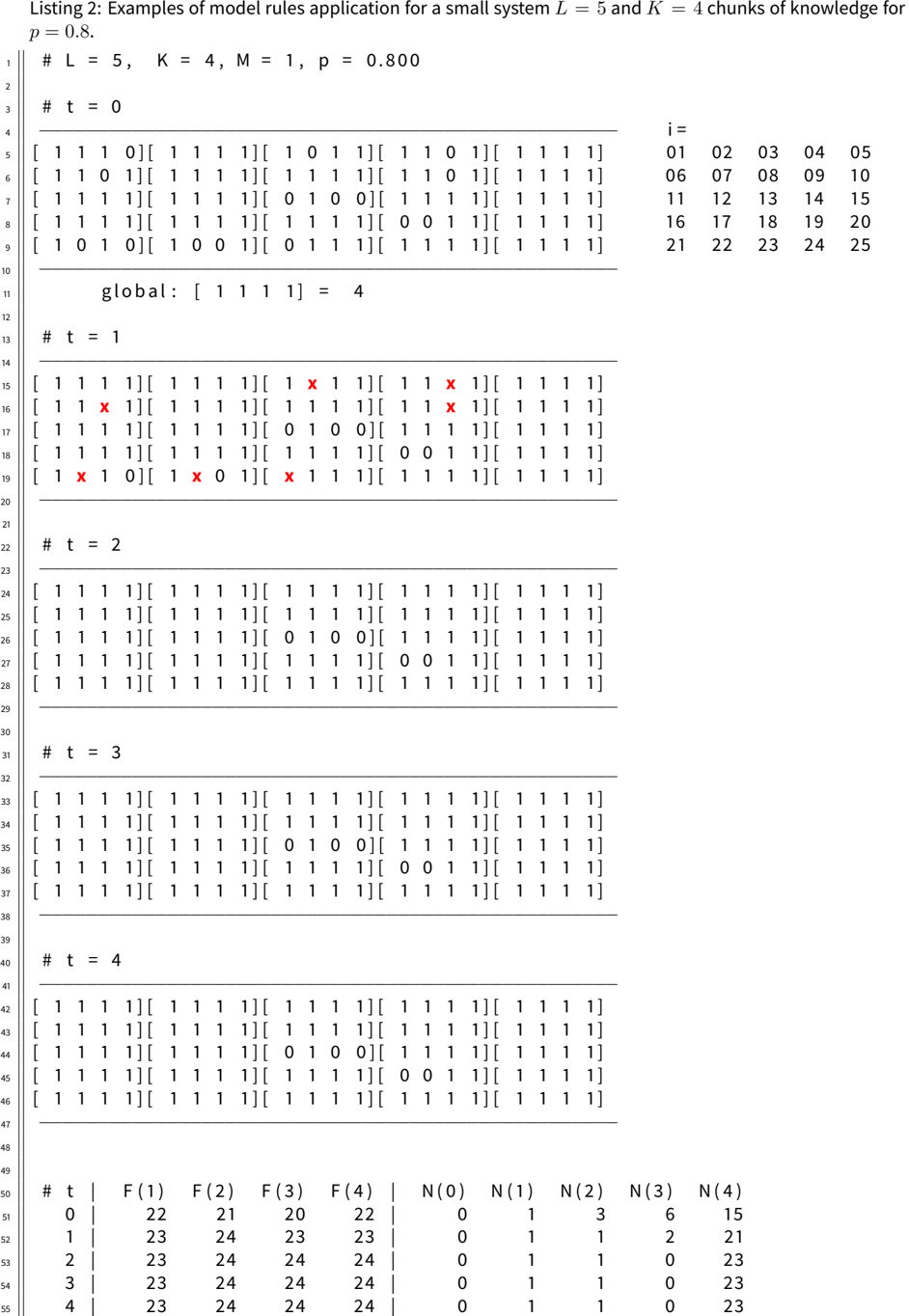
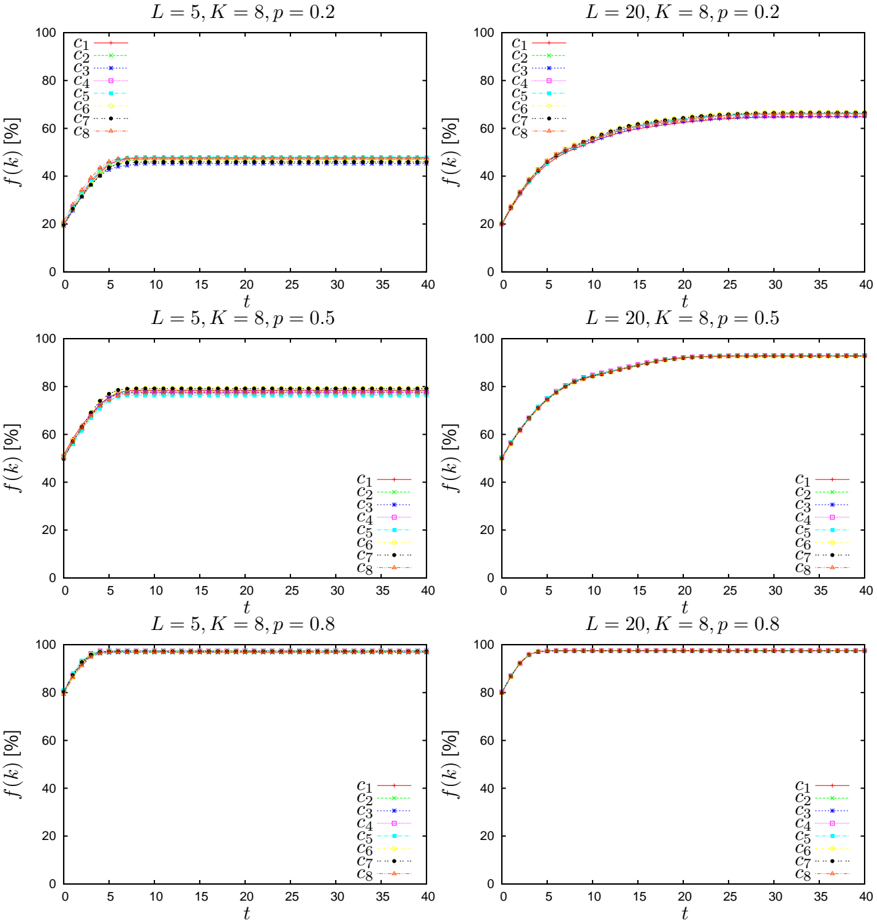
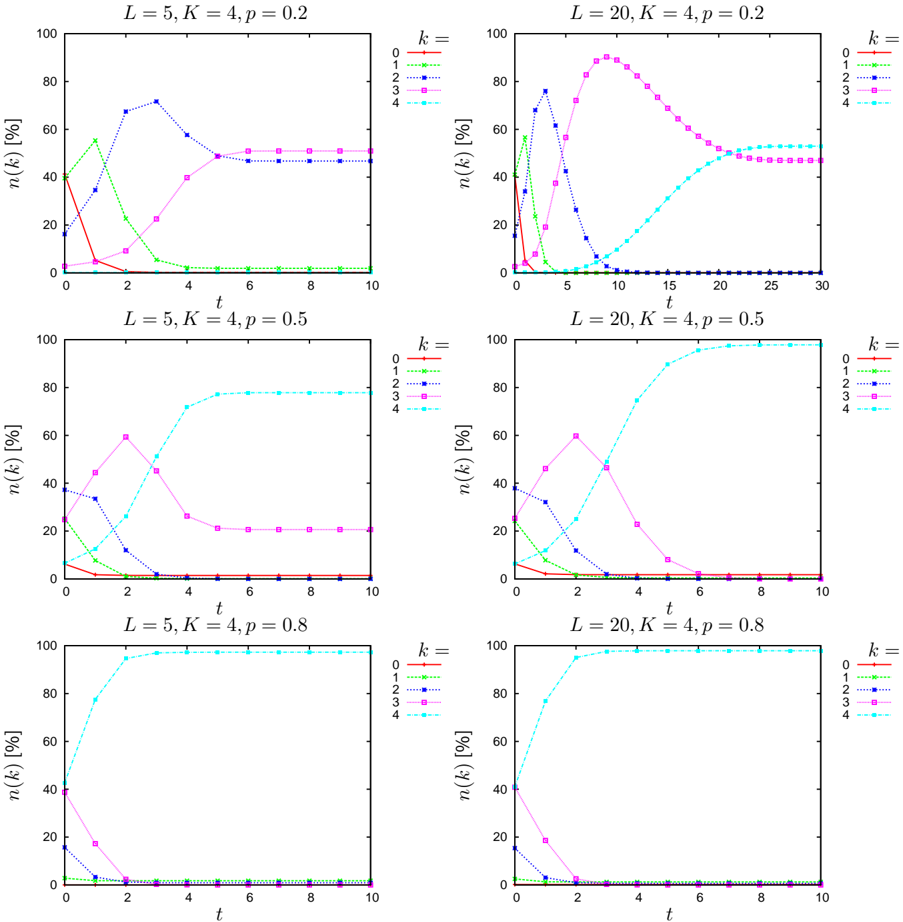
Many studies show that the acquisition of knowledge is the key to building the competitive advantage of companies.We propose a simple model of knowledge transfer within the organisation and we implement the proposed model using the cellular automata technique.In this paper the organisation is considered in the context of complex systems whereby the main role in the organisation is played by the network of informal contacts (informal communication).The goal of this paper is to ascertain which factors influence the efficiency and effectiveness of knowledge transfer.Our studies indicate a significant role of initial distribution of chunks of knowledge for the knowledge transfer process, and the results suggest taking action in the organisation to shorten the distance (social distance) between people with different levels of knowledge, or determining incentives to share knowledge.
Overview
The claims and statistics of this paper haven’t been checked yet.
Run the check — free, no account needed. It reads the open-access text and checks the sources it cites.
Integrity signals
Registry
Cites
Statistics
Figures
Verification
Claims the paper makes
The claims and statistics of this paper haven’t been checked yet.
Run the check — free, no account needed. It reads the open-access text and checks the sources it cites.
Self-check
Percentages, sums and reported differences re-computed from the paper’s own numbers.
The self-check needs the paper’s full text.
Citations
Cites
The Search-Transfer Problem: The Role of Weak Ties in Sharing Knowledge across Organization Subunits
Hansen, M. T. (1999) · Administrative Science Quarterly · doi:10.2307/2667032 · Cited by 5,809 · cited 1×
“Thirdly, studying the effects of strong and weak ties to the transfer of knowledge, is very interesting [Uzzi, 1997, 1999, Hansen, 1999].”
BackgroundMixing beliefs among interacting agents
Deffuant, G., Neau, D., Amblard, F., & Weisbuch, G. (2000) · Advances in Complex Systems · doi:10.1142/s0219525900000078 · Cited by 2,165
All changes great and small: Exploring approaches to change and its leadership
Higgs, M., & Rowland, D. (2005) · Journal of Change Management · doi:10.1080/14697010500082902 · Cited by 410
Knowledge transfer in organizations: The roles of members, tasks, tools, and networks
Argote, L., & Fahrenkopf, E. (2016) · Organizational Behavior and Human Decision Processes · doi:10.1016/j.obhdp.2016.08.003 · Cited by 258
Krylova, K. O., Vera, D. M., & Crossan, M. M. (2016) · Journal of Knowledge Management · doi:10.1108/jkm-10-2015-0385 · Cited by 159
How to Fix Knowledge Management
Gilmour, D. (2003) · Harvard business review · Cited by 95
Knowledge Creation and Transfer: Role of Learning Organization
Alipour, F., Idris, K., & Karimi, R. (2011) · International Journal of Business Administration · doi:10.5430/ijba.v2n3p61 · Cited by 83
Dynamics of linguistic opinion formation in bounded confidence model
Dong, Y., Chen, X., Liang, H., & Li, C. (2016) · Information Fusion · doi:10.1016/j.inffus.2016.03.001 · Cited by 53
David, N. (2013) · Understanding complex systems · doi:10.1007/978-3-540-93813-2_8 · Cited by 32
Network structure and the di'usion of knowledge
Cowan, R., & Jonard, N. (2004) · Cited by 11
Research works printed but not linked: 17
- Butcher, D. & Atkinson, S. ( ). The bottom-up principle. Management Review, ( ), -
- Chen, C. & Huang, J. ( ). How organizational climate and structure affect knowledge management -The social interaction perspective. International Journal of Information Management, ( ), -
- Cowan, R. & Jonard, N. ( ). Network structure and the diffusion of knowledge. Journal of Economic Dynamics and Control, ( ), - Da , R. L. ( ). Organization Theory and Design. Cincinnati, OH: South-Western College Publishing
- Harari, M. B., Jain, N. K. & Joseph, T. ( ). The five-factor model of personality and knowledge transfer in the United Arab Emirates. International Journal of Selection and Assessment, ( ), - Hegselmann, R. & Krause, U. ( ). Opinion dynamics and bounded confidence: Models, analysis and simula- tion. Journal of Artificial Societies and Social Simulation, ( ),
- Hirshman, B. R., Charles, J. S. & Carley, K. M. ( ). Leaving us in tiers: Can homophily be used to generate tiering effects? Computational and Mathematical Organization Theory, , - Ibarra, H. ( ). Network centrality, power, and innovation involvement: Determinants of technical and ad- ministrative roles. Academy of Management Journal, ( ), - Ilachinski, A. ( ). Cellular Automata: A Discrete Universe. Singapore: World Scientific
- Kempster, S., Higgs, M. & Wuerz, T. ( ). Pilots for change: Exploring organisational change hrough distributed leadership. Leadership and Organization Development Journal, ( ), - Kowalska-Styczeń, A., Malarz, K. & Paradowski, K. ( ). Searching for effective and efficient way of knowledge transfer within an organization. In A. P. Rocha & J. van den Herik (Eds.), Proceedings of the th International Conference on Agents and Artificial Intelligence, (pp. -). Rome: SciTePress
- Kraut, R. E., Fish, R. S., Root, R. W. & Chalfonte, B. L. ( ). Information communication in organizations: Form, function, and technology. In R. M. Baecker (Ed.), Readings in Groupware and Computer-Supported Cooperative Work, (pp. -). San Mateo, CA: Morgan Kaufmann Publishers
- Levin, D. Z., Cross, R., Abrams, L. C. & Lesser, E. L. ( ). Trust and knowledge sharing: A critical combination. In E. Lesser & L. Prusak (Eds.), Creating Value with Knowledge, (pp. -). Oxford: Oxford University Press
- Lyles, M. & Salk, J. ( ). Knowledge acquisition from foreign parents in international joint venture: An empir- ical examination in the hungarian context. Journal of International Business Studies, ( ), - Malarz, K. ( ). Truth seekers in opinion dynamics models. International Journal of Modern Physics C, ( ), - Malarz, K., Gronek, P. & Kułakowski, K. ( ). Zaller-Deffuant model of mass opinion. Journal of Artificial Societies and Social Simulation, ( ),
- Malarz, K. & Kułakowski, K. ( ). Mental ability and common sense in an artificial society. Europhysics News, ( ), - Martinez, L. F., Ferreira, A. I. & Can, A. B. ( ). Consultant-client relationship and knowledge transfer in small- and medium-sized enterprises change processes. Psychological Reports, ( ), - Morone, P. & Taylor, R. ( ). Small world dynamics and the process of knowledge diffusion: The case of the metropolitan area of greater santiago de chile. Journal of Artificial Societies and Social Simulation, ( ), JASSS, ( ) , http://jasss.soc.surrey.ac.uk/ / / .html Doi: . /jasss.
- Morone, P. & Taylor, R. ( ). Knowledge diffusion dynamics and network properties of face-to-face interac- tions. Journal of Evolutionary Economics, ( ), - Nonaka, I. ( ). A dynamic theory of organizational knowledge creation. Organization Science, ( ), -
- Nonaka, I. & Takeuchi, H. ( ). The Knowledge Creating Company. How Japanese Companies Create the Dy- namic of Innovation. New York, NY: Oxford University Press
- Novianto, O. & Puspasari, D. ( ). Knowledge management system's implementation in a company with dif- ferent generations: A case study. Procedia-Social and Behavioral Sciences, , - O'Deal, C., Wiig, K. & Odem, P. ( ). Benchmarking unveils emerging knowledge strategies. Benchmarking: An International Journal, ( ), -
- Paradowski, K., Malarz, K. & Kowalska-Styczeń, A. ( ). Influence of a range of interaction among agents on efficiency of knowledge transfer within an organization. ArXiv: . . https://arxiv.org/abs/1711. 05065
- Pérez-Nordtvedt, L., Kedia, B. L., Datta, D. K. & Rasheed, A. A. ( ). Effectiveness and efficiency of cross-border knowledge transfer: An empirical examination. Journal of Management Studies, ( ), - Reagans, R. & McEvily, B. ( ). Network structure and knowledge transfer: The effects of cohesion and range. Administrative Science Quarterly, ( ), - Spałek, S. ( ). Does investment in project management pay off? Industrial Management & Data Systems, ( ), - Szulanski, G. ( ). Exploring internal stickness: Impediments to the transfer of best practice within the firm. Strategic Management Journal, (S ), - Tang, F. ( ). Knowledge transfer in intra-organization networks. Systems Research and Behavioral Science, ( ), -
- Long Range Planning, ( ), - Tsai, W. ( ). Knowledge transfer in intraorganizational networks: Effects of network position and absorptive capacity on business unit innovation and performance. Academy of Management Journal, ( ), - Tsai, W. ( ). Social structure of 'coopetition' within a multiunit organization: Coordination, competition, and intra-organizational knowledge sharing. Organization Science, ( ), - Uzzi, B. ( ). Social structure and competition in interfirm networks: The paradox of embeddedness. Admin- istrative Science Quarterly, ( ), -
- Uzzi, B. ( ). Social relations and networks in the making of financial capital. American Sociological Review, , - Van de Ven, A. H., Delbecq, A. L. & Koenig Jr., R. ( ). Determinants of coordination modes within organiza- tions. American Sociological Review, , - Wolfram, S. ( ). A New Kind of Science. Champaign, IL: Wolfram Media
Cited by
Jonek-Kowalska, I. (2019) · Oeconomia Copernicana · doi:10.24136/oc.2019.030 · Cited by 36
Yu, H., & Li, Z. (2024) · Service Industries Journal · doi:10.1080/02642069.2024.2379013 · Cited by 19
Does CSR Affect the Profitability and Valuation of Energy Companies? An Example from Poland
Zieliński, M., & Jonek-Kowalska, I. (2021) · Energies · doi:10.3390/en14123668 · Cited by 19
Li, H., Li, C.-H., & Wang, Z. (2021) · Journal of Business and Industrial Marketing · doi:10.1108/jbim-12-2019-0528 · Cited by 20
Akhmad, M., Chang, S., & Deguchi, H. (2021) · Journal of Computational Social Science · doi:10.1007/s42001-020-00083-8 · Cited by 18
“These knowledge are materialized as the organizational routines in which the group operates [25].”
BackgroundJonek-Kowalska, I., & Nawrocki, T. L. (2019) · Resources Policy · doi:10.1016/j.resourpol.2019.101464 · Cited by 17
Li, J., & Li, X. (2024) · Electronic Commerce Research and Applications · doi:10.1016/j.elerap.2024.101383 · Cited by 14
The Changing Nature of Expatriation: The Emerging Role of Knowledge Transfer Readiness
Prihadyanti, D., Sari, K., Hidayat, D., Laili, N., Triyono, B., & Laksani, C. S. (2021) · Journal of the Knowledge Economy · doi:10.1007/s13132-021-00777-y · Cited by 10
Jonek-Kowalska, I. (2021) · Journal of Open Innovation Technology Market and Complexity · doi:10.3390/joitmc7020162 · Cited by 6
Efficiency Analysis of Zinc Refining Companies
Park, H. S., Kim, T. Y., & Kim, D. (2019) · Sustainability · doi:10.3390/su11226528 · Cited by 4
Will you infect me with your opinion?
Domino, K., & Miszczak, J. A. (2022) · Physica A Statistical Mechanics and its Applications · doi:10.1016/j.physa.2022.128289 · Cited by 3
An Optimal Control Problem of Knowledge Dissemination
Elastic, P., Bakhtiar, T., & Jaharuddin, J. (2019) · Advances in human resources management and organizational development book series · doi:10.4018/978-1-5225-8933-4.ch022 · Cited by 1
To hoard or to share? Strategic management of knowledge and ICTs in complex economic systems
Canals, A. (2021) · Intangible Capital · doi:10.3926/ic.1358 · Cited by 1
The Effect of Incentive Mechanism on Knowledge Transfer Network: An Agent-Based Model Approach
Isakh, R. R., & Hwang, J. (2023) · IEEE International Conference on Technology Management, Operations and Decisions (ICTMOD) · doi:10.1109/ictmod59086.2023.10438123
Emergent multifractality in a multi-asset three-state agent-based market model
Kowalski, R., Oświȩcimka, P., & Drożdż, S. (2026) · Chaos An Interdisciplinary Journal of Nonlinear Science · doi:10.1063/5.0347841
Metadata
- Authors
- Kowalska-Styczeń, A., Malarz, K., & Paradowski, K.
- Affiliations
- Silesian University of Technology (PL)
- AGH University of Krakow (PL)
- Venue
- Journal of Artificial Societies and Social Simulation
- Published
- 2018
- Volume
- 21
- Issue
- 2
- ISSN
- 1460-7425 (ISSN-L)
- OpenAlex
- W2608037719
- Cited by
- 15
- References
- 9
- Citations by year
- 2026: 1 · 2024: 2 · 2023: 1 · 2022: 1 · 2021: 5 · 2020: 1 · 2019: 4
- FWCI
- 5.47
- Type
- journal article
- Language
- en
- Open access
- gold
- doi.org
- Licence
- cc-by
- Locations
- Journal of Artificial Societies and Social Simulation (publishedVersion, cc-by)
- arXiv (Cornell University) (submittedVersion)
- arXiv (Cornell University)
- Funders
- Infrastruktura PL-Grid
- Topics
- Social Sciences › Decision Sciences › Information Systems and Management › Knowledge Management and Sharing
- Social Sciences › Business, Management and Accounting › Strategy and Management › Innovation and Knowledge Management
- Physical Sciences › Physics and Astronomy › Statistical and Nonlinear Physics › Complex Network Analysis Techniques
- Keywords
- knowledge transfer, organizational knowledge, cellular automata, complex systems, informal communication, social networks, knowledge distribution, social distance, knowledge sharing incentives, competitive advantage
About these checks
Registry, retraction, Cites and statistics results are computed, not judged, with one exception: a printed reference that no index lists is read once by a model before it counts as a citation error. Claims are extracted by a model and kept only when their quote appears verbatim in the text; each cited source is then checked, with a model’s help, for whether it says what the claim relies on. Those verdicts can be wrong — read the claim’s quote and the cited source before relying on one.
Statistics and arithmetic are recomputed, not judged.
Confidence bands are shown only for fields calibrated on our annotated test set. None is calibrated yet, so no band is shown.
What counts as a claim ›How we measure confidence ›How we check this ›
Are you an author, or do you see a problem with this page? Request a review
Data sources
Bibliographic data: Semantic Scholar, OpenAlex, Crossref.
Contains information from the Semantic Scholar Academic Graph Datasets, made available under the ODC Attribution License (ODC-BY 1.0).
Semantic Scholar’s data is described in: Kinney, R., et al. (2023). The Semantic Scholar Open Data Platform. arXiv:2301.10140.
