

ERNIE: Enhanced Language Representation with Informative Entities
Open accessThe DOI matches its Crossref record; 58 of the 58 references it cites were found in a registry or an index.
Abstract
Neural language representation models such as BERT pre-trained on large-scale corpora can well capture rich semantic patterns from plain text, and be fine-tuned to consistently improve the performance of various NLP tasks.However, the existing pre-trained language models rarely consider incorporating knowledge graphs (KGs), which can provide rich structured knowledge facts for better language understanding.We argue that informative entities in KGs can enhance language representation with external knowledge.In this paper, we utilize both large-scale textual corpora and KGs to train an enhanced language representation model (ERNIE), which can take full advantage of lexical, syntactic, and knowledge information simultaneously.The experimental results have demonstrated that ERNIE achieves significant improvements on various knowledge-driven tasks, and meanwhile is comparable with the state-of-the-art model BERT on other common NLP tasks.The source code and experiment details of this paper can be obtained from https:// github.com/thunlp/ERNIE.
Overview
The claims and statistics of this paper haven’t been checked yet.
Free: it reads the open-access text and checks the first 5 claims that cite a source we can check. Create a free account to check every claim.
Integrity signals
Registry
Cites
Statistics
Figures
Verification
Claims the paper makes
The claims and statistics of this paper haven’t been checked yet.
Free: it reads the open-access text and checks the first 5 claims that cite a source we can check. Create a free account to check every claim.
Claims other papers make about this one
Each is checked against this paper’s own text: does it say what the citing paper says it does?
The cited source doesn’t support the claim as written.
In the citing paper
“However, akin to question answering (QA), modality interaction is frequently confined to feeding knowledge into language (Zhang et al. 2019; Shen et al. 2020; Donghan et al. 2022), rather than fostering interactions across multiple layers.”
From Large language models (LLMs): survey, technical frameworks, and future challenges (2024) · cites this paper as Zhang et al. 2019
Checked by a reasoning model — may be wrong.
Experimental — accuracy not yet measuredThe source backs part of the claim, not all of it — or backs it for a different population, condition or comparison.
In the citing paper
“THU-ERNIE (Zhang et al. 2019) is a pioneer in this direction by fusing entity information, but the relations between entities are ignored by it.”
From K-BERT: Enabling Language Representation with Knowledge Graph (2020) · cites this paper as Zhang et al. 2019
Experimental — accuracy not yet measuredIn the citing paper
“Experiments demonstrate that mBART produces significant performance gains across a wide variety of machine translation (MT) tasks.”
From Pre-trained models for natural language processing: A survey (2020) · cites this paper as [61]
In the citing paper
“Experiments demonstrated that mBART could significantly improve both supervised and unsupervised machine translation at both the sentence level and document level.”
From Pre-trained models for natural language processing: A survey (2020) · cites this paper as [61]
In the citing paper
“ERNIE-Tsinghua [189] fuses informative entities via aggregated pre-training and random masking.”
From A Survey on Knowledge Graphs: Representation, Acquisition, and Applications (2022) · cites this paper as [189]
Self-check
Percentages, sums and reported differences re-computed from the paper’s own numbers.
The self-check needs the paper’s full text.
Citations
Cites
Vaswani, A., Shazeer, N., Parmar, N., Uszkoreit, J., Jones, L., Gomez, A. N., Kaiser, L., & Polosukhin, I. (2017) · arXiv · doi:10.48550/arxiv.1706.03762 · Cited by 120,404 · cited 4×
“For the large cost of training ERNIE from scratch, we adopt the parameters of BERT released by Google to initialize the Trans-former blocks for encoding tokens.”
BackgroundInfluentialExploiting Generative AI to Scale up Intelligent Tutoring Systems
Jakubův, J., Chvalovský, K., Goertzel, Z., Kaliszyk, C., Olšák, M., Piotrowski, B., Schulz, S., Suda, M., & Urban, J. (2023) · DROPS (Schloss Dagstuhl – Leibniz Center for Informatics) · doi:10.4230/lipics.itp.2023.19 · Cited by 76,658
BERT: Pre-training of Deep Bidirectional Transformers for Language Understanding
Devlin, J., Chang, M.-W., Lee, K., & Toutanova, K. (2018) · arXiv · doi:10.48550/arxiv.1810.04805 · Cited by 73,173 · cited 6×
“More details of these pre-training tasks can be found from Devlin et al. (2018).”
BackgroundInfluentialBERT: Pre-training of Deep Bidirectional Transformers for Language Understanding
Devlin, J., Chang, M.-W., Lee, K., & Toutanova, K. (2019) · Proceedings of the 2019 Conference of the North American Chapter of the Association for Computational Linguistics: Human Language Technologies, Volume 1 (Long and Short Papers) · doi:10.18653/v1/n19-1423 · Cited by 54,325 · cited 6×
“More details of these pre-training tasks can be found from Devlin et al. (2018).”
BackgroundInfluentialGlove: Global Vectors for Word Representation
Pennington, J., Socher, R., & Manning, C. (2014) · Proceedings of the 2014 Conference on Empirical Methods in Natural Language Processing (EMNLP) · doi:10.3115/v1/d14-1162 · Cited by 34,071 · cited 1×
“The early work (Collobert and Weston, 2008; Mikolov et al., 2013; Pennington et al., 2014) focuses on adopting feature-based approaches to transform words into distributed representations.”
BackgroundDistributed Representations of Words and Phrases and their Compositionality
Mikolov, T., Sutskever, I., Chen, K., Corrado, G., & Dean, J. (2013) · arXiv · doi:10.48550/arxiv.1310.4546 · Cited by 24,533
Deep Contextualized Word Representations
Peters, M., Neumann, M., Iyyer, M., Gardner, M., Clark, C., Lee, K., & Zettlemoyer, L. (2018) · Proceedings of the 2018 Conference of the North American Chapter of the Association for Computational Linguistics: Human Language Technologies, Volume 1 (Long Papers) · doi:10.18653/v1/n18-1202 · Cited by 11,983 · cited 4×
“There are three important directions remain for future research: (1) inject knowledge into feature-based pre-training models such as ELMo (Peters et al., 2018); (2) introduce diverse structured knowledge into language representation models such as Con-ceptNet (Speer and Havasi, 2012) which is different from world know…”
BackgroundMethodInfluentialExtracting and composing robust features with denoising autoencoders
Vincent, P., Larochelle, H., Bengio, Y., & Manzagol, P.-A. (2008) · Proceedings of the 25th international conference on Machine learning - ICML '08 · doi:10.1145/1390156.1390294 · Cited by 7,436
Recursive Deep Models for Semantic Compositionality Over a Sentiment Treebank
Socher, R., Perelygin, A., Wu, J., Chuang, J., Manning, C. D., Ng, A., & Potts, C. (2013) · Proceedings of the 2013 Conference on Empirical Methods in Natural Language Processing · doi:10.18653/v1/d13-1170 · Cited by 6,878 · cited 1×
“, 2018) is a collection of diverse natural language understanding tasks (Warstadt et al., 2018; Socher et al., 2013; Dolan and Brockett, 2005; Agirre et al., 2007; Williams et al., 2018; Rajpurkar et al., 2016; Dagan et al., 2006; Levesque et al., 2011), which is the main benchmark used in Devlin et al.”
BackgroundSQuAD: 100,000+ Questions for Machine Comprehension of Text
Rajpurkar, P., Zhang, J., Lopyrev, K., & Liang, P. (2016) · Proceedings of the 2016 Conference on Empirical Methods in Natural Language Processing · doi:10.18653/v1/d16-1264 · Cited by 6,208 · cited 2×
“…including feature-based (Mikolov et al., 2013; Pen-nington et al., 2014; Peters et al., 2017, 2018) and fine-tuning (Dai and Le, 2015; Howard and Ruder, 2018; Radford et al., 2018; Devlin et al., 2018) approaches, can capture rich language information from text and then benefit many NLP applications.”
Background
Research works printed but not linked: 4
- Eneko Agirre, Llu'is M'arquez, and Richard Wicen- towski. 2007. Proceedings of the fourth interna- tional workshop on semantic evaluations (semeval- 2007). In Proceedings of SemEval-2007.
- Tomas Mikolov, Ilya Sutskever, Kai Chen, Greg S Cor- rado, and Jeff Dean. 2013. Distributed representa- tions of words and phrases and their compositional- ity. In Proceedings of NIPS, pages 3111-3119.
- Matthew Peters, Mark Neumann, Mohit Iyyer, Matt Gardner, Christopher Clark, Kenton Lee, and Luke Zettlemoyer. 2018. Deep contextualized word rep- resentations. In Proceedings of NAACL-HLT, pages 2227-2237.
- Alec Radford, Karthik Narasimhan, Tim Salimans, and Ilya Sutskever. 2018. Improving language under- standing by generative pre-training. In Proceedings of Technical report, OpenAI.
Cited by
Items 601–700 of 1,015
Pack Together: Entity and Relation Extraction with Levitated Marker.Preprint
Ye, D., Lin, Y., & Sun, M. (2021) · arXiv (Cornell University) · Cited by 14
Self-citationProcess Knowledge-infused Learning for Suicidality Assessment on Social MediaPreprint
Roy, K., Gaur, M., Zhang, Q., & Sheth, A. (2022) · arXiv (Cornell University) · doi:10.48550/arxiv.2204.12560 · Cited by 14
“• ERNIE -”
MethodGenerating Chinese Event Extraction Method Based on ChatGPT and Prompt Learning
Chen, J., Chen, P., & Wu, X. (2023) · Applied Sciences · doi:10.3390/app13179500 · Cited by 13
Synergies between machine learning and reasoning - An introduction by the Kay R. Amel group
Baaj, I., Bouraoui, Z., Cornuéjols, A., Denœux, T., Destercke, S., Dubois, D., Lesot, M., Marques-Silva, J. P., Mengin, J., Prade, H. M., et al. (2024) · International Journal of Approximate Reasoning · doi:10.1016/j.ijar.2024.109206 · Cited by 17
Temporal validity reassessment: commonsense reasoning about information obsoleteness
Hosokawa, T., Jatowt, A., & Sugiyama, K. (2024) · Discover Computing · doi:10.1007/s10791-024-09433-w · Cited by 17
Xu, Y., Gan, Z., Guo, R., Wang, X., Shi, K., & Ma, P. (2024) · Aerospace · doi:10.3390/aerospace11100837 · Cited by 13
Conversational User Interfaces and Agents
Biancofiore, G. M., Palma, D. D., Pomo, C., Narducci, F., & Noia, T. D. (2025) · Human-computer interaction series · doi:10.1007/978-3-031-61375-3_4 · Cited by 20
On the Potential of Logic and Reasoning in Neurosymbolic Systems Using OWL-Based Knowledge Graphs
Herron, D., Jiménez-Ruiz, E., & Weyde, T. (2025) · Neurosymbolic Artificial Intelligence · doi:10.1177/29498732251320043 · Cited by 21
“For example, (Peters et al., 2019; Roy et al., 2023; Yamada et al., 2020; Zhang et al., 2019) explore variations on this theme and all report performance improvements from injecting KG embeddings as background knowledge.”
Opportunities and challenges of integrating geographic information science and large language models
de Weghe, N. V., Sloover, L. D., Cohn, A. G., Huang, H., Scheider, S., Sieber, R. E., Timpf, S., & Claramunt, C. (2025) · Journal of Spatial Information Science · doi:10.5311/josis.2025.30.389 · Cited by 24
“These embeddings can then be seamlessly integrated into the input layers of the LLM, enabling the model to inherently capture, process, and reason with spatial relationships [66].”
Design Patterns for Large Language Model Based Neuro-Symbolic Systems
de Boer, M., Smit, Q. T. S., van Bekkum, M. A., Meyer-Vitali, A., & Schmid, T. (2025) · Neurosymbolic Artificial Intelligence · doi:10.1177/29498732251377499 · Cited by 18
“ERNIE proposes a dual encoder system, consisting of a textual encoder that is fused with the KG encoder (Zhang et al., 2019).”
MusiCoder: A Universal Music-Acoustic Encoder Based on Transformer
Zhao, Y., & Guo, J. (2021) · Lecture notes in computer science · doi:10.1007/978-3-030-67832-6_34 · Cited by 30
Tan, Y., Wang, X., & Jia, T. (2020) · Lecture notes in computer science · doi:10.1007/978-3-030-62419-4_30 · Cited by 13
“Given the role and application of the hypernym-hyponym relation, it is essential to explore an automatic method to extract such the relation between two entities, which presents an important task in knowledge-driven NLP [11].”
MethodFast Sentiment Analysis Algorithm Based on Double Model Fusion
Lin, Z., Wang, L., Cui, X., & Gu, Y. (2020) · Computer Systems Science and Engineering · doi:10.32604/csse.2021.014260 · Cited by 13
Utilizing External Knowledge to Enhance Semantics in Emotion Detection in Conversation
Ren, F., & She, T. (2021) · IEEE Access · doi:10.1109/access.2021.3128277 · Cited by 14
“[33] combined entity information with BERT to enhance language representation, which can utilize vocabulary, syntax and knowledge information at the same time.”
BackgroundIslam, S. M., & Bhattacharya, S. (2022) · International World Wide Web Conference (WWW) · doi:10.1145/3485447.3511941 · Cited by 17
“[23, 24, 44] propose a promising line of schemes for incorporating entity knowledge in KGs into BERT embeddings.”
BackgroundER: Equivariance Regularizer for Knowledge Graph Completion
Cao, Z., Xu, Q., Yang, Z., & Huang, Q. (2022) · Proceedings of the AAAI Conference on Artificial Intelligence · doi:10.1609/aaai.v36i5.20490 · Cited by 16
KGNER: Improving Chinese Named Entity Recognition by BERT Infused with the Knowledge Graph
Hu, W., He, L., Ma, H., Wang, K., & Xiao, J. (2022) · Applied Sciences · doi:10.3390/app12157702 · Cited by 14
“ERNIE [15] extended the BERT by using an entity-level mask to guide pre-training.”
BackgroundMethodEnhancing Document-Level Relation Extraction by Entity Knowledge Injection
Wang, X., Wang, Z., Sun, W., & Hu, W. P. (2022) · Lecture notes in computer science · doi:10.1007/978-3-031-19433-7_3 · Cited by 20
Multi-task learning with helpful word selection for lexicon-enhanced Chinese NER
Tian, X., Bu, X., & He, L. (2023) · Applied Intelligence · doi:10.1007/s10489-023-04464-0 · Cited by 14
Causality-aware Concept Extraction based on Knowledge-guided Prompting
Yuan, S., Yang, D., Liu, J., Tian, S., Liang, J., Xiao, Y., & Xie, R. (2023) · Proceedings of the conference - Association for Computational Linguistics. Meeting · doi:10.18653/v1/2023.acl-long.514 · Cited by 20
Medical knowledge-enhanced prompt learning for diagnosis classification from clinical text
Lu, Y., Zhao, X., & Wang, J. (2023) · Clinical Natural Language Processing Workshop (ClinicalNLP) · doi:10.18653/v1/2023.clinicalnlp-1.33 · Cited by 21
“However, the knowledge-enhanced PLM ERNIE, which is trained on generic knowledge, is 0.41 percent weaker than the standard prompt learning method.”
MethodInfluentialExtracting Domain-Specific Chinese Named Entities for Aviation Safety Reports: A Case Study
Wang, X., Gan, Z., Xu, Y., Liu, B., & Zheng, T. (2023) · Applied Sciences · doi:10.3390/app131911003 · Cited by 15
Enhancing Fake News Detection in Romanian Using Transformer-Based Back Translation Augmentation
Bucos, M., & Drăgulescu, B. (2023) · Applied Sciences · doi:10.3390/app132413207 · Cited by 10
Chinese Grammatical Correction Using BERT-based Pre-trained Model
Wang, H., Kurosawa, M., Katsumata, S., & Komachi, M. (2020) · Conference of the Asia-Pacific Chapter of the Association for Computational Linguistics and the International Joint Conference on Natural Language Processing (AACL-IJCNLP) · doi:10.18653/v1/2020.aacl-main.20 · Cited by 19
Continual knowledge infusion into pre-trained biomedical language models
Jha, K., & Zhang, A. (2021) · Bioinformatics · doi:10.1093/bioinformatics/btab671 · Cited by 17
AutoKG: Constructing Virtual Knowledge Graphs from Unstructured Documents for Question AnsweringPreprint
Yu, S., He, T., & Glass, J. R. (2020) · arXiv · doi:10.48550/arxiv.2008.08995 · Cited by 24
“These approaches require a predefined knowledge base to align the extracted entities or relationships (Lin et al., 2016; Zhou et al., 2016; Zhang et al., 2019; Cao et al., 2020).”
BackgroundDoes Knowledge Help General NLU? An Empirical StudyPreprint
Xu, R., Fang, Y., Zhu, C., & Zeng, M. (2021) · arXiv (Cornell University) · doi:10.48550/arxiv.2109.00563 · Cited by 13
“In recent years, there has been a rise in the trend of integrating external knowledge into language models (Wang et al., 2020; Yu et al., 2020; Wang et al., 2019b; Liu et al., 2020; Peters et al., 2019; Zhang et al., 2019; Poerner et al., 2020) based on the transformer (Vaswani et al., 2017).”
BackgroundPiat, G., Allauzen, A., Essafi, H., Bernard, G., Tourille, J., & Semmar, N. (2022) · doi:10.1109/wimob55322.2022 · Cited by 13
Exploring Pre-Trained Language Models to Build Knowledge Graph for Metal-Organic Frameworks (MOFs)
An, Y., Greenberg, J., Hu, X. T., Kalinowski, A., Fang, X., Zhao, X., McClellan, S., Uribe‐Romo, F. J., Langlois, K., Furst, J. D., et al. (2022) · IEEE International Conference on Big Data (BigData) · doi:10.1109/bigdata55660.2022.10020568 · Cited by 16
“Representative pre-trained models using MLMs include BERT [16], ERNIE [53] and many variants.”
MethodA cognitive emotion model enhanced sequential method for social emotion cause identification
Xiao, X., Mao, W., Sun, Y., & Zeng, D. D. (2023) · Information Processing & Management · doi:10.1016/j.ipm.2023.103305 · Cited by 14
Guo, K., Chen, J., Dong, P., Zou, T., Zhu, J., Huang, X., Liu, S., & Liao, C. (2023) · IEEE Transactions on Cloud Computing · doi:10.1109/tcc.2023.3294506 · Cited by 14
“ERNIE [51] is a natural language processing (NLP) model that introduces knowledge graphs into BERT.”
BackgroundDPCNN-based Models for Text Classification
Zhang, M., Pang, J., Cai, J., Huo, Y., Yang, C., & Xiong, H. (2023) · IEEE International Conference on Cyber Security and Cloud Computing / IEEE International Conference on Edge Computing and Scalable Cloud (CSCloud/EdgeCom) · doi:10.1109/cscloud-edgecom58631.2023.00068 · Cited by 12
Ma, K., Zheng, S., Tian, M., Qiu, Q., Tan, Y.-J., Hu, X., Li, H., & Xie, Z. (2023) · Earth Science Informatics · doi:10.1007/s12145-023-01112-6 · Cited by 12
“ERNIE (Zhang et al. 2019), KEPLER (Wang et al. 2021a) and SentiLARE (Ke et al. 2020) introduced external knowledge to language representation learning by auxiliary pretraining tasks.”
BackgroundKong, L., Zhang, W. E., Hu, H., Liang, Z., Han, Y., Wang, D., & Song, M. (2024) · Journal of Informetrics · doi:10.1016/j.joi.2024.101542 · Cited by 14
Learning Conceptual-Contextual Embeddings for Medical Text
Zhang, X., Dou, D., & Wu, J. Y. (2020) · Proceedings of the AAAI Conference on Artificial Intelligence · doi:10.1609/aaai.v34i05.6504 · Cited by 18
“More recently some enhanced BERT models propose to mark entities in training, to make models aware of entities in text (Zhang et al. 2019; Sun et al. 2019).”
BackgroundLinking Entities to Unseen Knowledge Bases with Arbitrary Schemas
Vyas, Y., & Ballesteros, M. (2021) · Conference of the North American Chapter of the Association for Computational Linguistics: Human Language Technologies (NAACL-HLT) · doi:10.18653/v1/2021.naacl-main.65 · Cited by 14
A Summary of Aspect-based Sentiment Analysis
Fan, S., Yao, J., Sun, Y., & Zhan, Y. (2020) · Journal of Physics Conference Series · doi:10.1088/1742-6596/1624/2/022051 · Cited by 14
“For example, Zhang et al. [44] proposed to add the information of knowledge map to the training of Bert model.”
BackgroundAn effective framework for semistructured document classification via hierarchical attention model
Zhao, W., Fang, D., Zhang, J., Zhao, Y., Xu, X., Jiang, X., Hu, X., & He, T. (2021) · International Journal of Intelligent Systems · doi:10.1002/int.22508 · Cited by 13
Self-citationSKR-QA: Semantic ranking and knowledge revise for multi-choice question answering
Ren, M., Huang, H., & Gao, Y. (2021) · Neurocomputing · doi:10.1016/j.neucom.2021.06.076 · Cited by 12
Improving Abstractive Dialogue Summarization with Hierarchical Pretraining and Topic Segment
Qi, M., Liu, H., Fu, Y., & Liu, T. (2021) · Findings of the Association for Computational Linguistics: EMNLP (Findings of EMNLP) · doi:10.18653/v1/2021.findings-emnlp.97 · Cited by 24
“We mainly follow the hierarchical meeting summarization network model structure and make some improvements on the utterance-level encoder, which its fusion blocks come from ERNIE (Zhang et al., 2019).”
MethodLiu, N., & Yuan, Z. (2021) · Journal of Shanghai Jiaotong University (Science) · doi:10.1007/s12204-021-2384-3 · Cited by 14
A Simple but Effective Pluggable Entity Lookup Table for Pre-trained Language Models
Ye, D., Lin, Y., Li, P., Sun, M., & Liu, Z. (2022) · Proceedings of the conference - Association for Computational Linguistics. Meeting · doi:10.18653/v1/2022.acl-short.57 · Cited by 18
Self-citationelBERto: Self-supervised commonsense learning for question answering
Zhan, X., Li, Y., Dong, X., Liang, X., Hu, Z., & Carin, L. (2022) · Knowledge-Based Systems · doi:10.1016/j.knosys.2022.109964 · Cited by 12
A RoBERTa Based Approach for Address Validation
Guermazi, Y., Sellami, S., & Boucelma, O. (2022) · Communications in computer and information science · doi:10.1007/978-3-031-15743-1_15 · Cited by 12
“Indeed, incorporating external knowledge into PLM has proven effective in various NLP tasks [8, 9].”
BackgroundJin, Z., Wang, X., Cheng, F., Sun, C., Liu, Q., & Qu, H. (2023) · IEEE Transactions on Visualization and Computer Graphics · doi:10.1109/tvcg.2023.3236380 · Cited by 14
Self-citationPoetryBERT: Pre-training with Sememe Knowledge for Classical Chinese Poetry
Zhao, J., Bai, T., Wei, Y., & Wu, B. (2022) · Communications in computer and information science · doi:10.1007/978-981-19-8991-9_26 · Cited by 15
VarMAE: Pre-training of Variational Masked Autoencoder for Domain-adaptive Language Understanding
Hu, D., Hou, X., Du, X., Zhou, M., Jiang, L., Mo, Y., & Shi, X. (2022) · Findings of the Association for Computational Linguistics: EMNLP (Findings of EMNLP) · doi:10.18653/v1/2022.findings-emnlp.468 · Cited by 21
QUERT: Continual Pre-training of Language Model for Query Understanding in Travel Domain Search
Xie, J., Liang, Y., Liu, J., Xiao, Y., Wu, B., & Ni, S. (2023) · ACM SIGKDD Conference on Knowledge Discovery and Data Mining (KDD) · doi:10.1145/3580305.3599891 · Cited by 19
“For example, Baidu Maps apply ERNIE-GeoL [10], a language model pre-trained on whole word mask and geocoding prediction task, to improve the performance on geographical tasks.”
MethodPlug-and-Play Document Modules for Pre-trained Models
Xiao, C., Zhang, Z., Han, X., Chan, C.-M., Lin, Y., Liu, Z., Li, X., Li, Z., Cao, Z., & Sun, M. (2023) · Proceedings of the conference - Association for Computational Linguistics. Meeting · doi:10.18653/v1/2023.acl-long.875 · Cited by 18
Self-citationBareiß, P., Klinger, R., & Barnes, J. (2024) · International World Wide Web Conference (WWW) · doi:10.1145/3589335.3651902 · Cited by 24
“This leads to 792 instances for English and 830 for Spanish across 7 emotions.”
BackgroundEntEval: A Holistic Evaluation Benchmark for Entity Representations
Chen, M., Chu, Z., Chen, Y., Stratos, K., & Gimpel, K. (2019) · Conference on Empirical Methods in Natural Language Processing (EMNLP) · doi:10.18653/v1/d19-1040 · Cited by 18
“Another related line of work is to integrate entityrelated knowledge into the training of language models (Logan et al., 2019; Zhang et al., 2019; Sun et al., 2019).”
BackgroundPugaliya, H., Saxena, K., Garg, S., Shalini, S., Gupta, P. K., Nyberg, E., & Mitamura, T. (2019) · BioNLP Workshop and Shared Task (BioNLP) · doi:10.18653/v1/w19-5041 · Cited by 12
“Masking entities has been shown to generalize better in ERNIE(Zhang et al., 2019) in comparison to BERT(Devlin et al., 2018).”
ResultLow Anisotropy Sense Retrofitting (LASeR) : Towards Isotropic and Sense Enriched Representations
Bihani, G., & Rayz, J. T. (2021) · Workshop on Knowledge Extraction and Integration for Deep Learning Architectures: Deep Learning Inside Out (DeeLIO) · doi:10.18653/v1/2021.deelio-1.9 · Cited by 12
Yuan, J., Wei, Z., Gao, Y., Chen, W., Song, Y. S., Zhao, D., Ma, J., Hu, Z. Y., Zou, S., Li, D., et al. (2021) · Data Intelligence · doi:10.1162/dint_a_00094 · Cited by 17
“Also, among the baseline models above, BERT gives out the best performance on the task, and therefore makes the pretrained language model such as Sentence-BERT [38], RoBerta [39], and ERNIE [40] popular in submissions.”
MethodSelf-Supervised Point Cloud Understanding via Mask Transformer and Contrastive Learning
Wang, D., & Yang, Z.-X. (2022) · IEEE Robotics and Automation Letters · doi:10.1109/lra.2022.3224370 · Cited by 12
“Masking in Transformers is a widely used scheme in both languages [39], [40] and images [38], [41], [42], which usually”
MethodEfficient Pre-training of Masked Language Model via Concept-based Curriculum Masking
Lee, M., Park, J.-H., Kim, J., Kim, K.-M., & Lee, S. (2022) · Conference on Empirical Methods in Natural Language Processing (EMNLP) · doi:10.18653/v1/2022.emnlp-main.502 · Cited by 21
MedType: Improving Medical Entity Linking with Semantic Type Prediction.Preprint
Vashishth, S., Joshi, R., Dutt, R., Newman-Griffis, D. R., & Rosé, C. P. (2020) · arXiv (Cornell University) · Cited by 14
Montella, S., Fabre, B., Urvoy, T., Heinecke, J., & Rojas-Barahona, L. M. (2020) · arXiv (Cornell University) · doi:10.48550/arxiv.2012.00571 · Cited by 19
“As observed in language models (Devlin et al., 2019; Radford et al., 2019; Zhang et al., 2019), knowledge is somehow assim-ilated by the model throughout training.”
Disaster Tweets Classification using BERT-Based Language ModelPreprint
Le, A. D. (2022) · arXiv (Cornell University) · doi:10.48550/arxiv.2202.00795 · Cited by 12
“For instance, Enhanced Language Representation with Informative Entities (ERNIE) [11] or Robustly Optimized BERT Pretraining Approach (RoBERTa) [12].”
MethodGeoGLUE: A GeoGraphic Language Understanding Evaluation BenchmarkPreprint
Li, D., Ding, R., Zhang, Q., Li, Z., Chen, B., Xie, P., Yao, X., Li, X., Guo, N., Huang, F., et al. (2023) · arXiv (Cornell University) · doi:10.48550/arxiv.2305.06545 · Cited by 12
“– ERNIE [36] proposes an enhanced language model pre-trained on large-scale textual corpora and KGs to fully utilize the lexical, syntactic knowledge.”
BackgroundXu, P., Patwary, M., Shoeybi, M., Puri, R., Fung, P., Anandkumar, A., & Catanzaro, B. (2020) · arXiv · doi:10.48550/arxiv.2010.00840 · Cited by 12
“Knowledge Incorporation of knowledge into language models has shown promising results for downstream tasks, such as factual correct generation (Logan et al., 2019) , commonsense knowledge graph construction (Bosselut et al., 2019), entity typing (Zhang et al., 2019) and etc.”
BackgroundLM-CORE: Language Models with Contextually Relevant External Knowledge
Kaur, J. N., Bhatia, S., Aggarwal, M., Bansal, R., & Krishnamurthy, B. (2022) · Findings of the Association for Computational Linguistics: NAACL · doi:10.18653/v1/2022.findings-naacl.57 · Cited by 16
“This is consistent with the initialization in Peters et al. (2019); Zhang et al. (2019); Wang et al. (2021b) and is a common practice to save up on pre-training time.”
BackgroundMethodInfluentialLi, R., Di, S., Chen, L., & Zhou, X. (2024) · ACM SIGKDD Conference on Knowledge Discovery and Data Mining (KDD) · doi:10.1145/3637528.3671769 · Cited by 21
“This indicates that one may try to use the limited seed entities more effectively to improve the performance. and natural language understanding [29, 50, 63].”
LKMT: Linguistics Knowledge-Driven Multi-Task Neural Machine Translation for Urdu and English
Hassan, M. N. U., Yu, Z., Wang, J., Li, Y., Gao, S., Yang, S., & Mao, C. (2024) · Computers, materials & continua/Computers, materials & continua (Print) · doi:10.32604/cmc.2024.054673 · Cited by 14
Code LLMs: A Taxonomy-based Survey
Raihan, N., Newman, C., & Zampieri, M. (2024) · BigData Congress [Services Society] · doi:10.1109/bigdata62323.2024.10826108 · Cited by 13
EKBSA: A Chinese Sentiment Analysis Model by Enhancing K-BERT
Bai, H., Wang, D., Feng, S., & Zhang, Y. (2025) · Journal of Computer Science and Technology · doi:10.1007/s11390-024-2870-9 · Cited by 11
Qin, S., Wang, Y., Cui, T., Ma, J., Zhou, X., Guo, X., Zhang, C., Zhou, C., Guo, R., & Li, H. (2025) · Pharmacological Research · doi:10.1016/j.phrs.2025.107883 · Cited by 12
Looking inside Noun Compounds: Unsupervised Prepositional and Free Paraphrasing
Ponkiya, G., Murthy, R., Bhattacharyya, P., & Palshikar, G. K. (2020) · Findings of the Association for Computational Linguistics: EMNLP (Findings of EMNLP) · doi:10.18653/v1/2020.findings-emnlp.386 · Cited by 11
“…on domain/application specific corpus (Lee et al., 2020; Beltagy et al., 2019; Huang et al., 2019; Alsentzer et al., 2019; Adhikari et al., 2019; Lee and Hsiang, 2019), training on monolingual corpora (Pires et al., 2019), incorporating knowledge graph in the input (Zhang et al., 2019), etc .”
BackgroundKW-ATTN: Knowledge Infused Attention for Accurate and Interpretable Text Classification
Jang, H., Bang, S., Xiao, W., Carenini, G., Ng, R. T., & Lee, Y. J. (2021) · Workshop on Knowledge Extraction and Integration for Deep Learning Architectures: Deep Learning Inside Out (DeeLIO) · doi:10.18653/v1/2021.deelio-1.10 · Cited by 13
“ERNIE (Zhang et al., 2019) integrated entity embeddings pretrained on a knowledge graph with corresponding entity mentions in the text to augment the text representation.”
Enabling Language Representation with Knowledge Graph and Structured Semantic Information
Xu, W., Fang, M., Li, Y., Jiang, H., Geng, L., & Zuo, C. (2021) · International Conference on Computer Communication and Artificial Intelligence (CCAI) · doi:10.1109/ccai50917.2021.9447453 · Cited by 13
“THU-ERNIE [18] is a pioneer in fusing entity information but ignores the relationship between entities.”
BackgroundHow Context or Knowledge Can Benefit Healthcare Question Answering
Wang, X., Luo, F., Wu, Q., & Bao, Z. (2021) · IEEE Transactions on Knowledge and Data Engineering · doi:10.1109/tkde.2021.3090253 · Cited by 14
“To generate the entity sequences, existing works [20], [27], [49] incorporate the external knowledge information by performing entity mention detection using string matching methods [50] such as n-gram matching or entity linking methods.”
BackgroundMethodInfluentialDeepBlueAI at SemEval-2021 Task 1: Lexical Complexity Prediction with A Deep Ensemble Approach
Pan, C., Song, B., Wang, S., & Luo, Z. (2021) · International Workshop on Semantic Evaluation (SemEval) · doi:10.18653/v1/2021.semeval-1.72 · Cited by 23
“There are two main steps for our system: (i) fine-tuning numbers of heterogeneous PLMs, including BERT (Devlin et al., 2019), ALBERT (Lan et al., 2019), RoBERTa (Liu et al., 2019) and ERNIE (Zhang et al., 2019), with various hyperparameters and training strategies, obtaining diverse models; (ii) applying an effective s…”
MethodInfluentialTowards Automatic Bias Detection in Knowledge Graphs
Keidar, D., Zhong, M., Zhang, C., Shrestha, Y. R., & Paudel, B. (2021) · Findings of the Association for Computational Linguistics: EMNLP (Findings of EMNLP) · doi:10.18653/v1/2021.findings-emnlp.321 · Cited by 15
Chinese adversarial examples generation approach with multi-strategy based on semantic
Ou, H., Yu, L., Tian, S., & Chen, X. (2022) · Knowledge and Information Systems · doi:10.1007/s10115-022-01652-1 · Cited by 11
“This paper selects two text classification models in deep learning, namely BERT (Bidirectional Encoder Representations from Transformers) [20] and ERNIE (Enhanced Language Representation with Informative Entities) [21], respectively, they are used to perform text classification tasks on three Chinese data sets, and then…”
MethodYe, Q., Yang, R., Cheng, C.-L., Lin, P., & Lan, Y. (2023) · Evidence-based Complementary and Alternative Medicine · doi:10.1155/2023/2088698 · Cited by 12
“[20] tried to use external KG to enrich embedded information and improve language understanding.”
MethodHan, D., Wang, Z., Li, Y., ma, X., & Zhang, J. (2024) · Complex & Intelligent Systems · doi:10.1007/s40747-024-01551-8 · Cited by 11
“FortheflatNERdatasetimcs21,inadditiontoBERT-CRF, FLAT-Lattice the baseline models include: • ERNIE [56].”
Commonsense Evidence Generation and Injection in Reading Comprehension
Liu, Y., Yang, T., You, Z., Fan, W., & Yu, P. S. (2020) · Annual Meeting of the Special Interest Group on Discourse and Dialogue · doi:10.18653/v1/2020.sigdial-1.9 · Cited by 18
Enhancing Question Answering by Injecting Ontological Knowledge through Regularization
Goodwin, T. R., & Demner‐Fushman, D. (2020) · Workshop on Knowledge Extraction and Integration for Deep Learning Architectures: Deep Learning Inside Out (DeeLIO) · doi:10.18653/v1/2020.deelio-1.7 · Cited by 13
“In terms of injecting knowledge into pre-training, Zhang et al. (2019) explored injecting entity information into BERT using multi-head attention.”
BackgroundWang, G., Liu, S., & Wei, F. (2021) · Applied Intelligence · doi:10.1007/s10489-021-02596-9 · Cited by 11
“…further improve the performance of many RE tasks: fine-tuning of language representations pretrained on the token level [18, 19] or span level [20], fine-tuning of knowledge-enhanced word representations that are pretrained on entity-linked text [21, 22], and “matching the blanks” pretraining [23].”
BackgroundImproving TA Feedback on In-Class Coding Assignments for Introductory Computer Science
Cook, A., Phan, V., & Windsor, A. J. (2022) · ACM Conference on Innovation and Technology in Computer Science Education (ITiCSE) · doi:10.1145/3502718.3524746 · Cited by 15
“Ambiguous feedback is difficult to act on [35].”
BackgroundTowards Evaluating the Robustness of Chinese BERT ClassifiersPreprint
Wang, B., Pan, B., Li, X., & Li, B. (2020) · arXiv (Cornell University) · doi:10.48550/arxiv.2004.03742 · Cited by 14
“Recently, the impressive performance of BERT [4] has inspired many pre-trained large-scale language models [11, 22, 25], which have obtained state-of-the-art results over many downstream NLP tasks.”
CuriousLLM: Elevating Multi-Document Question Answering with LLM-Enhanced Knowledge Graph ReasoningPreprint
Yang, Z., Zhu, Z., & Zhu, X. (2024) · arXiv (Cornell University) · doi:10.48550/arxiv.2404.09077 · Cited by 14
“…(Pan et al., 2024; Agrawal et al., 2024) summarize various strategies for unifying KGs and LLMs, including KG-enhanced LLMs (Shen et al., 2020; Zhang et al., 2019; Rosset et al., 2021), LLM-augmented KGs (Zhang et al., 2020; Xie et al., 2022a,b; Kumar et al., 2020b) and synergized LLM + KGs…”
When Large Language Models Meet Law: Dual-Lens Taxonomy, Technical Advances, and Ethical GovernancePreprint
Shao, P., Xu, L., Wang, J., Zhou, W., & Wu, X. (2025) · arXiv (Cornell University) · doi:10.48550/arxiv.2507.07748 · Cited by 15
“Subsequent innovations such as ERNIE [212] extended this paradigm by incorporating structured knowledge graphs through entity alignment and novel pretraining objectives, demonstrating significant improvements in knowledge-intensive tasks such as entity typing and relation classification through…”
Tri-Train: Automatic Pre-Fine Tuning between Pre-Training and Fine-Tuning for SciNER
Zeng, Q., Yu, W., Yu, M., Jiang, T., Weninger, T., & Jiang, M. (2020) · Findings of the Association for Computational Linguistics: EMNLP 2020 · doi:10.18653/v1/2020.findings-emnlp.429 · Cited by 10
“These models improve the performance by span prediction (Joshi et al., 2020), including entity embeddings (Zhang et al., 2019; Sun et al., 2019), autoregressive pretraining (Yang et al., 2019; Dai et al., 2018), and sentence ordering ob-jective (Wang et al., 2019).”
BackgroundKnowledge Graph Fusion Based Semantic Communication Framework
Liang, C., Sun, Y., Niyato, D. T., & Imran, M. A. (2025) · IEEE Transactions on Mobile Computing · doi:10.1109/tmc.2025.3583605 · Cited by 10
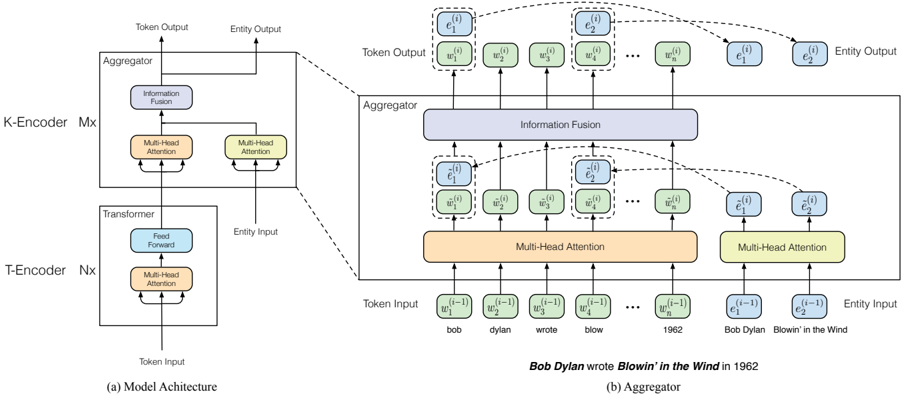
“TheT-encodercaptures essentiallexicalandsyntacticinformationfrominputtokens.”
Yang, Y. T., Edwards, B. I., & Sanmugam, M. (2025) · Social Sciences & Humanities Open · doi:10.1016/j.ssaho.2025.101729 · Cited by 10
Bauer, L., Deng, L., & Bansal, M. (2021) · Workshop on Knowledge Extraction and Integration for Deep Learning Architectures: Deep Learning Inside Out (DeeLIO) · doi:10.18653/v1/2021.deelio-1.7 · Cited by 14
“In their work, pre-trained representations of external knowledge from knowledge bases (e.g., TransE) were directly applied; they did not tailor knowledge content or structure specifically to the NLI task and did not improve NLI performance (Zhang et al., 2019a).”
BackgroundMethodInfluentialBeyond facts – a survey and conceptualisation of claims in online discourse analysis
Boland, K., Fafalios, P., Tchechmedjiev, A., Dietze, S., & Todorov, K. (2022) · Semantic Web · doi:10.3233/sw-212838 · Cited by 20
“Paraphrasing detection allows to discover equivalent text fragments that differ (to a given extent), where neural language models are currently largely applied to the task [194, 195].”
BackgroundChen, J., Ma, M., Zheng, R., & Huang, L. (2021) · Interspeech (USB) · doi:10.21437/interspeech.2021-733 · Cited by 10
“Text-based BERT-style [32, 33, 34, 35] frameworks are extremely popular in recent years due to the remarkable improvement on the downstream tasks at fine-tuning stages.”
BackgroundCompactIE: Compact Facts in Open Information Extraction
Bayat, F. F., Bhutani, N., & Jagadish, H. V. (2022) · Conference of the North American Chapter of the Association for Computational Linguistics: Human Language Technologies (NAACL-HLT) · doi:10.18653/v1/2022.naacl-main.65 · Cited by 10
TABi: Type-Aware Bi-Encoders for Open-Domain Entity Retrieval
Leszczynski, M., Fu, D. Y., Chen, M. F., & Ré, C. (2022) · Findings of the Association for Computational Linguistics: ACL (Findings of ACL) · doi:10.18653/v1/2022.findings-acl.169 · Cited by 13
Visual Description Augmented Integration Network for Multimodal Entity and Relation Extraction
Zuo, M., Wang, Y., Dong, W., Zhang, Q., Cai, Y., & Kong, J. (2023) · Applied Sciences · doi:10.3390/app13106178 · Cited by 10
Short Text Classification Based on Hierarchical Heterogeneous Graph and LDA Fusion
Xu, X., Li, B., Shen, Y., Luo, B., Zhang, C., & Hao, F. (2023) · Electronics · doi:10.3390/electronics12122560 · Cited by 13
SPSQL: Step-by-step Parsing Based Framework for Text-to-SQL Generation
Shen, R., Sun, G., Shen, H., Li, Y., Jin, L., & Jiang, H. (2023) · International Conference on Machine Vision and Information Technology (CMVIT) · doi:10.1109/cmvit57620.2023.00030 · Cited by 12
“Since 2018, with the development of pre-trained language models such as ELMo [20], GPT [21], BERT [22], and T5 [23], more and more researchers have applied them to Text2SQL, resulting in methods based on pre-trained language models such as RoBERTa, XLNet, ERNIE, FastBERT [24]}, MobileBERT [25], and MTL-BERT [26].”
MethodUMLS-KGI-BERT: Data-Centric Knowledge Integration in Transformers for Biomedical Entity Recognition
Mannion, A., Schwab, D., & Goeuriot, L. (2023) · Clinical Natural Language Processing Workshop (ClinicalNLP) · doi:10.18653/v1/2023.clinicalnlp-1.35 · Cited by 13
Retrieval-Augmented Domain Adaptation of Language Models
Xu, B., Zhao, C., Jiang, W., Zhu, P., Dai, S., Pang, C., Sun, Z., Wang, S., & Sun, Y. (2023) · Workshop on Representation Learning for NLP (RepL4NLP) · doi:10.18653/v1/2023.repl4nlp-1.5 · Cited by 22
XDoc: Unified Pre-training for Cross-Format Document Understanding
Chen, J., Lv, T., Cui, L., Zhang, C., & Wei, F. (2022) · Findings of the Association for Computational Linguistics: EMNLP (Findings of EMNLP) · doi:10.18653/v1/2022.findings-emnlp.71 · Cited by 14
Robust Integration of Contextual Information for Cross-Target Stance Detection
Beck, T., Waldis, A., & Gurevych, I. (2023) · Joint Conference on Lexical and Computational Semantics · doi:10.18653/v1/2023.starsem-1.43 · Cited by 22
“Within the era of PLMs, many approaches rely on extensive pretraining using data from knowledge bases (Peters et al., 2019; Zhang et al., 2019) (KB) or supervision from knowledge completion tasks (Wang et al., 2021; Rozen et al., 2021).”
Metadata
- Authors
- Zhang, Z., Han, X., Liu, Z., Jiang, X., Sun, M., & Liu, Q.
- Affiliations
- State Key Laboratory of Intelligent Technology and Systems (CN)
- Tsinghua University (CN)
- Huawei Technologies (China) (CN)
- Corresponding author
- Zhang, Zhengyan
- Venue
- Proceedings of the 57th Annual Meeting of the Association for Computational Linguistics
- Published
- 2019
- Pages
- 1441-1451
- ISSN
- 0736-587X (ISSN-L)
- OpenAlex
- W2953356739
- Cited by
- 1,482
- References
- 56
- Citations by year
- 2026: 74 · 2025: 142 · 2024: 236 · 2023: 292 · 2022: 250 · 2021: 284 · 2020: 174 · 2019: 29
- FWCI
- 70.49
- Type
- conference paper
- Language
- en
- Open access
- hybrid
- doi.org
- Licence
- cc-by
- Locations
- Proceedings of the conference - Association for Computational Linguistics. Meeting (publishedVersion, cc-by)
- arXiv (Cornell University) (submittedVersion)
- arXiv (Cornell University)
- Funders
- China Association for Science and Technology (2016QNRC001)
- Deutsche Forschungsgemeinschaft (DFG TRR 169, TRR169, 61621136008, NSFC 61621136008)
- National Natural Science Foundation of China (61621136008, NSFC 61621136008, TRR-169, 2016QNRC001, 61572273)
- Topics
- Physical Sciences › Computer Science › Artificial Intelligence › Topic Modeling
- Physical Sciences › Computer Science › Artificial Intelligence › Advanced Graph Neural Networks
- Physical Sciences › Computer Science › Computer Vision and Pattern Recognition › Multimodal Machine Learning Applications
- Keywords
- ERNIE, linguistic representation, knowledge graphs, pre-trained language models, BERT, external knowledge integration
About these checks
Registry, retraction, Cites and statistics results are computed, not judged, with one exception: a printed reference that no index lists is read once by a model before it counts as a citation error. Claims are extracted by a model and kept only when their quote appears verbatim in the text; each cited source is then checked, with a model’s help, for whether it says what the claim relies on. Those verdicts can be wrong — read the claim’s quote and the cited source before relying on one.
Statistics and arithmetic are recomputed, not judged.
Confidence bands are shown only for fields calibrated on our annotated test set. None is calibrated yet, so no band is shown.
What counts as a claim ›How we measure confidence ›How we check this ›
Are you an author, or do you see a problem with this page? Request a review
Data sources
Bibliographic data: Semantic Scholar, OpenAlex, Crossref.
Contains information from the Semantic Scholar Academic Graph Datasets, made available under the ODC Attribution License (ODC-BY 1.0).
Semantic Scholar’s data is described in: Kinney, R., et al. (2023). The Semantic Scholar Open Data Platform. arXiv:2301.10140.
