

The DOI matches its Crossref record; 47 of the 47 references it cites were found in a registry or an index; none of the 52 sources its claims cite is checked for support yet.
Narrative Therapy to Treat a College Student's Depression: A Case Report
Open accessAbstract
In the context of college students' depression, narrative therapy is beneficial to explore and challenge negative self-perceptions and beliefs contributing to their depressive symptoms. Narrative therapy was conducted through telecounseling using a video-conference platform with nine sessions for a female university student in her mid-20s with depressive mood, low energy, and suicidal thoughts, resulting in delays in her academic task fulfillment. She hardly finished her fieldwork reports and had not started her thesis after receiving a study period extension when majority of her classmates had graduated. The intervention was aimed to change client's depression narrative to more empowered preferred stories shaping her new identity so she could graduate from her program. During the the intervention process, the participant can finish her academic obligations and graduate before the due date. Discussion about the case is provided for practitioners interested in the narrative approach, supported by the worksheets and therapy stages explanation.
Overview
AI snapshot
Written from the paper’s full text.
TL;DR
This case report describes nine sessions of online narrative therapy with a female Indonesian graduate student in her mid-20s diagnosed with major depressive disorder, aimed at separating her identity from depression ("The Sadness") so she could complete her fieldwork reports and thesis. The client completed her academic obligations and graduated before the deadline, with her Global Assessment of Functioning score rising from 43 to 83.
Key findings
- The client's GAF score was 43 before intervention (serious symptoms with serious impairment in social and school functioning) and 83 after intervention (minimal symptoms, good functioning, socially effective, no reported suicidal thoughts).
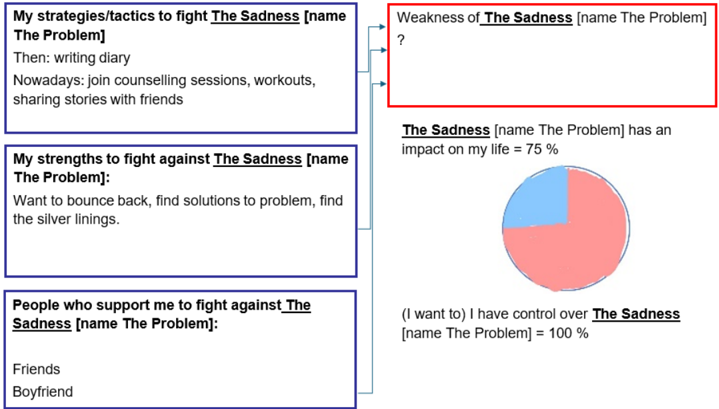
- The client externalized her depression as "The Sadness," which she said she had lived with since childhood; her perceived power to defeat it rose from 25% (Figure 5) to 75% or more (Figure 7), with a stated hope of reaching 100%.
- She finished her fieldwork reports and thesis during the session covering Worksheet 6 (Landscape of Identity) and graduated from her master's program before the extended deadline of July 31, 2023.
- Reported subjective improvements included better well-being and social rhythm, medication adherence, greater acceptance of the diagnosis, and more openness with family, friends, and her boyfriend.
Methods
- Single case report of "Aya" (pseudonym), an Indonesian woman in her mid-20s, a master's student diagnosed with major depressive disorder by a psychiatrist and prescribed antidepressants in early 2022; assessment used an online semi-structured interview based on the Global Assessment of Functioning (Hall, 1995).
- Intervention was telecounseling via Google Meet across nine sessions (June 27, 2022 – September 22, 2023), following an unpublished Narrative Therapy Module (Swasti & Martani, 2013) adapted for depression, using worksheets as prompts; techniques included externalizing conversations, deconstruction, re-authoring and unique outcomes, re-membering, and definitional ceremonies.
- Analysis was qualitative: data gathered from in-depth conversations and reflections during sessions, plus observations of facial expression, intonation, and eye contact, examined through White's (2007) narrative therapy framework and Payne's (2006) outline of practices.
Limitations
- Stated: no direct communication between the psychologist/therapist and the psychiatrist, despite the client taking medication during therapy; the authors recommend integrated treatment planning and regular collaboration.
- Stated: outcome measurement was only qualitative (client narratives guided by therapist questions, with GAF as a semi-structured guideline); the authors recommend adding quantitative measures such as PHQ-9 or BDI-II and coding systems (Innovative Moments Coding System, TCCS).
- Stated: difficulty measuring treatment fidelity, since the plan became more client-centered and evolved around her condition, and academic deadlines affected the intervention's duration; the authors recommend recording sessions and assessing fidelity.
- Evident from the text: this is a single case with no control or comparison condition, and the reported changes rest largely on the client's self-report and the therapist's (author's) observations, so findings cannot be generalized.
Model-written summary. Check it against the paper before relying on it.
Integrity signals
Registry
Cites
Statistics
Figures


Verification
Claims the paper makes
42 Own result · 26 No basis given · 21 Own method · 19 Own interpretation · 9 Check pending · 8 No full text of the sources · 6 Sources not found · 3 Not checked yet
A result the paper reports from its own data — it cites no other source for it, so there is none to check. The quote shows it is in the paper.
In the paper
“Aya personified her depression as The Sadness (Bahasa Indonesia: Si Sedih).”
§ Narrative Therapy to Treat a College Student's Depression: A Case Report > 1. Externalizing conversations
plainSingle case- Asserted: passes — The authors put it forward as true.
- Checkable: passes — It can be checked against evidence.
- Load-bearing: unclear — It is unclear whether the paper’s conclusions depend on it.
- Based: passes — The paper gives a reason why it holds.
The paper states this without a source or data behind it here, so there is nothing to check it against. The quote shows it is in the paper.
In the paper
“For example, Aya became more open to her family whom she felt quite emotionally distant before.”
§ Narrative Therapy to Treat a College Student's Depression: A Case Report > DISCUSSION
plainSingle case- Asserted: passes — The authors put it forward as true.
- Checkable: passes — It can be checked against evidence.
- Load-bearing: unclear — It is unclear whether the paper’s conclusions depend on it.
- Based: passes — The paper gives a reason why it holds.
The paper states this without a source or data behind it here, so there is nothing to check it against. The quote shows it is in the paper.
In the paper
“By viewing depression as a problem that was separated to herself, Aya started to gain a sense of control and autonomy over her symptoms.”
§ Narrative Therapy to Treat a College Student's Depression: A Case Report > DISCUSSION
plaindirectSingle case- Asserted: passes — The authors put it forward as true.
- Checkable: passes — It can be checked against evidence.
- Load-bearing: passes — The paper’s conclusions depend on it.
- Based: passes — The paper gives a reason why it holds.
The paper states this without a source or data behind it here, so there is nothing to check it against. The quote shows it is in the paper.
In the paper
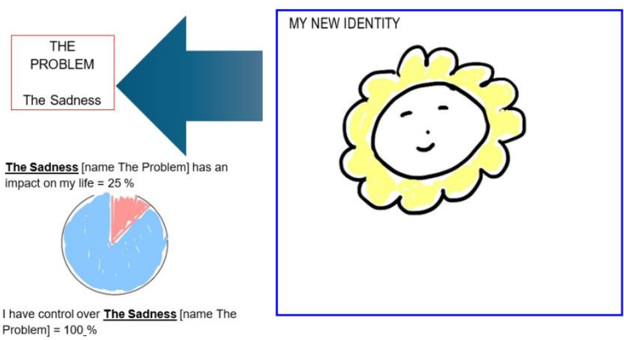
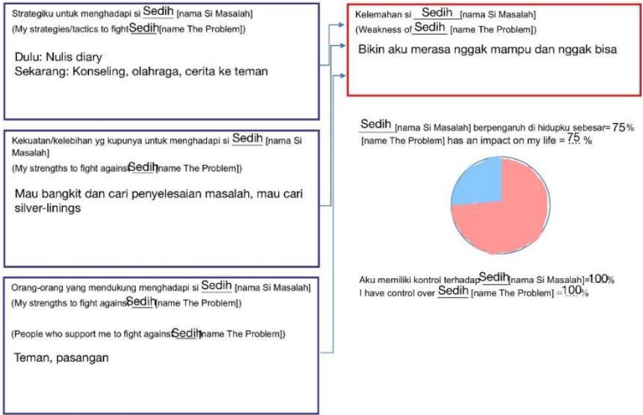
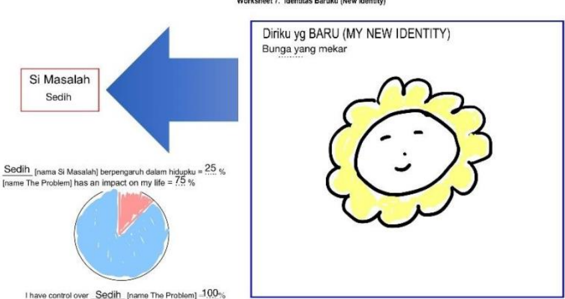
“This means that her power to defeat The Sadness had grown from 25% (as seen in Figure 5) to 75% and more (in Figure 7).”
§ Narrative Therapy to Treat a College Student's Depression: A Case Report > 5. Re-membering and definitional ceremony to enhance client feedback and self-assessment
plaindirectSingle case- Asserted: passes — The authors put it forward as true.
- Checkable: passes — It can be checked against evidence.
- Load-bearing: passes — The paper’s conclusions depend on it.
- Based: passes — The paper gives a reason why it holds.
A result the paper reports from its own data — it cites no other source for it, so there is none to check. The quote shows it is in the paper.
In the paper
“Aya's condition before engaging in narrative therapy was depicted with a GAF score of 43 and 83 after the therapy.”
§ Narrative Therapy to Treat a College Student's Depression: A Case Report > DISCUSSION
plainSingle case- Asserted: passes — The authors put it forward as true.
- Checkable: passes — It can be checked against evidence.
- Load-bearing: passes — The paper’s conclusions depend on it.
- Based: passes — The paper gives a reason why it holds.
A result the paper reports from its own data — it cites no other source for it, so there is none to check. The quote shows it is in the paper.
In the paper
“-Aya melaporkan tidak lagi ada ide-ide bunuh diri.”
§ Narrative Therapy to Treat a College Student's Depression: A Case Report > DISKUSI
plainSingle case- Asserted: passes — The authors put it forward as true.
- Checkable: passes — It can be checked against evidence.
- Load-bearing: passes — The paper’s conclusions depend on it.
- Based: passes — The paper gives a reason why it holds.
The paper states this without a source or data behind it here, so there is nothing to check it against. The quote shows it is in the paper.
In the paper
“Her interpersonal relationships with significant persons in her life flourished as she continued to build her therapeutic alliance.”
§ Narrative Therapy to Treat a College Student's Depression: A Case Report > 5. Re-membering and definitional ceremony to enhance client feedback and self-assessment
plaincorrelationalSingle case- Asserted: passes — The authors put it forward as true.
- Checkable: passes — It can be checked against evidence.
- Load-bearing: unclear — It is unclear whether the paper’s conclusions depend on it.
- Based: passes — The paper gives a reason why it holds.
The paper states this without a source or data behind it here, so there is nothing to check it against. The quote shows it is in the paper.
In the paper
“Misalnya, Aya menjadi lebih terbuka kepada keluargaa yang sebelumnya dia merasa jauh secara emosional.”
§ Narrative Therapy to Treat a College Student's Depression: A Case Report > DISKUSI
plainSingle case- Asserted: passes — The authors put it forward as true.
- Checkable: passes — It can be checked against evidence.
- Load-bearing: unclear — It is unclear whether the paper’s conclusions depend on it.
- Based: passes — The paper gives a reason why it holds.
A result the paper reports from its own data — it cites no other source for it, so there is none to check. The quote shows it is in the paper.
In the paper
“Sebelum menjalani terapi, Aya bingung akan jati dirinya sebagai orang yang sangat dipengaruhi oleh kesedihan.”
§ Narrative Therapy to Treat a College Student's Depression: A Case Report > DISKUSI
plainSingle case- Asserted: passes — The authors put it forward as true.
- Checkable: passes — It can be checked against evidence.
- Load-bearing: unclear — It is unclear whether the paper’s conclusions depend on it.
- Based: passes — The paper gives a reason why it holds.
A result the paper reports from its own data — it cites no other source for it, so there is none to check. The quote shows it is in the paper.
In the paper
“In mid-2022, Aya had not submitted her report for fieldwork examination.”
§ Narrative Therapy to Treat a College Student's Depression: A Case Report > Participants
plainSingle case- Asserted: passes — The authors put it forward as true.
- Checkable: passes — It can be checked against evidence.
- Load-bearing: unclear — It is unclear whether the paper’s conclusions depend on it.
- Based: passes — The paper gives a reason why it holds.
- Probably not a substantial claim. 51
- It may state two separate claims as one. 55
- The quote only partly states this claim. 3
The paper states this without a source or data behind it here, so there is nothing to check it against. The quote shows it is in the paper.
In the paper
“Aya was diagnosed with major depressive disorder by a psychiatrist and was prescribed antidepressant in early 2022.”
§ Narrative Therapy to Treat a College Student's Depression: A Case Report > Participants
plainSingle case- Asserted: passes — The authors put it forward as true.
- Checkable: passes — It can be checked against evidence.
- Load-bearing: fails — The paper’s conclusions may not depend on it.
- Based: passes — The paper gives a reason why it holds.
Probably not a substantial claim. The paper’s conclusions may not depend on it. It may state two separate claims as one.
A result the paper reports from its own data — it cites no other source for it, so there is none to check. The quote shows it is in the paper.
In the paper
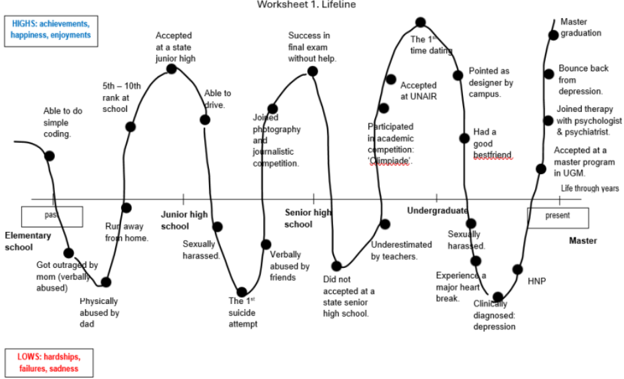
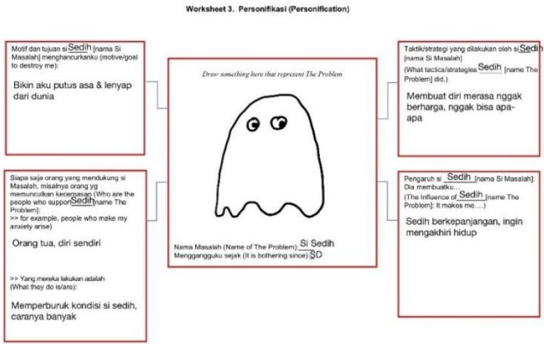
“She mentioned that she had been living with The Sadness since childhood (see Figure 1).”
§ Narrative Therapy to Treat a College Student's Depression: A Case Report > 1. Externalizing conversations
plainSingle case- Asserted: passes — The authors put it forward as true.
- Checkable: passes — It can be checked against evidence.
- Load-bearing: fails — The paper’s conclusions may not depend on it.
- Based: passes — The paper gives a reason why it holds.
Probably not a substantial claim. The paper’s conclusions may not depend on it.
A result the paper reports from its own data — it cites no other source for it, so there is none to check. The quote shows it is in the paper.
In the paper
“-Aya reported the absence of suicidal thoughts.”
§ Narrative Therapy to Treat a College Student's Depression: A Case Report > 83
plainSingle case- Asserted: passes — The authors put it forward as true.
- Checkable: passes — It can be checked against evidence.
- Load-bearing: passes — The paper’s conclusions depend on it.
- Based: passes — The paper gives a reason why it holds.
The quote only partly states this claim.
The paper states this without a source or data behind it here, so there is nothing to check it against. The quote shows it is in the paper.
In the paper
“Her identity was absorbed by The Sadness so she could not fully enjoy her life and appreciate her effort even though she tried to maintain her academic achievements.”
§ Narrative Therapy to Treat a College Student's Depression: A Case Report > 1. Externalizing conversations
plaindirectSingle case- Asserted: passes — The authors put it forward as true.
- Checkable: passes — It can be checked against evidence.
- Load-bearing: unclear — It is unclear whether the paper’s conclusions depend on it.
- Based: passes — The paper gives a reason why it holds.
It may state two separate claims as one.
A result the paper reports from its own data — it cites no other source for it, so there is none to check. The quote shows it is in the paper.
In the paper
“-Socially effective: Aya was able to come to the campus and interact with the thesis writing assistant, the study program administrators, and her supervisors (both fieldwork and thesis).Aya also opened up to ask for help and assistance from her friends to finish her fieldwork reports and thesis.”
§ Narrative Therapy to Treat a College Student's Depression: A Case Report > 83
plainSingle case- Asserted: passes — The authors put it forward as true.
- Checkable: passes — It can be checked against evidence.
- Load-bearing: passes — The paper’s conclusions depend on it.
- Based: passes — The paper gives a reason why it holds.
It may state two separate claims as one.
The paper states this without a source or data behind it here, so there is nothing to check it against. The quote shows it is in the paper.
In the paper
“Aya reported subjective improvements in well-being and social rhythm, medication adherence, and greater acceptance of the diagnosis.”
§ Narrative Therapy to Treat a College Student's Depression: A Case Report > DISCUSSION
plainSingle case- Asserted: passes — The authors put it forward as true.
- Checkable: passes — It can be checked against evidence.
- Load-bearing: passes — The paper’s conclusions depend on it.
- Based: passes — The paper gives a reason why it holds.
It may state two separate claims as one.
A result the paper reports from its own data — it cites no other source for it, so there is none to check. The quote shows it is in the paper.
In the paper
“During the intervention process, the participant can finish her academic obligations and graduate before the due date.”
- Also stated in: § 83 · plain
“Aya finally graduated from her study program.”
§ Narrative Therapy to Treat a College Student's Depression: A Case Report > Abstract
plainSingle case- Asserted: passes — The authors put it forward as true.
- Checkable: passes — It can be checked against evidence.
- Load-bearing: passes — The paper’s conclusions depend on it.
- Based: passes — The paper gives a reason why it holds.
It may state two separate claims as one. The quote only partly states this claim.
- Also stated in: § 83 · plain
A result the paper reports from its own data — it cites no other source for it, so there is none to check. The quote shows it is in the paper.
In the paper
“Aya's Global Assessment of Functioning (GAF) score before intervention was 43, indicating serious symptoms with serious impairment in social and school functioning.”
§ Narrative Therapy to Treat a College Student's Depression: A Case Report > Participants
plainSingle case- Asserted: passes — The authors put it forward as true.
- Checkable: passes — It can be checked against evidence.
- Load-bearing: unclear — It is unclear whether the paper’s conclusions depend on it.
- Based: passes — The paper gives a reason why it holds.
It may state two separate claims as one.
A result the paper reports from its own data — it cites no other source for it, so there is none to check. The quote shows it is in the paper.
In the paper
“Aya terus mengonsumsi antidepresan dan memberi tahu psikiaternya bahwa dia juga menjalani psikoterapi.”
§ Narrative Therapy to Treat a College Student's Depression: A Case Report > Partisipan
plainSingle case- Asserted: passes — The authors put it forward as true.
- Checkable: passes — It can be checked against evidence.
- Load-bearing: fails — The paper’s conclusions may not depend on it.
- Based: passes — The paper gives a reason why it holds.
Probably not a substantial claim. The paper’s conclusions may not depend on it. It may state two separate claims as one.
The paper states this without a source or data behind it here, so there is nothing to check it against. The quote shows it is in the paper.
In the paper
“Hal ini meningkatkan motivasi dan komitmennya untuk terlibat dalam praktik perawatan diri dan mencari dukungan saat dia perlu menyelesaikan laporan kerja lapangan dan menulis tesisnya.”
§ Narrative Therapy to Treat a College Student's Depression: A Case Report > DISKUSI
plaindirectSingle case- Asserted: passes — The authors put it forward as true.
- Checkable: passes — It can be checked against evidence.
- Load-bearing: passes — The paper’s conclusions depend on it.
- Based: passes — The paper gives a reason why it holds.
It may state two separate claims as one.
The paper states this without a source or data behind it here, so there is nothing to check it against. The quote shows it is in the paper.
In the paper
“Aya melaporkan peningkatan subjektif dalam kesejahteraan dan ritme sosial, kepatuhan pengobatan, dan penerimaan diagnosis yang lebih baik.”
§ Narrative Therapy to Treat a College Student's Depression: A Case Report > DISKUSI
plainSingle case- Asserted: passes — The authors put it forward as true.
- Checkable: passes — It can be checked against evidence.
- Load-bearing: passes — The paper’s conclusions depend on it.
- Based: passes — The paper gives a reason why it holds.
It may state two separate claims as one.
The paper states this without a source or data behind it here, so there is nothing to check it against. The quote shows it is in the paper.
In the paper
“Hubungan interpersonal dengan orang-orang penting dalam hidupnya berkembang seiring dia terus membangun aliansi terapeutiknya.”
§ Narrative Therapy to Treat a College Student's Depression: A Case Report > 5. 'Menjadi Anggota Kembali' dan penentuan definisi untuk meningkatkan umpan balik klien dan penilaian diri
plaincorrelationalSingle case- Asserted: passes — The authors put it forward as true.
- Checkable: passes — It can be checked against evidence.
- Load-bearing: fails — The paper’s conclusions may not depend on it.
- Based: passes — The paper gives a reason why it holds.
Probably not a substantial claim. The paper’s conclusions may not depend on it.
The paper states this without a source or data behind it here, so there is nothing to check it against. The quote shows it is in the paper.
In the paper
“Fokus klien adalah menyelesaikan tugas-tugas akademisnya, ia pun memperkuat kerja kolaboratif dengan dosen pembimbing, supervisor lapangan, asisten peneliti, teman-teman, serta kekasihnya yang memberikan masukan konstruktif untuk laporan kerja lapangan dan tesis.”
§ Narrative Therapy to Treat a College Student's Depression: A Case Report > DISKUSI
plaindirectSingle case- Asserted: passes — The authors put it forward as true.
- Checkable: passes — It can be checked against evidence.
- Load-bearing: unclear — It is unclear whether the paper’s conclusions depend on it.
- Based: passes — The paper gives a reason why it holds.
It may state two separate claims as one.
A result the paper reports from its own data — it cites no other source for it, so there is none to check. The quote shows it is in the paper.
In the paper
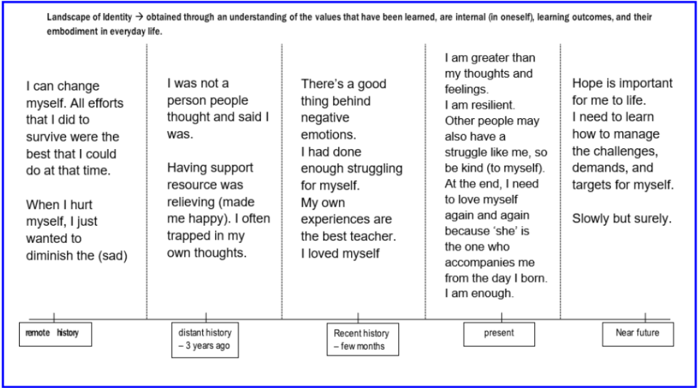
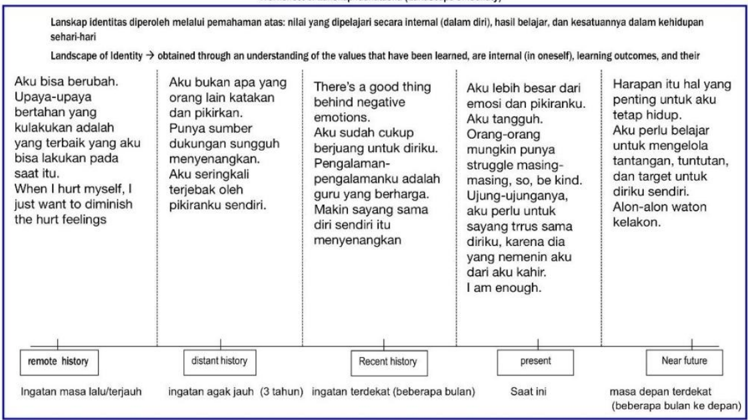
“Aya finally finished her fieldwork reports as well as her thesis at the time she had the narrative therapy session discussing Worksheet 6. Landscape of Identity.”
§ Narrative Therapy to Treat a College Student's Depression: A Case Report > 4. Reflection on re-authoring efforts (selected stories)
plainSingle case- Asserted: passes — The authors put it forward as true.
- Checkable: passes — It can be checked against evidence.
- Load-bearing: fails — The paper’s conclusions may not depend on it.
- Based: passes — The paper gives a reason why it holds.
Probably not a substantial claim. The paper’s conclusions may not depend on it.
A result the paper reports from its own data — it cites no other source for it, so there is none to check. The quote shows it is in the paper.
In the paper
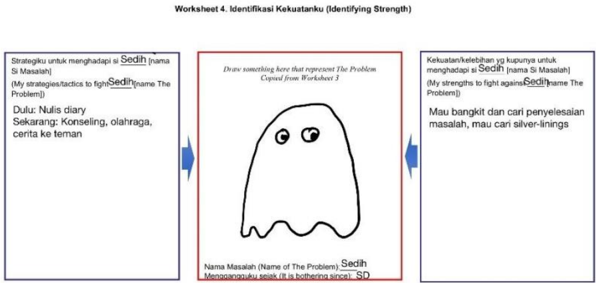
“Aya mentioned her close friends and boyfriend as her support systems to beat The Sadness, therefore she realized that she had to be open and genuine with them (see Figure 5).”
§ Narrative Therapy to Treat a College Student's Depression: A Case Report > 4. Reflection on re-authoring efforts (selected stories)
plaindirectSingle case- Asserted: passes — The authors put it forward as true.
- Checkable: passes — It can be checked against evidence.
- Load-bearing: fails — The paper’s conclusions may not depend on it.
- Based: passes — The paper gives a reason why it holds.
Probably not a substantial claim. The paper’s conclusions may not depend on it.
A result the paper reports from its own data — it cites no other source for it, so there is none to check. The quote shows it is in the paper.
In the paper
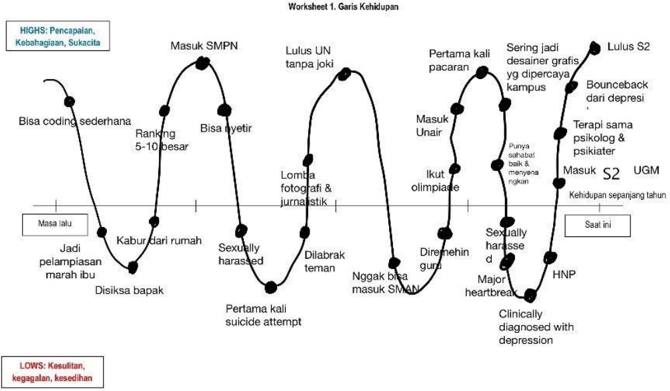
“When she began seeking psychotherapy, Aya reported experiencing depressive episodes characterized by constant fatigue, fluctuating appetite, low energy, low motivation, irritability, episodes of anxiety, episodes of sad moods accompanied by crying spells that lasted for one to two weeks at a time, and a deluge of self-deprecating thoughts including thoughts of self-harm and suicide.”
§ Narrative Therapy to Treat a College Student's Depression: A Case Report > ANALYSIS OF INTERVENTION EFFECTIVENESS
plainSingle case- Asserted: passes — The authors put it forward as true.
- Checkable: passes — It can be checked against evidence.
- Load-bearing: passes — The paper’s conclusions depend on it.
- Based: passes — The paper gives a reason why it holds.
It may state two separate claims as one.
A result the paper reports from its own data — it cites no other source for it, so there is none to check. The quote shows it is in the paper.
In the paper
“Di akhir sesi terapi, Aya menyimpulkan bahwa dia selalu punya pilihan dalam hidupnya karena dia memahami konsep eksternalisasi masalah, mendekonstruksi cerita yang penuh masalah, dan menulis ulang cerita yang disukai dari sudut pandang baru yang memberdayakan identitas untuk lepas dari permasalahan.”
§ Narrative Therapy to Treat a College Student's Depression: A Case Report > 5. 'Menjadi Anggota Kembali' dan penentuan definisi untuk meningkatkan umpan balik klien dan penilaian diri
plaindirectSingle case- Asserted: passes — The authors put it forward as true.
- Checkable: passes — It can be checked against evidence.
- Load-bearing: passes — The paper’s conclusions depend on it.
- Based: passes — The paper gives a reason why it holds.
It may state two separate claims as one.
A result the paper reports from its own data — it cites no other source for it, so there is none to check. The quote shows it is in the paper.
In the paper
“At the end of therapy sessions, Aya concluded that she always had a choice in her life as she understood the concept of externalizing the problem, deconstructing the problemsaturated stories, and re-authoring the preferred stories from a new point of view to empower her identity separated from the problem.”
§ Narrative Therapy to Treat a College Student's Depression: A Case Report > 5. Re-membering and definitional ceremony to enhance client feedback and self-assessment
plaindirectSingle case- Asserted: passes — The authors put it forward as true.
- Checkable: passes — It can be checked against evidence.
- Load-bearing: passes — The paper’s conclusions depend on it.
- Based: passes — The paper gives a reason why it holds.
Probably not a substantial claim.
A result the paper reports from its own data — it cites no other source for it, so there is none to check. The quote shows it is in the paper.
In the paper
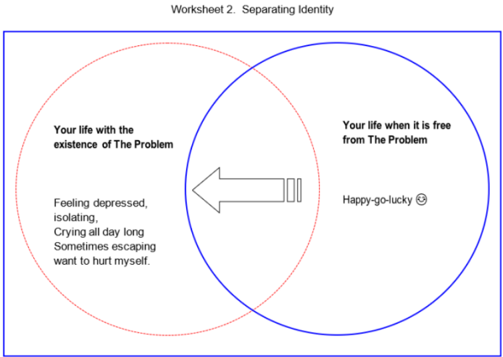
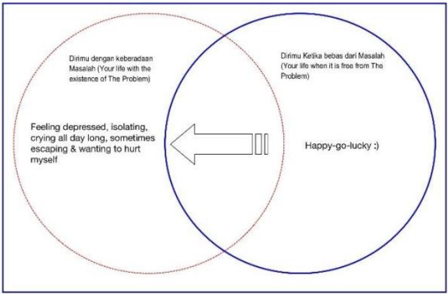
“Si Sedih merenggut Aya dari jati dirinya yang ia identifikasi sebagai gadis happy go lucky (gambaran diri yang ceria dan bebas) dan mengubahnya menjadi seorang yang memiliki perasaan tertekan (mengisolasi diri dan menangis sepanjang hari serta memiliki kecenderungan menyakiti diri sendiri seperti terlihat pada Gambar 2).”
§ Narrative Therapy to Treat a College Student's Depression: A Case Report > DISKUSI
plaindirectSingle case- Asserted: passes — The authors put it forward as true.
- Checkable: passes — It can be checked against evidence.
- Load-bearing: passes — The paper’s conclusions depend on it.
- Based: passes — The paper gives a reason why it holds.
It may state two separate claims as one.
The paper states this without a source or data behind it here, so there is nothing to check it against. The quote shows it is in the paper.
In the paper
“Her social rhythm in college increased as she joined a writing group and was able to accept assistance.”
§ Narrative Therapy to Treat a College Student's Depression: A Case Report > DISCUSSION
plaindirectSingle case- Asserted: passes — The authors put it forward as true.
- Checkable: passes — It can be checked against evidence.
- Load-bearing: unclear — It is unclear whether the paper’s conclusions depend on it.
- Based: passes — The paper gives a reason why it holds.
It may state two separate claims as one.
A result the paper reports from its own data — it cites no other source for it, so there is none to check. The quote shows it is in the paper.
In the paper
“Skor Global Assessment of Functioning (GAF) Aya sebelum menjalani intervensi adalah 43 yang menunjukkan gejala serius dengan gangguan serius dalam fungsi sosial dan sekolah/kuliah.”
§ Narrative Therapy to Treat a College Student's Depression: A Case Report > Partisipan
plainSingle case- Asserted: passes — The authors put it forward as true.
- Checkable: passes — It can be checked against evidence.
- Load-bearing: unclear — It is unclear whether the paper’s conclusions depend on it.
- Based: passes — The paper gives a reason why it holds.
It may state two separate claims as one.
The paper states this without a source or data behind it here, so there is nothing to check it against. The quote shows it is in the paper.
In the paper
“As the client's focus was to finish her academic work, she strengthened her collaborative work with her supervisor, research assistants, friends, and lover, who gave her constructive feedback for her written works consisting of fieldwork reports and thesis.”
§ Narrative Therapy to Treat a College Student's Depression: A Case Report > DISCUSSION
plainSingle case- Asserted: passes — The authors put it forward as true.
- Checkable: passes — It can be checked against evidence.
- Load-bearing: unclear — It is unclear whether the paper’s conclusions depend on it.
- Based: passes — The paper gives a reason why it holds.
It may state two separate claims as one.
A result the paper reports from its own data — it cites no other source for it, so there is none to check. The quote shows it is in the paper.
In the paper
“Identitas Aya terserap oleh Si Sedih sehingga ia tidak bisa sepenuhnya menikmati hidup dan mengapresiasi usahanya meski sudah berusaha mempertahankan prestasi akademisnya.Pada akhirnya, ia mampu mengalahkan Si Sedih dan lulus dari program magisternya.”
§ Narrative Therapy to Treat a College Student's Depression: A Case Report > DISKUSI
plaindirectSingle case- Asserted: passes — The authors put it forward as true.
- Checkable: passes — It can be checked against evidence.
- Load-bearing: passes — The paper’s conclusions depend on it.
- Based: passes — The paper gives a reason why it holds.
It may state two separate claims as one.
A result the paper reports from its own data — it cites no other source for it, so there is none to check. The quote shows it is in the paper.
In the paper
“Terlihat pada Gambar 7, klien mampu memisahkan identitasnya dengan Si Sedih dan ia optimis dapat mengendalikan dampak Si Sedih terhadap hidupnya (sebesar 25%).”
§ Narrative Therapy to Treat a College Student's Depression: A Case Report > 5. 'Menjadi Anggota Kembali' dan penentuan definisi untuk meningkatkan umpan balik klien dan penilaian diri
plainSingle case- Asserted: passes — The authors put it forward as true.
- Checkable: passes — It can be checked against evidence.
- Load-bearing: unclear — It is unclear whether the paper’s conclusions depend on it.
- Based: passes — The paper gives a reason why it holds.
It may state two separate claims as one.
The paper states this without a source or data behind it here, so there is nothing to check it against. The quote shows it is in the paper.
In the paper
“Her study got extended until July 31, 2023.”
§ Narrative Therapy to Treat a College Student's Depression: A Case Report > Participants
plainSingle case- Asserted: passes — The authors put it forward as true.
- Checkable: passes — It can be checked against evidence.
- Load-bearing: fails — The paper’s conclusions may not depend on it.
- Based: passes — The paper gives a reason why it holds.
Probably not a substantial claim. The paper’s conclusions may not depend on it.
A result the paper reports from its own data — it cites no other source for it, so there is none to check. The quote shows it is in the paper.
In the paper
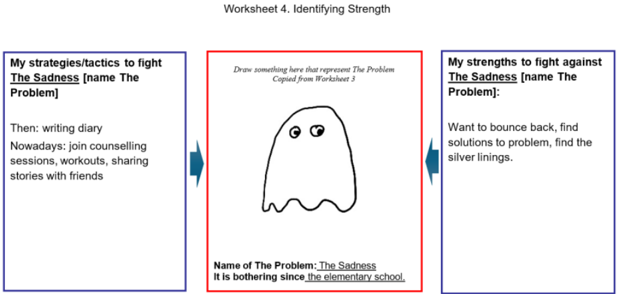
“Ia juga menuliskan beberapa strategi penanggulangan yang dapat diterapkan untuk mendukung dirinya selama masa-masa sulit, seperti menulis jurnal, berbicara dengan teman, mengakses layanan konseling, dan melakukan latihan fisik/berolahraga.”
§ Narrative Therapy to Treat a College Student's Depression: A Case Report > 3. Penulisan ulang dan identifikasi hasil unik
plainSingle case- Asserted: passes — The authors put it forward as true.
- Checkable: passes — It can be checked against evidence.
- Load-bearing: fails — The paper’s conclusions may not depend on it.
- Based: passes — The paper gives a reason why it holds.
Probably not a substantial claim. The paper’s conclusions may not depend on it.
A result the paper reports from its own data — it cites no other source for it, so there is none to check. The quote shows it is in the paper.
In the paper
“-Efektif secara sosial: Aya mampu datang ke kampus dan berinteraksi dengan asisten menulis tesis, staf administrasi, dan dosen pembimbing kerja lapangan dan tesis.Aya terbuka untuk meminta dan menerima bantuan penyelesaian laporan serta tesisnya.”
§ Narrative Therapy to Treat a College Student's Depression: A Case Report > DISKUSI
plainSingle case- Asserted: passes — The authors put it forward as true.
- Checkable: passes — It can be checked against evidence.
- Load-bearing: passes — The paper’s conclusions depend on it.
- Based: passes — The paper gives a reason why it holds.
It may state two separate claims as one.
A result the paper reports from its own data — it cites no other source for it, so there is none to check. The quote shows it is in the paper.
In the paper
“She also wrote several coping strategies that were applicable to support herself during the hard times, such as journaling, talking to her friends, accessing counseling services, and exercising.”
§ Narrative Therapy to Treat a College Student's Depression: A Case Report > 3. Re-authoring and identification of unique outcomes
plainSingle case- Asserted: passes — The authors put it forward as true.
- Checkable: passes — It can be checked against evidence.
- Load-bearing: fails — The paper’s conclusions may not depend on it.
- Based: passes — The paper gives a reason why it holds.
Probably not a substantial claim. The paper’s conclusions may not depend on it.
A result the paper reports from its own data — it cites no other source for it, so there is none to check. The quote shows it is in the paper.
In the paper
“83- Gejala minimal: Aya merasa cemas dan tertekan ketika mendekati sidang akhir tesisnya, tetapi ia dapat mengelolanya.”
§ Narrative Therapy to Treat a College Student's Depression: A Case Report > DISKUSI
plainSingle case- Asserted: passes — The authors put it forward as true.
- Checkable: passes — It can be checked against evidence.
- Load-bearing: passes — The paper’s conclusions depend on it.
- Based: passes — The paper gives a reason why it holds.
It may state two separate claims as one.
The paper states this without a source or data behind it here, so there is nothing to check it against. The quote shows it is in the paper.
In the paper
“Ritme pergaulannya di kampus meningkat ketika ia bergabung dengan kelompok menulis dan mampu menerima bantuan yang bermanfaat.”
§ Narrative Therapy to Treat a College Student's Depression: A Case Report > DISKUSI
plaindirectSingle case- Asserted: passes — The authors put it forward as true.
- Checkable: passes — It can be checked against evidence.
- Load-bearing: unclear — It is unclear whether the paper’s conclusions depend on it.
- Based: passes — The paper gives a reason why it holds.
It may state two separate claims as one.
A result the paper reports from its own data — it cites no other source for it, so there is none to check. The quote shows it is in the paper.
In the paper
“She gained a new understanding about her self-harm tendencies and suicidal thoughts that were created as an escape from her depressive mood influenced by The Sadness.”
§ Narrative Therapy to Treat a College Student's Depression: A Case Report > 4. Reflection on re-authoring efforts (selected stories)
plaindirectSingle case- Asserted: passes — The authors put it forward as true.
- Checkable: passes — It can be checked against evidence.
- Load-bearing: fails — The paper’s conclusions may not depend on it.
- Based: passes — The paper gives a reason why it holds.
Probably not a substantial claim. The paper’s conclusions may not depend on it.
A result the paper reports from its own data — it cites no other source for it, so there is none to check. The quote shows it is in the paper.
In the paper
“Aya melaporkan mengalami episode depresi yang ditandai dengan kelelahan terus-menerus, nafsu makan berfluktuasi, sedikit energi, motivasi rendah, mudah tersinggung, episode kecemasan, episode suasana hati sedih disertai dengan tangisan yang berlangsung selama seminggu hingga dua minggu, dan pikiran bertubitubi yang mencela diri sendiri termasuk pikiran untuk melukai dan membunuh diri.”
§ Narrative Therapy to Treat a College Student's Depression: A Case Report > ANALISIS EFEKTIVITAS INTERVENSI
plainSingle case- Asserted: passes — The authors put it forward as true.
- Checkable: passes — It can be checked against evidence.
- Load-bearing: passes — The paper’s conclusions depend on it.
- Based: passes — The paper gives a reason why it holds.
It may state two separate claims as one.
The paper states this without a source or data behind it here, so there is nothing to check it against. The quote shows it is in the paper.
In the paper
“Dia akhirnya dapat mengidentifikasi nilai-nilai yang penting baginya dan berupaya menyelaraskan tindakan dan pilihan dengan nilai-nilai tersebut.”
§ Narrative Therapy to Treat a College Student's Depression: A Case Report > DISKUSI
plainSingle case- Asserted: passes — The authors put it forward as true.
- Checkable: passes — It can be checked against evidence.
- Load-bearing: passes — The paper’s conclusions depend on it.
- Based: passes — The paper gives a reason why it holds.
It may state two separate claims as one.
A result the paper reports from its own data — it cites no other source for it, so there is none to check. The quote shows it is in the paper.
In the paper
“The feeling of being incompetent and left behind was so strong that they interfered with her daily life functioning, resulting in serious symptoms and impairments (see table 2).”
§ Narrative Therapy to Treat a College Student's Depression: A Case Report > ANALYSIS OF INTERVENTION EFFECTIVENESS
plaindirectSingle case- Asserted: passes — The authors put it forward as true.
- Checkable: passes — It can be checked against evidence.
- Load-bearing: passes — The paper’s conclusions depend on it.
- Based: passes — The paper gives a reason why it holds.
It may state two separate claims as one.
A result the paper reports from its own data — it cites no other source for it, so there is none to check. The quote shows it is in the paper.
In the paper
“Dia menyebutkan bahwa dirinya telah hidup bersama Si Sedih ini sejak kecil (lihat Gambar 1).”
§ Narrative Therapy to Treat a College Student's Depression: A Case Report > 1. Percakapan Eksternalisasi
plainSingle case- Asserted: passes — The authors put it forward as true.
- Checkable: passes — It can be checked against evidence.
- Load-bearing: fails — The paper’s conclusions may not depend on it.
- Based: passes — The paper gives a reason why it holds.
Probably not a substantial claim. The paper’s conclusions may not depend on it.
A result the paper reports from its own data — it cites no other source for it, so there is none to check. The quote shows it is in the paper.
In the paper
“Dia menulis bahwa kekuatannya adalah tangguh, fokus pada pemecahan masalah, dan optimis (dengan mencari hikmah di balik masalah yang dialami).”
§ Narrative Therapy to Treat a College Student's Depression: A Case Report > 3. Penulisan ulang dan identifikasi hasil unik
plainSingle case- Asserted: passes — The authors put it forward as true.
- Checkable: passes — It can be checked against evidence.
- Load-bearing: fails — The paper’s conclusions may not depend on it.
- Based: passes — The paper gives a reason why it holds.
Probably not a substantial claim. The paper’s conclusions may not depend on it. It may state two separate claims as one.
The paper states this without a source or data behind it here, so there is nothing to check it against. The quote shows it is in the paper.
In the paper
“Aya didiagnosis menderita gangguan depresi berat oleh psikiater dan diberi resep antidepresan pada awal tahun 2022.”
§ Narrative Therapy to Treat a College Student's Depression: A Case Report > Partisipan
plainSingle case- Asserted: passes — The authors put it forward as true.
- Checkable: passes — It can be checked against evidence.
- Load-bearing: fails — The paper’s conclusions may not depend on it.
- Based: passes — The paper gives a reason why it holds.
Probably not a substantial claim. The paper’s conclusions may not depend on it. It may state two separate claims as one.
A result the paper reports from its own data — it cites no other source for it, so there is none to check. The quote shows it is in the paper.
In the paper
“Aya mentioned in the later sessions that she wanted to fight The Sadness by using her strength.”
§ Narrative Therapy to Treat a College Student's Depression: A Case Report > 3. Re-authoring and identification of unique outcomes
plainSingle case- Asserted: passes — The authors put it forward as true.
- Checkable: passes — It can be checked against evidence.
- Load-bearing: fails — The paper’s conclusions may not depend on it.
- Based: passes — The paper gives a reason why it holds.
Probably not a substantial claim. The paper’s conclusions may not depend on it.
A result the paper reports from its own data — it cites no other source for it, so there is none to check. The quote shows it is in the paper.
In the paper
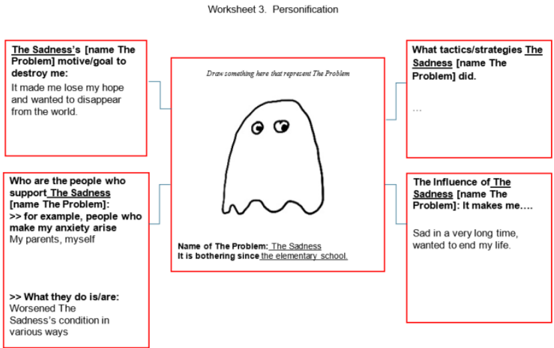
“During the externalizing conversations, the client explained that she was afraid to fail her master's degree and felt guilty for her parents because her parents were on The Sadness's side (see Figure 3).”
§ Narrative Therapy to Treat a College Student's Depression: A Case Report > 2. Deconstruction questions (by tracking exceptions)
plaindirectSingle case- Asserted: passes — The authors put it forward as true.
- Checkable: passes — It can be checked against evidence.
- Load-bearing: fails — The paper’s conclusions may not depend on it.
- Based: passes — The paper gives a reason why it holds.
Probably not a substantial claim. The paper’s conclusions may not depend on it. It may state two separate claims as one.
The paper states this without a source or data behind it here, so there is nothing to check it against. The quote shows it is in the paper.
In the paper
“Before counseling, Aya did not like to express herself but after gaining insights from the therapy sessions, she began to ask for help and be more expressive.”
§ Narrative Therapy to Treat a College Student's Depression: A Case Report > 4. Reflection on re-authoring efforts (selected stories)
plaindirectSingle case- Asserted: passes — The authors put it forward as true.
- Checkable: passes — It can be checked against evidence.
- Load-bearing: passes — The paper’s conclusions depend on it.
- Based: passes — The paper gives a reason why it holds.
It may state two separate claims as one.
A result the paper reports from its own data — it cites no other source for it, so there is none to check. The quote shows it is in the paper.
In the paper
“She also reported physical complaints such as insomnia, psychomotor retardation and agitation, headache caused by tension, and low energy.”
§ Narrative Therapy to Treat a College Student's Depression: A Case Report > Participants
plainSingle case- Asserted: passes — The authors put it forward as true.
- Checkable: passes — It can be checked against evidence.
- Load-bearing: unclear — It is unclear whether the paper’s conclusions depend on it.
- Based: passes — The paper gives a reason why it holds.
It may state two separate claims as one.
The paper states this without a source or data behind it here, so there is nothing to check it against. The quote shows it is in the paper.
In the paper
“Berbeda dengan pengalaman bersama Si Sedih sebelumnya, saat mengikuti terapi, klien mengalami kesulitan dalam mencapai target kehidupan akademisnya, misalnya menyelesaikan laporan kerja lapangan dan tesis.Oleh karena itu, sulit baginya untuk menemukan pengecualian dalam hidupnya yang bebas dari Si Sedih.”
§ Narrative Therapy to Treat a College Student's Depression: A Case Report > 1. Percakapan Eksternalisasi
plaindirectSingle case- Asserted: passes — The authors put it forward as true.
- Checkable: passes — It can be checked against evidence.
- Load-bearing: unclear — It is unclear whether the paper’s conclusions depend on it.
- Based: passes — The paper gives a reason why it holds.
It may state two separate claims as one.
A result the paper reports from its own data — it cites no other source for it, so there is none to check. The quote shows it is in the paper.
In the paper
“She wrote that her strengths are resiliency, problem-focused, and optimistic (by looking for the silver linings).”
§ Narrative Therapy to Treat a College Student's Depression: A Case Report > 3. Re-authoring and identification of unique outcomes
plainSingle case- Asserted: passes — The authors put it forward as true.
- Checkable: passes — It can be checked against evidence.
- Load-bearing: fails — The paper’s conclusions may not depend on it.
- Based: passes — The paper gives a reason why it holds.
Probably not a substantial claim. The paper’s conclusions may not depend on it. It may state two separate claims as one.
A result the paper reports from its own data — it cites no other source for it, so there is none to check. The quote shows it is in the paper.
In the paper
“In Aya's case, she had to finish her fieldwork report and thesis in the extended period given by the study program.This caused Aya to spend her time catching up on deadlines, impacting the duration of this intervention.”
§ Narrative Therapy to Treat a College Student's Depression: A Case Report > DISCUSSION
plaindirectSingle case- Asserted: passes — The authors put it forward as true.
- Checkable: passes — It can be checked against evidence.
- Load-bearing: unclear — It is unclear whether the paper’s conclusions depend on it.
- Based: passes — The paper gives a reason why it holds.
It may state two separate claims as one.
A result the paper reports from its own data — it cites no other source for it, so there is none to check. The quote shows it is in the paper.
In the paper
“Sebelum melakukan konseling, Aya kurang suka mengutarakan pendapatnya, tetapi setelah mendapatkan wawasan dari sesi terapi, ia mulai meminta bantuan dan mengungkapkan perasaannya secara terbuka.”
§ Narrative Therapy to Treat a College Student's Depression: A Case Report > 3. Penulisan ulang dan identifikasi hasil unik
plaindirectSingle case- Asserted: passes — The authors put it forward as true.
- Checkable: passes — It can be checked against evidence.
- Load-bearing: passes — The paper’s conclusions depend on it.
- Based: passes — The paper gives a reason why it holds.
It may state two separate claims as one.
What the paper did — it cites no source for this, so there is none to check. The quote shows it is in the paper.
In the paper
“The client's written consent for the purposes of publication of this report was asked.”
§ Narrative Therapy to Treat a College Student's Depression: A Case Report > Intervention Procedure
plainSingle case- Asserted: passes — The authors put it forward as true.
- Checkable: passes — It can be checked against evidence.
- Load-bearing: fails — The paper’s conclusions may not depend on it.
- Based: passes — The paper gives a reason why it holds.
Probably not a substantial claim. The paper’s conclusions may not depend on it.
In the paper
“The sessions in this case referred to an unpublished Narrative Therapy Module with seven sessions activities developed by Swasti and Martani (2013) and adapted to fit clients' needs in the context of depression, it is also applicable in an online setting (Vermeire & Van den Berge, 2021).”
§ Narrative Therapy to Treat a College Student's Depression: A Case Report > 8. Reflecting on progress
What the sources say
plainSingle case- Asserted: passes — The authors put it forward as true.
- Checkable: passes — It can be checked against evidence.
- Load-bearing: fails — The paper’s conclusions may not depend on it.
- Based: passes — The paper gives a reason why it holds.
Probably not a substantial claim. The paper’s conclusions may not depend on it. It may state two separate claims as one.
None of the sources cited for this claim have been checked yet.
In the paper
“The data were then examined and elaborated using Michael White's narrative therapy theoretical framework, covering widely known narrative therapy techniques (White, 2007) such as (1) externalizing conversations, (2) re-authoring conversations, (3) re-membering conversations, (4) definitional ceremony conversations, (5) conversations that highlight unique outcomes.”
§ Narrative Therapy to Treat a College Student's Depression: A Case Report > ANALYSIS OF INTERVENTION EFFECTIVENESS
What the sources say
- Not matchedcites White, 2007
Couldn’t be matched to a paper in Crossref, so it can’t be checked.
- Not checked — no full text of the sourcecites Payne, 2006 source
boostedSingle case- Asserted: passes — The authors put it forward as true.
- Checkable: passes — It can be checked against evidence.
- Load-bearing: passes — The paper’s conclusions depend on it.
- Based: passes — The paper gives a reason why it holds.
Probably not a substantial claim. The quote only partly states this claim.
- Not matched
In the paper
“This shift in perspective reduces self-blame and self-stigma, allowing her to reframe her past experiences and develop a more hopeful outlook (Koganei et al., 2021;Lopes et al., 2014;Molina et al., 2017;Vromans & Schweitzer, 2011).”
§ Narrative Therapy to Treat a College Student's Depression: A Case Report > DISCUSSION
What the sources say
plaindirectSingle case- Asserted: passes — The authors put it forward as true.
- Checkable: passes — It can be checked against evidence.
- Load-bearing: passes — The paper’s conclusions depend on it.
- Based: passes — The paper gives a reason why it holds.
It may state two separate claims as one.
What the paper did — it cites no source for this, so there is none to check. The quote shows it is in the paper.
In the paper
“Observations were conducted during interactions, focusing on changes in facial expression, intonation, and eye contact.”
§ Narrative Therapy to Treat a College Student's Depression: A Case Report > ANALYSIS OF INTERVENTION EFFECTIVENESS
plainSingle case- Asserted: passes — The authors put it forward as true.
- Checkable: passes — It can be checked against evidence.
- Load-bearing: fails — The paper’s conclusions may not depend on it.
- Based: passes — The paper gives a reason why it holds.
Probably not a substantial claim. The paper’s conclusions may not depend on it.
What the paper did — it cites no source for this, so there is none to check. The quote shows it is in the paper.
In the paper
“In this case report, only qualitative exploration is done based on the client's narratives guided by the therapist's questions throughout the sessions.Furthermore, the assessment of therapy outcomes was conducted using the GAF scale as a semi-structured guideline.”
§ Narrative Therapy to Treat a College Student's Depression: A Case Report > DISCUSSION
plainSingle case- Asserted: passes — The authors put it forward as true.
- Checkable: passes — It can be checked against evidence.
- Load-bearing: passes — The paper’s conclusions depend on it.
- Based: passes — The paper gives a reason why it holds.
It may state two separate claims as one.
A conclusion the paper draws from its own results — it cites no other source for it, so there is none to check. The quote shows it is in the paper.
In the paper
“From this case report, it is important to highlight that the creative aspect of Narrative Therapy can be engaging and enjoyable for university students, making therapy sessions more accessible and effective.”
§ Narrative Therapy to Treat a College Student's Depression: A Case Report > DISCUSSION
plaindirectSingle case- Asserted: passes — The authors put it forward as true.
- Checkable: fails — It may be too vague to check against evidence.
- Load-bearing: passes — The paper’s conclusions depend on it.
- Based: passes — The paper gives a reason why it holds.
Probably not a substantial claim. It may be too vague to check against evidence. It may state two separate claims as one.
What the paper did — it cites no source for this, so there is none to check. The quote shows it is in the paper.
In the paper
“The data presented in this case report were gathered from indepth conversations and reflections during therapy sessions.”
§ Narrative Therapy to Treat a College Student's Depression: A Case Report > ANALYSIS OF INTERVENTION EFFECTIVENESS
plainSingle case- Asserted: passes — The authors put it forward as true.
- Checkable: passes — It can be checked against evidence.
- Load-bearing: passes — The paper’s conclusions depend on it.
- Based: passes — The paper gives a reason why it holds.
Probably not a substantial claim.
In the paper
“However, narrative therapy is relatively new to psychologists in Indonesia, and its application is especially limited for Indonesian college students with depression.”
§ Narrative Therapy to Treat a College Student's Depression: A Case Report > INTRODUCTION
What the sources say
- Check pendingcites Swasti & Martani, 2013 source
- Not matchedcites Iswari & Hasanat, 2016
Couldn’t be matched to a paper in Crossref, so it can’t be checked.
- Not matchedcites Syarif & Hasanat, 2018
Couldn’t be matched to a paper in Crossref, so it can’t be checked.
plain- Asserted: passes — The authors put it forward as true.
- Checkable: passes — It can be checked against evidence.
- Load-bearing: passes — The paper’s conclusions depend on it.
- Based: passes — The paper gives a reason why it holds.
It may state two separate claims as one.
What the paper did — it cites no source for this, so there is none to check. The quote shows it is in the paper.
In the paper
“Before starting, the therapist ensured the confidentiality of the session.”
§ Narrative Therapy to Treat a College Student's Depression: A Case Report > Intervention Procedure
plainSingle case- Asserted: passes — The authors put it forward as true.
- Checkable: passes — It can be checked against evidence.
- Load-bearing: fails — The paper’s conclusions may not depend on it.
- Based: passes — The paper gives a reason why it holds.
Probably not a substantial claim. The paper’s conclusions may not depend on it.
What the paper did — it cites no source for this, so there is none to check. The quote shows it is in the paper.
In the paper
“Informed consent was provided on the academic system website before the client registered for the counseling schedule.”
§ Narrative Therapy to Treat a College Student's Depression: A Case Report > Intervention Procedure
plainSingle case- Asserted: passes — The authors put it forward as true.
- Checkable: passes — It can be checked against evidence.
- Load-bearing: fails — The paper’s conclusions may not depend on it.
- Based: passes — The paper gives a reason why it holds.
Probably not a substantial claim. The paper’s conclusions may not depend on it.
A claim is checked only against the cited paper’s full text, never its abstract, and none is available for its sources.
In the paper
“Reviewing clients' experiences can harmonize cognition, affection, and behavior (Beaudoin, 2020;Monk & Zamani, 2019) and can alleviate the physical complaints experienced by the client (Zimmerman & Beaudoin, 2015) to help them find solutions to problems.”
§ Narrative Therapy to Treat a College Student's Depression: A Case Report > DISCUSSION
What the sources say
plaindirect- Asserted: passes — The authors put it forward as true.
- Checkable: passes — It can be checked against evidence.
- Load-bearing: unclear — It is unclear whether the paper’s conclusions depend on it.
- Based: passes — The paper gives a reason why it holds.
It may state two separate claims as one.
What the paper did — it cites no source for this, so there is none to check. The quote shows it is in the paper.
In the paper
“Klien ditangani oleh terapis (penulis laporan kasus ini) yang terdaftar sebagai Psikolog Klinis pada Konsil Tenaga Kesehatan Indonesia Kementerian Kesehatan Republik Indonesia nomor STR 15-24-8-2-2-21-4001983, dengan nomor Surat Ijin Praktik Psikolog Klinis: 446/5791/7312/VI-26 yang dikeluarkan oleh Dinas Kesehatan Kabupaten Sleman, Yogyakarta, Indonesia.”
§ Narrative Therapy to Treat a College Student's Depression: A Case Report > Prosedur Intervensi
plainSingle case- Asserted: passes — The authors put it forward as true.
- Checkable: passes — It can be checked against evidence.
- Load-bearing: fails — The paper’s conclusions may not depend on it.
- Based: passes — The paper gives a reason why it holds.
Probably not a substantial claim. The paper’s conclusions may not depend on it. It may state two separate claims as one.
What the paper did — it cites no source for this, so there is none to check. The quote shows it is in the paper.
In the paper
“Secara umum, terapis membuat rencana treatment untuk Aya, tetapi ternyata jadwal tidak sepenuhnya sesuai rencana dan menjadi lebih berpusat pada klien karena berkembang sesuai kondisi klien.”
§ Narrative Therapy to Treat a College Student's Depression: A Case Report > DISKUSI
plaindirectSingle case- Asserted: passes — The authors put it forward as true.
- Checkable: passes — It can be checked against evidence.
- Load-bearing: fails — The paper’s conclusions may not depend on it.
- Based: passes — The paper gives a reason why it holds.
Probably not a substantial claim. The paper’s conclusions may not depend on it. It may state two separate claims as one.
In the paper
“Proses ini didukung oleh Payne (2006) yang menyatakan bahwa penting bagi klien untuk mengidentifikasi orang-orang, seperti teman, kerabat, teman sebaya, dan sebagainya-kepada siapa klien ingin menceritakan kisah terbarunya.”
§ Narrative Therapy to Treat a College Student's Depression: A Case Report > DISKUSI
What the sources say
- Not checked — no full text of the sourcecites Payne (2006) source
plain- Asserted: passes — The authors put it forward as true.
- Checkable: passes — It can be checked against evidence.
- Load-bearing: fails — The paper’s conclusions may not depend on it.
- Based: passes — The paper gives a reason why it holds.
Probably not a substantial claim. The paper’s conclusions may not depend on it.
In the paper
“Sejauh mana suatu intervensi dilaksanakan sesuai rencana adalah konsep kesetiaan intervensi yang terkenal (Chan dkk., 2020).”
§ Narrative Therapy to Treat a College Student's Depression: A Case Report > DISKUSI
What the sources say
- Not matchedcites Chan dkk., 2020
Couldn’t be matched to a paper in Crossref, so it can’t be checked.
boosted- Asserted: passes — The authors put it forward as true.
- Checkable: passes — It can be checked against evidence.
- Load-bearing: fails — The paper’s conclusions may not depend on it.
- Based: passes — The paper gives a reason why it holds.
Probably not a substantial claim. The paper’s conclusions may not depend on it.
- Not matched
In the paper
“Prevalensi global depresi di kalangan mahasiswa adalah 33,6% dan di negara-negara berpenghasilan rendah serta menengah adalah 42,5% (Li dkk., 2022).”
§ Narrative Therapy to Treat a College Student's Depression: A Case Report > Terapi Naratif untuk Mengobati Depresi Mahasiswa: Laporan Kasus
What the sources say
- Not matchedcites Li dkk., 2022
Couldn’t be matched to a paper in Crossref, so it can’t be checked.
plain- Asserted: passes — The authors put it forward as true.
- Checkable: passes — It can be checked against evidence.
- Load-bearing: fails — The paper’s conclusions may not depend on it.
- Based: passes — The paper gives a reason why it holds.
Probably not a substantial claim. The paper’s conclusions may not depend on it. It may state two separate claims as one.
- Not matched
In the paper
“Namun demikian, terapi naratif tergolong baru bagi psikolog di Indonesia.Praktik layanan psikologi dengan pendekatan naratif dalam setting konseling bagi mahasiswa depresi di Indonesia masih terbatas.”
§ Narrative Therapy to Treat a College Student's Depression: A Case Report > Terapi Naratif untuk Mengobati Depresi Mahasiswa: Laporan Kasus
What the sources say
- Check pendingcites Swasti & Martani, 2013 source
- Not matchedcites Iswari & Hasanat, 2016
Couldn’t be matched to a paper in Crossref, so it can’t be checked.
- Not matchedcites Syarif & Hasanat, 2018
Couldn’t be matched to a paper in Crossref, so it can’t be checked.
plain- Asserted: passes — The authors put it forward as true.
- Checkable: passes — It can be checked against evidence.
- Load-bearing: passes — The paper’s conclusions depend on it.
- Based: passes — The paper gives a reason why it holds.
It may state two separate claims as one.
None of the sources cited for this claim could be matched to a paper in Crossref, so there is nothing to check it against.
In the paper
“Data tersebut kemudian diperiksa dan diuraikan menggunakan kerangka teori terapi naratif (White, 2007), yang mencakup teknik terapi naratif yang dikenal luas, yaitu: (1) percakapan untuk mengeksternalisasi, (2) percakapan untuk menulis ulang cerita, (3) percakapan untuk mengingat kembali, (4) percakapan upacara definisional, dan (5) percakapan yang menonjolkan hasil yang unik.”
- Also stated in: § ANALISIS EFEKTIVITAS INTERVENSI · plain
“Untuk melengkapi kerangka White tersebut, penulis juga mempertimbangkan garis besar praktik terapi naratif yang melibatkan: (1) menceritakan deskripsi yang jenuh dengan masalah, (2) menamai masalah, (3) menggunakan bahasa yang mengeksternalisasikan masalah, (4) mempertanyakan pengaruh relatif dan dekonstruksi hasil unik (5) menjadi anggota kembali/re-membering (Payne, 2016).”
§ Narrative Therapy to Treat a College Student's Depression: A Case Report > ANALISIS EFEKTIVITAS INTERVENSI
What the sources say
- Not matchedcites White, 2007
Couldn’t be matched to a paper in Crossref, so it can’t be checked.
- Not matchedcites Payne, 2016
Couldn’t be matched to a paper in Crossref, so it can’t be checked.
plainSingle case- Asserted: passes — The authors put it forward as true.
- Checkable: passes — It can be checked against evidence.
- Load-bearing: passes — The paper’s conclusions depend on it.
- Based: passes — The paper gives a reason why it holds.
Probably not a substantial claim.
- Also stated in: § ANALISIS EFEKTIVITAS INTERVENSI · plain
A conclusion the paper draws from its own results — it cites no other source for it, so there is none to check. The quote shows it is in the paper.
In the paper
“This process can contribute to a sense of purpose and fulfillment, which can be instrumental in alleviating depression symptoms.”
§ Narrative Therapy to Treat a College Student's Depression: A Case Report > CONCLUSION
plainconditionalSingle case- Asserted: passes — The authors put it forward as true.
- Checkable: fails — It may be too vague to check against evidence.
- Load-bearing: passes — The paper’s conclusions depend on it.
- Based: fails — The paper may give no reason why it holds.
Probably not a substantial claim. It may be too vague to check against evidence. The paper may give no reason why it holds.
What the paper did — it cites no source for this, so there is none to check. The quote shows it is in the paper.
In the paper
“the limitation of this case report is also related to the challenge of measuring treatment fidelity in narrative practice as the practice involves flexible conversations.”
§ Narrative Therapy to Treat a College Student's Depression: A Case Report > DISCUSSION
plaindirect- Asserted: passes — The authors put it forward as true.
- Checkable: passes — It can be checked against evidence.
- Load-bearing: fails — The paper’s conclusions may not depend on it.
- Based: passes — The paper gives a reason why it holds.
Probably not a substantial claim. The paper’s conclusions may not depend on it.
What the paper did — it cites no source for this, so there is none to check. The quote shows it is in the paper.
In the paper
“Keterbatasan pertama adalah tidak adanya komunikasi langsung antara psikolog/terapis dan psikiater, meskipun Aya menceritakan bahwa ia juga mengonsumsi obat-obatan selama terapi naratif.”
§ Narrative Therapy to Treat a College Student's Depression: A Case Report > DISKUSI
plainSingle case- Asserted: passes — The authors put it forward as true.
- Checkable: passes — It can be checked against evidence.
- Load-bearing: unclear — It is unclear whether the paper’s conclusions depend on it.
- Based: passes — The paper gives a reason why it holds.
It may state two separate claims as one.
What the paper did — it cites no source for this, so there is none to check. The quote shows it is in the paper.
In the paper
“Informed consent diberikan melalui website sistem akademik sebelum klien mendaftar jadwal konseling.”
§ Narrative Therapy to Treat a College Student's Depression: A Case Report > Prosedur Intervensi
plainSingle case- Asserted: passes — The authors put it forward as true.
- Checkable: passes — It can be checked against evidence.
- Load-bearing: fails — The paper’s conclusions may not depend on it.
- Based: passes — The paper gives a reason why it holds.
Probably not a substantial claim. The paper’s conclusions may not depend on it.
In the paper
“Terapi naratif dapat diterapkan secara daring (Vermeire & Van den Berge, 2021).”
§ Narrative Therapy to Treat a College Student's Depression: A Case Report > Terapi Naratif untuk Mengobati Depresi Mahasiswa: Laporan Kasus
What the sources say
- Not checked — no full text of the sourcecites Vermeire & Van den Berge, 2021 source
plain- Asserted: passes — The authors put it forward as true.
- Checkable: passes — It can be checked against evidence.
- Load-bearing: fails — The paper’s conclusions may not depend on it.
- Based: passes — The paper gives a reason why it holds.
Probably not a substantial claim. The paper’s conclusions may not depend on it.
What the paper did — it cites no source for this, so there is none to check. The quote shows it is in the paper.
In the paper
“Namun demikian, penanganan kolaboratif antara psikolog/terapis dan psikiater tidak dilakukan.”
§ Narrative Therapy to Treat a College Student's Depression: A Case Report > Partisipan
plainSingle case- Asserted: passes — The authors put it forward as true.
- Checkable: passes — It can be checked against evidence.
- Load-bearing: fails — The paper’s conclusions may not depend on it.
- Based: passes — The paper gives a reason why it holds.
Probably not a substantial claim. The paper’s conclusions may not depend on it.
A conclusion the paper draws from its own results — it cites no other source for it, so there is none to check. The quote shows it is in the paper.
In the paper
“Dari laporan kasus ini, penting untuk digarisbawahi bahwa aspek kreatif terapi naratif dapat menarik dan menyenangkan bagi mahasiswa, menjadikan sesi terapi lebih mudah diakses dan efektif.”
§ Narrative Therapy to Treat a College Student's Depression: A Case Report > DISKUSI
plaindirectSingle case- Asserted: passes — The authors put it forward as true.
- Checkable: fails — It may be too vague to check against evidence.
- Load-bearing: passes — The paper’s conclusions depend on it.
- Based: passes — The paper gives a reason why it holds.
Probably not a substantial claim. It may be too vague to check against evidence. It may state two separate claims as one.
A claim is checked only against the cited paper’s full text, never its abstract, and none is available for its sources.
In the paper
“Meninjau pengalaman klien dapat menyelaraskan kognisi, afeksi, dan perilaku (Beaudoin, 2020;Monk & Zamani, 2019) serta dapat meringankan keluhan fisik yang dialami klien (Zimmerman & Beaudoin, 2015) untuk membantu klien menemukan solusi permasalahan.”
§ Narrative Therapy to Treat a College Student's Depression: A Case Report > DISKUSI
What the sources say
plaindirect- Asserted: passes — The authors put it forward as true.
- Checkable: passes — It can be checked against evidence.
- Load-bearing: passes — The paper’s conclusions depend on it.
- Based: passes — The paper gives a reason why it holds.
It may state two separate claims as one.
A conclusion the paper draws from its own results — it cites no other source for it, so there is none to check. The quote shows it is in the paper.
In the paper
“By exploring and reshaping her narratives, Aya can develop a more empowering and hopeful story about her life experiences and possibilities for change.”
§ Narrative Therapy to Treat a College Student's Depression: A Case Report > CONCLUSION
plainconditionalSingle case- Asserted: passes — The authors put it forward as true.
- Checkable: fails — It may be too vague to check against evidence.
- Load-bearing: passes — The paper’s conclusions depend on it.
- Based: passes — The paper gives a reason why it holds.
Probably not a substantial claim. It may be too vague to check against evidence.
What the paper did — it cites no source for this, so there is none to check. The quote shows it is in the paper.
In the paper
“Sebelum memulai, terapis memastikan seluruh kerahasiaan pada sesi tersebut.”
§ Narrative Therapy to Treat a College Student's Depression: A Case Report > Prosedur Intervensi
plainSingle case- Asserted: passes — The authors put it forward as true.
- Checkable: passes — It can be checked against evidence.
- Load-bearing: fails — The paper’s conclusions may not depend on it.
- Based: passes — The paper gives a reason why it holds.
Probably not a substantial claim. The paper’s conclusions may not depend on it.
In the paper
“Terapi naratif menekankan pentingnya mengeksternalisasikan masalah dan memisahkannya dari identitas seseorang (Epston, 2016).”
§ Narrative Therapy to Treat a College Student's Depression: A Case Report > Terapi Naratif untuk Mengobati Depresi Mahasiswa: Laporan Kasus
What the sources say
- Not checked — no full text of the sourcecites Epston, 2016 source
plain- Asserted: passes — The authors put it forward as true.
- Checkable: passes — It can be checked against evidence.
- Load-bearing: passes — The paper’s conclusions depend on it.
- Based: passes — The paper gives a reason why it holds.
Probably not a substantial claim.
What the paper did — it cites no source for this, so there is none to check. The quote shows it is in the paper.
In the paper
“The client was treated by the therapist (the author of this case report), who is registered as Clinical Psychologist in the Indonesian Council of Health Workers, Ministry of Health of Republic Indonesia no.15-24-8-2-2-21-4001983, with clinical practice license 446/5791/7312/VI-26 issued by Sleman Regency Health Office, Yogyakarta, Indonesia.”
§ Narrative Therapy to Treat a College Student's Depression: A Case Report > Intervention Procedure
plainSingle case- Asserted: passes — The authors put it forward as true.
- Checkable: passes — It can be checked against evidence.
- Load-bearing: fails — The paper’s conclusions may not depend on it.
- Based: passes — The paper gives a reason why it holds.
Probably not a substantial claim. The paper’s conclusions may not depend on it. It may state two separate claims as one.
A conclusion the paper draws from its own results — it cites no other source for it, so there is none to check. The quote shows it is in the paper.
In the paper
“Proses ini dapat berkontribusi pada rasa memiliki tujuan dan kepuasan yang dapat berperan dalam mengurangi gejala depresi.”
§ Narrative Therapy to Treat a College Student's Depression: A Case Report > DISKUSI
plainconditionalSingle case- Asserted: passes — The authors put it forward as true.
- Checkable: fails — It may be too vague to check against evidence.
- Load-bearing: passes — The paper’s conclusions depend on it.
- Based: passes — The paper gives a reason why it holds.
Probably not a substantial claim. It may be too vague to check against evidence.
In the paper
“Tren depresi pada mahasiswa di Indonesia cenderung meningkat pada masa pandemi (Aloysius & Salvia, 2021;Kurniawan dkk., 2022).”
§ Narrative Therapy to Treat a College Student's Depression: A Case Report > Terapi Naratif untuk Mengobati Depresi Mahasiswa: Laporan Kasus
What the sources say
- Check pendingcites Aloysius & Salvia, 2021 source
- Not matchedcites Kurniawan dkk., 2022
Couldn’t be matched to a paper in Crossref, so it can’t be checked.
plaincorrelational- Asserted: passes — The authors put it forward as true.
- Checkable: passes — It can be checked against evidence.
- Load-bearing: fails — The paper’s conclusions may not depend on it.
- Based: passes — The paper gives a reason why it holds.
Probably not a substantial claim. The paper’s conclusions may not depend on it.
None of the sources cited for this claim have been checked yet.
In the paper
“This was supported by the fact that narrative therapy allows clients to explore their experiences through storytelling, metaphor (McGuinty et al., 2017), art/visual tools (Medina-Muñoz et al., 2016), or writing (Schneider et al., 2008).”
- Also stated in: § DISKUSI · plain
“Hal ini didukung oleh fakta bahwa terapi naratif memungkinkan klien mengeksplorasi pengalaman mereka melalui penceritaan, metafora (McGuinty dkk., 2017), seni/alat visual (Medina-Muñoz dkk., 2016), atau tulisan (Schneider dkk., 2008).”
§ Narrative Therapy to Treat a College Student's Depression: A Case Report > DISCUSSION
What the sources say
- Not checked — no full text of the sourcecites McGuinty et al., 2017 source
- Not checked — no full text of the sourcecites Medina-Muñoz et al., 2016 source
- Not checked — no full text of the sourcecites Schneider et al., 2008 source
- Not matchedcites McGuinty dkk., 2017
Couldn’t be matched to a paper in Crossref, so it can’t be checked.
- Not matchedcites Medina-Muñoz dkk., 2016
Couldn’t be matched to a paper in Crossref, so it can’t be checked.
- Not matchedcites Schneider dkk., 2008
Couldn’t be matched to a paper in Crossref, so it can’t be checked.
plaindirect- Asserted: passes — The authors put it forward as true.
- Checkable: passes — It can be checked against evidence.
- Load-bearing: passes — The paper’s conclusions depend on it.
- Based: passes — The paper gives a reason why it holds.
Probably not a substantial claim.
- Also stated in: § DISKUSI · plain
In the paper
“Aya's progress was supported by previous researchers stating that narrative therapy allowed clients to grow hope and develop a positive identity through authoring affirmative life stories (Seo et al., 2015)”
§ Narrative Therapy to Treat a College Student's Depression: A Case Report > DISCUSSION
What the sources say
- Not checked — no full text of the sourcecites Seo et al., 2015 source
plaindirect- Asserted: passes — The authors put it forward as true.
- Checkable: passes — It can be checked against evidence.
- Load-bearing: passes — The paper’s conclusions depend on it.
- Based: passes — The paper gives a reason why it holds.
It may state two separate claims as one.
What the paper did — it cites no source for this, so there is none to check. The quote shows it is in the paper.
In the paper
“The psychologist (author) could not force Aya to stick to the therapy schedule since academic delay was Aya's main stressor at that time.”
§ Narrative Therapy to Treat a College Student's Depression: A Case Report > DISCUSSION
hedgeddirectSingle case- Asserted: passes — The authors put it forward as true.
- Checkable: passes — It can be checked against evidence.
- Load-bearing: unclear — It is unclear whether the paper’s conclusions depend on it.
- Based: passes — The paper gives a reason why it holds.
It may state two separate claims as one.
A conclusion the paper draws from its own results — it cites no other source for it, so there is none to check. The quote shows it is in the paper.
In the paper
“Hal ini terjadi karena Aya menginternalisasi Si Sedih sebagai identitasnya sehingga menciptakan ikatan tak kasat mata antara pengalaman hidup dengan tema utama cerita sedih.”
§ Narrative Therapy to Treat a College Student's Depression: A Case Report > DISKUSI
plaindirectSingle case- Asserted: passes — The authors put it forward as true.
- Checkable: passes — It can be checked against evidence.
- Load-bearing: passes — The paper’s conclusions depend on it.
- Based: passes — The paper gives a reason why it holds.
It may state two separate claims as one.
What the paper did — it cites no source for this, so there is none to check. The quote shows it is in the paper.
In the paper
“Ketiga, keterbatasan laporan kasus ini juga terkait dengan tantangan mengukur kesetiaan treatment (treatment fidelity) dalam praktik naratif karena melibatkan percakapan yang cair dan fleksibel.”
§ Narrative Therapy to Treat a College Student's Depression: A Case Report > DISKUSI
plaindirectSingle case- Asserted: passes — The authors put it forward as true.
- Checkable: passes — It can be checked against evidence.
- Load-bearing: fails — The paper’s conclusions may not depend on it.
- Based: passes — The paper gives a reason why it holds.
Probably not a substantial claim. The paper’s conclusions may not depend on it.
In the paper
“Asesmen yang dilakukan terhadap Aya adalah wawancara semiterstruktur berbasis online untuk menggali informasi berdasarkan kriteria tertentu mengenai fungsi globalnya terkait psikologis, sosial, dan pekerjaan (Hall, 1995).”
§ Narrative Therapy to Treat a College Student's Depression: A Case Report > Partisipan
What the sources say
- Not checked — no full text of the sourcecites Hall, 1995 source
plainSingle case- Asserted: passes — The authors put it forward as true.
- Checkable: passes — It can be checked against evidence.
- Load-bearing: fails — The paper’s conclusions may not depend on it.
- Based: passes — The paper gives a reason why it holds.
Probably not a substantial claim. The paper’s conclusions may not depend on it.
What the paper did — it cites no source for this, so there is none to check. The quote shows it is in the paper.
In the paper
“Psikolog (penulis) tidak bisa memaksa Aya untuk tetap mengikuti jadwal terapi karena keterlambatan akademik yang merupakan stresor utama Aya saat itu.”
§ Narrative Therapy to Treat a College Student's Depression: A Case Report > DISKUSI
plaindirectSingle case- Asserted: passes — The authors put it forward as true.
- Checkable: passes — It can be checked against evidence.
- Load-bearing: unclear — It is unclear whether the paper’s conclusions depend on it.
- Based: passes — The paper gives a reason why it holds.
It may state two separate claims as one.
What the paper did — it cites no source for this, so there is none to check. The quote shows it is in the paper.
In the paper
“but it turned out to be not fully planned and became more client-centered, evolving around the client's condition.”
§ Narrative Therapy to Treat a College Student's Depression: A Case Report > DISCUSSION
plainSingle case- Asserted: passes — The authors put it forward as true.
- Checkable: passes — It can be checked against evidence.
- Load-bearing: fails — The paper’s conclusions may not depend on it.
- Based: passes — The paper gives a reason why it holds.
Probably not a substantial claim. The paper’s conclusions may not depend on it. It may state two separate claims as one.
A conclusion the paper draws from its own results — it cites no other source for it, so there is none to check. The quote shows it is in the paper.
In the paper
“Penelitian-penelitian sebelumnya sejalan dengan hasil kasus Aya, terbukti dengan akhirnya ia dapat menyelesaikan kewajiban akademis sebagai mahasiswa tingkat akhir.”
§ Narrative Therapy to Treat a College Student's Depression: A Case Report > DISKUSI
boostedcorrelationalSingle case- Asserted: passes — The authors put it forward as true.
- Checkable: passes — It can be checked against evidence.
- Load-bearing: fails — The paper’s conclusions may not depend on it.
- Based: fails — The paper may give no reason why it holds.
Probably not a substantial claim. The paper’s conclusions may not depend on it. The paper may give no reason why it holds.
In the paper
“These findings were also in line with Hutto and Gallagher (2017), stating that in the narrative therapy approach, reflection based on the re-authoring process could promote self-understanding and therefore, would help promote one's self-management strategies.”
§ Narrative Therapy to Treat a College Student's Depression: A Case Report > DISCUSSION
What the sources say
- Check pendingcites Hutto & Gallagher, 2017 source
hedgedconditionalSingle case- Asserted: passes — The authors put it forward as true.
- Checkable: passes — It can be checked against evidence.
- Load-bearing: passes — The paper’s conclusions depend on it.
- Based: passes — The paper gives a reason why it holds.
It may state two separate claims as one.
A conclusion the paper draws from its own results — it cites no other source for it, so there is none to check. The quote shows it is in the paper.
In the paper
“To conclude, the fact that the client finally completed all her academic responsibilities proves that she succeeded in managing her depression symptoms.”
§ Narrative Therapy to Treat a College Student's Depression: A Case Report > CONCLUSION
boosteddirectSingle case- Asserted: passes — The authors put it forward as true.
- Checkable: passes — It can be checked against evidence.
- Load-bearing: passes — The paper’s conclusions depend on it.
- Based: unclear — It is unclear why the paper says it holds.
It may state two separate claims as one.
- Rests on an assumption: Completing academic responsibilities is a valid indicator that a client has succeeded in managing depression symptoms.
In the paper
“* Catatan: Penyekoran berdasarkan panduan Global Assessment of Functioning dariHall (1995).”
§ Narrative Therapy to Treat a College Student's Depression: A Case Report > DISKUSI
What the sources say
- Not checked — no full text of the sourcecites Hall (1995) source
plain- Asserted: passes — The authors put it forward as true.
- Checkable: passes — It can be checked against evidence.
- Load-bearing: fails — The paper’s conclusions may not depend on it.
- Based: passes — The paper gives a reason why it holds.
Probably not a substantial claim. The paper’s conclusions may not depend on it.
What the paper did — it cites no source for this, so there is none to check. The quote shows it is in the paper.
In the paper
“Tidak lupa persetujuan tertulis dari klien untuk keperluan publikasi laporan kasus ini.”
§ Narrative Therapy to Treat a College Student's Depression: A Case Report > Prosedur Intervensi
plainSingle case- Asserted: passes — The authors put it forward as true.
- Checkable: passes — It can be checked against evidence.
- Load-bearing: fails — The paper’s conclusions may not depend on it.
- Based: passes — The paper gives a reason why it holds.
Probably not a substantial claim. The paper’s conclusions may not depend on it.
A conclusion the paper draws from its own results — it cites no other source for it, so there is none to check. The quote shows it is in the paper.
In the paper
“Respons individu terhadap terapi dapat bervariasi dan efektivitas terapi naratif dalam mengurangi gejala depresi mungkin berbeda di kalangan mahasiswa.”
§ Narrative Therapy to Treat a College Student's Depression: A Case Report > DISKUSI
hedgedconditional- Asserted: passes — The authors put it forward as true.
- Checkable: fails — It may be too vague to check against evidence.
- Load-bearing: fails — The paper’s conclusions may not depend on it.
- Based: fails — The paper may give no reason why it holds.
Probably not a substantial claim. It may be too vague to check against evidence. The paper’s conclusions may not depend on it. The paper may give no reason why it holds. It may state two separate claims as one.
The paper relies on this without support.
Aya's improvement and graduation were attributable to narrative therapy rather than other factors such as medication, passage of time, or external support.
“During the intervention process, the participant can finish her academic obligations and graduate before the due date.”
“Aya's concrete actions as the result of narrative therapy were supported by previous research findings that positive narratives contribute to social rhythm by affecting motivation and engagement in daily activities (Margraf et al., 2016;Seo et al., 2015).”
The paper relies on this without support.
The client's self-reports and the therapist's observations accurately reflect her psychological state and progress.
“The data presented in this case report were gathered from indepth conversations and reflections during therapy sessions.”
The paper relies on this without support.
The GAF score changes reflect the effect of narrative therapy rather than other factors.
“Aya's condition before engaging in narrative therapy was depicted with a GAF score of 43 and 83 after the therapy.”
The paper relies on this without support.
Completing academic responsibilities is a valid indicator that a client has succeeded in managing depression symptoms.
“To conclude, the fact that the client finally completed all her academic responsibilities proves that she succeeded in managing her depression symptoms.”
The paper relies on this without support.
The improvement in Aya's GAF score and symptoms was due to narrative therapy rather than other factors such as antidepressant medication, passage of time, or social support.
“Kondisi Aya sebelum mengikuti terapi naratif digambarkan dengan skor GAF sebesar 43 dan sebesar 83 setelah menerima terapi.”
The paper relies on this without support.
The therapist's observations of changes in expression, intonation, and eye contact are valid indicators of narrative change.
“Observasi dilakukan saat interaksi, berfokus pada perubahan ekspresi, intonasi, dan kontak mata klien.”
The paper relies on this without support.
Aya would be expelled from her study program if she failed to meet the academic deadline.
“Jika dia gagal memenuhi tenggat waktu, dia akan dikeluarkan dari program tersebut.”
The paper relies on this without support.
The study program had helped students like Aya complete their academic obligations before the deadline.
“mengingat program studi telah membantu mahasiswa seperti Aya dalam menyelesaikan kewajiban akademisnya sebelum batas waktu.”
The paper relies on this without support.
The client's qualitative narratives and therapist-guided questions accurately reflect her depressive symptoms and progress.
“Dalam laporan kasus ini, pengukuran hanya berupa eksplorasi kualitatif yang dilakukan berdasarkan narasi klien yang dipandu oleh pertanyaan terapis sepanjang sesi.”
Self-check
Percentages, sums and reported differences re-computed from the paper’s own numbers.
Each contradiction between two passages listed here was confirmed by an independent check.
Rated minor: it would not touch a result — a value no result rests on, a p-value that stays on the same side of the significance level, or a conflict that is clerical, resolved elsewhere in the paper, or outside its own findings.
In the paper
§ Narrative Therapy to Treat a College Student's Depression: A Case Report > ANALISIS EFEKTIVITAS INTERVENSI
“(Payne, 2016).”
§ Narrative Therapy to Treat a College Student's Depression: A Case Report > References
“Payne, M. (2006) Narrative therapy: An introduction for counsellors, 2nd edition.”
Citations
Cites
Laporan Nasional Riskesdas 2018
Kesehatan, B. P. D. P. (2019) · Cited by 1,635
College Students: Mental Health Problems and Treatment Considerations
Pedrelli, P., Nyer, M., Yeung, A., Zulauf, C., & Wilens, T. (2015) · Academic Psychiatry · doi:10.1007/s40596-014-0205-9 · Cited by 1,325
Global Assessment of Functioning
Hall, R. C. W. (1995) · Psychosomatics · doi:10.1016/s0033-3182(95)71666-8 · Cited by 975
Prevalence of depression amongst medical students: A meta-analysis
Puthran, R., Zhang, M. W. B., Tam, W. W., & Ho, R. C. (2016) · Medical Education · doi:10.1111/medu.12962 · Cited by 855
Hamkins, S. (2008) · Psychiatric Services · doi:10.1176/appi.ps.59.8.941 · Cited by 821
Li, W., Zhao, Z., Chen, D., Peng, Y., & Lu, Z. (2022) · Journal of Child Psychology and Psychiatry · doi:10.1111/jcpp.13606 · Cited by 615
Al-Kumaim, N. H., Alhazmi, A. K., Mohammed, F., Gazem, N. A., Shabbir, M. S., & Fazea, Y. (2021) · Sustainability · doi:10.3390/su13052546 · Cited by 343
Liu, X., Guo, Y.-X., Zhang, W., & Gao, W. (2022) · World Journal of Psychiatry · doi:10.5498/wjp.v12.i7.860 · Cited by 181
Innovative moments and change in narrative therapy
de Matos, M. A. V., Santos, A., Gonçalves, M. M., & Martins, C. (2008) · Psychotherapy Research · doi:10.1080/10503300802430657 · Cited by 137
Vromans, L., & Schweitzer, R. (2010) · Psychotherapy Research · doi:10.1080/10503301003591792 · Cited by 119
Research works printed but not linked: 4
- INSAN Jurnal Psikologi dan Kesehatan Mental 2024, Vol. 9(1), 1-34 doi: 10.20473/jpkm.v9i12024.1-34 INSAN Jurnal Psikologi dan Kesehatan Mental 2024, Vol. 9(1), 1-34 doi: 10.20473/jpkm.v9i12024.1-34 INSAN Jurnal Psikologi dan Kesehatan Mental 2024, Vol. 9(1), 1-34 doi: 10.20473/jpkm.v9i12024.1-34 INSAN Jurnal Psikologi dan Kesehatan Mental 2024, Vol. 9(1), 1-34 doi: 10.20473/jpkm.v9i12024.1-34 INSAN Jurnal Psikologi dan Kesehatan Mental 2024, Vol. 9(1), 1-34 doi: 10.20473/jpkm.v9i12024.1-34 INSAN Jurnal Psikologi dan Kesehatan Mental 2024, Vol. 9(1), 1-34 doi: 10.20473/jpkm.v9i12024.1-34 INSAN Jurnal Psikologi dan Kesehatan Mental 2024, Vol. 9(1), 1-34 doi: 10.20473/jpkm.v9i12024.1-34 INSAN Jurnal Psikologi dan Kesehatan Mental 2024, Vol. 9(1), 1-34 doi: 10.20473/jpkm.v9i12024.1-34 INSAN Jurnal Psikologi dan Kesehatan Mental 2024, Vol. 9(1), 1-34 doi: 10.20473/jpkm.v9i12024.1-34 INSAN Jurnal Psikologi dan Kesehatan Mental 2024, Vol. 9(1), 1-34 doi: 10.20473/jpkm.v9i12024.1-34 INSAN Jurnal Psikologi dan Kesehatan Mental 2024, Vol. 9(1), 1-34 doi: 10.20473/jpkm.v9i12024.1-34 INSAN Jurnal Psikologi dan Kesehatan Mental 2024, Vol. 9(1), 1-34 doi: 10.20473/jpkm.v9i12024.1-34 INSAN Jurnal Psikologi dan Kesehatan Mental 2024, Vol. 9(1), 1-34 doi: 10.20473/jpkm.v9i12024.1-34 INSAN Jurnal Psikologi dan Kesehatan Mental 2024, Vol. 9(1), 1-34 doi: 10.20473/jpkm.v9i12024.1-34
- Beaudoin, M., & Duvall, J. (2017). Collaborative therapy and neurobiology: Evolving practices in action. New York, NY: Routledge.
- INSAN Jurnal Psikologi dan Kesehatan Mental 2024, Vol. 9(1), 1-34 doi: 10.20473/jpkm.v9i12024.1-34
- Kurniawan, K., Khoirunnisa, K., Senjaya, S., Rahmawati, S., Aisyah, S., Andriani, N., Heryani, H., Apni, S. N., Jati, B. I. M., Sintia, Y., & Nurhafifah, S. (2022). Gambaran tingkat depresi pada mahasiswa di masa pandemi: Narrative review. Jurnal Ilmu Keperawatan Jiwa, 5(1), 115-126. https://journal.ppnijateng.org/index.php/jikj/article/view/1452
Cited by
Sorted by citations
Resilience, Gender, Self-efficacy, and Emotion Maturity among Gen Z: Correlation Model and Mapping
Pratama, R. C. (2025) · Biopsikososial Jurnal Ilmiah Psikologi Fakultas Psikologi Universitas Mercubuana Jakarta · doi:10.22441/biopsikososial.v9i2.33851 · Cited by 1
Metadata
- Authors
- Swasti, I. K.
- Affiliations
- Universitas Gadjah Mada (ID)
- Corresponding author
- Swasti, Idei Khurnia
- ORCID
- Swasti, Idei Khurnia
- Venue
- INSAN Jurnal Psikologi dan Kesehatan Mental
- Publisher
- Universitas Airlangga
- Published
- 2024-06-28
- Volume
- 9
- Issue
- 1
- Pages
- 1-34
- ISSN
- 1411-2671 (ISSN-L)
- 2528-5181
- 2528-0104
- OpenAlex
- W4400338946
- Cited by
- 1
- References
- 47
- Citations by year
- 2025: 1
- FWCI
- 0.36
- Type
- journal article
- Language
- en
- Open access
- diamond
- doi.org
- Locations
- INSAN Jurnal Psikologi dan Kesehatan Mental (publishedVersion, cc-by)
- Topics
- Social Sciences › Psychology › Clinical Psychology › Counseling, Therapy, and Family Dynamics
- Social Sciences › Psychology › Clinical Psychology › Psychological Treatments and Assessments
- Social Sciences › Psychology › Clinical Psychology › Psychotherapy Techniques and Applications
- Keywords
- narrative therapy, depression, university students, telehealth counseling, videoconferencing, suicidal ideation, academic procrastination, identity, negative self-concept
About these checks
Registry, retraction, Cites and statistics results are computed, not judged, with one exception: a printed reference that no index lists is read once by a model before it counts as a citation error. Claims are extracted by a model and kept only when their quote appears verbatim in the text; each cited source is then checked, with a model’s help, for whether it says what the claim relies on. Those verdicts can be wrong — read the claim’s quote and the cited source before relying on one.
A language model drew the claims from the paper on 2026-11-11, under version 3 of the claim definition (model deepseek-v4.1-flash, prompt extract-v3).
A second model labelled each claim on 2026-11-11 (model jev-1.13-20260917, definition revision gold-guideline-v0.2).
Statistics and arithmetic are recomputed, not judged.
Confidence bands are shown only for fields calibrated on our annotated test set. None is calibrated yet, so no band is shown.
What counts as a claim ›How we measure confidence ›How we check this ›
Are you an author, or do you see a problem with this page? Request a review
How to cite
Cite CoChat for the checks on this page, and the paper for its own findings.
- This page
- CoChat. (2026). Citation check: Narrative Therapy to Treat a College Student's Depression: A Case Report. https://app.cochat.ai/papers/10.20473/jpkm.v9i12024.1-34
- The paper
- Swasti, I. K. (2024). Narrative Therapy to Treat a College Student's Depression: A Case Report. INSAN Jurnal Psikologi dan Kesehatan Mental. https://doi.org/10.20473/jpkm.v9i12024.1-34
