

Celiac disease and bone
Open accessThe DOI matches its Crossref record; 78 of the 78 references it cites were found in a registry or an index.
Abstract
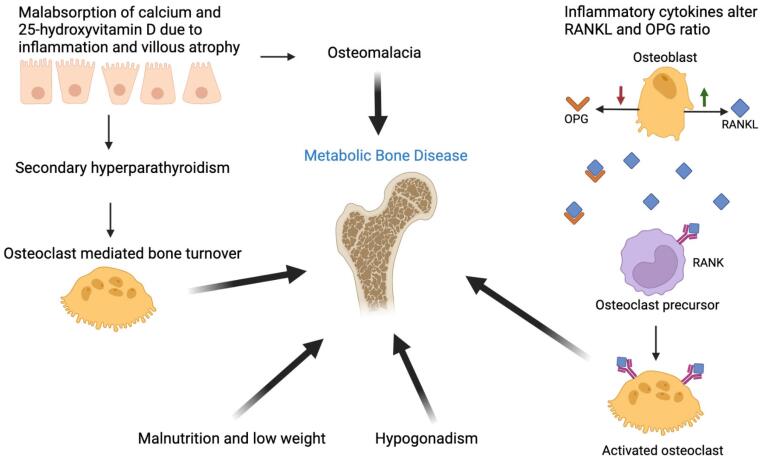
Celiac disease (CD) is an autoimmune disorder characterized by small intestinal inflammation triggered by gluten ingestion in genetically-predisposed individuals. A frequent extra-intestinal manifestation of CD is metabolic bone disease which contributes to an increased risk of fracture. The mechanisms underlying bone disease in CD remain incompletely understood, but multiple processes have been proposed including (1) malabsorption of calcium and vitamin D leading to secondary hyperparathyroidism and increased skeletal resorption, (2) pro-inflammatory cytokines altering the osteoprotegerin and receptor activator of nuclear kappa-B ligand ratio favoring osteoclastogenesis, (3) hypogonadism, and (4) low weight and malnutrition. Most studies show reduced bone mineral density in patients with CD. Bone microarchitecture is also deteriorated leading to reduced whole bone stiffness. Many, but not all investigations, have shown an increased risk of fracture associated with CD. The main stay of therapy for CD is maintaining a gluten-free diet. Improvement in bone mineral density with adherence to a gluten-free diet has been well-established. Bone mineral density remains lower, however, compared to controls and increased fracture risk can persist. There is no consensus on the timing of dual-energy x-ray absorptiometry for bone mineral density assessment in patients with CD. Routine screening for CD in patients with osteoporosis is not recommended. Little data are available on the use or efficacy of prescription osteoporosis therapeutics in patients with CD. Studies are needed to develop standardized guidelines for screening and treatment of metabolic bone disease in patients with CD to identify those who may need early intervention with prescription osteoporosis therapy.
Overview
The claims and statistics of this paper haven’t been checked yet.
Free: it reads the open-access text and checks the first 5 claims that cite a source we can check. Create a free account to check every claim.
Integrity signals
Registry
Cites
Statistics
Figures
Verification
Claims the paper makes
The claims and statistics of this paper haven’t been checked yet.
Free: it reads the open-access text and checks the first 5 claims that cite a source we can check. Create a free account to check every claim.
Self-check
Percentages, sums and reported differences re-computed from the paper’s own numbers.
The self-check needs the paper’s full text.
Citations
Cites
Global Prevalence of Celiac Disease: Systematic Review and Meta-analysis
Singh, P., Arora, A., Strand, T. A., Leffler, D. A., Catassi, C., Green, P. H., Kelly, C. P., Ahuja, V., & Makharia, G. K. (2018) · Clinical Gastroenterology and Hepatology · doi:10.1016/j.cgh.2017.06.037 · Cited by 1,743
The Oslo definitions for coeliac disease and related terms
Ludvigsson, J. F., Leffler, D. A., Bai, J. C., Biagi, F., Fasano, A., Green, P. H. R., Hadjivassiliou, M., Kaukinen, K., Kelly, C. P., Leonard, J. N., et al. (2013) · Gut · doi:10.1136/gutjnl-2011-301346 · Cited by 1,721 · cited 2×
“CD is estimated to affect 1%-2% of the population worldwide with increasing incidence and prevalence over the last few decades (7-9).”
BackgroundSelf-citationFasano, A., Berti, I., Gerarduzzi, T., Not, T., Colletti, R. B., Drago, S., Elitsur, Y., Green, P. H. R., Guandalini, S., Hill, I. D., et al. (2003) · Archives of Internal Medicine · doi:10.1001/archinte.163.3.286 · Cited by 1,698 · cited 2×
“The mechanisms underlying bone disease in CD remain incompletely understood, but multiple processes have been proposed including (1) malabsorption of calcium and vitamin D leading to secondary hyperparathyroidism and increased skeletal resorption, (2) pro-inflammatory cytokines altering the osteoprotegerin and recepto…”
BackgroundACG Clinical Guidelines: Diagnosis and Management of Celiac Disease
Rubio-Tapia, A., Hill, I. D., Kelly, C. P., Calderwood, A. H., & Murray, J. A. (2013) · American Journal of Gastroenterology · doi:10.1038/ajg.2013.79 · Cited by 1,681
Minireview: The OPG/RANKL/RANK System
Khosla, S. (2001) · Endocrinology · doi:10.1210/endo.142.12.8536 · Cited by 1,515 · cited 1×
“Inflammatory cytokines lower the ratio favoring osteoclastogenesis (36,37).”
BackgroundLudvigsson, J. F., Bai, J. C., Biagi, F., Card, T. R., Ciacci, C., Ciclitira, P. J., Green, P. H. R., Hadjivassiliou, M., Holdoway, A., van Heel, D. A., et al. (2014) · Gut · doi:10.1136/gutjnl-2013-306578 · Cited by 1,116 · cited 1×
“Similarly, the American Gastroenterological Association (AGA) recommends BMD assessment one year after GFD initiation in newly diagnosed CD patients (64), while the British Society of Gastroenterology (BSG) recommends BMD testing after one year of a GFD in patients above age 55 or those who have additional risk factor…”
BackgroundCeliac disease: a comprehensive current review
Caio, G., Volta, U., Sapone, A., Leffler, D. A., De Giorgio, R., Catassi, C., & Fasano, A. (2019) · BMC Medicine · doi:10.1186/s12916-019-1380-z · Cited by 1,105 · cited 3×
“Ingestion of gluten and its immunogenic fragment, gliadin, leads to an inflammatory cascade that may result in changes in gut permeability, production of pro-inflammatory cytokines, lymphocytic infiltration of the intestinal epithelium and ultimately villous atrophy (2,3).”
BackgroundLebwohl, B., Sanders, D. S., & Green, P. H. R. (2018) · The Lancet · doi:10.1016/s0140-6736(17)31796-8 · Cited by 1,065 · cited 2×
“Ingestion of gluten and its immunogenic fragment, gliadin, leads to an inflammatory cascade that may result in changes in gut permeability, production of pro-inflammatory cytokines, lymphocytic infiltration of the intestinal epithelium and ultimately villous atrophy (2,3).”
BackgroundAl-Toma, A., Volta, U., Auricchio, R., Castillejo, G., Sanders, D. S., Cellier, C., Mulder, C. J., & Lundin, K. E. A. (2019) · United European Gastroenterology Journal · doi:10.1177/2050640619844125 · Cited by 1,012 · cited 1×
“In contrast, the European Society for Study of Celiac Disease recommends BMD testing at time of diagnosis in all adult CD patients (62).”
BackgroundFasano, A., & Catassi, C. (2012) · New England Journal of Medicine · doi:10.1056/nejmcp1113994 · Cited by 687 · cited 2×
“The mechanisms underlying bone disease in CD remain incompletely understood, but multiple processes have been proposed including (1) malabsorption of calcium and vitamin D leading to secondary hyperparathyroidism and increased skeletal resorption, (2) pro-inflammatory cytokines altering the osteoprotegerin and recepto…”
BackgroundIncidence of Celiac Disease Is Increasing Over Time: A Systematic Review and Meta-analysis
King, J. A., Jeong, J., Underwood, F. E., Quan, J., Panaccione, N., Windsor, J. W., Coward, S., deBruyn, J., Ronksley, P. E., Shaheen, A.-A., et al. (2020) · American Journal of Gastroenterology · doi:10.14309/ajg.0000000000000523 · Cited by 444 · cited 1×
“CD is estimated to affect 1%-2% of the population worldwide with increasing incidence and prevalence over the last few decades (7-9).”
BackgroundVestergaard, P. (2002) · American Journal of Epidemiology · doi:10.1093/aje/kwf007 · Cited by 321 · cited 4×
“Vestergaard and Mosekilde (46), 2002 Prospective case-control 1021 CD (588/433)”
BackgroundResultInfluentialExtraintestinal manifestations of coeliac disease
Leffler, D. A., Green, P. H. R., & Fasano, A. (2015) · Nature Reviews Gastroenterology & Hepatology · doi:10.1038/nrgastro.2015.131 · Cited by 277 · cited 1×
“One of the most common extra-intestinal manifestations of CD is metabolic bone disease (MBD) which contributes to an increased risk of fracture in patients with CD (18-20).”
BackgroundHusby, S., Murray, J. A., & Katzka, D. A. (2019) · Gastroenterology · doi:10.1053/j.gastro.2018.12.010 · Cited by 274
Reversal of osteopenia with diet in adult coeliac disease.
Valdimarsson, T., Löfman, O., Toss, G., & Ström, M. (1996) · Gut · doi:10.1136/gut.38.3.322 · Cited by 232 · cited 3×
“Valdimarsson (39), 1996* Prospective 63 LS: 15%”
BackgroundOsteoporosis in a North American adult population with celiac disease1
Meyer, D., Stavropolous, S., Diamond, B., Shane, E., & Green, P. H. R. (2001) · The American Journal of Gastroenterology · doi:10.1111/j.1572-0241.2001.03507.x · Cited by 228 · cited 2×
“reported osteoporosis in 34% of patients at the spine, 44% at the FN, 32% at the radius and found men were more severely affected than women when compared to age-matched controls (42).”
ResultConcordance, disease progression, and heritability of coeliac disease in Italian twins
Nisticò, L., Fagnani, C., Coto, I., Percopo, S., Cotichini, R., Limongelli, M. G., Paparo, F., D’Alfonso, S., Giordano, M., Sferlazzas, C., et al. (2006) · Gut · doi:10.1136/gut.2005.083964 · Cited by 222 · cited 1×
“Similar to other autoimmune disorders, CD has a strong genetic component evidenced by familial clustering and high concordance in identical twins (4,5).”
BackgroundRisk of fractures in celiac disease patients: a cross-sectional, case-control study
Vazquez, H., Mazure, R., Gonzalez, D., Flores, D., Pedreira, S., Niveloni, S., Smecuol, E., Maurino, E., & Bai, J. C. (2000) · The American Journal of Gastroenterology · doi:10.1111/j.1572-0241.2000.01682.x · Cited by 207 · cited 4×
“8%) with a majority of fractures occurring at the wrist and forearm (20), while Ludvigsson and cols.”
BackgroundResultInfluentialOlmos, M., Antelo, M., Vazquez, H., Smecuol, E., Mauriño, E., & Bai, J. C. (2008) · Digestive and Liver Disease · doi:10.1016/j.dld.2007.09.006 · Cited by 197 · cited 2×
“One such analysis that included eight studies with over 20,000 patients found a 43% greater risk of fracture in patients with CD (51).”
BackgroundFracture risk in people with celiac disease: a population-based cohort study
West, J., Logan, R. F. A., Card, T. R., Smith, C., & Hubbard, R. (2003) · Gastroenterology · doi:10.1016/s0016-5085(03)00891-6 · Cited by 192
Diagnostic Testing for Celiac Disease Among Patients With Abdominal Symptoms: A Systematic Review
van der Windt, D. A. W. M., Jellema, P., Mulder, C. J., Kneepkens, C. M. F., & van der Horst, H. E. (2010) · JAMA · doi:10.1001/jama.2010.549 · Cited by 192 · cited 1×
“Patients with low IgA levels should have Immunoglobulin G (IgG)-based testing which includes tTG-IgG and deamiated gliadin peptide (DGP)-IgG, as IgA deficiency may lead to falsely negative tTG-IgA (13,14).”
BackgroundThe genetics of celiac disease: A comprehensive review of clinical implications
Dieli-Crimi, R., Cénit, M. C., & Núñez, C. (2015) · Journal of Autoimmunity · doi:10.1016/j.jaut.2015.07.003 · Cited by 191 · cited 1×
“Genome wide association studies have identified several nonHLA genes associated with CD (2,6).”
BackgroundCoeliac disease and the risk of fractures – a general population‐based cohort study
LUDVIGSSON, J. F., MICHAELSSON, K., EKBOM, A., & MONTGOMERY, S. M. (2007) · Alimentary Pharmacology & Therapeutics · doi:10.1111/j.1365-2036.2006.03203.x · Cited by 187
Kelly, C. P., Murray, J. A., Leffler, D. A., Getts, D. R., Bledsoe, A. C., Smithson, G., First, M. R., Morris, A., Boyne, M., Elhofy, A., et al. (2021) · Gastroenterology · doi:10.1053/j.gastro.2021.03.014 · Cited by 183
Stenson, W. F., Newberry, R., Lorenz, R., Baldus, C., & Civitelli, R. (2005) · Archives of Internal Medicine · doi:10.1001/archinte.165.4.393 · Cited by 182 · cited 1×
“2%) and recommended routine serologic screening for CD in all patients with osteoporosis (69).”
BackgroundBone Loss in Celiac Disease Is Related to Secondary Hyperparathyroidism
Dr. Selby, P. L., Davies, M., Adams, J. E., & Mawer, E. B. (1999) · Journal of Bone and Mineral Research · doi:10.1359/jbmr.1999.14.4.652 · Cited by 176 · cited 1×
“Limited data suggest, up to 25% of patients develop secondary hyperparathyroidism and increased bone resorption (30,31).”
BackgroundSingh, P., Arora, S., Lal, S., Strand, T. A., & Makharia, G. K. (2015) · American Journal of Gastroenterology · doi:10.1038/ajg.2015.296 · Cited by 160 · cited 1×
“First- and second-degree relatives of patients with CD are at increased risk for developing the disease, with the highest risk in siblings, followed by offspring and parents (10).”
BackgroundBone mineral affection in asymptomatic adult patients with celiac disease.
Mazure, R. M., Vázquez, H., Gonzalez, D., Mautalén, C., Pedreira, S. C., Boerr, L. A., & Bai, J. (1994) · PubMed · Cited by 151
Fornari, C. M., Pedreira, S., Niveloni, S., González, D., Diez, R. A., Vázquez, H., Mazure, R., Sugai, E., Smecuol, E., Boerr, L., et al. (1998) · American Journal of Gastroenterology · doi:10.1111/j.1572-0241.1998.00413.x · Cited by 141
Corazza, G. R., Sario, A. D., Cecchetti, L., Jorizzo, R. A., Stefano, M. D., Minguzzi, L., Brusco, G., Bernardi, M., & Gasbarrini, G. (1996) · Bone · doi:10.1016/8756-3282(96)00071-3 · Cited by 139 · cited 2×
“Others suggest symptoms (56), age (57) and menopause status (53), may affect the response to a GFD.”
BackgroundCeliac Disease and Bone Fractures: A Systematic Review and Meta-Analysis
Heikkilä, K., Pearce, J., Mäki, M., & Kaukinen, K. (2015) · The Journal of Clinical Endocrinology & Metabolism · doi:10.1210/jc.2014-1858 · Cited by 132 · cited 1×
“Similarly a second meta-analysis indicated risk for any fracture and hip fracture were increased by 30% and 69% respectively in those with CD (52).”
BackgroundThe Relationship Between Bone Density, Mineral Content, and Mechanical Strength in the Femoral Neck
LEICHTER, I., MARGULIES, J. Y., WEINREB, A., MIZRAHI, J., ROBIN, G. C., CONFORTY, B., MAKIN, M., & BLOCH, B. (1982) · Clinical Orthopaedics and Related Research · doi:10.1097/00003086-198203000-00041 · Cited by 128 · cited 1×
“Larazotide, a tight junction regulator which decreases intestinal permeability, was being studied in a Phase III trial that has been discontinued (17).”
BackgroundFracture experience of patients with coeliac disease: a population based survey
Thomason, K. (2003) · Gut · doi:10.1136/gut.52.4.518 · Cited by 128 · cited 2×
“Thomason (47), 2003 Case-control 244 (171/73)”
ResultEffect of a gluten free diet on osteopenia in adults with newly diagnosed coeliac disease.
McFarlane, X. A., Bhalla, A. K., & Robertson, D. A. (1996) · Gut · doi:10.1136/gut.39.2.180 · Cited by 124 · cited 1×
“Some studies indicate that BMD increases by 5%-8% on average with most improvement in BMD seen within the first one to three years of GFD initiation (55,56).”
BackgroundLong‐term effect of gluten restriction on bone mineral density of patients with coeliac disease
BAI, J. C., GONZALEZ, D., MAUTALEN, C., MAZURE, R., PEDREIRA, S., VAZQUEZ, H., SMECUOL, E., SICCARDI, A., CATALDI, M., NIVELONI, S., et al. (1997) · Alimentary Pharmacology & Therapeutics · doi:10.1046/j.1365-2036.1997.112283000.x · Cited by 122 · cited 2×
“Others suggest symptoms (56), age (57) and menopause status (53), may affect the response to a GFD.”
BackgroundImbalance of osteoclastogenesis-regulating factors in patients with celiac disease.
Taranta, A., Fortunati, D., Longo, M., Rucci, N., Iacomino, E., Aliberti, F., Facciuto, E., Migliaccio, S., Bardella, M. T., Dubini, A., et al. (2004) · Journal of Bone and Mineral Research · doi:10.1359/jbmr.040319 · Cited by 118 · cited 1×
“Inflammatory cytokines lower the ratio favoring osteoclastogenesis (36,37).”
BackgroundBones in coeliac disease: diagnosis and treatment
Corazza, G. R., Stefano, M. D., Mauriño, E. C., & Bai, J. C. (2005) · Best Practice & Research Clinical Gastroenterology · doi:10.1016/j.bpg.2005.01.002 · Cited by 117 · cited 1×
“2022;66/5 lower compared to disease-free controls and increased fracture risk can persist (39,53,54).”
Background(2003) · Gastroenterology · doi:10.1053/gast.2003.50107 · Cited by 111
Persistent Mucosal Damage and Risk of Fracture in Celiac Disease
Lebwohl, B., Michaëlsson, K., Green, P. H. R., & Ludvigsson, J. F. (2014) · The Journal of Clinical Endocrinology & Metabolism · doi:10.1210/jc.2013-3164 · Cited by 108 · cited 1×
“Given this data, patients should be counseled about the importance of GFD with regard to skeletal health (58).”
BackgroundPazianas, M., Butcher, G. P., Subhani, J., Finch, P. J., Ang, L., Collins, C., Heaney, R. P., Zaidi, M., & Maxwell, J. D. (2004) · Osteoporosis International · doi:10.1007/s00198-004-1641-2 · Cited by 104 · cited 1×
“In one study, even four years after institution of a GFD, fractional absorption of calcium remained lower in patients with versus without CD (32).”
BackgroundT. Valdimarsson, G. T. (2000) · Scandinavian Journal of Gastroenterology · doi:10.1080/003655200750024146 · Cited by 100 · cited 1×
“Limited data suggest, up to 25% of patients develop secondary hyperparathyroidism and increased bone resorption (30,31).”
BackgroundZanchetta, M. B., Longobardi, V., & Bai, J. C. (2016) · Current Osteoporosis Reports · doi:10.1007/s11914-016-0304-5 · Cited by 92 · cited 1×
“The reported prevalence of osteopenia or osteoporosis in CD is variable, ranging from 38%-72% of newly diagnosed patients (Table 2) (24-27).”
BackgroundBone Mineralization in Celiac Disease
Larussa, T., Suraci, E., Nazionale, I., Abenavoli, L., Imeneo, M., & Luzza, F. (2012) · Gastroenterology Research and Practice · doi:10.1155/2012/198025 · Cited by 89 · cited 1×
“The reported prevalence of osteopenia or osteoporosis in CD is variable, ranging from 38%-72% of newly diagnosed patients (Table 2) (24-27).”
BackgroundStratification of bone fracture risk in patients with celiac disease
Moreno, M. D. L., Vázquez, H., Mazure, R. M., Smecuol, E., Niveloni, S. I., Pedreira, S. C., Sugai, E., Mauriño, E. C., Gomez, J. C., & Bai, J. C. (2004) · Clinical Gastroenterology and Hepatology · doi:10.1016/s1542-3565(03)00320-3 · Cited by 88 · cited 2×
“Symptomatic men and women with CD had significantly higher rates of fractures and risk of first peripheral fractures compared to controls and those with non-classical and subclinical CD in two studies (49,50).”
ResultCiacci, C., Maurelli, L., Klain, M., Savino, G., Salvatore, M., Mazzacca, G., & Círillo, M. (1997) · PubMed · Cited by 83
Fiore, C. E., Pennisi, P. A., Ferro, G., Ximenes, B., Privitelli, L., Mangiafico, R. A., Santoro, F., Parisi, N., & Lombardo, T. (2006) · Hormone and Metabolic Research · doi:10.1055/s-2006-944548 · Cited by 82 · cited 1×
“Limited data suggest altered OPG/RANKL ratios in CD, with lower ratios associated with lower spinal BMD (38).”
BackgroundGanji, R., Moghbeli, M., Sadeghi, R., Bayat, G., & Ganji, A. (2019) · Nutrition Journal · doi:10.1186/s12937-019-0434-6 · Cited by 79 · cited 2×
“Ganji (24), 2019 Meta-analysis 563 LS: 16.”
BackgroundBones of Contention: Bone Mineral Density Recovery in Celiac Disease—A Systematic Review
Grace-Farfaglia, P. (2015) · Nutrients · doi:10.3390/nu7053347 · Cited by 77 · cited 1×
“Many studies indicate that patients with CD, including those with asymptomatic disease (21), have lower bone mineral density (BMD) compared to age- and sex-matched controls (22,23).”
BackgroundEvaluation and Management of Skeletal Health in Celiac Disease: Position Statement
Fouda, M. A., Khan, A. A., Sultan, M., Rios, L. P., McAssey, K., & Armstrong, D. (2012) · Canadian Journal of Gastroenterology · doi:10.1155/2012/823648 · Cited by 76 · cited 4×
“In patients with normal baseline BMD, testing can be repeated in two to three years (63).”
BackgroundInfluentialRisk of fracture in celiac disease: Gender, dietary compliance, or both?
Sánchez, M. I. P. (2011) · World Journal of Gastroenterology · doi:10.3748/wjg.v17.i25.3035 · Cited by 71 · cited 4×
“Symptomatic men and women with CD had significantly higher rates of fractures and risk of first peripheral fractures compared to controls and those with non-classical and subclinical CD in two studies (49,50).”
BackgroundResultInfluentialKamycheva, E., Goto, T., & Camargo, C. A. (2016) · Osteoporosis International · doi:10.1007/s00198-016-3791-4 · Cited by 70 · cited 1×
“Many studies indicate that patients with CD, including those with asymptomatic disease (21), have lower bone mineral density (BMD) compared to age- and sex-matched controls (22,23).”
BackgroundStefano, M. D., Mengoli, C., Bergonzi, M., & Corazza, G. R. (2013) · Nutrients · doi:10.3390/nu5114786 · Cited by 67
Coeliac disease and bone mineral density in adult female patients.
Pistorius, L. R., Sweidan, W., Purdie, D. W., Steel, S. A., Howey, S., Bennett, J. R., & SUTTON, D. R. (1995) · Gut · doi:10.1136/gut.37.5.639 · Cited by 60 · cited 1×
“found only reduced femoral neck (FN) BMD in premenopausal women with CD but low FN and spine BMD in post-menopausal women with CD (40).”
BackgroundKontakou, M., Przemioslo, R. T., Sturgess, R. P., Limb, A. G., & Ciclitira, P. J. (1995) · Scandinavian Journal of Gastroenterology · doi:10.3109/00365529509093307 · Cited by 60
Bianchi, M. L., & Bardella, M. T. (2002) · Calcified Tissue International · doi:10.1007/s00223-001-2131-6 · Cited by 56
Zanchetta, M. B., Longobardi, V., Costa, F., Longarini, G. I., Mazure, R. M., Moreno, M. L., Vázquez, H., Silveira, F., Niveloni, S. I., Smecuol, E., et al. (2016) · Journal of Bone and Mineral Research · doi:10.1002/jbmr.2922 · Cited by 54 · cited 1×
“Despite improvement, a majority of the bone parameters remained significantly lower compared to the healthy control group (59).”
BackgroundSignificant bone microarchitecture impairment in premenopausal women with active celiac disease
Zanchetta, M. B., Costa, F., Longobardi, V., Longarini, G. I., Mazure, R. M., Moreno, M. L., Vázquez, H., Silveira, F., Niveloni, S. I., Smecuol, E., et al. (2015) · Bone · doi:10.1016/j.bone.2015.03.005 · Cited by 43 · cited 1×
“The microarchitectural deficits were greater in those with symptomatic compared to subclinical CD (43).”
BackgroundLaszkowska, M., Mahadev, S., Sundström, J., Lebwohl, B., Green, P. H. R., Michaëlsson, K., & Ludvigsson, J. F. (2018) · Alimentary Pharmacology & Therapeutics · doi:10.1111/apt.14911 · Cited by 37 · cited 1×
“6% of patients with osteoporosis have biopsyproven CD (70), a rate comparable to that of the general population.”
BackgroundCeliac Disease and Its Role in the Development of Metabolic Bone Disease
Micić, D., Rao, V. L., & Semrad, C. E. (2019) · Journal of Clinical Densitometry · doi:10.1016/j.jocd.2019.06.005 · Cited by 37 · cited 1×
“Adults can present with mild abdominal pain or bloating, but may be asymptomatic or have only extra-intestinal symptoms (11,12).”
BackgroundWalker, M. D., Williams, J. M., Lewis, S. K., Bai, J. C., Lebwohl, B., & Green, P. H. R. (2019) · Clinical Gastroenterology and Hepatology · doi:10.1016/j.cgh.2019.03.049 · Cited by 31 · cited 5×
“Walker (28), 2020 Cross-sectional 721 (493/228)”
BackgroundInfluentialAbnormal Skeletal Strength and Microarchitecture in Women With Celiac Disease
Stein, E. M., Rogers, H., Leib, A., McMahon, D. J., Young, P., Nishiyama, K. K., Guo, X.-D. E., Lewis, S. K., Green, P. H., & Shane, E. J. (2015) · The Journal of Clinical Endocrinology & Metabolism · doi:10.1210/jc.2015-1392 · Cited by 29 · cited 1×
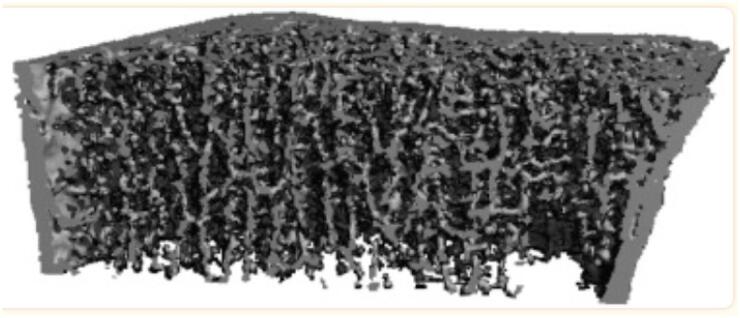
“A subsequent study confirmed these findings and also found reduced whole bone stiffness (a biomechanical indicator of strength, which is associated with fracture) measured by microfinite elemental analysis (FEA) compared to controls (44) (Figure 2).”
ResultCeliac disease: diagnosis and treatment.
Hvas, C. L., Jensen, M. D., Reimer, M., Riis, L. B., Rumessen, J. J., Skovbjerg, H., Teisner, A., & Wildt, S. (2015) · PubMed · Cited by 27
International Society for Clinical Densitometry official positions: Asia-Pacific Region consensus.
Kung, A., Wu, C.-H., Itabashi, A., Lee, J., Park, H., Zhao, Y., Chan, W., Kendler, D., Leib, E., Lewiecki, E., et al. (2010) · Journal of clinical densitometry · doi:10.1016/j.jocd.2010.05.006 · Cited by 26 · cited 1×
“The International Society for Clinical Densitometry recommends BMD testing at diagnosis only in adults with classic malabsorptive symptoms (61).”
BackgroundScreening for celiac disease in patients with osteoporosis
Legroux-Gérot, I., Leloire, O., Blanckaert, F., Tonnel, F., Grardel, B., Ducrocq, J.-L., & Cortet, B. (2009) · Joint Bone Spine · doi:10.1016/j.jbspin.2008.06.016 · Cited by 25
Galli, G., Lahner, E., Conti, L., Esposito, G., Sacchi, M. C., & Annibale, B. (2018) · United European Gastroenterology Journal · doi:10.1177/2050640618784340 · Cited by 22 · cited 2×
“Age greater than 45 years, male gender and low weight was associated with osteoporosis (41).”
BackgroundKavuncu, V., Dündar, Ü., Çiftçi, İ. H., Evcik, D., & Yiğit, İ. (2008) · Rheumatology International · doi:10.1007/s00296-008-0797-z · Cited by 20
Kumar, M., Rastogi, A., Bhadada, S. K., Bhansali, A. K., Vaiphei, K., & Kochhar, R. K. (2013) · Europe PMC (PubMed Central) · Cited by 19
Clinical evaluation for osteoporosis
Becker, C. (2003) · Clinics in Geriatric Medicine · doi:10.1016/s0749-0690(02)00068-x · Cited by 18 · cited 1×
“Pre-menopausal women and men below age 70 with osteoporosis, those with Z-scores two or more SD below age-matched controls, those with worsening osteoporosis despite therapy or without risk factors should be evaluated for secondary causes of osteoporosis, including CD (74).”
BackgroundRios, L. P., Khan, A. A., Sultan, M., McAssey, K., Fouda, M. A., & Armstrong, D. (2013) · Europe PMC (PubMed Central) · Cited by 16
Improved Bone Microarchitecture in Patients With Celiac Disease After 3 Years on a Gluten-Free Diet
Zanchetta, M. B., Costa, A. F., Longobardi, V., Mazure, R. M., Silveira, F., Temprano, M. P., Vázquez, H., Bogado, C. E., Niveloni, S. I., Smecuol, E., et al. (2017) · Clinical Gastroenterology and Hepatology · doi:10.1016/j.cgh.2017.09.054 · Cited by 16 · cited 1×
“Improvement in trabecular and cortical parameters was, however, maintained 3 years later (60).”
BackgroundHypocalcemia after Alendronate Therapy in a Patient with Celiac Disease
Meek, S., & Nix, K. (2007) · Endocrine Practice · doi:10.4158/ep.13.4.403 · Cited by 15 · cited 1×
“Risk factors for hypocalcemia, including vitamin D deficiency, increased bone resorption, hyperparathyroidism and hypomagnesemia, are also commonly seen in untreated CD patients (77,78).”
BackgroundSayar, S., Aykut, H., Kaya, Ö., Kürbüz, K., Ak, Ç., Gökçen, P., Bilgiç, N. M., Adalı, G., Kahraman, R., Doğanay, H. L., et al. (2021) · The Turkish Journal of Gastroenterology · doi:10.5152/tjg.2021.20313 · Cited by 14 · cited 2×
“Sayar (25), 2021 Cross-sectional 100 (84/16)”
BackgroundImplementation and adherence to osteoporosis screening guidelines among coeliac disease patients
Singh, P., & Garber, J. J. (2016) · Digestive and Liver Disease · doi:10.1016/j.dld.2016.08.121 · Cited by 12 · cited 1×
“For example, a retrospective study in the United States found only 36% of patients with CD in an outpatient tertiary referral center were appropriately referred for DXA as per AGA guidelines (66).”
BackgroundPredictors of improvement in bone mineral density after celiac disease diagnosis
Zylberberg, H. M., Lebwohl, B., RoyChoudhury, A., Walker, M. D., & Green, P. H. R. (2017) · Endocrine · doi:10.1007/s12020-017-1488-x · Cited by 11
No major reduction in bone mineral density after long-term treatment of patients with Celiac Disease
Hære, P., Høie, O., Lundin, K. E. A., & Haugeberg, G. (2019) · European Journal of Internal Medicine · doi:10.1016/j.ejim.2019.07.024 · Cited by 7 · cited 1×
“Adults can present with mild abdominal pain or bloating, but may be asymptomatic or have only extra-intestinal symptoms (11,12).”
BackgroundSymptomatic hypocalcemia due to oral risedronate therapy
Doğru, T., Sönmez, A., Tasci, I., & Genç, H. (2005) · Indian Journal of Medical Sciences · doi:10.4103/0019-5359.19198 · Cited by 5 · cited 1×
“Risk factors for hypocalcemia, including vitamin D deficiency, increased bone resorption, hyperparathyroidism and hypomagnesemia, are also commonly seen in untreated CD patients (77,78).”
BackgroundCeliac disease and bone health: is there a gap in the management of postmenopausal osteoporosis?
Stuckey, B. G. A., Mahoney, L. A., Dragovic, S., & Brown, S. J. (2020) · Climacteric · doi:10.1080/13697137.2020.1816957 · Cited by 5
[Value of consultation studies of problem sera in the diagnosis of syphilis].
Weyman-Rzucidło, D., Ochelska, B., & Przedpełska, G. (1987) · PubMed · Cited by 1
Cited by
Clinical practice guidelines for the care of girls and women with Turner syndrome.
Gravholt, C. H., Andersen, N. H., Christin-Maitre, S., Davis, S. M., Duijnhouwer, A., Gawlik, A., Maciel-Guerra, A. T., Gutmark-Little, I., Fleischer, K., Hong, D., et al. (2024) · European Journal of Endocrinology · doi:10.1093/ejendo/lvae050 · Cited by 224
Celiac Disease: Beyond Diet and Food Awareness
Herrera‐Quintana, L., Navajas-Porras, B., Vázquez‐Lorente, H., Hinojosa-Nogueira, D., Corrales-Borrego, F. J., López-Garzón, M., & Plaza‐Díaz, J. (2025) · Foods · doi:10.3390/foods14030377 · Cited by 29
Santonicola, A., Wieser, H., Gizzi, C., Soldaini, C., & Ciacci, C. (2024) · Nutrients · doi:10.3390/nu16121814 · Cited by 33
“The underlying mechanisms remain incompletely understood, although several mechanisms, such as the malabsorption of calcium and vitamin D and the secretion of pro-inflammatory cytokines, have been suggested [41].”
BackgroundExtraintestinal complications of celiac disease: treatment considerations
Lazzano, P., Fracas, E., Nandi, N., Scaramella, L., & Elli, L. (2024) · Expert Review of Gastroenterology & Hepatology · doi:10.1080/17474124.2024.2443053 · Cited by 12
“The International Society for Clinical Densitometry suggests carrying out more investigations only in subjects with signs of malabsorption [62].”
Celiac Disease: A Transitional Point of View
Aitella, E., Cozzolino, D., Ginaldi, L., & Romano, C. P. (2025) · Nutrients · doi:10.3390/nu17020234 · Cited by 13
“…exogenous gluten dependence of the disease is lost to become a “fully” dysimmune gluten-independent condition; type 2, on the other hand, seems to be more frequently associated with homozygosity of HLA-DQ2 and can be considered as an in situ T cell lymphoma at high risk of EATL progression [62,63].”
Metadata
- Authors
- Kondapalli, A. V., & Walker, M. D.
- Affiliations
- Columbia University Irving Medical Center (US)
- Corresponding author
- Walker, Marcella Donovan
- Venue
- Archives of Endocrinology and Metabolism
- Published
- 2022
- Volume
- 66
- Issue
- 5
- Pages
- 756-764
- ISSN
- 2359-3997 (ISSN-L)
- 2359-4292
- PMC
- PMC10118825
- OpenAlex
- W4309364606
- Cited by
- 25
- References
- 78
- Citations by year
- 2026: 7 · 2025: 8 · 2024: 7 · 2023: 3
- FWCI
- 0.93
- Type
- journal article
- Language
- en
- Open access
- diamond
- doi.org
- Licence
- cc-by
- Locations
- Archives of Endocrinology and Metabolism (publishedVersion, cc-by)
- PubMed Central (publishedVersion, cc-by)
- PubMed (publishedVersion)
- LA Referencia (Red Federada de Repositorios Institucionales de Publicaciones Científicas) (publishedVersion, other-oa)
- DOAJ (DOAJ: Directory of Open Access Journals) (submittedVersion, cc-by-sa)
- Topics
- Health Sciences › Medicine › Gastroenterology › Celiac Disease Research and Management
- Health Sciences › Medicine › Orthopedics and Sports Medicine › Bone health and osteoporosis research
- Life Sciences › Biochemistry, Genetics and Molecular Biology › Molecular Biology › Bone Metabolism and Diseases
- Keywords
- celiac disease, metabolic bone disease, bone mineral density, fracture risk, osteoporosis, gluten-free diet, secondary hyperparathyroidism, osteoclastogenesis, RANK/RANKL, osteoprotegerin, hypogonadism, bone microarchitecture, osteoporosis screening, osteoporosis treatment
- MeSH terms
- Bone and Bones, Bone Diseases, Metabolic, Celiac Disease, Humans, Osteoporosis, Bone Density, Fractures, Bone, Diet, Gluten-Free
About these checks
Registry, retraction, Cites and statistics results are computed, not judged, with one exception: a printed reference that no index lists is read once by a model before it counts as a citation error. Claims are extracted by a model and kept only when their quote appears verbatim in the text; each cited source is then checked, with a model’s help, for whether it says what the claim relies on. Those verdicts can be wrong — read the claim’s quote and the cited source before relying on one.
Statistics and arithmetic are recomputed, not judged.
Confidence bands are shown only for fields calibrated on our annotated test set. None is calibrated yet, so no band is shown.
What counts as a claim ›How we measure confidence ›How we check this ›
Are you an author, or do you see a problem with this page? Request a review
Data sources
Bibliographic data: Semantic Scholar, OpenAlex, Crossref.
Contains information from the Semantic Scholar Academic Graph Datasets, made available under the ODC Attribution License (ODC-BY 1.0).
Semantic Scholar’s data is described in: Kinney, R., et al. (2023). The Semantic Scholar Open Data Platform. arXiv:2301.10140.
