

The DOI matches its Crossref record; 1 of the 1 references it cites were found in a registry or an index.
Targeting MDR Pseudomonas aeruginosa biofilm with an evolutionary trained bacteriophage cocktail exploiting phage resistance trade-offs
Open accessPreprint — published as 10.1038/s41467-024-52595-w · Paper page
Abstract
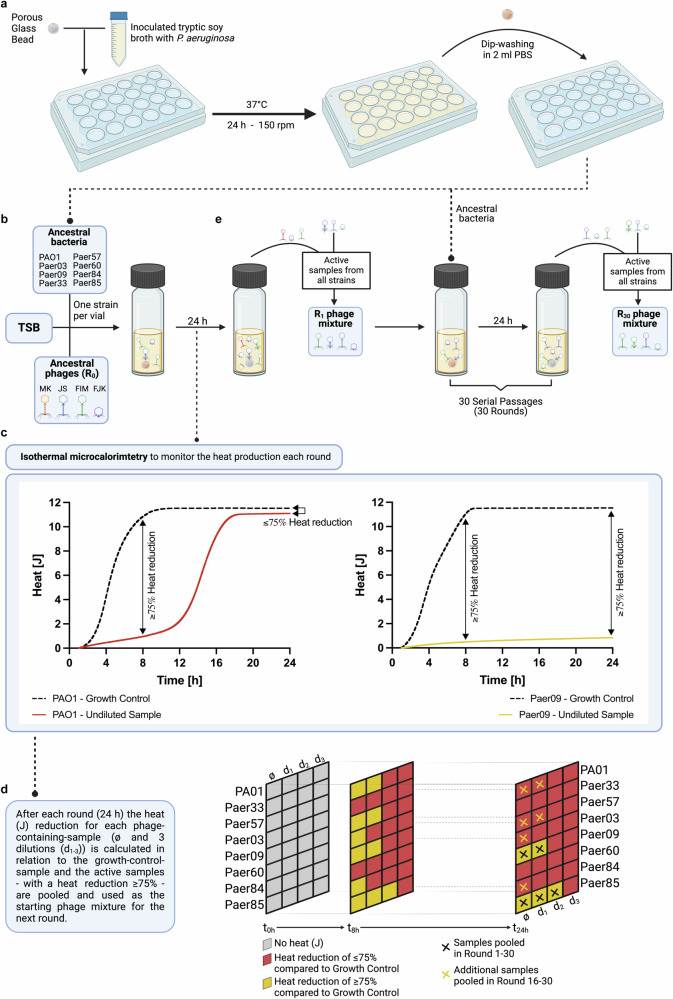
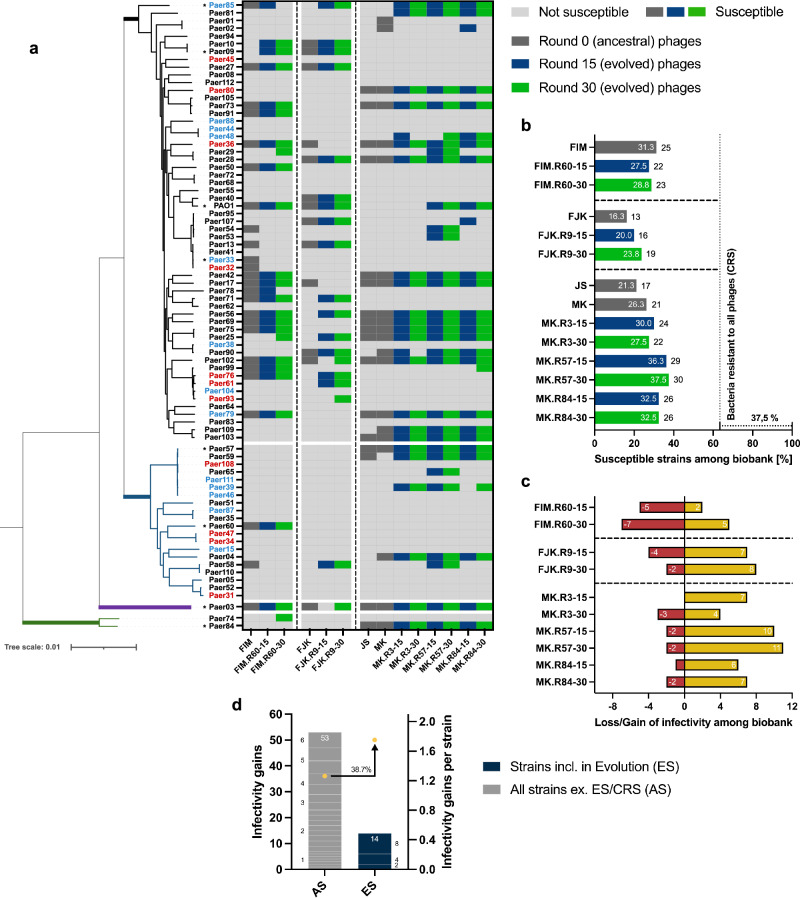
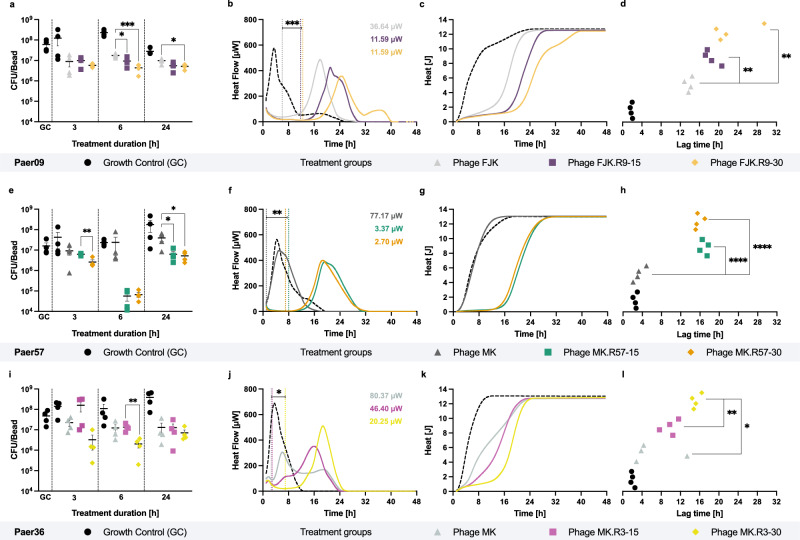
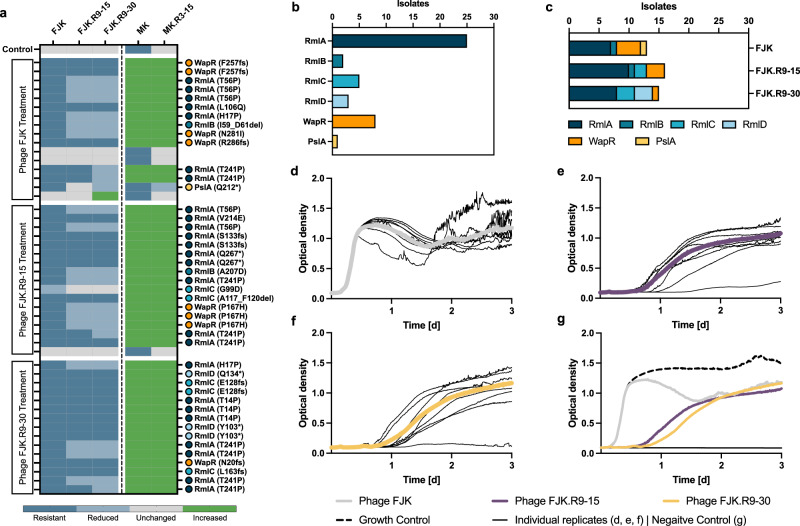
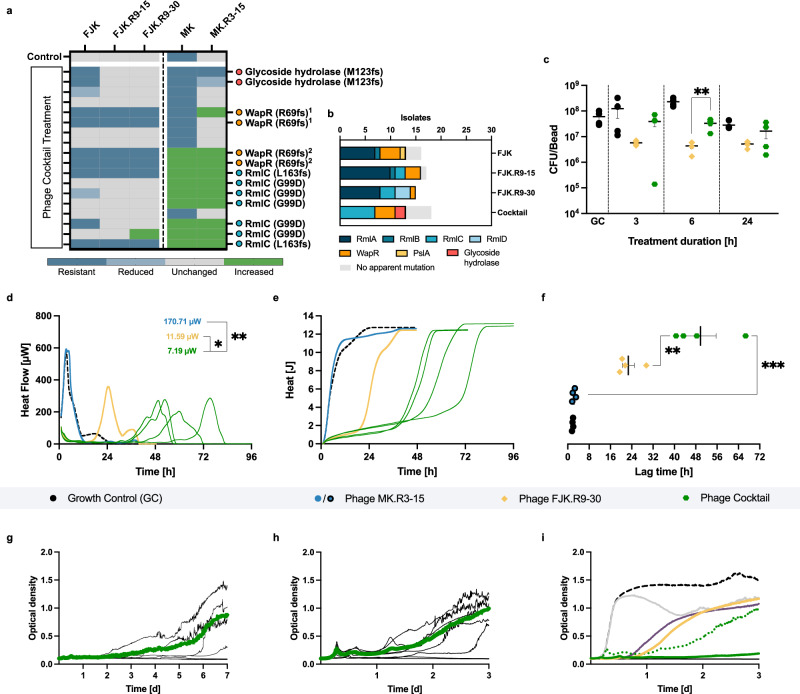
Spread of multidrug-resistant Pseudomonas aeruginosa strains threatens to render currently available antibiotics obsolete, with limited prospects for the development of new antibiotics. Lytic bacteriophages (phages), the natural predators of bacteria, represent a path to combat this threat. In vitro directed evolution is traditionally applied to expand the phage host range or increase bacterial suppression in planktonic cultures. However, while 80% of human microbial infections are biofilm-associated, research towards targeted improvement of phages’ ability to combat biofilms remains scarce. Here, we describe an in vitro evolution assay that improves multiple phage parameters in parallel, while optimizing phage cocktail design by exploiting a bacterial phage resistance trade-off. The obtained evolved phages show an expanded host spectrum, improved antimicrobial efficacy under isothermal microcalorimetric monitoring and enhanced antibiofilm performance, as determined by RT-qPCR. Our two-phage cocktail revealed further improved antimicrobial efficacy without incurring dual-phage-resistance in treated bacteria. We anticipate this assay will allow a better understanding of phenotypic-genomic relationships in phages and enable the training of phages against other desired pathogens. This, in turn, will strengthen phage therapy as a treatment adjunct to improve clinical outcomes of multidrug-resistant bacterial infections.
Overview
The claims and statistics of this paper haven’t been checked yet.
Run the check — free, no account needed. It reads the open-access text and checks the sources it cites.
Integrity signals
Registry
Cites
Statistics
Figures
Verification
Claims the paper makes
The claims and statistics of this paper haven’t been checked yet.
Run the check — free, no account needed. It reads the open-access text and checks the sources it cites.
Self-check
Percentages, sums and reported differences re-computed from the paper’s own numbers.
The self-check needs the paper’s full text.
Citations
Cites
Highly accurate protein structure prediction with AlphaFold
Jumper, J., Evans, R., Pritzel, A., Green, T., Figurnov, M., Ronneberger, O., Tunyasuvunakool, K., Bates, R., Žídek, A., Potapenko, A., et al. (2021) · Nature · doi:10.1038/s41586-021-03819-2 · Cited by 43,764
Metadata
- Authors
- Kunisch, F., Wagemans, J., Yildirim, S., Chan, B., Schaudinn, C., Lavigne, R., Turner, P., Raschke, M., Trampuz, A., & Moreno, M. G.
- Affiliations
- University of Münster (DE)
- KU Leuven (BE)
- Berlin Institute of Health at Charité – Universitätsmedizin Berlin
- Yale University (US)
- Robert Koch Institute (DE)
- Westfälische Wilhelms-Universität Münster
- Charité – Universitätsmedizin Berlin
- Humboldt-Universität zu Berlin (DE)
- ORCID
- Venue
- Nature Communications
- Published
- 2023-06-19
- Volume
- 15
- Issue
- 1
- Pages
- 8572-8572
- ISSN
- 2041-1723 (ISSN-L)
- PMC
- PMC11450229
- OpenAlex
- W4403098193
- Cited by
- 102
- References
- 1
- Citations by year
- 2026: 61 · 2025: 39 · 2024: 2
- FWCI
- 27.92
- Type
- journal article
- Language
- en
- Open access
- gold
- doi.org
- Licence
- Locations
- Nature Communications (publishedVersion, cc-by-nc-nd)
- Research Square (acceptedVersion, cc-by)
- PubMed Central (publishedVersion, cc-by-nc-nd)
- PubMed (publishedVersion)
- Publication server of the Robert Koch Institute (Robert Kock Institute) (submittedVersion, cc-by)
- Lirias (KU Leuven) (submittedVersion, cc-by-nc-nd)
- RePEc: Research Papers in Economics (submittedVersion)
- DOAJ (DOAJ: Directory of Open Access Journals) (submittedVersion, cc-by-sa)
- Funders
- Yale University
- Sonnenfeld Stiftung
- Joint Programming Initiative on Antimicrobial Resistance
- Bundesministerium für Bildung und Forschung (01KI1823)
- KU Leuven (IDN/20/024)
- Studienstiftung des Deutschen Volkes
- Università di Pisa
- Topics
- Life Sciences › Immunology and Microbiology › Virology › Bacteriophages and microbial interactions
- Life Sciences › Biochemistry, Genetics and Molecular Biology › Molecular Biology › Bacterial biofilms and quorum sensing
- Life Sciences › Biochemistry, Genetics and Molecular Biology › Genetics › Evolution and Genetic Dynamics
- Keywords
- Pseudomonas aeruginosa, biofilm, phage therapy, multidrug resistance, host range expansion, antibiofilm activity, isothermal microcalorimetry, real-time PCR
- MeSH terms
- Phage Therapy, Anti-Bacterial Agents, Bacteriophages, Humans, Microbial Sensitivity Tests, Pseudomonas aeruginosa, Pseudomonas Infections, Pseudomonas Phages, Biofilms, Drug Resistance, Multiple, Bacterial, Host Specificity
About these checks
Registry, retraction, Cites and statistics results are computed, not judged, with one exception: a printed reference that no index lists is read once by a model before it counts as a citation error. Claims are extracted by a model and kept only when their quote appears verbatim in the text; each cited source is then checked, with a model’s help, for whether it says what the claim relies on. Those verdicts can be wrong — read the claim’s quote and the cited source before relying on one.
Statistics and arithmetic are recomputed, not judged.
Confidence bands are shown only for fields calibrated on our annotated test set. None is calibrated yet, so no band is shown.
What counts as a claim ›How we measure confidence ›How we check this ›
Are you an author, or do you see a problem with this page? Request a review
