

The DOI matches its Crossref record; 1 of the 1 references it cites were found in a registry or an index.
HaloClass: Salt-Tolerant Protein Classification with Protein Language Models
Open accessPreprint — published as 10.1007/s10930-024-10236-7 · Paper page
Abstract
Salt-tolerant proteins, also known as halophilic proteins, have unique adaptations to function in high-salinity environments. These proteins have naturally evolved in extremophilic organisms, and more recently, are being increasingly applied as enzymes in industrial processes. Due to an abundance of salt-tolerant sequences and a simultaneous lack of experimental structures, most computational methods to predict stability are sequence-based only. These approaches, however, are hindered by a lack of structural understanding of these proteins. Here, we present HaloClass, an SVM classifier that leverages ESM-2 protein language model embeddings to accurately identify salt-tolerant proteins. On a newer and larger test dataset, HaloClass outperforms existing approaches when predicting the stability of never-before-seen proteins that are distal to its training set. Finally, on a mutation study that evaluated changes in salt tolerance based on single- and multiple-point mutants, HaloClass outperforms existing approaches, suggesting applications in the guided design of salt-tolerant enzymes.
Overview
The claims and statistics of this paper haven’t been checked yet.
Run the check — free, no account needed. It reads the open-access text and checks the sources it cites.
Integrity signals
Registry
Cites
Statistics
Figures
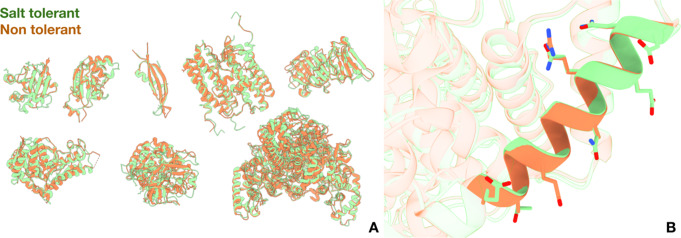
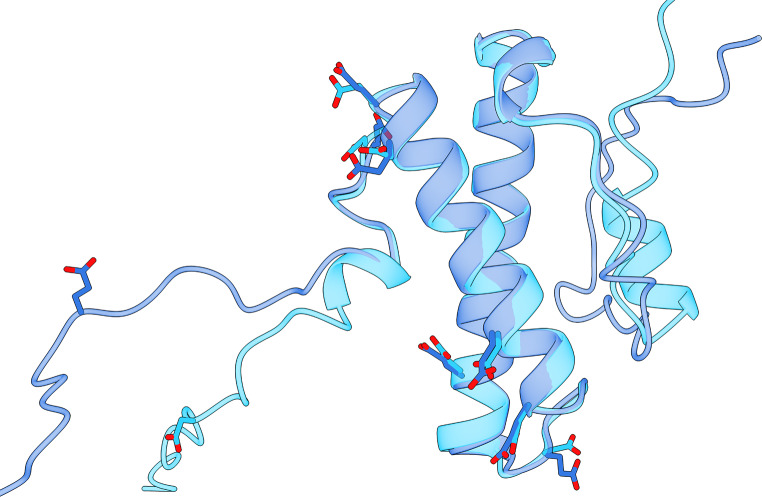
Verification
Claims the paper makes
The claims and statistics of this paper haven’t been checked yet.
Run the check — free, no account needed. It reads the open-access text and checks the sources it cites.
Self-check
Percentages, sums and reported differences re-computed from the paper’s own numbers.
The self-check needs the paper’s full text.
Citations
Cites
Highly accurate protein structure prediction with AlphaFold
Jumper, J., Evans, R., Pritzel, A., Green, T., Figurnov, M., Ronneberger, O., Tunyasuvunakool, K., Bates, R., Žídek, A., Potapenko, A., et al. (2021) · Nature · doi:10.1038/s41586-021-03819-2 · Cited by 43,764
Research works printed but not linked: 50
- Sharma N, Farooqi MS, Chaturvedi KK, Lal SB, Grover M, Rai A et al (2014) Halophile Protein Database Database 2014(0):bau114–bau114
- Dutta B, Bandopadhyay R (2022) Biotechnological potentials of halophilic microorganisms and their impact on mankind. Beni-Suef Univ J Basic Appl Sci 11(1):75 · DOI
- Corral P, Amoozegar MA, Ventosa A (2019) Halophiles and Their Biomolecules: Recent Advances and Future Applications in Biomedicine. Mar Drugs 18(1):33 · DOI
- DasSarma S, DasSarma P (2015) Halophiles and their enzymes: negativity put to good use. Curr Opin Microbiol 25:120–126 · DOI
- Pica A, Russo Krauss I, Castellano I, La Cara F, Graziano G, Sica F et al (2013) Effect of NaCl on the conformational stability of the thermophilic γ-glutamyltranspeptidase from Geobacillus thermodenitrificans: Implication for globular protein halotolerance. Biochimica et Biophysica Acta (BBA) -. Proteins Proteom 1834(1):149–157 · DOI
- Zhang G, Ge H (2013) Protein Hypersaline Adaptation: Insight from Amino Acids with Machine Learning Algorithms. Protein J 32(4):239–245 · DOI
- Nath A (2016) Insights into the sequence parameters for halophilic adaptation. Amino Acids 48(3):751–762 · DOI
- Hu S, Wang X, Wang Z, Jiang M, Wang S, Wang W et al (2024) HPClas: A data-driven approach for identifying halophilic proteins based on catBoost. mLife. ;mlf2.12125.
- Bepler T, Berger B (2021) Learning the protein language: Evolution, structure, and function. Cell Syst 12(6):654–669e3 · DOI · Paper page
- Lin Z, Akin H, Rao R, Hie B, Zhu Z, Lu W et al (2023) Evolutionary-scale prediction of atomic-level protein structure with a language model. Science 379(6637):1123–1130 · DOI · Paper page
- Rives A, Meier J, Sercu T, Goyal S, Lin Z, Liu J et al (2021) Biological structure and function emerge from scaling unsupervised learning to 250 million protein sequences. Proc Natl Acad Sci USA 118(15):e2016239118 · DOI · Paper page
- Vig J, Madani A, Varshney LR, Xiong C, Socher R, Rajani NF (2020) BERTology Meets Biology: Interpreting Attention in Protein Language Models [Internet]. arXiv; [cited 2024 Aug 21]. https://arxiv.org/abs/2006.15222 · arXiv
- Abramson J, Adler J, Dunger J, Evans R, Green T, Pritzel A et al (2024) Accurate structure prediction of biomolecular interactions with AlphaFold 3. Nature 630(8016):493–500 · DOI · Paper page
- Baek M, DiMaio F, Anishchenko I, Dauparas J, Ovchinnikov S, Lee GR et al (2021) Accurate prediction of protein structures and interactions using a three-track neural network. Science 373(6557):871–876 · DOI · Paper page
- Haselbeck F, John M, Zhang Y, Pirnay J, Fuenzalida-Werner JP, Costa RD et al (2023) Superior protein thermophilicity prediction with protein language model embeddings. NAR Genomics Bioinf 5(4):lqad087 · DOI
- Ghazikhani H, Butler G (2024) Exploiting protein language models for the precise classification of ion channels and ion transporters. Proteins 92(8):998–1055 · DOI
- Carbery A, Buttenschoen M, Skyner R, Von Delft F, Deane CM (2024) Learnt representations of proteins can be used for accurate prediction of small molecule binding sites on experimentally determined and predicted protein structures. J Cheminform 16(1):32 · DOI
- Siglioccolo A, Paiardini A, Piscitelli M, Pascarella S (2011) Structural adaptation of extreme halophilic proteins through decrease of conserved hydrophobic contact surface. BMC Struct Biol 11(1):50 · DOI
- The UniProt Consortium, Bateman A, Martin MJ, Orchard S, Magrane M, Ahmad S et al (2023) UniProt: the Universal Protein Knowledgebase in 2023. Nucleic Acids Res 51(D1):D523–D531 · DOI · Paper page
- Fu L, Niu B, Zhu Z, Wu S, Li W (2012) CD-HIT: accelerated for clustering the next-generation sequencing data. Bioinformatics 28(23):3150–3152 · DOI · Paper page
- Tadeo X, López-Méndez B, Trigueros T, Laín A, Castaño D, Millet O (2009) Structural Basis for the Aminoacid Composition of Proteins from Halophilic Archea. Petsko GA, editor. PLoS Biol. ;7(12):e1000257
- Meng EC, Goddard TD, Pettersen EF, Couch GS, Pearson ZJ, Morris JH et al (2023) UCSF ChimeraX: Tools for structure building and analysis. Protein Sci 32(11):e4792 · DOI
- Berman HM (2000) The Protein Data Bank. Nucleic Acids Res 28(1):235–242 · DOI · Paper page
- Frolow F, Harel1 M, Sussman JL, Mevarech M, Shoham M (1996) Insights into protein adaptation to a saturated salt environment from the crystal structure of a halophilic 2Fe-2S ferredoxin. Nat Struct Mol Biol 3(5):452–458 · DOI
- Rypniewski WR, Breiter DR, Benning MM, Wesenberg G, Oh BH, Markley JL et al (1991) Crystallization and structure determination of 2.5-.ANG. resolution of the oxidized iron-sulfur [2Fe-2S] ferredoxin isolated from Anabaena 7120. Biochemistry 30(17):4126–4131 · DOI
- Zeth K, Offermann S, Essen LO, Oesterhelt D (2004) Iron-oxo clusters biomineralizing on protein surfaces: Structural analysis of Halobacterium salinarum DpsA in its low- and high-iron states. Proc Natl Acad Sci USA 101(38):13780–13785 · DOI
- Alaleona F, Franceschini S, Ceci P, Ilari A, Chiancone E (2010) Thermosynechoccus elongatus DpsA binds Zn(II) at a unique three histidine-containing ferroxidase center and utilizes O 2 as iron oxidant with very high efficiency, unlike the typical Dps proteins. FEBS J 277(4):903–917 · DOI
- Britton KL, Baker PJ, Fisher M, Ruzheinikov S, Gilmour DJ, Bonete MJ et al (2006) Analysis of protein solvent interactions in glucose dehydrogenase from the extreme halophile Haloferax mediterranei. Proc Natl Acad Sci USA 103(13):4846–4851 · DOI
- Milburn CC, Lamble HJ, Theodossis A, Bull SD, Hough DW, Danson MJ et al (2006) The Structural Basis of Substrate Promiscuity in Glucose Dehydrogenase from the Hyperthermophilic Archaeon Sulfolobus solfataricus. J Biol Chem 281(21):14796–14804 · DOI
- Grininger M, Zeth K, Oesterhelt D, Dodecins (2006) A Family of Lumichrome Binding Proteins. J Mol Biol 357(3):842–857 · DOI
- Meissner B, Schleicher E, Weber S, Essen LO (2007) The Dodecin from Thermus thermophilus, a Bifunctional Cofactor Storage Protein. J Biol Chem 282(45):33142–33154 · DOI
- Yamada Y, Fujiwara T, Sato T, Igarashi N, Tanaka N (2002) The 2.0 Å crystal structure of catalase-peroxidase from Haloarcula marismortui. Nat Struct Biol 9(9):691–695 · DOI
- Carpena X, Wiseman B, Deemagarn T, Herguedas B, Ivancich A, Singh R et al (2006) Roles for Arg426 and Trp111 in the Modulation of NADH Oxidase Activity of the Catalase-peroxidase KatG from Burkholderia pseudomallei Inferred from pH-Induced Structural Changes ,. Biochemistry 45(16):5171–5179 · DOI
- Besir H, Zeth K, Bracher A, Heider U, Ishibashi M, Tokunaga M et al (2005) Structure of a halophilic nucleoside diphosphate kinase from Halobacterium salinarum. FEBS Lett 579(29):6595–6600 · DOI
- Wang H, Bao R, Jiang C, Yang Z, Zhou CZ, Chen Y (2008) Structure of Ynk1 from the yeast Saccharomyces cerevisiae. Acta Crystallogr F Struct Biol Cryst Commun 64(7):572–576 · DOI
- Fioravanti E, Vellieux FMD, Amara P, Madern D, Weik M (2007) Specific radiation damage to acidic residues and its relation to their chemical and structural environment. J Synchrotron Rad 14(1):84–91 · DOI
- Chen L, Yang H, Kataeva I, Chen LR, Tempel W, Lee D et al (2004) L-Lactate Dehydrogenase from Clostridium Thermocellum Cth-1135 [Internet]. RCSB PDB; https://doi.org/10.2210/pdb1Y6J/pdb · DOI
- Winter JA, Christofi P, Morroll S, Bunting KA (2009) The crystal structure of Haloferax volcanii proliferating cell nuclear antigen reveals unique surface charge characteristics due to halophilic adaptation. BMC Struct Biol 9(1):55 · DOI
- Chapados BR, Hosfield DJ, Han S, Qiu J, Yelent B, Shen B et al (2004) Structural Basis for FEN-1 Substrate Specificity and PCNA-Mediated Activation in DNA Replication and Repair. Cell 116(1):39–50 · DOI
- Strickler SS, Gribenko AV, Gribenko AV, Keiffer TR, Tomlinson J, Reihle T et al (2006) Protein Stability and Surface Electrostatics: A Charged Relationship. Biochemistry 45(9):2761–2766 · DOI
- Gribenko AV, Makhatadze GI (2007) Role of the Charge–Charge Interactions in Defining Stability and Halophilicity of the CspB Proteins. J Mol Biol 366(3):842–856 · DOI
- Trevino SR, Scholtz JM, Pace CN (2008) Measuring and Increasing Protein Solubility. J Pharm Sci 97(10):4155–4166 · DOI
- Michelitsch MD, Weissman JS (2000) A census of glutamine/asparagine-rich regions: Implications for their conserved function and the prediction of novel prions. Proc Natl Acad Sci USA 97(22):11910–11915 · DOI
- Jeon D, Kim JB, Kang BC, Kim C (2023) Deciphering the Genetic Mechanisms of Salt Tolerance in Sorghum bicolor L.: Key Genes and SNP Associations from Comparative Transcriptomic Analyses. Plants 12(14):2639 · DOI · Paper page
- Nick Pace C, Alston RW, Shaw KL (2000) Charge–charge interactions influence the denatured state ensemble and contribute to protein stability. Protein Sci 9(7):1395–1398 · DOI
- Ortega G, Laín A, Tadeo X, López-Méndez B, Castaño D, Millet O (2011) Halophilic enzyme activation induced by salts. Sci Rep 1(1):6 · DOI
- Lemke T, Edte M, Gebauer D, Peter C (2021) Three Reasons Why Aspartic Acid and Glutamic Acid Sequences Have a Surprisingly Different Influence on Mineralization. J Phys Chem B 125(36):10335–10343 · DOI · Paper page
- Fukuchi S, Yoshimune K, Wakayama M, Moriguchi M, Nishikawa K (2003) Unique Amino Acid Composition of Proteins in Halophilic Bacteria. J Mol Biol 327(2):347–357 · DOI · Paper page
- Li L, Vorobyov I, Allen TW (2013) The Different Interactions of Lysine and Arginine Side Chains with Lipid Membranes. J Phys Chem B 117(40):11906–11920 · DOI
- Ortega G, Diercks T, Millet O (2015) Halophilic Protein Adaptation Results from Synergistic Residue-Ion Interactions in the Folded and Unfolded States. Chem Biol 22(12):1597–1607 · DOI
Metadata
- Authors
- Narang, K., Nath, A., Hemstrom, W., & Chu, S. K. S.
- Affiliations
- University of California, Davis (US)
- Pt. Jawahar Lal Nehru Memorial Medical College (IN)
- Purdue University West Lafayette (US)
- Corresponding author
- Narang, Kush
- Venue
- The Protein Journal
- Published
- 2024-10-10
- Volume
- 43
- Issue
- 6
- Pages
- 1035-1044
- ISSN
- 1572-3887 (ISSN-L)
- PMC
- PMC11543744
- OpenAlex
- W4403605087
- Cited by
- 6
- References
- 1
- Citations by year
- 2026: 4 · 2025: 2
- FWCI
- 0.81
- Type
- journal article
- Language
- en
- Open access
- hybrid
- doi.org
- Locations
- The Protein Journal (publishedVersion, cc-by)
- Research Square (acceptedVersion, cc-by)
- PubMed Central (publishedVersion, cc-by)
- PubMed (publishedVersion)
- Topics
- Life Sciences › Biochemistry, Genetics and Molecular Biology › Molecular Biology › Machine Learning in Bioinformatics
- Life Sciences › Biochemistry, Genetics and Molecular Biology › Molecular Biology › Protein Structure and Dynamics
- Life Sciences › Biochemistry, Genetics and Molecular Biology › Molecular Biology › Enzyme Catalysis and Immobilization
- Keywords
- halophilic proteins, protein stability prediction, protein language models, ESM-2 embeddings, protein classification, support vector classifier, protein mutations, enzyme design, extremophiles
- MeSH terms
- Models, Molecular, Proteins, Computational Biology, Databases, Protein, Salt Tolerance, Support Vector Machine
About these checks
Registry, retraction, Cites and statistics results are computed, not judged, with one exception: a printed reference that no index lists is read once by a model before it counts as a citation error. Claims are extracted by a model and kept only when their quote appears verbatim in the text; each cited source is then checked, with a model’s help, for whether it says what the claim relies on. Those verdicts can be wrong — read the claim’s quote and the cited source before relying on one.
Statistics and arithmetic are recomputed, not judged.
Confidence bands are shown only for fields calibrated on our annotated test set. None is calibrated yet, so no band is shown.
What counts as a claim ›How we measure confidence ›How we check this ›
Are you an author, or do you see a problem with this page? Request a review
