

Impact of Frequent ARID1A Mutations on Protein Stability: Insights into Cancer Pathogenesis
Open accessPreprint — published as 10.1038/s41598-025-87103-7
The DOI matches its Crossref record; 1 of the 1 references it cites were found in a registry or an index.
Abstract
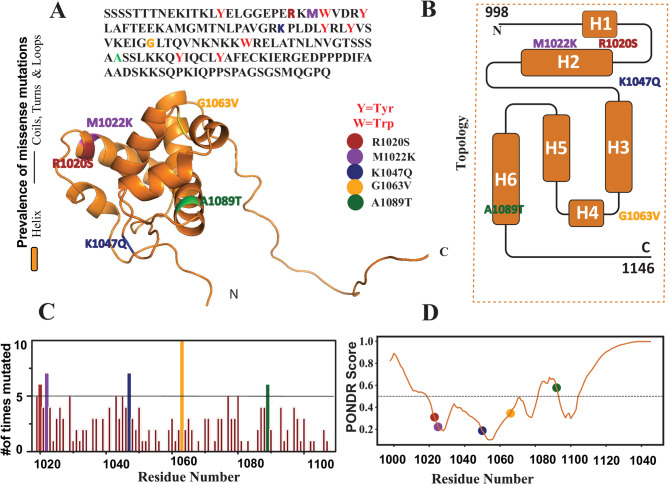
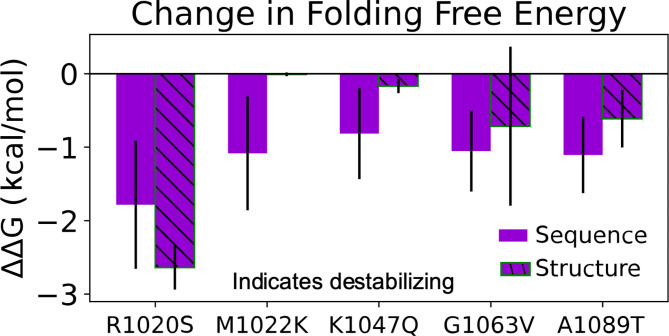
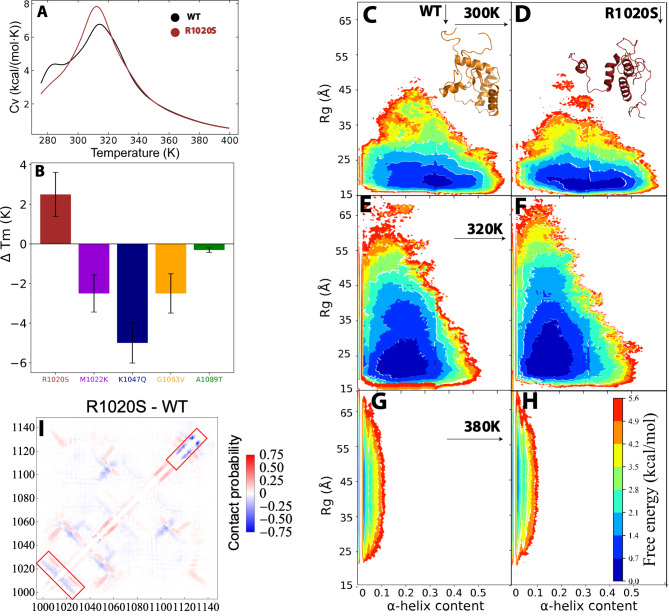
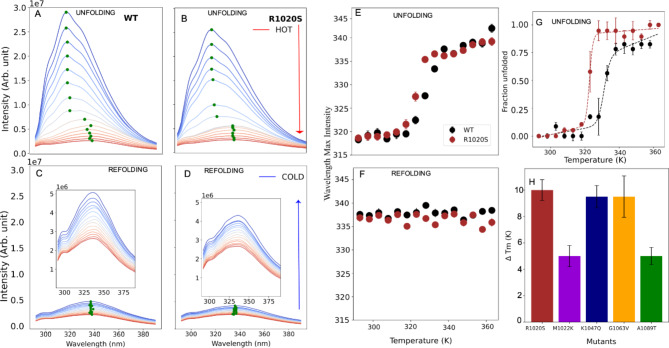
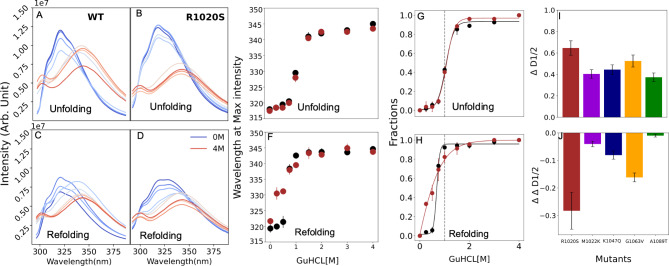
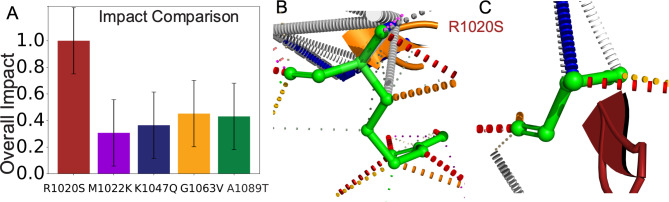
The ARID1A gene, frequently mutated in cancer, encodes the AT-rich interactive domain-containing protein 1A, a key component of the chromatin remodeling SWI/SNF complex. The ARID1A protein features a conserved DNA-binding domain (ARID domain) of approximately 100 residues crucial for its function. Despite the frequency of mutations, the impact on ARID1A’s stability and contribution to cancer progression remains unclear. We analyzed five frequent missense mutations R1020S, M1022K, K1047Q, G1063V, and A1089T identified in The Cancer Genome Atlas (TCGA) to assess their effects on the stability of the ARID domain using a hybrid experimental and computational approach. By combining computational stability from web server tools, the structural dynamics from replica exchange discrete molecular simulation (rexDMD), and thermal and chemical denaturation experiments, we found that the R1020S mutation severely decreases structural stability, making it the most impactful, while M1022K has minimal effect, and others lie in between. These findings enhance our understanding of the structural-functional relationship of ARID1A missense mutations at the molecular levels and their role in cancer pathogenesis. This research paves the way for identifying and categorizing which ARID1A mutations are most pathogenic, potentially guiding the development of targeted therapies tailored to specific mutation profiles in cancer treatment.
Overview
The claims and statistics of this paper haven’t been checked yet.
Free: it reads the open-access text and checks the first 5 claims that cite a source we can check. Create a free account to check every claim.
Integrity signals
Registry
Cites
Statistics
Figures
Verification
Claims the paper makes
The claims and statistics of this paper haven’t been checked yet.
Free: it reads the open-access text and checks the first 5 claims that cite a source we can check. Create a free account to check every claim.
Self-check
Percentages, sums and reported differences re-computed from the paper’s own numbers.
The self-check needs the paper’s full text.
Citations
Cites
Highly accurate protein structure prediction with AlphaFold
Jumper, J., Evans, R., Pritzel, A., Green, T., Figurnov, M., Ronneberger, O., Tunyasuvunakool, K., Bates, R., Žídek, A., Potapenko, A., et al. (2021) · Nature · doi:10.1038/s41586-021-03819-2 · Cited by 43,764
Research works printed but not linked: 38
- Deller, M. C., Kong, L. & Rupp, B. Protein stability: a crystallographer’s perspective. Acta Crystallogr. Sect. F Struct. Biology Commun. 72 (Pt 2), 72–95. https://doi.org/10.1107/S2053230X15024619 (2016). · DOI · Paper page
- Shirley, B. A. (ed) Protein stability and folding: theory and practice (Humana, 1995).
- Bonifer, C. & Cockerill, P. N. Chromatin mechanisms regulating gene expression in health and disease. Adv. Exp. Med. Biol. 711, 12–25. https://doi.org/10.1007/978-1-4419-8216-2_2 (2011). · DOI
- Han, L. et al. Chromatin remodeling mediated by ARID1A is indispensable for normal hematopoiesis in mice. Leukemia. 33 (9), 2291–2305. https://doi.org/10.1038/s41375-019-0438-4 (2019). · DOI
- Mittal, P. & Roberts, C. W. M. The SWI/SNF complex in cancer — biology, biomarkers and therapy. Nat. Reviews Clin. Oncol. 17 (7), 435–448. https://doi.org/10.1038/s41571-020-0357-3 (2020). · DOI · Paper page
- Wilson, B. G. & Roberts, C. W. M. SWI/SNF nucleosome remodellers and cancer. Nat. Rev. Cancer. 11 (7), 481–492. https://doi.org/10.1038/nrc3068 (2011). · DOI · Paper page
- Kim, S., Zhang, Z., Upchurch, S., Isern, N. & Chen, Y. Structure and DNA-binding Sites of the SWI1 AT-rich Interaction Domain (ARID) Suggest Determinants for Sequence-specific DNA Recognition. J. Biol. Chem. 279 (16), 16670–16676. https://doi.org/10.1074/jbc.M312115200 (2004). · DOI
- Nie, Z. et al. A Specificity and Targeting Subunit of a Human SWI/SNF Family-Related Chromatin-Remodeling Complex. Mol. Cell. Biol. 20 (23), 8879–8888. https://doi.org/10.1128/MCB.20.23.8879-8888.2000 (2000). · DOI · Paper page
- Bakr, A. et al. ARID1A regulates DNA repair through chromatin organization and its deficiency triggers DNA damage-mediated anti-tumor immune response. Nucleic Acids Res. 52 (10), 5698–5719. https://doi.org/10.1093/nar/gkae233 (2024). · DOI
- Wu, J. N. & Roberts, C. W. M. ARID1A Mutations in Cancer: Another Epigenetic Tumor Suppressor? Cancer Discov. 3 (1), 35–43. https://doi.org/10.1158/2159-8290.CD-12-0361 (2013). · DOI · Paper page
- Wilsker, D., Patsialou, A., Dallas, P. B. & Moran, E. ARID Proteins: A Diverse Family of DNA Binding Proteins Implicated in the Control of Cell Growth, Differentiation, and Development1. Cell Growth Differ. 13 (3), 95–106 (2002).
- Mullen, J., Kato, S., Sicklick, J. K. & Kurzrock, R. Targeting ARID1A mutations in cancer. Cancer Treat. Rev. 100, 102287. https://doi.org/10.1016/j.ctrv.2021.102287 (2021). · DOI · Paper page
- Hein, K. Z., Stephen, B. & Fu, S. Therapeutic Role of Synthetic Lethality in ARID1A-Deficient Malignancies. J. Immunotherapy Precision Oncol. 7 (1), 41–52. https://doi.org/10.36401/JIPO-22-37 (2024). · DOI
- TAKEDA, T. et al. ARID1A gene mutation in ovarian and endometrial cancers (Review). Oncol. Rep. 35 (2), 607–613. https://doi.org/10.3892/or.2015.4421 (2016). · DOI · Paper page
- Tang, L., Nogales, E. & Ciferri, C. Structure and Function of SWI/SNF Chromatin Remodeling Complexes and Mechanistic Implications for Transcription. Prog. Biophys. Mol. Biol. 102 (2–3), 122–128. https://doi.org/10.1016/j.pbiomolbio.2010.05.001 (2010). · DOI · Paper page
- Bell, D. et al. Integrated genomic analyses of ovarian carcinoma. Nature. 474 (7353), 609–615. https://doi.org/10.1038/nature10166 (2011). … Data coordination centre. · DOI · Paper page
- Rausell, A. et al. Analysis of Stop-Gain and Frameshift Variants in Human Innate Immunity Genes. PLoS Comput. Biol. 10 (7), e1003757. https://doi.org/10.1371/journal.pcbi.1003757 (2014). · DOI
- Rivlin, N., Brosh, R., Oren, M. & Rotter, V. Mutations in the p53 Tumor Suppressor Gene. Genes Cancer. 2 (4), 466–474. https://doi.org/10.1177/1947601911408889 (2011). · DOI · Paper page
- He, B. et al. Predicting intrinsic disorder in proteins: an overview. Cell Res. 19 (8), 929–949. https://doi.org/10.1038/cr.2009.87 (2009). · DOI · Paper page
- Patil, A. et al. A disordered region controls cBAF activity via condensation and partner recruitment. Cell. 186 (22), 4936–4955e26. https://doi.org/10.1016/j.cell.2023.08.032 (2023). · DOI · Paper page
- Tokuriki, N. & Tawfik, D. S. Stability effects of mutations and protein evolvability. Curr. Opin. Struct. Biol. 19 (5), 596–604. https://doi.org/10.1016/j.sbi.2009.08.003 (2009). · DOI · Paper page
- Ding, F., Tsao, D., Nie, H. & Dokholyan, N. V. Ab initio folding of proteins using all-atom discrete molecular dynamics. Structure (London, England: 1993), 16(7), 1010–1018. (2008). https://doi.org/10.1016/j.str.2008.03.013 · DOI · Paper page
- Li, G., Panday, S. K. & Alexov, E. SAAFEC-SEQ: A Sequence-Based Method for Predicting the Effect of Single Point Mutations on Protein Thermodynamic Stability. Int. J. Mol. Sci. 22 (2). https://doi.org/10.3390/ijms22020606 (2021). · DOI · Paper page
- Fariselli, P., Martelli, P. L., Savojardo, C. & Casadio, R. INPS: predicting the impact of non-synonymous variations on protein stability from sequence. Bioinf. (Oxford England). 31 (17), 2816–2821. https://doi.org/10.1093/bioinformatics/btv291 (2015). · DOI · Paper page
- Nikam, R., Kulandaisamy, A., Harini, K., Sharma, D. & Gromiha, M. M. ProThermDB: thermodynamic database for proteins and mutants revisited after 15 years. Nucleic Acids Res. 49 (D1), D420–D424. https://doi.org/10.1093/nar/gkaa1035 (2021). · DOI · Paper page
- Pires, D. E. V., Ascher, D. B. & Blundell, T. L. mCSM: predicting the effects of mutations in proteins using graph-based signatures. Bioinformatics. 30 (3), 335–342. https://doi.org/10.1093/bioinformatics/btt691 (2014). · DOI · Paper page
- Zhou, Y., Pan, Q., Pires, D. E. V., Rodrigues, C. H. M. & Ascher, D. B. DDMut: predicting effects of mutations on protein stability using deep learning. Nucleic Acids Res. 51 (W1), W122–W128. https://doi.org/10.1093/nar/gkad472 (2023). · DOI · Paper page
- Ding, F., Tsao, D., Nie, H. & Dokholyan, N. V. Ab Initio Folding of Proteins with All-Atom Discrete Molecular Dynamics. Structure. 16 (7), 1010–1018. https://doi.org/10.1016/j.str.2008.03.013 (2008). · DOI · Paper page
- ACS Applied Materials & Interfaces, 14(43), 48464–48475. https://doi.org/10.1021/acsami.2c14748. · DOI
- Huang, G. et al. Direct Observation of Seeded Conformational Conversion of hIAPP In Silico Reveals the Mechanisms for Morphological Dependence and Asymmetry of Fibril Growth. J. Chem. Inf. Model. 63 (18), 5863–5873. https://doi.org/10.1021/acs.jcim.3c00898 (2023). · DOI
- Song, Z., Gatch, A. J., Sun, Y. & Ding, F. Differential Binding and Conformational Dynamics of Tau Microtubule-Binding Repeats with a Preformed Amyloid-β Fibril Seed. ACS Chem. Neurosci. 14 (7), 1321–1330. https://doi.org/10.1021/acschemneuro.3c00014 (2023). · DOI
- IEEE … International Conference on Computational Advances in Bio and Medical Sciences:[proceedings]. IEEE International Conference on Computational Advances in Bio and Medical Sciences, 2011, 13–18. https://doi.org/10.1109/ICCABS.2011.5729867. · DOI · Paper page
- Kumar, S., Rosenberg, J. M., Bouzida, D., Swendsen, R. H. & Kollman, P. A. (n.d.). Citation for: THE weighted histogram analysis method for free-energy calculations on biomolecules. I. The method. Wiley Online Library. Retrieved from https://onlinelibrary.wiley.com/action/showCitFormats?doi=10.1002%2Fjcc.540130812 · DOI · Paper page
- Sotomayor-Vivas, C., Hernández-Lemus, E. & Dorantes-Gilardi, R. Linking protein structural and functional change to mutation using amino acid networks. PLoS ONE. 17 (1), e0261829. https://doi.org/10.1371/journal.pone.0261829 (2022). · DOI
- Petukh, M., Kucukkal, T. G. & Alexov, E. On human disease-causing amino acid variants: statistical study of sequence and structural patterns. Hum. Mutat. 36 (5), 524–534. https://doi.org/10.1002/humu.22770 (2015). · DOI · Paper page
- Science, 381(6664), eadg7492. https://doi.org/10.1126/science.adg7492. · DOI · Paper page
- Gerasimavicius, L., Livesey, B. J. & Marsh, J. A. Loss-of-function, gain-of-function and dominant-negative mutations have profoundly different effects on protein structure. Nat. Commun. 13 (1), 3895. https://doi.org/10.1038/s41467-022-31686-6 (2022). · DOI · Paper page
- Levenga, J., de Vrij, F. M. S., Oostra, B. A. & Willemsen, R. Potential therapeutic interventions for fragile X syndrome. Trends Mol. Med. 16 (11), 516–527. https://doi.org/10.1016/j.molmed.2010.08.005 (2010). · DOI · Paper page
Metadata
- Authors
- Goutam, R. K., Huang, G., Medina, E., Ding, F., Edenfield, W. J., & Sanabria, H.
- Affiliations
- Clemson University (US)
- University of Chile (CL)
- Prisma Health (US)
- Corresponding author
- Sanabria, Hugo
- Venue
- Scientific Reports
- Published
- 2024-12-19
- Volume
- 15
- Issue
- 1
- Pages
- 3072-3072
- ISSN
- 2045-2322 (ISSN-L)
- PMC
- PMC11760938
- OpenAlex
- W4406803719
- Cited by
- 2
- References
- 1
- Citations by year
- 2026: 1 · 2025: 1
- FWCI
- 0.60
- Type
- journal article
- Language
- en
- Open access
- gold
- doi.org
- Licence
- Locations
- Scientific Reports (publishedVersion, cc-by-nc-nd)
- Research Square (acceptedVersion, cc-by)
- PubMed Central (publishedVersion, cc-by-nc-nd)
- PubMed (publishedVersion)
- PubMed Central (submittedVersion, cc-by)
- DOAJ (DOAJ: Directory of Open Access Journals) (submittedVersion, cc-by-sa)
- Funders
- National Institutes of Health
- National Cancer Institute (R15CA280699)
- National Institute of General Medical Sciences (R35GM145409)
- Topics
- Life Sciences › Biochemistry, Genetics and Molecular Biology › Molecular Biology › Chromatin Remodeling and Cancer
- Life Sciences › Biochemistry, Genetics and Molecular Biology › Molecular Biology › Protein Structure and Dynamics
- Life Sciences › Biochemistry, Genetics and Molecular Biology › Genetics › Genomics and Rare Diseases
- Keywords
- ARID1A, missense mutations, protein stability, ARID domain, SWI/SNF complex, structural dynamics, thermal denaturation, chemical denaturation, carcinogenesis, pathogenicity prediction, targeted therapy
About these checks
Registry, retraction, Cites and statistics results are computed, not judged, with one exception: a printed reference that no index lists is read once by a model before it counts as a citation error. Claims are extracted by a model and kept only when their quote appears verbatim in the text; each cited source is then checked, with a model’s help, for whether it says what the claim relies on. Those verdicts can be wrong — read the claim’s quote and the cited source before relying on one.
Statistics and arithmetic are recomputed, not judged.
Confidence bands are shown only for fields calibrated on our annotated test set. None is calibrated yet, so no band is shown.
What counts as a claim ›How we measure confidence ›How we check this ›
Are you an author, or do you see a problem with this page? Request a review
How to cite
Cite CoChat for the checks on this page, and the paper for its own findings.
- This page
- CoChat. (2026). Citation check: Impact of Frequent ARID1A Mutations on Protein Stability: Insights into Cancer Pathogenesis. https://app.cochat.ai/papers/10.21203/rs.3.rs-5225582/v1
- The paper
- Goutam, R. K., Huang, G., Medina, E., Ding, F., Edenfield, W. J., & Sanabria, H. (2024). Impact of Frequent ARID1A Mutations on Protein Stability: Insights into Cancer Pathogenesis. Scientific Reports. https://doi.org/10.21203/rs.3.rs-5225582/v1
Data sources
Bibliographic data: Semantic Scholar, OpenAlex, Crossref.
Contains information from the Semantic Scholar Academic Graph Datasets, made available under the ODC Attribution License (ODC-BY 1.0).
Semantic Scholar’s data is described in: Kinney, R., et al. (2023). The Semantic Scholar Open Data Platform. arXiv:2301.10140.
