

Inhibiting tumor cell-intrinsic UBA6 by inosine augments tumor immunogenicity
Open accessPreprint — published as 10.1038/s41467-022-33116-z
The DOI matches its Crossref record; 53 of the 53 references it cites were found in a registry or an index.
Abstract
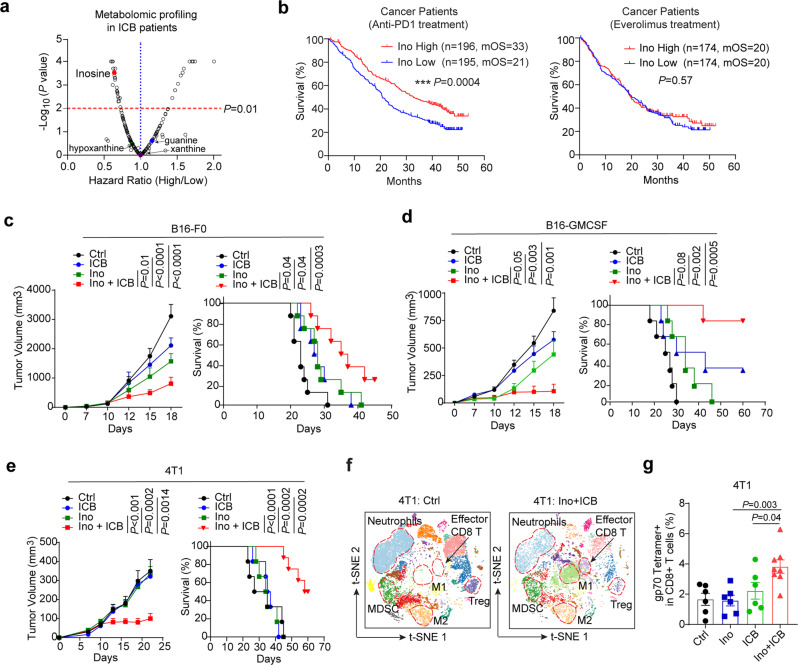
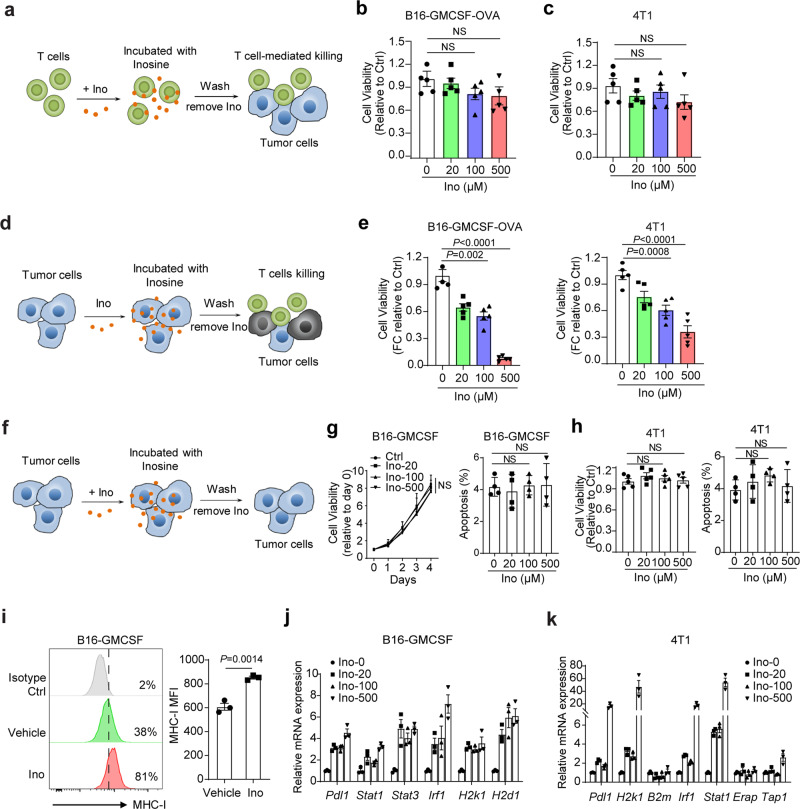
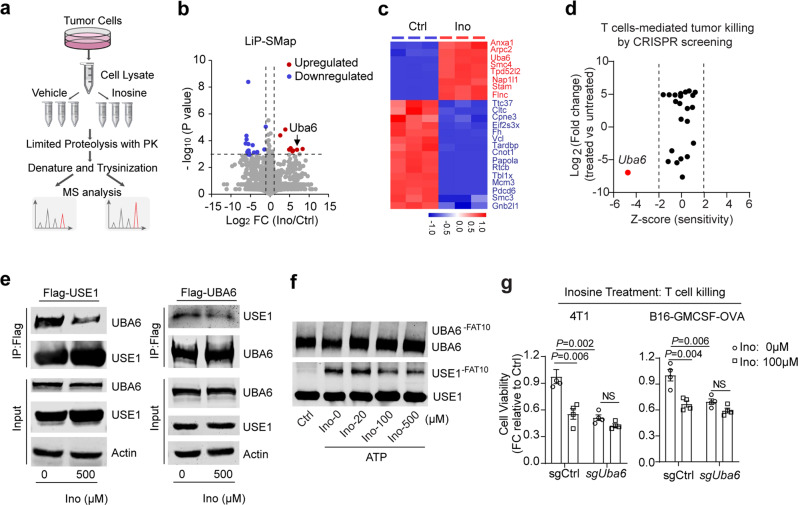
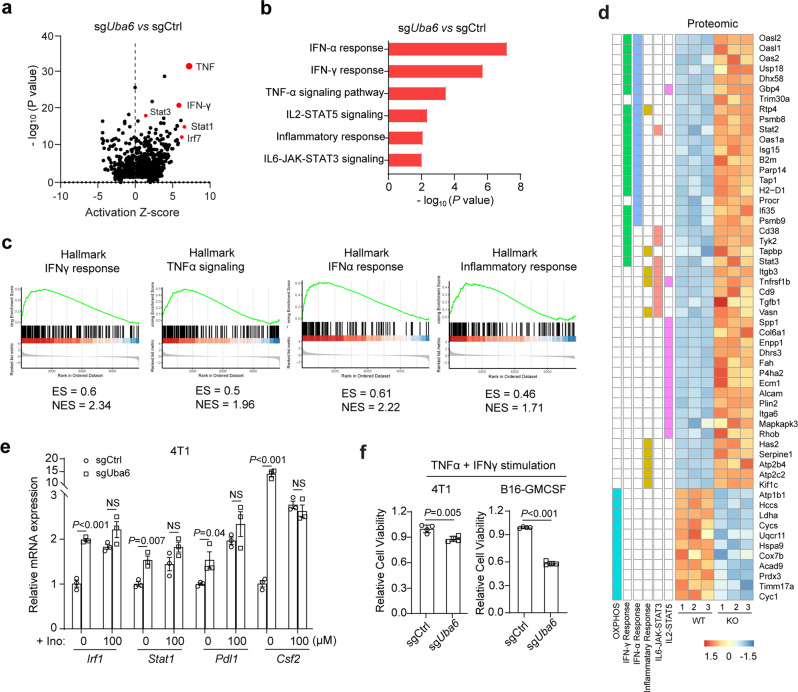
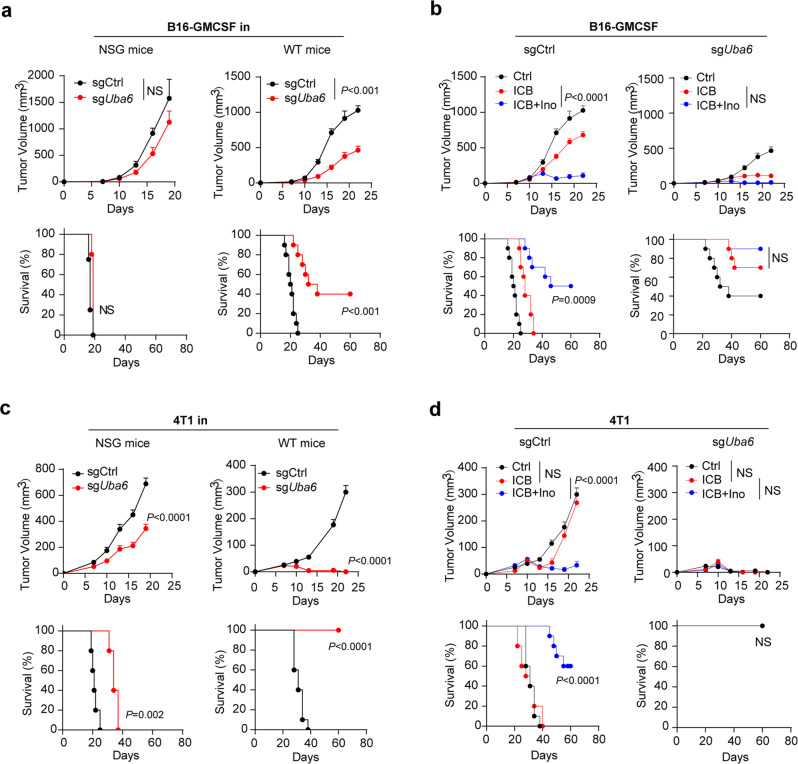
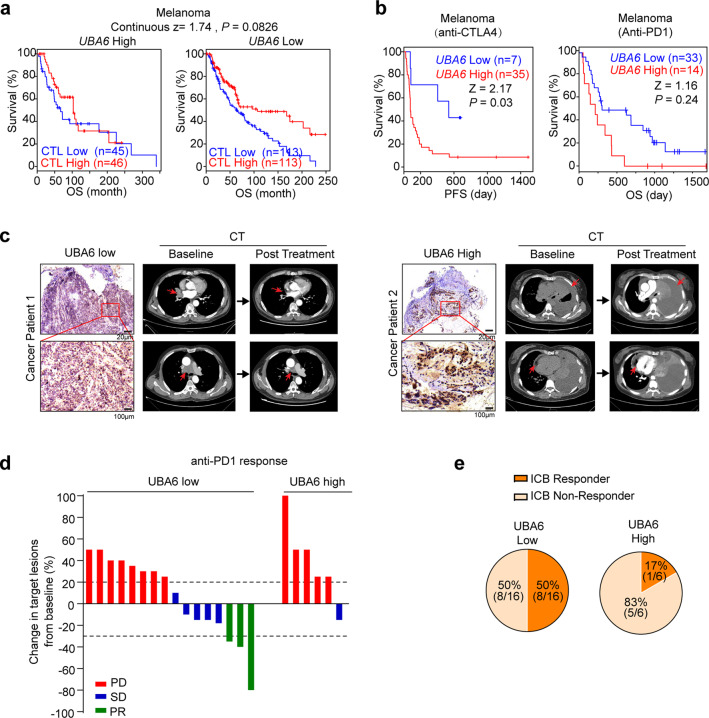
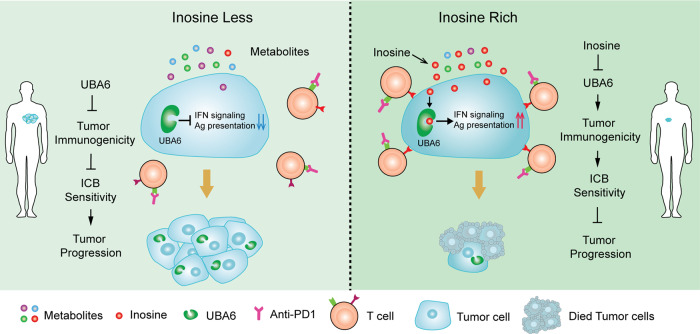
Metabolic alteration influences cancer immunity. However, the role and mechanism of metabolic adaption on immune checkpoint blockade (ICB) responses remains ill-defined. Here, to identify metabolites that modulate ICB sensitivity, metabolomic profiling in mouse tumor models and cancer patients treated with ICB was performed. We identified that metabolite inosine was associated with ICB sensitivity in mice and humans, and overcame ICB resistance in several mouse tumor models. Notably, inosine sensitized tumor cells to T cell-mediated cytotoxicity by amplifying tumor-intrinsic immunogenicity. Chemical proteomics further identified that inosine directly bound and inhibited ubiquitin-activating enzyme UBA6. Tumor UBA6 loss augmented tumor immunogenicity and substituted the synergistic effect of inosine in combination with ICB. Clinically, tumor UBA6 expression negatively correlated with ICB response in cancer patients. Thus, we reveal an unappreciated function of inosine on tumor-intrinsic immunogenicity and provide UBA6 as a candidate target for immunotherapy.
Overview
The claims and statistics of this paper haven’t been checked yet.
Free: it reads the open-access text and checks the first 5 claims that cite a source we can check. Create a free account to check every claim.
Integrity signals
Registry
Cites
Statistics
Figures
Verification
Claims the paper makes
The claims and statistics of this paper haven’t been checked yet.
Free: it reads the open-access text and checks the first 5 claims that cite a source we can check. Create a free account to check every claim.
Claims other papers make about this one
Each is checked against this paper’s own text: does it say what the citing paper says it does?
The source backs part of the claim, not all of it — or backs it for a different population, condition or comparison.
In the citing paper
“On the one hand, the gut microbiota can directly enhance the innate immunogenicity of tumor cells by acting on UBA6 on the tumor cell surface to augment ICI responses [67].”
From Gut microbiota influence immunotherapy responses: mechanisms and therapeutic strategies (2022) · doi:10.1186/s13045-022-01273-9 · cites this paper as [67]
Experimental — accuracy not yet measured
Self-check
Percentages, sums and reported differences re-computed from the paper’s own numbers.
The self-check needs the paper’s full text.
Citations
Cites
The Molecular Signatures Database Hallmark Gene Set Collection
Liberzon, A., Birger, C., Thorvaldsdóttir, H., Ghandi, M., Mesirov, J. P., & Tamayo, P. (2015) · Cell Systems · doi:10.1016/j.cels.2015.12.004 · Cited by 13,807
The emerging hallmarks of cancer metabolism
Pavlova, N. N., & Thompson, C. B. (2016) · Cell Metabolism · doi:10.1016/j.cmet.2015.12.006 · Cited by 5,926
Nivolumab versus Everolimus in Advanced Renal-Cell Carcinoma
Motzer, R. J., Escudier, B., McDermott, D. F., George, S., Hammers, H. J., Srinivas, S., Tykodi, S. S., Sosman, J. A., Procopio, G., Plimack, E. R., et al. (2015) · New England Journal of Medicine · doi:10.1056/nejmoa1510665 · Cited by 5,807
Causal analysis approaches in Ingenuity Pathway Analysis
Krämer, A., Green, J., Pollard, J., & Tugendreich, S. (2014) · Bioinformatics · doi:10.1093/bioinformatics/btt703 · Cited by 5,724
Signatures of T cell dysfunction and exclusion predict cancer immunotherapy response
Jiang, P., Gu, S., Pan, D., Fu, J., Sahu, A., Hu, X., Li, Z., Traugh, N., Bu, X., Li, B., et al. (2018) · Nature Medicine · doi:10.1038/s41591-018-0136-1 · Cited by 5,179
GEPIA2: an enhanced web server for large-scale expression profiling and interactive analysis
Tang, Z., Kang, B., Li, C., Chen, T., & Zhang, Z. (2019) · Nucleic Acids Research · doi:10.1093/nar/gkz430 · Cited by 5,083
Aran, D., Looney, A. P., Liu, L., Wu, E., Fong, V., Hsu, A., Chak, S., Naikawadi, R. P., Wolters, P. J., Abate, A. R., et al. (2019) · Nature Immunology · doi:10.1038/s41590-018-0276-y · Cited by 4,984
Commensal Bifidobacterium promotes antitumor immunity and facilitates anti–PD-L1 efficacy
Sivan, A., Corrales, L., Hubert, N., Williams, J. B., Aquino-Michaels, K., Earley, Z. M., Benyamin, F. W., Man Lei, Y., Jabri, B., Alegre, M.-L., et al. (2015) · Science · doi:10.1126/science.aac4255 · Cited by 3,888
Anticancer immunotherapy by CTLA-4 blockade relies on the gut microbiota
Vétizou, M., Pitt, J. M., Daillère, R., Lepage, P., Waldschmitt, N., Flament, C., Rusakiewicz, S., Routy, B., Roberti, M. P., Duong, C. P. M., et al. (2015) · Science · doi:10.1126/science.aad1329 · Cited by 3,488
Fundamental Mechanisms of Immune Checkpoint Blockade Therapy
Wei, S. C., Duffy, C. R., & Allison, J. P. (2018) · Cancer Discovery · doi:10.1158/2159-8290.cd-18-0367 · Cited by 3,088
Genomic correlates of response to CTLA-4 blockade in metastatic melanoma
Van Allen, E. M., Miao, D., Schilling, B., Shukla, S. A., Blank, C., Zimmer, L., Sucker, A., Hillen, U., Geukes Foppen, M. H., Goldinger, S. M., et al. (2015) · Science · doi:10.1126/science.aad0095 · Cited by 2,839
Top 10 Challenges in Cancer Immunotherapy
Hegde, P. S., & Chen, D. S. (2020) · Immunity · doi:10.1016/j.immuni.2019.12.011 · Cited by 2,238
Microbiome-derived inosine modulates response to checkpoint inhibitor immunotherapy
Mager, L. F., Burkhard, R., Pett, N., Cooke, N. C. A., Brown, K., Ramay, H., Paik, S., Stagg, J., Groves, R. A., Gallo, M., et al. (2020) · Science · doi:10.1126/science.abc3421 · Cited by 1,407
Glutamine blockade induces divergent metabolic programs to overcome tumor immune evasion
Leone, R. D., Zhao, L., Englert, J. M., Sun, I.-M., Oh, M.-H., Sun, I.-H., Arwood, M. L., Bettencourt, I. A., Patel, C. H., Wen, J., et al. (2019) · Science · doi:10.1126/science.aav2588 · Cited by 1,169
Large-scale public data reuse to model immunotherapy response and resistance
Fu, J., Li, K., Zhang, W., Wan, C., Zhang, J., Jiang, P., & Liu, X. S. (2020) · Genome Medicine · doi:10.1186/s13073-020-0721-z · Cited by 1,067
Gide, T. N., Quek, C., Menzies, A. M., Tasker, A. T., Shang, P., Holst, J., Madore, J., Lim, S. Y., Velickovic, R., Wongchenko, M., et al. (2019) · Cancer Cell · doi:10.1016/j.ccell.2019.01.003 · Cited by 1,047
Pitt, J. M., Vétizou, M., Daillère, R., Roberti, M. P., Yamazaki, T., Routy, B., Lepage, P., Boneca, I. G., Chamaillard, M., Kroemer, G., et al. (2016) · Immunity · doi:10.1016/j.immuni.2016.06.001 · Cited by 1,041
Liu, D., Schilling, B., Liu, D., Sucker, A., Livingstone, E., Jerby-Arnon, L., Zimmer, L., Gutzmer, R., Satzger, I., Loquai, C., et al. (2019) · Nature Medicine · doi:10.1038/s41591-019-0654-5 · Cited by 1,039
Immune and genomic correlates of response to anti-PD-1 immunotherapy in glioblastoma
Zhao, J., Chen, A. X., Gartrell, R. D., Silverman, A. M., Aparicio, L., Chu, T., Bordbar, D., Shan, D., Samanamud, J., Mahajan, A., et al. (2019) · Nature Medicine · doi:10.1038/s41591-019-0349-y · Cited by 903
Overcoming resistance to checkpoint blockade therapy by targeting PI3Kγ in myeloid cells
De Henau, O., Rausch, M., Winkler, D., Campesato, L. F., Liu, C., Cymerman, D. H., Budhu, S., Ghosh, A., Pink, M., Tchaicha, J., et al. (2016) · Nature · doi:10.1038/nature20554 · Cited by 860
A major chromatin regulator determines resistance of tumor cells to T cell–mediated killing
Pan, D., Kobayashi, A., Jiang, P., Ferrari de Andrade, L., Tay, R. E., Luoma, A. M., Tsoucas, D., Qiu, X., Lim, K., Rao, P., et al. (2018) · Science · doi:10.1126/science.aao1710 · Cited by 852
Interplay between the human gut microbiome and host metabolism
Visconti, A., Le Roy, C. I., Rosa, F., Rossi, N., Martin, T. C., Mohney, R. P., Li, W., de Rinaldis, E., Bell, J. T., Venter, J. C., et al. (2019) · Nature Communications · doi:10.1038/s41467-019-12476-z · Cited by 782
The Next Decade of Immune Checkpoint Therapy
Sharma, P., Siddiqui, B. A., Anandhan, S., Yadav, S. S., Subudhi, S. K., Gao, J., Goswami, S., & Allison, J. P. (2021) · Cancer Discovery · doi:10.1158/2159-8290.cd-20-1680 · Cited by 750
Loss of ADAR1 in tumours overcomes resistance to immune checkpoint blockade
Ishizuka, J. J., Manguso, R. T., Cheruiyot, C. K., Bi, K., Panda, A., Iracheta-Vellve, A., Miller, B. C., Du, P. P., Yates, K. B., Dubrot, J., et al. (2019) · Nature · doi:10.1038/s41586-018-0768-9 · Cited by 697
Healthspan and lifespan extension by fecal microbiota transplantation into progeroid mice
Bárcena, C., Valdés-Mas, R., Mayoral, P., Garabaya, C., Durand, S., Rodríguez, F., Fernández-García, M. T., Salazar, N., Nogacka, A. M., Garatachea, N., et al. (2019) · Nature Medicine · doi:10.1038/s41591-019-0504-5 · Cited by 661
Metabolic barriers to cancer immunotherapy
DePeaux, K., & Delgoffe, G. M. (2021) · Nature Reviews Immunology · doi:10.1038/s41577-021-00541-y · Cited by 597
A Map of Protein-Metabolite Interactions Reveals Principles of Chemical Communication
Piazza, I., Kochanowski, K., Cappelletti, V., Fuhrer, T., Noor, E., Sauer, U., & Picotti, P. (2018) · Cell · doi:10.1016/j.cell.2017.12.006 · Cited by 556
Nishino, M., Giobbie-Hurder, A., Gargano, M., Suda, M., Ramaiya, N. H., & Hodi, F. S. (2013) · Clinical Cancer Research · doi:10.1158/1078-0432.ccr-13-0895 · Cited by 522
Immune Regulation of Metabolic Homeostasis in Health and Disease
Brestoff, J. R., & Artis, D. (2015) · Cell · doi:10.1016/j.cell.2015.02.022 · Cited by 497
Tumor immune evasion arises through loss of TNF sensitivity
Kearney, C. J., Vervoort, S. J., Hogg, S. J., Ramsbottom, K. M., Freeman, A. J., Lalaoui, N., Pijpers, L., Michie, J., Brown, K. K., Knight, D. A., et al. (2018) · Science Immunology · doi:10.1126/sciimmunol.aar3451 · Cited by 381
Haskó, G., Kuhel, D. G., Németh, Z. H., Mabley, J. G., Stachlewitz, R. F., Virág, L., Lohinai, Z., Southan, G. J., Salzman, A. L., & Szabó, C. (2000) · The Journal of Immunology · doi:10.4049/jimmunol.164.2.1013 · Cited by 334
Inosine is an alternative carbon source for CD8+-T-cell function under glucose restriction
Wang, T., Gnanaprakasam, J. N. R., Chen, X., Kang, S., Xu, X., Sun, H., Liu, L., Rodgers, H., Miller, E., Cassel, T. A., et al. (2020) · Nature Metabolism · doi:10.1038/s42255-020-0219-4 · Cited by 331
SnapShot: Immune Checkpoint Inhibitors
Abril-Rodriguez, G., & Ribas, A. (2017) · Cancer Cell · doi:10.1016/j.ccell.2017.05.010 · Cited by 309
Immunomodulatory and neuroprotective effects of inosine
Haskó, G., Sitkovsky, M. V., & Szabó, C. (2004) · Trends in Pharmacological Sciences · doi:10.1016/j.tips.2004.01.006 · Cited by 308
Huang, B., Chen, Z., Geng, L., Wang, J., Liang, H., Cao, Y., Chen, H., Huang, W., Su, M., Wang, H., et al. (2019) · Cell · doi:10.1016/j.cell.2019.10.027 · Cited by 307
Self-citationHui, E. (2019) · Reactions weekly · doi:10.1007/s40278-019-66550-9 · Cited by 307
Diet, genetics, and the gut microbiome drive dynamic changes in plasma metabolites
Fujisaka, S., Avila-Pacheco, J., Soto, M., Kostic, A., Dreyfuss, J. M., Pan, H., Ussar, S., Altindis, E., Li, N., Bry, L., et al. (2018) · Cell Reports · doi:10.1016/j.celrep.2018.02.060 · Cited by 231
Metabolomic adaptations and correlates of survival to immune checkpoint blockade
Li, H., Bullock, K., Gurjao, C., Braun, D., Shukla, S. A., Bossé, D., Lalani, A.-K. A., Gopal, S., Jin, C., Horak, C., et al. (2019) · Nature Communications · doi:10.1038/s41467-019-12361-9 · Cited by 218
He, B., Hoang, T. K., Wang, T., Ferris, M., Taylor, C. M., Tian, X., Luo, M., Tran, D. Q., Zhou, J., Tatevian, N., et al. (2017) · Journal of Experimental Medicine · doi:10.1084/jem.20160961 · Cited by 196
Self-citationE1-L2 Activates Both Ubiquitin and FAT10
Chiu, Y.-H., Sun, Q., & Chen, Z. J. (2007) · Molecular Cell · doi:10.1016/j.molcel.2007.08.020 · Cited by 192
Activating the ubiquitin family: UBA6 challenges the field
Groettrup, M., Pelzer, C., Schmidtke, G., & Hofmann, K. (2008) · Trends in Biochemical Sciences · doi:10.1016/j.tibs.2008.01.005 · Cited by 192
Influence of gemcitabine chemotherapy on the microbiota of pancreatic cancer xenografted mice
Panebianco, C., Adamberg, K., Jaagura, M., Copetti, M., Fontana, A., Adamberg, S., Kolk, K., Vilu, R., Andriulli, A., & Pazienza, V. (2018) · Cancer Chemotherapy and Pharmacology · doi:10.1007/s00280-018-3549-0 · Cited by 104
Systematic characterization of mutations altering protein degradation in human cancers
Tokheim, C., Wang, X., Timms, R. T., Zhang, B., Mena, E. L., Wang, B., Chen, C., Ge, J., Chu, J., Zhang, W., et al. (2021) · Molecular Cell · doi:10.1016/j.molcel.2021.01.020 · Cited by 83
Jiang, Z., Hsu, J. L., Li, Y., Hortobágyi, G. N., & Hung, M. (2020) · Frontiers in Oncology · doi:10.3389/fonc.2020.01197 · Cited by 67
Kroemer, G., & Zitvogel, L. (2020) · The Journal of Experimental Medicine · doi:10.1084/jem.20201979 · Cited by 62
The ubiquitin-like modifier FAT10 in antigen processing and antimicrobial defense.
Basler, M., Buerger, S., & Groettrup, M. (2015) · Molecular Immunology · doi:10.1016/j.molimm.2015.04.012 · Cited by 42
Ebstein, F., Lehmann, A., & Kloetzel, P.-M. (2012) · Cellular and Molecular Life Sciences · doi:10.1007/s00018-012-0933-5 · Cited by 42
Gavin, J. M., Chen, J. J., Liao, H., Rollins, N., Yang, X., Xu, Q., Ma, J., Loke, H.-K., Lingaraj, T., Brownell, J. E., et al. (2012) · Journal of Biological Chemistry · doi:10.1074/jbc.m111.336198 · Cited by 41
Califano, R., Lal, R., Lewanski, C. R., Nicolson, M. C., Ottensmeier, C. H. H., Popat, S., Hodgson, M. J., & Postmus, P. E. (2018) · Future Oncology · doi:10.2217/fon-2018-0330 · Cited by 37
Huang, Y., Xie, J.-L., Ding, Y., et al. (2016) · American Journal of Clinical Pathology · doi:10.1093/ajcp/aqv010 · Cited by 35
Inosine Released from Dying or Dead Cells Stimulates Cell Proliferation via Adenosine Receptors
Chen, J., Chaurio, R. A., Maueröder, C., Derer, A., Rauh, M., Kost, A., Liu, Y., Mo, X., Hueber, A. J., Bilyy, R. O., et al. (2017) · Frontiers in Immunology · doi:10.3389/fimmu.2017.00504 · Cited by 29
Kumar, R., Yoneda, J., Fidler, I. J., & Dong, Z. (1999) · Journal of Leukocyte Biology · doi:10.1002/jlb.65.1.102 · Cited by 27
Lipid Metabolism and Tumor Antigen Presentation
Qin, H., & Chen, Y. (2021) · Advances in experimental medicine and biology · doi:10.1007/978-981-33-6785-2_11 · Cited by 12
Cited by
Gut microbiota influence immunotherapy responses: mechanisms and therapeutic strategies
(2022) · doi:10.1186/s13045-022-01273-9 · Cited by 495
“On the one hand, the gut microbiota can directly enhance the innate immunogenicity of tumor cells by acting on UBA6 on the tumor cell surface to augment ICI responses [67].”
BackgroundSelf-citationFaecalcrobiota metabolites: emerging insights into cancer radiotherapy outcomes
Gao, Y., Zeng, B., Wang, Z., Liang, S., & Yang, Y. (2025) · Frontiers in Microbiology · doi:10.3389/fmicb.2025.1663835 · Cited by 1
Self-citation
Metadata
- Authors
- He, B., Zhang, L., Jiang, L., Yu, L., Li, Q., Tian, X., He, J.-Q., Zeng, L., Yang, Y., Wang, C., Wei, Y., Jiang, X., Li, J., Ge, X., Gu, Q., Li, J.-K., Wu, D., Sadler, A., Yu, D., Xu, D., Gao, Y., & Yuan, X.
- Affiliations
- Guangzhou University of Chinese Medicine (CN)
- Shanghai Jiao Tong University (CN)
- Capital Medical University (CN)
- The University of Texas MD Anderson Cancer Center (US)
- Peking University
- First People's Hospital Affiliated to Shanghai Jiaotong University
- University of North Carolina at Chapel Hill (US)
- Hudson Institute of Medical Research (AU)
- The University of Queensland (AU)
- Tianjin University of Traditional Chinese Medicine
- Corresponding author
- He, Baokun
- Yu, Liang
- Gao, Yue
- Yuan, Xiangliang
- ORCID
- Venue
- Nature Communications
- Published
- 2021-07-12
- Volume
- 13
- Issue
- 1
- Pages
- 5413-5413
- ISSN
- 2041-1723 (ISSN-L)
- PMC
- PMC9478149
- OpenAlex
- W4296038319
- Cited by
- 82
- References
- 49
- Citations by year
- 2026: 19 · 2025: 29 · 2024: 19 · 2023: 14 · 2022: 1
- FWCI
- 6.58
- Type
- journal article
- Language
- en
- Open access
- gold
- doi.org
- Locations
- Nature Communications (publishedVersion, cc-by)
- Research Square (acceptedVersion, cc-by)
- PubMed Central (publishedVersion, cc-by)
- PubMed (publishedVersion)
- Digital Commons-TMC (Texas Medical Center) (submittedVersion)
- RePEc: Research Papers in Economics (submittedVersion)
- DOAJ (DOAJ: Directory of Open Access Journals) (submittedVersion, cc-by-sa)
- Funders
- National Natural Science Foundation of China (81402148, 81871274, 2019YFC1604900, 81974256, 81630102, 81772525)
- National Key Research and Development Program of China (2019YFC1604900)
- Topics
- Health Sciences › Medicine › Oncology › Cancer Immunotherapy and Biomarkers
- Life Sciences › Immunology and Microbiology › Immunology › Immunotherapy and Immune Responses
- Life Sciences › Biochemistry, Genetics and Molecular Biology › Physiology › Adenosine and Purinergic Signaling
- Keywords
- inosine, UBA6, immune checkpoint blockade, tumor immunogenicity, melanoma, breast cancer, purine metabolism, anti-PD-1 therapy, CTLA-4 blockade, T cell cytotoxicity, tumor microenvironment, cancer metabolism, immunotherapy sensitivity
- MeSH terms
- Immune Checkpoint Inhibitors, Animals, Combined Modality Therapy, Humans, Inosine, Melanoma, Radioimmunotherapy, Ubiquitin-Activating Enzymes, Mice, Tumor Microenvironment
About these checks
Registry, retraction, Cites and statistics results are computed, not judged, with one exception: a printed reference that no index lists is read once by a model before it counts as a citation error. Claims are extracted by a model and kept only when their quote appears verbatim in the text; each cited source is then checked, with a model’s help, for whether it says what the claim relies on. Those verdicts can be wrong — read the claim’s quote and the cited source before relying on one.
Statistics and arithmetic are recomputed, not judged.
Confidence bands are shown only for fields calibrated on our annotated test set. None is calibrated yet, so no band is shown.
What counts as a claim ›How we measure confidence ›How we check this ›
Are you an author, or do you see a problem with this page? Request a review
Data sources
Bibliographic data: Semantic Scholar, OpenAlex, Crossref.
Contains information from the Semantic Scholar Academic Graph Datasets, made available under the ODC Attribution License (ODC-BY 1.0).
Semantic Scholar’s data is described in: Kinney, R., et al. (2023). The Semantic Scholar Open Data Platform. arXiv:2301.10140.
