

The DOI matches its Crossref record; 35 of the 35 references it cites were found in a registry or an index; none of the 24 sources its claims cite is checked for support yet.
Secular Cycles and Millennial Trends
Open accessAbstract
The paper argues that millennial trends cannot be understood without secular cycles and demographic-political dynamics.
Overview
CoChat Summary
TL;DR
The paper argues that millennial trends in carrying capacity, consumption, and empire size are tightly connected to secular demographic-political cycles. Using historical empire-size and population/consumption data, it reports that several predicted relationships are in the predicted direction and statistically significant.
Key findings
- The authors state that the structure of millennial trends “cannot be adequately understood without secular cycles being taken into consideration,” and that millennial trends can be a “virtual byproduct of demographic cycles.”
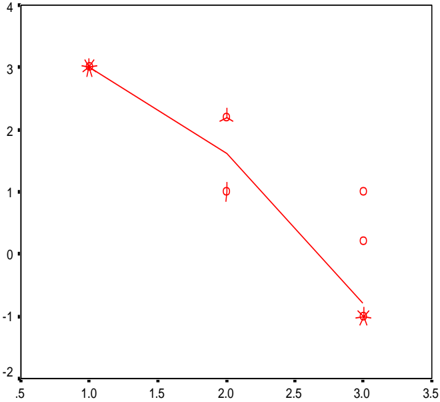
- Their first test finds that phases of relatively rapid population growth correlate with phases of relatively rapid territorial expansion; the correlation is described as “very strong and statistically significant.”
- They report that relatively fast population growth also correlates with relatively high consumption levels; this empirical test “confirms its validity.”
- They further report that the effect of relative consumption rate on territorial expansion/aggressive external warfare is in the predicted direction, “very strong and statistically significant,” and that higher core-area population is associated with lower expansion rate.
Methods
- The paper uses Taagepera’s database on the historical dynamics of empire sizes and Nefedov’s data on population and consumption dynamics.
- It examines a set of secular cycles in unipolar regional systems, including Babylonian, Eastern Han, Ming, Mughal, Qing, Roman Principate, Song, Early Tang, and Western Han cycles; the authors note they are “not really dealing with samples, but rather with the general populations” of cases with empirical estimates.
- Analysis consists of hypothesis tests with scatterplots and fitted LOWESS lines, using ordinal-coded axes and tables in the supplement (Tables S1–S4).
Limitations
- The paper states that for the direct test of population growth and territorial expansion it had to rely “almost exclusively on the Chinese data” because East Asia is the only region with direct historical population data for these tests.
- The paper notes that for Rome there is only indirect evidence for early population size and direct census evidence only for Roman citizens, who were a minority of the empire population.
- Evident from the text: the tests rely on historical reconstructions and ordinal measures in places, which limits precision; this is implied by the use of indirect evidence, direct/indirect comparisons, and purely ordinal axes.
Model-written summary. Check it against the paper before relying on it.
Integrity signals
Registry
Cites
Statistics
Figures


Verification
Claims the paper makes
0 Valid · 1 Not valid · 12 Not checked · 17 Own results and interpretations
None of the sources cited for this claim could be matched to a paper in Crossref, so there is nothing to check it against.
In the paper
“The test supports this hypothesis: the correlation has turned out to be in the predicted direction, very strong and statistically significant”
What the sources say
- Not matchedcites Figure 4
Couldn’t be matched to a paper in Crossref, so it can’t be checked.
- Not matchedcites Table S1
Couldn’t be matched to a paper in Crossref, so it can’t be checked.
boostedstates an association- Asserted: passes — The authors put it forward as true.
- Checkable: passes — It can be checked against evidence.
- Load-bearing: passes — The paper’s conclusions depend on it.
- Based: passes — The paper gives a reason why it holds.
- Not matched
None of the sources cited for this claim could be matched to a paper in Crossref, so there is nothing to check it against.
In the paper
“Our empirical test supports this hypothesis too”
What the sources say
- Not matchedcites Figure 7
Couldn’t be matched to a paper in Crossref, so it can’t be checked.
- Not matchedcites Table S4
Couldn’t be matched to a paper in Crossref, so it can’t be checked.
plainstates an association- Asserted: passes — The authors put it forward as true.
- Checkable: passes — It can be checked against evidence.
- Load-bearing: passes — The paper’s conclusions depend on it.
- Based: passes — The paper gives a reason why it holds.
- Not matched
None of the sources cited for this claim could be matched to a paper in Crossref, so there is nothing to check it against.
In the paper
“The test supports this hypothesis: the correlation turns out to be in the predicted direction, very strong and statistically significant”
What the sources say
- Not matchedcites Figure 6
Couldn’t be matched to a paper in Crossref, so it can’t be checked.
- Not matchedcites Table S3
Couldn’t be matched to a paper in Crossref, so it can’t be checked.
boostedstates an association- Asserted: passes — The authors put it forward as true.
- Checkable: passes — It can be checked against evidence.
- Load-bearing: passes — The paper’s conclusions depend on it.
- Based: passes — The paper gives a reason why it holds.
- Not matched
None of the sources cited for this claim could be matched to a paper in Crossref, so there is nothing to check it against.
In the paper
“Our empirical test of this assumption confirms its validity”
What the sources say
- Not matchedcites Figure 5
Couldn’t be matched to a paper in Crossref, so it can’t be checked.
- Not matchedcites Table S2
Couldn’t be matched to a paper in Crossref, so it can’t be checked.
boostedstates an association- Asserted: passes — The authors put it forward as true.
- Checkable: passes — It can be checked against evidence.
- Load-bearing: passes — The paper’s conclusions depend on it.
- Based: passes — The paper gives a reason why it holds.
- Not matched
None of the sources cited for this claim have been checked yet.
In the paper
“We believe that one of the most important recent findings in the study of longterm dynamic social processes was the discovery of the sociodemographic cycles as a basic feature of complex agrarian systems' dynamics”
What the sources say
- Not matchedcites Nefedov 2003
Couldn’t be matched to a paper in Crossref, so it can’t be checked.
- Not checked — no full text of the sourcecites Turchin, Nefedov 2009 source
plainstates an association- Asserted: passes — The authors put it forward as true.
- Checkable: passes — It can be checked against evidence.
- Load-bearing: passes — The paper’s conclusions depend on it.
- Based: passes — The paper gives a reason why it holds.
- Not matched
4 more claims
Create a free account to see all 30 claims and every source verdict.
- Probably not a substantial claim. 13
- It may state two separate claims as one. 11
- The quote only partly states this claim. 1
Citations
Cites
Algebraic decay in hierarchical graphs
Garcia, A., Sonnino, G., Malek-Mansour, M.-A., & Baras, F. (1997) · doi:10.1023/a · Cited by 5,187
The Conditions of Agricultural Growth: The Economics of Agrarian Change under Population Pressure.
Elliott, C. M., & Boserup, E. (1965) · The Economic History Review · doi:10.2307/2592582 · Cited by 516
The conditions of agricultural growth: the economics of agrarian change under population pressure
Heisey, P. (1996) · Agricultural Systems · doi:10.1016/s0308-521x(96)90026-8 · Cited by 370
Historical Dynamics: Why States Rise and Fall
Turchin, P. (2004) · Princeton University Press eBooks · doi:10.1515/9781400889310 · Cited by 354
Historical Estimates of World Population: An Evaluation
Durand, J. D. (1977) · Population and Development Review · doi:10.2307/1971891 · Cited by 206
Agricultural Productivity Growth and Escape from the Malthusian Trap
Kögel, T., & Prskawetz, A. (2001) · Journal of Economic Growth · doi:10.1023/a:1012742531003 · Cited by 192
Turchin, P., & Nefedov, S. A. (2009) · doi:10.1515/9781400830688 · Cited by 166
Size and duration of empires: Systematics of size
Taagepera, R. (1978) · Social Science Research · doi:10.1016/0049-089x(78)90007-8 · Cited by 162
Essays on Medieval Agriculture and General Problems of the Medieval Economy
Postan, M. M. (1973) · Cambridge University Press eBooks · doi:10.1017/cbo9780511896729 · Cited by 151
Great Divergence and Great Convergence
Grinin, L. E., & Korotayev, A. (2015) · Springer eBooks · doi:10.1007/978-3-319-17780-9 · Cited by 150
Self-citation
Research works printed but not linked: 10
- Bielenstein, H. 1987. 'Chinese Historical Demography A.D. 2 to 1982.' Bulletin of the Museum of Far Eastern Antiquities 59: 1-288.
- Cameron, R. 1989. A Concise Economic History of World. New York, NY: Oxford University Press.
- Chao, K. 1986. Man and Land in Chinese History. An Economic Analysis. Stanford: Stanford University Press.
- Goldstone, J. A. 1991. Revolution and Rebellion in the Early Modern World . Berkeley, CA: University of California Press.
- Hodder, I. 1978. 'Simulation in Population Studies.' In Simulation Studies in Archeology , edited by I. Hodder, 59-63. Cambridge, UK: Cambridge University Press.
- Korotayev, A., J. Zinkina, S. Kobzeva, J. Bozhevolnov, D. Khaltourina, A. Malkov, and S. Malkov. 2011. 'Demographic-structural factors of political instability in modern Africa and West Asia.' Cliodynamics 2(2): 276-303. http:// escholarship.org/uc/item/79t737gt.
- Le Roy Ladurie, E. 1977. The Peasants of Languedoc . Urbana, IL: University of Illinois Press.
- Malkov, S. Yu., and A. V. Sergeev. 2002. 'Mathematical Modeling of SocioEconomic Stability of a Developing Society.' Strategicheskaja stabil'nost' 4:54-61 (in Russian). - Malkov, S. Yu., Yu. V. Kosse, V. N. Bakulin, and A. V. Sergeev. 2002. 'SocioEconomic and Demographic Dynamics in Agrarian Societies.' Matematicheskoe modelirovanie 14(9):103-8 (in Russian).
- Nefedov, S. A. 2004. 'A Model of Demographic Cycles in Traditional Societies: The Case of Ancient China.' Social Evolution & History 3(1):69-80.
- Zinkina, J., and A. Korotayev. 2014b. 'Projecting Mozambique's Demographic Futures.' Journal of Futures Studies 19(2): 21-40.
Cited by
The Twenty-First-Century Singularity in the Big History Perspective—A Re-analysis
Korotayev, A. (2020) · World-systems evolution and global futures · doi:10.1007/978-3-030-33730-8_2 · Cited by 92
Self-citation(2006) · Social Evolution & History · Cited by 73
Self-citationA tale of two population crises in recent Chinese history
Lee, H. F., & Zhang, D. D. (2013) · Climatic Change · doi:10.1007/s10584-012-0490-9 · Cited by 62
“This leads to a ‘paradoxical situation’ which disrupts the positive linkage between population size and population checks (Korotayev et al. 2006).”
BackgroundMarkov, A. V., Анисимов, В. А., & Korotayev, A. (2010) · Paleontological Journal · doi:10.1134/s0031030110040015 · Cited by 61
Self-citationDynamics of Technological Growth Rate and the Forthcoming Singularity
Grinin, L. E., Леонидович, Г. А., & Korotayev, A. (2020) · World-systems evolution and global futures · doi:10.1007/978-3-030-33730-8_14 · Cited by 43
Self-citation
Metadata
- Authors
- Korotayev, A. V., Zinkina, J., & Andreev, A.
- Affiliations
- National Research University Higher School of Economics (RU)
- The Russian Presidential Academy of National Economy and Public Administration (RU)
- Lomonosov Moscow State University (RU)
- ORCID
- Korotayev, Andrey V
- Venue
- Cliodynamics: The Journal of Quantitative History and Cultural Evolution
- Publisher
- California Digital Library (CDL)
- Published
- 2016-12-31
- Volume
- 7
- Issue
- 2
- ISSN
- 2373-7530 (ISSN-L)
- OpenAlex
- W1849415442
- Cited by
- 27
- References
- 31
- Citations by year
- 2026: 4 · 2025: 3 · 2024: 3 · 2023: 6 · 2022: 1 · 2020: 2 · 2018: 1 · 2017: 1 · 2016: 2
- FWCI
- 1.46
- Type
- journal article
- Language
- en
- Open access
- diamond
- doi.org
- Locations
- Cliodynamics The Journal of Quantitative History and Cultural Evolution (publishedVersion, cc-by)
- DOAJ (DOAJ: Directory of Open Access Journals) (submittedVersion, cc-by-sa)
- eScholarship (California Digital Library) (submittedVersion, cc-by)
- eScholarship (California Digital Library) (submittedVersion)
- Topics
- Social Sciences › Decision Sciences › Management Science and Operations Research › Innovation Diffusion and Forecasting
- Social Sciences › Political Science and International Relations › World Systems and Global Transformations
- Social Sciences › Demography › Insurance, Mortality, Demography, Risk Management
- Keywords
- demographic cycles, cultural complexity, cliodynamics
About these checks
Registry, retraction, Cites and statistics results are computed, not judged, with one exception: a printed reference that no index lists is read once by a model before it counts as a citation error. Claims are extracted by a model and kept only when their quote appears verbatim in the text; each cited source is then checked, with a model’s help, for whether it says what the claim relies on. Those verdicts can be wrong — read the claim’s quote and the cited source before relying on one.
A language model drew the claims from the paper on 2026-10-10, under version 3 of the claim definition (model deepseek-v4.1-flash, prompt extract-v3).
A second model labelled each claim on 2026-10-10 (model jev-1.13-20260917, definition revision gold-guideline-v0.2).
Statistics and arithmetic are recomputed, not judged.
Confidence bands are shown only for fields calibrated on our annotated test set. None is calibrated yet, so no band is shown.
What counts as a claim ›How we measure confidence ›How we check this ›
Are you an author, or do you see a problem with this page? Request a review
How to cite
Cite CoChat for the checks on this page, and the paper for its own findings.
- This page
- CoChat. (2026). Citation check: Secular Cycles and Millennial Trends. https://app.cochat.ai/papers/10.21237/c7clio7230484
- The paper
- Korotayev, A. V., Zinkina, J., & Andreev, A. (2016). Secular Cycles and Millennial Trends. Cliodynamics: The Journal of Quantitative History and Cultural Evolution. https://doi.org/10.21237/c7clio7230484
Data sources
Bibliographic data: Semantic Scholar, OpenAlex, Crossref.
Contains information from the Semantic Scholar Academic Graph Datasets, made available under the ODC Attribution License (ODC-BY 1.0).
Semantic Scholar’s data is described in: Kinney, R., et al. (2023). The Semantic Scholar Open Data Platform. arXiv:2301.10140.
