

Does Access to Citizenship Confer Socio-Economic Returns? Evidence from a Randomized Control Design
Open accessThe DOI matches its Crossref record; 77 of the 77 references it cites were found in a registry or an index; none of the 47 sources its claims cite is checked for support yet.
Abstract
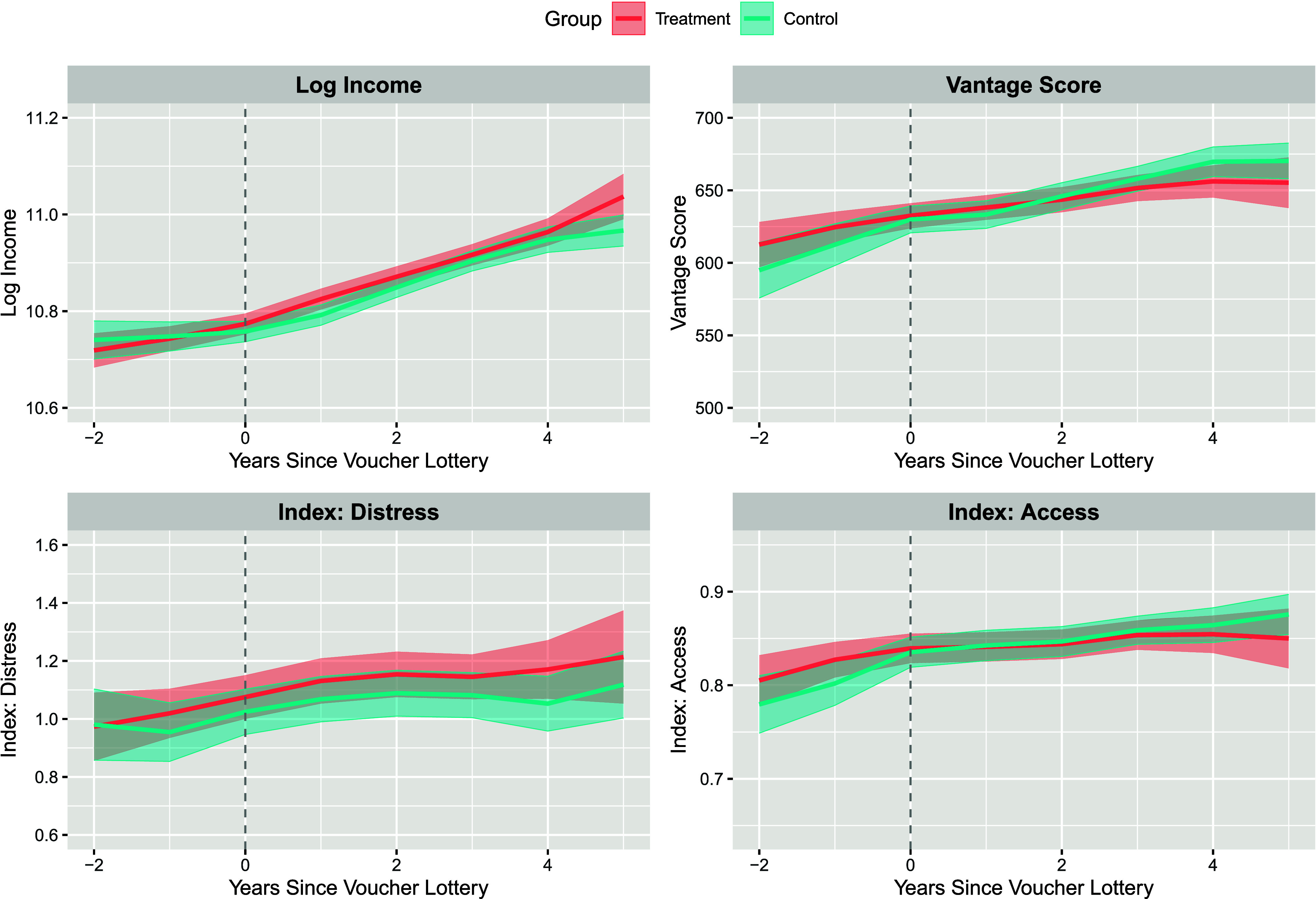
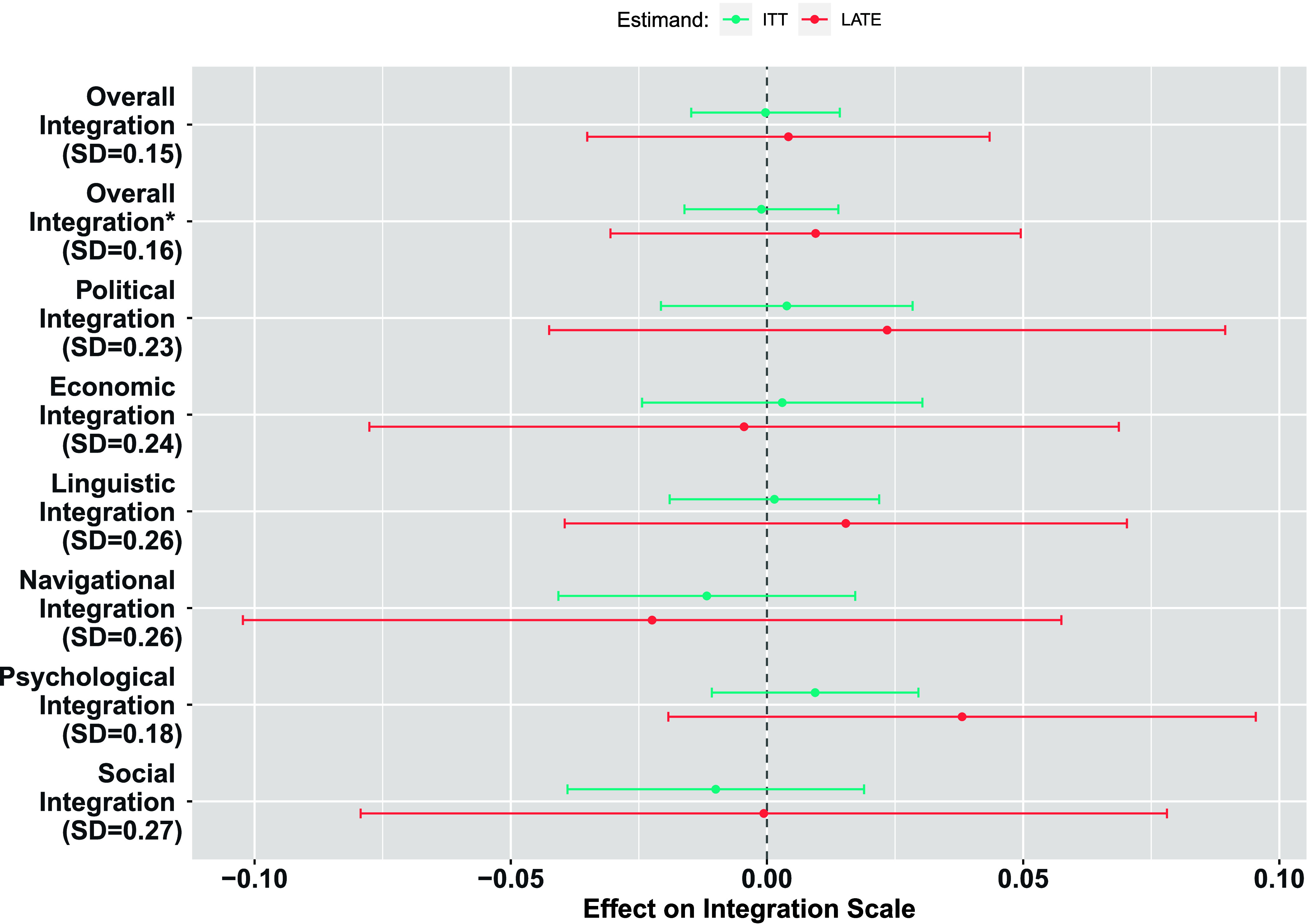
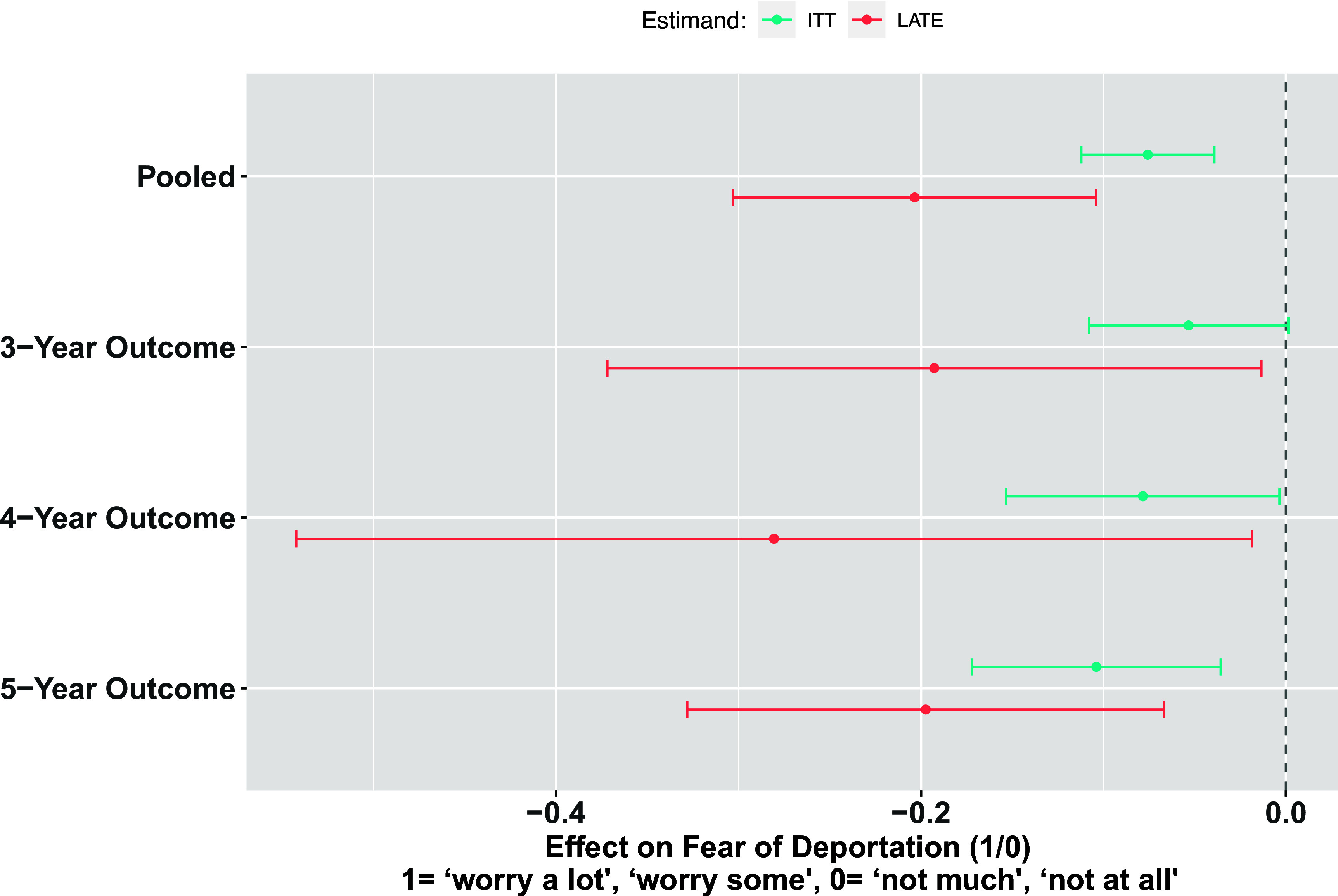
Based on observational studies, conventional wisdom suggests that citizenship carries economic benefits. We leverage a randomized experiment from New York where low-income registrants who wanted to become citizens entered a lottery to receive fee vouchers to naturalize. Voucher recipients were about 36 p.p. more likely to naturalize. Yet, we find no discernible effects of access to citizenship on several economic outcomes, including income, credit scores, access to credit, financial distress, and employment. Leveraging a multi-dimensional immigrant integration index, we similarly find no measurable effects on non-economic integration. However, we do find that citizenship reduces fears of deportation. Explaining our divergence from past studies, our results also reveal evidence of positive selection into citizenship, suggesting that observational studies of citizenship are susceptible to selection bias.
Overview
CoChat Summary
TL;DR
In a randomized naturalization fee-voucher lottery in New York (2016–2018), access to citizenship sharply increased naturalization but produced no detectable short- to medium-term improvements in economic, financial, or broader integration outcomes. The only clear benefit was reduced fear of deportation, and nonexperimental comparisons showed positive selection into citizenship.
Key findings
- The voucher increased naturalization by about 36 percentage points (first-stage partial F-statistic > 200; table estimates 0.346–0.369).
- There were no discernible effects on financial outcomes. The panel ITT effect on income was centered at 0.2%, equivalent to a $102 gain, with a 95% CI from a $767 decrease to a $1,022 increase; the three-year income point estimate was 0.0% with a 95% CI ruling out effects below −2.4% and above 2.4%. No effects were found on credit scores, financial distress, or access to credit.
- There was no support for mechanisms or noneconomic integration: no measurable effects on educational investment, employment, labor force participation, occupational upgrading, or the IPL-12 integration index (overall integration ITT = −0.0004, 95% CI −0.015 to 0.014; mean 0.65, SD 0.15).
- Citizenship reduced deportation fears: ITT estimates showed a 0.15-point reduction on a four-point scale (95% CI −0.24 to −0.06) and a 7.4 percentage-point drop in high fear (95% CI −0.11 to −0.04); LATE estimates were 0.42 points (95% CI −0.66 to −0.18) and 20.1 percentage points (95% CI −0.30 to −0.10). Nonexperimental comparisons showed positive selection: naturalizers had better outcomes, e.g., VantageScore +26.2 points (P = 0.01) and open credit line +5.6% (P = 0.004).
Methods
- Randomized encouragement design embedded in a New York statewide naturalization program operating 2016–2018. Eligible lawful permanent residents had household income at or below 300% of the Federal Poverty Guidelines; those between 150% and 300% not receiving means-tested benefits entered a lottery for a full naturalization fee voucher ($680–$725). Overall, 2,802 registrants were randomized: 1,442 treatment and 1,360 control, stratified by geographic blocks; analysis was limited to parts of New York City and Long Island.
- Data combined program registration records, annual follow-up surveys (three-year outcomes for all cohorts; four- and five-year data for the 2017 and 2016 cohorts), and matched credit bureau records with a 93.3% match rate, providing annual financial outcomes from 2016 to 2021. Outcomes included log income, VantageScore, financial distress, credit access, student loan activity, employment, labor force participation, occupational upgrading, IPL-12 integration, and deportation fear.
- Analysis estimated intention-to-treat (ITT) effects, local average treatment effects (LATE) via 2SLS using the lottery as an instrument for self-reported naturalization, panel models with individual and year fixed effects, and dynamic effects models. The study was preregistered; analyses used robust SEs, block-level inverse probability weights, and balance and attrition checks.
Limitations
- The paper states that results are limited to short- to medium-term outcomes and that longer-term follow-up is needed. It also states that findings may not generalize to other countries or time periods, with potential moderating factors including labor market flexibility, discrimination based on citizenship status, and difficulty of obtaining citizenship. Results concern access to citizenship among immigrants who already have permanent residency and do not speak to other immigrant statuses.
- The paper states that the exclusion restriction for the LATE may not strictly hold: winning the lottery could have a psychological effect or act as a one-time cash substitute for always-takers, potentially introducing a small upward bias in LATE estimates. Survey response rate was about 47%, though the paper reports no significant treatment-by-baseline interaction predicting response; credit bureau match rates were high and balanced.
- Evident from the text: the sample is restricted to low-income, motivated registrants in parts of New York City and Long Island, so the null estimates are local to that population and context; the paper argues external validity for the U.S. context using population-level ACS data.
Model-written summary. Check it against the paper before relying on it.
Integrity signals
Registry
Cites
Statistics
Figures
Verification
Claims the paper makes
0 Valid · 0 Not valid · 23 Not checked · 95 Own results and interpretations
A result the paper reports from its own data — it cites no other source for it, so there is none to check. The quote shows it is in the paper.
In the paper
“Consistent with this we did find psychological benefits in terms of reduced fears of deportation.”
§ The socioeconomic returns to citizenship: A randomized controlled trial > Discussion
plainstates a cause- Asserted: passes — The authors put it forward as true.
- Checkable: passes — It can be checked against evidence.
- Load-bearing: unclear — It is unclear whether the paper’s conclusions depend on it.
- Based: passes — The paper gives a reason why it holds.
A result the paper reports from its own data — it cites no other source for it, so there is none to check. The quote shows it is in the paper.
In the paper
“the interaction term (θ2) is also close to zero, with a slightly negative point estimate at −0.1% (95% CI =−1.1%, 0.9%)”
§ The socioeconomic returns to citizenship: A randomized controlled trial > Materials and Methods > Results.
plain- Asserted: passes — The authors put it forward as true.
- Checkable: passes — It can be checked against evidence.
- Load-bearing: passes — The paper’s conclusions depend on it.
- Based: passes — The paper gives a reason why it holds.
In the paper
“We find that the voucher assignment increased the likelihood of submitting a citizenship application by about 35 to 37 percentage points, on average (also see ref. 18).”
- Also stated in: § Abstract · plain
“we find that being selected to receive a fee voucher in the lottery resulted in a large increase in naturalization on the order of 36 percentage points (first-stage partial F-statistic > 200).”
§ The socioeconomic returns to citizenship: A randomized controlled trial > Materials and Methods > Results.
What the sources say
- Not checked yetcites [18] J. Hainmueller, A randomized controlled design reveals barriers to citizenship for low-income immigrants. Proc. Natl. Acad. Sci. U.S.A. 115, 939– 944 (2018). 29339470 PMC5798346 source
plainstates a cause- Asserted: passes — The authors put it forward as true.
- Checkable: passes — It can be checked against evidence.
- Load-bearing: passes — The paper’s conclusions depend on it.
- Based: passes — The paper gives a reason why it holds.
- Also stated in: § Abstract · plain
A result the paper reports from its own data — it cites no other source for it, so there is none to check. The quote shows it is in the paper.
In the paper
“We find that citizenship consistently reduced fears of deportation.”
§ The socioeconomic returns to citizenship: A randomized controlled trial > Materials and Methods > Results.
plainstates a causen = 1,290- Asserted: passes — The authors put it forward as true.
- Checkable: passes — It can be checked against evidence.
- Load-bearing: passes — The paper’s conclusions depend on it.
- Based: passes — The paper gives a reason why it holds.
A result the paper reports from its own data — it cites no other source for it, so there is none to check. The quote shows it is in the paper.
In the paper
“When we use the nonexperimental variation and compare naturalizers with nonnaturalizers, we find that citizenship is associated with higher income, fewer third-party debt collections, and a higher probability of having an open credit line.”
§ The socioeconomic returns to citizenship: A randomized controlled trial > Abstract
plainstates an association- Asserted: passes — The authors put it forward as true.
- Checkable: passes — It can be checked against evidence.
- Load-bearing: passes — The paper’s conclusions depend on it.
- Based: passes — The paper gives a reason why it holds.
54 more claims
Create a free account to see all 118 claims and to verify the 42 references still open.
- It may state two separate claims as one. 34
- Probably not a substantial claim. 34
Self-check
Percentages, sums and reported differences re-computed from the paper’s own numbers.
Each contradiction between two passages listed here was confirmed by an independent check.
Rated minor: it would not touch a result — a value no result rests on, a p-value that stays on the same side of the significance level, or a conflict that is clerical, resolved elsewhere in the paper, or outside its own findings.
In the paper
§ The socioeconomic returns to citizenship: A randomized controlled trial > References
“11. B. Bratsberg, J. F. Ragan Jr., Z. M. Nasir, The effect of naturalization on wage growth: A panel study of young male immigrants. J. Law Econ. 20, 568– 597 (2002).”
§ The socioeconomic returns to citizenship: A randomized controlled trial > References
“21. B. Bratsberg, J. F. Ragan Jr., Z. M. Nasir, The effect of naturalization on wage growth: A panel study of young male immigrants. J. Law Econ. 20, 568– 597 (1992).”
Citations
Cites
Controlling the False Discovery Rate: A Practical and Powerful Approach to Multiple Testing
Benjamini, Y., & Hochberg, Y. (1995) · Journal of the Royal Statistical Society Series B: Statistical Methodology · doi:10.1111/j.2517-6161.1995.tb02031.x · Cited by 109,482
Estimating dynamic treatment effects in event studies with heterogeneous treatment effects
Sun, L., & Abraham, S. (2021) · Journal of Econometrics · doi:10.1016/j.jeconom.2020.09.006 · Cited by 7,462
Identification and estimation of local average treatment effects
Imbens, G. W., & Angrist, J. D. (1994) · Econometrica · doi:10.2307/2951620 · Cited by 4,101
The Effect of Americanization on the Earnings of Foreign-born Men
Chiswick, B. R. (1978) · Journal of Political Economy · doi:10.1086/260717 · Cited by 2,775
The Oregon Health Insurance Experiment: Evidence from the First Year*
Finkelstein, A., Taubman, S., Wright, B., Bernstein, M., Gruber, J., Newhouse, J. P., Allen, H., Baicker, K., & Oregon Health Study Group (2012) · The Quarterly Journal of Economics · doi:10.1093/qje/qjs020 · Cited by 1,657
When Should You Adjust Standard Errors for Clustering?
Abadie, A., Athey, S., Imbens, G. W., & Wooldridge, J. M. (2022) · The Quarterly Journal of Economics · doi:10.1093/qje/qjac038 · Cited by 1,460
When Should You Adjust Standard Errors for Clustering?
Abadie, A., Athey, S., Imbens, G., & Wooldridge, J. (2017) · National Bureau of Economic Research · doi:10.3386/w24003 · Cited by 1,360
Field Experiments of Discrimination in the Market Place
Riach, P. A., & Rich, J. (2002) · The Economic Journal · doi:10.1111/1468-0297.00080 · Cited by 911
Semiparametric instrumental variable estimation of treatment response models
Abadie, A. (2003) · Journal of Econometrics · doi:10.1016/s0304-4076(02)00201-4 · Cited by 901
You Can't Take It with You? Immigrant Assimilation and the Portability of Human Capital
Friedberg, R. M. (2000) · Journal of Labor Economics · doi:10.1086/209957 · Cited by 810
Research works printed but not linked: 4
- [38]C. Gathmann, O. Monscheuer, Naturalization and citizenship: Who benefits? IZA World Labor 125, e223607 (2020).
- [46]J. E. Hayfron, “The economics of Norwegian citizenship” in The Economics of Citizenship, P. Bevelander, D. DeVoretz, Eds. (Malmo University, 2008), pp. 89–104.
- [64]S. Ruggles, Integrated public use microdata series: Version 9.0 [dataset]. Minneap. Univ. Minn. 23, 56 (2019).
- [66]E. Hartman, R. Grieve, R. Ramsahai, J. S. Sekhon, From sate to patt: Combining experimental with observational studies to estimate population treatment effects. JR Stat. Soc. Ser. A Stat. Soc. 10, 1111 (2015).
Cited by
Rescaling citizenship: revisiting debates on territory, rights, and membership
Falcke, S., & Peters, F. (2025) · Journal of Ethnic and Migration Studies · doi:10.1080/1369183x.2025.2550109 · Cited by 16
The economic returns to citizenship: Evidence from a meta-analysis
Hainmueller, J., & Laitin, D. D. (2026) · Proceedings of the National Academy of Sciences · doi:10.1073/pnas.2617804123
Self-citationA framework for bridging conventional and critical perspectives on immigrant assimilation
Asad, A. L., & Dahir, N. (2026) · Ethnic and Racial Studies · doi:10.1080/01419870.2026.2667901
Intergenerational Mobility Across Origins in France
Sirugue, L. (2024) · theses.fr (ABES) · doi:10.70675/5cd7b827zd475z430fz9138z4f34e4ebd1d2
Catron, P., Hoffmann, N. I., & Li, M. (2026) · American Sociological Review · doi:10.1177/00031224261489725
Metadata
- Authors
- Hainmueller, J., Cascardi, E., Hotard, M., Koslowski, R., Lawrence, D., Yasenov, V., & Laitin, D.
- Affiliations
- Stanford University (US)
- University at Albany, State University of New York (US)
- Corresponding author
- Laitin, David
- Venue
- Proceedings of the National Academy of Sciences
- Publisher
- Elsevier BV
- Published
- 2023
- Volume
- 123
- Issue
- 5
- Pages
- e2516178123-e2516178123
- ISSN
- 0027-8424 (ISSN-L)
- PMC
- PMC12867681
- OpenAlex
- W7126274542
- Cited by
- 7
- References
- 76
- Citations by year
- 2026: 4 · 2025: 2 · 2024: 1
- FWCI
- 15.12
- Type
- journal article
- Language
- en
- Open access
- hybrid
- doi.org
- Licence
- cc-by-nc-nd
- Locations
- Proceedings of the National Academy of Sciences (publishedVersion, cc-by-nc-nd)
- SSRN Electronic Journal (submittedVersion)
- SocArXiv (OSF Preprints) (submittedVersion, cc-by-nd)
- PubMed Central (publishedVersion, cc-by-nc-nd)
- PubMed (publishedVersion)
- RePEc: Research Papers in Economics (submittedVersion)
- Econstor (Econstor) (submittedVersion)
- SocArXiv (OSF Preprints) (submittedVersion)
- Zenodo (CERN European Organization for Nuclear Research) (submittedVersion, cc-by)
- Funders
- New York Community Trust (P16-00010)
- Robin Hood Foundation (SPO 123714, 123714)
- University of California, Davis
- Topics
- Social Sciences › Sociology and Political Science › Migration, Refugees, and Integration
- Social Sciences › Sociology and Political Science › Migration and Labor Dynamics
- Social Sciences › Sociology and Political Science › Urban, Neighborhood, and Segregation Studies
- Keywords
- citizenship, naturalization, permanent residence, lotteries, low-income immigrants, socioeconomic outcomes, income, credit scores, access to credit, financial distress, employment, immigrant integration, fear of deportation, selection bias, New York
- MeSH terms
- Humans, Income, New York, Poverty, Socioeconomic Factors, Emigrants and Immigrants
About these checks
Registry, retraction, Cites and statistics results are computed, not judged, with one exception: a printed reference that no index lists is read once by a model before it counts as a citation error. Claims are extracted by a model and kept only when their quote appears verbatim in the text; each cited source is then checked, with a model’s help, for whether it says what the claim relies on. Those verdicts can be wrong — read the claim’s quote and the cited source before relying on one.
A language model drew the claims from the paper on 2026-11-27, under version 3 of the claim definition (model deepseek-v4.1-flash, prompt extract-v3).
A second model labelled each claim on 2026-11-27 (model jev-1.13-20260917, definition revision gold-guideline-v0.2).
Statistics and arithmetic are recomputed, not judged.
Confidence bands are shown only for fields calibrated on our annotated test set. None is calibrated yet, so no band is shown.
What counts as a claim ›How we measure confidence ›How we check this ›
Are you an author, or do you see a problem with this page? Request a review
Data sources
Bibliographic data: Semantic Scholar, OpenAlex, Crossref.
Contains information from the Semantic Scholar Academic Graph Datasets, made available under the ODC Attribution License (ODC-BY 1.0).
Semantic Scholar’s data is described in: Kinney, R., et al. (2023). The Semantic Scholar Open Data Platform. arXiv:2301.10140.
