

Early Detection of Renal Impairment Among Patients with Type 2 Diabetes Mellitus Through Evaluation of Serum Cystatin C in Comparison with Serum Creatinine Levels: A Cross-Sectional Study
Open accessThe DOI matches its Crossref record; 16 of the 16 references it cites were found in a registry or an index.
Abstract
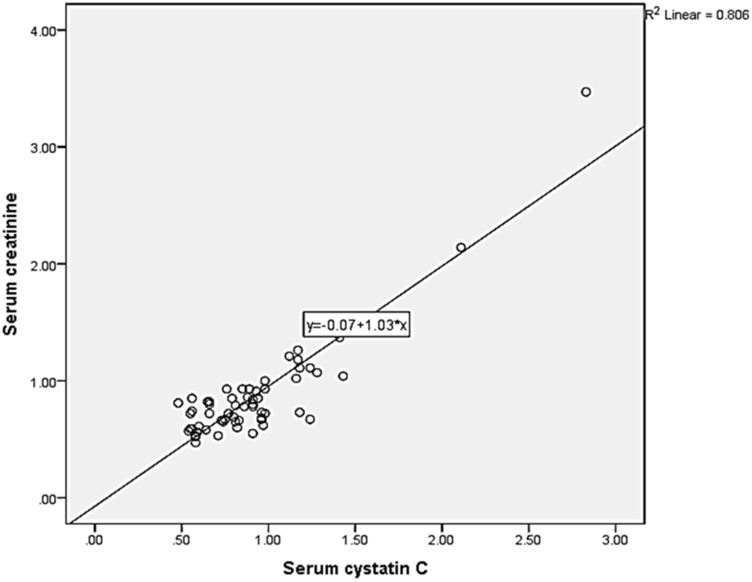
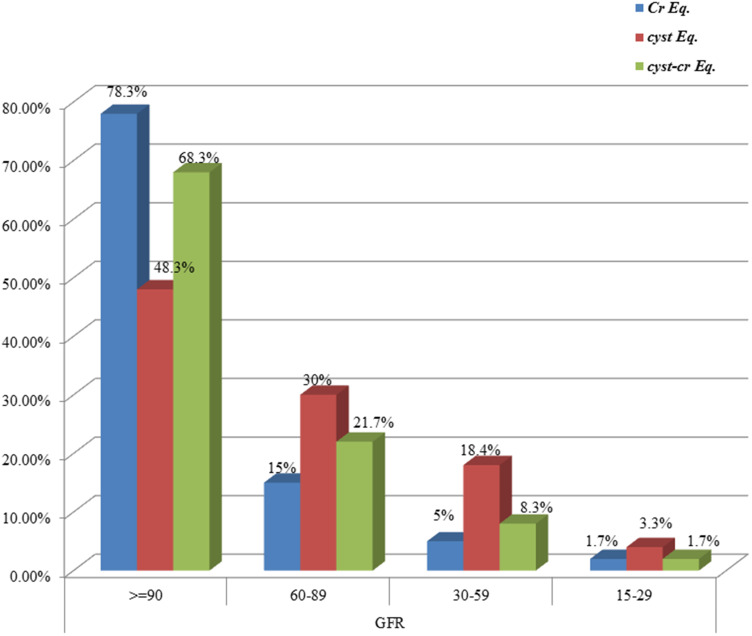
Background: The proportion of patients with end-stage renal disease caused by diabetes has progressively increased during the last few decades. Serum creatinine level is the most commonly used biochemical parameter to estimate GFR in routine practice. However, 50% of GFR can be lost before significant elevation of serum creatinine. Cystatin C is found to be a new promising marker for early detection of renal diseases. Objective of the Study: The aim of this study was to determine the value of serum cystatin C and serum creatinine levels for early detection of renal disease in patients with type 2 diabetes mellitus. Methodology: A hospital-based comparative cross-sectional study was conducted with a sample size of 120. For early detection of renal disease in patients with type 2 diabetes mellitus, serum creatinine and cystatin C levels were measured and compared. Result and Discussion: Serum creatinine and cystatin C levels were significantly increased in patients with type 2 diabetes mellitus compared to healthy controls. The mean±SD value of serum creatinine was found to be 0.87± 0.44 mg/dL in patients and 0.63± 0.27 mg/dL in control. Serum cystatin C level was also found to be significantly ( P =0.0001) higher in patients (0.92± 0.38 mg/L) compared to controls (0.52± 0.20 mg/L). The mean±SD of eGFR in three equations (Creatinine Equation, Cystatin C Equation, and Creatinine–Cystatin C Equation) were 105.7± 27.5 mL/min/m 2 , 90.4± 28.2 mL/min/m 2 , and 100± 29.5 mL/min/m 2 , respectively. Conclusion: Cystatin C-based GFR estimation equations detect renal impairment in patients with type 2 diabetes mellitus earlier than creatinine-based GFR estimation equations. Keywords: diabetic nephropathy, type 2 diabetes, serum cystatin C, creatinine
Overview
The claims and statistics of this paper haven’t been checked yet.
Free: it reads the open-access text and checks the first 5 claims that cite a source we can check. Create a free account to check every claim.
Integrity signals
Registry
Cites
Statistics
Figures
Verification
Claims the paper makes
The claims and statistics of this paper haven’t been checked yet.
Free: it reads the open-access text and checks the first 5 claims that cite a source we can check. Create a free account to check every claim.
Claims other papers make about this one
Each is checked against this paper’s own text: does it say what the citing paper says it does?
The cited source says what the claim attributes to it.
In the citing paper
“Cystatin C may also detect kidney dysfunction at an earlier stage than creatinine in people with diabetes (480).”
From Guidelines and Recommendations for Laboratory Analysis in the Diagnosis and Management of Diabetes Mellitus (2023) · cites this paper as [480]
Self-check
Percentages, sums and reported differences re-computed from the paper’s own numbers.
The self-check needs the paper’s full text.
Citations
Cites
Shlipak, M. G., Katz, R., Sarnak, M. J., Fried, L. F., Newman, A. B., Stehman-Breen, C., Seliger, S. L., Kestenbaum, B., Psaty, B., Tracy, R. P., et al. (2006) · Annals of Internal Medicine · doi:10.7326/0003-4819-145-4-200608150-00003 · Cited by 540
Ix, J. H., Shlipak, M. G., Chertow, G. M., & Whooley, M. A. (2007) · Circulation · doi:10.1161/circulationaha.106.644286 · Cited by 326
Finney, H., Newman, D. J., Gruber, W., Merle, P., & Price, C. P. (1997) · Clinical Chemistry · doi:10.1093/clinchem/43.6.1016 · Cited by 318
GRUBB, A. O. (2020) · Clinical Biochemistry · doi:10.1016/j.clinbiochem.2020.06.002 · Cited by 88
Alehagen, U., Dahlström, U., & Lindahl, T. L. (2009) · European Journal of Heart Failure · doi:10.1093/eurjhf/hfp024 · Cited by 81
Åkesson, A., Lindström, V., Nyman, U., Jonsson, M., Abrahamson, M., Christensson, A. G., Björk, J., & GRUBB, A. O. (2020) · Scandinavian Journal of Clinical and Laboratory Investigation · doi:10.1080/00365513.2020.1759139 · Cited by 73
Tsai, C.-W., Grams, M. E., Inker, L. A., Coresh, J., & Selvin, E. (2014) · Diabetes Care · doi:10.2337/dc13-1910 · Cited by 67
Cystatin C is Indispensable for Evaluation of Kidney Disease.
GRUBB, A. O. (2017) · PubMed Central · Cited by 36
Estimating glomerular filtration rate in diabetes using serum cystatin C.
MacIsaac, R. J., Premaratne, E., & Jerums, G. (2011) · Europe PMC (PubMed Central) · Cited by 30
Alprostadil plays a protective role in contrast-induced nephropathy in the elderly
Miao, Y., Zhong, Y., Hong, Y., Li, W., Wang, B., & Jin, J. (2013) · International Urology and Nephrology · doi:10.1007/s11255-013-0484-1 · Cited by 28
Research works printed but not linked: 4
- Aksun S, Öncel T, Avşar C, Demir L, Tengiz F, Narin F. Condition Assessment Study For More Effective Medical Biochemistry Education. Clin Chem Lab Med. 2018; 56: 11.
- Aksun S, Öncel T. Condition Assessment Study for More Effective Medical Biochemistry Education. Clin Chem Lab Med; 56; 2018.
- Andreoli ET, Fitz JG, Benjamin I. Andreoli and Carpenter’s Cecil Essentials of Medicine E-Book. Elsevier Health Sciences; 2010.
- McLeod S. What a p-value tells you about statistical significance. Luettavissa. 2019; 2020.
Cited by
Sacks, D. B., Arnold, M., Bakris, G. L., Bruns, D. E., Horvath, A. R., Lernmark, Å., Metzger, B. E., Nathan, D. M., & Kirkman, M. S. (2023) · Diabetes Care · doi:10.2337/dci23-0036 · Cited by 351
Sacks, D. B., Arnold, M. A., Bakris, G. L., Bruns, D. E., Horvath, A. R., Lernmark, Å., Metzger, B. E., Nathan, D. M., & Kirkman, M. S. (2023) · Clinical Chemistry · doi:10.1093/clinchem/hvad080 · Cited by 208
Dejenie, T. A., Abebe, E. C., Mengstie, M. A., Seid, M. A., Gebeyehu, N. A., Adella, G. A., Kassie, G. A., Gebrekidan, A. Y., Gesese, M. M., Tegegne, K. D., et al. (2023) · Frontiers in Endocrinology · doi:10.3389/fendo.2023.1124367 · Cited by 42
Zhang, Y., Liao, H., Shen, D., Zhang, X., Wang, J., Zhang, X., Wang, X., & Li, R. (2022) · Frontiers in Pharmacology · doi:10.3389/fphar.2021.743931 · Cited by 22
Jamil, M., Dorisnita, D., & Ardayanti, L. (2021) · Jurnal Ilmiah Universitas Batanghari Jambi · doi:10.33087/jiubj.v21i2.1581 · Cited by 12
Cystatin C-based equations: Enhancing accuracy in kidney function tests for type 2 diabetes
Gembillo, G., Sessa, C., & Santoro, D. (2025) · World Journal of Nephrology · doi:10.5527/wjn.v14.i3.102756 · Cited by 11
Cistatina C como marcador de daño renal en pacientes con diabetes mellitus tipo II
Lara, A., & Fiallos, A. V. D. L. T. (2024) · Revista Científica Arbitrada Multidisciplinaria PENTACIENCIAS · doi:10.59169/pentaciencias.v6i3.1102 · Cited by 8
Wang, H., Li, L., Wu, J., Yuan, X., Hong, L., Pu, L., Qin, S., Li, L., Yang, H., & Zhang, J. (2025) · Poultry Science · doi:10.1016/j.psj.2025.105275 · Cited by 6
Mahashabde, M., Chauhan, R. S., Paidi, S. K. R., & Sriram, P. J. (2025) · Annals of African Medicine · doi:10.4103/aam.aam_124_25 · Cited by 6
Fan, J., Zuo, L., Li, F., Wang, B., An, Y., & Yu, D. (2024) · Journal of Renal Nutrition · doi:10.1053/j.jrn.2024.04.002 · Cited by 5
Ngai, A. W., Baig, A., Zia, M., Arca-Contreras, K., Haque, N. U., Livetsky, V., Rokicki, M., & Sukhram, S. D. (2025) · International Journal of Molecular Sciences · doi:10.3390/ijms26157412 · Cited by 5
AL-Fatlawi, H. Y., & Jwad, S. M. (2022) · UTTAR PRADESH JOURNAL OF ZOOLOGY · doi:10.56557/upjoz/2022/v43i93018 · Cited by 4
Enfermedad Renal: El Papel de los Biomarcadores para el Diagnóstico y Monitoreo
Santana, C. I. C., Mero, N. E. P., Regalado, J. C. P., & Chisaguano, J. P. T. (2025) · Revista Veritas de Difusão Cientifica. · doi:10.61616/rvdc.v6i2.852 · Cited by 3
Rahemmah, A. Z., Choobineh, H., Nabatchian, F., Majidi, Z., & Rahimkhani, M. (2026) · Journal of Diabetes & Metabolic Disorders · doi:10.1007/s40200-026-01909-4 · Cited by 2
Matute-Uloa, G. H., Bacusoy-Palma, J. C., & Lino-Villacreses, W. A. (2024) · MQRInvestigar · doi:10.56048/mqr20225.8.1.2024.2593-2616 · Cited by 1
Ibrahim, R., Alabi, M. A., Yusuf, B. O., Ibrahim, L. B., Ahmad, J., Ogunyale, K., Oladiji, E. O., & Bashir, R. (2022) · Journal of Medical Sciences(Faisalabad) · doi:10.3923/jms.2022.208.218 · Cited by 1
Association of Lipid Profile with Diabetic Kidney Disease in Type 2 Diabetes Mellitus.
Hameed, S. Y., Meena, M. Q., & Mansour, A. A. (2025) · Journal of Pioneering Medical Science · doi:10.47310/jpms2025140710 · Cited by 1
Nefropatía diabética: una revisión bibliográfica de la etiología, evaluación y tratamiento
Aguaiza, H. B. C., Choez, J. F. C., Peñafiel, N. Y. C., & Ortiz, J. B. M. (2025) · UNESUM-SALUD · doi:10.47230/unesum-salud.v4.n1.2025.197-210 · Cited by 1
Ali, S. A. (2026) · International Journal of Advanced Biochemistry Research · doi:10.33545/26174693.2026.v10.i1p.7251 · Cited by 1
Sajid, A., Niaz, A., Ishfaq, A., Tahir, M. Z., Chohan, A. R., & Tahir, M. Z. (2025) · BMC Journal of Medical Sciences · doi:10.70905/bmcj.06.02.0529 · Cited by 1
Agidew, M. M., Gizaw, S. T., & Menon, M. (2022) · SSRN Electronic Journal · doi:10.2139/ssrn.4170539
Self-citationStudy of the Level of Cystatin C in Type 2 Diabetes Mellitus with Obesity
Shaaban, M. A., Aboelkhair, N. T., Darwish, O. S., & hamed, M. B. (2023) · Menoufia Medical Journal · doi:10.59204/2314-6788.1014
Kazaryan, S. V. K., Bazarbekovna, B. R., Kassimbekovna, D. A., Kainarbekova, N., & Zhakebayeva, A. (2024) · Expert Review of Endocrinology & Metabolism · doi:10.1080/17446651.2024.2363543
Hamoud, A., Wanas, H., Bayoumi, A. H., Shuaib, D. M., Zickri, M. B., Gouda, M., & Motawie, A. G. (2025) · Folia Morphologica · doi:10.5603/fm.103545
Ashour, L., Jarrar, Z. M., Alzoubi, G., Hamdan, S., Heramas, R., Alakhdar, D., Jeries, J. A., Mishleb, A., Marar, M., Ayesh, L., et al. (2025) · Critical Pathways in Cardiology A Journal of Evidence-Based Medicine · doi:10.1097/hpc.0000000000000386
Tolossa, W. J., Leulseged, T. W., Yesufe, A. A., Challa, F., Mezgebu, T., Aytehgeza, R. S., Mera, N. A., Asfaw, K. G., Ahmed, M. M., & Begna, K. H. (2025) · PLoS ONE · doi:10.1371/journal.pone.0325883
Baliga, S. S., Singh, A., Walvekar, P., Handigund, R. S., & Karishetti, M. S. (2025) · Indian Journal of Forensic and Community Medicine · doi:10.18231/j.ijfcm.12854.1761281555
Baliga, S. S., Walvekar, P., Karishetti, M. S., Handigund, R. S., & Kandula, D. P. (2026) · Indian Journal of Forensic and Community Medicine · doi:10.18231/j.ijfcm.16900.1782714827
Podder, A., Sarker, M. S., Matin, M. R. A., Barman, M., Sarker, A., & Hasan, M. F. (2026) · Pacific Journal of Medical Research · doi:10.70818/pjmr.v03i03.0294
Metadata
- Authors
- Asmamaw, T., Genet, S., Menon, M., Tarekegn, G., Chekol, E., Geto, Z., Lejisa, T., Habtu, W., Getahun, T., & Tolcha, Y.
- Affiliations
- Addis Ababa University (ET)
- Ethiopian Public Health Institute (ET)
- ORCID
- Venue
- Diabetes, Metabolic Syndrome and Obesity: Targets and Therapy
- Publisher
- Informa UK Limited
- Published
- 2020-12
- Volume
- Volume 13
- Pages
- 4727-4735
- ISSN
- 1178-7007 (ISSN-L)
- PMC
- PMC7721116
- OpenAlex
- W3108770176
- Semantic Scholar
- 75b053fb64b1743a0a2b834ee30aae03fe349779
- Cited by
- 20
- References
- 16
- Citations by year
- 2026: 1 · 2025: 6 · 2024: 4 · 2023: 4 · 2022: 4 · 2021: 1
- FWCI
- 1.41
- Type
- journal article
- Language
- en
- Open access
- gold
- doi.org
- Licence
- Locations
- Diabetes Metabolic Syndrome and Obesity (publishedVersion, cc-by-nc)
- PubMed Central (publishedVersion, cc-by-nc)
- PubMed (publishedVersion)
- DOAJ (DOAJ: Directory of Open Access Journals) (submittedVersion, cc-by-sa)
- Dove Medical Press (Taylor and Francis Group) (submittedVersion, cc-by-nc)
- Funders
- Addis Ababa University
- Topics
- Health Sciences › Medicine › Nephrology › Chronic Kidney Disease and Diabetes
- Health Sciences › Medicine › Nephrology › Acute Kidney Injury Research
- Health Sciences › Medicine › Nephrology › Dialysis and Renal Disease Management
- Keywords
- cystatin C, serum creatinine, type 2 diabetes, diabetic nephropathy, glomerular filtration rate estimation, creatinine-based equations, end-stage renal disease
About these checks
Registry, retraction, Cites and statistics results are computed, not judged, with one exception: a printed reference that no index lists is read once by a model before it counts as a citation error. Claims are extracted by a model and kept only when their quote appears verbatim in the text; each cited source is then checked, with a model’s help, for whether it says what the claim relies on. Those verdicts can be wrong — read the claim’s quote and the cited source before relying on one.
Statistics and arithmetic are recomputed, not judged.
Confidence bands are shown only for fields calibrated on our annotated test set. None is calibrated yet, so no band is shown.
What counts as a claim ›How we measure confidence ›How we check this ›
Are you an author, or do you see a problem with this page? Request a review
Data sources
Bibliographic data: Semantic Scholar, OpenAlex, Crossref.
Contains information from the Semantic Scholar Academic Graph Datasets, made available under the ODC Attribution License (ODC-BY 1.0).
Semantic Scholar’s data is described in: Kinney, R., et al. (2023). The Semantic Scholar Open Data Platform. arXiv:2301.10140.
