

Medication Administration Errors and Associated Factors Among Nurses
Open accessThe DOI matches its Crossref record; 28 of the 28 references it cites were found in a registry or an index.
Abstract
INTRODUCTION: Medication error has the potential to lead to harm to the patient. It is the leading cause of threatens trust in the healthcare system, induce corrective therapy, and prolong patients' hospitalization, produces extra costs and even death. This study aimed to assess medication administration error (MAE) and associated factors among nurses in referral hospitals of Ethiopia. METHODS: Institutional-based, cross-sectional study design was used, and 422 study participants were selected using a simple random sampling method. Data were collected using a semi-structured and pre-tested self-administered questionnaire and observational checklist. The collected data were analyzed using descriptive and analytical statistics and binary logistic regression was done to identify factors associated with medication administration errors. P-value ≤ 0.05 was considered statistically significant. RESULTS: Four hundred fourteen participants with a response rate of 98.1% were involved and 54.3% were females. The median age was 30 with IQR (28-34) years and the majority of them (83.8%) had BSc qualification in nursing. The prevalence of MAE in this study was 57.7% and 30.4% of them made it more than three times. Wrong time (38.6%), wrong assessment (27.5%), and wrong evaluation (26.1%) were the most frequently perpetuated medication administration errors. Significant association between medication administration errors and lack of training [AOR=2.20; 95% CI (1.09, 4.46)], unavailability of guideline [AOR=1.65; 95% CI (1.03, 2.79)], poor communication when face problem [AOR=3.31; 95% CI (2.04, 5.37)], interruption [AOR = 3.37, 95% CI (2.15, 5.28)] and failure to follow medication administration rights [AOR=1.647; 95% CI (1.00, 2.49)] was noticed. CONCLUSION: MAE was high in the study area as compared to studies from Jimma University Specialized Hospital, Adigrat and Mekelle University Hospital, and the University of Gondar Referral Hospital and hence developing guidelines, providing training, and develop strategies to minimize distracters are better to be undertaken.
Overview
The claims and statistics of this paper haven’t been checked yet.
Free: it reads the open-access text and checks the first 5 claims that cite a source we can check. Create a free account to check every claim.
Integrity signals
Registry
Cites
Statistics
Figures


Verification
Claims the paper makes
The claims and statistics of this paper haven’t been checked yet.
Free: it reads the open-access text and checks the first 5 claims that cite a source we can check. Create a free account to check every claim.
Claims other papers make about this one
Each is checked against this paper’s own text: does it say what the citing paper says it does?
The source backs part of the claim, not all of it — or backs it for a different population, condition or comparison.
In the citing paper
“Apart from very few studies focused on the interruption of medication administration, which is considered a priority in nursing care [2], there is a lack of investigations on specific nursing tasks.”
From Workflow interruption and nurses’ mental workload in electronic health record tasks: An observational study (2023) · cites this paper as [2]
Experimental — accuracy not yet measuredThe source backs part of the claim, not all of it — or backs it for a different population, condition or comparison.
In the citing paper
“However, interruptions in EHR tasks are quite common, as EHR tasks are considered one of the lowest priorities in nursing care under the modern nursing emphasis on being”
From Workflow interruption and nurses’ mental workload in electronic health record tasks: An observational study (2023) · cites this paper as [2]
Experimental — accuracy not yet measuredIn the citing paper
“some studies have suggested that they are associated with compromised working efficiency, error and patient safety [2].”
From Workflow interruption and nurses’ mental workload in electronic health record tasks: An observational study (2023) · cites this paper as [2]
Self-check
Percentages, sums and reported differences re-computed from the paper’s own numbers.
The self-check needs the paper’s full text.
Citations
Cites
Improving Patient Care: The Implementation of Change in Health Care
(2013) · doi:10.1002/9781118525975 · Cited by 506 · cited 1×
“Having a consistent reporting system and providing care based on guidelines could prevent 75% of the occurrence of harm to hospitalized patients.(21) Medication administration errors can also be prevented by the use of technology like bar-coding for medications and patients, smart infusion pumps for intravenous admini…”
BackgroundWestbrook, J. I., Rob, M. I., Woods, A., & Parry, D. (2011) · BMJ Quality & Safety · doi:10.1136/bmjqs-2011-000089 · Cited by 348 · cited 4×
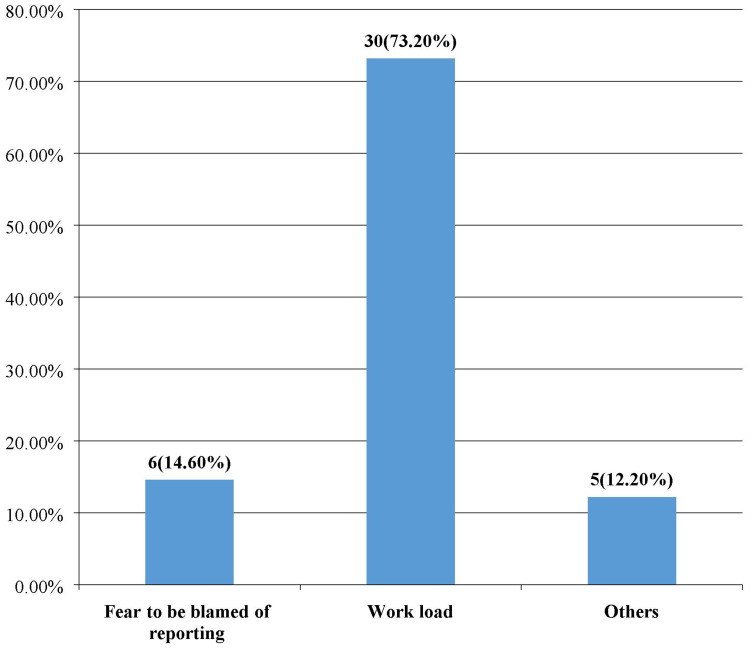
“On the other hand, the result of this finding was lower than studies conducted in two public hospitals of Southern Ethiopia, the pediatrics ward at JUSH and teaching hospitals in Australia.(26,30,34) This may be attributed to the variation in the number of hospitals considered during Figure 4 Reason for not reporting…”
ResultInfluentialMedication Errors in the Southeast Asian Countries: A Systematic Review
Salmasi, S., Khan, T. M., Hong, Y. H., Ming, L. C., & Wong, T. W. (2015) · PLOS ONE · doi:10.1371/journal.pone.0136545 · Cited by 183
Medication administration error: magnitude and associated factors among nurses in Ethiopia
Feleke, S. A., Mulatu, M. A., & Yesmaw, Y. S. (2015) · BMC Nursing · doi:10.1186/s12912-015-0099-1 · Cited by 175
Nurses’ perceptions of medication errors and their contributing factors in South Korea
Kim, K. S., Kwon, S., Kim, J., & Cho, S. (2011) · Journal of Nursing Management · doi:10.1111/j.1365-2834.2011.01249.x · Cited by 162 · cited 3×
“Poor communication with other nurses when they had problems was another factor significantly associated with medication administration which was similar to a study conducted in South Korea.36 Effective communication and collaboration between healthcare providers, such as open communications, error reporting, and team…”
ResultInfluentialAdverse Drug Events and Medication Errors in African Hospitals: A Systematic Review
Mekonnen, A. B., Alhawassi, T. M., McLachlan, A. J., & Brien, J.-A. E. (2017) · Drugs - Real World Outcomes · doi:10.1007/s40801-017-0125-6 · Cited by 143
Fathi, A., Hajizadeh, M., Moradi, K., Zandian, H., Dezhkameh, M., Kazemzadeh, S., & Rezaei, S. (2017) · Epidemiology and Health · doi:10.4178/epih.e2017022 · Cited by 111 · cited 2×
“The prevalence of MAE in this self-reported study was relatively consistent with studies conducted at Felege Hiwot referral hospital and research done in Kenya(25,27) but much higher than a study conducted in teaching hospitals in west Iran.(24) The difference might be because the previous study was done in a develope…”
ResultBarriers to Medical Error Reporting for Physicians and Nurses
Soydemir, D., Seren Intepeler, S., & Mert, H. (2017) · Western Journal of Nursing Research · doi:10.1177/0193945916671934 · Cited by 82
Medication administration errors in an intensive care unit in Ethiopia
Abejew, A. A., Ayele, Y., Bedada, W., & Woldie, M. K. (2012) · International Archives of Medicine · doi:10.1186/1755-7682-5-15 · Cited by 81 · cited 1×
“Medication administration error was most commonly practiced at referral hospitals of Amhara region as compared Jimma University Specialized Hospital, Adigrat and Mekelle University Hospitals, and university of Gondar referral hospital.(22,32,33) Although all these findings were from Ethiopian Hospitals, the constitute…”
Härkänen, M., Vehviläinen-Julkunen, K. M., Murrells, T., Rafferty, A. M., & Franklin, B. D. (2018) · Research in Social and Administrative Pharmacy · doi:10.1016/j.sapharm.2018.11.010 · Cited by 77
Research works printed but not linked: 7
- Grissinger, 2009, PT, 34, 10
- Harkanen, 2018, Res Soc Admi Pharm
- Mohajan, 2018, Int J Public Health Health Sys, 3, 91
- Aboshaiqah, 2013, Middle East J Sci Res, 17, 130
- Huynh, 2016, J Healthc Eng, 2016
- Sadat-Ali, 2010, Saudi Med J, 31, 1257
- Yemisirach, 2010, Tropical J Pharm Res, 9, 401
Cited by
Shan, Y., Shang, J., Yan, Y., & Ye, X. (2023) · BMC Nursing · doi:10.1186/s12912-023-01209-9 · Cited by 79
“However, interruptions in EHR tasks are quite common, as EHR tasks are considered one of the lowest priorities in nursing care under the modern nursing emphasis on being "human oriented"; hence, there is a dearth of studies examining EHR tasks [2].”
BackgroundInfluentialEvaluation of Applying the PDCA Cycle on Medication Administration in the Emergency Departments
Salameh, W. M. K. B., Mohammad, A. A. S., Alshurideh, M. T., Alolayyan, M. N., Hunitie, M. F. A., Rababah, M. W., Haija, A. A. A., Al-Hawary, S. I. S., Alzyoud, M. S., & Al-hawajreh, K. M. (2025) · Studies in computational intelligence · doi:10.1007/978-3-031-74220-0_24 · Cited by 50
Öztürk Şahin, Ö., Aközlü, Z., & Taşdelen, Y. (2023) · Nurse Education in Practice · doi:10.1016/j.nepr.2023.103712 · Cited by 23
Schroers, G., Ross, J. G., & Moriarty, H. (2022) · Journal of Professional Nursing · doi:10.1016/j.profnurs.2022.05.012 · Cited by 28
Mohammed, T., Mahmud, S., Gintamo, B., Mekuria, Z. N., & Gizaw, Z. (2022) · BMJ Open · doi:10.1136/bmjopen-2022-066531 · Cited by 21
Metadata
- Authors
- Tsegaye, D., Alem, G., Tessema, Z., & Alebachew, W.
- Affiliations
- Debre Markos University (ET)
- Venue
- International Journal of General Medicine
- Publisher
- Informa UK Limited
- Published
- 2020-12
- Volume
- Volume 13
- Pages
- 1621-1632
- ISSN
- 1178-7074 (ISSN-L)
- PMC
- PMC7764714
- OpenAlex
- W3115860094
- Cited by
- 93
- References
- 28
- Citations by year
- 2026: 19 · 2025: 26 · 2024: 19 · 2023: 15 · 2022: 9 · 2021: 5
- FWCI
- 6.78
- Type
- journal article
- Language
- en
- Open access
- gold
- doi.org
- Licence
- Locations
- International Journal of General Medicine (publishedVersion, cc-by-nc)
- PubMed Central (publishedVersion, cc-by-nc)
- PubMed (publishedVersion)
- DOAJ (DOAJ: Directory of Open Access Journals) (submittedVersion, cc-by-sa)
- Dove Medical Press (Taylor and Francis Group) (submittedVersion, cc-by-nc)
- Funders
- Debre Markos University
- Topics
- Health Sciences › Medicine › Public Health, Environmental and Occupational Health › Patient Safety and Medication Errors
- Health Sciences › Medicine › Infectious Diseases › Infection Control in Healthcare
- Life Sciences › Pharmacology, Toxicology and Pharmaceutics › Toxicology › Pharmacovigilance and Adverse Drug Reactions
- Keywords
- medication administration errors, nurses, medication errors, nursing training, clinical guidelines, communication, interruptions, referral hospitals, Ethiopia
About these checks
Registry, retraction, Cites and statistics results are computed, not judged, with one exception: a printed reference that no index lists is read once by a model before it counts as a citation error. Claims are extracted by a model and kept only when their quote appears verbatim in the text; each cited source is then checked, with a model’s help, for whether it says what the claim relies on. Those verdicts can be wrong — read the claim’s quote and the cited source before relying on one.
Statistics and arithmetic are recomputed, not judged.
Confidence bands are shown only for fields calibrated on our annotated test set. None is calibrated yet, so no band is shown.
What counts as a claim ›How we measure confidence ›How we check this ›
Are you an author, or do you see a problem with this page? Request a review
How to cite
Cite CoChat for the checks on this page, and the paper for its own findings.
- This page
- CoChat. (2026). Citation check: Medication Administration Errors and Associated Factors Among Nurses. https://app.cochat.ai/papers/10.2147/ijgm.s289452
- The paper
- Tsegaye, D., Alem, G., Tessema, Z., & Alebachew, W. (2020). Medication Administration Errors and Associated Factors Among Nurses. International Journal of General Medicine. https://doi.org/10.2147/ijgm.s289452
Data sources
Bibliographic data: Semantic Scholar, OpenAlex, Crossref.
Contains information from the Semantic Scholar Academic Graph Datasets, made available under the ODC Attribution License (ODC-BY 1.0).
Semantic Scholar’s data is described in: Kinney, R., et al. (2023). The Semantic Scholar Open Data Platform. arXiv:2301.10140.
