

Intranasal Corticosteroids: Topical Potency, Systemic Activity and Therapeutic Index
Open accessThe DOI matches its Crossref record; 63 of the 63 references it cites were found in a registry or an index.
Abstract
Intranasal corticosteroid (INCS) therapy is the preferred treatment option for allergic rhinitis (AR). Although all INCSs for the treatment of AR are considered safe and effective, differences in potency, molecular structure features and physicochemical and pharmacokinetic properties could result in differences in clinical efficacy and safety. Higher glucocorticoid receptor (GR) binding affinity of INCS is associated with higher lipophilicity, nasal tissue retention and topical potency. Higher topical potency is also accompanied by low oral bioavailability and high systemic clearance conferring low systemic exposure, reduced potential for systemic adverse effects and an improved therapeutic index. It has been shown that adverse events related to systemic exposure of INCSs in children are low. Although INCSs mostly produce low systemic effects, use of an INCS with low systemic exposure in patients on multiple corticosteroid (CS) therapies could help reduce the total systemic burden of CS therapy. Despite differences in topical potency, physicochemical and pharmacokinetic properties between INCSs, clinical studies of INCSs in the treatment of AR generally show no clinically important differences between these compounds, and poor correlation between INCS topical potency and clinical response. However, the lack of head-to-head comparisons of INCSs in clinical studies conducted in more severe AR patients should be noted. This narrative review provides an assessment of the therapeutic relevance of topical potency and the physicochemical and pharmacokinetic properties of INCSs and describes for the first time the relationship between topical potency and therapeutic index using pharmacological features of INCSs. It concludes that higher GR binding affinity and topical potency can potentially improve the therapeutic index of an INCS. Therefore, both efficacy and systemic exposure profiles should be considered when comparing INCS regimens in terms of therapeutic equivalence, to aid clinical decision-making and avoid the assumption that all INCS formulations are the same when considering treatment options.
Overview
The claims and statistics of this paper haven’t been checked yet.
Free: it reads the open-access text and checks the first 5 claims that cite a source we can check. Create a free account to check every claim.
Integrity signals
Registry
Cites
Statistics
Figures
Verification
Claims the paper makes
The claims and statistics of this paper haven’t been checked yet.
Free: it reads the open-access text and checks the first 5 claims that cite a source we can check. Create a free account to check every claim.
Claims other papers make about this one
Each is checked against this paper’s own text: does it say what the citing paper says it does?
The source backs part of the claim, not all of it — or backs it for a different population, condition or comparison.
In the citing paper
“However, several intra-nasal glucocorticoids have high bioavailability and glucocorticoid receptor binding affinity, which can result in significant systemic exposure after prolonged use (113).”
From European Society of Endocrinology and Endocrine Society Joint Clinical Guideline: Diagnosis and Therapy of Glucocorticoid-induced Adrenal Insufficiency (2024) · cites this paper as [113]
Experimental — accuracy not yet measured
Self-check
Percentages, sums and reported differences re-computed from the paper’s own numbers.
The self-check needs the paper’s full text.
Citations
Cites
Summary of product characteristics
(2013) · Pharmaceutical Medicine · doi:10.1093/med/9780199609147.003.0027 · Cited by 1,905
The diagnosis and management of rhinitis: An updated practice parameter
WALLACE, D., DYKEWICZ, M., BERNSTEIN, D., BLESSINGMOORE, J., COX, L., KHAN, D., LANG, D., NICKLAS, R., OPPENHEIMER, J., & PORTNOY, J. (2008) · Journal of Allergy and Clinical Immunology · doi:10.1016/j.jaci.2008.06.003 · Cited by 1,096
Efficacy and Safety of Inhaled Corticosteroids: New Developments
BARNES, P. J., PEDERSEN, S., & BUSSE, W. W. (1998) · American Journal of Respiratory and Critical Care Medicine · doi:10.1164/ajrccm.157.3.157315 · Cited by 749
Effect of Inhaled Glucocorticoids in Childhood on Adult Height
Kelly, H. W., Sternberg, A. L., Lescher, R., Fuhlbrigge, A. L., Williams, P., Zeiger, R. S., Raissy, H. H., Van Natta, M. L., Tonascia, J., & Strunk, R. C. (2012) · New England Journal of Medicine · doi:10.1056/nejmoa1203229 · Cited by 371
Schenkel, E. J., Skoner, D. P., Bronsky, E. A., Miller, S. D., Pearlman, D. S., Rooklin, A., Rosen, J. P., Ruff, M. E., Vandewalker, M. L., Wanderer, A., et al. (2000) · Pediatrics · doi:10.1542/peds.105.2.e22 · Cited by 354
A comparison of the efficacy and safety of inhaled corticosteroids in asthma
Pedersen, S., & O'Byrne, P. (1997) · Allergy · doi:10.1111/j.1398-9995.1997.tb05047.x · Cited by 352 · cited 1×
“Also, because INCSs differ in pharmacokinetic properties, including systemic absorption and activity after administration, studies using different INCSs and delivery devices such as ANS and MDI may not be directly comparable to each other.(59) Differences in, for example, performance and ease-ofuse of different delive…”
Skoner, D. P., Rachelefsky, G. S., Meltzer, E. O., Chervinsky, P., Morris, R. M., Seltzer, J. M., Storms, W. W., & Wood, R. A. (2000) · Pediatrics · doi:10.1542/peds.105.2.e23 · Cited by 306
Inhaled corticosteroids: potency, dose equivalence and therapeutic index
Daley‐Yates, P. T. (2015) · British Journal of Clinical Pharmacology · doi:10.1111/bcp.12637 · Cited by 260 · cited 9×
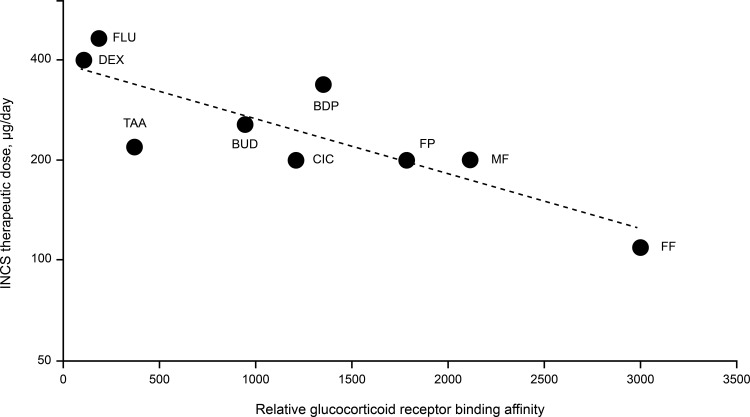
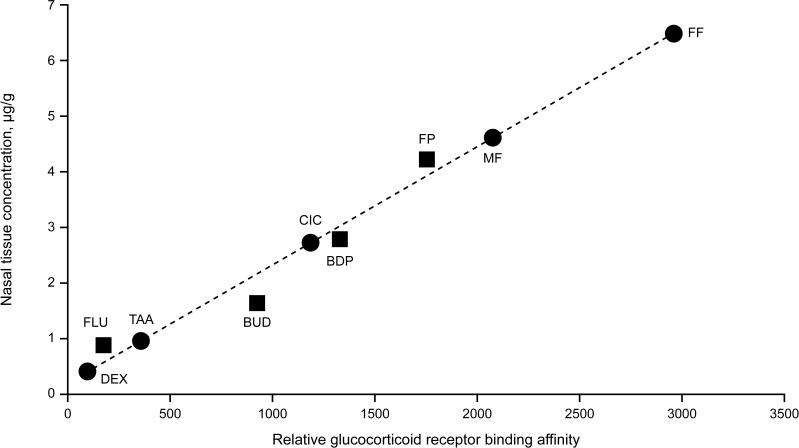
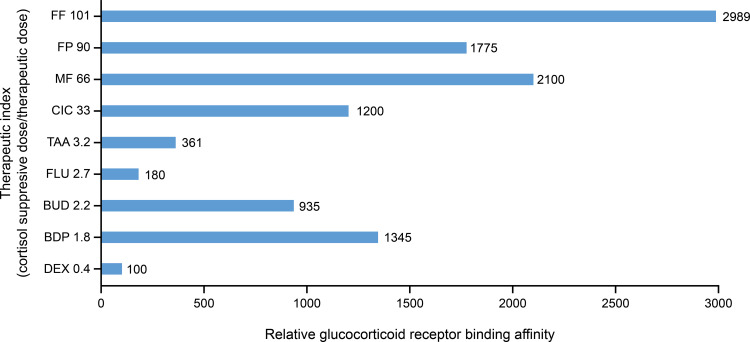
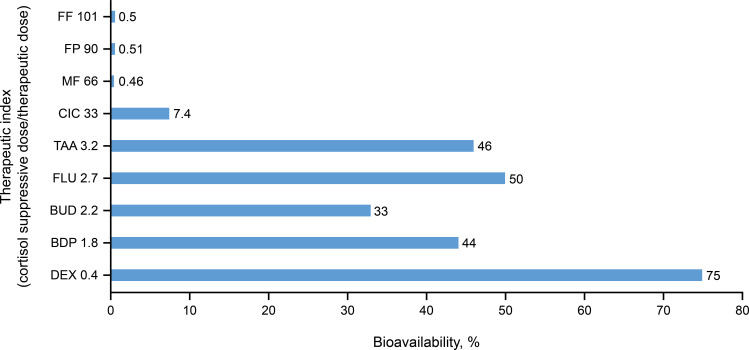
“833).(12,32,34,35,38,62) Abbreviations: BDP, beclomethasone dipropionate; BUD, budesonide; CIC, ciclesonide; DEX, dexamethasone; FF, fluticasone furoate; FLU, flunisolide; FP, fluticasone propionate; INCS, intranasal corticosteroid; MF, mometasone furoate; TAA, triamcinolone acetonide.”
BackgroundResultInfluentialSelf-citationDerendorf, H., & Meltzer, E. O. (2008) · Allergy · doi:10.1111/j.1398-9995.2008.01750.x · Cited by 233 · cited 5×
“While increased topical potency at intranasal sites can potentially improve efficacy, systemic absorption of INCSs could pose safety risks as INCSs could interact with GRs found throughout the body.(1) Therefore, INCSs with increased topical potency are not considered to offer a therapeutic advantage over INCSs with l…”
BackgroundResultInfluentialDaley‐Yates, P. T., Price, A. C., Sisson, J. R., Pereira, A., & Dallow, N. (2001) · British Journal of Clinical Pharmacology · doi:10.1046/j.0306-5251.2001.01374.x · Cited by 225 · cited 4×
“Finally, clinical trials of INCSs mostly include patients with moderate AR symptoms who are able to participate in a study for 2 to 4 weeks, taking only a placebo as treatment for their symptoms; whereas it might be easier to determine differences Figure 2 Relationship between relative glucocorticoid receptor binding…”
BackgroundInfluentialSelf-citation
Research works printed but not linked: 1
- Daley-Yates P, Richards DH. Pharmacokinetics (PK) and Pharmacodynamic (PD) relationships for Intranasal Corticosteroids (INCS). J Allergy Clin Immunol. 2001; 107(2, Supplement): S313.
Cited by
Beuschlein, F., Else, T., Bancos, I., Hahner, S., Hamidi, O., van Hulsteijn, L., Husebye, E. S., Karavitaki, N., Prete, A., Vaidya, A., et al. (2024) · The Journal of Clinical Endocrinology & Metabolism · doi:10.1210/clinem/dgae250 · Cited by 172
Beuschlein, F., Else, T., Bancos, I., Hahner, S., Hamidi, O., van Hulsteijn, L. T., Husebye, E. S., Karavitaki, N., Prete, A., Vaidya, A., et al. (2024) · European Journal of Endocrinology · doi:10.1093/ejendo/lvae029 · Cited by 157
Rollema, C., van Roon, E. N., van Boven, J. F. M., Hagedoorn, P., Klemmeier, T., Kocks, J., Metting, E., Elberink, H. N. G. O., Peters, T. T. A., Giorgi, M. R. M. S., et al. (2022) · Clinical & Experimental Allergy · doi:10.1111/cea.14212 · Cited by 40
The olfactory bulb: A neuroendocrine spotlight on feeding and metabolism
Stark, R. (2024) · Journal of Neuroendocrinology · doi:10.1111/jne.13382 · Cited by 46
Palmer, J. N., Adappa, N. D., Chandra, R. K., Davis, G. E., Mahdavinia, M., Messina, J. C., Ow, R. A., Patel, Z. M., Peters, A. T., Sacks, H. J., et al. (2024) · The Journal of Allergy and Clinical Immunology In Practice · doi:10.1016/j.jaip.2023.12.016 · Cited by 34
In situ gelling nanosuspension as an advanced platform for fluticasone propionate nasal delivery
Nodilo, L. N., Perkušić, M., Ugrina, I., Špoljarić, D., Brala, C. J., Klarić, D. A., Lovrić, J., Saršon, V., Kučuk, M. S., Zadravec, D., et al. (2022) · European Journal of Pharmaceutics and Biopharmaceutics · doi:10.1016/j.ejpb.2022.04.009 · Cited by 23
Latek, M., Łacwik, P., Molińska, K., Błauż, A., Lach, J., Rychlik, B., Strapagiel, D., Majak, J., Molińska, J., Czech, D., et al. (2023) · Archives of Pediatrics and Adolescent Medicine · doi:10.1001/jamapediatrics.2022.6172 · Cited by 24
Gil‐Mata, S., Vieira, R. J., Borowiack, E., Sadowska, E., Bognanni, A., Cardoso‐Fernandes, A., Ferreira‐Cardoso, H., Castro‐Teles, J., Soprani, J., Pinheiro, L., et al. (2025) · The Journal of Allergy and Clinical Immunology In Practice · doi:10.1016/j.jaip.2025.07.004 · Cited by 18
Self-citationSee, K. C. (2023) · World Journal of Diabetes · doi:10.4239/wjd.v14.i8.1202 · Cited by 17
Systemic Adverse Events Associated with Locally Administered Corticosteroids
Vleeschhauwer, F. D., Casteels, K., Hoffman, I. E. A., Proesmans, M., & Rochtus, A. M. (2024) · Children · doi:10.3390/children11080951 · Cited by 10
“To date most studies showed no significant evidence linking INCS to increased intraocular pressure in children [7,10], but further research is warranted to clarify this potential risk.”
BackgroundResultFarokhi, S., Tabaie, S. M., Fakouri, A., Manshouri, S., Emtiazi, N., Sanaei, A., mahjoor, M., Akbari, A., Daneshvar, A., & Seif, F. (2025) · Immuno · doi:10.3390/immuno5030026 · Cited by 10
Dutta, R., Kolanjiyil, A. V., Walenga, R. L., Chopski, S. G., Kaviratna, A., Mohan, A. R., Newman, B. W., Golshahi, L., & Longest, P. W. (2024) · International Journal of Pharmaceutics · doi:10.1016/j.ijpharm.2024.124660 · Cited by 10
Comparing available treatments for pollen-induced allergic rhinitis in children
Klain, A., Indolfi, C., Dinardo, G., Decimo, F., Tosca, M. A., del Giudice, M. M., & Ciprandi, G. (2022) · Expert Review of Clinical Immunology · doi:10.1080/1744666x.2022.2093188 · Cited by 6
“The strength of INCS is the high anti-inflammatory activity and relief of nasal obstruction; the limitations include local side effects and expensive costs [30].”
BackgroundDumitru, C. Ș., Zara, F., Novacescu, D., Szekely, D., Iovănescu, D., Iovănescu, G., Pătrașcu, R., & Dumitru, C. (2025) · Life · doi:10.3390/life15081166 · Cited by 13
Singh, A. K., Shaili, S., Siddiqui, A., Ali, A., Choubey, A., Jain, P., Mirza, M. A., & Iqbal, Z. (2025) · Frontiers in Allergy · doi:10.3389/falgy.2025.1636415 · Cited by 6
Pharmacokinetics of intranasal drugs, still a missed opportunity?
Sardu, M. L., & Poggesi, I. (2024) · Xenobiotica · doi:10.1080/00498254.2024.2349046 · Cited by 4
Jangan, A., Mughal, Z., Ahmad, A., Simmons, M., Sheikh, A., & Mughal, F. (2024) · Journal of General and Family Medicine · doi:10.1002/jgf2.720 · Cited by 4
Zihlif, M. A., Abusara, O. H., Al-Qerem, W. A., Al-Ibadah, M. A., Mahafza, T. M., Al-Akhras, F. M., & Mahafza, N. T. (2023) · Drug Metabolism and Personalized Therapy · doi:10.1515/dmpt-2023-0014 · Cited by 6
Update on the treatment of allergic rhinitis in children
Anastasiou, E., Xepapadaki, P. V., Asllani, J., Kapsouli, F., Karavelia, A., Petta, A., & Papadopoulos, N. G. (2026) · Pediatric Allergy and Immunology · doi:10.1111/pai.70329 · Cited by 3
“44,49 Newer generation INCSs (mometasone furoate, ciclesonide, and fluticasone furoate) are characterized by minimal systemic bioavailability, good therapeutic index, and no measurable effects on growth or hypothalamic–pitu - itary–adrenal axis function.”
La necesidad de un abordaje integrado de la rinitis y el asma
Saranz, R. J., Lozano, A., Lozano, N. A., Alegre, G., Visconti, P., & Ponzio, M. F. (2023) · Revista de la Facultad de Ciencias Médicas de Córdoba · doi:10.31053/1853.0605.v80.n2.40782 · Cited by 4
“Son más efectivos que los antihistamínicos para el control de todos los síntomas de rinitis((42)) y se prefieren los que tienen una baja biodisponibilidad sistémica como el furoato de fluticasona y de mometasona, propionato de fluticasona y budesonide en spray nasal((27)).”
BackgroundThe Practical Management of Rhinitis in Athletes
Khalid, H., Tait, J. E., North, A. S., & Lakhani, R. (2024) · Clinical Journal of Sport Medicine · doi:10.1097/jsm.0000000000001263 · Cited by 3
Insalaco, A., Vandelli, S., Madeo, S. F., Bruzzi, P., Trevisani, V., Predieri, B., Lucaccioni, L., & Iughetti, L. (2025) · Case Reports in Pediatrics · doi:10.1155/crpe/6109378 · Cited by 1
“However, given its high potency, it is mandatory to adhere to recommended doses to ensure negligible systemic concentrations and prevent adverse efects [5].”
Medical Management of Rhinitis
Li, S., Shaker, M. S., & Peters, A. T. (2025) · Immunology and Allergy Clinics of North America · doi:10.1016/j.iac.2025.09.007 · Cited by 1
Lourenço‐Silva, N., Sousa‐Pinto, B., Bognanni, A., Martini, M., Ordak, M., Paoletti, G., Gil‐Mata, S., Amaral, R., Bedbrook, A., Bonadonna, P., et al. (2025) · Clinical & Experimental Allergy · doi:10.1111/cea.70173 · Cited by 1
Self-citationCorticosteroid Exposure in Chronic Rhinosinusitis and Global Airway Disease: Adrenal and Bone Impact
Haase, C. H., Håkansson, K. E. J., Schwarz, P., Aanæs, K., Tidemandsen, J. E., Ulrik, C. S., Esbensen, B. A., & Backer, V. (2026) · The Laryngoscope · doi:10.1002/lary.70500 · Cited by 1
“Only 0.1%–2% of topical nasal steroids is absorbed systemically [12], while approximately 20% of ICS are absorbed [13].”
InfluentialZuberbier, T., Abuzakouk, M., Angelova‐Fischer, I., Arruda, L. K., Augustin, M., Beck, L., Bernstein, J. A., Bindslev‐Jensen, C., Bertolín‐Colilla, M., Bangert, C., et al. (2026) · World Allergy Organization Journal · doi:10.1016/j.waojou.2026.101380 · Cited by 3
“31 The panel regarded it as a helpful clinical guide rather than a prescriptive rule.”
Self-citationChen, J., Lu, K., Tang, P., Liu, Y., & Huang, D. (2026) · European Archives of Oto-Rhino-Laryngology · doi:10.1007/s00405-026-10184-1 · Cited by 1
“While INCS can alleviate nasal inflammation, they may cause local side effects such as nasal dryness or bleed - ing [ 21 , 22 ]; oral antihistamines are effective against nasal and ocular symptoms, such as itching, sneezing, and runny nose, with a rapid onset and a lasting effect, but their effi -…”
Martins, L., Silvestre, S., & Monteiro, C. S. D. J. (2024) · Healthcare · doi:10.3390/healthcare12191923 · Cited by 1
Is intranasal dexamethasone effective in reducing sore throat following surgery?
Shetabi, H., & Momeni, E. (2024) · Tzu Chi Medical Journal · doi:10.4103/tcmj.tcmj_99_24 · Cited by 1
“Advantages of intranasal administration of corticosteroids include their noninvasive nature, rapid onset of action, and often reduced incidence of side effects due to a more precise and focused delivery mechanism [34].”
Is Mometasone Effective in Treating Otitis Media with Effusion?
Al-Zaidi, H. M. H. (2023) · Journal of Medical and Health Studies · doi:10.32996/jmhs.2023.4.1.5 · Cited by 1
A cost‐effective alternative for nasal corticosteroid saline irrigations
Cho, D., Grayson, J. W., & Woodworth, B. A. (2023) · International Forum of Allergy & Rhinology · doi:10.1002/alr.23269
Corticosteroids for Inflammation Control in the Allergic Child
Cardinale, F., Ciccarone, D. A., Tranchino, V., & Mastrorilli, C. (2024) · Springer eBooks · doi:10.1007/978-3-031-71283-8_24
Asthenia, insomnia, malaise and high blood pressure during nasal spray corticotherapy in an adult
Mestier, J. D., Lecanu, J.-B., & Laccourreye, O. (2025) · European Annals of Otorhinolaryngology Head and Neck Diseases · doi:10.1016/j.anorl.2025.03.001
Mestier, J. D., Lecanu, J.-B., & Laccourreye, O. (2025) · Annales françaises d Oto-rhino-laryngologie et de Pathologie Cervico-faciale · doi:10.1016/j.aforl.2025.02.001
Nasal and Ophthalmic Medications for Treatment of Allergic Rhinitis and Allergic Conjunctivitis
Bonthu, S., Akar-Ghibril, N., & Chang, C. C.-C. (2025) · Springer eBooks · doi:10.1007/978-3-031-88107-7_6
Yırgın, K., & Çelıksoy, M. H. (2025) · IntechOpen eBooks · doi:10.5772/intechopen.1012804 · Cited by 1
The Effect of Whitening Creams Usage on the Adrenal Gland
Azeez, F. S., Noaman, N. F., & AL-Mussawy, A. N. (2025) · F1000Research · doi:10.12688/f1000research.173725.1
Elsheikh, M. M., Elshafei, A. M., Zekry, M., & Hamed, M. G. (2025) · The Egyptian Journal of Otolaryngology · doi:10.1186/s43163-025-00973-6
“Mometasone furoate is characterized by its high receptor affinity and low systemic bioavailability, making it effective for local application with minimal systemic side effects [18, 19].”
Cao, C., Hossen, M. A., Efti, M. S., Warda, A. A., AlJaouni, S. K., El-Far, A., & Lv, C. (2026) · Frontiers in Immunology · doi:10.3389/fimmu.2026.1792658
“Intranasal corticosteroids are the initial pharmacotherapy and inhibit in fl ammation by transcriptionally repressing the glucocorticoid receptor (91).”
Monga, A., Rane, T., Chinda, M., Bhagat, S. B., Patil, S., & Barkate, H. V. (2026) · Frontiers in Allergy · doi:10.3389/falgy.2026.1863171
“Intranasal corticosteroids (INCS) remain the cornerstone of pharmacological management for AR because of their potent anti-inflammatory effects targeting multiple components of the allergic cascade (8, 9).”
The Effect of Whitening Creams Usage on the Adrenal Gland
Azeez, F. S., Noaman, N. F., & AL-Mussawy, A. N. (2026) · F1000Research · doi:10.12688/f1000research.173725.2
Jia, X., Liu, L., & Yang, Y. (2026) · Frontiers in Medicine · doi:10.3389/fmed.2026.1838641
“Second-generation INCS such as mometasone furoate and fluticasone propionate exhibit systemic bioavailability of less than 1%, theoretically minimizing systemic adverse effects (6).”
Kennedy, D. W., Cheng, L., & Wang, D. Y. (2026) · World Journal of Otorhinolaryngology - Head and Neck Surgery · doi:10.1002/wjo2.70114
Rosacea-like findings associated with over-the-counter intranasal corticosteroid use: a survey study
Merkle, T., Curley, C., Rezaee, R., Cook, H., Wambold, D., & Ilyas, E. N. (2026) · Archives of Dermatological Research · doi:10.1007/s00403-026-04899-8
Tang, F., Xiao, W., Maoli, J., & Huang, W. (2026) · Investigación Clínica · doi:10.54817/ic.v67n3a10
Salimi, S., Hamidi, A., Babajani, M. M., Mohammadnejad, A., & Rezaiemanesh, A. (2026) · Clinical Drug Investigation · doi:10.1007/s40261-026-01597-1
“Second, differences in lipophilicity among intranasal corticosteroids may influence local tissue concentration and duration of action [66].”
Soft drugs: design principles and topical applications
Pirali, T., Accetta, A., Rautio, J., & Carzaniga, L. (2026) · Nature Reviews Drug Discovery · doi:10.1038/s41573-026-01535-y · Cited by 2
Papadopoulou, A., Papadopoulos, M., & Tsabouri, S. (2026) · Pediatric Allergy and Immunology · doi:10.1111/pai.70514
“3,8 On the other hand, the total daily dose of INS may influence safety by potentially suppressing the HPA axis.”
Håkansson, K. E. J., Skov, I. R., Andersen, S. A. W., Ali, Z., Thomsen, S. F., Løkke, A., Ibsen, R., Hilberg, O., Meteran, H., Johnsen, C. R., et al. (2026) · The Journal of Allergy and Clinical Immunology In Practice · doi:10.1016/j.jaip.2026.09.029
Metadata
- Authors
- Daley-Yates, P. T., Larenas-Linnemann, D., Bhargave, C., & Verma, M.
- Affiliations
- GlaxoSmithKline (India) (IN)
- Venue
- Journal of Asthma and Allergy
- Publisher
- Informa UK Limited
- Published
- 2021-09
- Volume
- Volume 14
- Pages
- 1093-1104
- ISSN
- 1178-6965 (ISSN-L)
- PMC
- PMC8436259
- OpenAlex
- W3197423053
- Cited by
- 49
- References
- 62
- Citations by year
- 2026: 15 · 2025: 13 · 2024: 12 · 2023: 6 · 2022: 3
- FWCI
- 0.83
- Type
- journal article
- Language
- en
- Open access
- gold
- doi.org
- Licence
- Locations
- Journal of Asthma and Allergy (publishedVersion, cc-by-nc)
- Europe PMC (PubMed Central) (publishedVersion, cc-by-nc)
- PubMed Central (publishedVersion, cc-by-nc)
- PubMed (publishedVersion)
- DOAJ (DOAJ: Directory of Open Access Journals) (acceptedVersion)
- Dove Medical Press (Taylor and Francis Group) (submittedVersion, cc-by-nc)
- Funders
- GlaxoSmithKline
- Topics
- Health Sciences › Medicine › Immunology and Allergy › Allergic Rhinitis and Sensitization
- Life Sciences › Pharmacology, Toxicology and Pharmaceutics › Pharmaceutical Science › Advanced Drug Delivery Systems
- Health Sciences › Medicine › Otorhinolaryngology › Sinusitis and nasal conditions
- Keywords
- intranasal corticosteroids, allergic rhinitis, therapeutic index, lipophilicity, oral bioavailability, systemic exposure, pharmacokinetics, physicochemical properties, systemic side effects, children, therapeutic equivalence
About these checks
Registry, retraction, Cites and statistics results are computed, not judged, with one exception: a printed reference that no index lists is read once by a model before it counts as a citation error. Claims are extracted by a model and kept only when their quote appears verbatim in the text; each cited source is then checked, with a model’s help, for whether it says what the claim relies on. Those verdicts can be wrong — read the claim’s quote and the cited source before relying on one.
Statistics and arithmetic are recomputed, not judged.
Confidence bands are shown only for fields calibrated on our annotated test set. None is calibrated yet, so no band is shown.
What counts as a claim ›How we measure confidence ›How we check this ›
Are you an author, or do you see a problem with this page? Request a review
Data sources
Bibliographic data: Semantic Scholar, OpenAlex, Crossref.
Contains information from the Semantic Scholar Academic Graph Datasets, made available under the ODC Attribution License (ODC-BY 1.0).
Semantic Scholar’s data is described in: Kinney, R., et al. (2023). The Semantic Scholar Open Data Platform. arXiv:2301.10140.
