

Intranasal Corticosteroids: Topical Potency, Systemic Activity and Therapeutic Index
Open accessThe DOI matches its Crossref record; 63 of the 63 references it cites were found in a registry or an index.
Abstract
Intranasal corticosteroid (INCS) therapy is the preferred treatment option for allergic rhinitis (AR). Although all INCSs for the treatment of AR are considered safe and effective, differences in potency, molecular structure features and physicochemical and pharmacokinetic properties could result in differences in clinical efficacy and safety. Higher glucocorticoid receptor (GR) binding affinity of INCS is associated with higher lipophilicity, nasal tissue retention and topical potency. Higher topical potency is also accompanied by low oral bioavailability and high systemic clearance conferring low systemic exposure, reduced potential for systemic adverse effects and an improved therapeutic index. It has been shown that adverse events related to systemic exposure of INCSs in children are low. Although INCSs mostly produce low systemic effects, use of an INCS with low systemic exposure in patients on multiple corticosteroid (CS) therapies could help reduce the total systemic burden of CS therapy. Despite differences in topical potency, physicochemical and pharmacokinetic properties between INCSs, clinical studies of INCSs in the treatment of AR generally show no clinically important differences between these compounds, and poor correlation between INCS topical potency and clinical response. However, the lack of head-to-head comparisons of INCSs in clinical studies conducted in more severe AR patients should be noted. This narrative review provides an assessment of the therapeutic relevance of topical potency and the physicochemical and pharmacokinetic properties of INCSs and describes for the first time the relationship between topical potency and therapeutic index using pharmacological features of INCSs. It concludes that higher GR binding affinity and topical potency can potentially improve the therapeutic index of an INCS. Therefore, both efficacy and systemic exposure profiles should be considered when comparing INCS regimens in terms of therapeutic equivalence, to aid clinical decision-making and avoid the assumption that all INCS formulations are the same when considering treatment options.
Overview
The claims and statistics of this paper haven’t been checked yet.
Free: it reads the open-access text and checks the first 5 claims that cite a source we can check. Create a free account to check every claim.
Integrity signals
Registry
Cites
Statistics
Figures
Verification
Claims the paper makes
The claims and statistics of this paper haven’t been checked yet.
Free: it reads the open-access text and checks the first 5 claims that cite a source we can check. Create a free account to check every claim.
Claims other papers make about this one
Each is checked against this paper’s own text: does it say what the citing paper says it does?
The source backs part of the claim, not all of it — or backs it for a different population, condition or comparison.
In the citing paper
“However, several intra-nasal glucocorticoids have high bioavailability and glucocorticoid receptor binding affinity, which can result in significant systemic exposure after prolonged use (113).”
From European Society of Endocrinology and Endocrine Society Joint Clinical Guideline: Diagnosis and Therapy of Glucocorticoid-induced Adrenal Insufficiency (2024) · cites this paper as [113]
Experimental — accuracy not yet measured
Self-check
Percentages, sums and reported differences re-computed from the paper’s own numbers.
The self-check needs the paper’s full text.
Citations
Cites
Summary of product characteristics
(2013) · Pharmaceutical Medicine · doi:10.1093/med/9780199609147.003.0027 · Cited by 1,905
The diagnosis and management of rhinitis: An updated practice parameter
WALLACE, D., DYKEWICZ, M., BERNSTEIN, D., BLESSINGMOORE, J., COX, L., KHAN, D., LANG, D., NICKLAS, R., OPPENHEIMER, J., & PORTNOY, J. (2008) · Journal of Allergy and Clinical Immunology · doi:10.1016/j.jaci.2008.06.003 · Cited by 1,096
Efficacy and Safety of Inhaled Corticosteroids: New Developments
BARNES, P. J., PEDERSEN, S., & BUSSE, W. W. (1998) · American Journal of Respiratory and Critical Care Medicine · doi:10.1164/ajrccm.157.3.157315 · Cited by 749
Effect of Inhaled Glucocorticoids in Childhood on Adult Height
Kelly, H. W., Sternberg, A. L., Lescher, R., Fuhlbrigge, A. L., Williams, P., Zeiger, R. S., Raissy, H. H., Van Natta, M. L., Tonascia, J., & Strunk, R. C. (2012) · New England Journal of Medicine · doi:10.1056/nejmoa1203229 · Cited by 371
Schenkel, E. J., Skoner, D. P., Bronsky, E. A., Miller, S. D., Pearlman, D. S., Rooklin, A., Rosen, J. P., Ruff, M. E., Vandewalker, M. L., Wanderer, A., et al. (2000) · Pediatrics · doi:10.1542/peds.105.2.e22 · Cited by 354
A comparison of the efficacy and safety of inhaled corticosteroids in asthma
Pedersen, S., & O'Byrne, P. (1997) · Allergy · doi:10.1111/j.1398-9995.1997.tb05047.x · Cited by 352 · cited 1×
“Also, because INCSs differ in pharmacokinetic properties, including systemic absorption and activity after administration, studies using different INCSs and delivery devices such as ANS and MDI may not be directly comparable to each other.(59) Differences in, for example, performance and ease-ofuse of different delive…”
Skoner, D. P., Rachelefsky, G. S., Meltzer, E. O., Chervinsky, P., Morris, R. M., Seltzer, J. M., Storms, W. W., & Wood, R. A. (2000) · Pediatrics · doi:10.1542/peds.105.2.e23 · Cited by 306
Inhaled corticosteroids: potency, dose equivalence and therapeutic index
Daley‐Yates, P. T. (2015) · British Journal of Clinical Pharmacology · doi:10.1111/bcp.12637 · Cited by 260 · cited 9×
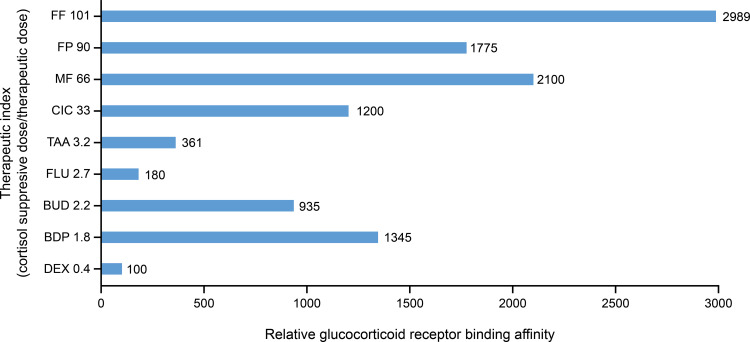
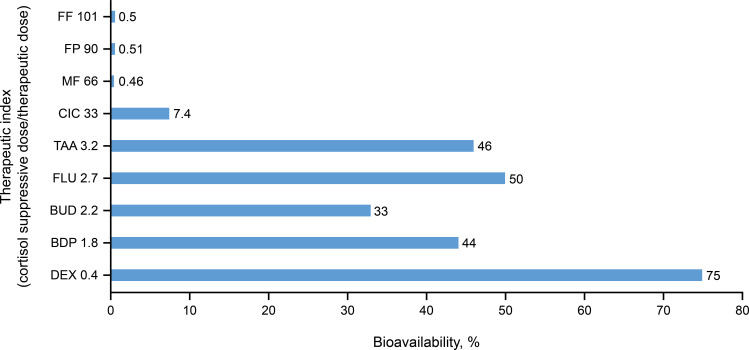
“833).(12,32,34,35,38,62) Abbreviations: BDP, beclomethasone dipropionate; BUD, budesonide; CIC, ciclesonide; DEX, dexamethasone; FF, fluticasone furoate; FLU, flunisolide; FP, fluticasone propionate; INCS, intranasal corticosteroid; MF, mometasone furoate; TAA, triamcinolone acetonide.”
BackgroundResultInfluentialSelf-citationDerendorf, H., & Meltzer, E. O. (2008) · Allergy · doi:10.1111/j.1398-9995.2008.01750.x · Cited by 233 · cited 5×
“While increased topical potency at intranasal sites can potentially improve efficacy, systemic absorption of INCSs could pose safety risks as INCSs could interact with GRs found throughout the body.(1) Therefore, INCSs with increased topical potency are not considered to offer a therapeutic advantage over INCSs with l…”
BackgroundResultInfluentialDaley‐Yates, P. T., Price, A. C., Sisson, J. R., Pereira, A., & Dallow, N. (2001) · British Journal of Clinical Pharmacology · doi:10.1046/j.0306-5251.2001.01374.x · Cited by 225 · cited 4×
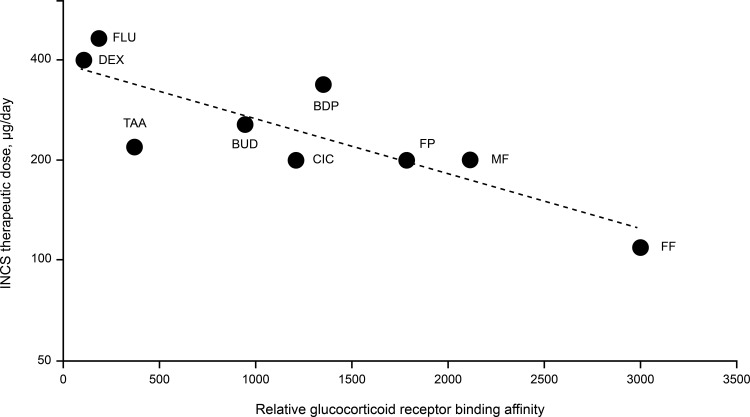
“Finally, clinical trials of INCSs mostly include patients with moderate AR symptoms who are able to participate in a study for 2 to 4 weeks, taking only a placebo as treatment for their symptoms; whereas it might be easier to determine differences Figure 2 Relationship between relative glucocorticoid receptor binding…”
BackgroundInfluentialSelf-citationAllergic rhinitis is associated with poor asthma control in children with asthma
de Groot, E. P., Nijkamp, A., Duiverman, E. J., & Brand, P. L. P. (2012) · Thorax · doi:10.1136/thoraxjnl-2011-201168 · Cited by 214 · cited 1×
“Children in particular often receive concurrent ICS and INCS therapy for asthma and AR, respectively.(55) While the”
BackgroundThe Nasal Mucociliary Clearance: Relevance to Nasal Drug Delivery
Schipper, N. G. M., Verhoef, J. C., & Merkus, F. W. H. M. (1991) · Pharmaceutical Research · doi:10.1023/a:1015830907632 · Cited by 212 · cited 1×
“Nasal ciliary clearance removes most of the unabsorbed material usually within 30 minutes.(30) However, run-off and post-nasal drip can be reduced by decreasing the spray volume in which the applied dose is administered.”
BackgroundSafety of Inhaled and Intranasal Corticosteroids: Lessons for the New Millennium
Lipworth, B. J., & Jackson, C. M. (2000) · Drug Safety · doi:10.2165/00002018-200023010-00002 · Cited by 209 · cited 1×
“Nasal drug delivery, by spraying an aqueous suspension into the nose, is inherently inefficient due to run-off and rapid nasal ciliary clearance, which leaves only a short time-window for drug particles to form an aqueous suspension formulation, dissolve, and to be absorbed into the nasal mucosa.(29) Nasal ciliary cle…”
BackgroundSystemic effects of intranasal steroids: An endocrinologist’s perspective
Allen, D. B. (2000) · Journal of Allergy and Clinical Immunology · doi:10.1067/mai.2000.110038 · Cited by 171 · cited 1×
“Even so, only a small fraction of the applied dose reaches the site of action as the majority of the dose is eventually swallowed;(29) direct absorption into the circulation via the nasal mucosa is therefore low, especially for highly insoluble lipophilic INCSs(29) when administered as ANS suspension formulations.(31,…”
BackgroundKaiser, H. B., Naclerio, R. M., Given, J. T., Toler, T., Ellsworth, A., & Philpot, E. E. (2007) · Journal of Allergy and Clinical Immunology · doi:10.1016/j.jaci.2007.02.022 · Cited by 159
Intranasal corticosteroids for allergic rhinitis: How do different agents compare?
Corren, J. (1999) · Journal of Allergy and Clinical Immunology · doi:10.1016/s0091-6749(99)70310-6 · Cited by 131 · cited 5×
“Topical Potency Over time, newer INCS molecules such as FP, MF and FF have been introduced, with increased GR binding affinity, GR selectivity, greater uptake and retention in nasal tissue, and reduced systemic bioavailability compared to older INCS molecules, such as DEX, BDP and BUD.(9,13) The relative GR binding af…”
BackgroundResultInfluentialDifferent types of intranasal steroids for chronic rhinosinusitis
Chong, L. Y., Head, K., Hopkins, C., Philpott, C., Burton, M. J., & Schilder, A. G. (2016) · Cochrane Database of Systematic Reviews · doi:10.1002/14651858.cd011993.pub2 · Cited by 121
Assessment of the Long-term Safety of Inhaled Ciclesonide on Growth in Children With Asthma
Skoner, D. P., Maspero, J. F., Banerji, D. D., & and the Ciclesonide Pediatric Growth Study Group (2007) · PEDIATRICS · doi:10.1542/peds.2006-2206 · Cited by 119 · cited 1×
“were not found to significantly affect growth of children with asthma.(52) The impact of long-term treatment with INCS on adult height has not been studied,(41) but results of”
BackgroundMeltzer, E. O., Orgel, H. A., Bronsky, E. A., Furukawa, C. T., Grossman, J., LaForce, C., Lemanske, R. F., Paull, B. R., Pearlman, D. S., Ratner, P. H., et al. (1990) · Journal of Allergy and Clinical Immunology · doi:10.1016/s0091-6749(05)80069-7 · Cited by 115 · cited 1×
“In a dose-ranging study of FP ANS, all doses of FP studied reduced symptoms of AR significantly versus the placebo; the decrease in total symptom scores was slightly greater with the largest dose of FP (400 μg twice-daily [BID]) compared with the smallest dose (25 μg BID), but the difference was not significant.(23) R…”
BackgroundPharmacokinetics of intranasal corticosteroids
Szefler, S. J. (2001) · Journal of Allergy and Clinical Immunology · doi:10.1067/mai.2001.115563 · Cited by 110 · cited 1×
“For some INCS, a high rate of first-pass metabolism will inactivate the absorbed dose but any direct absorption into the circulation via the nasal mucosa bypasses the hepatic first-pass mechanism.(1,33) Consequently, the systemic exposure of an INCS depends primarily on its oral bioavailability with only a minor contr…”
BackgroundLoke, Y. K., Blanco, P., Thavarajah, M., & Wilson, A. M. (2015) · PLoS ONE · doi:10.1371/journal.pone.0133428 · Cited by 108 · cited 1×
“growth studies of ICS in children with asthma show little or no reduction in final adult height.(41,53,54) A meta-analysis of 32 published pediatric studies(37) (including 12 studies of INCSs, conducted before”
BackgroundWolthers, O. D., & Pedersen, S. (1993) · Acta Paediatrica · doi:10.1111/j.1651-2227.1993.tb12780.x · Cited by 108 · cited 1×
“For example, use of BDP ANS (168 μg BID) was shown to significantly affect growth rate in children after one year of treatment,(43) and BUD MDI (200 μg BID) was found to significantly reduce lower-leg growth in children after six weeks of treatment.(44) However, other studies of INCS use in pediatric populations (with…”
ResultValotis, A., & Högger, P. (2007) · Respiratory Research · doi:10.1186/1465-9921-8-54 · Cited by 101
Bateman, E. D., O’Byrne, P. M., Busse, W. W., Lötvall, J. O., Bleecker, E. R., Andersen, L., Jacques, L., Frith, L., Lim, J., & Woodcock, A. A. (2013) · Thorax · doi:10.1136/thoraxjnl-2013-203600 · Cited by 87
Daley‐Yates, P. T., & Baker, R. C. (2001) · British Journal of Clinical Pharmacology · doi:10.1046/j.1365-2125.2001.01325.x · Cited by 84 · cited 4×
“Finally, clinical trials of INCSs mostly include patients with moderate AR symptoms who are able to participate in a study for 2 to 4 weeks, taking only a placebo as treatment for their symptoms; whereas it might be easier to determine differences Figure 2 Relationship between relative glucocorticoid receptor binding…”
BackgroundInfluentialSelf-citationSafety of nasal budesonide in the long‐term treatment of children with perennial rhinitis
Möller, C., Ahlström, H., Henricson, K. ‐., Malmqvist, L. ‐., Åkerlund, A., & Hildebrand, H. (2003) · Clinical & Experimental Allergy · doi:10.1046/j.1365-2222.2003.01689.x · Cited by 83
Influence of inhaled corticosteroids on growth: a pediatric endocrinologist's perspective
Allen, D. (1998) · Acta Paediatrica · doi:10.1111/j.1651-2227.1998.tb00960.x · Cited by 79
Bioavailability of fluticasone propionate and mometasone furoate aqueous nasal sprays
Daley‐Yates, P. T., Kunka, R. L., Yin, Y., Andrews, S. M., Callejas, S., & Ng, C. M. (2004) · European Journal of Clinical Pharmacology · doi:10.1007/s00228-004-0763-y · Cited by 77 · cited 5×
“833).(12,32,34,35,38,62) Abbreviations: BDP, beclomethasone dipropionate; BUD, budesonide; CIC, ciclesonide; DEX, dexamethasone; FF, fluticasone furoate; FLU, flunisolide; FP, fluticasone propionate; INCS, intranasal corticosteroid; MF, mometasone furoate; TAA, triamcinolone acetonide.”
BackgroundInfluentialSelf-citationLumry, W. R. (1999) · Journal of Allergy and Clinical Immunology · doi:10.1016/s0091-6749(99)70311-8 · Cited by 76 · cited 3×
“Topical Potency Over time, newer INCS molecules such as FP, MF and FF have been introduced, with increased GR binding affinity, GR selectivity, greater uptake and retention in nasal tissue, and reduced systemic bioavailability compared to older INCS molecules, such as DEX, BDP and BUD.9,13 The relative GR binding affi…”
BackgroundDaley‐Yates, P. T., Brealey, N., Thomas, S., Austin, D. J., Shabbir, S. S., Harrison, T. W., Singh, D., & Barnes, N. C. (2020) · British Journal of Clinical Pharmacology · doi:10.1111/bcp.14406 · Cited by 74 · cited 1×
“as seen for FF in AR (Table 1 and Figure 1) and for ICS in asthma.(19,20)”
BackgroundSelf-citationJuel-Berg, N., Darling, P., Bolvig, J., Foss-Skiftesvik, M. H., Halken, S., Winther, L., Hansen, K. S., Askjaer, N., Heegaard, S., Madsen, A. R., et al. (2017) · American Journal of Rhinology & Allergy · doi:10.2500/ajra.2016.30.4397 · Cited by 70
Herman, H. (2007) · American Journal of Rhinology · doi:10.2500/ajr.2007.21.2896 · Cited by 69 · cited 2×
“Therefore, differences in sensory attributes of the formulation (such as taste, smell, aftertaste or throat rundown), perception of safety during pregnancy, and cost are all factors underlying patient preference and adherence to therapy.(15) Additionally, some clinicians are still reluctant to prescribe INCS because o…”
BackgroundResultCorticosteroids in the treatment of pediatric allergic rhinitis
Scadding, G. K. (2001) · Journal of Allergy and Clinical Immunology · doi:10.1067/mai.2001.115568 · Cited by 67 · cited 1×
“Additionally, some clinicians are still reluctant to prescribe INCS because of concerns of systemic effects, especially on growth in children.(4) This narrative review aims to guide clinical decision-making and help specialists make more informed treatment decisions through better characterized efficacy/safety profile…”
BackgroundNathan, R. A., Berger, W. E., Yang, W. H.-C., Cheema, A. S., Silvey, M., Wu, W., & Philpot, E. E. (2008) · Annals of Allergy Asthma & Immunology · doi:10.1016/s1081-1206(10)60477-2 · Cited by 61
Intranasal Corticosteroids for Allergic Rhinitis: Superior Relief?
Nielsen, L. P., Mygind, N., & Dahl, R. (2001) · Drugs · doi:10.2165/00003495-200161110-00004 · Cited by 58
Daley‐Yates, P. T., & Richards, D. H. (2004) · Clinical Therapeutics · doi:10.1016/j.clinthera.2004.11.017 · Cited by 57 · cited 8×
“In conclusion, higher GR binding affinity and topical potency can potentially improve the therapeutic index of an INCS.”
BackgroundInfluentialSelf-citationFormulation considerations of intranasal corticosteroids for the treatment of allergic rhinitis
Meltzer, E. O. (2007) · Annals of Allergy Asthma & Immunology · doi:10.1016/s1081-1206(10)60854-x · Cited by 54 · cited 1×
“available as pump sprays or aerosol metered-dose inhalers (MDI); an aqueous nasal spray (ANS) pump is the most commonly used device.(10,11) All INCSs prescribed for the treatment of AR are considered safe and effective, however, these molecules have structural differences that influence their glucocorticoid receptor (…”
MethodAbsolute Bioavailability of Intranasal Fluticasone Furoate in Healthy Subjects
Allen, A., Down, G., Newland, A. R., Reynard, K., Rousell, V. M., Salmon, E., & Scott, R. (2007) · Clinical Therapeutics · doi:10.1016/j.clinthera.2007.07.028 · Cited by 54 · cited 4×
“Finally, clinical trials of INCSs mostly include patients with moderate AR symptoms who are able to participate in a study for 2 to 4 weeks, taking only a placebo as treatment for their symptoms; whereas it might be easier to determine differences Figure 2 Relationship between relative glucocorticoid receptor binding…”
BackgroundInfluentialMurphy, K. R., Uryniak, T., Simpson, B., & O'Dowd, L. C. (2006) · Annals of Allergy Asthma & Immunology · doi:10.1016/s1081-1206(10)61072-1 · Cited by 53
Keith, P. K., & Scadding, G. K. (2009) · Current Medical Research and Opinion · doi:10.1185/03007990903094106 · Cited by 52 · cited 3×
“A confounding factor in placebo-controlled trials with aqueous nasal sprays is the possibility of a significant placebo effect due to the formulation alone, since it can wash the nasal epithelium and thereby reduce antigens and inflammatory mediators.24–26 In general, clinical studies comparing the efficacy of INCSs i…”
BackgroundInfluentialAn in vitro comparison of commonly used topical glucocorticoid preparations
Stellato, C., Atsuta, J., Bickel, C., & Schleimer, R. P. (1999) · Journal of Allergy and Clinical Immunology · doi:10.1016/s0091-6749(99)70334-9 · Cited by 52 · cited 2×
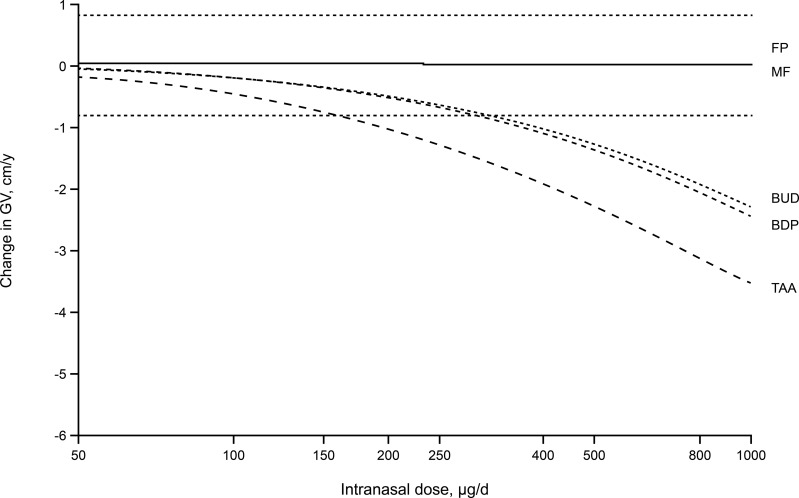
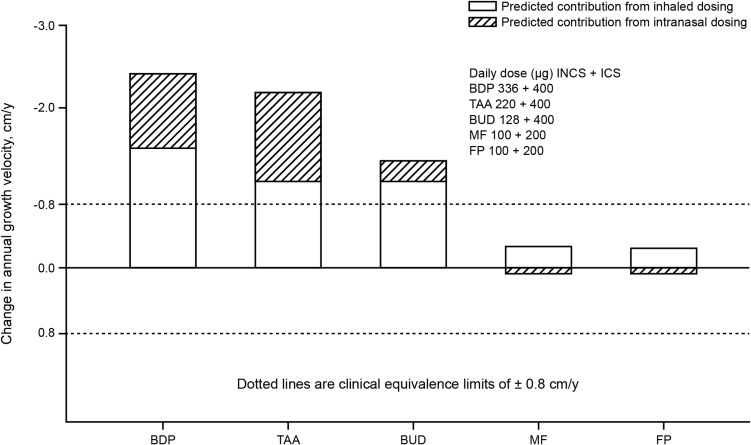
“Small changes in growth velocity seen in short-term studies may have minor clinical relevance, however, since differences in growth velocity between formulations with higher and lower systemic bioavailability have been demonstrated it is desirable to select products that minimize this effect particularly when used fre…”
BackgroundLee, L. A., Sterling, R. K., Maspero, J. F., Clements, D. S., Ellsworth, A., & Pedersen, S. (2014) · The Journal of Allergy and Clinical Immunology In Practice · doi:10.1016/j.jaip.2014.04.008 · Cited by 50 · cited 1×
“demonstrate a small reduction in growth without any other safety issue identified.(49,50) Growth velocity in children trea-”
BackgroundEffects of 2 Inhaled Corticosteroids on Growth
de Benedictis, F. M., Teper, A., Green, R. J., Boner, A. L., Williams, L., & Medley, H. (2001) · Archives of Pediatrics and Adolescent Medicine · doi:10.1001/archpedi.155.11.1248 · Cited by 49
Clinical relevance of inhaled corticosteroids and HPA axis suppression
Dluhy, R. G. (1998) · Journal of Allergy and Clinical Immunology · doi:10.1016/s0091-6749(98)70157-5 · Cited by 48
Donaldson, A. M., Choby, G. W., Kim, D. H., Marks, L. A., & Lal, D. (2020) · Otolaryngology · doi:10.1177/0194599820931455 · Cited by 45
Iatrogenic Cushing's syndrome due to dexamethasone nasal drops
Kimmerle, R., & Rolla, A. R. (1985) · The American Journal of Medicine · doi:10.1016/0002-9343(85)90046-4 · Cited by 44 · cited 1×
“The systemic exposure of INCS is generally regarded as low compared to systemic CS use,(38) however, systemic exposure of INCS may still be significant and result in adverse effects for molecules with high bioavailability (eg DEX, FLU, TAA; Table 1).(39)”
BackgroundVasar, M., Houle, P.-A., Douglass, J. A., Meltzer, E. O., Silvey, M., Wu, W., Caldwell, M., & Philpot, E. (2008) · Allergy and Asthma Proceedings · doi:10.2500/aap.2008.29.3126 · Cited by 42
Topical intranasal corticosteroids and growth velocity in children: a meta‐analysis
Mener, D. J., Shargorodsky, J., Varadhan, R., & Lin, S. Y. (2014) · International Forum of Allergy & Rhinology · doi:10.1002/alr.21430 · Cited by 41
Baumann, D., Bachert, C., & Högger, P. (2009) · Clinical & Experimental Allergy · doi:10.1111/j.1365-2222.2009.03306.x · Cited by 41
Safety of intranasal corticosteroids
Bensch, G. W. (2016) · Annals of Allergy Asthma & Immunology · doi:10.1016/j.anai.2016.06.009 · Cited by 40 · cited 1×
“As many patients with AR also have asthma, INCSs are often used concurrently with standard maintenance therapy for asthma such as inhaled corticosteroids (ICS).(5,6) A range of INCS treatments are currently available in Europe and the US for AR treatment, including first-generation INCSs triamcinolone acetonide (TAA),…”
BackgroundTherapeutic Index (TIX) for intranasal corticosteroids in the treatment of allergic rhinitis
Schafer, T., Schnoor, M., Wagenmann, M., Klimek, L., & Bachert, C. (2011) · Rhinology Journal · doi:10.4193/rhino10.170 · Cited by 34
Gradman, J., Caldwell, M. F., & Wolthers, O. D. (2007) · Clinical Therapeutics · doi:10.1016/j.clinthera.2007.08.017 · Cited by 33
Assessing the effect of intranasal steroids on growth
Pedersen, S. (2001) · Journal of Allergy and Clinical Immunology · doi:10.1067/mai.2001.115565 · Cited by 33 · cited 9×
“Differences in, for example, performance and ease-ofuse of different delivery devices, and patient compliance to these devices may confound the results of comparative studies of INCSs.(41,60) This narrative review compared INCSs using pharmacological principles, rather than clinical endpoints alone, allowing for a mor…”
BackgroundResultInfluentialEvaluating the Safety of Intranasal Steroids in the Treatment of Allergic Rhinitis
Sheth, K. K. (2008) · Allergy Asthma and Clinical Immunology · doi:10.1186/1710-1492-4-3-125 · Cited by 27 · cited 1×
“As many patients with AR also have asthma, INCSs are often used concurrently with standard maintenance therapy for asthma such as inhaled corticosteroids (ICS).(5,6) A range of INCS treatments are currently available in Europe and the US for AR treatment, including first-generation INCSs triamcinolone acetonide (TAA),…”
BackgroundCauwenberge, P. V., Hoecke, H. V., Vandenbulcke, L., Zele, T. V., & Bachert, C. (2005) · Immunology and Allergy Clinics of North America · doi:10.1016/j.iac.2005.05.001 · Cited by 26
Hankin, C. S., Cox, L., Lang, D. M., Bronstone, A. B., Wang, Z., Lepore, M. S., & Buck, P. O. (2012) · Allergy and Asthma Proceedings · doi:10.2500/aap.2012.33.3565 · Cited by 24 · cited 1×
“available as pump sprays or aerosol metered-dose inhalers (MDI); an aqueous nasal spray (ANS) pump is the most commonly used device.(10,11) All INCSs prescribed for the treatment of AR are considered safe and effective, however, these molecules have structural differences that influence their glucocorticoid receptor (…”
MethodSheth, K. K., Cook, C. K., Philpot, E. E., Prillaman, B. A., Witham, L. A., Faris, M. A., Klein, K. C., & RICKARD, K. A. (2004) · PubMed · Cited by 22
on behalf of the study team, Bardsley, G., Daley‐Yates, P. T., Baines, A. J., Kempsford, R. D., Williams, M., Mallon, T., Braithwaite, I. E., Riddell, K., Joshi, S., et al. (2018) · Respiratory Research · doi:10.1186/s12931-018-0836-6 · Cited by 21 · cited 1×
“as seen for FF in AR (Table 1 and Figure 1) and for ICS in asthma.(19,20)”
BackgroundSelf-citationBinding of Glucocorticoids to Human Nasal Tissue in vitro
Esmailpour, N., Högger, P., & Rohdewald, P. J. (2000) · International Archives of Allergy and Immunology · doi:10.1159/000024371 · Cited by 19 · cited 7×
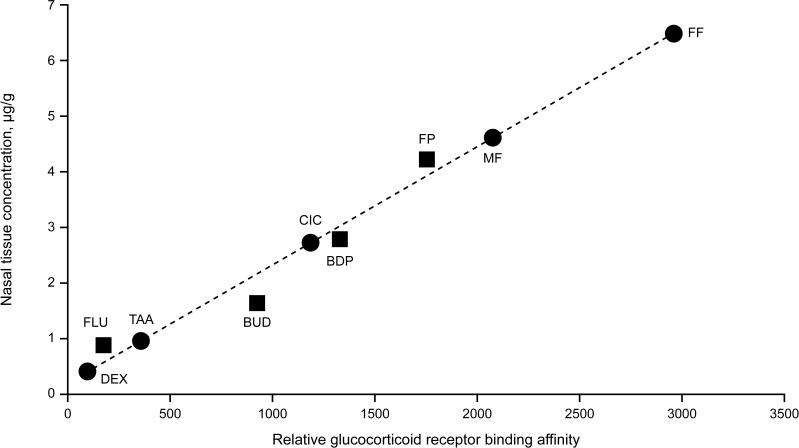
“989); data plotted as ● symbols are values predicted from Esmailpour et al data.(17) Abbreviations: BDP, beclomethasone dipropionate; BUD, budesonide; CIC, ciclesonide; DEX, dexamethasone; FF, fluticasone furoate; FLU, flunisolide; FP, fluticasone propionate; MF, mometasone furoate; TAA, triamcinolone acetonide.”
BackgroundMethodInfluentialKirtsreesakul, V., Chansaksung, P., & Ruttanaphol, S. (2008) · Otolaryngology · doi:10.1016/j.otohns.2008.07.023 · Cited by 12 · cited 1×
“In persistent AR, a minimal dose of INCS was shown to achieve the expected clinical outcome with near maximal symptomatic control being achieved with three quarters of the recommended regular once-daily (QD) dose.(22) In a dose-ranging study of FP ANS, all doses of FP studied reduced symptoms of AR significantly versu…”
BackgroundThe effect of long-term use of intranasal steroids on intraocular pressure
Şimşek, A., Bayraktar, C., Doğan, S., Karataş, M., & Sarıkaya, Y. (2016) · Clinical ophthalmology · doi:10.2147/opth.s106392 · Cited by 11
Weiswasser, M., Zhu, J., Chia, V., Nave, R., & Wingertzahn, M. A. (2008) · Journal of Allergy and Clinical Immunology · doi:10.1016/j.jaci.2007.12.214 · Cited by 2
Intranasal ciclesonide for allergic rhinitis
Smith, W. J., Williams, & Kette (2008) · Journal of Asthma and Allergy · doi:10.2147/jaa.s3082 · Cited by 2
Research works printed but not linked: 1
- Daley-Yates P, Richards DH. Pharmacokinetics (PK) and Pharmacodynamic (PD) relationships for Intranasal Corticosteroids (INCS). J Allergy Clin Immunol. 2001; 107(2, Supplement): S313.
Cited by
Beuschlein, F., Else, T., Bancos, I., Hahner, S., Hamidi, O., van Hulsteijn, L., Husebye, E. S., Karavitaki, N., Prete, A., Vaidya, A., et al. (2024) · The Journal of Clinical Endocrinology & Metabolism · doi:10.1210/clinem/dgae250 · Cited by 172
Beuschlein, F., Else, T., Bancos, I., Hahner, S., Hamidi, O., van Hulsteijn, L. T., Husebye, E. S., Karavitaki, N., Prete, A., Vaidya, A., et al. (2024) · European Journal of Endocrinology · doi:10.1093/ejendo/lvae029 · Cited by 157
Rollema, C., van Roon, E. N., van Boven, J. F. M., Hagedoorn, P., Klemmeier, T., Kocks, J., Metting, E., Elberink, H. N. G. O., Peters, T. T. A., Giorgi, M. R. M. S., et al. (2022) · Clinical & Experimental Allergy · doi:10.1111/cea.14212 · Cited by 40
The olfactory bulb: A neuroendocrine spotlight on feeding and metabolism
Stark, R. (2024) · Journal of Neuroendocrinology · doi:10.1111/jne.13382 · Cited by 46
Palmer, J. N., Adappa, N. D., Chandra, R. K., Davis, G. E., Mahdavinia, M., Messina, J. C., Ow, R. A., Patel, Z. M., Peters, A. T., Sacks, H. J., et al. (2024) · The Journal of Allergy and Clinical Immunology In Practice · doi:10.1016/j.jaip.2023.12.016 · Cited by 34
Metadata
- Authors
- Daley-Yates, P. T., Larenas-Linnemann, D., Bhargave, C., & Verma, M.
- Affiliations
- GlaxoSmithKline (India) (IN)
- Venue
- Journal of Asthma and Allergy
- Publisher
- Informa UK Limited
- Published
- 2021-09
- Volume
- Volume 14
- Pages
- 1093-1104
- ISSN
- 1178-6965 (ISSN-L)
- PMC
- PMC8436259
- OpenAlex
- W3197423053
- Cited by
- 49
- References
- 62
- Citations by year
- 2026: 15 · 2025: 13 · 2024: 12 · 2023: 6 · 2022: 3
- FWCI
- 0.83
- Type
- journal article
- Language
- en
- Open access
- gold
- doi.org
- Licence
- Locations
- Journal of Asthma and Allergy (publishedVersion, cc-by-nc)
- Europe PMC (PubMed Central) (publishedVersion, cc-by-nc)
- PubMed Central (publishedVersion, cc-by-nc)
- PubMed (publishedVersion)
- DOAJ (DOAJ: Directory of Open Access Journals) (acceptedVersion)
- Dove Medical Press (Taylor and Francis Group) (submittedVersion, cc-by-nc)
- Funders
- GlaxoSmithKline
- Topics
- Health Sciences › Medicine › Immunology and Allergy › Allergic Rhinitis and Sensitization
- Life Sciences › Pharmacology, Toxicology and Pharmaceutics › Pharmaceutical Science › Advanced Drug Delivery Systems
- Health Sciences › Medicine › Otorhinolaryngology › Sinusitis and nasal conditions
- Keywords
- intranasal corticosteroids, allergic rhinitis, therapeutic index, lipophilicity, oral bioavailability, systemic exposure, pharmacokinetics, physicochemical properties, systemic side effects, children, therapeutic equivalence
About these checks
Registry, retraction, Cites and statistics results are computed, not judged, with one exception: a printed reference that no index lists is read once by a model before it counts as a citation error. Claims are extracted by a model and kept only when their quote appears verbatim in the text; each cited source is then checked, with a model’s help, for whether it says what the claim relies on. Those verdicts can be wrong — read the claim’s quote and the cited source before relying on one.
Statistics and arithmetic are recomputed, not judged.
Confidence bands are shown only for fields calibrated on our annotated test set. None is calibrated yet, so no band is shown.
What counts as a claim ›How we measure confidence ›How we check this ›
Are you an author, or do you see a problem with this page? Request a review
Data sources
Bibliographic data: Semantic Scholar, OpenAlex, Crossref.
Contains information from the Semantic Scholar Academic Graph Datasets, made available under the ODC Attribution License (ODC-BY 1.0).
Semantic Scholar’s data is described in: Kinney, R., et al. (2023). The Semantic Scholar Open Data Platform. arXiv:2301.10140.
