

The DOI matches its Crossref record; 100 of the 100 references it cites were found in a registry or an index.
Vagus Nerve and Underlying Impact on the Gut Microbiota-Brain Axis in Behavior and Neurodegenerative Diseases
Open accessAbstract
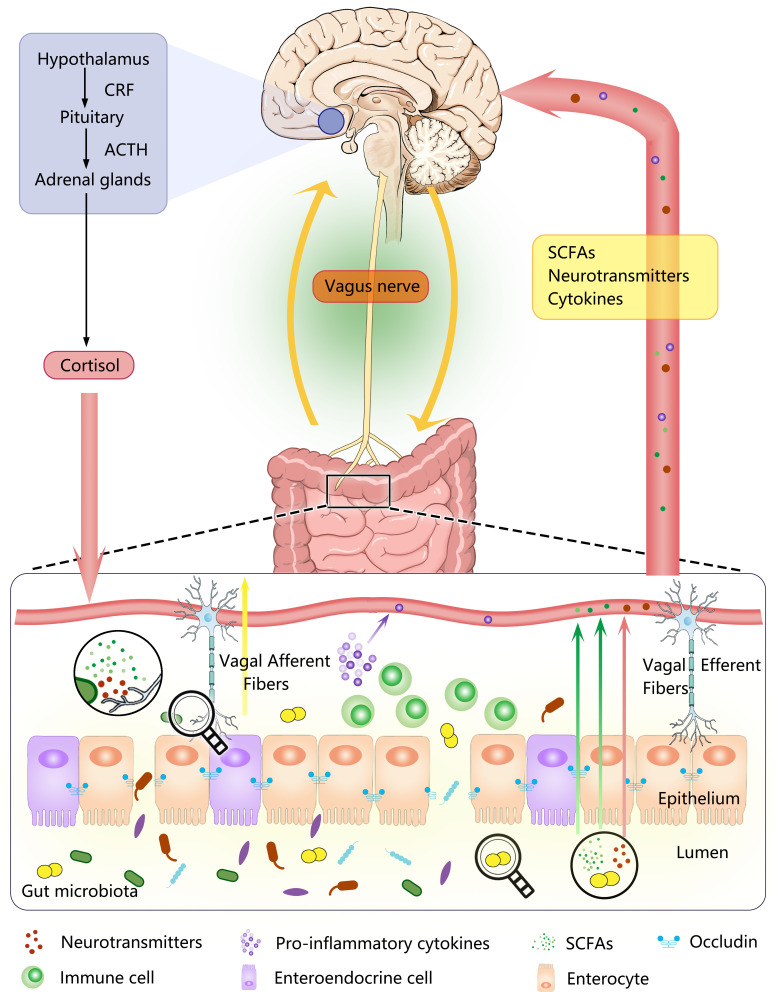
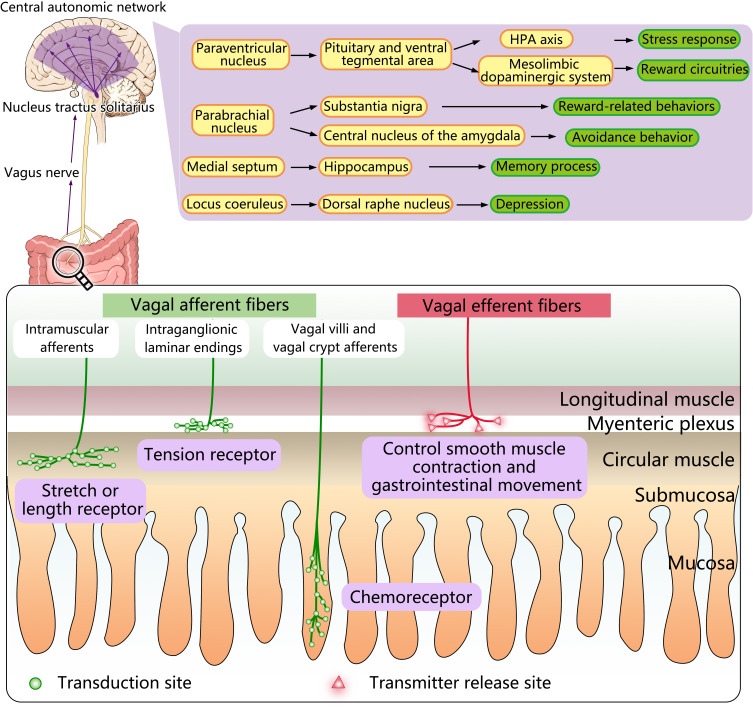
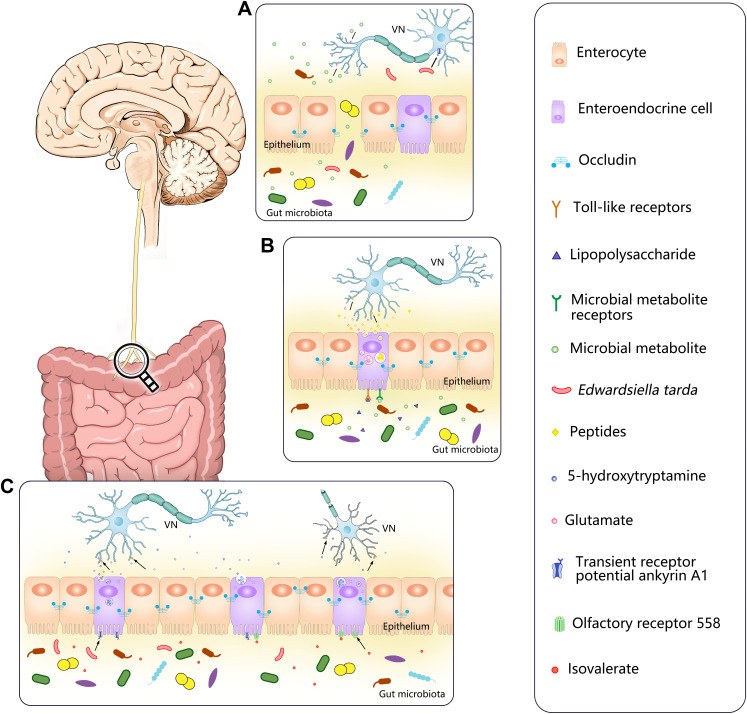
The gut microbiota is the most abundant and diverse microbiota in the human body and the vagus nerve is the most widely distributed and complex nerve in the body, both of them are essential in maintaining homeostasis. The most important phenomenon is how they coordinate to regulate functions, which has attracted the great attention of scientists. The academic literature on the correlation with a host of intestinal diseases and even systemic diseases has revealed the bidirectional communication between the gut microbiota and the brain, which can be carried out via multiple patterns. In the review, firstly, we have a general overview of the gut microbiota and the gut microbiota-brain axis. Secondly, according to the distribution characteristics of the vagus nerve, we analyzed and summarized its function in the intestinal tract. At the same time, we have summarized the underlying mechanism of some behavior changes such as depressive and anxiety-like behaviors and related neurodegenerative diseases caused by the vagus nerve and intestinal microecological environment disorders, and then we also analyzed inconsistency of the experimental evidence in order to propose novel strategies for the clinical practice.
Overview
The claims and statistics of this paper haven’t been checked yet.
Run the check — free, no account needed. It reads the open-access text and checks the sources it cites.
Integrity signals
Registry
Cites
Statistics
Figures
Verification
Claims the paper makes
The claims and statistics of this paper haven’t been checked yet.
Run the check — free, no account needed. It reads the open-access text and checks the sources it cites.
Claims other papers make about this one
Each is checked against this paper’s own text: does it say what the citing paper says it does?
The source backs part of the claim, not all of it — or backs it for a different population, condition or comparison.
In the citing paper
“Furthermore, microbial metabolites stimulate the vagus nerve, thereby exerting an important impact on brain function in SZ [14].”
From Effect of Supplementation with Probiotics in Patients with Schizophrenia: Systematic Review and Meta-Analysis of Randomized Controlled Clinical Trials (2025) · cites this paper as [14]
Experimental — accuracy not yet measured
Self-check
Percentages, sums and reported differences re-computed from the paper’s own numbers.
The self-check needs the paper’s full text.
Citations
Cites
Scheltens, P., De Strooper, B., Kivipelto, M., Holstege, H., Chételat, G., Teunissen, C. E., Cummings, J., & van der Flier, W. M. (2021) · The Lancet · doi:10.1016/s0140-6736(20)32205-4 · Cited by 5,465
The Microbial Metabolites, Short-Chain Fatty Acids, Regulate Colonic T reg Cell Homeostasis
Smith, P. M., Howitt, M. R., Panikov, N., Michaud, M., Gallini, C. A., Bohlooly-Y, M., Glickman, J. N., & Garrett, W. S. (2013) · Science · doi:10.1126/science.1241165 · Cited by 5,413
Bravo, J. A., Forsythe, P., Chew, M. V., Escaravage, E., Savignac, H. M., Dinan, T. G., Bienenstock, J., & Cryan, J. F. (2011) · Proceedings of the National Academy of Sciences · doi:10.1073/pnas.1102999108 · Cited by 3,888
Indigenous bacteria from the gut microbiota regulate host serotonin biosynthesis
Yano, J. M., Yu, K., Donaldson, G. P., Shastri, G. G., Ann, P., Ma, L., Nagler, C. R., Ismagilov, R. F., Mazmanian, S. K., & Hsiao, E. Y. (2015) · Cell · doi:10.1016/j.cell.2015.02.047 · Cited by 3,614
The role of short-chain fatty acids in microbiota–gut–brain communication
Dalile, B., Van Oudenhove, L., Vervliet, B., & Verbeke, K. (2019) · Nature Reviews Gastroenterology & Hepatology · doi:10.1038/s41575-019-0157-3 · Cited by 3,357
Nicotinic acetylcholine receptor α7 subunit is an essential regulator of inflammation
Wang, H., Yu, M., Ochani, M., Amella, C. A., Tanovic, M., Susarla, S., Li, J. H., Wang, H., Yang, H., Ulloa, L., et al. (2003) · Nature · doi:10.1038/nature01339 · Cited by 3,228
Sudo, N., Chida, Y., Aiba, Y., Sonoda, J., Oyama, N., Yu, X., Kubo, C., & Koga, Y. (2004) · The Journal of Physiology · doi:10.1113/jphysiol.2004.063388 · Cited by 2,735
The gut microbiota–brain axis in behaviour and brain disorders
Morais, L. H., Schreiber, H. L., & Mazmanian, S. K. (2021) · Nature Reviews Microbiology · doi:10.1038/s41579-020-00460-0 · Cited by 2,149
Braak, H., R�b, U., Gai, W. P., & Del Tredici, K. (2003) · Journal of Neural Transmission · doi:10.1007/s00702-002-0808-2 · Cited by 1,683
SCFA: mechanisms and functional importance in the gut
Martin‐Gallausiaux, C., Marinelli, L., Blottière, H. M., Larraufie, P., & Lapaque, N. (2020) · Proceedings of The Nutrition Society · doi:10.1017/s0029665120006916 · Cited by 1,585
Research works printed but not linked: 2
- Rinaman, 1989, J Neurosci, 9, 1985, 10.1523/JNEUROSCI.09-06-01985 · DOI
- Cechetto, 1987, Fed Proc, 46, 17
Cited by
Sorted by citations
Items 101–200 of 265
El‐Sehrawy, A. A. M. A., Ayoub, I. I., Uthirapathy, S., Ballal, S., Gabble, B. C., Singh, A., Kavitha, V., Panigrahi, R., Kamali, M., & Khosravi, M. (2025) · European Journal of Translational Myology · doi:10.4081/ejtm.2025.13690 · Cited by 8
Phage-Microbiota Crosstalk: Implications for Central Nervous System Disorders
Salari, V., Parrella, E., Mengoni, F., Cintra, L., Bertini, G., & Fabene, P. F. (2025) · International Journal of Molecular Sciences · doi:10.3390/ijms26136183 · Cited by 6
Ling, P.-Z., Wong, K., Ho, J. Y. S., Cheng, W., & Chang, R. C. (2025) · NeuroImmunoModulation · doi:10.1159/000547746 · Cited by 8
Sarkar, S., Maparu, K., & Aran, K. R. (2025) · Probiotics and Antimicrobial Proteins · doi:10.1007/s12602-025-10703-2 · Cited by 7
Molecular mechanisms underlying obesity-induced memory dysfunction: a comprehensive narrative review
Golkar, A., Razazpour, F., Dalfardi, M., & Baghcheghi, Y. (2025) · Physiology & Behavior · doi:10.1016/j.physbeh.2025.115119 · Cited by 7
Age-driven dysbiosis: gut microbiota in the pathogenesis and treatment of aging disorders
Kopalli, S. R., Wankhede, N. L., Rahangdale, S. R., Sammeta, S. S., Aglawe, M. M., Koppula, S., Taksande, B. G., Upaganlawar, A., Umekar, M. J., & Kale, M. B. (2026) · Biogerontology · doi:10.1007/s10522-026-10389-1 · Cited by 6
Exploring the Link Between the Gut Mycobiome and Neurological Disorders
Yetgin, A. (2024) · Advanced Gut & Microbiome Research · doi:10.1155/2024/9965893 · Cited by 6
Yu, Y., Yang, H.-J., Li, C., Ryu, M. S., Seo, J.-W., Jeong, D., & Park, S. (2025) · Nutrients · doi:10.3390/nu17101617 · Cited by 6
Du, D., Yuan, Y., Guan, X., Xie, Q., Sun, X., & Dong, Z. (2025) · Annals of Medicine · doi:10.1080/07853890.2025.2561222 · Cited by 7
Enlarged cross-sectional area of the left vagus nerve in patients with major depressive disorder
Schreiber, L. S., Wozniak, D., Scheller, E., Böttcher, E., Pelz, J. O., & Schmidt, F. M. (2023) · Frontiers in Psychiatry · doi:10.3389/fpsyt.2023.1237983 · Cited by 6
Can the gut-brain axis provide insight into psilocybin's therapeutic value in reducing stress?
Kit, A., Conway, K., Makarowski, S., O'Regan, G., Allen, J., Shultz, S. R., Bodnar, T. S., & Christie, B. R. (2025) · Neurobiology of Stress · doi:10.1016/j.ynstr.2025.100732 · Cited by 5
Su, S., Chen, M., Lu, D., Wu, Y.-F., Huang, X.-S., & Zhang, L. (2025) · The Journal of Nutritional Biochemistry · doi:10.1016/j.jnutbio.2025.110122 · Cited by 5
Flores, F. J. B., Tamez, J. A. G., Winkelman, T., Flores, R. B., & Madva, E. N. (2025) · Frontiers in Gastroenterology · doi:10.3389/fgstr.2025.1637172 · Cited by 8
Ma, C., Wen, H., Wenhao, Y., Changqing, L., Li, C., & Zhao, X. (2024) · Brain and Behavior · doi:10.1002/brb3.70169 · Cited by 5
Exploring the Potential of Dietary Supplements to Alleviate Pain Due to Long COVID
Marchesi, N., Allegri, M., Bruno, G. M., Pascale, A., & Govoni, S. M. (2025) · Nutrients · doi:10.3390/nu17071287 · Cited by 5
Aydin, B. N., Stinson, E. J., Travis, K. T., Krakoff, J. A., Rodzevik, T. L., Chang, D. C., & Gluck, M. E. (2024) · Behavioural Brain Research · doi:10.1016/j.bbr.2024.115201 · Cited by 7
Abbaszadeh, F., Fakhri, S., Varnamkhasti, B. S., Moradi, S. Z., Olfati, M. H., Moradi, Z., Khirehgesh, M. R., & Khan, H. Z. (2025) · Current Neuropharmacology · doi:10.2174/011570159x353541250128101649 · Cited by 5
Rocchetti, M. T., Chiano, M. D., Elouardi, I., & Fiocco, D. (2025) · Global Pediatrics · doi:10.1016/j.gpeds.2025.100266 · Cited by 6
Microbiome‐derived metabolites in substance use disorders: Mechanisms and implications
Koperska, M., & Kiraly, D. D. (2025) · Annals of the New York Academy of Sciences · doi:10.1111/nyas.15416 · Cited by 5
Misra, J. P., Shreevatsa, K. S., Ravi, K., Abomughaid, M. M., Lakhanpal, S., Gupta, R., Jha, N. K., & Kumar, N. (2026) · Journal of Neuroimmunology · doi:10.1016/j.jneuroim.2026.578913 · Cited by 4
Neurohormonal-Immune Dysregulation in Rosacea: Emerging Perspectives from the Skin-Gut-Brain Axis
Shi, L., Li, S., 姚晓东, Zhang, Z., Dong, Q., Zhang, H., Wang, X., Bai, J., Han, H., Fu, X., et al. (2026) · Drug Design Development and Therapy · doi:10.2147/dddt.s608151 · Cited by 4
Receptor-Independent Therapies for Forensic Detainees with Schizophrenia–Dementia Comorbidity
Sfera, A., Andronescu, L., Britt, W. G., Himsl, K., Klein, C. A., Rahman, L., & Kozlakidis, Z. (2023) · International Journal of Molecular Sciences · doi:10.3390/ijms242115797 · Cited by 3
Fu, H., & Liu, Y. (2024) · Regenerative medicine reports . · doi:10.4103/regenmed.regenmed-d-24-00006 · Cited by 5
Dopaminergic Pathways in Neuroplasticity After Stroke and Vagus Nerve Stimulation
Song, M., & Cramer, S. C. (2025) · Stroke · doi:10.1161/strokeaha.125.050674 · Cited by 5
Mirab, F., Pirhaghi, M., Otzen, D. E., & Saboury, A. A. (2025) · Biochimica et Biophysica Acta (BBA) - Molecular Basis of Disease · doi:10.1016/j.bbadis.2025.167862 · Cited by 4
Bali, P., Lal, P., Sivapuram, M. S., Kutikuppala, L. V. S., Avti, P., Chanana, A., Kumar, S., & Anand, A. (2024) · Neuroepidemiology · doi:10.1159/000538416 · Cited by 4
Recent Insights on the Prospective role of Phytocompounds in Modulating Gut-Brain Axis
Kumari, N., Anand, S., Shah, K., & Chauhan, N. S. (2024) · Current Pharmacology Reports · doi:10.1007/s40495-024-00364-0 · Cited by 3
Yu, Y., Li, C., Zhang, T., & Park, S. (2025) · BioFactors · doi:10.1002/biof.70031 · Cited by 3
Li, X., Chen, Y., Gao, Z., Liu, X., Song, Z., Gao, F., Wang, S., Yu, C., Sun, L., Huang, Y., et al. (2025) · Aging Cell · doi:10.1111/acel.70188 · Cited by 4
Christodoulou, M. V., Alexiou, G. Α., Lampros, M. G., Astrakas, L. G., Katsanos, K. H., & Argyropoulou, M. I. (2025) · Neuroradiology · doi:10.1007/s00234-025-03756-1 · Cited by 4
Zhao, J., Liu, H., & Badehnoosh, B. (2025) · Antonie van Leeuwenhoek · doi:10.1007/s10482-025-02162-0 · Cited by 4
Lifestyle factors affecting aging and healthspan in dogs and cats
Oh, W., Armstrong, P., & Han, H. (2025) · Journal of Veterinary Sciences · doi:10.4142/jvs.25227 · Cited by 4
Babu, K. S., Gupta, V., Dar, A. A., Sheikh, J. A., Kumar, D., Choudhary, N., Tanwar, R., Gupta, S., Rani, P., & Arunprasad, V. K. (2025) · ASN NEURO · doi:10.1080/17590914.2025.2603409 · Cited by 4
How Do Air Pollutants Affect the Brain? Potential Entry Routes and Peripheral Effects
Mussalo, L., Fayad, C., Shahbaz, M. A., Puris, E., & Kanninen, K. M. (2025) · Springer eBooks · doi:10.1007/978-3-031-99302-2_3 · Cited by 3
Engineering the Gut Microbiome: Emerging Genome-Editing Strategies and Therapeutic Applications
Liu, W., Li, Z., Zhu, J., Sun, Z., Yan, L., Luo, M., Chen, H., & Yin, Y. (2026) · Microorganisms · doi:10.3390/microorganisms14061174 · Cited by 4
Intratumoral Microbiome in Head and Neck Paragangliomas
Fedorova, M., Snezhkina, A. V., Kalinin, D. V., Pudova, E. A., Lantsova, M. S., Krasnov, G. S., Pavlov, V., & Kudryavtseva, A. V. (2024) · International Journal of Molecular Sciences · doi:10.3390/ijms25179180 · Cited by 3
The oral microbiota: new insight into intracranial aneurysms
Gong, W., Yu, H., You, W., Chen, Z., Wang, Y., Liu, C., Li, Y., & Guan, S. (2025) · Annals of Medicine · doi:10.1080/07853890.2025.2451191 · Cited by 3
Self-citationSleep, gut microbiota, and mind-body medicine
Das, M., Muralitharan, G., Saini, S., & Patra, S. (2025) · Brain Behavior and Immunity Integrative · doi:10.1016/j.bbii.2025.100128 · Cited by 3
Decoding the Gut-Brain Axis in Alzheimer’s Disease: Emerging Perspectives
Singh, V., Yadav, A., Taj, T., Islam, A., Mantry, S., Debnath, B., Kumar, B., & Ashique, S. (2025) · CNS & Neurological Disorders - Drug Targets · doi:10.2174/0118715273390442250805174841 · Cited by 2
Gluten affects behaviors related to activity and anxiety in mice fed high-fat diets
Schurdak, J. D., Benoit, S. C., & Woollett, L. A. (2025) · Journal of Neurophysiology · doi:10.1152/jn.00285.2025 · Cited by 2
Abuljadayel, D. A. (2025) · Journal of Applied Hematology · doi:10.4103/joah.joah_80_25 · Cited by 2
Gut microbial signatures in schizophrenia: exploring archaea, fungi, and bacteria
Fu, R., Liang, X., Yang, W., Li, R., Shi, Y., Guo, L., Yu, H., Chen, Y.-H., & Wang, H.-N. (2026) · BMC Psychiatry · doi:10.1186/s12888-025-07721-3 · Cited by 2
The Gut-Brain-Cardiac Axis: How Microbiota Influence Cognitive and Cardiovascular Health
Kumar, V., Singh, B., Ayyagari, A., Chaudhari, D. N., & Ahire, J. J. (2026) · Current Microbiology · doi:10.1007/s00284-026-04857-7 · Cited by 2
Wu, T., Xing, H., Wu, T., Xie, X., Ji, L., Wang, W., Zhang, X., Zhang, Y., Jiang, C., & Bao, T. (2026) · Neuropsychiatric Disease and Treatment · doi:10.2147/ndt.s591429 · Cited by 3
Rao, X., Zou, L., Cai, X., Yao, Y., & Zhong, L. (2026) · Frontiers in Immunology · doi:10.3389/fimmu.2026.1761834 · Cited by 2
Liu, C., Zhu, Z., Lin, H., Bush, W. S., Jenq, R. R., Cominelli, F., Pillai, J. A., Haines, J. L., Zhu, X., Xu, R., et al. (2026) · Frontiers in Molecular Biosciences · doi:10.3389/fmolb.2026.1735332 · Cited by 2
Ziaka, M. (2026) · Pathogens · doi:10.3390/pathogens15070659 · Cited by 2
Potent of strategic approaches for tauopathies ranging from single-cell transcriptome to microbiome
Kim, S., Yang, S., Yang, E.-J., Kang, M., & Joo, J. (2023) · Animal Cells and Systems · doi:10.1080/19768354.2023.2285826 · Cited by 2
From gut to brain: Deciphering the impact of gut microbiota on neurological health
Gopinath, R., Arundadhi, M., Dhanasezhian, A., & Sucila, T. G. (2024) · Novel Research in Microbiology Journal · doi:10.21608/nrmj.2024.273319.1479 · Cited by 2
Nezu, T., Eto, F., Hironaka, A., Aoki, S., Neshige, S., Tasaka, S., Kirimoto, H., & Maruyama, H. (2024) · Journal of Ultrasound · doi:10.1007/s40477-024-00936-2 · Cited by 2
Epigenetic Modulations by Microbiome in Breast Cancer
Zhao, Y., & Bhatnagar, S. (2024) · Advances in experimental medicine and biology · doi:10.1007/978-3-031-66686-5_4 · Cited by 2
Persister Intestinal Bacteria, Epigenetics and Major Depression
Vitetta, L., Bambling, M., & Strodl, E. S. (2025) · Frontiers in Bioscience-Landmark · doi:10.31083/fbl26837 · Cited by 2
Palanivelu, L., Chen, Y.-Y., Liang, Y., Li, S., Chang, C.-W., Huang, Y.-T., & Lo, Y. (2025) · NeuroImage · doi:10.1016/j.neuroimage.2025.121344 · Cited by 2
Serrano, J. I., Cruz-Gil, S., Fernández, C. M., Fernández, L. P., Sobrino-Santos, A., Espinosa‐Salinas, I., Maestre, C., Latasa, M.-J., Cebrián, M., Ramos, R., et al. (2025) · Scientific Reports · doi:10.1038/s41598-025-16090-6 · Cited by 2
Nankova, B. B., Hu, F., & LaGamma, E. F. (2025) · Frontiers in Microbiology · doi:10.3389/fmicb.2025.1504513 · Cited by 1
The Role of the Microbiome and the Neurovascular Unit
Polster, S. P. (2025) · Surgical Clinics of North America · doi:10.1016/j.suc.2025.06.008 · Cited by 2
The bacterial OMP amyloids modulate α-synuclein and amyloid-β aggregation
Sulatsky, M. I., Belousov, M. V., Stepanenko, O. V., Stepanenko, O. V., Mikhailova, E. V., Fayoud, H. J., Nizhnikov, A. A., & Sulatskaya, A. I. (2025) · International Journal of Biological Macromolecules · doi:10.1016/j.ijbiomac.2025.147485 · Cited by 1
Çopuroğlu, Ö. B., Çopuroğlu, M., & Tekiş, D. (2026) · International Urogynecology Journal · doi:10.1007/s00192-025-06511-5 · Cited by 1
Adrenergic signaling during parasitic infections
Gardias, P., & Bąska, P. (2026) · Frontiers in Immunology · doi:10.3389/fimmu.2025.1691005 · Cited by 1
Substance Addiction Development: The Microbiota–Gut–Brain Axis Role
Chaves-Jiménez, G., Baltodano-Rodas, C., Morales-Vargas, J. I., Ortiz-Quesada, A., & Pereira-Brenes, J. (2025) · Biochemistry (Moscow) Supplement Series B Biomedical Chemistry · doi:10.1134/s1990750824601279 · Cited by 1
Gupta, J., Chakraborty, A., Bhattacharya, D., Nag, M., Lahiri, D., Elayaperumal, S., Gill, H. S., Rajeev, M., Pandit, S., Sharma, S., et al. (2026) · SN Comprehensive Clinical Medicine · doi:10.1007/s42399-026-02402-y · Cited by 1
Microplastics as drivers of neuroinflammation: a review
Chakrabarti, S. K., & Chattopadhyay, D. (2026) · Journal of Neurology & Stroke · doi:10.15406/jnsk.2026.16.00647 · Cited by 1
Singh, P., & Mohanty, B. (2026) · Progress in Neuro-Psychopharmacology and Biological Psychiatry · doi:10.1016/j.pnpbp.2026.111847 · Cited by 1
Almarzooqi, S., Yassin, L. K., AlNuaimi, F., Alketbi, S., Skrabulyte-Barbulescu, J., AlAhbabi, N., Alremeithi, D., Almarashda, R., Almazrouei, S., Shehab, S., et al. (2026) · Translational Psychiatry · doi:10.1038/s41398-026-04305-x · Cited by 1
Microbiota–Gut–Brain Axis: An Integrative Overview of Communication Pathways
Martínez‐Porchas, M., Medina‐Félix, D., Olivas-Bernal, C. A., Guirado-Flores, J. S. O., Vargas‐Albores, F., Porchas‐Quijada, M., & Garibay-Valdéz, E. (2026) · Advanced Gut & Microbiome Research · doi:10.1155/agm3/8142006 · Cited by 1
Association of Pooled Fecal Microbiota on Height Growth in Children According to Enterotypes
Park, S., & Kang, S. (2023) · Journal of Pediatric Gastroenterology and Nutrition · doi:10.1097/mpg.0000000000003949 · Cited by 1
Disclosure orthodontic and TMD – new study
Lockerman, L. Z. (2024) · Evidence-Based Dentistry · doi:10.1038/s41432-024-00991-y · Cited by 1
Szabó, Á., Galla, Z., Spekker, E., Szűcs, M., Martos, D., Takeda, K., Ozaki, K., Inoue, H., Yamamoto, S., Toldi, J., et al. (2024) · Research Square · doi:10.21203/rs.3.rs-4624269/v1 · Cited by 1
Yang, X., Chen, Y.-H., Liu, L., Gu, Z., You, Y., Hao, J., Sun, N., & Gao, C. (2023) · SSRN Electronic Journal · doi:10.2139/ssrn.4527346
Perspectives of PCOS Pathophysiology: Exploring the Interplay between PCOS and the Gut Microbiota
Khade, K., Dadachanji, R., & Mukherjee, S. (2023) · Journal of Endocrinology & Reproduction · doi:10.18311/jer/2023/34986
Gut-Microbiota as a Therapeutic Intervention for Cognitive Damage
Hamdalla, H. M., Abdul‐Hamid, M., & Zaky, M. Y. (2024) · Springer eBooks · doi:10.1007/978-981-99-8803-7_11
Mohammadi, T., & Mohebalizadeh, M. (2023) · Springer eBooks · doi:10.1007/978-3-030-80962-1_373-1
Microbiome and Circadian Rhythms: Implications for Sleep, Aging, and Therapeutic Strategies
Najumuddin, Ullah, I., Taqveem, A., & Khurshid, M. (2024) · Springer eBooks · doi:10.1007/978-981-97-3790-1_10
Role of microbiota gut–brain axis in Parkinson's disease
Mansuri, R., Dhanawat, M., Patel, S., Garima, G., & Diwan, A. (2025) · Elsevier eBooks · doi:10.1016/b978-0-443-21680-0.00003-1
Doddamane, S. T., Paliwal, A., Bagul, K. R., & Patel, N. (2025) · Indian Journal of Private Psychiatry · doi:10.5005/jp-journals-10067-0178
Onkolojik Acillerde Görüntüleme
Öztürk, M. Ö., & Reşorlu, M. (2025) · Türk Radyoloji Seminerleri · doi:10.4274/trs.2025.24185
Mohammadi, T., & Mohebalizadeh, M. (2025) · Springer eBooks · doi:10.1007/978-3-032-00759-9_373
The Gut-Brain Connection: How Diet Influences Mental Health
Yener, S. M. (2025) · Nutritional neurosciences · doi:10.1007/978-981-95-1414-4_5
Zhang, B., Dunn, E., Williams, R. S. B., Snowden, S. G., & Augustin, H. (2025) · Disease Models & Mechanisms · doi:10.1242/dmm.052184
Areekul, P., Bhunyakarnjanarat, T., Suebnuson, S., Somsri, K., Trakultritrung, S., Taveethavornsawat, K., Tencomnao, T., Boonyasuppayakorn, S., & Leelahavanichkul, A. (2025) · Biology · doi:10.3390/biology14111583
Role of gut microbiome in diabetes and neurodegenerative diseases
Nabi, H., & Hossain, A. (2025) · Elsevier eBooks · doi:10.1016/b978-0-443-33355-2.00009-8
郭, 沛. (2025) · Traditional Chinese Medicine · doi:10.12677/tcm.2025.1412768
Kotowska-Bąbol, M., Konowałek, Ł., Szajewska, H., & Łukasik, J. (2025) · Trials · doi:10.1186/s13063-025-09373-w
Introduction to psychobiotics: Definition, mechanism of action, sources, and functionality
Chaturvedi, S., & Manickavasagan, A. (2026) · Elsevier eBooks · doi:10.1016/b978-0-443-33116-9.00004-8
Dietary modulation of gut microbiota and gut–brain axis
Viana, S., Ferreira, C., Violante, C., Hinchado, M. D., & Reis, F. (2026) · Elsevier eBooks · doi:10.1016/b978-0-443-33841-0.00017-8
Starved synapses: Gut microbiome dysbiosis and its role in Alzheimer’s glucose impairment
Upadhyay, R., Santhosh, S., Malathi, R., Kumari, P. S., Vijayanand, S., & Sevanan, M. (2026) · International review of neurobiology · doi:10.1016/bs.irn.2026.01.010
Gut-brain axis in metabolic control
Singh, S. P., Ghosh, S., Singh, D. K. K., & Sinha, J. K. (2026) · Elsevier eBooks · doi:10.1016/b978-0-443-32848-0.00024-8
Karmakar, A., Roycowdhury, P., Sengupta, P., & Mukhopadhyay, D. (2026) · International review of neurobiology · doi:10.1016/bs.irn.2026.02.007
Neurobiological effects of microbial treatments within psychiatry: a systematic review
Sgarbossa, C., Forth, E., Squires, S. D., Groth, A., Farid, M., Gallant, K., Desai, D., Redfearn, W., & Milev, R. V. (2026) · Frontiers in Psychiatry · doi:10.3389/fpsyt.2026.1745964
Nikolenko, V., Zharova, N., Mikliaeva, E., Pomelenok, A., Vostrikova, I., Ershova, E., Raikh, N., Zharikova, T. M., Pontes-Silva, A., & Zharikov, Y. O. (2026) · Aktuelle Rheumatologie · doi:10.1055/a-2839-9811
The Microbiome-Body Connection: Unraveling the Gut-Brain Axis
Islam, M. M., Mahbub, N. U., & Islam, M. A. (2026) · Springer eBooks · doi:10.1007/978-981-95-7494-0_1
Vagally Mediated Pathways: How Gut Signals Affect the Nervous System
Sengottuvel, T., Aysha, M. A., & Sneha, V. K. (2026) · Springer eBooks · doi:10.1007/978-981-95-7494-0_3
Huma, N. E., Davison, S., Guse, K., Walls, C., Rutschke, S., Sackett, A., Blanco-Ruiz, G., Zhang, J., Chen, C., Damián, J. P., et al. (2026) · bioRxiv (Cold Spring Harbor Laboratory) · doi:10.64898/2026.05.07.718715
Importance of the inflammasome in gut-brain axis: from pathological driver to therapeutic target
Sarkar, S., Roy, S., & Choudhury, L. (2026) · Inflammopharmacology · doi:10.1007/s10787-026-02230-5
Herbal medicine for mild cognitive impairment: Neuroimaging perspectives
Zhang, Y.-Q. (2026) · World Journal of Clinical Cases · doi:10.12998/wjcc.v14.i16.118410
Aggad, W. S., Ghosh, R., Almohaimeed, H. M., Mohammedsaleh, Z. M., Saleh, F. M., Almars, . I., Jyothi, S. R., Panigrahi, R., Kumer, A., & Dhara, B. (2026) · Animal Models and Experimental Medicine · doi:10.1002/ame2.70226
Huang, D., Gao, Y., Hao, K., Hu, C., Zhang, S., Gong, W., Qin, X., Du, G., Li, H., & Zhou, Y. (2026) · Journal of Pharmaceutical Analysis · doi:10.1016/j.jpha.2026.101674
Self-citationPRICE, M. (2026) · Duke University Press eBooks · doi:10.1215/9781478062363-004
Metadata
- Authors
- Han, Y., Wang, B., Gao, H., He, C., Hua, R., Liang, C., Zhang, S., Wang, Y., Xin, S., & Xu, J.
- Affiliations
- Capital Medical University (CN)
- Peking University People's Hospital (CN)
- Beijing Tongren Hospital (CN)
- Corresponding author
- Xu, Jingdong
- Venue
- Journal of Inflammation Research
- Publisher
- Informa UK Limited
- Published
- 2022-11
- Volume
- Volume 15
- Pages
- 6213-6230
- ISSN
- 1178-7031 (ISSN-L)
- PMC
- PMC9656367
- OpenAlex
- W4308542736
- Cited by
- 265
- References
- 100
- Citations by year
- 2026: 100 · 2025: 83 · 2024: 57 · 2023: 25
- FWCI
- 4.30
- Type
- journal article
- Language
- en
- Open access
- gold
- doi.org
- Licence
- Locations
- Journal of Inflammation Research (publishedVersion, cc-by-nc)
- PubMed Central (publishedVersion, cc-by-nc)
- PubMed (publishedVersion)
- DOAJ (DOAJ: Directory of Open Access Journals) (submittedVersion, cc-by-sa)
- Dove Medical Press (Taylor and Francis Group) (submittedVersion, cc-by-nc)
- Funders
- National Natural Science Foundation of China (81673671, 82174056)
- Topics
- Life Sciences › Biochemistry, Genetics and Molecular Biology › Molecular Biology › Gut microbiota and health
- Life Sciences › Neuroscience › Neurology › Vagus Nerve Stimulation Research
- Health Sciences › Medicine › Gastroenterology › Gastrointestinal motility and disorders
- Keywords
- vagus nerve, gut microbiota, gut-brain axis, neurodegenerative diseases, depression-like behavior, anxiety-like behavior, two-way communication
About these checks
Registry, retraction, Cites and statistics results are computed, not judged, with one exception: a printed reference that no index lists is read once by a model before it counts as a citation error. Claims are extracted by a model and kept only when their quote appears verbatim in the text; each cited source is then checked, with a model’s help, for whether it says what the claim relies on. Those verdicts can be wrong — read the claim’s quote and the cited source before relying on one.
Statistics and arithmetic are recomputed, not judged.
Confidence bands are shown only for fields calibrated on our annotated test set. None is calibrated yet, so no band is shown.
What counts as a claim ›How we measure confidence ›How we check this ›
Are you an author, or do you see a problem with this page? Request a review
