

Machine Learning and AI in Cancer Prognosis, Prediction, and Treatment Selection: A Critical Approach
Open accessThe DOI matches its Crossref record; 89 of the 89 references it cites were found in a registry or an index.
Abstract
Cancer is a leading cause of morbidity and mortality worldwide. While progress has been made in the diagnosis, prognosis, and treatment of cancer patients, individualized and data-driven care remains a challenge. Artificial intelligence (AI), which is used to predict and automate many cancers, has emerged as a promising option for improving healthcare accuracy and patient outcomes. AI applications in oncology include risk assessment, early diagnosis, patient prognosis estimation, and treatment selection based on deep knowledge. Machine learning (ML), a subset of AI that enables computers to learn from training data, has been highly effective at predicting various types of cancer, including breast, brain, lung, liver, and prostate cancer. In fact, AI and ML have demonstrated greater accuracy in predicting cancer than clinicians. These technologies also have the potential to improve the diagnosis, prognosis, and quality of life of patients with various illnesses, not just cancer. Therefore, it is important to improve current AI and ML technologies and to develop new programs to benefit patients. This article examines the use of AI and ML algorithms in cancer prediction, including their current applications, limitations, and future prospects.
Overview
The claims and statistics of this paper haven’t been checked yet.
Free: it reads the open-access text and checks the first 5 claims that cite a source we can check. Create a free account to check every claim.
Integrity signals
Registry
Cites
Statistics
Figures
Verification
Claims the paper makes
The claims and statistics of this paper haven’t been checked yet.
Free: it reads the open-access text and checks the first 5 claims that cite a source we can check. Create a free account to check every claim.
Claims other papers make about this one
Each is checked against this paper’s own text: does it say what the citing paper says it does?
The cited source says what the claim attributes to it.
In the citing paper
“These techniques have been applied to predict cancer prognosis and estimate treatment response based on genomic and clinical data [8–14].”
From Integrating machine learning and artificial intelligence in life-course epidemiology: pathways to innovative public health solutions (2024) · cites this paper as [10]
In the citing paper
“Research by Kumar et al. (76) and Zhang et al. (77) examined the use of AI algorithms in cancer and diagnosis. The studies revealed that AI algorithms achieved high accuracy rates in diagnosing cancer subtypes, assisting clinicians in developing tailored treatment plans.”
From Improving health literacy using the power of digital communications to achieve better health outcomes for patients and practitioners. (2023) · cites this paper as [77]
Self-check
Percentages, sums and reported differences re-computed from the paper’s own numbers.
The self-check needs the paper’s full text.
Citations
Cites
1 retracted
Research on Early Warning Mechanism and Model of Liver Cancer Rehabilitation Based on CS-SVM
Bo, J., Shuang, L., Ma, P., Zhu, Y., & Zhang, Y. (2021) · Journal of Healthcare Engineering · doi:10.1155/2021/6658776 · Cited by 17 · cited 1×
“14 Studies have also reported that different ML and AI techniques serve as models for global practices allowing big data and cognition-capable computers to aid cancer research specialists in revolutionizing medicine by performing multifaceted tasks to improve clinical workflow, diagnostic accuracy,…”
RetractedSung, H., Ferlay, J., Siegel, R. L., Laversanne, M., Soerjomataram, I., Jemal, A., & Bray, F. (2021) · CA: A Cancer Journal for Clinicians · doi:10.3322/caac.21660 · Cited by 108,699 · cited 2×
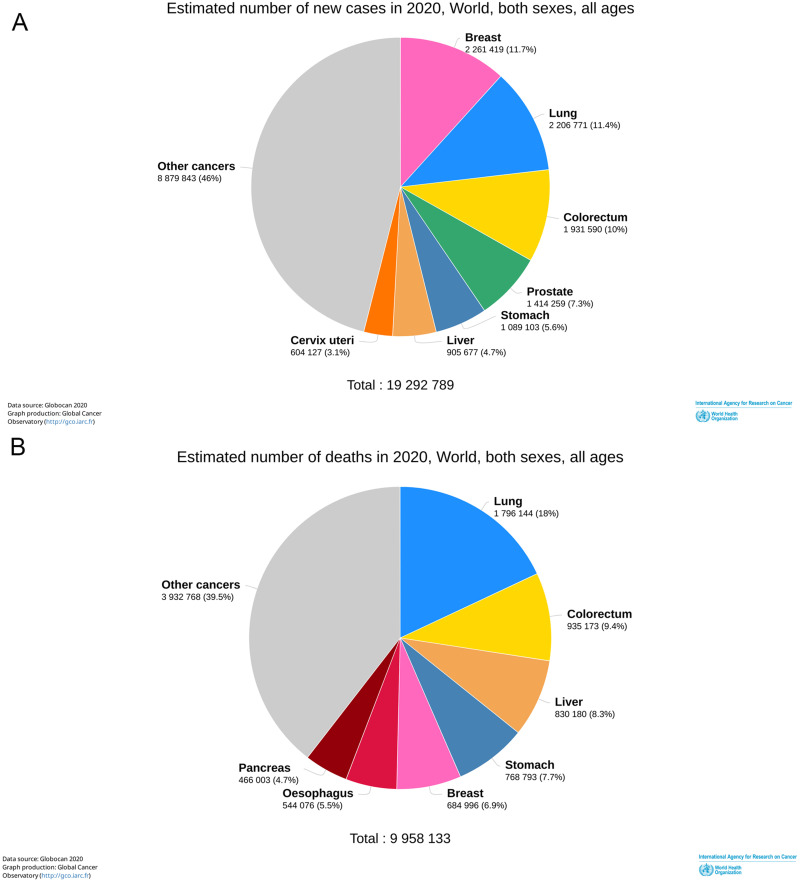
“3 million new cases and 10 million deaths have been reported annually.(2) Lung cancer remains the most common cause of cancer-related mortality, with expected 1.”
BackgroundThe FAIR Guiding Principles for scientific data management and stewardship
Wilkinson, M. D., Dumontier, M., Aalbersberg, I. J., Appleton, G., Axton, M., Baak, A., Blomberg, N., Boiten, J.-W., da Silva Santos, L. B., Bourne, P. E., et al. (2016) · Scientific Data · doi:10.1038/sdata.2016.18 · Cited by 18,423 · cited 1×
“84 An editorial has been published which is based on the challenges of the effectual implementation of FAIR Principles in biomedical research.”
Dermatologist-level classification of skin cancer with deep neural networks
Esteva, A., Kuprel, B., Novoa, R. A., Ko, J., Swetter, S. M., Blau, H. M., & Thrun, S. (2017) · Nature · doi:10.1038/nature21056 · Cited by 14,362 · cited 1×
“Recently, ML algorithms have been used successfully in prognosis of skin cancer with equivalent accuracy to a skilled dermatologist, 24 and to predict the development of pre-diabetes type 2 diabetes using routinely obtained electronic health record data of the patients.”
Machine learning: Trends, perspectives, and prospects
Jordan, M. I., & Mitchell, T. M. (2015) · Science · doi:10.1126/science.aaa8415 · Cited by 9,955 · cited 1×
“23 To date, the primary benefactors of the twenty-first-century surge in the availability of big data, data science, and machine learning have been companies that were able to acquire these data and pay the required personnel to transform their products.”
Gene selection for cancer classification using support vector machines
Guyon, I., Weston, J., Barnhill, S., & Vapnik, V. (2002) · Machine Learning · doi:10.1023/a:1012487302797 · Cited by 9,954
Santos, A. G., da Rocha, G. O., & de Andrade, J. B. (2019) · Scientific Reports · doi:10.1038/s41598-018-37186-2 · Cited by 8,495
Knowledge Graph Embedding by Translating on Hyperplanes
Wang, Z., Zhang, J., Feng, J., & Chen, Z. (2014) · Proceedings of the AAAI Conference on Artificial Intelligence · doi:10.1609/aaai.v28i1.8870 · Cited by 3,915
International evaluation of an AI system for breast cancer screening
McKinney, S. M., Sieniek, M., Godbole, V., Godwin, J., Antropova, N., Ashrafian, H., Back, T., Chesus, M., Corrado, G. S., Darzi, A., et al. (2020) · Nature · doi:10.1038/s41586-019-1799-6 · Cited by 3,287 · cited 1×
“” In January 2020, researchers developed an artificial intelligence system based on a “Google DeepMind algorithm” capable of outperforming human “breast cancer” detection specialists.(36,37) In July 2020, the University of Pittsburgh developed an AI systembased machine learning technique with the highest accuracy in d…”
MethodA Survey on Knowledge Graphs: Representation, Acquisition, and Applications
Ji, S., Pan, S., Cambria, E., Marttinen, P., & Yu, P. S. (2022) · IEEE Transactions on Neural Networks and Learning Systems · doi:10.1109/tnnls.2021.3070843 · Cited by 2,947
Research works printed but not linked: 13
- Kubat M. An Introduction to Machine Learning. Springer; 2017.
- Alpaydin E. Introduction to Machine Learning. MIT press; 2020.
- Rebala G, Ravi A, Churiwala S. An Introduction to Machine Learning. Springer; 2019.
- Ertel W. Introduction to Artificial Intelligence. Springer; 2018.
- Kalis B, Collier M, Fu R. 10 promising AI applications in health care. Harv Bus Rev. 2018; 2018: 1.
- Ray A, Chen M, Gelogo Y. Performance Comparison of Different Machine Learning Algorithms for Risk Prediction and Diagnosis of Breast Cancer. In: Smart Technologies in Data Science and Communication. Springer; 2020: 71– 76.
- Kharya S, Dubey D, Soni S. Predictive machine learning techniques for breast cancer detection. Int J Comput Sci Inf Technol. 2013; 4(6): 1023– 1028.
- Lv Z, Yu Z, Xie S, Alamri A. Deep learning-based smart predictive evaluation for interactive multimedia-enabled smart healthcare. ACM Trans Multimedia Comput Commun Appl. 2022; 18(1): 1– 20.
- Tumuluru P, Ravi B. GOA-based DBN: grasshopper optimization algorithm-based deep belief neural networks for cancer classification. Int J Appl Eng Res. 2017; 12(24): 14218– 14231.
- Sivashanker K, Duong T, Resnick A, Eappen S. Health care equity: from fragmentation to transformation. NEJM Catal Innov Care Deliv. 2020; 1 5.
- Zhang P, Schmidt DC, White J, Lenz G. Chapter One - Blockchain Technology Use Cases in Healthcare. In: Raj P, Deka GC, editors. Advances in Computers. Vol. 111. Elsevier; 2018: 1– 41.
- Stokman FN, de Vries PH. Structuring Knowledge in a Graph. Rijksuniversiteit Groningen; 1986.
- Alawad M, Gao S, Shekar MC, et al. Integration of domain knowledge using medical knowledge graph deep learning for cancer phenotyping. arXiv preprint arXiv. 2021; 2021: 210101337.
Cited by
Fitzpatrick, P. J. (2023) · Frontiers in Digital Health · doi:10.3389/fdgth.2023.1264780 · Cited by 416
Khalighi, S., Reddy, K., Midya, A., Pandav, K. B., Madabhushi, A., & Abedalthagafi, M. (2024) · npj Precision Oncology · doi:10.1038/s41698-024-00575-0 · Cited by 306
“AI can add value at all steps of tumor diagnosis, with the majority of ,pathologydata,orbothdatamodescombined 68 .”
AI-driven biomarker discovery: enhancing precision in cancer diagnosis and prognosis
Alum, E. U. (2025) · Discover Oncology · doi:10.1007/s12672-025-02064-7 · Cited by 208
Integrating artificial intelligence in healthcare: applications, challenges, and future directions
Chong, P. L., Vaigeshwari, V., Reyasudin, B. K. M., Hidayah, B. R. A. N., Purnshatman, T., Yeow, J. A., & Kong, F. Y. (2025) · Future Science OA · doi:10.1080/20565623.2025.2527505 · Cited by 132
“Zhang et al. [87] call for transparent frameworks that govern Ai deployment, particularly in high-stakes fields like oncology. to this end, policymakers and healthcare institutions must establish ethical guidelines that address issues such as the secondary use of data, algorithmic bias, and the…”
Vinay, V., Jodalli, P. S., Chavan, M. S., Buddhikot, C. S., Luke, A. M., Ingafou, M., Reda, R., Pawar, A. M., & Testarelli, L. (2025) · Diagnostics · doi:10.3390/diagnostics15030280 · Cited by 95
Metadata
- Authors
- Zhang, B., Shi, H., & Wang, H.
- Affiliations
- Tonghua Normal University (CN)
- Corresponding author
- Zhang, Bo
- Venue
- Journal of Multidisciplinary Healthcare
- Publisher
- Informa UK Limited
- Published
- 2023-06
- Volume
- Volume 16
- Pages
- 1779-1791
- ISSN
- 1178-2390 (ISSN-L)
- PMC
- PMC10312208
- OpenAlex
- W4381989081
- Cited by
- 347
- References
- 89
- Citations by year
- 2026: 102 · 2025: 152 · 2024: 80 · 2023: 13
- FWCI
- 7.26
- Type
- journal article
- Language
- en
- Open access
- gold
- doi.org
- Licence
- Locations
- Journal of Multidisciplinary Healthcare (publishedVersion, cc-by-nc)
- PubMed Central (publishedVersion, cc-by-nc)
- PubMed (publishedVersion)
- Dove Medical Press (Taylor and Francis Group) (submittedVersion, cc-by-nc)
- DOAJ (DOAJ: Directory of Open Access Journals) (submittedVersion, cc-by-sa)
- Topics
- Physical Sciences › Computer Science › Artificial Intelligence › AI in cancer detection
- Health Sciences › Medicine › Health Informatics › Artificial Intelligence in Healthcare and Education
- Health Sciences › Medicine › Radiology, Nuclear Medicine and Imaging › Radiomics and Machine Learning in Medical Imaging
- Keywords
- artificial intelligence, machine learning, cancer prognosis, cancer prediction, treatment selection, cancer risk assessment, early cancer detection, breast cancer, brain cancer, lung cancer, liver cancer, prostate cancer
About these checks
Registry, retraction, Cites and statistics results are computed, not judged, with one exception: a printed reference that no index lists is read once by a model before it counts as a citation error. Claims are extracted by a model and kept only when their quote appears verbatim in the text; each cited source is then checked, with a model’s help, for whether it says what the claim relies on. Those verdicts can be wrong — read the claim’s quote and the cited source before relying on one.
Statistics and arithmetic are recomputed, not judged.
Confidence bands are shown only for fields calibrated on our annotated test set. None is calibrated yet, so no band is shown.
What counts as a claim ›How we measure confidence ›How we check this ›
Are you an author, or do you see a problem with this page? Request a review
Data sources
Bibliographic data: Semantic Scholar, OpenAlex, Crossref.
Contains information from the Semantic Scholar Academic Graph Datasets, made available under the ODC Attribution License (ODC-BY 1.0).
Semantic Scholar’s data is described in: Kinney, R., et al. (2023). The Semantic Scholar Open Data Platform. arXiv:2301.10140.
