

Tumor Suppressor microRNA-138 Suppresses Low-Grade Glioma Development and Metastasis via Regulating IGF2BP2
Open accessThe DOI matches its Crossref record; 32 of the 33 references it cites were found in a registry or an index.
Abstract
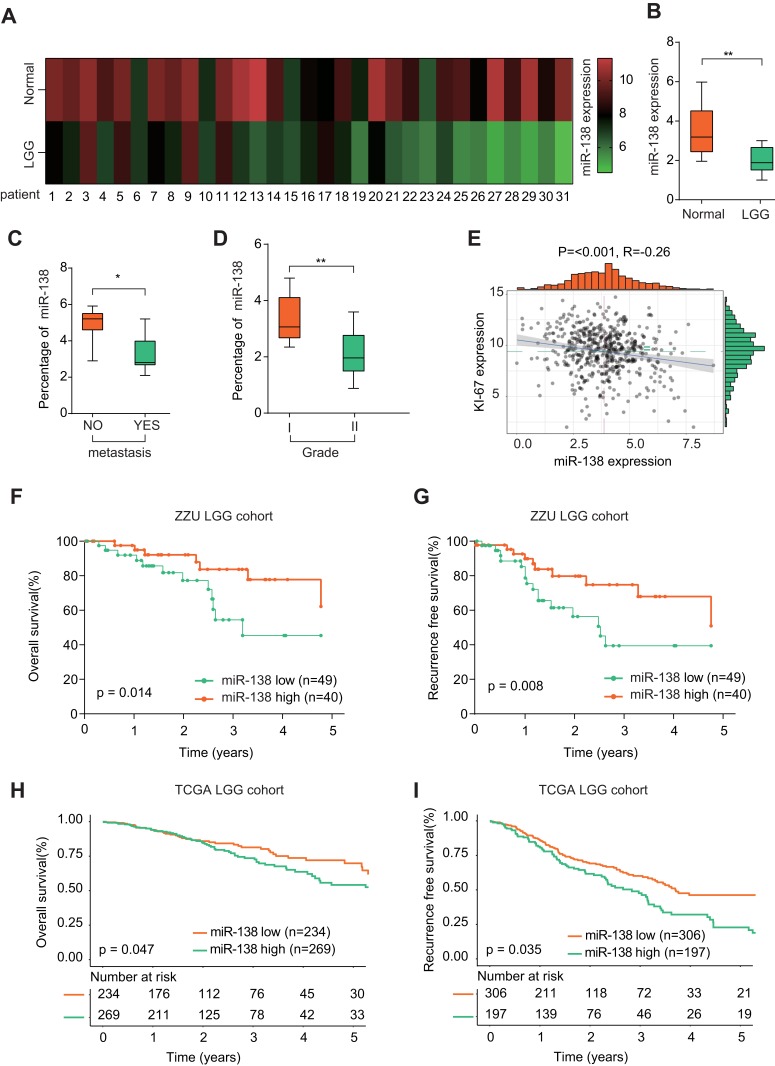
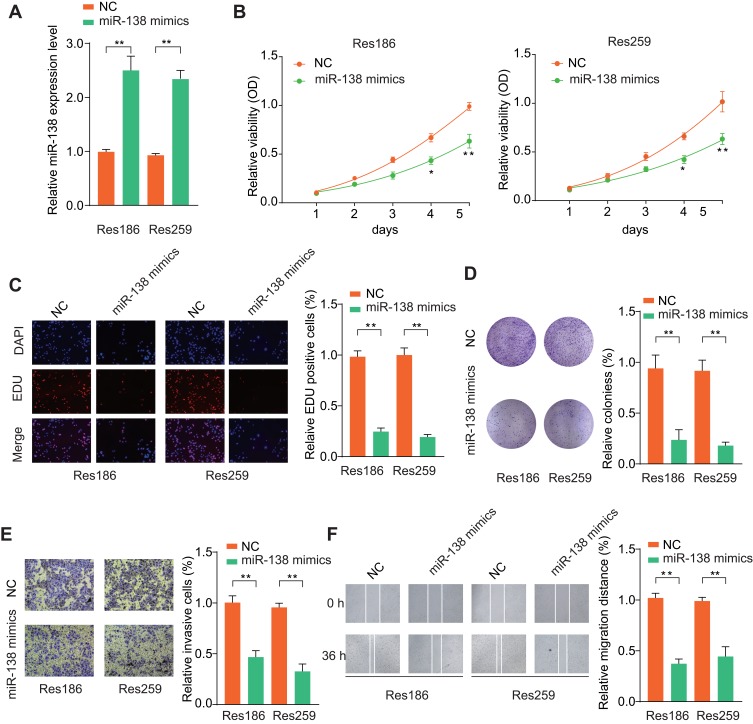
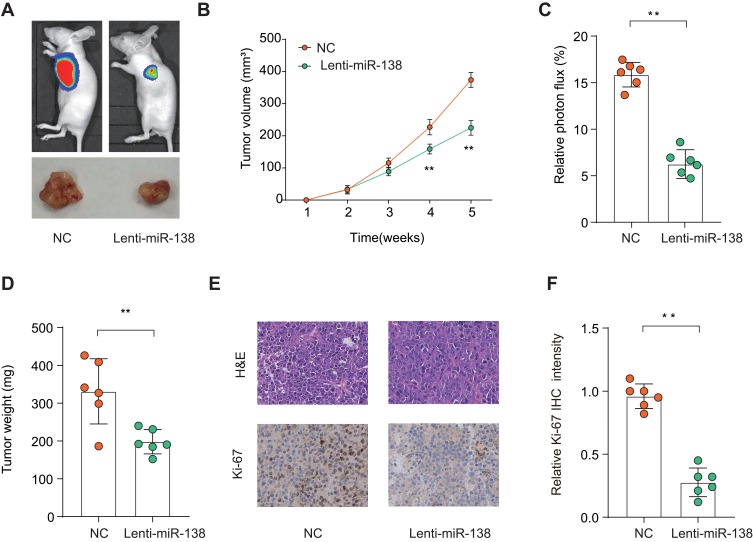
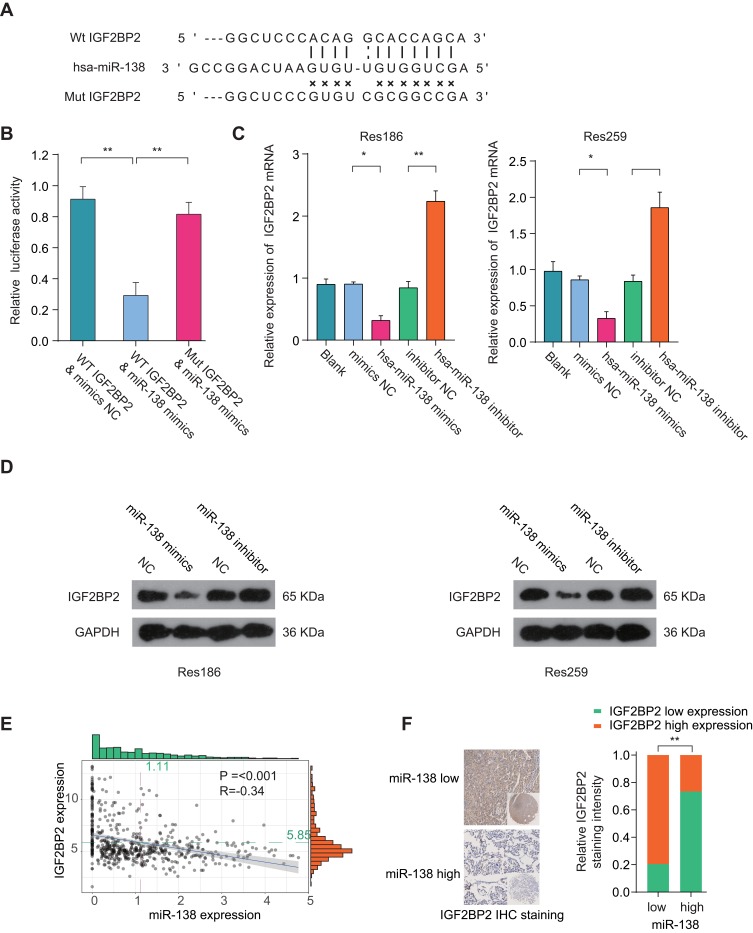
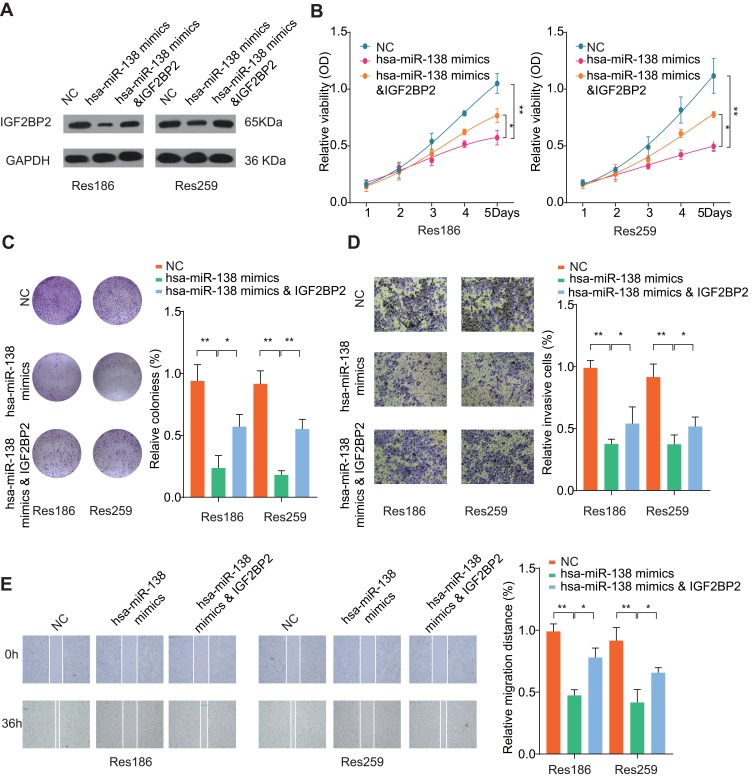
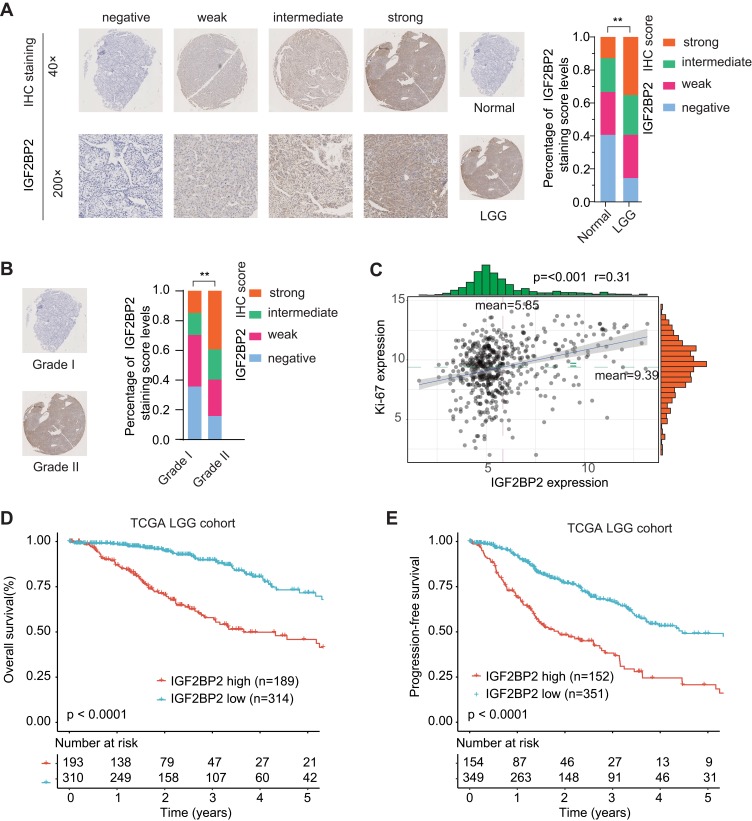
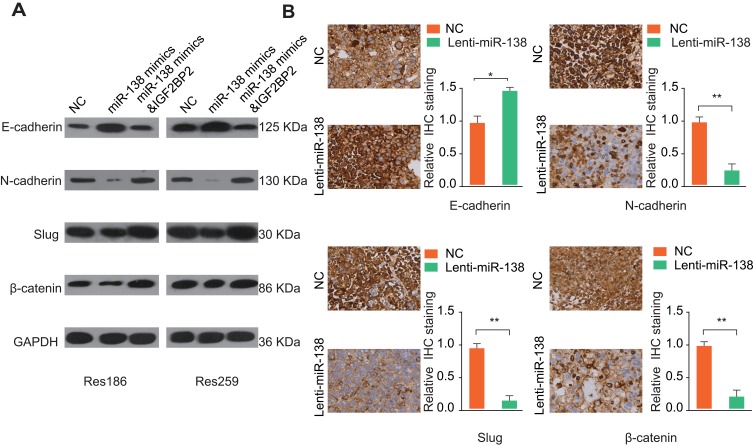
BACKGROUND: Low-grade gliomas (LGG), approximately constitute one-third of all types of gliomas, are prone to relapse and metastasis. MicroRNA-138 (miR-138) is reported to be dysregulated in diverse human tumors and mainly function as a tumor suppressor. In this study, we analyzed the expression profile and function of miR-138 in LGG. METHODS: Quantitative PCR (qPCR) and public database bioinformatics analysis were performed to determine the miR-138 levels in LGG. MiR-138 overexpression in LGG cells was achieved by miR-138 mimics transfection. Cell proliferation was assessed by CCK8, EdU and colony formation assays. Cell invasion and migration were analyzed by transwell and wound-healing assays. Xenograft model was employed to study the role of miR-138 in LGG growth in vivo. The target of miR-138 was validated by multiple methods, such as luciferase reporter assay, RT-qPCR and Western blot. Bioinformatics analysis was conducted to explore the molecular mechanisms by which miR-138 contributed to LGG progression. RESULTS: miR-138 was significantly downregulated in LGG tumor tissues and low expression of miR-138 was significantly associated with poor prognosis as well as relapse and metastasis in LGG patients. Functional analysis indicated that ectopic miR-138 expression suppressed LGG cell growth and invasive phenotype in vitro, and inhibited tumor development in vivo. Moreover, miR-138 directly targeted and repressed insulin-like growth factor 2 mRNA binding protein 2 (IGF2BP2) by targeting the 3'-UTR of IGF2BP2, inhibiting epithelial to mesenchymal transition (EMT) to attenuate LGG aggressiveness. In addition, we found that elevated IGF2BP2 expression correlates with poor survival of LGG patients. CONCLUSION: miR-138 may function as a tumor inhibitor by directly inhibiting IGF2BP2 and suppressing EMT in the progression of LGG.
Overview
The claims and statistics of this paper haven’t been checked yet.
Free: it reads the open-access text and checks the first 5 claims that cite a source we can check. Create a free account to check every claim.
Integrity signals
Registry
Cites
Statistics
Figures
Verification
Claims the paper makes
The claims and statistics of this paper haven’t been checked yet.
Free: it reads the open-access text and checks the first 5 claims that cite a source we can check. Create a free account to check every claim.
Claims other papers make about this one
Each is checked against this paper’s own text: does it say what the citing paper says it does?
The source backs part of the claim, not all of it — or backs it for a different population, condition or comparison.
In the citing paper
“Multiple microRNAs act as negative regulators of IMP2 across a variety of biological processes and diseases, including breast, pancreatic, and hepatocellular carcinoma, as well as keratinocyte migration, demonstrating the extensive regulatory network controlling its activity [55,56,57,58,59,60,61].”
From IMPlications of IMP2 in RNA Biology and Disease (2025) · cites this paper as [56]
Experimental — accuracy not yet measured
Self-check
Percentages, sums and reported differences re-computed from the paper’s own numbers.
The self-check needs the paper’s full text.
Citations
Cites
1 retracted
Li, X., Li, Y., & Lu, H. (2017) · Oncology Research Featuring Preclinical and Clinical Cancer Therapeutics · doi:10.3727/97818823455816x14760504645779 · Cited by 33
RetractedThe 2016 World Health Organization Classification of Tumors of the Central Nervous System: a summary
Louis, D. N., Perry, A., Reifenberger, G., von Deimling, A., Figarella-Branger, D., Cavenee, W. K., Ohgaki, H., Wiestler, O. D., Kleihues, P., & Ellison, D. W. (2016) · Acta Neuropathologica · doi:10.1007/s00401-016-1545-1 · Cited by 15,657
Regulation of microRNA biogenesis and its crosstalk with other cellular pathways
Treiber, T., Treiber, N., & Meister, G. (2019) · Nature Reviews Molecular Cell Biology · doi:10.1038/s41580-018-0059-1 · Cited by 1,252
Hellström (2019) · doi:10.21037/atm · Cited by 798
MicroRNA expression and function in cancer
Garzon, R., Fabbri, M., Cimmino, A., Calin, G. A., & Croce, C. M. (2006) · Trends in Molecular Medicine · doi:10.1016/j.molmed.2006.10.006 · Cited by 780
MicroRNA Biogenesis and Cancer
Gregory, R. I., & Shiekhattar, R. (2005) · Cancer Research · doi:10.1158/0008-5472.can-05-0298 · Cited by 613
Godlewski, J., Nowicki, M. O., Bronisz, A., Williams, S., Otsuki, A., Nuovo, G., RayChaudhury, A., Newton, H. B., Chiocca, E. A., & Lawler, S. (2008) · Cancer Research · doi:10.1158/0008-5472.can-08-2629 · Cited by 587
Current and future strategies for treatment of glioma
Bush, N. A. O., Chang, S. M., & Berger, M. S. (2017) · Neurosurgical Review · doi:10.1007/s10143-016-0709-8 · Cited by 577
Siegel, G., Obernosterer, G., Fiore, R., Oehmen, M., Bicker, S., Christensen, M., Khudayberdiev, S., Leuschner, P. F., Busch, C. J. L., Kane, C., et al. (2009) · Nature Cell Biology · doi:10.1038/ncb1876 · Cited by 500
MiR-138 exerts anti-glioma efficacy by targeting immune checkpoints
Wei, J., Nduom, E. K., Kong, L.-Y., Hashimoto, Y., Xu, S., Gabrusiewicz, K., Ling, X., Huang, N., Qiao, W., Zhou, S., et al. (2016) · Neuro-Oncology · doi:10.1093/neuonc/nov292 · Cited by 197
microRNA-146b inhibits glioma cell migration and invasion by targeting MMPs
Xia, H., Qi, Y., Ng, S. S., Chen, X., Li, D., Chen, S., Ge, R., Jiang, S., Li, G., Chen, Y., et al. (2009) · Brain Research · doi:10.1016/j.brainres.2009.02.037 · Cited by 189
MiR-138 Inhibits Tumor Growth Through Repression of EZH2 in Non-Small Cell Lung Cancer
Zhang, H., Zhang, H., Zhao, M., Lv, Z., Zhang, X., Qin, X., Wang, H., Wang, S., Su, J., Lv, X., et al. (2013) · Cellular Physiology and Biochemistry · doi:10.1159/000343349 · Cited by 148
Gao, Y., Fan, X., Li, W., Wei, P., Deng, Y. L., & Fu, X. (2014) · Biochemical and Biophysical Research Communications · doi:10.1016/j.bbrc.2014.02.073 · Cited by 112
Ye, S., Song, W., Xu, X., Zhao, X., & Yang, L. (2016) · FEBS Letters · doi:10.1002/1873-3468.12205 · Cited by 108
Lochhead, P. J., Imamura, Y., Morikawa, T., Kuchiba, A., Yamauchi, M., Liao, X., Qian, Z. R., Nishihara, R., Wu, K., Meyerhardt, J. A., et al. (2012) · European Journal of Cancer · doi:10.1016/j.ejca.2012.06.021 · Cited by 98
Zare, M., Bastami, M., Solali, S., & Alivand, M. R. (2017) · Journal of Cellular Physiology · doi:10.1002/jcp.26116 · Cited by 98
Cleynen, I., Brants, J. R., Peeters, K., Deckers, R., Debiec-Rychter, M., Sciot, R., Van de Ven, W. J. M., & Petit, M. M. R. (2007) · Molecular Cancer Research · doi:10.1158/1541-7786.mcr-06-0331 · Cited by 92
Down-regulation of miR-138 promotes colorectal cancer metastasis via directly targeting TWIST2
Long, L., Huang, G., Zhu, H., Guo, Y., Liu, Y., & Huo, J. (2013) · Journal of Translational Medicine · doi:10.1186/1479-5876-11-275 · Cited by 90
Qiu, S., Huang, D., Yin, D., Li, F., Li, X., Kung, H.-F., & Peng, Y. (2013) · Biochimica et Biophysica Acta (BBA) - Molecular Basis of Disease · doi:10.1016/j.bbadis.2013.05.015 · Cited by 87
Chan, X. H. D., Nama, S., Gopal, F., Rizk, P., Ramasamy, S., Sundaram, G., Ow, G. S., Vladimirovna, I. A., Tanavde, V., Haybaeck, J., et al. (2012) · Cell Reports · doi:10.1016/j.celrep.2012.07.012 · Cited by 84
Li, Z., Zhang, Y., Ramanujan, K., Ma, Y., Kirsch, D. G., & Glass, D. J. (2013) · Cancer Research · doi:10.1158/0008-5472.can-12-3947 · Cited by 61
MicroRNA-200b targets CREB1 and suppresses cell growth in human malignant glioma
Peng, B., Hu, S., Jun, Q., Luo, D., Zhang, X., Zhao, H., & Li, D. (2013) · Molecular and Cellular Biochemistry · doi:10.1007/s11010-013-1626-6 · Cited by 53
Paediatric gliomas: diagnosis, molecular biology and management
Blionas, A., Giakoumettis, D., Κλώνου, Α., Neromyliotis, E., Karydakis, P., & Themistocleous, M. S. (2018) · Annals of Translational Medicine · doi:10.21037/atm.2018.05.11 · Cited by 53 · cited 1×
“Low-grade gliomas (LGG) account for one-third of all gliomas.(2) Though LGG is typically slow growing, it has much high morbidity and mortality due to the recurrence and malignant progression.”
BackgroundStojcheva, N., Schechtmann, G., Sass, S., Roth, P., Florea, A.-M., Stefanski, A., Stühler, K., Wolter, M., Müller, N. S., Theis, F. J., et al. (2016) · Oncotarget · doi:10.18632/oncotarget.7346 · Cited by 50
Liu, X., Chen, Z., Zhao, X., Huang, M., Wang, C., Peng, W., Yin, J., Li, J., He, G., Li, X., et al. (2015) · Pharmacogenomics · doi:10.2217/pgs.15.49 · Cited by 37
Self-citationMolecular genetics and therapeutic targets of pediatric low-grade gliomas
Tateishi, K., Nakamura, T., & Yamamoto, T. (2019) · Brain Tumor Pathology · doi:10.1007/s10014-019-00340-3 · Cited by 27
Controversies in the Therapy of Low-Grade Gliomas
Carabenciov, I. D., & Buckner, J. C. (2019) · Current Treatment Options in Oncology · doi:10.1007/s11864-019-0625-6 · Cited by 21
C/EBPβ mediates RNA polymerase III-driven transcription of oncomiR-138 in malignant gliomas
Pascale, F. D., Nama, S., Muhuri, M., Quah, S., Ismail, H. M., Chan, X. H. D., Sundaram, G. M., Ramalingam, R., Burke, B. E., & Sampath, P. (2017) · Nucleic Acids Research · doi:10.1093/nar/gkx1105 · Cited by 21
Integrated mRNAseq and microRNAseq data analysis for grade III gliomas
Dai, J., Bing, Z., Zhang, Y., Li, Q., Niu, L., Liang, W., Yuan, G., Duan, L., Yin, H., & Pan, Y. (2017) · Molecular Medicine Reports · doi:10.3892/mmr.2017.7545 · Cited by 11
MiR-138-5p targeting LIMK1 suppresses breast cancer cell proliferation and motility
Li, D., Song, H., Wu, T., Xie, D., Hu, J., Zhao, J., & Fang, L. (2017) · RSC Advances · doi:10.1039/c7ra09042k · Cited by 8
miR-1193 Inhibits Glioma Cells Proliferation, Migration, and Invasion via Targeting IGF2BP2
Chen, Z., Wu, C., Xu, L., Zhang, X., & Huang, L. (2018) · Journal of Biomaterials and Tissue Engineering · doi:10.1166/jbt.2018.1904 · Cited by 2
Janiszewska, M., Suvà, M.-L., Houtkooper, R. H., Clément‐Schatlo, V., & Stamenkovic, I. (2012) · The FASEB Journal · doi:10.1096/fasebj.26.1_supplement.479.6 · Cited by 1
Cited by
The role of m6A modification in the biological functions and diseases
Jiang, X., Liu, B., Nie, Z., Duan, L., Xiong, Q., Jin, Z., Yang, C., & Chen, Y. (2021) · Signal Transduction and Targeted Therapy · doi:10.1038/s41392-020-00450-x · Cited by 2,335
The role of IGF2BP2, an m6A reader gene, in human metabolic diseases and cancers
Wang, J., Chen, L., & Qiang, P. (2021) · Cancer Cell International · doi:10.1186/s12935-021-01799-x · Cited by 221
“↑ Oncogene Proliferation, invasion miR-138 / [17]”
BackgroundInfluentialThe IGF2BP family of RNA binding proteins links epitranscriptomics to cancer
Ramesh-Kumar, D., & Guil, S. (2022) · Seminars in Cancer Biology · doi:10.1016/j.semcancer.2022.05.009 · Cited by 165
Duan, M., Liu, H., Xu, S., Yang, Z., Zhang, F., Wang, G., Wang, Y., Zhao, S., & Jiang, X. (2023) · Genes & Diseases · doi:10.1016/j.gendis.2023.06.017 · Cited by 100
Dondi, A., Lischetti, U., Jacob, F., Singer, F., Borgsmüller, N., Coelho, R., Aebersold, R. H., Ak, M., Alquaddoomi, F., Albert, S. I., et al. (2023) · Nature Communications · doi:10.1038/s41467-023-43387-9 · Cited by 57
“IGF2BP2 is known to be regulated via 3 ’ UTR miRNA silencing 78 , however, the IGF2BP2::TESPA1 fusion has the unregulated 3 ’ UTR of TESPA1 , which could explain its overexpression.”
Metadata
- Authors
- Yang, Y., Liu, X., Cheng, L., Li, L., Wei, Z., Wang, Z., Han, G., Wan, X., Wang, Z., Zhang, J., & Chen, C.
- Affiliations
- Zhengzhou University (CN)
- Huanghuai University (CN)
- Zhumadian Central Hospital (CN)
- Henan Psychiatric Hospital (CN)
- Corresponding author
- Chen, Chuanliang
- Venue
- OncoTargets and Therapy
- Publisher
- Informa UK Limited
- Published
- 2020-03
- Volume
- Volume 13
- Pages
- 2247-2260
- ISSN
- 1178-6930 (ISSN-L)
- PMC
- PMC7082711
- OpenAlex
- W3011862050
- Semantic Scholar
- ab6b79029b8433675655f27754c244acf2064958
- Cited by
- 35
- References
- 33
- Citations by year
- 2026: 3 · 2025: 5 · 2024: 6 · 2023: 5 · 2022: 6 · 2021: 8 · 2020: 2
- FWCI
- 1.80
- Type
- journal article
- Language
- en
- Open access
- gold
- doi.org
- Licence
- Locations
- OncoTargets and Therapy (publishedVersion, cc-by-nc)
- PubMed Central (publishedVersion, cc-by-nc)
- PubMed (publishedVersion)
- Topics
- Life Sciences › Biochemistry, Genetics and Molecular Biology › Cancer Research › MicroRNA in disease regulation
- Life Sciences › Biochemistry, Genetics and Molecular Biology › Cancer Research › Cancer-related molecular mechanisms research
- Health Sciences › Medicine › Oncology › Glioma Diagnosis and Treatment
- Keywords
- microRNA-138, low-grade glioma, IGF2BP2, tumor suppressor microRNA, epithelial-mesenchymal transition, glioma metastasis, tumor recurrence, cell proliferation, cell migration and invasion, 3' UTR target regulation, prognosis, xenograft tumor growth
About these checks
Registry, retraction, Cites and statistics results are computed, not judged, with one exception: a printed reference that no index lists is read once by a model before it counts as a citation error. Claims are extracted by a model and kept only when their quote appears verbatim in the text; each cited source is then checked, with a model’s help, for whether it says what the claim relies on. Those verdicts can be wrong — read the claim’s quote and the cited source before relying on one.
Statistics and arithmetic are recomputed, not judged.
Confidence bands are shown only for fields calibrated on our annotated test set. None is calibrated yet, so no band is shown.
What counts as a claim ›How we measure confidence ›How we check this ›
Are you an author, or do you see a problem with this page? Request a review
Data sources
Bibliographic data: Semantic Scholar, OpenAlex, Crossref.
Contains information from the Semantic Scholar Academic Graph Datasets, made available under the ODC Attribution License (ODC-BY 1.0).
Semantic Scholar’s data is described in: Kinney, R., et al. (2023). The Semantic Scholar Open Data Platform. arXiv:2301.10140.
