

At the Origin of Animals: The Revolutionary Cambrian Fossil Record
Open accessThe DOI matches its Crossref record; 82 of the 82 references it cites were found in a registry or an index.
Abstract
The certain fossil record of animals begins around 540 million years ago, close to the base of the Cambrian Period. A series of extraordinary discoveries starting over 100 years ago with Walcott's discovery of the Burgess Shale has accelerated in the last thirty years or so with the description of exceptionally-preserved Cambrian fossils from around the world. Such deposits of "Burgess Shale Type" have been recently complemented by other types of exceptional preservation. Together with a remarkable growth in knowledge about the environments that these early animals lived in, these discoveries have long exerted a fascination and strong influence on views on the origins of animals, and indeed, the nature of evolution itself. Attention is now shifting to the period of time just before animals become common, at the base of the Cambrian and in the preceding Ediacaran Period. Remarkable though the Burgess Shale deposits have been, a substantial gap still exists in our knowledge of the earliest animals. Nevertheless, the fossils from this most remarkable period of evolutionary history continue to exert a strong influence on many aspects of animal evolution, not least recent theories about developmental evolution.
Overview
The claims and statistics of this paper haven’t been checked yet.
Free: it reads the open-access text and checks the first 5 claims that cite a source we can check. Create a free account to check every claim.
Integrity signals
Registry
Cites
Statistics
Figures
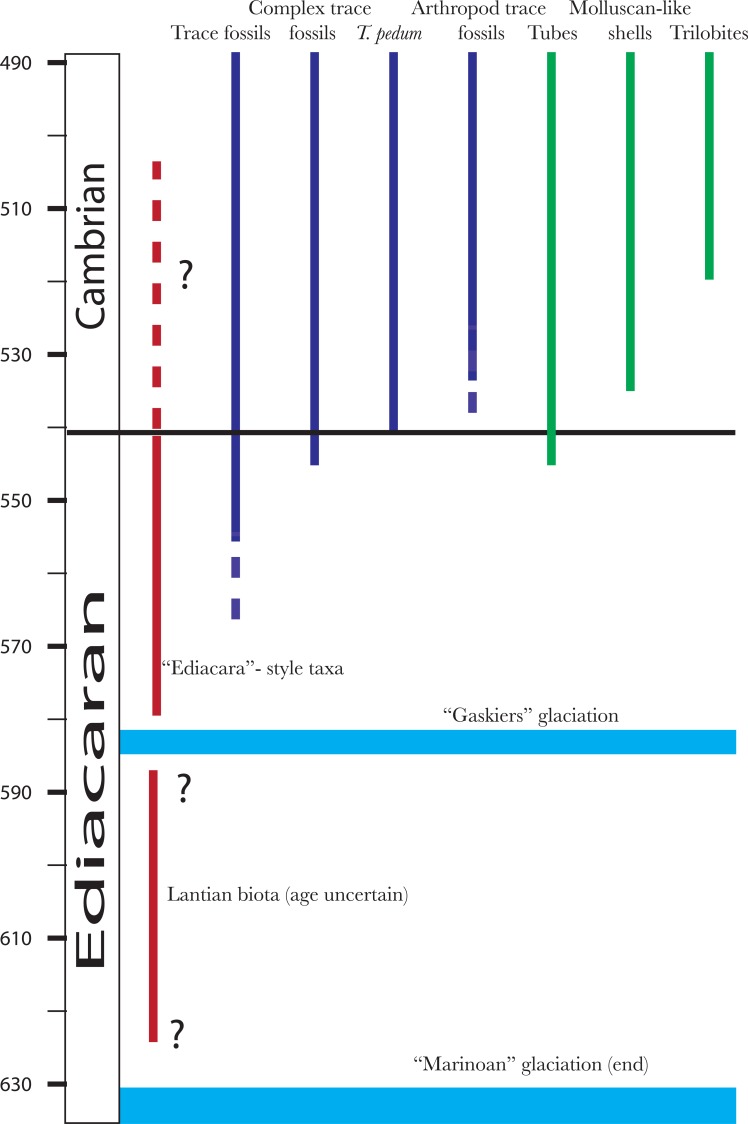
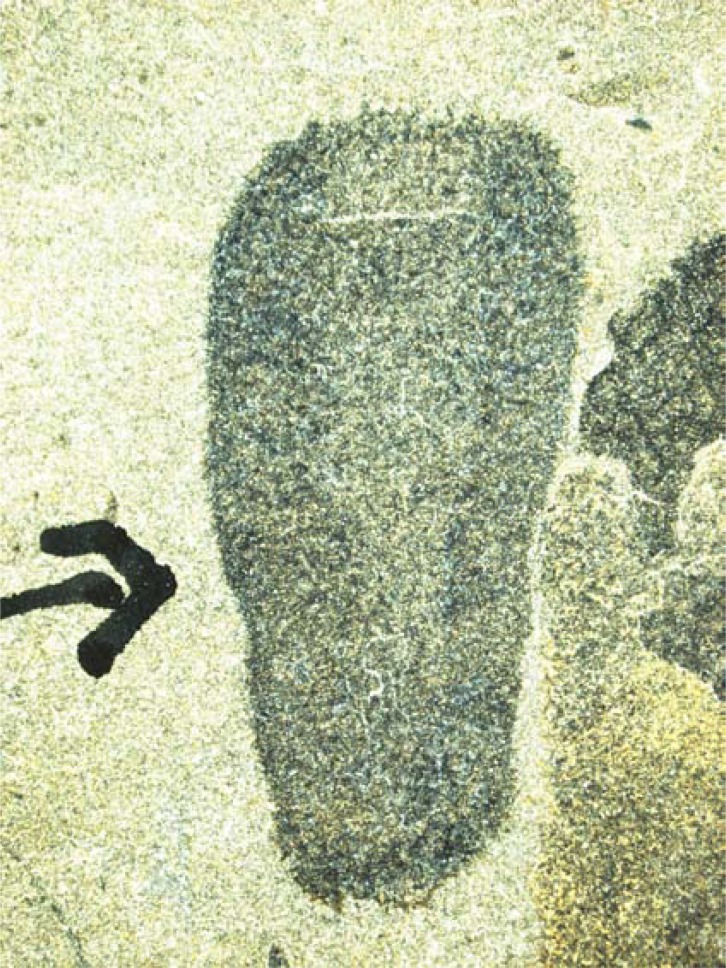
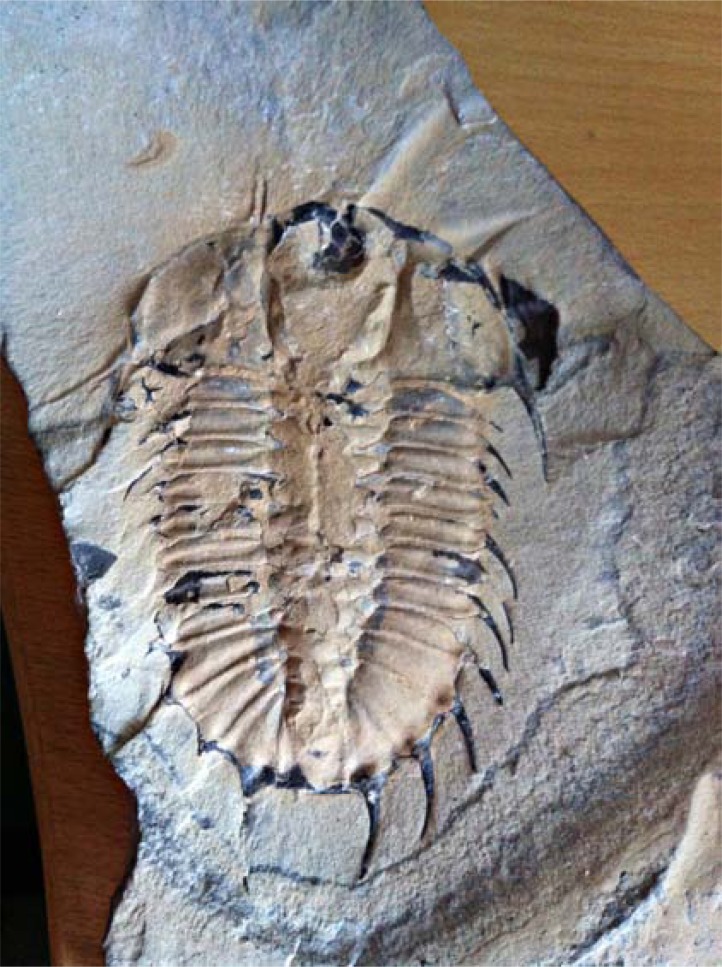
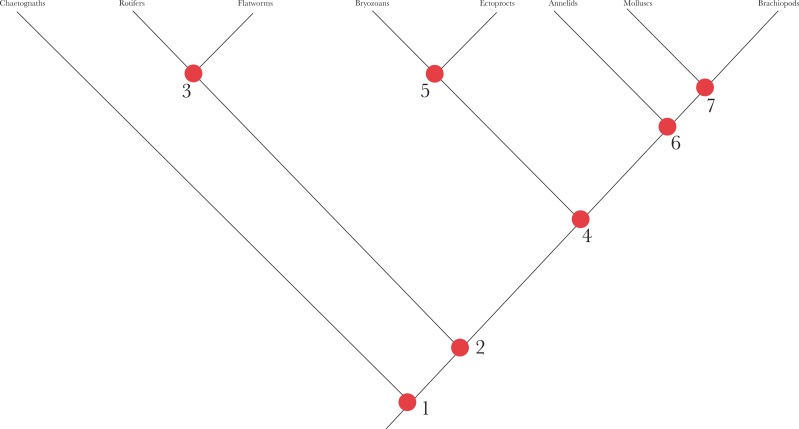
Verification
Claims the paper makes
The claims and statistics of this paper haven’t been checked yet.
Free: it reads the open-access text and checks the first 5 claims that cite a source we can check. Create a free account to check every claim.
Claims other papers make about this one
Each is checked against this paper’s own text: does it say what the citing paper says it does?
The cited source says what the claim attributes to it.
In the citing paper
“As is common with singular identifications (Budd, 2013), if one cnidarian is found in such early deposits, it implies that a considerable amount of early animal evolution had taken place by then.”
From The origin of the animals and a ‘Savannah’ hypothesis for early bilaterian evolution: Early evolution of the animals (2017) · cites this paper as Budd, 2013
Self-check
Percentages, sums and reported differences re-computed from the paper’s own numbers.
The self-check needs the paper’s full text.
Citations
Cites
Erwin, D. H., Laflamme, M., Tweedt, S. M., Sperling, E. A., Pisani, D., & Peterson, K. J. (2011) · Science · doi:10.1126/science.1206375 · Cited by 1,336
U-Pb Ages from the Neoproterozoic Doushantuo Formation, China
Condon, D., Zhu, M., Bowring, S., Wang, W., Yang, A., & Jin, Y. (2005) · Science · doi:10.1126/science.1107765 · Cited by 1,329 · cited 1×
“5 km stratigraphically below this point in the same region [35] suggested that the their first appearance was considerably older than this (a date of 579 Ma is quoted by [36]), perhaps close to the date of an important glacial interval, the Gaskiers, at around 582 Ma [37].”
BackgroundGene Regulatory Networks and the Evolution of Animal Body Plans
Davidson, E. H., & Erwin, D. H. (2006) · Science · doi:10.1126/science.1113832 · Cited by 1,207
Resolving difficult phylogenetic questions: Why more sequences are not enough
Philippe, H., Brinkmann, H., Lavrov, D. V., Littlewood, D. T. J., Manuel, M., Wörheide, G., & Baurain, D. (2011) · PLoS Biology · doi:10.1371/journal.pbio.1000602 · Cited by 1,129 · cited 2×
“Recent molecular work [30-32] suggests that they are the sister-group to eumetazoans (cnidarians and bilaterians), but their exact significance remains obscure – a recent claim that they have retained an ancient mode of feeding seen in the Ediacaran taxa is interesting [65] but cannot be well supported at present.”
BackgroundLate-Neoproterozoic Deep-Ocean Oxygenation and the Rise of Animal Life
Canfield, D. E., Poulton, S. W., & Narbonne, G. M. (2007) · Science · doi:10.1126/science.1135013 · Cited by 1,000 · cited 1×
“The conventional view is that this proximity in time was enforced by general amelioration of the environment, ie by an increase in oxygen levels [59].”
BackgroundFossil steroids record the appearance of Demospongiae during the Cryogenian period
Love, G. D., Grosjean, E., Stalvies, C., Fike, D. A., Grotzinger, J. P., Bradley, A. S., Kelly, A. E., Bhatia, M., Meredith, W., Snape, C. E., et al. (2009) · Nature · doi:10.1038/nature07673 · Cited by 731
Phylogenomics Revives Traditional Views on Deep Animal Relationships
Philippe, H., Derelle, R., Lopez, P., Pick, K., Borchiellini, C., Boury-Esnault, N., Vacelet, J., Renard, E., Houliston, E., Quéinnec, E., et al. (2009) · Current Biology · doi:10.1016/j.cub.2009.02.052 · Cited by 695
Calibrating Rates of Early Cambrian Evolution
Bowring, S. A., Grotzinger, J. P., Isachsen, C. E., Knoll, A. H., Pelechaty, S. M., & Kolosov, P. (1993) · Science · doi:10.1126/science.11539488 · Cited by 526
The evolution of cell types in animals: emerging principles from molecular studies
Arendt, D. (2008) · Nature Reviews Genetics · doi:10.1038/nrg2416 · Cited by 525 · cited 1×
“Unfortunately, there are simply no exceptionally well-preserved biotas known from the critical interval from about 541 to about 520 Ma [91], and it is thus very hard to assess the true patterns of diversification during this “formative interval”.”
BackgroundBowring, S. A., Grotzinger, J. P., Condon, D. J., Ramezani, J., Newall, M. J., & Allen, P. A. (2007) · American Journal of Science · doi:10.2475/10.2007.01 · Cited by 465
Research works printed but not linked: 4
- [20]Buick R Early life: Ancient acritarchs Nat 2010 463 7283 885 886 20164911
- [36]Laflamme M Darroch S A F Tweedt S M Peterson K J Erwin D H The end of the Ediacara biota: Extinction, biotic replacement, or Cheshire Cat? Gond. Res 2013 in press
- [66]Nielsen C Animal Relationships 2001 Oxford OUP
- [74]Hejnol A Evolutionary biology: Muscle's dual origins Nature 2012 487 7406 181 182 22785312
Cited by
Budd, G. E., & Jensen, S. (2017) · Biological Reviews · doi:10.1111/brv.12239 · Cited by 242
Self-citationThe Cambrian revolutions: Trace-fossil record, timing, links and geobiological impact
Gabriela Mángano, M., & Buatois, L. A. (2017) · Earth-Science Reviews · doi:10.1016/j.earscirev.2017.08.009 · Cited by 140
Ecological innovations in the Cambrian and the origins of the crown group phyla
Budd, G. E., & Jackson, I. S. C. (2016) · Philosophical Transactions of the Royal Society B: Biological Sciences · doi:10.1098/rstb.2015.0287 · Cited by 90
Self-citationMángano, M. G., & Buatois, L. A. (2016) · Topics in geobiology · doi:10.1007/978-94-017-9600-2_3 · Cited by 93
Budd, G. E., & Mann, R. P. (2018) · Evolution · doi:10.1111/evo.13593 · Cited by 79
Self-citationEdiacaran Ecosystems and the Dawn of Animals
Buatois, L. A., & Mángano, M. G. (2016) · Topics in geobiology · doi:10.1007/978-94-017-9600-2_2 · Cited by 77
Animal origins: The record from organic microfossils
Slater, B. J., & Bohlin, M. S. (2022) · Earth-Science Reviews · doi:10.1016/j.earscirev.2022.104107 · Cited by 45
Structure and function of a compound eye, more than half a billion years old
Schoenemann, B., Pärnaste, H., & Clarkson, E. N. K. (2017) · Proceedings of the National Academy of Sciences · doi:10.1073/pnas.1716824114 · Cited by 60
Budd, G. E., & Mann, R. P. (2020) · Interface Focus · doi:10.1098/rsfs.2019.0110 · Cited by 54
Self-citationSmall carbonaceous fossils ( SCF s) from the T erreneuvian (lower C ambrian) of B altica
Slater, B. J., Harvey, T. H. P., & Butterfield, N. J. (2018) · Palaeontology · doi:10.1111/pala.12350 · Cited by 50
Bosch, T. C. G., Guillemin, K. J., & McFall‐Ngai, M. (2019) · BioEssays · doi:10.1002/bies.201800256 · Cited by 50
Spiculogenesis and biomineralization in early sponge animals
Tang, Q., Wan, B., Yuan, X., Muscente, A. D., & Xiao, S. (2019) · Nature Communications · doi:10.1038/s41467-019-11297-4 · Cited by 46
Testing hypotheses in macroevolution
Bromham, L. D. (2015) · Studies in History and Philosophy of Science Part A · doi:10.1016/j.shpsa.2015.08.013 · Cited by 39
Kimmig, J., & Strotz, L. C. (2017) · Bulletin of Geosciences · doi:10.3140/bull.geosci.1667 · Cited by 35
Shao, T., Tang, H., Liu, Y., Waloszek, D., Maas, A., & Zhang, H. (2018) · Journal of Paleontology · doi:10.1017/jpa.2017.94 · Cited by 30
The early animal radiation: insights from interpreting the Cambrian problematic fossils
Cong, P. (2023) · Frontiers in Earth Science · doi:10.3389/feart.2023.1120118 · Cited by 24
Typological thinking: Then and now
Witteveen, J. (2018) · Journal of Experimental Zoology Part B Molecular and Developmental Evolution · doi:10.1002/jez.b.22796 · Cited by 19
Zheng, S., Feng, Q., van de Velde, S., Chang, S., Zhang, L., & Gao, B. (2022) · Journal of Earth Science · doi:10.1007/s12583-020-1117-0 · Cited by 12
Invertebrates and Their Use by Humans
Scanes, C. G. (2017) · Elsevier eBooks · doi:10.1016/b978-0-12-805247-1.00012-5 · Cited by 10
An early Cambrian mackenziid reveals links to modular Ediacaran macro‐organisms
Zhao, Y., Vinther, J., Li, Y., Wei, F., Hou, X., & Cong, P. (2021) · Papers in Palaeontology · doi:10.1002/spp2.1412 · Cited by 11
Smith, D. A., Palacios-Pérez, M., & Jheeta, S. (2022) · Life · doi:10.3390/life12020287 · Cited by 9
Paleobotany to understand evolution and biodiversity in Mexico
Cevallos-Ferriz, S. R. S., Hernández-Damián, A. L., Beraldi-Campesi, H., Rubalcava-Knoth, M. A., & Huerta-Vergara, A. R. (2022) · Botanical Sciences · doi:10.17129/botsci.3122 · Cited by 7
Expansion of eIF4E and 4E-BP Family Members in Deuterostomes
Gillespie, K. M., Bachvaroff, T. R., & Jagus, R. (2016) · Springer eBooks · doi:10.1007/978-3-319-39468-8_8 · Cited by 9
Grosjean, E., Jarrett, A. J. M., Boreham, C. J., Wang, L., Johnson, L. M., Hope, J. M., Ranasinghe, P., Brocks, J. J., Bailey, A. H. E., Butcher, G. A., et al. (2023) · Organic Geochemistry · doi:10.1016/j.orggeochem.2023.104688 · Cited by 6
Origin of thyroid hormone signalling in metazoans and implications in their metamorphosis
Holzer, G. (2015) · theses.fr (ABES) · doi:10.70675/7ce78e55zf23fz4d93z9bc9zb395150382ce · Cited by 6
An Alternative Molecular View of Evolution: How DNA was Altered over Geological Time
Menger, F. M. (2020) · Molecules · doi:10.3390/molecules25215081 · Cited by 4
Budd, G. E. (2013) · Systematic Biology · doi:10.1093/sysbio/syt043 · Cited by 4
Self-citationMángano, M. G., & Buatois, L. A. (2020) · Elsevier eBooks · doi:10.1016/b978-0-08-102908-4.00142-9 · Cited by 4
Morphological disparity and evolutionary patterns of Cambrian hyoliths
Liu, F., Topper, T. P., Strotz, L. C., Liang, Y., Hu, Y., Skovsted, C. B., & Zhang, Z. (2024) · Papers in Palaeontology · doi:10.1002/spp2.1554 · Cited by 3
Welcome, M. O. (2018) · Springer eBooks · doi:10.1007/978-3-319-91056-7_1 · Cited by 3
Origin of Metazoan Patterning Systems and the Role of ANTP ‐Class Homeobox Genes
Thomas‐Chollier, M., & Martínez, P. (2016) · Wiley eBooks · doi:10.1002/9780470015902.a0022852.pub2 · Cited by 3
Bacterial adaptation to diet is a key evolutionary force shaping Drosophila-Lactobacillus symbiosisPreprint
Martino, M. E., Joncour, P., Leenay, R. T., Gervais, H., Shah, M., Hughes, S., Gillet, B., Beisel, C. L., & Leulier, F. (2017) · bioRxiv (Cold Spring Harbor Laboratory) · doi:10.1101/222364 · Cited by 3
Zhang, Y., Chen, X., Zuza, A. V., Zhang, B., & Zhao, H. (2020) · Acta Geologica Sinica - English Edition · doi:10.1111/1755-6724.14569 · Cited by 2
Protostomia and Deuterostomia: Do They Exist?
Malakhov, V. V., & Ezhova, O. V. (2025) · Paleontological Journal · doi:10.1134/s003103012560074x · Cited by 2
Phanerozoic evolution—Ediacaran biota
Cabej, N. R. (2019) · Elsevier eBooks · doi:10.1016/b978-0-12-814311-7.00002-0 · Cited by 2
Cabej, N. R. (2019) · Elsevier eBooks · doi:10.1016/b978-0-12-814311-7.00004-4 · Cited by 2
Smith, D. A., Jheeta, S., López-Cortés, G. I., Street, B., Fuentes, H. V., & Palacios-Pérez, M. (2023) · Gastrointestinal Disorders · doi:10.3390/gidisord5020018 · Cited by 2
Die oorsprong van die mens: "Laat Ons mense maak"
Dreyer, J. S., & van der Walt, K. (2023) · Tydskrif vir Geesteswetenskappe · doi:10.17159/2224-7912/2023/v63n2a4 · Cited by 3
Rbm45 Phylogenetics, Protein Domain Conservation, and Gene Architecture in Clade Metazoa
Vuchkovska, V., Marti, T. N., Cisneros, A., Saiki, L. M., & Henderson, J. O. (2024) · Journal of Evolutionary Science · doi:10.14302/issn.2689-4602.jes-24-4982 · Cited by 2
Martin, E. L. O. (2016) · theses.fr (ABES) · doi:10.70675/84136300z3723z4326za610z607fb105295e · Cited by 2
Chen, F., Zhang, Z., Holmer, L. E., Li, G., Topper, T. P., Song, B., & Zhang, Z. (2025) · Communications Biology · doi:10.1038/s42003-025-09051-2 · Cited by 1
Ewolucja - ...najwznioślejsze zjawisko, jakie możemy pojąć...
Bobrowski, M. (2017) · Jagiellonian University Repository (Jagiellonian University) · Cited by 1
Gillespie, K. M. (2015) · University Libraries (University of Maryland) · doi:10.13016/m2g068 · Cited by 1
Scientific Integrity, Precambrian Acritarchs from Brazil and Mangroves and Climate Change
Kellner, A. W. A. (2015) · Anais da Academia Brasileira de Ciências · doi:10.1590/0001-37652015872
Genetic sequence classification and phylogenetic construction with N-gram methods
Kincaid, C. J. (2018)
Agić, H. (2017) · OSF Preprints (OSF Preprints) · doi:10.31219/osf.io/9r2ef
(2019) · Elsevier eBooks · doi:10.1016/b978-0-12-814311-7.02001-1
Characterisation and Nanobody Targeting of Essential Cytoskeletal Proteins of Trypanosoma brucei
Reix, C. E. B. (2019) · theses.fr (ABES) · doi:10.70675/354eedf0za680z4ad4z8c56ze227941da313
Procesos y patrones de las plantas a través del tiempo geológico
Cevallos-Ferriz, S. R. S., Hernández-Damián, A. L., Ruvalcaba-Knoth, M. A., & Huerta-Vergara, A. R. (2026) · TIP Revista Especializada en Ciencias Químico-Biológicas · doi:10.22201/fesz.23958723e.2026.803
Metadata
- Authors
- Budd, G.
- Affiliations
- Uppsala University (SE)
- Corresponding author
- Budd, Graham
- ORCID
- Budd, Graham
- Venue
- Current Genomics
- Publisher
- Bentham Science Publishers Ltd.
- Published
- 2013-09-01
- Volume
- 14
- Issue
- 6
- Pages
- 344-354
- ISSN
- 1389-2029 (ISSN-L)
- PMC
- PMC3861885
- OpenAlex
- W1987543894
- Cited by
- 44
- References
- 68
- Citations by year
- 2025: 2 · 2024: 2 · 2023: 4 · 2022: 4 · 2021: 1 · 2020: 4 · 2019: 6 · 2018: 5 · 2017: 5 · 2016: 4 · 2015: 6 · 2013: 1
- FWCI
- 2.49
- Type
- journal article
- Language
- en
- Open access
- bronze
- doi.org
- Locations
- Current Genomics (publishedVersion)
- Europe PMC (PubMed Central) (publishedVersion, cc-by)
- PubMed Central (publishedVersion, cc-by)
- PubMed (publishedVersion)
- Funders
- Vetenskapsrådet
- Topics
- Physical Sciences › Earth and Planetary Sciences › Paleontology › Paleontology and Stratigraphy of Fossils
- Physical Sciences › Earth and Planetary Sciences › Paleontology › Paleontology and Evolutionary Biology
- Physical Sciences › Earth and Planetary Sciences › Paleontology › Evolution and Paleontology Studies
- Keywords
- Burgess Shale, Ediacaran fossils, exceptional preservation, early animal evolution, evolutionary developmental biology, history of paleontology
About these checks
Registry, retraction, Cites and statistics results are computed, not judged, with one exception: a printed reference that no index lists is read once by a model before it counts as a citation error. Claims are extracted by a model and kept only when their quote appears verbatim in the text; each cited source is then checked, with a model’s help, for whether it says what the claim relies on. Those verdicts can be wrong — read the claim’s quote and the cited source before relying on one.
Statistics and arithmetic are recomputed, not judged.
Confidence bands are shown only for fields calibrated on our annotated test set. None is calibrated yet, so no band is shown.
What counts as a claim ›How we measure confidence ›How we check this ›
Are you an author, or do you see a problem with this page? Request a review
Data sources
Bibliographic data: Semantic Scholar, OpenAlex, Crossref.
Contains information from the Semantic Scholar Academic Graph Datasets, made available under the ODC Attribution License (ODC-BY 1.0).
Semantic Scholar’s data is described in: Kinney, R., et al. (2023). The Semantic Scholar Open Data Platform. arXiv:2301.10140.
