

At the Origin of Animals: The Revolutionary Cambrian Fossil Record
Open accessThe DOI matches its Crossref record; 82 of the 82 references it cites were found in a registry or an index.
Abstract
The certain fossil record of animals begins around 540 million years ago, close to the base of the Cambrian Period. A series of extraordinary discoveries starting over 100 years ago with Walcott's discovery of the Burgess Shale has accelerated in the last thirty years or so with the description of exceptionally-preserved Cambrian fossils from around the world. Such deposits of "Burgess Shale Type" have been recently complemented by other types of exceptional preservation. Together with a remarkable growth in knowledge about the environments that these early animals lived in, these discoveries have long exerted a fascination and strong influence on views on the origins of animals, and indeed, the nature of evolution itself. Attention is now shifting to the period of time just before animals become common, at the base of the Cambrian and in the preceding Ediacaran Period. Remarkable though the Burgess Shale deposits have been, a substantial gap still exists in our knowledge of the earliest animals. Nevertheless, the fossils from this most remarkable period of evolutionary history continue to exert a strong influence on many aspects of animal evolution, not least recent theories about developmental evolution.
Overview
The claims and statistics of this paper haven’t been checked yet.
Free: it reads the open-access text and checks the first 5 claims that cite a source we can check. Create a free account to check every claim.
Integrity signals
Registry
Cites
Statistics
Figures
Verification
Claims the paper makes
The claims and statistics of this paper haven’t been checked yet.
Free: it reads the open-access text and checks the first 5 claims that cite a source we can check. Create a free account to check every claim.
Claims other papers make about this one
Each is checked against this paper’s own text: does it say what the citing paper says it does?
The cited source says what the claim attributes to it.
In the citing paper
“As is common with singular identifications (Budd, 2013), if one cnidarian is found in such early deposits, it implies that a considerable amount of early animal evolution had taken place by then.”
From The origin of the animals and a ‘Savannah’ hypothesis for early bilaterian evolution: Early evolution of the animals (2017) · cites this paper as Budd, 2013
Self-check
Percentages, sums and reported differences re-computed from the paper’s own numbers.
The self-check needs the paper’s full text.
Citations
Cites
Erwin, D. H., Laflamme, M., Tweedt, S. M., Sperling, E. A., Pisani, D., & Peterson, K. J. (2011) · Science · doi:10.1126/science.1206375 · Cited by 1,336
U-Pb Ages from the Neoproterozoic Doushantuo Formation, China
Condon, D., Zhu, M., Bowring, S., Wang, W., Yang, A., & Jin, Y. (2005) · Science · doi:10.1126/science.1107765 · Cited by 1,329 · cited 1×
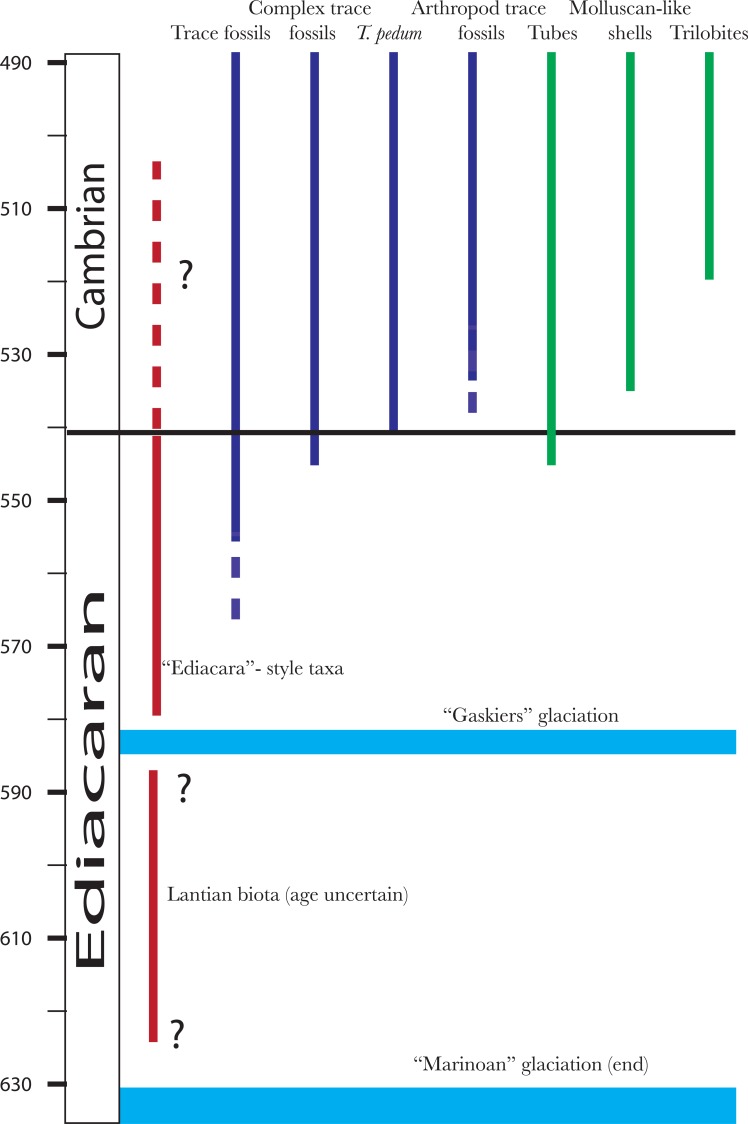
“5 km stratigraphically below this point in the same region [35] suggested that the their first appearance was considerably older than this (a date of 579 Ma is quoted by [36]), perhaps close to the date of an important glacial interval, the Gaskiers, at around 582 Ma [37].”
BackgroundGene Regulatory Networks and the Evolution of Animal Body Plans
Davidson, E. H., & Erwin, D. H. (2006) · Science · doi:10.1126/science.1113832 · Cited by 1,207
Resolving difficult phylogenetic questions: Why more sequences are not enough
Philippe, H., Brinkmann, H., Lavrov, D. V., Littlewood, D. T. J., Manuel, M., Wörheide, G., & Baurain, D. (2011) · PLoS Biology · doi:10.1371/journal.pbio.1000602 · Cited by 1,129 · cited 2×
“Recent molecular work [30-32] suggests that they are the sister-group to eumetazoans (cnidarians and bilaterians), but their exact significance remains obscure – a recent claim that they have retained an ancient mode of feeding seen in the Ediacaran taxa is interesting [65] but cannot be well supported at present.”
BackgroundLate-Neoproterozoic Deep-Ocean Oxygenation and the Rise of Animal Life
Canfield, D. E., Poulton, S. W., & Narbonne, G. M. (2007) · Science · doi:10.1126/science.1135013 · Cited by 1,000 · cited 1×
“The conventional view is that this proximity in time was enforced by general amelioration of the environment, ie by an increase in oxygen levels [59].”
BackgroundFossil steroids record the appearance of Demospongiae during the Cryogenian period
Love, G. D., Grosjean, E., Stalvies, C., Fike, D. A., Grotzinger, J. P., Bradley, A. S., Kelly, A. E., Bhatia, M., Meredith, W., Snape, C. E., et al. (2009) · Nature · doi:10.1038/nature07673 · Cited by 731
Phylogenomics Revives Traditional Views on Deep Animal Relationships
Philippe, H., Derelle, R., Lopez, P., Pick, K., Borchiellini, C., Boury-Esnault, N., Vacelet, J., Renard, E., Houliston, E., Quéinnec, E., et al. (2009) · Current Biology · doi:10.1016/j.cub.2009.02.052 · Cited by 695
Calibrating Rates of Early Cambrian Evolution
Bowring, S. A., Grotzinger, J. P., Isachsen, C. E., Knoll, A. H., Pelechaty, S. M., & Kolosov, P. (1993) · Science · doi:10.1126/science.11539488 · Cited by 526
The evolution of cell types in animals: emerging principles from molecular studies
Arendt, D. (2008) · Nature Reviews Genetics · doi:10.1038/nrg2416 · Cited by 525 · cited 1×
“Unfortunately, there are simply no exceptionally well-preserved biotas known from the critical interval from about 541 to about 520 Ma [91], and it is thus very hard to assess the true patterns of diversification during this “formative interval”.”
BackgroundBowring, S. A., Grotzinger, J. P., Condon, D. J., Ramezani, J., Newall, M. J., & Allen, P. A. (2007) · American Journal of Science · doi:10.2475/10.2007.01 · Cited by 465
Estimating metazoan divergence times with a molecular clock
Peterson, K. J., Lyons, J. B., Nowak, K. S., Takacs, C. M., Wargo, M. J., & McPeek, M. A. (2004) · Proceedings of the National Academy of Sciences · doi:10.1073/pnas.0401670101 · Cited by 461
Acoelomorph flatworms are deuterostomes related to Xenoturbella
Philippe, H., Brinkmann, H., Copley, R. R., Moroz, L. L., Nakano, H., Poustka, A. J., Wallberg, A., Peterson, K. J., & Telford, M. J. (2011) · Nature · doi:10.1038/nature09676 · Cited by 445
Hox genes and the evolution of the arthropod body plan1
Hughes, C. L., & Kaufman, T. C. (2002) · Evolution & Development · doi:10.1046/j.1525-142x.2002.02034.x · Cited by 434
The earliest Cambrian record of animals and ocean geochemical change
Maloof, A. C., Porter, S. M., Moore, J. L., Dudas, F. O., Bowring, S. A., Higgins, J. A., Fike, D. A., & Eddy, M. P. (2010) · Geological Society of America Bulletin · doi:10.1130/b30346.1 · Cited by 419 · cited 2×
“In detail, this method is not free from difficulties, and some of the results have been somewhat surprising (for example, the rocks in Mongolia, which bear a rather standard set of fossils, have been suggested to be somewhat older than similar rocks in Siberia), but the broad outlines of the sequence of events, and th…”
BackgroundResultThe Cambrian Substrate Revolution
Bottjer, D. J., Hagadorn, J. W., & Dornbos, S. Q. (2000) · CaltechAUTHORS (California Institute of Technology) · Cited by 411
The Cambrian fossils of Chengjiang, China: the flowering of early animal life
(2004) · Choice Reviews Online · doi:10.5860/choice.41-6546 · Cited by 406
Martin, M. W., Grazhdankin, D. V., Bowring, S. A., Evans, D. A. D., Fedonkin, M. A., & Kirschvink, J. L. (2000) · Science · doi:10.1126/science.288.5467.841 · Cited by 386 · cited 1×
“Charnia masonilike fronds are also known from the White Sea area from about 549 Ma [39, 40], making this an extremely long-lived morph.”
BackgroundThe Late Precambrian fossil Kimberella is a mollusc-like bilaterian organism
Fedonkin, M. A., & Waggoner, B. M. (1997) · Nature · doi:10.1038/42242 · Cited by 373
DISPARITY: MORPHOLOGICAL PATTERN AND DEVELOPMENTAL CONTEXT
ERWIN, D. H. (2007) · Palaeontology · doi:10.1111/j.1475-4983.2006.00614.x · Cited by 363 · cited 1×
“[78, 79]) that the pattern of the Cambrian explosion shows a qualitatively different process must be behind it when compared to the adaptive radiations of today.”
BackgroundAn early Ediacaran assemblage of macroscopic and morphologically differentiated eukaryotes
Yuan, X., Chen, Z., Xiao, S., Zhou, C., & Hua, H. (2011) · Nature · doi:10.1038/nature09810 · Cited by 351 · cited 6×
“Dates for the Ediacara- style biotas are surprisingly poorly documented, but a date of about 565 Ma in Newfoundland [34] is commonly cited for the major biotas at Mistaken Point.”
BackgroundInfluentialNarbonne, G. M., Myrow, P. M., Landing, E., & Anderson, M. M. (1987) · Canadian Journal of Earth Sciences · doi:10.1139/e87-124 · Cited by 301
Oxygen, animals and oceanic ventilation: an alternative view
BUTTERFIELD, N. J. (2009) · Geobiology · doi:10.1111/j.1472-4669.2009.00188.x · Cited by 300
The community structure of the Middle Cambrian Phyllopod Bed (Burgess Shale)
Morris, S. C. (1986) · Biodiversity Heritage Library (Smithsonian Institution) · Cited by 277
The Proterozoic and Earliest Cambrian Trace Fossil Record; Patterns, Problems and Perspectives
Jensen, S. (2003) · Integrative and Comparative Biology · doi:10.1093/icb/43.1.219 · Cited by 275
MACROEVOLUTION AND MACROECOLOGY THROUGH DEEP TIME
BUTTERFIELD, N. J. (2007) · Palaeontology · doi:10.1111/j.1475-4983.2006.00613.x · Cited by 267 · cited 2×
“The period of time around the EdiacaranCambrian boundary was a remarkable interval that changed, not just animal life, but also the planet [63], and as such can be considered to be truly revolutionary.”
BackgroundOrganic preservation of non-mineralizing organisms and the taphonomy of the Burgess Shale
Butterfield, N. J. (1990) · Paleobiology · doi:10.1017/s0094837300009994 · Cited by 265
Yi, Q., & Bengtson, S. (1989) · Fossils and Strata · doi:10.18261/8200374157-1989 · Cited by 258
The dawn of animal life, a biohistorical study
(1985) · Precambrian Research · doi:10.1016/0301-9268(85)90051-8 · Cited by 252
Independent evolution of striated muscles in cnidarians and bilaterians
Steinmetz, P. R. H., Kraus, J. E. M., Larroux, C., Hammel, J. U., Amon-Hassenzahl, A., Houliston, E., Wörheide, G., Nickel, M., Degnan, B. M., & Technau, U. (2012) · Nature · doi:10.1038/nature11180 · Cited by 252 · cited 1×
“[72-74]), leading to suggestions, for example, that striated muscle evolved independently in bilaterians, cnidarians and ctenophores.”
BackgroundPatterns of distribution in the Ediacaran biotas: facies versus biogeography and evolution
Grazhdankin, D. (2004) · Paleobiology · doi:10.1666/0094-8373(2004)030<0203:podite>2.0.co;2 · Cited by 251
The case for a Neoproterozoic Oxygenation Event: Geochemical evidence and biological consequences
Shields-Zhou, G., & Och, L. (2011) · GSA Today · doi:10.1130/gsatg102a.1 · Cited by 219
Choanoflagellates, choanocytes, and animal multicellularity
Maldonado, M. (2004) · Invertebrate Biology · doi:10.1111/j.1744-7410.2004.tb00138.x · Cited by 207
Poriferan paraphyly and its implications for Precambrian palaeobiology
Sperling, E. A., Pisani, D., & Peterson, K. J. (2007) · Geological Society, London, Special Publications · doi:10.1144/sp286.25 · Cited by 206 · cited 1×
“However, this view was attacked by morphologists who argued that the cnidarians and ctenophores did not belong together; and, more recently by a series of rather remarkable molecular results that place ctenophores at the base of the tree, and make the sponges paraphyletic [29], a result that in combination with molecu…”
BackgroundAvailable generic names for trilobites
Jell, P. A., & Adrain, J. M. (2003) · doi:10.5281/zenodo.16475295 · Cited by 195
A placozoan affinity for Dickinsonia and the evolution of late Proterozoic metazoan feeding modes
Sperling, E. A., & Vinther, J. (2010) · Evolution & Development · doi:10.1111/j.1525-142x.2010.00404.x · Cited by 194
Paleoecology of the Greater Phyllopod Bed community, Burgess Shale
Caron, J.-B., & Jackson, D. A. (2008) · Palaeogeography, Palaeoclimatology, Palaeoecology · doi:10.1016/j.palaeo.2007.05.023 · Cited by 191
Stauber, M., Prell, A., & Schmidt-Ott, U. (2002) · Proceedings of the National Academy of Sciences · doi:10.1073/pnas.012292899 · Cited by 181
Yi, Q., & Bengtson, S. (1989) · Fossils and Strata · doi:10.18261/8200374157-1989-01 · Cited by 171
A New Species of Yunnanozoan with Implications for Deuterostome Evolution
Shu, D., Morris, S. C., Zhang, Z. F., Liu, J. N., Han, J., Chen, L., Zhang, X. L., Yasui, K., & Li, Y. (2003) · Science · doi:10.1126/science.1079846 · Cited by 169
Trace fossil evidence for Ediacaran bilaterian animals with complex behaviors
Chen, Z., Zhou, C., Meyer, M., Xiang, K., Schiffbauer, J. D., Yuan, X., & Xiao, S. (2013) · Precambrian Research · doi:10.1016/j.precamres.2012.11.004 · Cited by 164 · cited 1×
“[52] for a report on the diversity of Ediacaran trace fossils).”
BackgroundLate Ediacaran redox stability and metazoan evolution
Johnston, D. T., Poulton, S. W., Goldberg, T., Sergeev, V. N., Podkovyrov, V., Vorob'eva, N. G., Bekker, A., & Knoll, A. H. (2012) · Earth and Planetary Science Letters · doi:10.1016/j.epsl.2012.05.010 · Cited by 146 · cited 1×
“Whilst oxygen levels do seem to have increased towards the end of the Ediacaran [60], there are cogent reasons for doubting it being the primary control in bilaterian radiations [28, 61, cf.”
BackgroundA critical reappraisal of the fossil record of the bilaterian phyla
BUDD, G. E., & JENSEN, S. (2000) · Biological Reviews · doi:10.1111/j.1469-185x.1999.tb00046.x · Cited by 145
Self-citationPaleozoic record of morphologica diversity in blastozoan echinoderms.
Foote, M. (1992) · Proceedings of the National Academy of Sciences · doi:10.1073/pnas.89.16.7325 · Cited by 145 · cited 1×
“[81]) that in some clades does seem to show sparse occupancy of morphospace in the Cambrian, a measure that is independent of taxonomic assignment and rank.”
BackgroundThe earliest fossil record of the animals and its significance
Budd, G. E. (2008) · Philosophical Transactions of the Royal Society B: Biological Sciences · doi:10.1098/rstb.2007.2232 · Cited by 140 · cited 1×
“Living sponges in general possess small mineralised spicules that have several ways of being preserved [27] and the apparent total absence of spicules from the fossil record until at the very least very close to the base of the Cambrian [28] renders this early origin suspect.”
BackgroundSelf-citationExceptionally preserved crustaceans from western Canada reveal a cryptic Cambrian radiation
Harvey, T. H. P., Vélez, M. I., & Butterfield, N. J. (2012) · Proceedings of the National Academy of Sciences · doi:10.1073/pnas.1115244109 · Cited by 139
The first tunicate from the Early Cambrian of South China
Chen, J.-Y., Huang, D.-Y., Peng, Q.-Q., Chi, H.-M., Wang, X.-Q., & Feng, M. (2003) · Proceedings of the National Academy of Sciences · doi:10.1073/pnas.1431177100 · Cited by 138 · cited 1×
“The Chengjiang biota in particular is remarkably diverse and yields many examples of taxa almost unknown from the rest of the fossil record such as putative tunicates [18] and a remarkable array of apparent early deuterostomes [19].”
BackgroundDeconstructing cell determination: proneural genes and neuronal identity
Brunet, J.-F., & Ghysen, A. (1999) · BioEssays · doi:10.1002/(sici)1521-1878(199904)21:4<313::aid-bies7>3.0.co;2-c · Cited by 135
Skovsted, C. B., Brock, G. A., Paterson, J. R., Holmer, L. E., & Budd, G. E. (2008) · Geology · doi:10.1130/g24385a.1 · Cited by 130
Self-citationArthropod body‐plan evolution in the Cambrian with an example from anomalocaridid muscle
Budd, G. E. (1998) · Lethaia · doi:10.1111/j.1502-3931.1998.tb00508.x · Cited by 129
Self-citationGut Contents as Direct Indicators for Trophic Relationships in the Cambrian Marine Ecosystem
Vannier, J. (2012) · PLoS ONE · doi:10.1371/journal.pone.0052200 · Cited by 120
Trace fossils, small shelly fossils and the Precambrian-Cambrian boundary
Landing, Narbonne, G. M., Myrow, P. M., & Matthew, G. F. (1988) · Cited by 115
Extinction of Cloudina and Namacalathus at the Precambrian-Cambrian boundary in Oman
(2003) · doi:10.1130/0091-7613(2003)031 · Cited by 113
SPERLING, E. A., PETERSON, K. J., & LAFLAMME, M. (2011) · Geobiology · doi:10.1111/j.1472-4669.2010.00259.x · Cited by 112
The oldest evidence of bioturbation on Earth
Rogov, V., Marusin, V., Bykova, N., Goy, Y., Nagovitsin, K., Kochnev, B., Karlova, G., & Grazhdankin, D. (2012) · Geology · doi:10.1130/g32807.1 · Cited by 110
Controversy in Victorian Geology: The Cambrian-Silurian Dispute
Rehbock, P. F., & Secord, J. A. (1989) · The American Historical Review · doi:10.2307/1906415 · Cited by 102
The Cambrian Fossil Record and the Origin of the Phyla
Budd, G. E. (2003) · Integrative and Comparative Biology · doi:10.1093/icb/43.1.157 · Cited by 102 · cited 1×
“Despite arguments that the lack of intermediates may reflect early evolutionary trajectories, I do not see any way of avoiding the conclusion that the gaps between the phyla today were generated by extinction and loss of intermediate morphologies, not because they were never there [92].”
BackgroundSelf-citationDeuterostomic Development in the Protostome Priapulus caudatus
Martín-Durán, J. M., Janßen, R., Wennberg, S. A., Budd, G. E., & Hejnol, A. (2012) · Current Biology · doi:10.1016/j.cub.2012.09.037 · Cited by 99
Self-citationDoes evolution in body patterning genes drive morphological change-or vice versa?
Budd, G. E. (1999) · BioEssays · doi:10.1002/(sici)1521-1878(199904)21:4<326::aid-bies9>3.0.co;2-0 · Cited by 89
Self-citationSizing up the sub-Tommotian unconformity in Siberia
Knoll, A. H., Kaufman, A. J., Semikhatov, M. A., Grotzinger, J. P., & Adams, W. (1995) · Geology · doi:10.1130/0091-7613(1995)023<1139:sutstu>2.3.co;2 · Cited by 88
Onychophoran Hox genes and the evolution of arthropod Hox gene expression
Janßen, R., Eriksson, B., Tait, N. N., & Budd, G. E. (2014) · Frontiers in Zoology · doi:10.1186/1742-9994-11-22 · Cited by 73
Self-citationOn the origin and evolution of major morphological characters
Budd, G. E. (2006) · Biological reviews/Biological reviews of the Cambridge Philosophical Society · doi:10.1017/s1464793106007135 · Cited by 73
Self-citationBilaterian Burrows and Grazing Behavior at >585 Million Years Ago
Pecoits, E., Konhauser, K. O., Aubet, N. R., Heaman, L. M., Veroslavsky, G., Stern, R. A., & Gingras, M. K. (2012) · Science · doi:10.1126/science.1216295 · Cited by 73
On the Origin of The Nervous System
Miller, G. (2009) · Science · doi:10.1126/science.325_24 · Cited by 73
Questioning the evidence of organic compounds called sponge biomarkers
Antcliffe, J. B. (2013) · Palaeontology · doi:10.1111/pala.12030 · Cited by 72 · cited 1×
“However, these results, based as they are on tying a molecule that might have had a broader distribution in the past to a particular living clade, have not persuaded everyone of the stronger result of sponges really having emerged that long ago [26].”
ResultCommunity structure and composition of the Cambrian Chengjiang biota
Zhao, F., Zhu, M., & Hu, S. (2010) · Science China Earth Sciences · doi:10.1007/s11430-010-4087-8 · Cited by 70
A new assemblage of juvenile Ediacaran fronds from the Drook Formation, Newfoundland
Liu, A. G., McIlroy, D., Matthews, J. J., & Brasier, M. D. (2012) · Journal of the Geological Society · doi:10.1144/0016-76492011-094 · Cited by 69
New reconstruction of Kimberella, problematic Vendian metazoan
Ivantsov, A. Y. (2009) · Paleontological Journal · doi:10.1134/s003103010906001x · Cited by 67 · cited 3×
“!) non-frondlike taxa such as Spriggina appear, and these are joined by the truly complex Kimberella [64].”
BackgroundInfluentialThe amnioserosa is an apomorphic character of cyclorrhaphan flies
Schmidt‐Ott, U. (2000) · Development Genes and Evolution · doi:10.1007/s004270000068 · Cited by 57
The Origin of Animal Body Plans: A Study in Evolutionary Developmental Biology
Erwin, D. H., & Arthur, W. (1998) · Palaios · doi:10.2307/3515353 · Cited by 56
Buatois, L. A., & Mángano, M. G. (2011) · Geology · doi:10.1130/g32408.1 · Cited by 54
Dayraud, C., Alié, A., Jager, M., Chang, P., Le Guyader, H., Manuel, M., & Quéinnec, E. (2012) · BMC Evolutionary Biology · doi:10.1186/1471-2148-12-107 · Cited by 49 · cited 1×
“[72-74]), leading to suggestions, for example, that striated muscle evolved independently in bilaterians, cnidarians and ctenophores.”
BackgroundThe lower cambrian fossil anabaritids: Affinities, occurrences and systematics
Kouchinsky, A., Bengtson, S., Feng, W., Kutygin, R., & Val'kov, A. (2009) · Journal of Systematic Palaeontology · doi:10.1017/s1477201909002715 · Cited by 47 · cited 1×
“Many clades do seem to have diversified rapidly during this time such as the molluscs [17], and although recent revisions to taxonomy in some groups such as the problematic anabaritids ([96] have greatly reduced apparent diversity, a fair number of apparently closely related taxa still seem to be present.”
BackgroundSelector genes and the Cambrian radiation of Bilateria.
Jacobs, D. K. (1990) · Proceedings of the National Academy of Sciences · doi:10.1073/pnas.87.11.4406 · Cited by 41
Hox3/zen and the Evolution of Extraembryonic Epithelia in Insects
Schmidt‐Ott, U., Rafiqi, A. M., & Lemke, S. (2010) · Advances in experimental medicine and biology · doi:10.1007/978-1-4419-6673-5_10 · Cited by 40
Alternative interpretations of some earliest Ediacaran fossils from China
Heyo, V. I. (2011) · Acta Palaeontologica Polonica · doi:10.4202/app.2011.0096 · Cited by 38
The amino acid sequence of cytochrome c from Helix aspersa Müller (garden snail)
Brown, R. H., Richardson, M., Boulter, D., Ramshaw, J. A. M., & Jefferies, R. P. S. (1972) · Biochemical Journal · doi:10.1042/bj1280971 · Cited by 36
The Cambrian Lower Boundary Problem
Rozanov, A. Y. (1967) · Geological Magazine · doi:10.1017/s0016756800049165 · Cited by 29
On the Discovery of Paradoxides in Britain
Salter, J. W. (1863) · Quarterly Journal of the Geological Society · doi:10.1144/gsl.jgs.1863.019.01-02.28 · Cited by 24
Comment on "Bilaterian Burrows and Grazing Behavior at >585 Million Years Ago"
Gaucher, C., Poiré, D. G., Bossi, J., Bettucci, L. S., & Beri, Á. (2013) · Science · doi:10.1126/science.1230339 · Cited by 23
A PALÆOZOIC TERRANE BENEATH THE CAMBRIAN.
Matthew, G. F. (1899) · Annals of the New York Academy of Sciences · doi:10.1111/j.1749-6632.1899.tb54983.x · Cited by 18
The earliest fossil record of the animals and its significance
Budd, G. E. (2009) · Oxford University Press eBooks · doi:10.1093/acprof:oso/9780199549429.003.0001 · Cited by 7
Self-citationShaping animal body plans in development and evolution by modulation of Hox expression patterns
(1998) · doi:10.1002/(sici)1521-1878(199802)20:2
Research works printed but not linked: 4
- [20]Buick R Early life: Ancient acritarchs Nat 2010 463 7283 885 886 20164911
- [36]Laflamme M Darroch S A F Tweedt S M Peterson K J Erwin D H The end of the Ediacara biota: Extinction, biotic replacement, or Cheshire Cat? Gond. Res 2013 in press
- [66]Nielsen C Animal Relationships 2001 Oxford OUP
- [74]Hejnol A Evolutionary biology: Muscle's dual origins Nature 2012 487 7406 181 182 22785312
Cited by
Budd, G. E., & Jensen, S. (2017) · Biological Reviews · doi:10.1111/brv.12239 · Cited by 242
Self-citationThe Cambrian revolutions: Trace-fossil record, timing, links and geobiological impact
Mángano, M. G., & Buatois, L. A. (2017) · Earth-Science Reviews · doi:10.1016/j.earscirev.2017.08.009 · Cited by 155
Ecological innovations in the Cambrian and the origins of the crown group phyla
Budd, G. E., & Jackson, I. S. C. (2016) · Philosophical Transactions of the Royal Society B: Biological Sciences · doi:10.1098/rstb.2015.0287 · Cited by 90
Self-citationMángano, M. G., & Buatois, L. A. (2016) · Topics in geobiology · doi:10.1007/978-94-017-9600-2_3 · Cited by 93
Budd, G. E., & Mann, R. P. (2018) · Evolution · doi:10.1111/evo.13593 · Cited by 79
Self-citation
Metadata
- Authors
- Budd, G.
- Affiliations
- Uppsala University (SE)
- Corresponding author
- Budd, Graham
- ORCID
- Budd, Graham
- Venue
- Current Genomics
- Publisher
- Bentham Science Publishers Ltd.
- Published
- 2013-09-01
- Volume
- 14
- Issue
- 6
- Pages
- 344-354
- ISSN
- 1389-2029 (ISSN-L)
- PMC
- PMC3861885
- OpenAlex
- W1987543894
- Cited by
- 44
- References
- 68
- Citations by year
- 2025: 2 · 2024: 2 · 2023: 4 · 2022: 4 · 2021: 1 · 2020: 4 · 2019: 6 · 2018: 5 · 2017: 5 · 2016: 4 · 2015: 6 · 2013: 1
- FWCI
- 2.49
- Type
- journal article
- Language
- en
- Open access
- bronze
- doi.org
- Locations
- Current Genomics (publishedVersion)
- Europe PMC (PubMed Central) (publishedVersion, cc-by)
- PubMed Central (publishedVersion, cc-by)
- PubMed (publishedVersion)
- Funders
- Vetenskapsrådet
- Topics
- Physical Sciences › Earth and Planetary Sciences › Paleontology › Paleontology and Stratigraphy of Fossils
- Physical Sciences › Earth and Planetary Sciences › Paleontology › Paleontology and Evolutionary Biology
- Physical Sciences › Earth and Planetary Sciences › Paleontology › Evolution and Paleontology Studies
- Keywords
- Burgess Shale, Ediacaran fossils, exceptional preservation, early animal evolution, evolutionary developmental biology, history of paleontology
About these checks
Registry, retraction, Cites and statistics results are computed, not judged, with one exception: a printed reference that no index lists is read once by a model before it counts as a citation error. Claims are extracted by a model and kept only when their quote appears verbatim in the text; each cited source is then checked, with a model’s help, for whether it says what the claim relies on. Those verdicts can be wrong — read the claim’s quote and the cited source before relying on one.
Statistics and arithmetic are recomputed, not judged.
Confidence bands are shown only for fields calibrated on our annotated test set. None is calibrated yet, so no band is shown.
What counts as a claim ›How we measure confidence ›How we check this ›
Are you an author, or do you see a problem with this page? Request a review
Data sources
Bibliographic data: Semantic Scholar, OpenAlex, Crossref.
Contains information from the Semantic Scholar Academic Graph Datasets, made available under the ODC Attribution License (ODC-BY 1.0).
Semantic Scholar’s data is described in: Kinney, R., et al. (2023). The Semantic Scholar Open Data Platform. arXiv:2301.10140.
