

Preclinical Evaluation of Efficacy and Safety of an Improved Lentiviral Vector for the Treatment of β-Thalassemia and Sickle Cell Disease
Open accessThe DOI matches its Crossref record; 60 of the 60 references it cites were found in a registry or an index.
Abstract
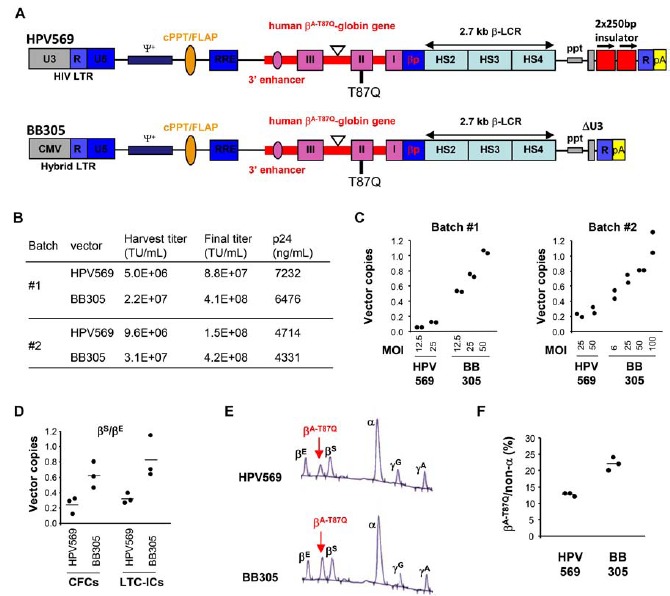
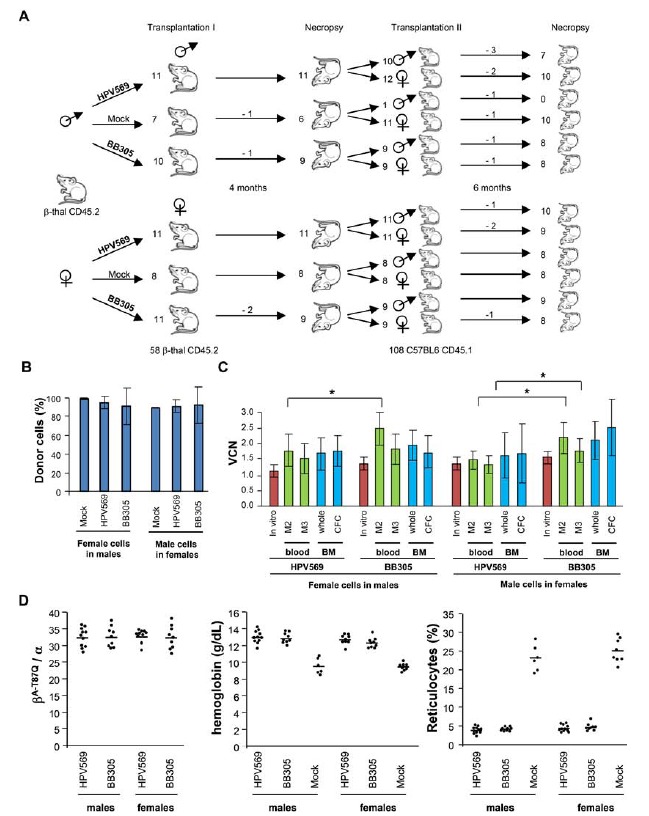
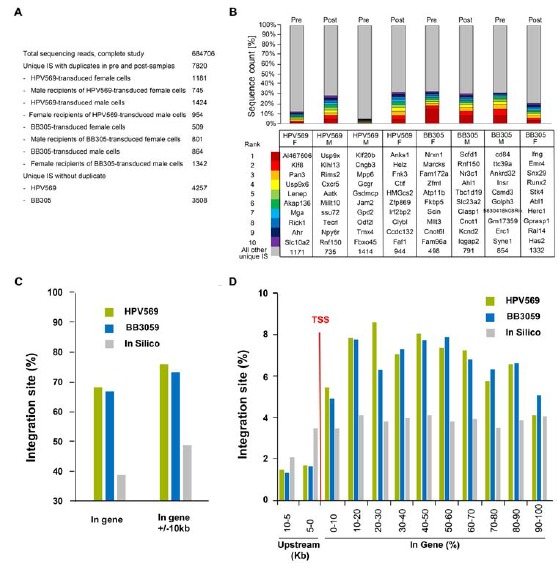
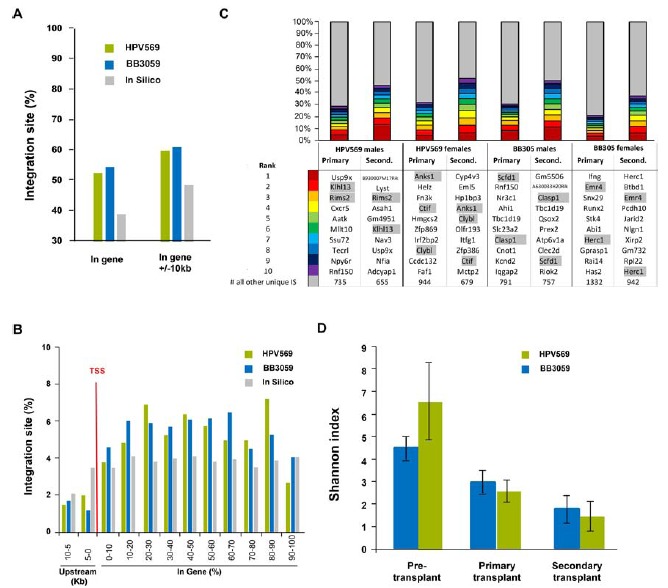
A previously published clinical trial demonstrated the benefit of autologous CD34(+) cells transduced with a selfinactivating lentiviral vector (HPV569) containing an engineered β-globin gene (β(A-T87Q)-globin) in a subject with β thalassemia major. This vector has been modified to increase transduction efficacy without compromising safety. In vitro analyses indicated that the changes resulted in both increased vector titers (3 to 4 fold) and increased transduction efficacy (2 to 3 fold). An in vivo study in which 58 β-thalassemic mice were transplanted with vector- or mock-transduced syngenic bone marrow cells indicated sustained therapeutic efficacy. Secondary transplantations involving 108 recipients were performed to evaluate long-term safety. The six month study showed no hematological or biochemical toxicity. Integration site (IS) profile revealed an oligo/polyclonal hematopoietic reconstitution in the primary transplants and reduced clonality in secondary transplants. Tumor cells were detected in the secondary transplant mice in all treatment groups (including the control group), without statistical differences in the tumor incidence. Immunohistochemistry and quantitative PCR demonstrated that tumor cells were not derived from transduced donor cells. This comprehensive efficacy and safety data provided the basis for initiating two clinical trials with this second generation vector (BB305) in Europe and in the USA in patients with β-thalassemia major and sickle cell disease.
Overview
The claims and statistics of this paper haven’t been checked yet.
Free: it reads the open-access text and checks the first 5 claims that cite a source we can check. Create a free account to check every claim.
Integrity signals
Registry
Cites
Statistics
Figures
Verification
Claims the paper makes
The claims and statistics of this paper haven’t been checked yet.
Free: it reads the open-access text and checks the first 5 claims that cite a source we can check. Create a free account to check every claim.
Claims other papers make about this one
Each is checked against this paper’s own text: does it say what the citing paper says it does?
The cited source says what the claim attributes to it.
In the citing paper
“Limited changes in the LentiGlobin vector (HPV569 vs. BB305) did not significantly alter the expression of β A-T87Q -globin per integrated vector copy, but they contributed (along with changes in vector manufacturing) to an increase in vector titers by a factor of approximately 4. 14,24,37”
From Gene Therapy in Patients with Transfusion-Dependent β-Thalassemia (2018) · cites this paper as [24]
Self-check
Percentages, sums and reported differences re-computed from the paper’s own numbers.
The self-check needs the paper’s full text.
Citations
Cites
LMO2 -Associated Clonal T Cell Proliferation in Two Patients after Gene Therapy for SCID-X1
Hacein-Bey-Abina, S., Von Kalle, C., Schmidt, M., McCormack, M. P., Wulffraat, N., Leboulch, P., Lim, A., Osborne, C. S., Pawliuk, R., Morillon, E., et al. (2003) · Science · doi:10.1126/science.1088547 · Cited by 3,587
Self-citationHIV-1 Integration in the Human Genome Favors Active Genes and Local Hotspots
Schröder, A. R. W., Shinn, P., Chen, H., Berry, C., Ecker, J. R., & Bushman, F. (2002) · Cell · doi:10.1016/s0092-8674(02)00864-4 · Cited by 1,832 · cited 2×
“Lens-Epithelium Growth Factor, LEDGF), gene expression state, chromatin state and other so far unknown factors seem to contribute to this target site selection [46-48].”
BackgroundResultHematopoietic Stem Cell Gene Therapy with a Lentiviral Vector in X-Linked Adrenoleukodystrophy
Cartier, N., Hacein-Bey-Abina, S., Bartholomae, C. C., Veres, G., Schmidt, M., Kutschera, I., Vidaud, M., Abel, U., Dal-Cortivo, L., Caccavelli, L., et al. (2009) · Science · doi:10.1126/science.1171242 · Cited by 1,508 · cited 1×
“Human genetic diseases have been treated successfully by gene therapy with lentiviral vectors, as shown for the first time in the treatment of subjects with childhood cerebral adrenoleukodystrophy (CCALD) [1, 2] and (cid:1) -thalassemia major [3, 4].”
BackgroundSelf-citationGalanello, R., & Origa, R. (2010) · Orphanet Journal of Rare Diseases · doi:10.1186/1750-1172-5-11 · Cited by 1,466
Transfusion independence and HMGA2 activation after gene therapy of human β-thalassaemia
Cavazzana-Calvo, M., Payen, E., Negre, O., Wang, G., Hehir, K., Fusil, F., Down, J., Denaro, M., Brady, T., Westerman, K., et al. (2010) · Nature · doi:10.1038/nature09328 · Cited by 1,276 · cited 9×
“We previously reported that a patient with -thalassemia major ( / ) became transfusion independent after autologous transplantation with CD34 cells transduced with the LentiGlobin HPV569 lentiviral vector [3].”
BackgroundInfluentialSelf-citationLentiviral Hematopoietic Stem Cell Gene Therapy Benefits Metachromatic Leukodystrophy
Biffi, A., Montini, E., Lorioli, L., Cesani, M., Fumagalli, F., Plati, T., Baldoli, C., Martino, S., Calabria, A., Canale, S., et al. (2013) · Science · doi:10.1126/science.1233158 · Cited by 1,180
Self-citationThe protein CTCF is required for the enhancer blocking activity of vertebrate insulators
Bell, A. C., West, A. G., & Felsenfeld, G. (1999) · Cell · doi:10.1016/s0092-8674(00)81967-4 · Cited by 1,101 · cited 1×
“Tandem copies of the cHS4 elements were shown to provide partial protection against oncogene activation by oncoretroviral long-terminal repeats (LTR) in cell lines [16] and chromatin barrier activities to the surrounded genes [16, 17].”
BackgroundOtt, M. G., Schmidt, M., Schwarzwaelder, K., Stein, S., Siler, U., Koehl, U., Glimm, H., Kühlcke, K., Schilz, A., Kunkel, H., et al. (2006) · Nature Medicine · doi:10.1038/nm1393 · Cited by 1,051
Self-citationLentiviral Hematopoietic Stem Cell Gene Therapy in Patients with Wiskott-Aldrich Syndrome
Aiuti, A., Biasco, L., Scaramuzza, S., Ferrua, F., Cicalese, M. P., Baricordi, C., Dionisio, F., Calabria, A., Giannelli, S., Castiello, M. C., et al. (2013) · Science · doi:10.1126/science.1233151 · Cited by 1,025
Self-citationProduction, concentration and titration of pseudotyped HIV-1-based lentiviral vectors
Kutner, R. H., Zhang, X.-Y., & Reiser, J. (2009) · Nature Protocols · doi:10.1038/nprot.2009.22 · Cited by 668
Self-citation
Research works printed but not linked: 2
- [32]Morawietz G. Ruehl-Fehlert C. Kittel B. Revised guides for organ sampling and trimming in rats and mice--Part 3. A joint publication of the RITA and NACAD groups. Exp. Toxicol. Pathol. 2004 55 433 449 15384249
- [40]Negre O. Bartholoma C. Kutner R. Abstract 674 of the American Society of Gene & Cell Therapy (ASGGT) 16th Annual Meeting. May 15-18, 2013. Salt Lake City, Utah, USA. Mol. Ther. 2013 21 Suppl. 1 s257 23728215
Cited by
Gene therapy in a patient with sickle cell disease
Ribeil, J.-A., Hacein-Bey-Abina, S., Payen, E., Magnani, A., Semeraro, M., Magrin, E., Caccavelli, L., Neven, B., Bourget, P., El Nemer, W., et al. (2017) · New England Journal of Medicine · doi:10.1056/nejmoa1609677 · Cited by 696
Self-citationGene Therapy in Patients with Transfusion-Dependent β-Thalassemia
Thompson, A. A., Walters, M. C., Kwiatkowski, J., Rasko, J. E. J., Ribeil, J.-A., Hongeng, S., Magrin, E., Schiller, G. J., Payen, E., Semeraro, M., et al. (2018) · New England Journal of Medicine · doi:10.1056/nejmoa1705342 · Cited by 684
Self-citationBetibeglogene Autotemcel Gene Therapy for Non–β 0 /β 0 Genotype β-Thalassemia
Locatelli, F., Thompson, A. A., Kwiatkowski, J. L., Porter, J. B., Thrasher, A. J., Hongeng, S., Sauer, M. G., Thuret, I., Lal, A., Algeri, M., et al. (2022) · New England Journal of Medicine · doi:10.1056/nejmoa2113206 · Cited by 283
Self-citationMolecular basis of α-thalassemia
Farashi, S., & Harteveld, C. L. (2018) · Blood Cells, Molecules, and Diseases · doi:10.1016/j.bcmd.2017.09.004 · Cited by 227
Acute Myeloid Leukemia Case after Gene Therapy for Sickle Cell Disease
Goyal, S., Tisdale, J., Schmidt, M., Kanter, J., Jaroscak, J., Whitney, D., Bitter, H., Gregory, P. D., Parsons, G., Foos, M., et al. (2022) · New England Journal of Medicine · doi:10.1056/nejmoa2109167 · Cited by 211
Self-citationFriedman, K. M., Garrett, T. E., Evans, J. W., Horton, H. M., Latimer, H. J., Seidel, S. L., Horvath, C. J., & Morgan, R. A. (2018) · Human Gene Therapy · doi:10.1089/hum.2018.001 · Cited by 205
“Vector copy number (VCN) was determined using qPCR, as described previously.(32) Briefly, gDNA was isolated from transduced T cells using QuickgDNA MiniPrep kit (Zymo Research Corp).”
MethodGene therapy targeting haematopoietic stem cells for inherited diseases: progress and challenges
Cavazzana, M., Bushman, F. D., Miccio, A., André-Schmutz, I., & Six, E. (2019) · Nature Reviews Drug Discovery · doi:10.1038/s41573-019-0020-9 · Cited by 199
Self-citationGenetic treatment of a molecular disorder: gene therapy approaches to sickle cell disease
Hoban, M. D., Orkin, S. H., & Bauer, D. E. (2016) · Blood · doi:10.1182/blood-2015-09-618587 · Cited by 194
Hit-and-run programming of therapeutic cytoreagents using mRNA nanocarriers
Moffett, H. F., Coon, M. E., Radtke, S., Stephan, S. B., McKnight, L., Lambert, A., Stoddard, B. L., Kiem, H. P., & Stephan, M. T. (2017) · Nature Communications · doi:10.1038/s41467-017-00505-8 · Cited by 183
Gene Therapy of the β-Hemoglobinopathies by Lentiviral Transfer of the β A(T87Q) - Globin Gene
Negre, O., Eggimann, A.-V., Beuzard, Y., Ribeil, J.-A., Bourget, P., Borwornpinyo, S., Hongeng, S., Hacein-Bey, S., Cavazzana, M., Leboulch, P., et al. (2016) · Human Gene Therapy · doi:10.1089/hum.2016.007 · Cited by 159
Self-citationGene Therapy for β-Hemoglobinopathies
Cavazzana, M., Antoniani, C., & Miccio, A. (2017) · Molecular Therapy · doi:10.1016/j.ymthe.2017.03.024 · Cited by 124
Self-citationGene therapy for sickle cell disease: An update
Demirci, S., Uchida, N., & Tisdale, J. F. (2018) · Cytotherapy · doi:10.1016/j.jcyt.2018.04.003 · Cited by 168
Long-term outcomes of lentiviral gene therapy for the β-hemoglobinopathies: the HGB-205 trial
Magrin, E., Semeraro, M., Hebert, N., Joseph, L., Magnani, A., Chalumeau, A., Gabrion, A., Roudaut, C., Marouene, J., Lefrère, F., et al. (2022) · Nature Medicine · doi:10.1038/s41591-021-01650-w · Cited by 119
Self-citationCRISPR/Cas9 gene editing for curing sickle cell disease
Park, S. H., & Bao, G. (2021) · Transfusion and Apheresis Science · doi:10.1016/j.transci.2021.103060 · Cited by 146
Current and future alternative therapies for beta-thalassemia major
Dreuzy, E. D., Bhukhai, K., Leboulch, P., & Payen, E. (2016) · Biomedical Journal · doi:10.1016/j.bj.2015.10.001 · Cited by 117
Self-citationThe Promise and the Hope of Gene Therapy
Papanikolaou, E., & Bosio, A. (2021) · Frontiers in Genome Editing · doi:10.3389/fgeed.2021.618346 · Cited by 115
Autologous Stem-Cell-Based Gene Therapy for Inherited Disorders: State of the Art and Perspectives
Staal, F. J. T., Aiuti, A., & Cavazzana, M. (2019) · Frontiers in Pediatrics · doi:10.3389/fped.2019.00443 · Cited by 85
Self-citationRNA Viruses as Tools in Gene Therapy and Vaccine Development
Lundstrom, K. (2019) · Genes · doi:10.3390/genes10030189 · Cited by 73
Brendel, C., Negre, O., Rothe, M., Guda, S., Parsons, G., Harris, C., McGuinness, M., Abriss, D., Tsytsykova, A., Klatt, D., et al. (2020) · Molecular Therapy - Methods & Clinical Development · doi:10.1016/j.omtm.2020.03.015 · Cited by 72
“In order to circumvent poor titers seen during large-scale production of the original research construct, we transferred the hairpin cassette into an LVV backbone that has consistently demonstrated enhanced titer characteristics.(26,29,42) We present data”
Self-citationCrippa, S., Rossella, V., Aprile, A., Silvestri, L., Rivis, S., Scaramuzza, S., Pirroni, S., Avanzini, M. A., Ricci, L. B., Hernández, R. J., et al. (2019) · Journal of Clinical Investigation · doi:10.1172/jci123191 · Cited by 72
Recent advances in lentiviral vectors for gene therapy
Wang, X., Ma, C., Rodríguez‐Labrada, R., Qin, Z., Xu, T., He, Z., & Wei, Y. (2021) · Science China Life Sciences · doi:10.1007/s11427-021-1952-5 · Cited by 68
2021 update on clinical trials in β‐thalassemia
Musallam, K. M., Bou‐Fakhredin, R., Cappellini, M. D., & Taher, A. T. (2021) · American Journal of Hematology · doi:10.1002/ajh.26316 · Cited by 74
Clinical applications of gene therapy for rare diseases: A review
Papaioannou, I., Owen, J. S., & Yáñez‐Muñoz, R. J. (2023) · International Journal of Experimental Pathology · doi:10.1111/iep.12478 · Cited by 79
Gene Therapy for Hemoglobinopathies
Cavazzana, M., & Mavilio, F. (2018) · Human Gene Therapy · doi:10.1089/hum.2018.122 · Cited by 71
Self-citationGene Therapy Approaches to Hemoglobinopathies
Ferrari, G., Cavazzana, M., & Mavilio, F. (2017) · Hematology/Oncology Clinics of North America · doi:10.1016/j.hoc.2017.06.010 · Cited by 56
Self-citationGene Therapy For Beta-Thalassemia: Updated Perspectives
Karponi, G., & Ζώγας, Ν. (2019) · The Application of Clinical Genetics · doi:10.2147/tacg.s178546 · Cited by 60
Thalassemias: from gene to therapy
Simone, G. D., Quattrocchi, A., Mancini, B., di Masi, A., Nervi, C., & Ascenzi, P. (2021) · Molecular Aspects of Medicine · doi:10.1016/j.mam.2021.101028 · Cited by 68
Yadak, R., Smitt, P. A. E. S., van Gisbergen, M. W., van Til, N. P., & de Coo, I. F. M. (2017) · Frontiers in Cellular Neuroscience · doi:10.3389/fncel.2017.00031 · Cited by 60
Schwarzer, A., Talbot, S. R., Selich, A., Morgan, M. A., Schott, J. W., Dittrich‐Breiholz, O., Bastone, A. L., Weigel, B., Ha, T. C., Dziadek, V., et al. (2021) · Molecular Therapy · doi:10.1016/j.ymthe.2021.06.017 · Cited by 59
Self-citationMasiuk, K. E., Zhang, R., Osborne, K. S., Hollis, R. P., Campo-Fernández, B., & Kohn, D. B. (2019) · Molecular Therapy — Methods & Clinical Development · doi:10.1016/j.omtm.2019.03.005 · Cited by 53
Morgan, R. A., Unti, M. J., Aleshe, B., Brown, D., Osborne, K. S., Koziol, C., Ayoub, P. G., Smith, O. B., O’Brien, R., Tam, C., et al. (2019) · Molecular Therapy · doi:10.1016/j.ymthe.2019.09.020 · Cited by 49
Nanotechnology Promotes Genetic and Functional Modifications of Therapeutic T Cells Against Cancer
Abdalla, A. M. E., Xiao, L. J., Miao, Y., Huang, L., Fadlallah, G. M., Gauthier, M., Ouyang, C., & Yang, G. (2020) · Advanced Science · doi:10.1002/advs.201903164 · Cited by 44
Wolff, J. H., & Mikkelsen, J. G. (2022) · Journal of Biomedical Science · doi:10.1186/s12929-022-00865-4 · Cited by 48
Contemporary Animal Models For Human Gene Therapy Applications
Gopinath, C., Nathar, T. J., Ghosh, A., Hickstein, D. D., & Nelson, E. J. R. (2015) · Current Gene Therapy · doi:10.2174/1566523215666150929110424 · Cited by 49
Ling, C., Bhukhai, K., Yin, Z., Tan, M., Yöder, M. C., Leboulch, P., Payen, E., & Srivastava, A. (2016) · Scientific Reports · doi:10.1038/srep35495 · Cited by 45
Self-citationRetroviral gene therapy in Germany with a view on previous experience and future perspectives
Morgan, M. A., Galla, M., Grez, M., Fehse, B., & Schambach, A. (2021) · Gene Therapy · doi:10.1038/s41434-021-00237-x · Cited by 42
CRISPR/Cas9-based gene-editing technology for sickle cell disease
Ma, L., Yang, S., Peng, Q., Zhang, J., & Zhang, J. (2023) · Gene · doi:10.1016/j.gene.2023.147480 · Cited by 56
Gene Therapy of the Hemoglobinopathies
Kunz, J. B., & Kulozik, A. E. (2020) · HemaSphere · doi:10.1097/hs9.0000000000000479 · Cited by 42
Hemoglobin disorders: lentiviral gene therapy in the starting blocks to enter clinical practice
Sii-Felice, K., Giorgi, M., Leboulch, P., & Payen, E. (2018) · Experimental Hematology · doi:10.1016/j.exphem.2018.05.004 · Cited by 39
Self-citationMeng, J., Counsell, J. R., Reza, M., Laval, S. H., Danos, O., Thrasher, A. J., Lochmüller, H., Muntoni, F., & Morgan, J. E. (2016) · Scientific Reports · doi:10.1038/srep19750 · Cited by 39
Afzal, S., Wilkening, S., von Kalle, C., Schmidt, M., & Fronza, R. (2017) · Molecular Therapy - Nucleic Acids · doi:10.1016/j.omtn.2016.12.001 · Cited by 35
Self-citationNovel players in β-thalassemia dyserythropoiesis and new therapeutic strategies
Arlet, J., Dussiot, M., Moura, I. C., Hermine, O., & Courtois, G. (2016) · Current Opinion in Hematology · doi:10.1097/moh.0000000000000231 · Cited by 44
Gene therapy and gene editing strategies for hemoglobinopathies
Lidonnici, M. R., & Ferrari, G. (2018) · Blood Cells Molecules and Diseases · doi:10.1016/j.bcmd.2017.12.001 · Cited by 37
Animal models of β-hemoglobinopathies: utility and limitations
McColl, B., & Vadolas, J. (2016) · Journal of Blood Medicine · doi:10.2147/jbm.s87955 · Cited by 37
Gene Therapy for Beta-Hemoglobinopathies: Milestones, New Therapies and Challenges
Ghiaccio, V., Chappell, M., Rivella, S., & Breda, L. (2019) · Molecular Diagnosis & Therapy · doi:10.1007/s40291-019-00383-4 · Cited by 31
Gene Therapy for β-Hemoglobinopathies: From Discovery to Clinical Trials
Segura, E., Ayoub, P. G., Hart, K. L., & Kohn, D. B. (2023) · Viruses · doi:10.3390/v15030713 · Cited by 35
The transformative potential of HSC gene therapy as a genetic medicine
Sagoo, P., & Gaspar, H. B. (2021) · Gene Therapy · doi:10.1038/s41434-021-00261-x · Cited by 28
Editing outside the body: Ex vivo gene-modification for β-hemoglobinopathy cellular therapy
Rosanwo, T. O., & Bauer, D. E. (2021) · Molecular Therapy · doi:10.1016/j.ymthe.2021.10.002 · Cited by 35
Rattananon, P., Anurathapan, U., Bhukhai, K., & Hongeng, S. (2021) · Frontiers in Pharmacology · doi:10.3389/fphar.2021.730873 · Cited by 31
Lidonnici, M. R., Paleari, Y., Tiboni, F., Mandelli, G., Rossi, C., Vezzoli, M., Aprile, A., Lederer, C. W., Ambrosi, A., Chanut, F. J.-A., et al. (2018) · Molecular Therapy — Methods & Clinical Development · doi:10.1016/j.omtm.2018.09.001 · Cited by 26
Development and clinical translation of ex vivo gene therapy
Wu, X., He, X., Liu, F., Jiang, X., Wang, P., Zhang, J., & Jiang, J. (2022) · Computational and Structural Biotechnology Journal · doi:10.1016/j.csbj.2022.06.015 · Cited by 31
CURING HEMOGLOBINOPATHIES: CHALLENGES AND ADVANCES OF CONVENTIONAL AND NEW GENE THERAPY APPROACHES.
Motta, I., Ghiaccio, V., Cosentino, A., & Breda, L. (2019) · Mediterranean Journal of Hematology and Infectious Diseases · doi:10.4084/mjhid.2019.067 · Cited by 27
Gene Therapy for Hemoglobinopathies: Tremendous Successes and Remaining Caveats
Malik, P. (2016) · Molecular Therapy · doi:10.1038/mt.2016.57 · Cited by 22
Therapeutic gene editing strategies using CRISPR-Cas9 for the β-hemoglobinopathies
Papizan, J. B., Porter, S. N., Sharma, A., & Pruett‐Miller, S. M. (2020) · Journal of Biomedical Research · doi:10.7555/jbr.34.20200096 · Cited by 25
Genome-based therapeutic interventions for β-type hemoglobinopathies
Karamperis, K., Tsoumpeli, M. T., Kounelis, F., Koromina, M., Mitropoulou, C., Moutinho, C., & Patrinos, G. P. (2021) · Human Genomics · doi:10.1186/s40246-021-00329-0 · Cited by 21
A Small Key for a Heavy Door: Genetic Therapies for the Treatment of Hemoglobinopathies
Zittersteijn, H. A., Harteveld, C. L., Klaver-Flores, S., Lankester, A. C., Hoeben, R. C., Staal, F. J. T., & Gonçalves, M. A. F. V. (2021) · Frontiers in Genome Editing · doi:10.3389/fgeed.2020.617780 · Cited by 24
Khamaikawin, W., Saisawang, C., Tassaneetrithep, B., Bhukhai, K., Phanthong, P., Borwornpinyo, S., Phuphuakrat, A., Pasomsub, E., Chaisavaneeyakorn, S., Anurathapan, U., et al. (2024) · Scientific Reports · doi:10.1038/s41598-024-61626-x · Cited by 20
Gene therapy for β-thalassemia: current and future options
Hardouin, G., Miccio, A., & Brusson, M. (2025) · Trends in Molecular Medicine · doi:10.1016/j.molmed.2024.12.001 · Cited by 23
Nualkaew, T., Sii-Felice, K., Giorgi, M., McColl, B., Gouzil, J., Glaser, A., Voon, H. P. J., Tee, H. Y., Grigoriadis, G., Svasti, S., et al. (2021) · Molecular Therapy · doi:10.1016/j.ymthe.2021.04.037 · Cited by 20
Self-citationEx Vivo Selection of Transduced Hematopoietic Stem Cells for Gene Therapy of β-Hemoglobinopathies
Bhukhai, K., Dreuzy, E. D., Giorgi, M., Colomb, C., Nègre, O., Denaro, M., Gillet-Legrand, B., Cheuzeville, J., Paulard, A., Trebeden‐Negre, H., et al. (2017) · Molecular Therapy · doi:10.1016/j.ymthe.2017.10.015 · Cited by 19
Self-citationPestina, T. I., Hargrove, P. W., Zhao, H., Mead, P. E., Smeltzer, M. P., Weiss, M. J., Wilber, A. C., & Persons, D. A. (2015) · Molecular Therapy — Methods & Clinical Development · doi:10.1038/mtm.2015.45 · Cited by 19
Mirza, A., Ritsert, M.-L., Tao, G., Thakar, H. L., Lobitz, S., Heine, S., Koscher, L., Dürken, M., Schmitt, A., Schmitt, M. W., et al. (2024) · Blood Advances · doi:10.1182/bloodadvances.2024014104 · Cited by 18
Treating hemoglobinopathies using gene-correction approaches: promises and challenges
Cottle, R. N., Lee, C. M., & Bao, G. (2016) · Human Genetics · doi:10.1007/s00439-016-1696-0 · Cited by 20
Lewis, G., Christiansen, L., McKenzie, J., Luo, M., Pasackow, E., Smurnyy, Y. D., Harrington, S., Gregory, P. D., Veres, G., Nègre, O., et al. (2018) · Molecular Therapy — Methods & Clinical Development · doi:10.1016/j.omtm.2018.04.001 · Cited by 18
Self-citationEmerging therapies in β-thalassemia: toward a new era in management
Bou‐Fakhredin, R., Tabbikha, R., Daadaa, H., & Taher, A. T. (2020) · Expert Opinion on Emerging Drugs · doi:10.1080/14728214.2020.1752180 · Cited by 20
VSeq-Toolkit: Comprehensive Computational Analysis of Viral Vectors in Gene Therapy
Afzal, S., Fronza, R., & Schmidt, M. (2020) · Molecular Therapy — Methods & Clinical Development · doi:10.1016/j.omtm.2020.03.024 · Cited by 17
Self-citationCurative approaches for sickle cell disease: A review of allogeneic and autologous strategies
Bauer, D. E., Brendel, C., & Fitzhugh, C. D. (2017) · Blood Cells Molecules and Diseases · doi:10.1016/j.bcmd.2017.08.014 · Cited by 17
Gene Therapy for Hemoglobinopathies
Lidonnici, M. R., Scaramuzza, S., & Ferrari, G. (2023) · Human Gene Therapy · doi:10.1089/hum.2023.138 · Cited by 18
Lemmens, M., Dorsheimer, L., Zeller, A., & Dietz, Y. (2024) · Mutation Research/Genetic Toxicology and Environmental Mutagenesis · doi:10.1016/j.mrgentox.2024.503767 · Cited by 16
Intracellular trafficking of a dynein-based nanoparticle designed for gene delivery
Favaro, M. T. D. P., Unzueta, U., de Cabo, M., Villaverde, A., Ferrer‐Miralles, N., & Azzoni, A. R. (2017) · European Journal of Pharmaceutical Sciences · doi:10.1016/j.ejps.2017.11.002 · Cited by 13
Sonzogni, O., Zak, D. E., Sasso, M. S., Lear, R., Muntzer, A., Zonca, M., West, K., Champion, B. R., & Rottman, J. B. (2022) · OncoImmunology · doi:10.1080/2162402x.2022.2029070 · Cited by 13
Yabe, I. M., Truitt, L. L., Espinoza, D. A., Wu, C., Koelle, S., Panch, S. R., Corat, M. A. F., Winkler, T., Yu, K., Hong, S. G., et al. (2018) · Molecular Therapy — Methods & Clinical Development · doi:10.1016/j.omtm.2018.10.009 · Cited by 12
Derisking Drug-Induced Carcinogenicity for Novel Therapeutics
Moggs, J. G., MacLachlan, T. K., Martus, H., & Bentley, P. (2016) · Trends in cancer · doi:10.1016/j.trecan.2016.07.003 · Cited by 11
Nature has the answers: Discovering and validating natural bioactives for human health
Kussmann, M., & Cunha, D. H. A. (2022) · Bioactive Compounds in Health and Disease · doi:10.31989/bchd.v5i10.1000 · Cited by 15
Bastone, A. L., Dziadek, V., John-Neek, P., Mansel, F., Fleischauer, J., Agyeman-Duah, E., Schaudien, D., Dittrich‐Breiholz, O., Schwarzer, A., Schambach, A., et al. (2023) · Molecular Therapy — Methods & Clinical Development · doi:10.1016/j.omtm.2023.08.017 · Cited by 13
Self-citationWild-type HIV infection after treatment with lentiviral gene therapy for β-thalassemia
Hongeng, S., Anurathapan, U., Songdej, D., Phuphuakrat, A., Jongrak, K., Parsons, G., Deary, B., Bonner, M. A., Veres, G., & Asmal, M. (2021) · Blood Advances · doi:10.1182/bloodadvances.2020003680 · Cited by 11
Self-citationChapin, J. C., Cohen, A. R., Neufeld, E. J., Vichinsky, E. P., Giardina, P. J., Boudreaux, J. M., Le, B. C., Kenney, K. M., Trimble, S. R., & Thompson, A. A. (2021) · British Journal of Haematology · doi:10.1111/bjh.17920 · Cited by 11
Innovative Therapies for Hemoglobin Disorders
Sii-Felice, K., Nègre, O., Brendel, C., Tubsuwan, A., Morel-à-l’Huissier, E., Filardo, C., & Payen, E. (2020) · BioDrugs · doi:10.1007/s40259-020-00439-6 · Cited by 10
Self-citationBauler, M. N., Ferrara, F., Lowe, B. R., Beard, J. A., Wincek, C., Wielgosz, M. M., Park, J. J., Shang, N., Nandy, S., Li, C., et al. (2024) · Molecular Therapy — Methods & Clinical Development · doi:10.1016/j.omtm.2024.101270 · Cited by 10
Efficacy and Safety of Gene Therapy for β-Thalassemia
Payen, E. (2022) · New England Journal of Medicine · doi:10.1056/nejme2118580 · Cited by 9
Self-citationAn erythroid-specific lentiviral vector improves anemia and iron metabolism in a new model of XLSA
Castracani, C. C., Breda, L., Papp, T. E., Guerra, A., Radaelli, E., Assenmacher, C., Finesso, G., Mui, B. L., Tam, Y. K., Fontana, S., et al. (2024) · Blood · doi:10.1182/blood.2024025846 · Cited by 9
Globin vector regulatory elements are active in early hematopoietic progenitor cells
Cabriolu, A., Odak, A., Zamparo, L., Yuan, H., Leslie, C. S., & Sadelain, M. (2022) · Molecular Therapy · doi:10.1016/j.ymthe.2022.02.028 · Cited by 10
Genetic Therapies for Sickle Cell Disease
Jayavaradhan, R., & Malik, P. (2018) · Pediatric Clinics of North America · doi:10.1016/j.pcl.2018.01.008 · Cited by 11
Ouyang, W., Dong, G., Zhao, W., Li, J., Zhou, Z., Yang, G., Liu, R., Li, Y., Zhang, Q., Du, X., et al. (2021) · Human Gene Therapy · doi:10.1089/hum.2020.204 · Cited by 9
Sun, Y., Yang, H., Xu, Q., Li, X., Lou, J., Duan, J., Xu, J., Liu, Z., Xia, Y., Lin, Z., et al. (2025) · Advanced Science · doi:10.1002/advs.202508754 · Cited by 11
Moiseenko, A., Sinadinos, A., Sergijenko, A., Pineault, K. M., Saleh, A., Nekola, K., Strang, N., Eleftheraki, A. G., Boyd, A., Davies, J. C., et al. (2024) · European Respiratory Journal · doi:10.1183/13993003.01683-2023 · Cited by 8
Self-citationAdvancing the care of β-thalassaemia patients with novel therapies.
Bou‐Fakhredin, R., Motta, I., & Cappellini, M. D. (2022) · Blood transfusion · doi:10.2450/2021.0265-21 · Cited by 10
Zhao, H. F., Abraham, A., Kim, Y., Wang, Y., Pestina, T. I., Zhan, J., Humphries, R. K., Nienhuis, A. W., & Persons, D. A. (2017) · Molecular Therapy · doi:10.1016/j.ymthe.2017.01.019 · Cited by 6
Guerra, A., Musallam, K. M., Taher, A. T., & Rivella, S. (2017) · Hematology/Oncology Clinics of North America · doi:10.1016/j.hoc.2017.11.002 · Cited by 7
Migliaccio, A. R. (2016) · Experimental Hematology · doi:10.1016/j.exphem.2016.04.016 · Cited by 6
Advances in Genetic Reprogramming: Prospects from Developmental Biology to Regenerative Medicine
Dhanjal, D. S., Singh, R., Sharma, V., Nepovimová, E., Adam, V., Kuča, K., & Chopra, C. (2023) · Current Medicinal Chemistry · doi:10.2174/0929867330666230503144619 · Cited by 5
Bastone, A. L., John-Neek, P., Dziadek, V., Mansel, F., Hagedorn, M., Fleischauer, J., Weigel, B., Paul, G., Schambach, A., & Rothe, M. (2025) · Human Gene Therapy · doi:10.1089/hum.2024.221 · Cited by 5
Self-citationEpigenetic Regulation of Erythropoiesis: From Developmental Programs to Therapeutic Targets
Vasiloudis, N.-I., Paschoudi, K., Beta, C., Georgolopoulos, G., & Psatha, N. (2025) · International Journal of Molecular Sciences · doi:10.3390/ijms26136342 · Cited by 9
Ex Vivo Gene and Cell Therapy in Hematopoietic Stem Cells
Petrova, I. O., & Smirnikhina, S. (2025) · International Journal of Molecular Sciences · doi:10.3390/ijms262311466 · Cited by 6
Gene Therapy for Primary Immunodeficiencies
Cicalese, M. P., & Aiuti, A. (2018) · Springer eBooks · doi:10.1007/978-3-319-77674-3_21
Improved biosafety of a lentiviral vector by reducing cellular gene activation
Li, S., He, J., Gao, Y., Fang, Y., Zhang, L., Wang, J., Sun, F., Zhang, F., Zeng, Y., Zeng, F., et al. (2019) · The Journal of Gene Medicine · doi:10.1002/jgm.3087 · Cited by 4
Everson, E. M., Hocum, J. D., & Trobridge, G. D. (2018) · The Journal of Gene Medicine · doi:10.1002/jgm.3028 · Cited by 4
Finotti, A., Borgatti, M., Bianchi, N., Zuccato, C., Lampronti, I., & Gambari, R. (2016) · Expert Opinion on Orphan Drugs · doi:10.1517/21678707.2016.1135793 · Cited by 6
Jansons, J., Avdoshina, D., Dudorova, A., Rubio, E. R., Sokolovska, L., Perminov, D., Lindenberga, I., Nicolai, H., Gebrila, S., Chowdhury, S., et al. (2025) · Infectious Agents and Cancer · doi:10.1186/s13027-025-00682-y · Cited by 5
Wu, J., Shen, W., Fan, Q., Zhang, J., & Zeng, F. (2024) · Molecular Biotechnology · doi:10.1007/s12033-023-01038-w · Cited by 3
Metadata
- Authors
- Negre, O., Bartholomae, C., Beuzard, Y., Cavazzana, M., Christiansen, L., Courne, C., Deichmann, A., Denaro, M., Dreuzy, E., Finer, M., Fronza, R., Gillet-Legrand, B., Joubert, C., Kutner, R., Leboulch, P., Maouche, L., Paulard, A., Pierciey, F., Rothe, M., Ryu, B., Schmidt, M., Kalle, C., Payen, E., & Veres, G.
- Affiliations
- German Cancer Research Center (DE)
- Université Paris-Saclay (FR)
- Bluebird Bio (France) (FR)
- Commissariat à l'Énergie Atomique et aux Énergies Alternatives (FR)
- Harvard University (US)
- Medizinische Hochschule Hannover (DE)
- Corresponding author
- Payen, Emmanuel
- Veres, Gabor
- ORCID
- Venue
- Current Gene Therapy
- Publisher
- Bentham Science Publishers Ltd.
- Published
- 2014-12-26
- Volume
- 15
- Issue
- 1
- Pages
- 64-81
- ISSN
- 1566-5232 (ISSN-L)
- PMC
- PMC4440358
- OpenAlex
- W2116613468
- Semantic Scholar
- 75d016ee3a12a0df2c54f2337be2a3f18834a4cc
- Cited by
- 126
- References
- 59
- Citations by year
- 2026: 6 · 2025: 10 · 2024: 8 · 2023: 9 · 2022: 9 · 2021: 17 · 2020: 9 · 2019: 12 · 2018: 14 · 2017: 12 · 2016: 15 · 2015: 5
- FWCI
- 7.01
- Type
- journal article
- Language
- en
- Open access
- green
- www.ncbi.nlm.nih.gov
- Licence
- cc-by-nc
- Locations
- Current Gene Therapy (publishedVersion)
- PubMed Central (publishedVersion, cc-by-nc)
- PubMed (publishedVersion)
- Digital Access to Scholarship at Harvard (DASH) (Harvard University) (submittedVersion, cc-by)
- Funders
- bluebird bio
- Agence Nationale de la Recherche
- Institut National de la Santé et de la Recherche Médicale
- Topics
- Life Sciences › Biochemistry, Genetics and Molecular Biology › Genetics › Virus-based gene therapy research
- Health Sciences › Medicine › Genetics (clinical) › Hemoglobinopathies and Related Disorders
- Health Sciences › Medicine › Hematology › Hematopoietic Stem Cell Transplantation
- Keywords
- beta-thalassemia major, sickle cell disease, lentiviral vectors, self-inactivating vectors, beta-globin gene, vector titer, bone marrow transplantation, serial transplantation, hematopoietic recovery, tumor incidence, gene therapy safety
- MeSH terms
- Anemia, Sickle Cell, Animals, Disease Models, Animal, DNA Damage, Female, Genetic Vectors, Male, Mice, Inbred C57BL, Genetic Therapy, Gene Expression, Lentivirus, beta-Thalassemia, Gene Transfer Techniques, Hematopoietic Stem Cell Transplantation, Antigens, CD34, Computational Biology, Mice
About these checks
Registry, retraction, Cites and statistics results are computed, not judged, with one exception: a printed reference that no index lists is read once by a model before it counts as a citation error. Claims are extracted by a model and kept only when their quote appears verbatim in the text; each cited source is then checked, with a model’s help, for whether it says what the claim relies on. Those verdicts can be wrong — read the claim’s quote and the cited source before relying on one.
Statistics and arithmetic are recomputed, not judged.
Confidence bands are shown only for fields calibrated on our annotated test set. None is calibrated yet, so no band is shown.
What counts as a claim ›How we measure confidence ›How we check this ›
Are you an author, or do you see a problem with this page? Request a review
Data sources
Bibliographic data: Semantic Scholar, OpenAlex, Crossref.
Contains information from the Semantic Scholar Academic Graph Datasets, made available under the ODC Attribution License (ODC-BY 1.0).
Semantic Scholar’s data is described in: Kinney, R., et al. (2023). The Semantic Scholar Open Data Platform. arXiv:2301.10140.
